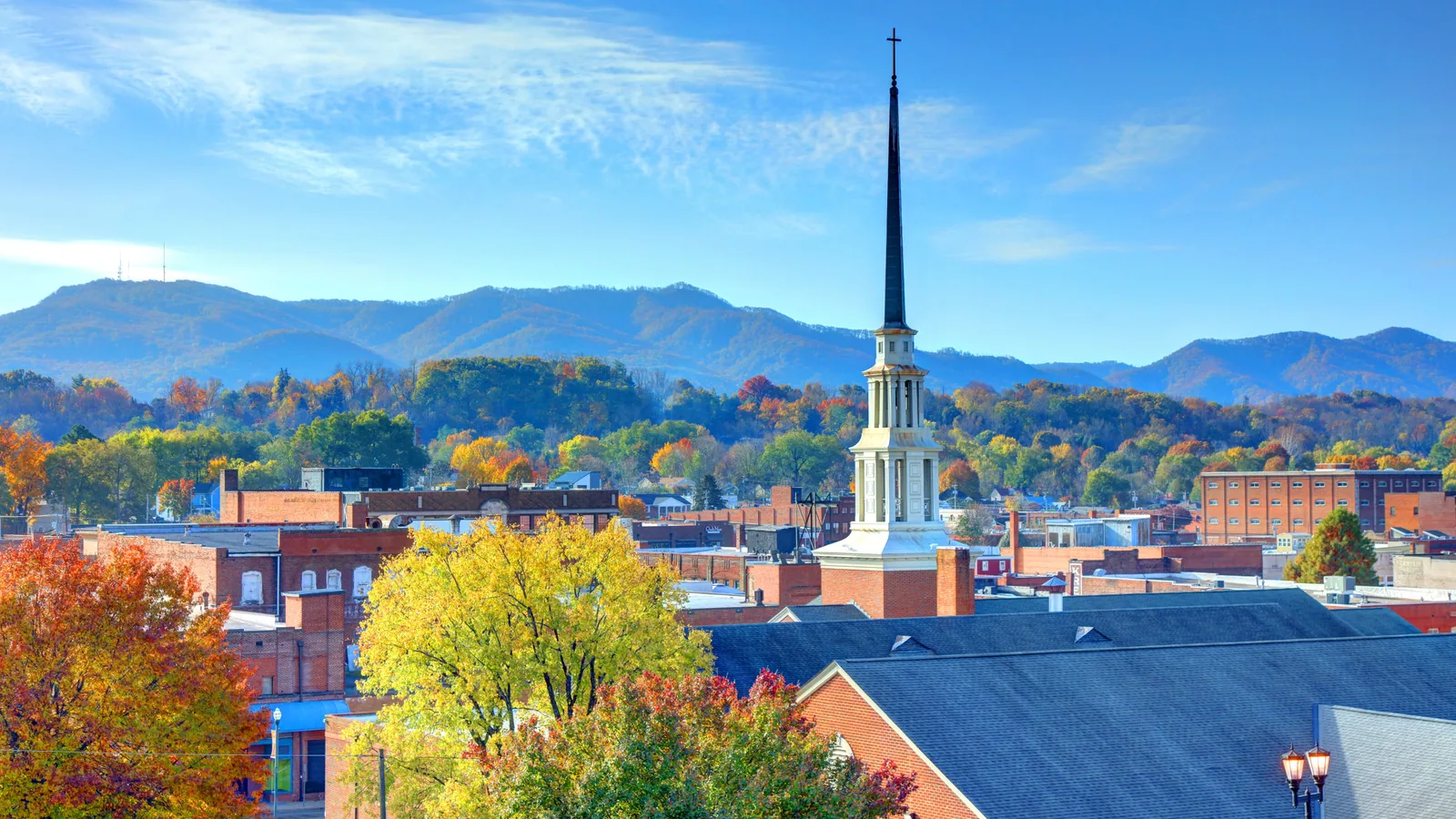
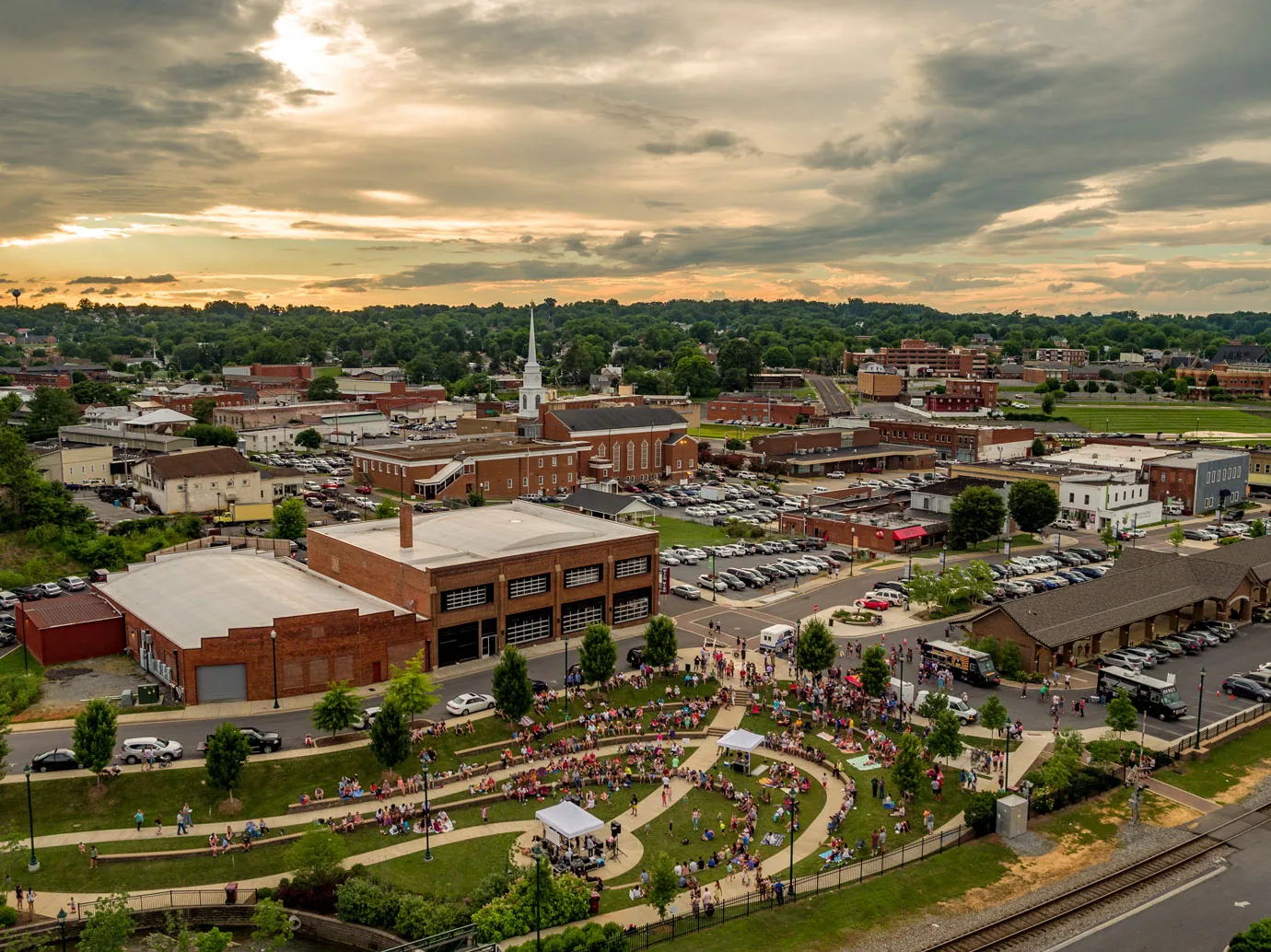
A Johnson City roof plan starts with the people under the roof and the rules that protect them. The city had 71,046 residents in 2020 and is served by I-26 and U.S. 19W, 11E, 321 and 23, and its commercial roofs cover a medical district, retail along State of Franklin Road and a long list of offices and institutional buildings. Before we ask for drawings, we ask who occupies the floor below the work, what the infection-control or quiet-hours rules are and where a crane can stand without blocking an ambulance route or a loading dock.
With those answers the phasing plan can be built, the permit step scheduled and the roof priced against a real sequence.
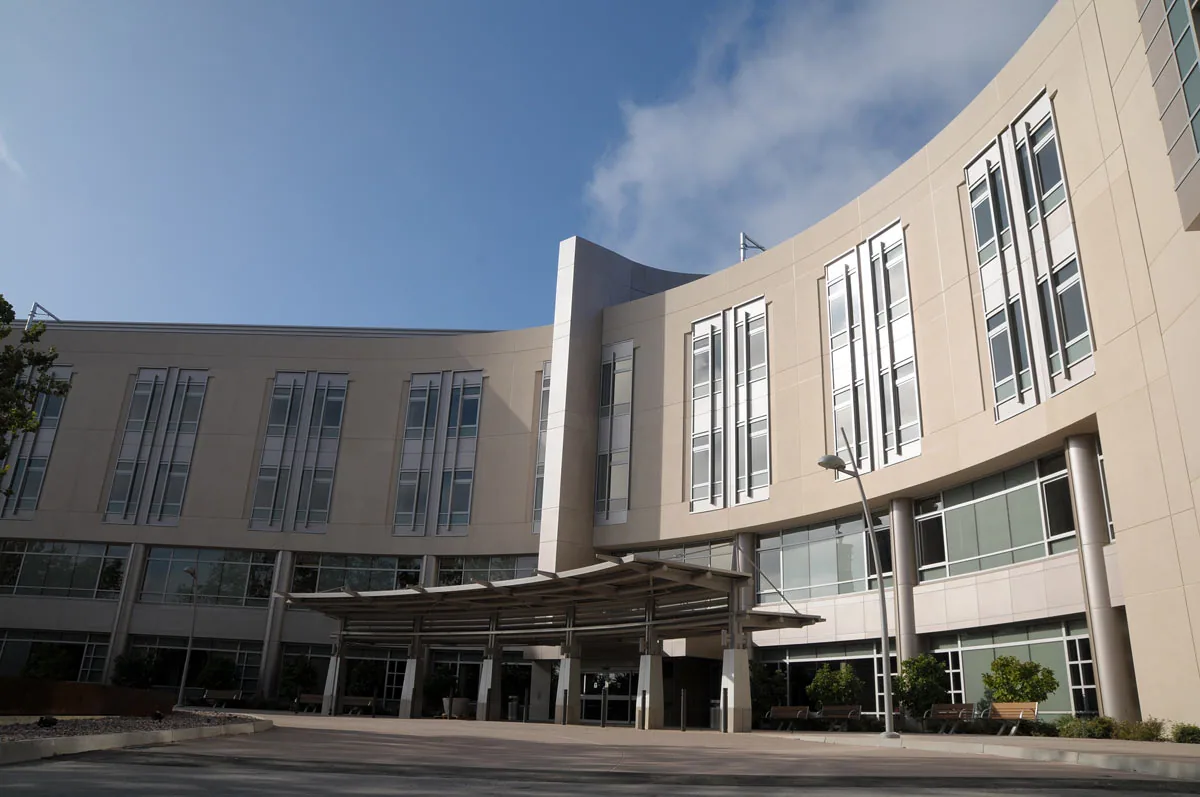
Roofing Beside Clinical Space
Johnson City Medical Center includes a Level 1 trauma center and Niswonger Children's Hospital, and it sits in the Med-Tech corridor with the colleges of East Tennessee State University. Ballad Health is headquartered in the city and employs 13,800 across 20 hospitals. In a city with that much health care and teaching space, the rules on a roof above clinical or laboratory areas are stricter than on a warehouse, and the plan has to carry them from the first day.
Above a patient floor, the first questions are about air and noise. Tear-off creates dust, odor and vibration, and a hospital or medical office writes its own rules for them. We ask for the facility's infection-control requirements, the air intake locations and the hours when noisy work is acceptable, and we place hot work, torch-applied seams and solvent-based adhesives away from intakes. Where a system option avoids fumes or open flame, we price it beside the others.
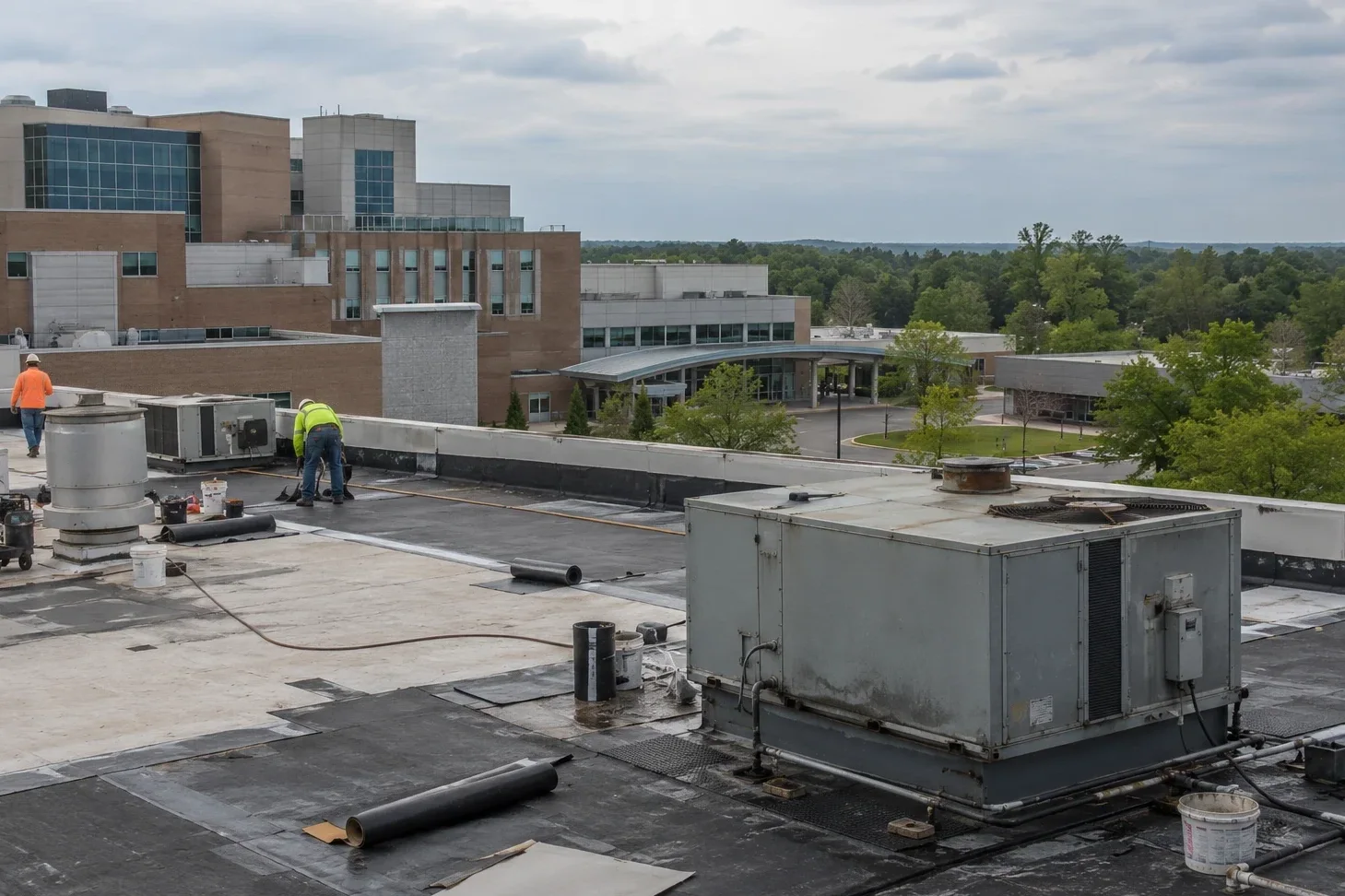
Roof equipment is as sensitive as the rooms below. Exhaust fans, air handlers and medical gas vents each need flashing that can be replaced without shutting the unit down longer than the facility allows. The hospital roof plan lists every unit with its permitted shutdown window.
Institutional Campuses and Older Buildings
Johnson City has a Mountain Home veterans campus dating to 1901, finished in 1903 across 450 acres, and the national cemetery on its grounds has French Renaissance-style buildings. A campus of that age and scale is a reminder that older institutional buildings can have details that modern roofing has to respect: parapets, cornices, built-in gutters and ornamental trim.
For any older building, we look at how the roof drains, whether the gutters are built into the cornice and how the flashing meets masonry. Built-in gutters fail at their joints, and repairs there need to be coordinated with the masonry or sheet metal trade. We do not assume the roof type; the walk and the original drawings tell us. A VA medical center roof has its own access and procedure requirements, and we plan to them when the owner provides them. Where a building of that kind has a slate or tile section, we bring in the right trade for that section rather than treating it like a membrane roof, and the written scope names who does what.
State of Franklin Road Retail and Mall Roofs
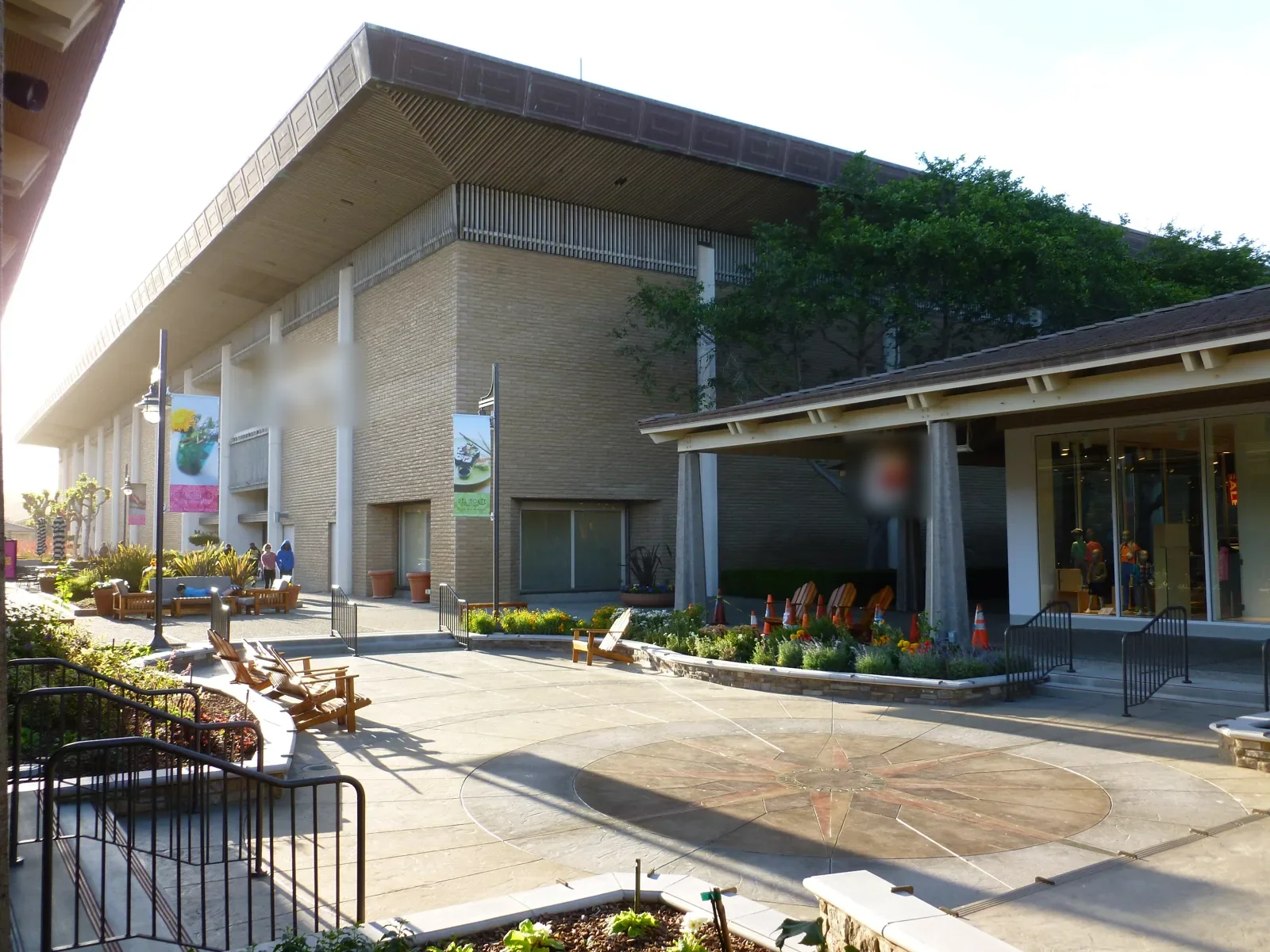
Retail concentrates along State of Franklin Road around Johnson City Crossings, and the city's only enclosed mall is the Mall at Johnson City. Shopping center roofs have their own pattern: many tenants, shared drainage and rooftop units added over time. We sketch which tenant spaces sit under each roof section and which drains serve them, which lets a leak call be routed to the correct section before anyone prices a repair.
Schedules follow trading hours. Deliveries arrive before opening, material goes up by hoist before the lot fills, and noisy work is placed in the slowest hours. Customer paths and fire lanes are marked on the site plan before the first truck arrives. A shopping center roof job also includes tenant notices, written through the property manager, so no store learns about a roof opening from the sound of the crew. We also keep a short list of the rooftop equipment that serves each tenant, because a unit shut down for a curb replacement affects the tenant it cools, and that tenant should hear about the hour and the duration from the property manager first.
Snow Loads, Ice and the Weather Buffer
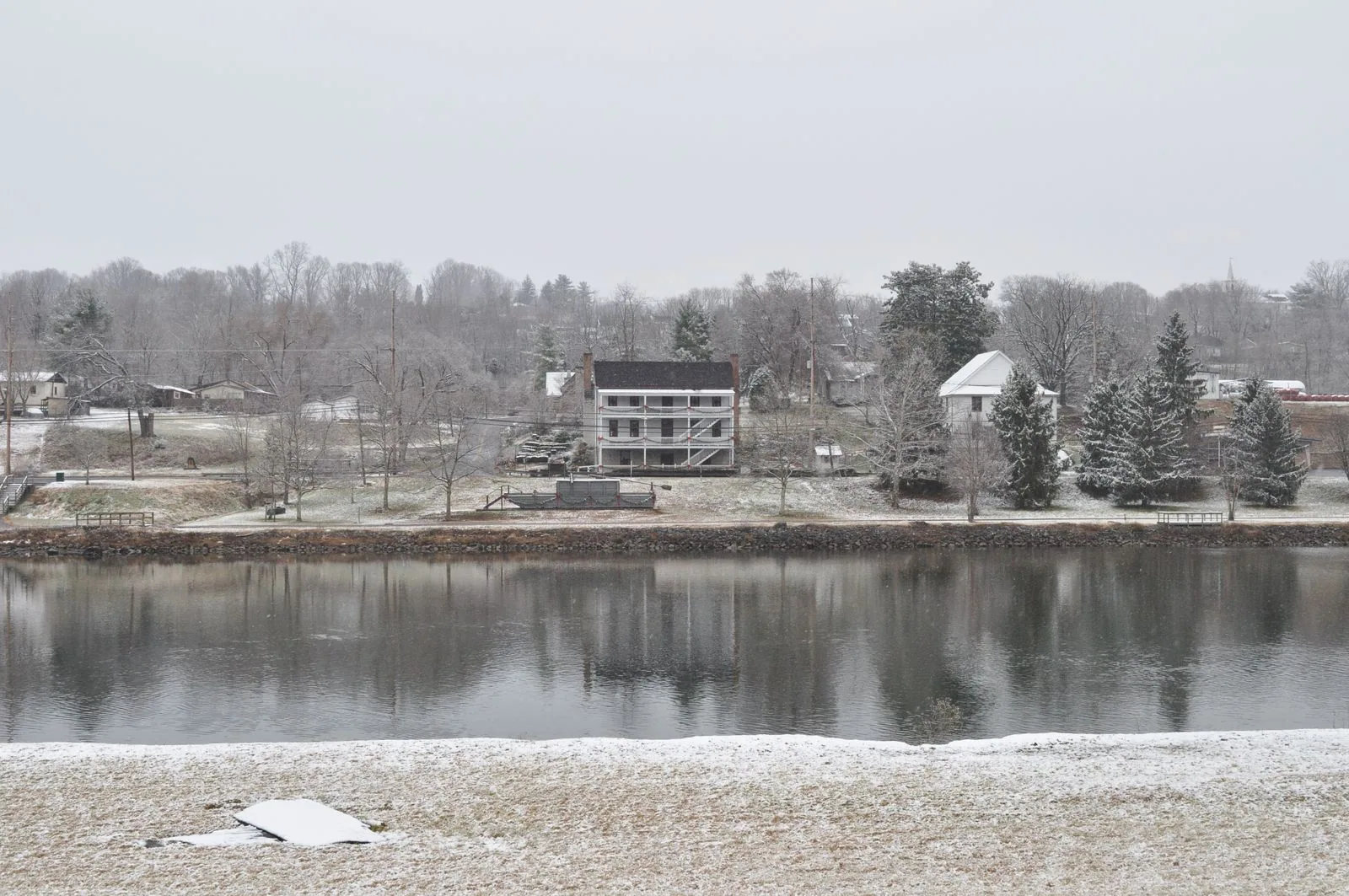
Snow is the difference between Johnson City and Kingsport, TN. Johnson City takes about 15.6 inches a year, noticeably more, on top of about 45 inches of total precipitation. More snow means more attention to drainage and to the weight on a roof that has equipment stacked on it or drifted snow against a parapet. After a heavy snow, ice at drains and scuppers blocks meltwater and sends it into the building at the edge.
Before winter we confirm that drains and scuppers are clear, that any heat-trace or de-icing works and that flashing at the base of walls is sound, since meltwater tests it harder than rain. The work of a snow and ice damage repair starts with relieving standing water and then fixing the cause.
Warm-weather planning is simpler: cold-sensitive materials go on in the warmer hours, thunderstorm warnings in the region have cited 60 mph gusts and hail, and every open section is closed before the crew leaves.
Permit, Inspection and Closeout
A Johnson City roof is permitted by whichever office has jurisdiction over the property, and we confirm it in writing. Stamped drawings and a state license above $25,000, as Kingsport requires, set the level of documentation we prepare. Closeout produces a signed punch list, photographs of flashings, edges and penetrations, the warranty paperwork and a dated roof plan.
Health systems and property managers with buildings across the region can pair that file with a roof asset management plan and compare Johnson City with Boones Creek, Gray and downtown Kingsport properties on one schedule.
Commercial Roofing Questions
How is dust and odor controlled when roofing above a medical office?
The facility sets the rules, and we build the plan to them. That usually means air intake locations identified, torch work or solvent adhesives kept away from them, debris contained at the roof edge and an agreed list of quiet hours. The foreman reviews the plan with the facility contact each morning.
What happens to rooftop equipment during a replacement?
Each unit gets a shutdown window agreed in advance with the mechanical contractor or facility engineer. The curb is re-flashed to the final unit size, and the unit is back in service before the section is closed for the day if the facility requires it.
Does Johnson City's snow change the roof design?
It changes the details. Johnson City averages more snow than Kingsport, so we check drainage capacity, the condition of scuppers and the flashing at wall bases, and we consider insulation and edge details that cope with meltwater and ice.
Can a mall or shopping center roof be done while stores stay open?
Yes, with phasing. Deliveries come before opening, work moves in sections, customer paths and fire lanes are marked and tenants receive written notice through the property manager. Each section is dried in by the end of the day.
What should an owner of an older institutional building expect from the first walk?
A record of the roof system, drainage and flashing, with attention to built-in gutters, parapets and masonry joints. The walk ends with a ranked list that separates urgent leaks from items to schedule, and each line carries a photograph and a price.