TPO work begins at the substrate: what the sheet will be fastened or adhered to, and whether that surface is ready to receive it. Everything after depends on the answer. In Kingsport, TN we confirm the deck, the insulation and the tie-ins before a roll of membrane is ordered.
From there the sequence is fixed. The deck is prepared, the insulation laid, the sheet installed, the seams welded, the details flashed and every weld tested, in that order. Each step names the trade that follows and the day it starts.
Substrate Survey and Tear-Off Sequence
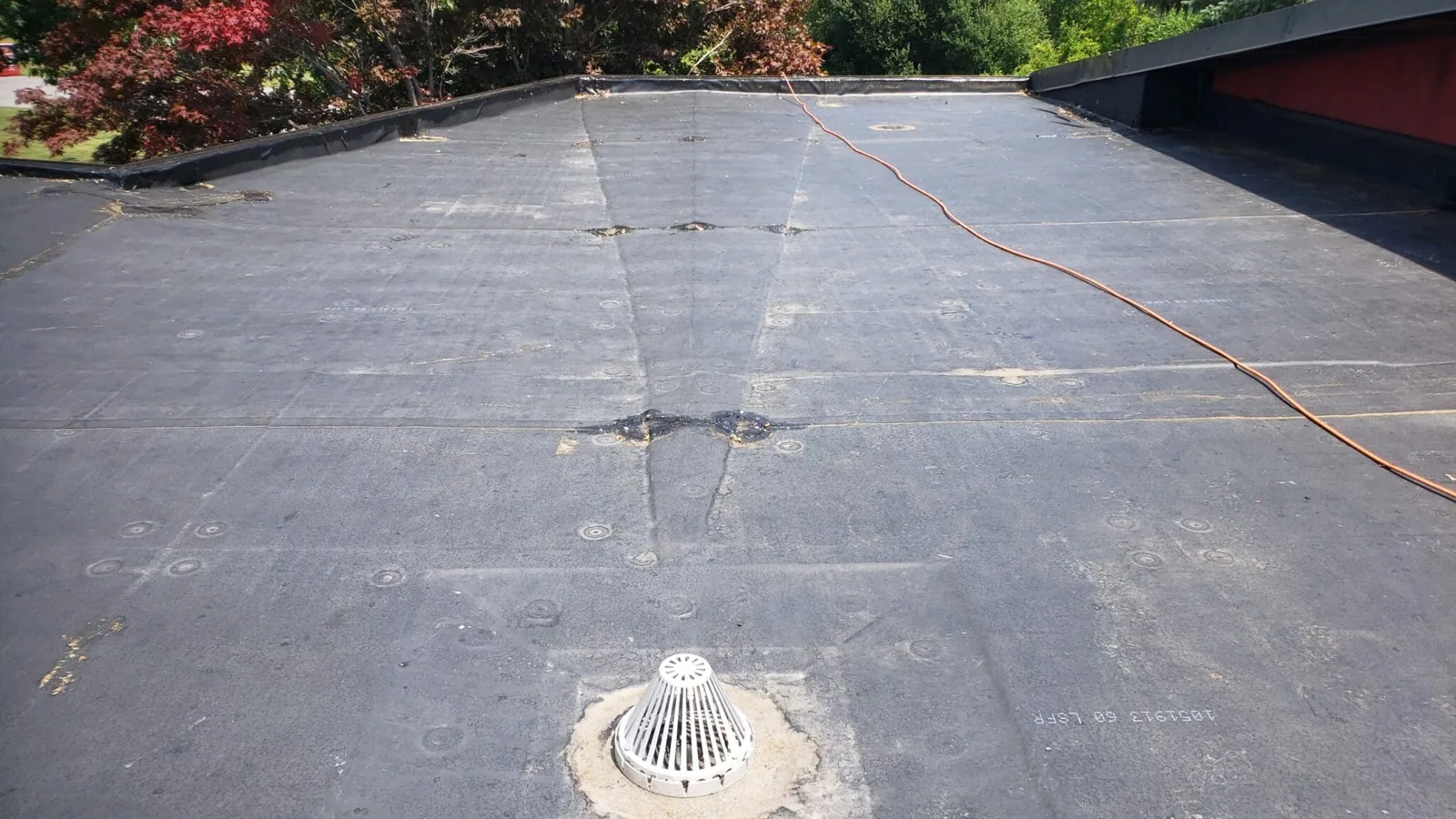
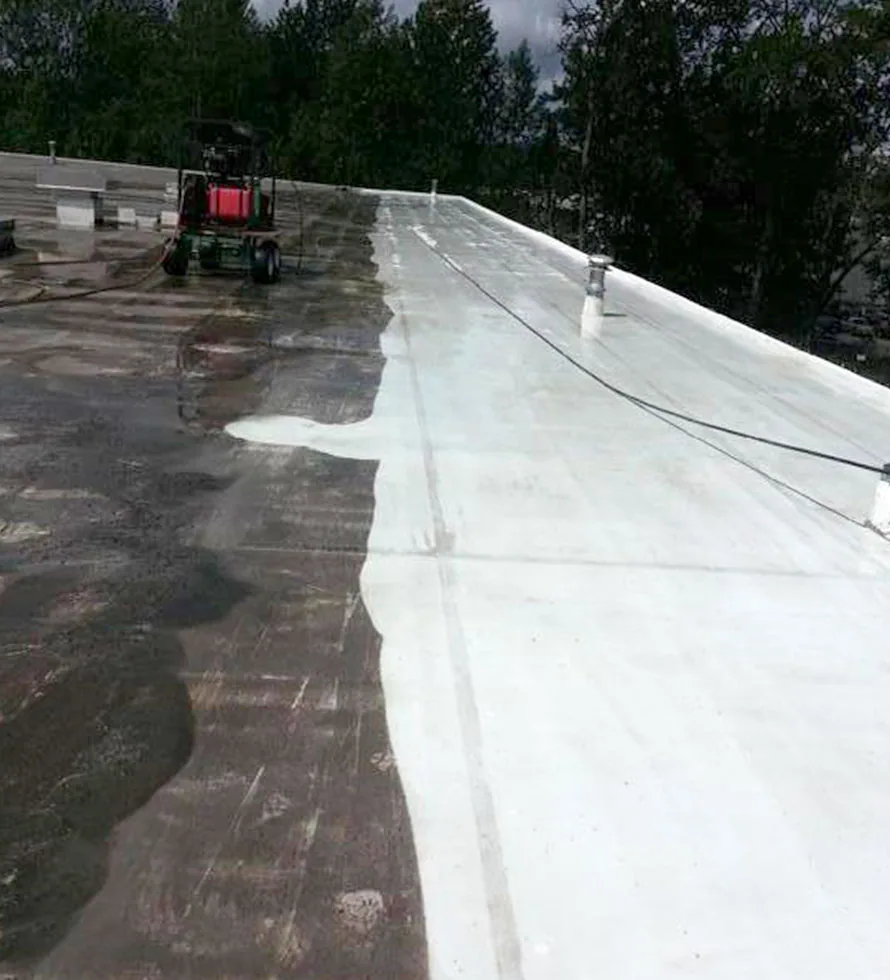
We cut cores at several locations to read the existing layers, then run a moisture scan to see where the insulation holds water. The results decide the tear-off. A recover over dry, sound board is possible. A full tear-off is needed when the layers are saturated or the deck is damaged.
Tear-off runs in sections sized for one shift. Each section is opened, stripped, inspected and covered with new insulation and membrane before the crew leaves. Damaged deck is flagged and priced on a unit basis, so the job does not stop for a negotiation. The haul route and dumpster position are fixed before the first section opens.
Insulation goes down next in staggered layers, so no joint sits over another. A cover board follows where the specification calls for one, since it protects the insulation from foot traffic and from hail. Tapered pieces are placed at drains and crickets are built behind curbs, so the finished roof sheds water instead of holding it. A drain set too high is corrected now, because it cannot be fixed after the sheet is welded.
Attachment: Mechanically Attached, Adhered and Ballasted
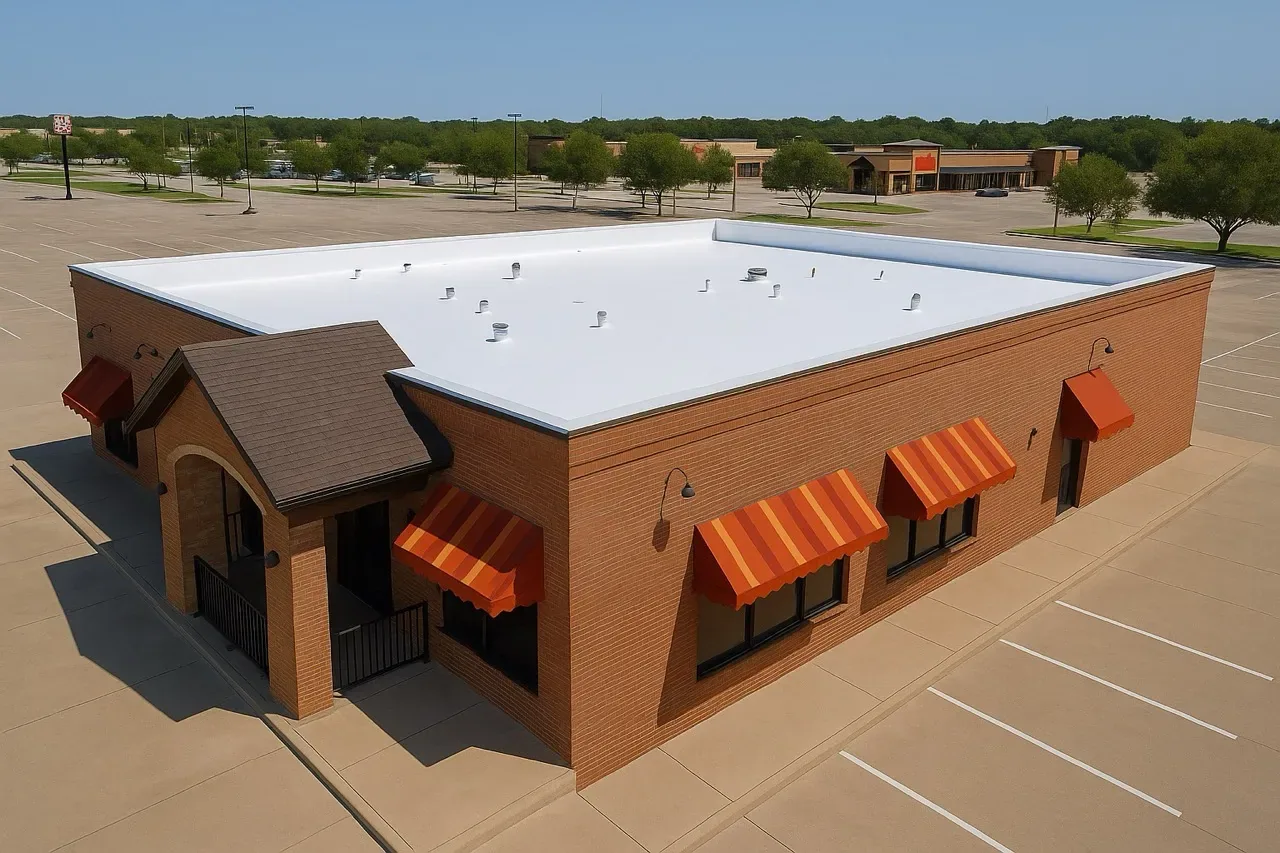
TPO is installed three ways. Mechanically attached sheets are secured with plates and screws under the seam overlap. Fully adhered sheets are bonded to the substrate with adhesive. Ballasted sheets rely on stone or pavers. The method follows the structure, the wind exposure and the building schedule.
Morristown thunderstorm warnings for Sullivan and Washington counties have named 60 mph gusts, which is why the perimeter gets the closest attention on attachment. We specify the fastener pattern, check pull-out values on the deck and inspect the edge metal before the sheet is closed. The laydown area for rolls and adhesive drums sits away from loading docks.
Welding Seams and Probing the Result
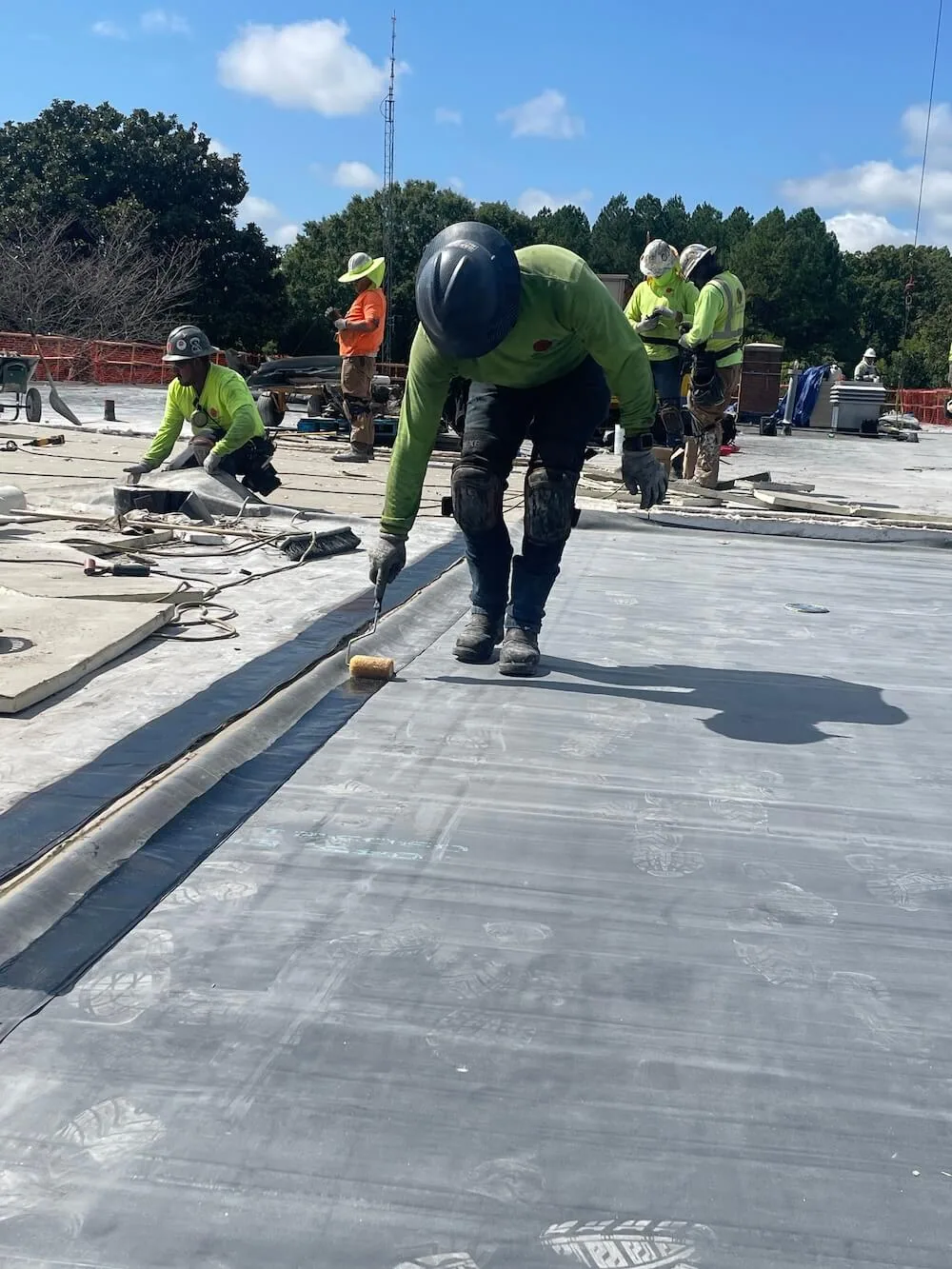
TPO sheets are joined with hot-air welders. The operator cleans the overlap, sets the machine temperature and speed and runs the weld. A trained inspector then probes the seam edge with a pick, looking for voids, cold spots and gaps.
Test welds are made at the start of each shift and each time conditions change. Wind, humidity and sheet temperature all affect the weld. Each probe result goes in the log with a location and a photograph. Open welds are repaired the same day, and the repair is probed again. A roof is not ready for the next trade until its seams pass.
Foot traffic after the seams pass needs control as well. Walk pads go along routes to rooftop units, and a sign-in rule limits who enters the roof. A dropped tool on fresh sheet leaves a cut that costs a patch and a probe. We photograph the roof at handover so any later damage can be traced to a date.
Flashing, Curbs and Tie-Ins
Most TPO problems appear at details, not in the field. Walls, curbs, pipes and drains all require flashing that is cut, fitted and welded. We build the details before the field sheet is finished, so the water has a continuous path to the drains.
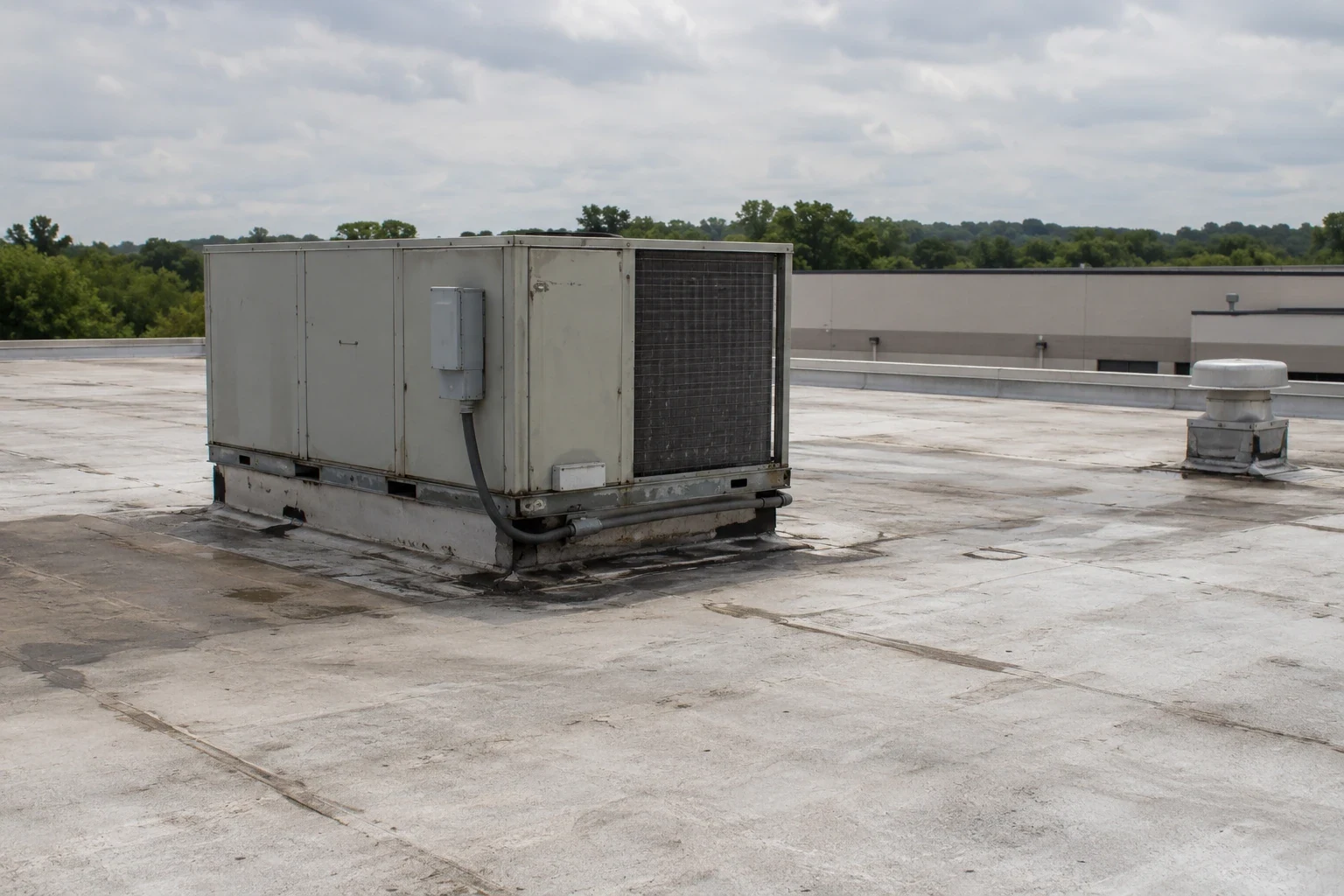
Tie-ins to existing roofs are staged at the end of each day. A temporary seal protects the open edge until the next shift. For a rooftop unit, we coordinate with the mechanical trade so the curb flashing is in place before the unit is reset. Our work on rooftop equipment curbs follows the same order.
Phasing Around Plants, Hospitals and Retail
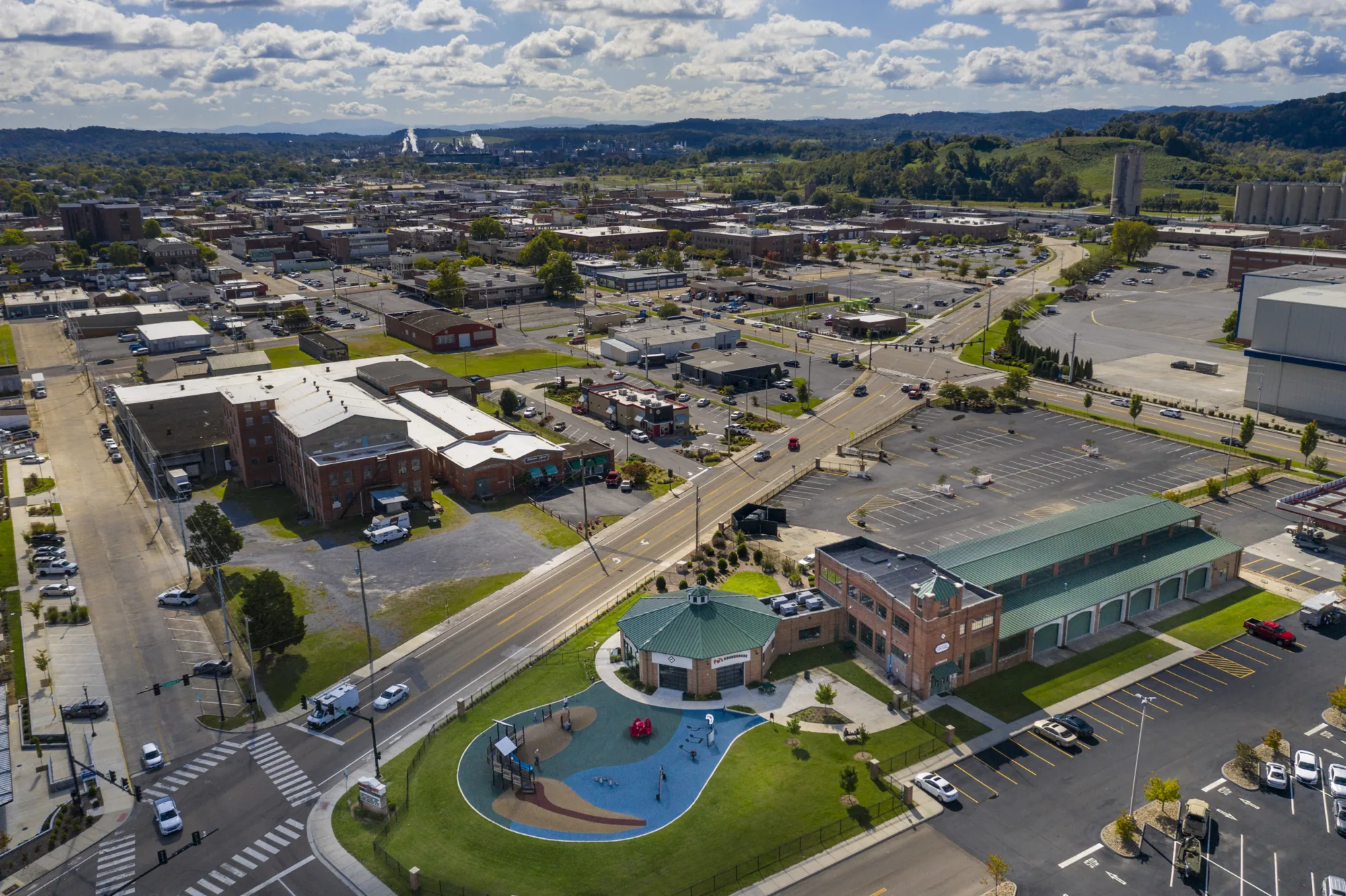
Chemical, paper and ordnance plants share the city with hospitals and retail, a mix that leaves a TPO crew working to several calendars at once. Eastman's complex, the Domtar mill converted in 2023 and Holston Valley Hospital all run schedules that a roofer must respect, so the phasing plan follows whichever outage calendar, quiet-hours rule or hot work permit applies.
A manufacturing plant roof may wait for a turnaround. A retail center may need night work. A hospital wing needs infection control. The plan names each constraint, each handoff and the person who can stop the work.
Permit, Inspection and Weather Windows
A TPO reroof at a commercial address goes to the City of Kingsport Building Department as one stamped plan set with a PDF copy, filed while the rolls are on order. The reviewers work from the 2024 building and energy code editions on the department's contractor page, which fix insulation values and the attachment schedule before a fastener is bought. Beyond $25,000 the package also needs the Tennessee contractor license and insurance certificates.
Welds are made on dry sheet, and the weather record explains the buffer days: wet conditions on about 133 days of the year, around 45 inches in all, with temperatures that have run from minus 18 F up to 104 F. Cold or damp mornings hold the hot-air welders, so the main field work is planned for the drier months and a tarp-and-dry stays staged on the roof.
Closeout and Punch List
The superintendent walks the finished roof with us. We check every seam, flashing and drain against the plan, sweep the surface, confirm the drains run clear and list open items with a name and a date. The weld probe log, photographs, warranty papers and material list make up the closeout package.
If the owner wants a comparison, PVC and EPDM are priced on the same scope. A retail owner in the Stone Drive corridor sends the roof plan and the store calendar. A replacement bid should include the probe log as a deliverable.
Commercial Roofing Questions
What do you need before you can price a TPO roof?
The roof plan, the access points, the outage or turnover calendar and any core or moisture data. We recommend sending them together. The phasing plan is built from them, and a price that ignores the plan changes once the access route is known.
Mechanically attached or fully adhered: how do you choose?
The structure, the wind exposure and the schedule drive the choice. Attached sheets install faster in many conditions, and adhered sheets give a smooth surface. We recommend a pull-out test on the deck and a wind uplift review before choosing, because county warnings have named 60 mph gusts.
How do you prove the seams are good?
We probe them. Each shift opens with a test weld, and the seam edge is probed with a pick for voids and gaps. We recommend that the probe log be a deliverable in the contract. It shows where defects were found and when they were repaired.
Can TPO be installed in cold weather?
With limits. Welds need dry sheets and moderate temperatures, and adhesives have minimum surface temperatures. Lows near minus 18 F are on record here, so we recommend scheduling field work for the drier months and using winter for survey, permit and material ordering.
What if the deck is damaged under the old roof?
The deck gets inspected the moment the old sheet is gone. Any damage is flagged, photographed and priced on a unit basis before new material goes on. We recommend that unit price be written into the contract so the job does not stop for a negotiation.