On a school roof the calendar comes first: the last day of classes, the first day of staff return and every summer program in between. Those dates set the access window, and the access window sets how much roof can come off. We ask the facilities director for the calendar before we ask for the drawings.
School districts in Kingsport, TN schedule roof work for a few short weeks each year. Our phasing plan puts a start date, a dry-in date and a punch list date on every section, so the facilities office and the principal can read the whole summer at a glance.
What Comes First on a Campus
Four items come before the first load. The access route that keeps trucks off bus lanes and drop-off loops. The key holder for roof hatches. The list of summer programs and the buildings they use. The background-check or badge procedure the district requires of contractors.
We walk the campus with the facilities lead and mark the haul route, the laydown area and the material hoist on the site plan. The principal gets a copy, as does the general contractor on any renovation that summer, since the principal knows which door the custodians use.
Last, we agree on the radio or phone check-in between the crew lead and the front office, so a delivery driver who arrives at the wrong door gets redirected in a minute.
Summer cleaning crews and floor refinishing schedules are on the list too. A roof section is not opened above a gym floor that is being refinished that week.
Access and Staging Around Buses and Summer Programs
Even in summer a school grounds is busy. Custodians work, summer programs run, and deliveries arrive for the fall. The laydown area sits away from entrances and out of the way of the bus loop, and fencing keeps students and staff clear.
Crane picks are set for early morning hours before programs start. The crane location, the road closure if any and the spotter are all listed in the plan, so the district can tell neighbors what to expect. A school roof plan also notes the shortest route from the staging area to each wing.
Parent pickup lanes and the bus loop get their own marked clearance. A crane pick, a hoist or a dumpster never sits in either one while students are on site.
Sequence of Work by Wing
The tear-off sequence runs by wing or by roof section, starting with the sections the district ranks worst. A section opens early, is closed against rain by late afternoon and is photographed. Gym and cafeteria roofs go early, because their long spans take longest to finish.
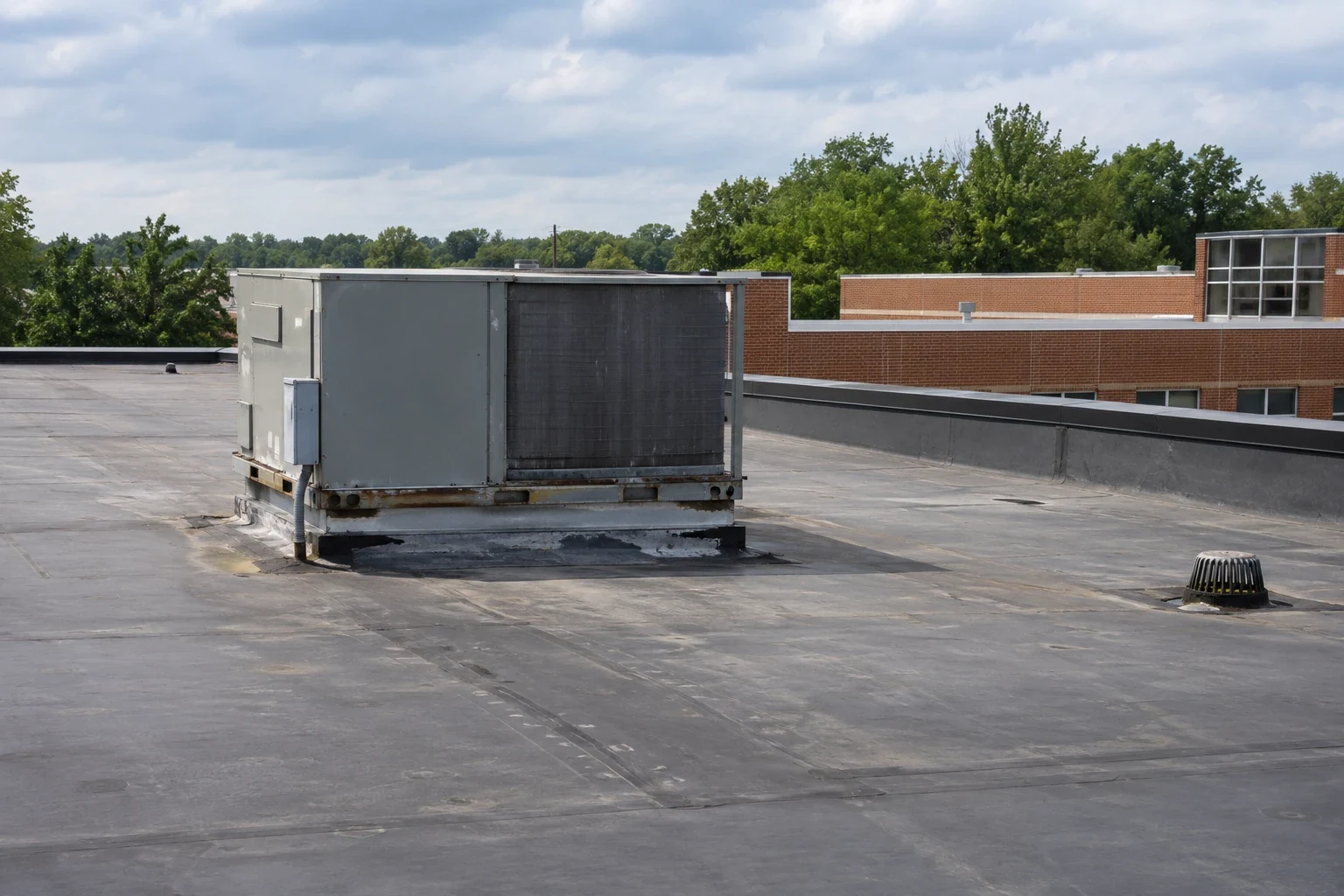
Mechanical equipment is shut down and flashed on a schedule the maintenance lead approves. The plan lists every unit by location and the day it will be set back, so the building has cooling or heat before staff and students return.
Roof drains and scuppers are checked and flushed before the crew leaves each section. Flushing every drain before the crew leaves a section is a standing step, since a clogged drain would flood fresh work.
Pipe vents, exhaust fans and kitchen hoods on cafeteria roofs are flashed as each section closes. The food service director gets a call before the hood is shut down, and the shutdown is set outside lunch prep.
Phasing Across Summers and Campuses
Few districts can fund all their roofs in one year, and a roof capital plan shows the order. A phased plan puts the worst sections in the first summer and the rest in later ones, with temporary protection on unfinished areas through the school year. Each phase is a complete, dry building when the first bell rings.
Kingsport City Schools ranks among the city's larger employers outside industry. Sullivan Elementary School and Sullivan Middle School sit in the central part of Sullivan Gardens. Downtown Kingsport hosts branch campuses of Lincoln Memorial University and Northeast State, an Academic Village that a college roof plan treats the same way. For any such group of buildings, the plan sorts them by roof age and condition before sequencing.
Gray, in Washington County, hosts a Northeast State Community College extension campus, and the same phasing approach applies to a small extension building as to a full school, only compressed.
Inspection, Permit and Bid Requirements
School roofs need a Kingsport permit, and a reroof counts. Stamped plans go in with a PDF, and the Building Department checks them against the IBC and the IECC.
Public bidding adds its own steps. The scope and alternates are written to match the bid form, and the permit submittal goes in as soon as an award is made. Public agencies that share a building with the district see the same plan.
Weather Windows in a Short Summer
Expect rain in a summer schedule: Kingsport records wet weather on about 133 days a year and totals near 45 inches. We build a buffer into each phase and set a go or no-go time each morning. A section that cannot be dried in by dark is not opened.
Severe thunderstorm warnings out of NWS Morristown have named 60 mph gusts and hail. The plan lists what comes off the roof when one posts: rolls strapped, loose material cleared, protection checked before the crew leaves. With highs of 104 F on record, summer hours start early.
Lightning matters on a school roof. The plan names a stop-work rule for the crew when thunder is heard, and the crew lead walks everyone off the deck until the storm has passed.
Closeout and Punch List Before Opening Day
Each wing gets a final walk with the facilities lead, and the punch list is photographed. The district's closeout set reaches the facilities office before opening day: as-builts, product data, the warranty and the permit.
A late curb or vent cap is a line on the list with a date and a name until the facilities lead signs it closed.
The principal's office gets a one-page summary of what was done in each wing, which helps staff answer questions from teachers and parents in August.
Commercial Roofing Questions
How early should a district start planning a summer reroof?
Start the winter before. We recommend sample cuts and a scope in winter, bids in spring and material ordered before classes end. The permit submittal should go in as soon as the award is made, so the permit and the delivery arrive together.
Can a school reroof be finished in one summer?
One wing or a gym often can. A full campus is usually phased across summers. We recommend putting the worst sections first and leaving temporary protection on any area that is not finished by August.
How are students and staff kept clear of the work?
Fencing, a separate haul route and timed deliveries do most of it. We recommend a written safety plan that the principal and facilities lead both sign. Summer programs get a map showing which doors are open.
What does the district receive at closeout?
The as-built plan, product data, photographs, the punch list and the warranty file. We recommend delivering them before opening day so the facilities office can file them with the building record.
Does a district need a contractor license?
State licensing starts at $25,000: above that figure a roofer must hold a Tennessee contractor license. The license and insurance proof go in the bid package.
Can a recover save a summer?
Sometimes. A recover avoids tear-off noise and debris, but it needs a sound deck and dry insulation. We recommend sample cuts before the district commits to the schedule.