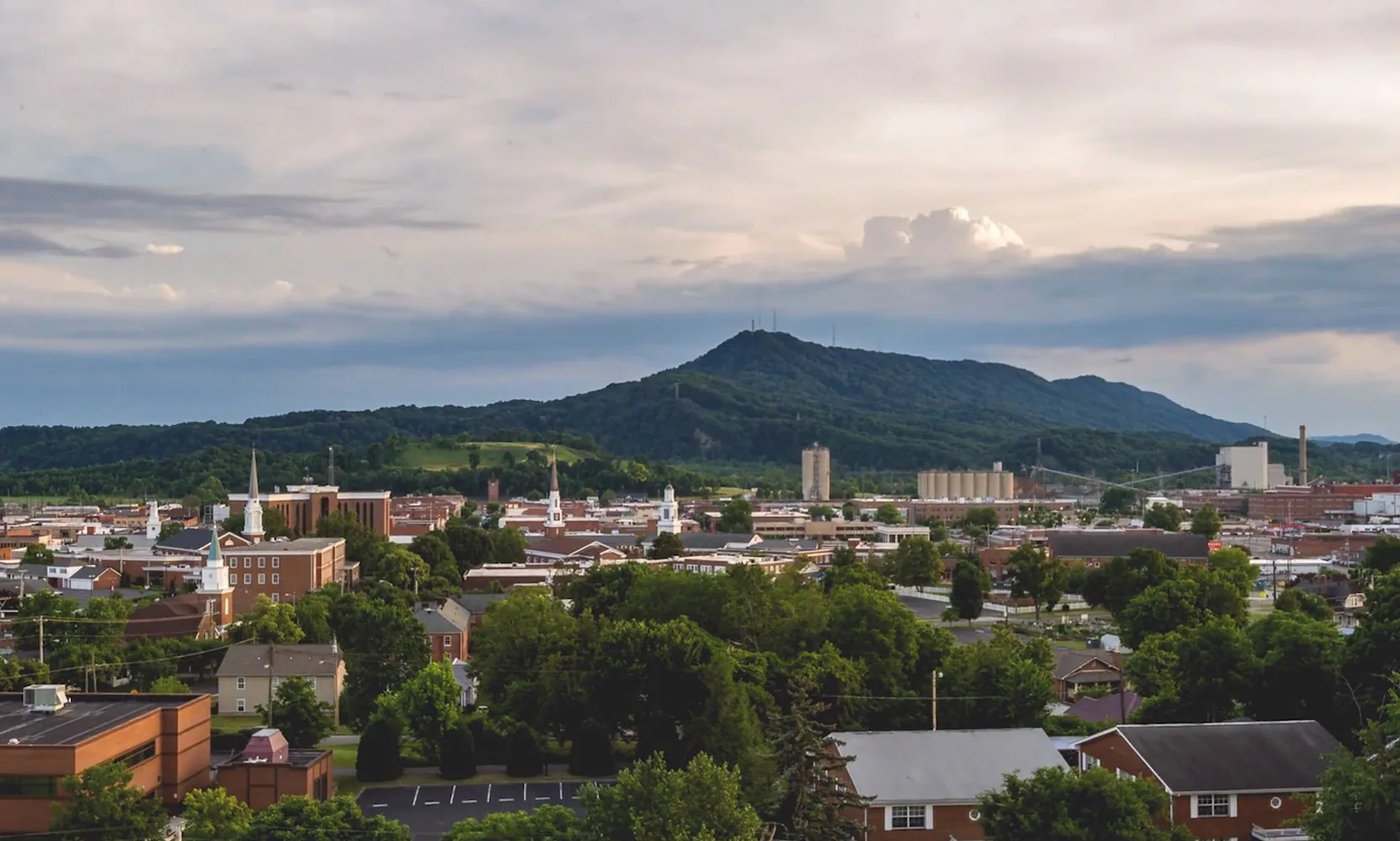
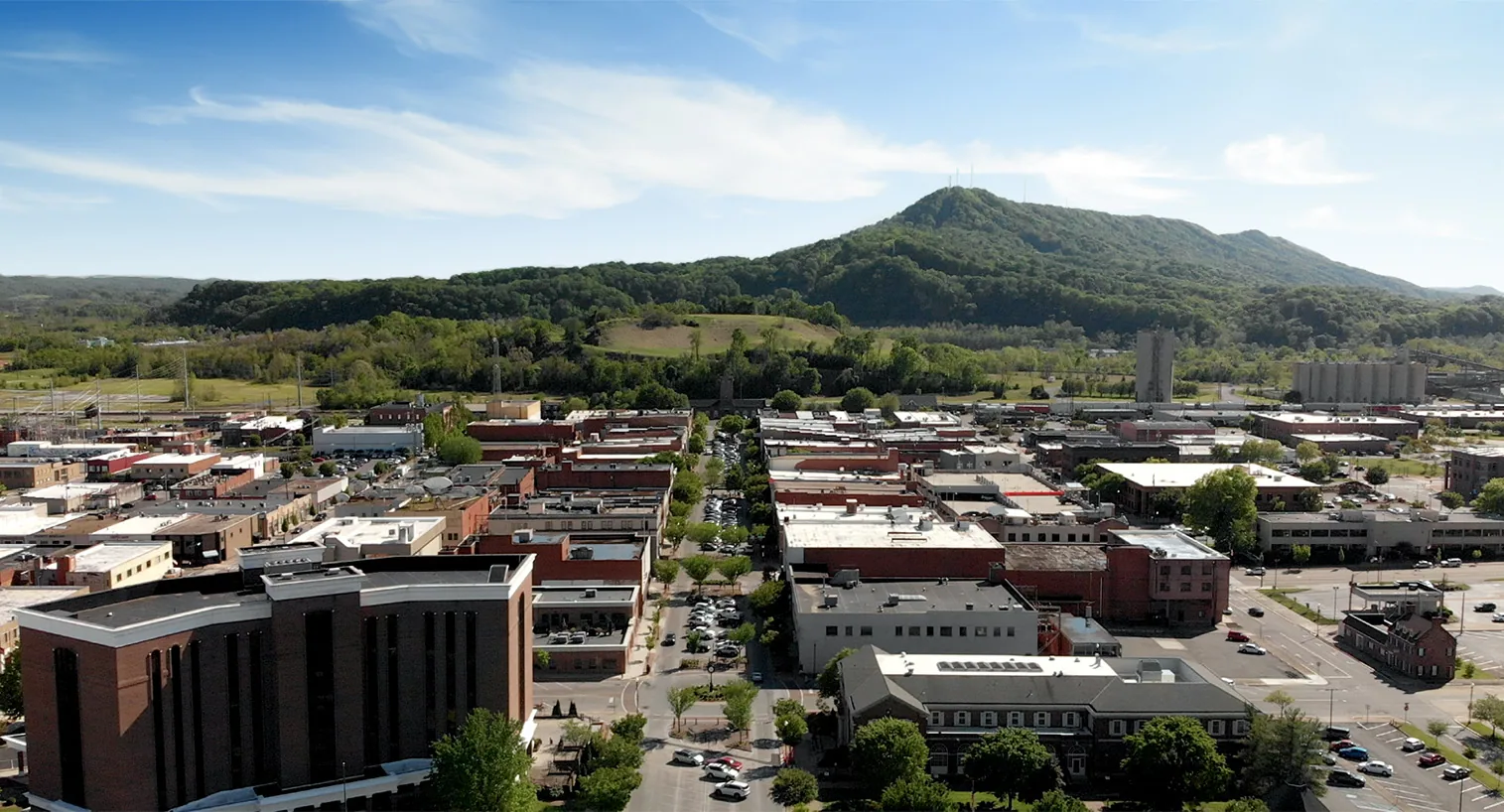
Choosing the road the trucks will use comes first on a Lynn Garden roof: Lynn Garden Drive, State Route 36, or U.S. 23 to the north. Lynn Garden is a Kingsport neighborhood whose boundaries match ZIP code 37665, and those two routes meet just to its north at Morrison City. We settle the haul route, the crane position and the laydown area before we settle the scope, because on a working road they decide whether a day of roofing is possible.
After the route we walk the roof, rank the findings and build a sequence the building's occupants can plan around.
Haul Route Between Two Roads
Lynn Garden Drive and U.S. 23 intersect at Morrison City just north of Lynn Garden, where a business district once stood. A truck coming from either road reaches a building through traffic that varies by the hour.
We mark where the trucks stop to unload, where the crane sits and where a material hoist can run without closing a driveway the business needs. Material is delivered in the early morning and staged against the building away from customer parking. If the building has a loading dock, the dock yard is kept open for the business's own freight, and our staging moves to the opposite wall.
What the First Walk Covers
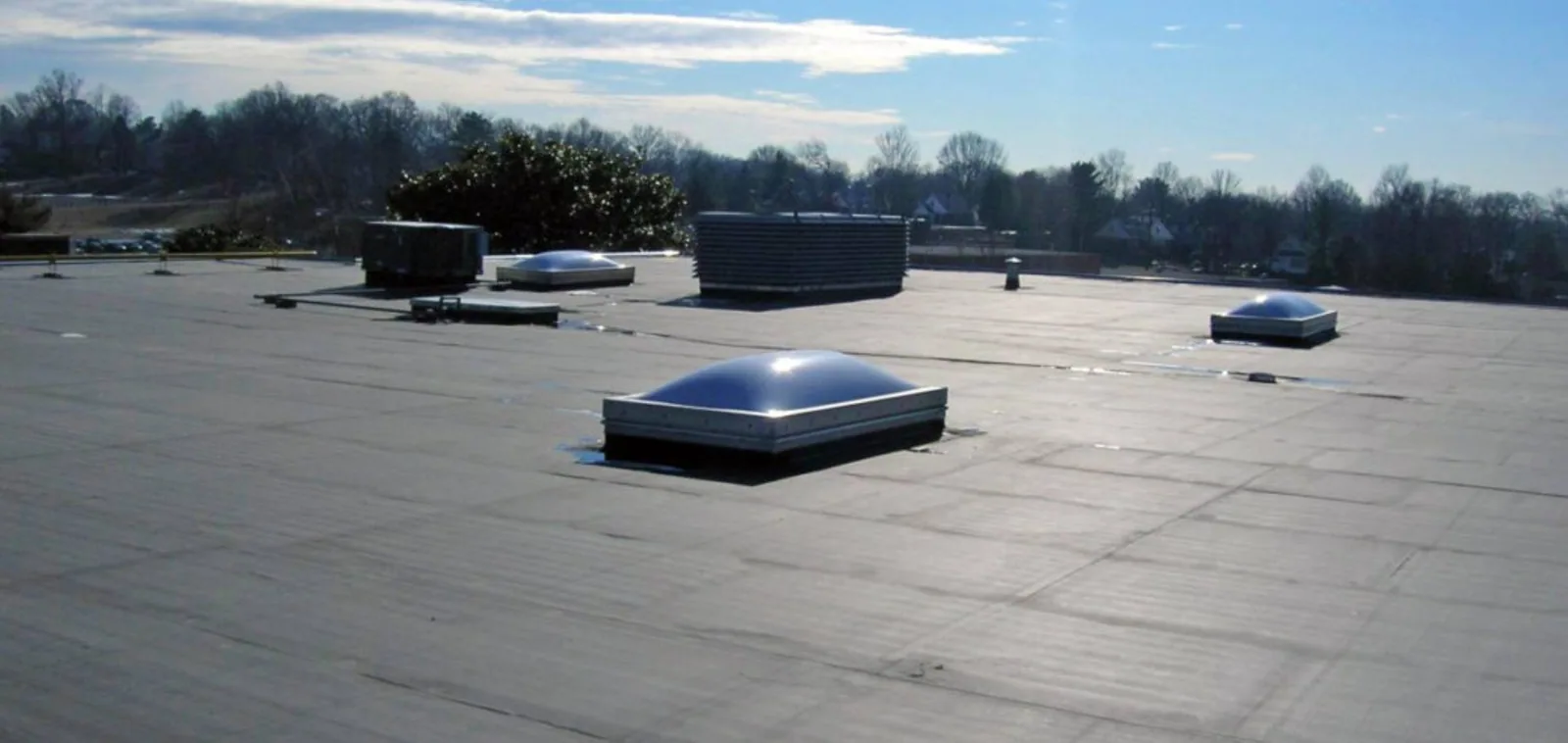
We do not assume a building's roof system until we are standing on it. A first walk records the membrane or metal type, its condition, the number of layers, the flashing at every wall and curb, and the drains and scuppers. Photographs are tied to a roof plan so each finding can be found again.
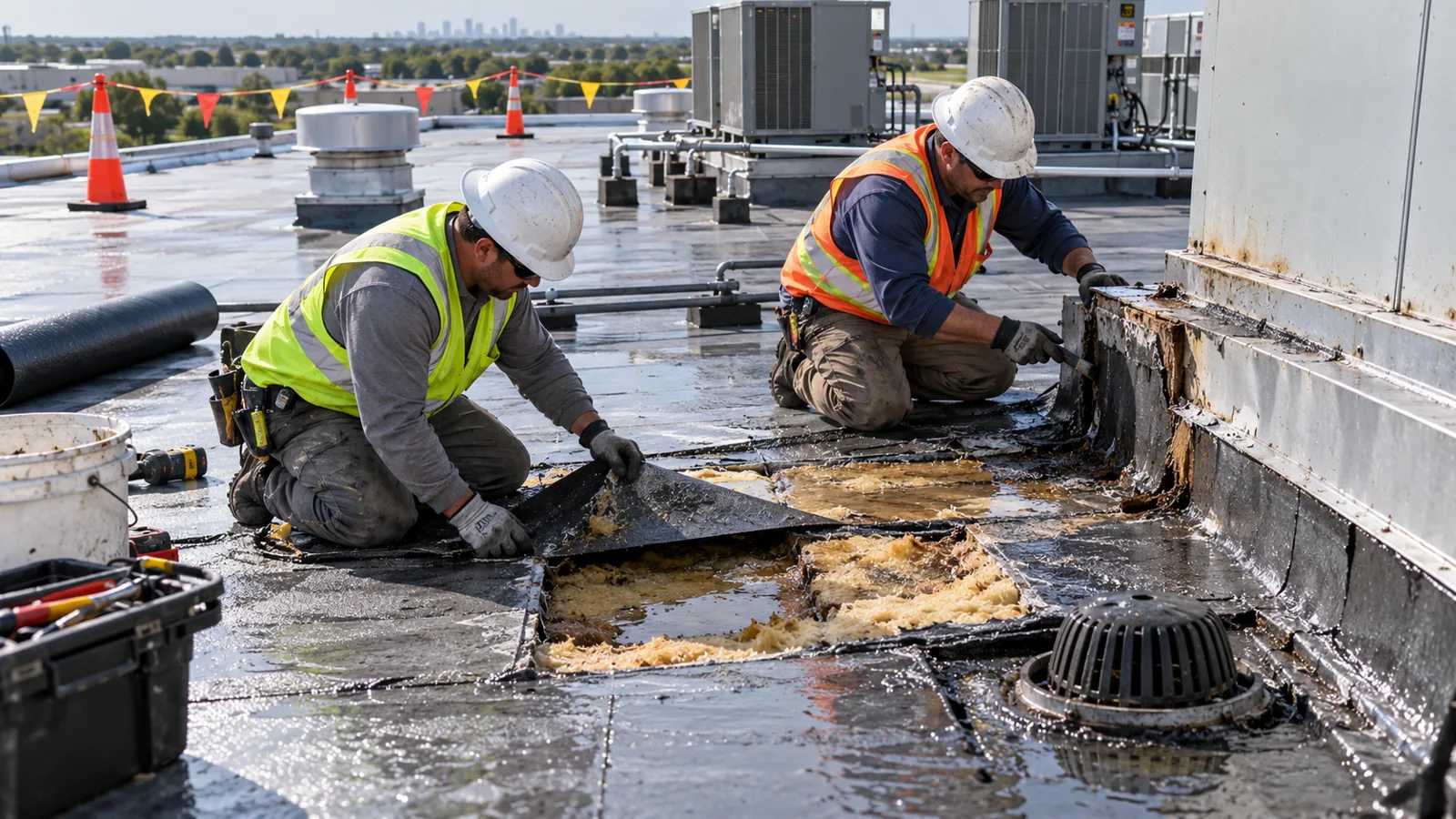
A commercial roof inspection produces a ranked list: items that need repair now, items to watch and items that point toward replacement. For buildings with moisture concerns, we add an infrared moisture survey and core cuts, which separate a roof that can be repaired from one that has to come off.
Roof access is part of the walk. We note where the ladder or hatch sits, whether a guardrail or fall protection is in place and how the crew carries tools and material up. If access is poor, the plan adds a ladder, a hoist or a rail, and the cost appears as its own line.
Sequence for Repair, Recover or Replacement
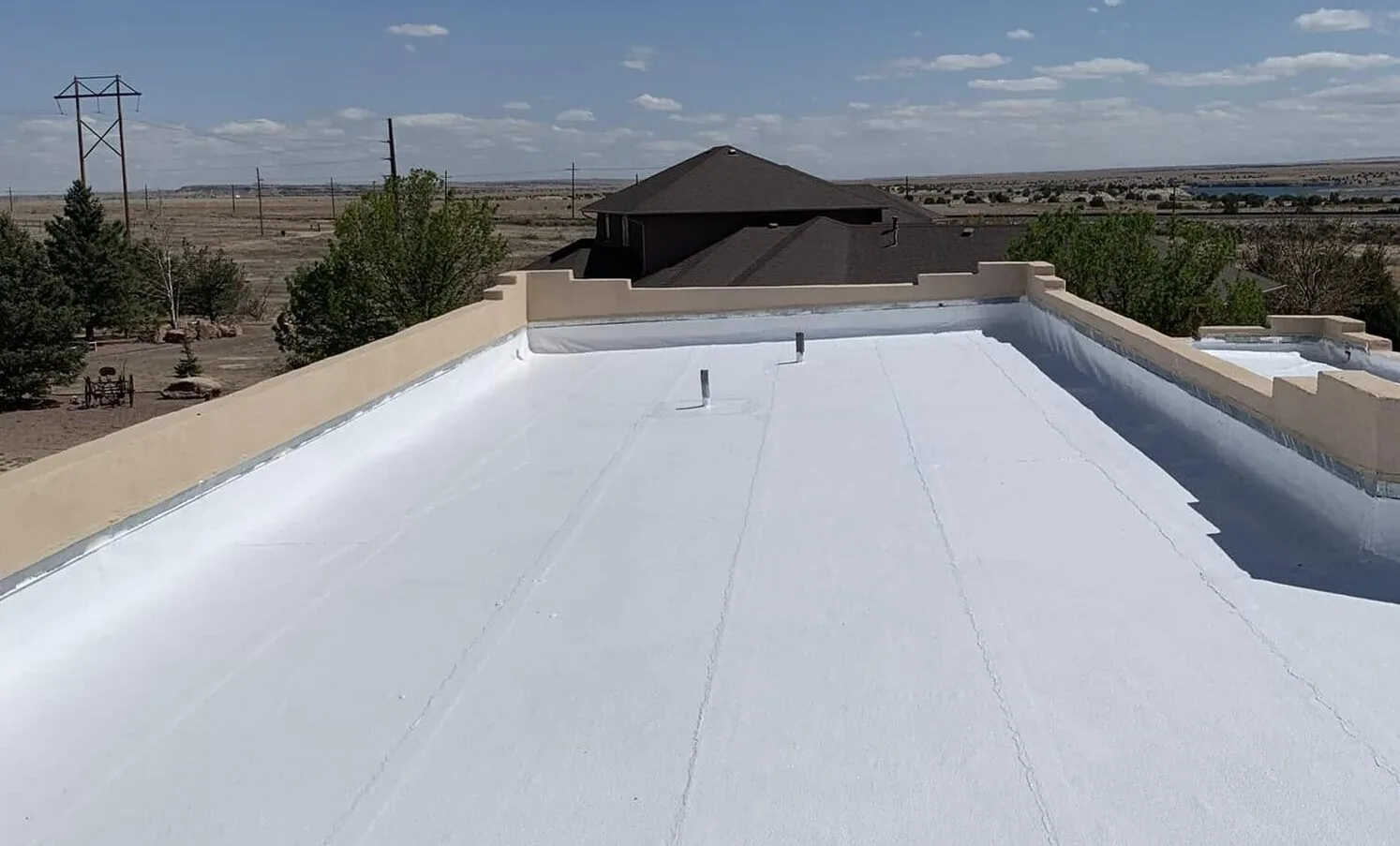
The sequence depends on which path the walk supports. Repair follows a numbered work order: drains first, then flashings, then seams and penetrations, with a photograph after each item. A roof recover adds cover board and a new membrane over a dry existing roof, and tear-off and replacement removes everything down to the deck.
In every case the roof is worked in sections, and each section is closed before the crew leaves. Tear-off, insulation, cover board, membrane and flashing go down in order, and the foreman checks the dry-in line before the crew leaves. The handoff to the next day is written in the daily plan.
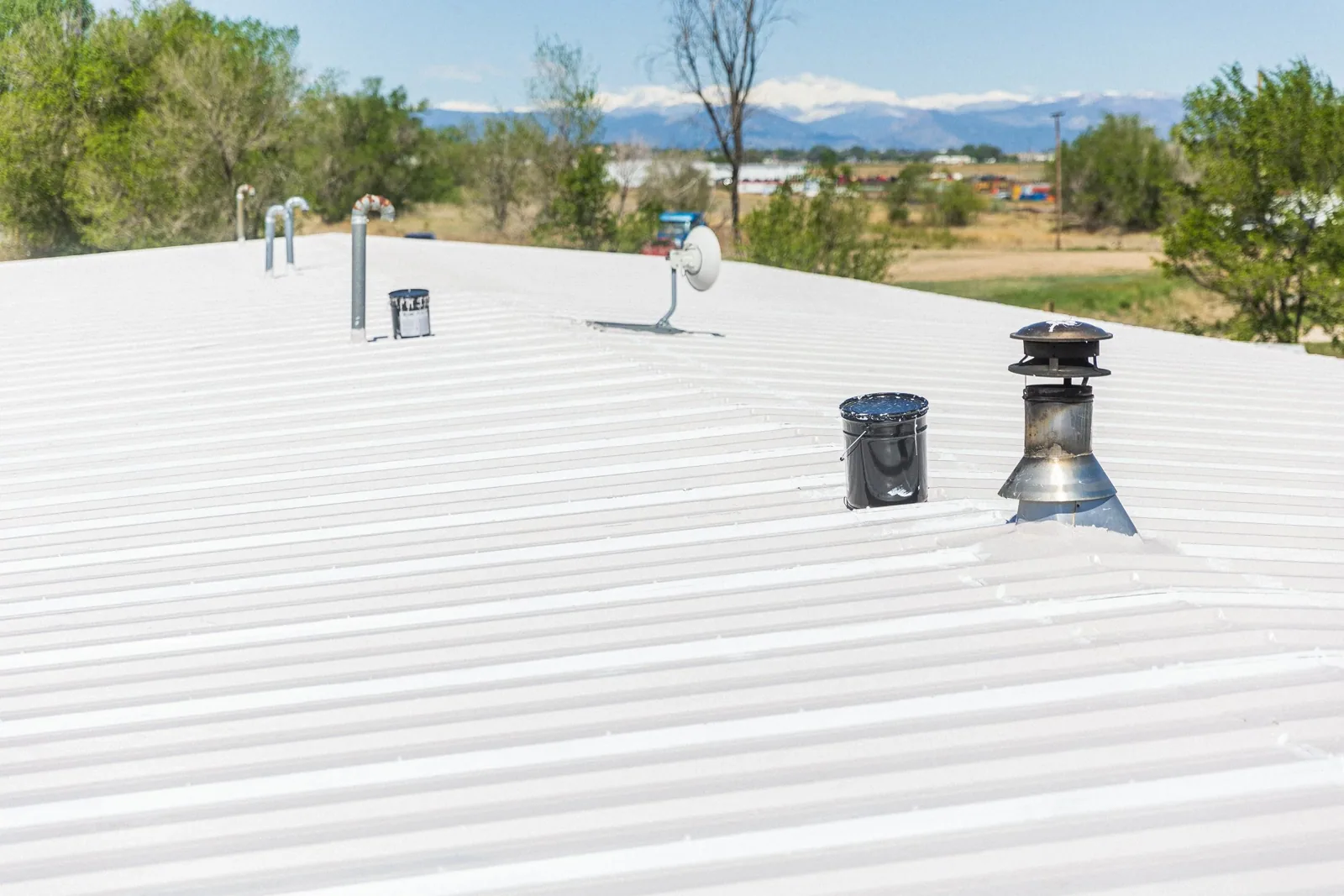
Penetrations get their own pass at the end of each section. Vent stacks, conduit, exhaust and equipment curbs are flashed, photographed and checked before the crew moves on. A curb flashed in the open is easier to inspect than one flashed after the unit is set, so the mechanical contractor's date is part of the sequence.
Phasing Around the Business Below
A business under the roof keeps its own schedule: opening hours, deliveries, shifts and any equipment that cannot be interrupted. We ask for that schedule at the start and set the noisy steps outside it. Where a space is sensitive to dust or fumes, we cover air intakes and schedule adhesive work for a quiet day.
Tenants receive notice a week ahead with the dates, hours and lot closures. We name one contact for the roof on the property side and one on ours, and the daily plan lists both. The goal is a roof job the business does not have to rearrange itself around.
Insurance and permits are also on the phasing list. We provide proof of coverage to the property owner before the first delivery, and we post the permit at the site. Small items, handled early, keep the first morning of work from turning into a conversation about paperwork.
Weather Windows and Drainage
Standing water ages a membrane faster than any other single cause, so drains, scuppers and ponding areas are the first things checked on a Lynn Garden roof. Measurable precipitation falls here on about 133 days a year, and that frequency is why low-slope roofs shed water so often. Our drain and scupper work is booked ahead of the wet season, when a clog costs the most.
The Morristown weather office has issued Sullivan County warnings with 60 mph gusts and hail, and roofs are on its list of expected damage. After one, the crew walks the edges and leaves tarps and ballast at the roof until the section is closed. Adhesives, sealants and welds each have a working range, and the recorded extremes of minus 18 F and 104 F mean we check product data against the forecast before the heaviest steps.
Permit, Inspection and Closeout
A Lynn Garden reroof goes through the city permit process with a stamped plan set and a PDF for commercial filings. Contracts above $25,000 also need the State of Tennessee contractor license, plus proof of workers' compensation and general liability cover. Our filing is made while the materials are being ordered, and the inspection is set for the day a section closes.
The closeout file holds a numbered punch list, flashing photographs and a roof plan for the owner. Each item gets a photograph, a responsible party and a close date, and the list stays open until the owner signs the last line. Warranty documents are filed with it, along with the maintenance conditions the manufacturer requires. Properties in neighboring Morrison City and Colonial Heights can be set up in the same file format, and the site plan, the roof access points and the turnover calendar are what we need to begin.
Commercial Roofing Questions
Which road should be used for roofing deliveries in Lynn Garden?
The one that leaves the building's own driveway free. We walk the site, compare approaches from Lynn Garden Drive and U.S. 23 and pick the route with the cleanest entry for a flatbed and a crane. The choice is written into the plan with the delivery times, so the business knows when trucks arrive.
What happens on the first walk of a roof?
We identify the roof system and its layers, photograph the flashings, curbs, drains and seams and mark every finding on a roof plan. The result is a ranked list of repairs, watch items and replacement indicators. Core cuts and a moisture scan are added where the findings suggest hidden water.
How do we decide between repair and replacement?
By the evidence. If the insulation is dry, the membrane is sound and the problems are confined to details, targeted repair carries the roof. If the insulation is wet across wide areas, or repairs repeat in the same places, replacement is the sounder choice. Core cuts and the moisture scan decide it.
Will the business have to close during roofing?
Not in most cases. Work proceeds by section with daily dry-in, noisy steps are kept outside opening hours and deliveries avoid the customer entrance. If a space cannot tolerate fumes or dust, we schedule that area for a quiet day and cover the intakes. The plan is shared a week ahead.