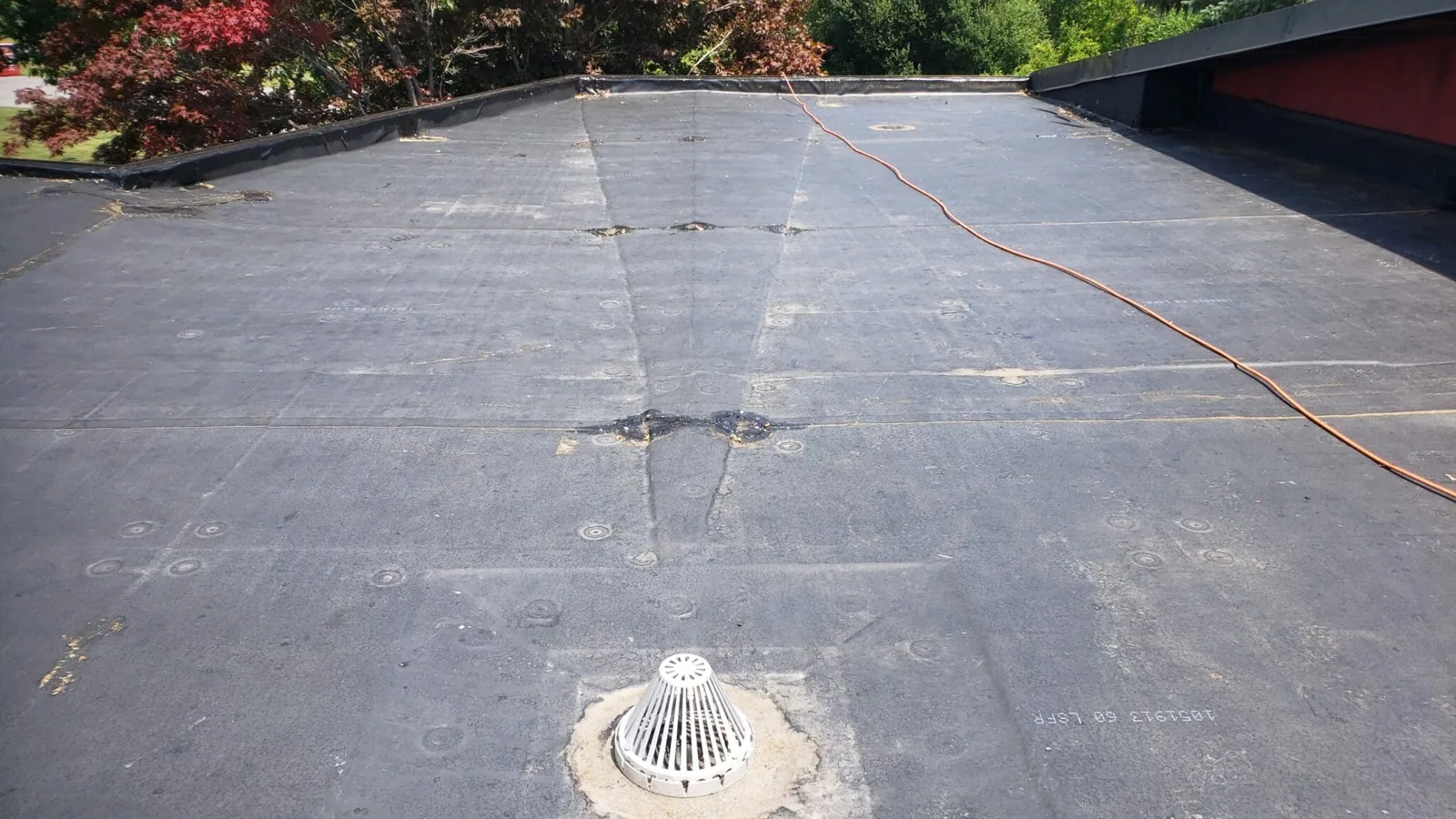
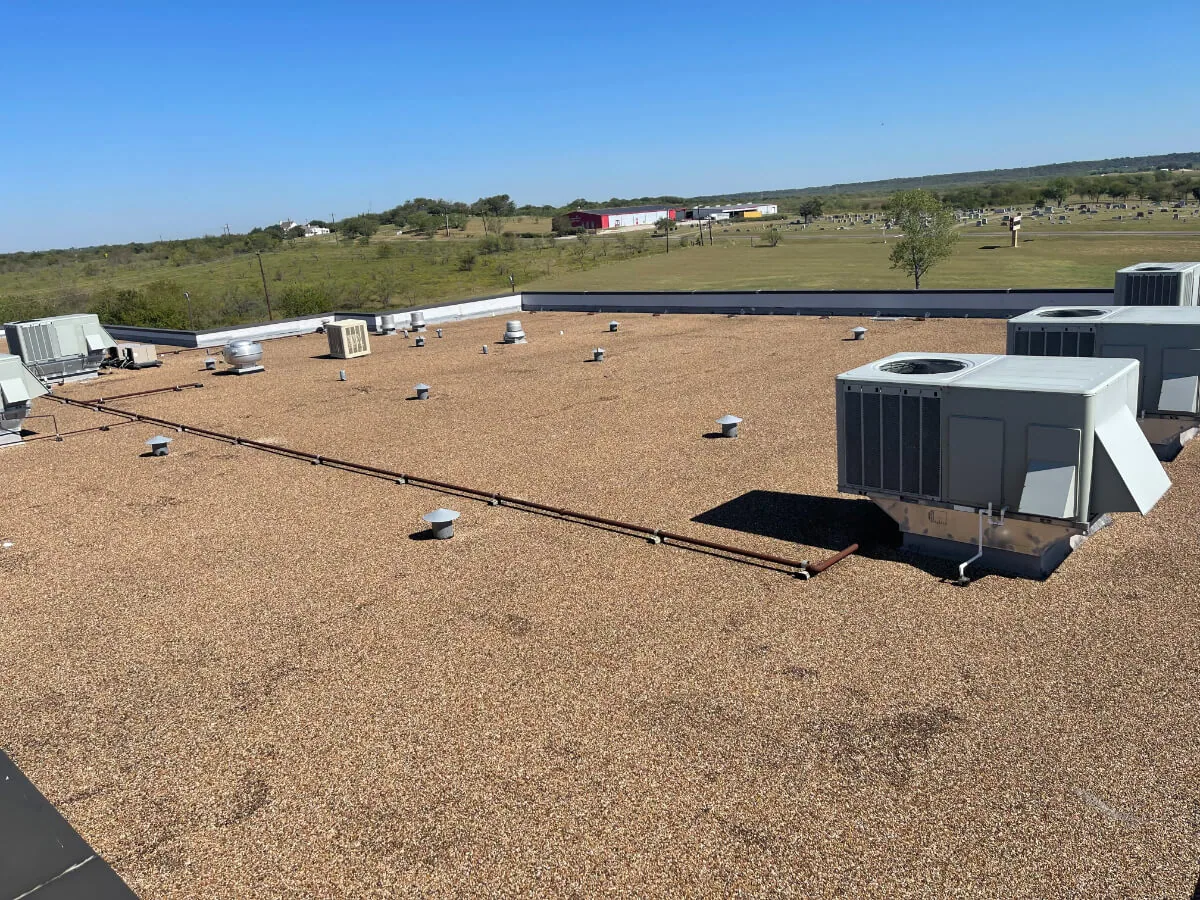
Built-up roof work begins with a core cut, because the number of plies and the amount of gravel set the whole removal plan. A roof with four plies and a heavy gravel surface takes longer to strip than one with a cap sheet. In Kingsport, TN we cut first, count second and write the tear-off sequence third.
With the layers known, the order is fixed: set up the kettle and the hoist, strip the gravel, remove the old plies, repair the deck, build the new plies, flash the details and surface the roof. Each step names the trade that follows.
Core Cuts, Weight and the Removal Plan
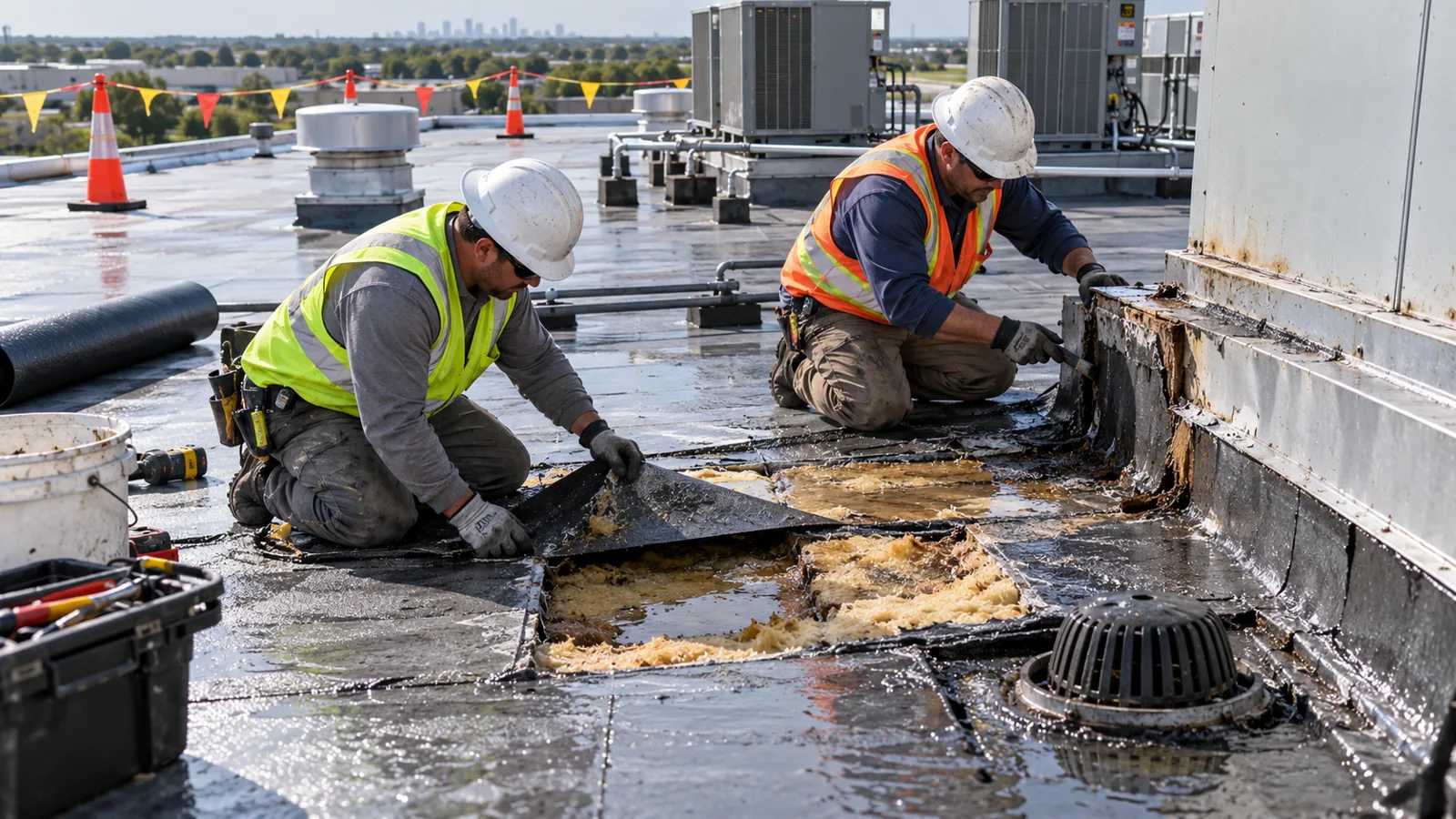
We cut cores at several locations and record the plies, the felts, the insulation and the deck. A moisture scan tells us where the insulation has taken on water. The results decide how much comes off and how much can stay under a recover.
Weight matters on a built-up roof. Gravel and several plies add load, and removal produces a lot of debris. We calculate the haul volume, size the dumpster and locate the chute or hoist. A haul route that crosses a loading dock or an entrance is changed before the first section opens. The structural engineer confirms the deck can carry the staged material.
Weather shapes the removal too. A stripped roof is an open roof, so no section is opened unless the forecast supports closing it. Morristown has put gusts of 60 mph and hail into Sullivan County warnings, and a built-up roof with loose gravel in that kind of wind throws stone. We stop gravel handling when gusts rise, and we sweep the roof edge before every break.
Kettle, Hot Asphalt and Safety Setup
Hot asphalt is applied from a kettle or a tanker, and it brings burn, fume and fire risks. The kettle sits at ground level or on a protected platform, away from air intakes and combustible material. Hot asphalt is lifted to the roof in sealed carriers or piped through a line. Crews wear protective gear, and a fire watch is posted.
The hot work permit names the kettle location, the temperature limits and the fire watch period. Where hot asphalt is not allowed, we price a cold-applied built-up system or a different membrane, such as EPDM. The decision is made with the site's safety office before the contract is signed, and the cost difference is shown in the bid.
Fume control matters on occupied sites. Hot asphalt fumes can enter air intakes and bother people nearby, so the kettle sits downwind of intakes on the day's forecast and a monitor watches the wind. If the wind turns toward an intake, the crew stops and the kettle is moved. The safety lead can stop the work, and every stop is logged with its cause and the time work resumed.
Building the Plies: Felts, Bitumen and Cap
New plies are laid in shingle fashion, each lapped over the one below, with hot or cold bitumen between them. The number of plies and the weight of each are set by the specification. The top layer is a gravel surface, a cap sheet or a coating, depending on the design.
The crew works in sections small enough to be finished in a shift. A section is not closed until the top ply is down and the edges are sealed. We check each ply for wrinkles, voids and dry spots before the next goes on. A built-up roof's strength comes from the stack, so a flaw in a lower ply cannot be corrected after the upper plies are on.
The method is a long-standing one on industrial buildings, and it applies to a manufacturing plant roof in the Phipps Bend park or the Tri-County park at Piney Flats.
Flashings, Drains and Edges
Flashings are the weak points of any built-up roof. They are built from the same plies, turned up the wall and finished with metal counterflashing. Inside corners, curbs and drains each get their own detail. We build them before the field is finished, so no section is left with an open edge.
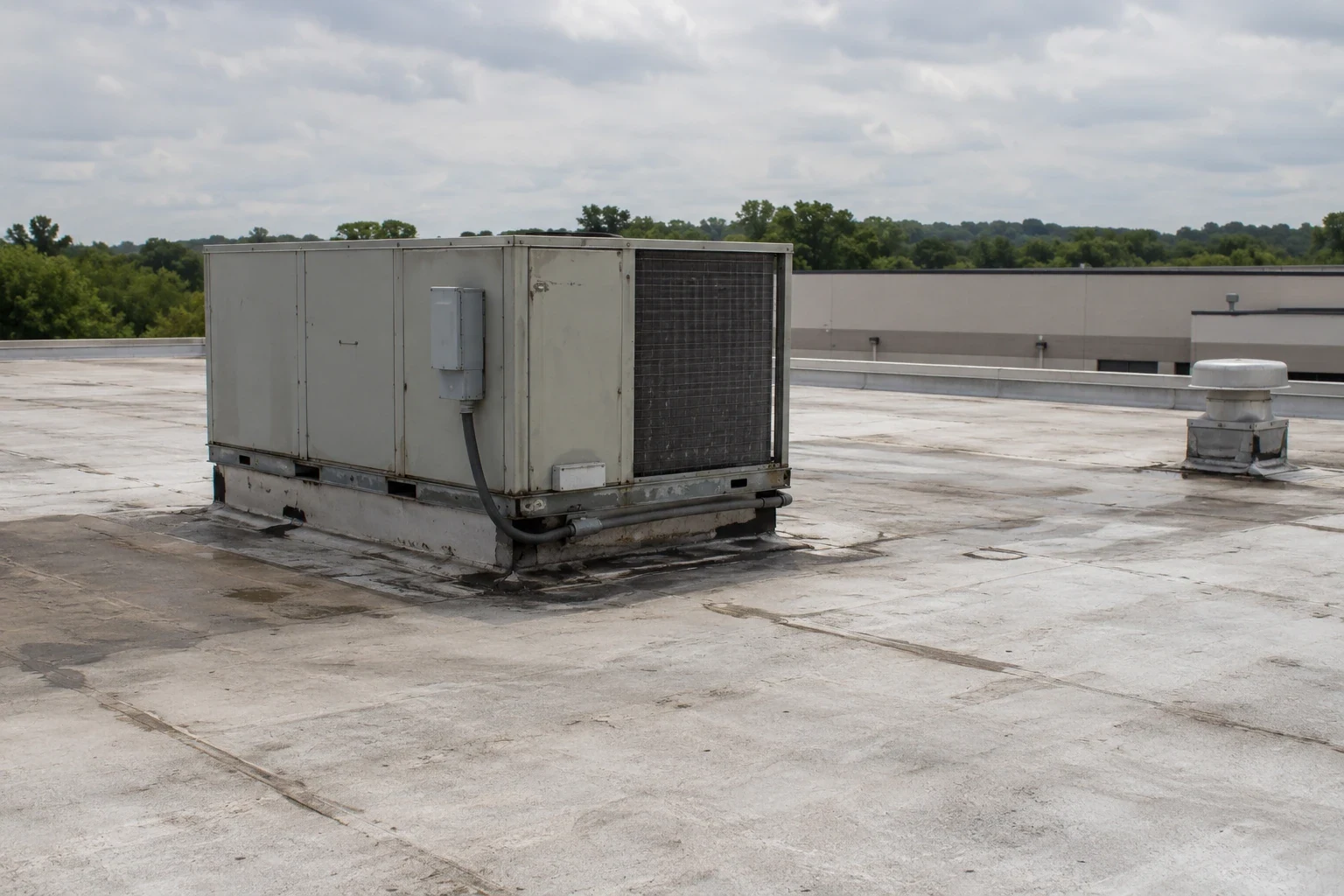
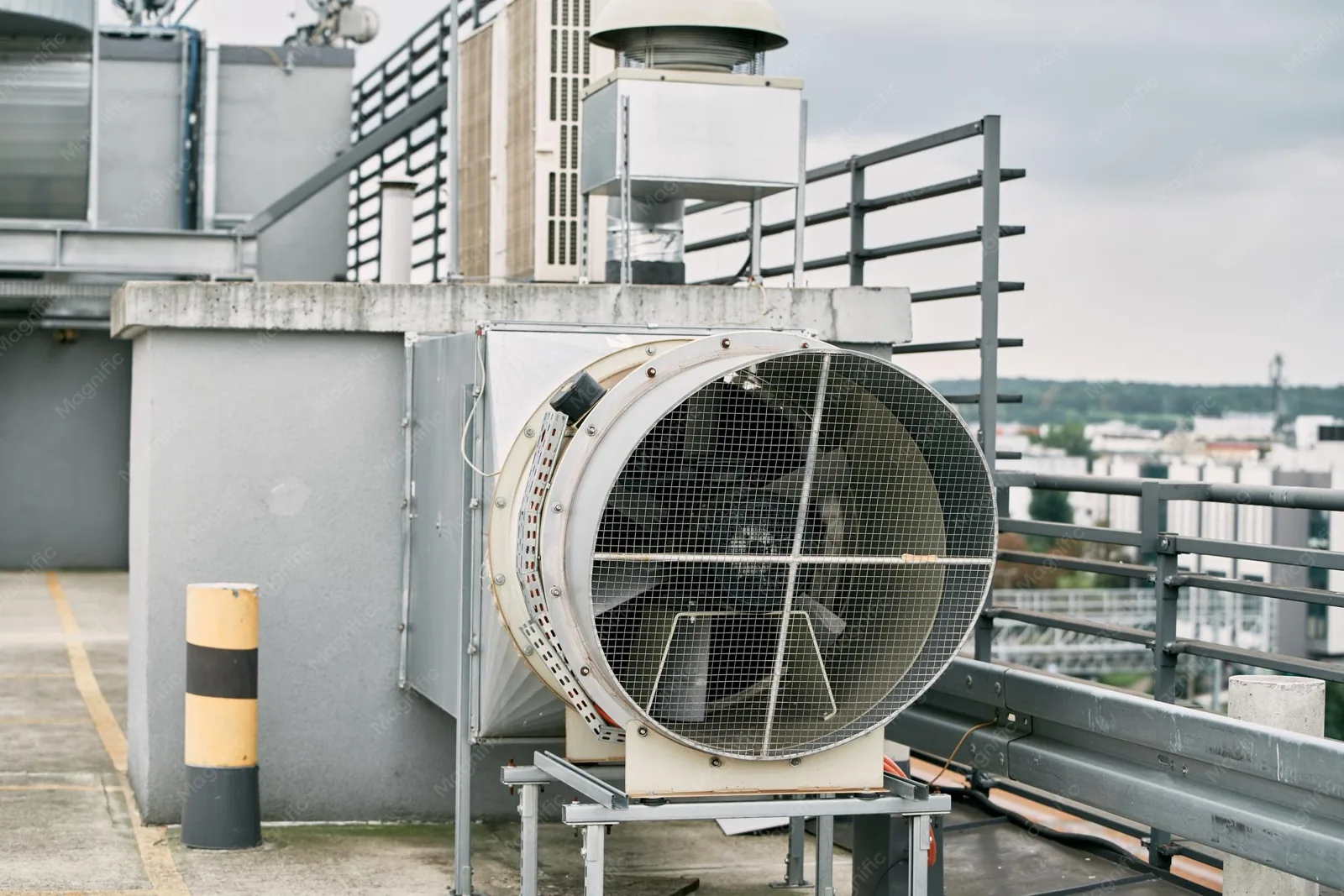
Edge metal and gravel stops are installed and sealed. Every drain gets a new strainer and flashing ring. Rooftop equipment is reset on finished curbs, with the mechanical trade called in advance, in the order used for curb and support work.
Renovation Projects and Shared Roofs
Downtown renovations underway in Kingsport include the Kingsport Grocery building and the Citizens Supply building, and the Dobyns-Taylor Warehouse is a conceptual renovation. A renovation can turn up a roof nobody has documented, and a core cut shows what each building has.
Where a renovation is under way, the roofer shares the site with other trades. Scaffolding, masonry work and mechanical installation all touch the roof. The phasing plan names who is on the roof each day, and a photo set at handover protects the new roof from later damage claims. The downtown Kingsport street grid sets crane and hoist locations.
Permit, Weather and Inspection
Kingsport's Building Department receives a built-up reroof as a stamped plan set and a PDF, and its reviewers work from the 2024 building and energy code editions. Once the contract passes $25,000 the Tennessee license and the insurance certificates ride along. The hot work permit is requested alongside the city filing, because the kettle position sits in both documents.
Asphalt and felts need dry surfaces, and cold stiffens bitumen. The record shows why the buffer days matter: about 133 days of precipitation a year, near 45 inches, and a range from minus 18 F to 104 F. The work is scheduled for milder, drier weeks, with a spare day in each phase.
Closeout and Punch List
At closeout the superintendent walks the roof with us. Each flashing, drain and edge is checked against the plan and photographed. Punch list items carry an owner and a date. The package includes the permit sign-off, the hot work log, the ply schedule and the warranty papers. If the owner wants a comparison, a modified bitumen system is priced beside the built-up option.
Commercial Roofing Questions
Why does a built-up roof need a core cut before a bid?
The number of plies and the amount of gravel set the removal plan and the haul volume. We recommend cutting at several locations. A bid priced without cores often changes when the real layers appear.
Can hot asphalt be used on an occupied building?
Only if the site allows it and the air intakes are protected. We recommend asking the safety office early. Where hot asphalt is banned, a cold-applied system or another membrane is priced, and the bid shows the difference.
How long does gravel removal take?
Time follows the volume and the haul route. Gravel is heavy and must be swept or vacuumed from the roof. We recommend sizing the dumpster and chute in the plan, and keeping the haul route away from entrances and docks.
What fails first on a new built-up roof?
Flashings, if they are rushed. They are built from the same plies but bend at corners and walls. We recommend inspecting every flashing before the next trade arrives and photographing it for the closeout package.
Does a downtown renovation change roof scheduling?
Yes. Other trades share the roof, and scaffolding or masonry work can damage a new roof. We recommend a daily roof schedule and a photo set at handover. The photographs show the roof's condition before later trades arrive.