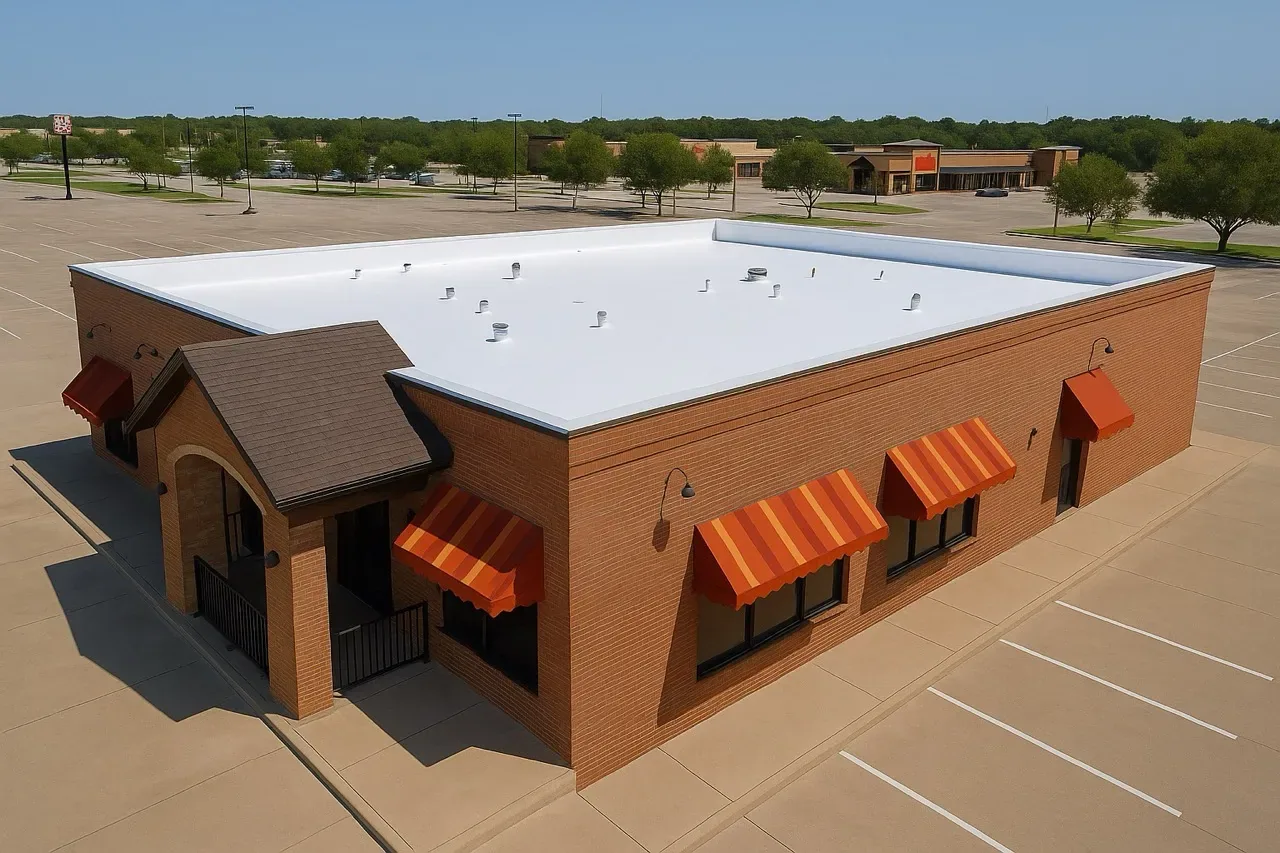
A KEE job begins with the discharge survey: which vents, stacks and fans put oil, fat or solvent on the roof, and how often. The answer decides whether KEE is the right sheet at all. In Kingsport, TN the building might be a food plant, a commercial kitchen or a process building, and each has its own list.
With the survey in hand, the sequence runs in order: prepare the substrate, lay insulation, install the sheet, weld the seams, flash the discharge points and test the work. Each step waits on the one before it.
Discharge Survey and Choice of Sheet
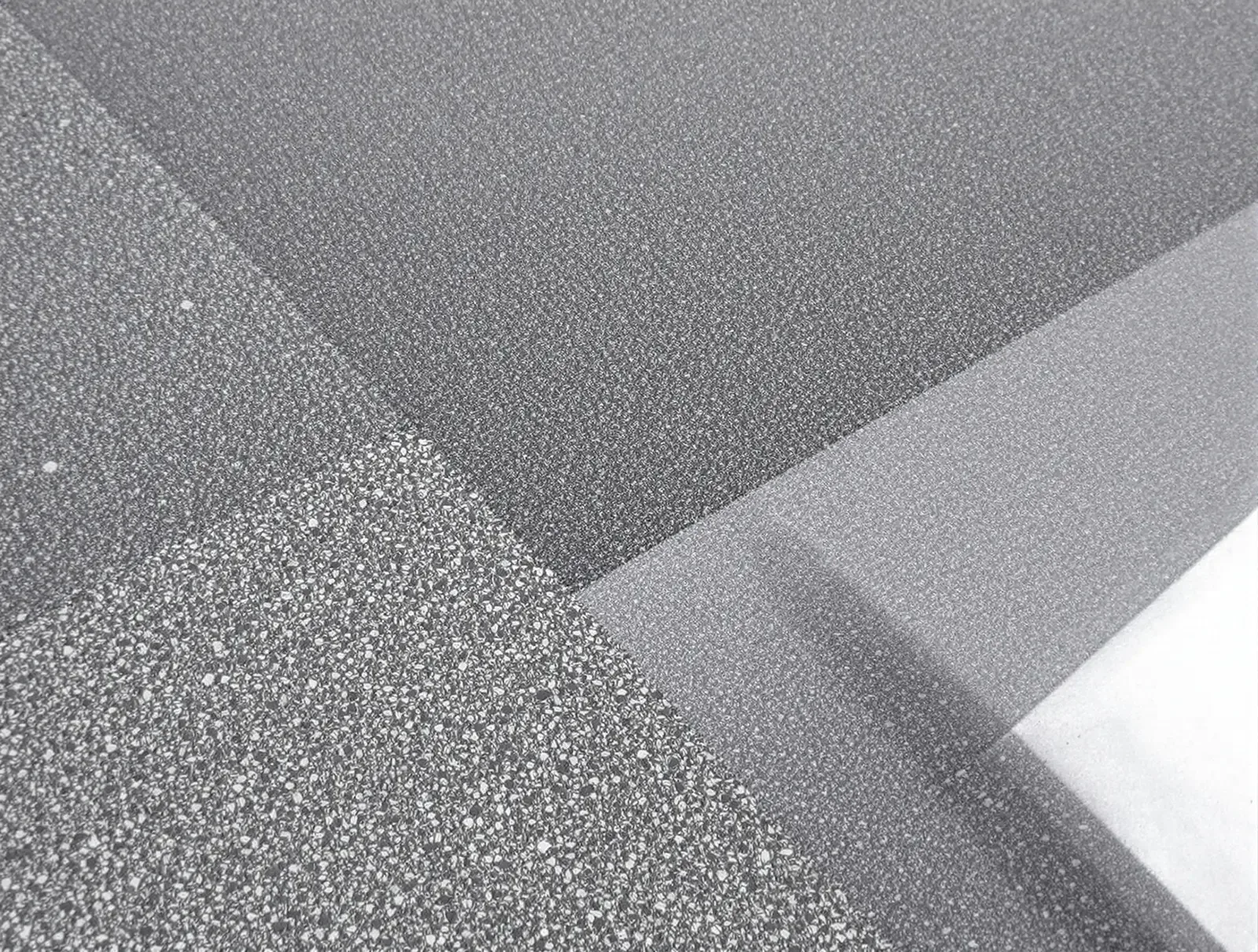
KEE is a PVC-alloy membrane formulated to resist animal fats, vegetable oils and many chemicals while staying flexible. It is chosen where standard PVC or other single-ply sheets would soften or swell under continuing exposure. The survey locates every discharge point and records what each puts on the roof.
We photograph the staining pattern and measure its reach. A single small fan may not justify KEE. Heavy continuous discharge across a large share of the roof may. The comparison against standard PVC and a modified bitumen system goes to the general contractor with the cost of each option, and the plant engineer signs off on the exposure data.
Substrate, Insulation and Sheet Layout
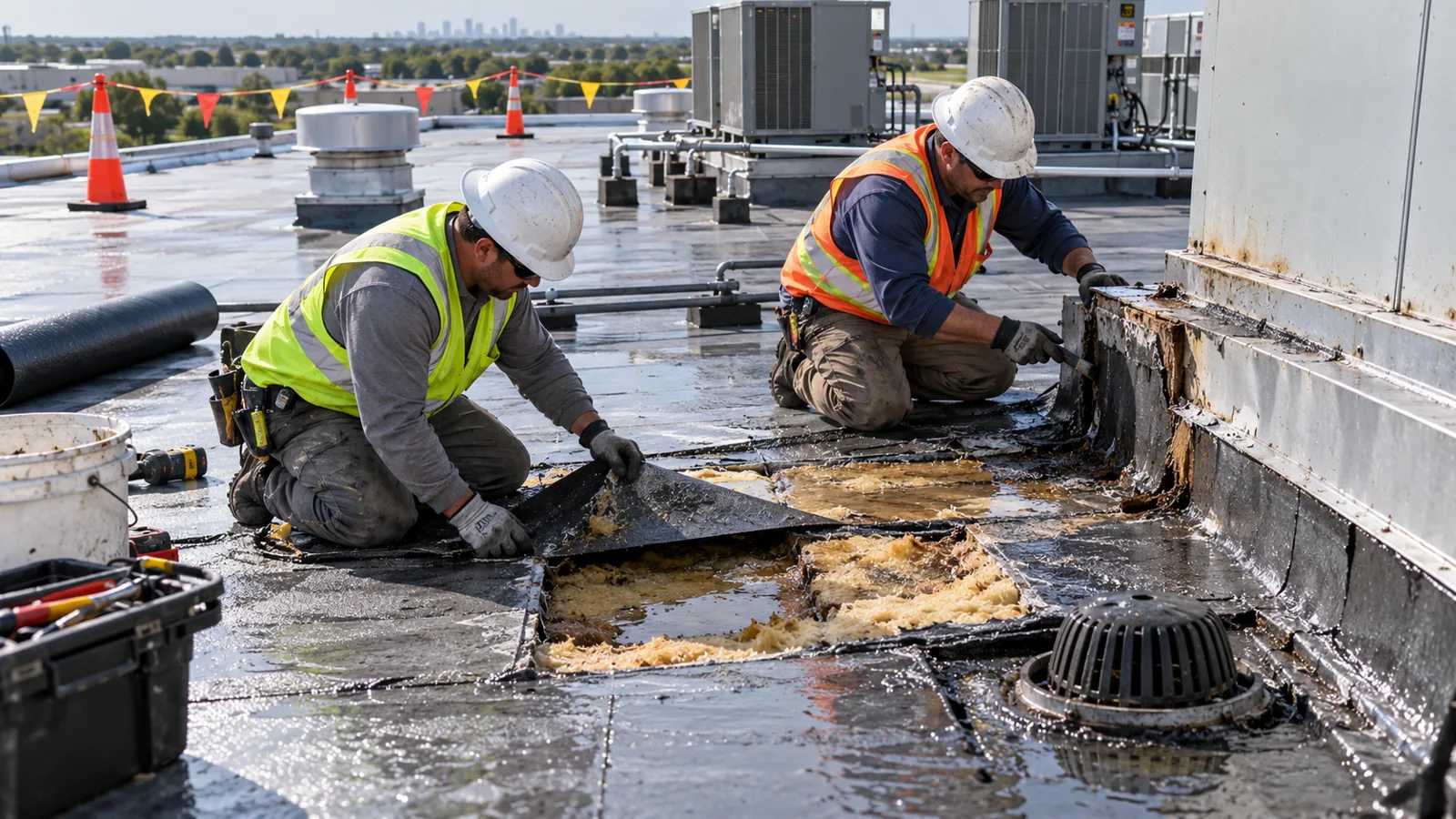
Core cuts show the existing layers. A moisture scan finds insulation that has taken on water. The results decide the tear-off, and the tear-off runs in sections that are closed by the end of each shift. Insulation goes down in staggered layers, with cover board where specified, and tapered pieces direct water to drains.
The sheet layout is drawn before rolls arrive. It places seams away from the heaviest discharge, and it puts prefabricated corners and boots where details occur. The laydown area for rolls sits clear of loading docks. The crane pick and the haul route are fixed on the site plan.
Drainage gets its own pass. Fat and grease carry into drains and harden, so we clear every drain, scupper and overflow and flush the lines where we can. A drain bowl coated in grease holds water, and standing water on a contaminated sheet is the worst case for any membrane. Where the pond returns after rain, we add a drain or build up the low area with tapered insulation.
Welding on Contaminated Roofs
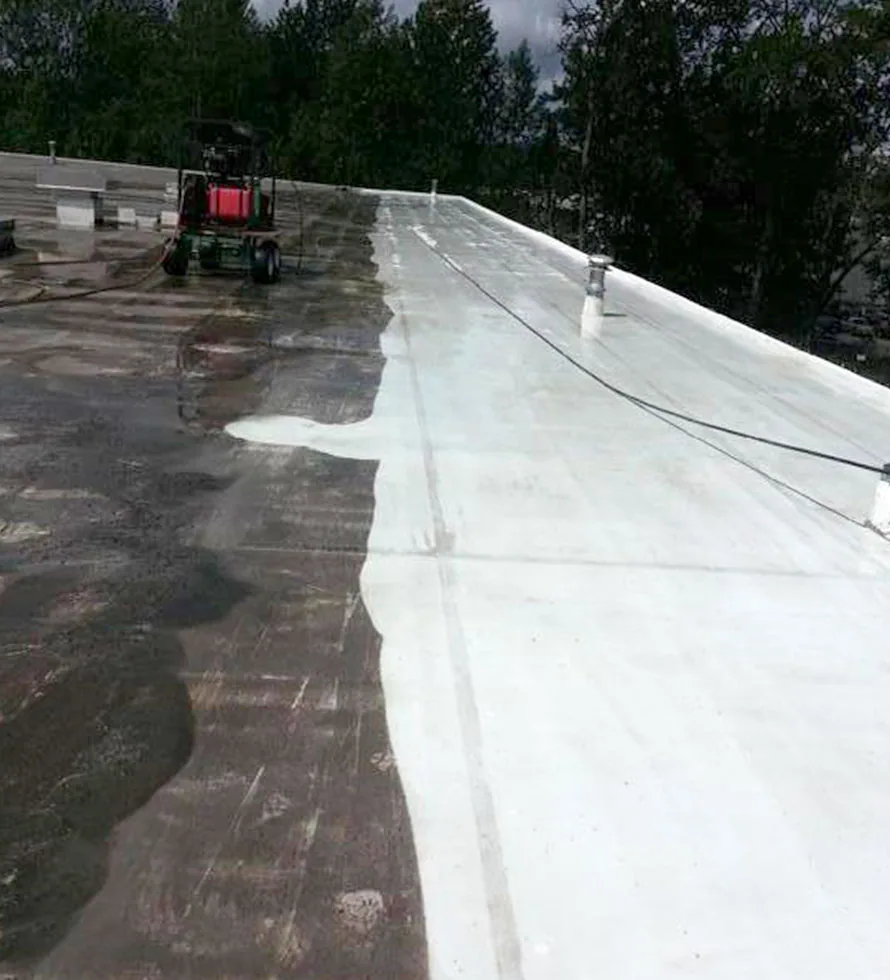
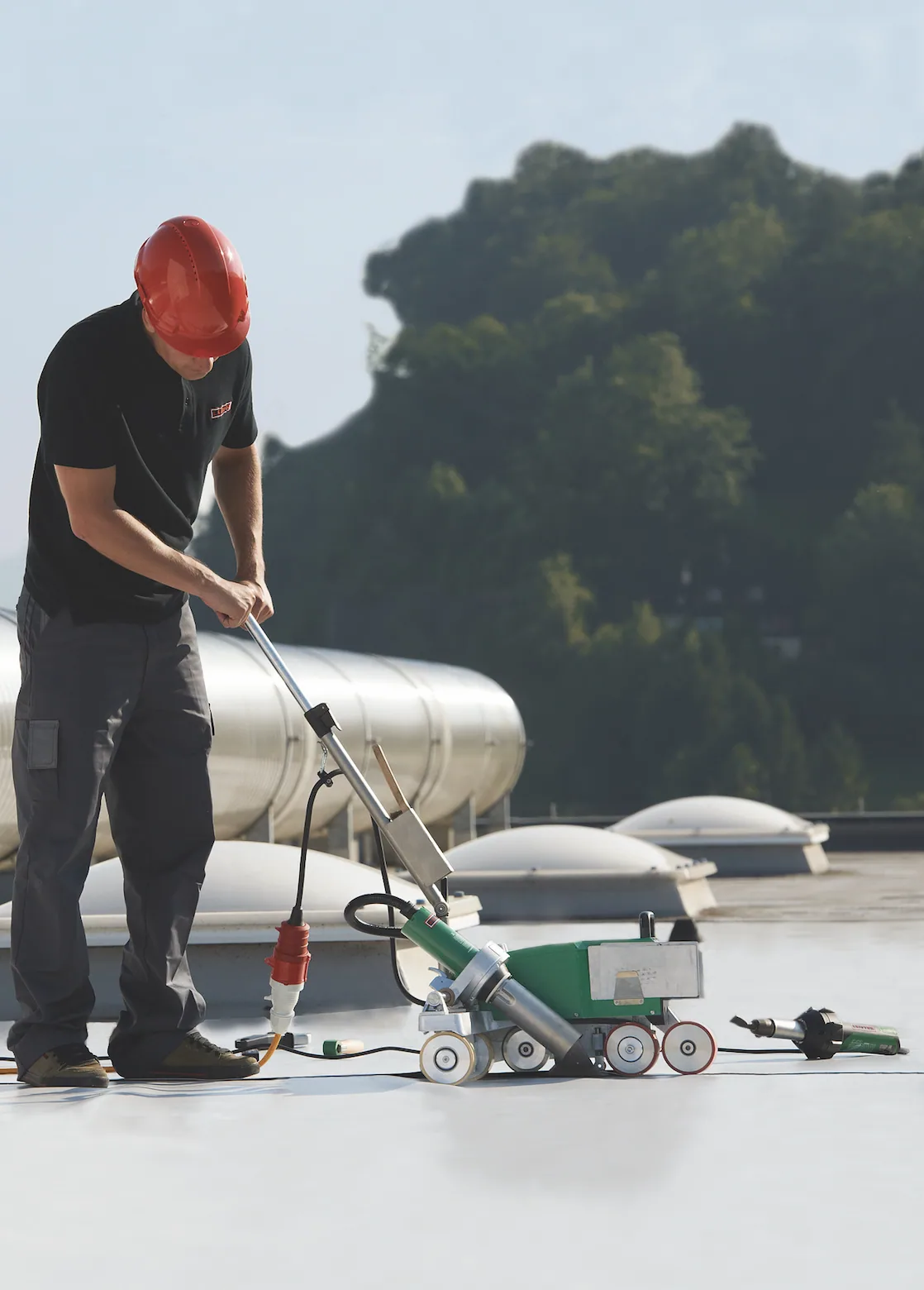
KEE is welded with hot air, like other thermoplastics. Welds need clean surfaces, and a roof that has taken oil for years is not clean. The crew washes the overlap with an approved cleaner and lets it dry before welding. Test welds open each shift and after any change in conditions.
An inspector runs a probe along the seam edge, looking for voids and cold spots. Results are logged by location, with a photograph. A weld found open is repaired and probed again before the shift ends. On a roof with continuing exposure, we recommend an extra probe check after the first season, because contamination can affect repairs more than new work.
Edges get the same care. Perimeter metal is set on a clean substrate, terminated with a bar and sealed. County warnings from Morristown have named 60 mph gusts and hail, so the edge attachment is checked at install and checked again at closeout. A well-welded KEE sheet held firmly at the edge gives the wind little to lift.
Flashing the Discharge Points
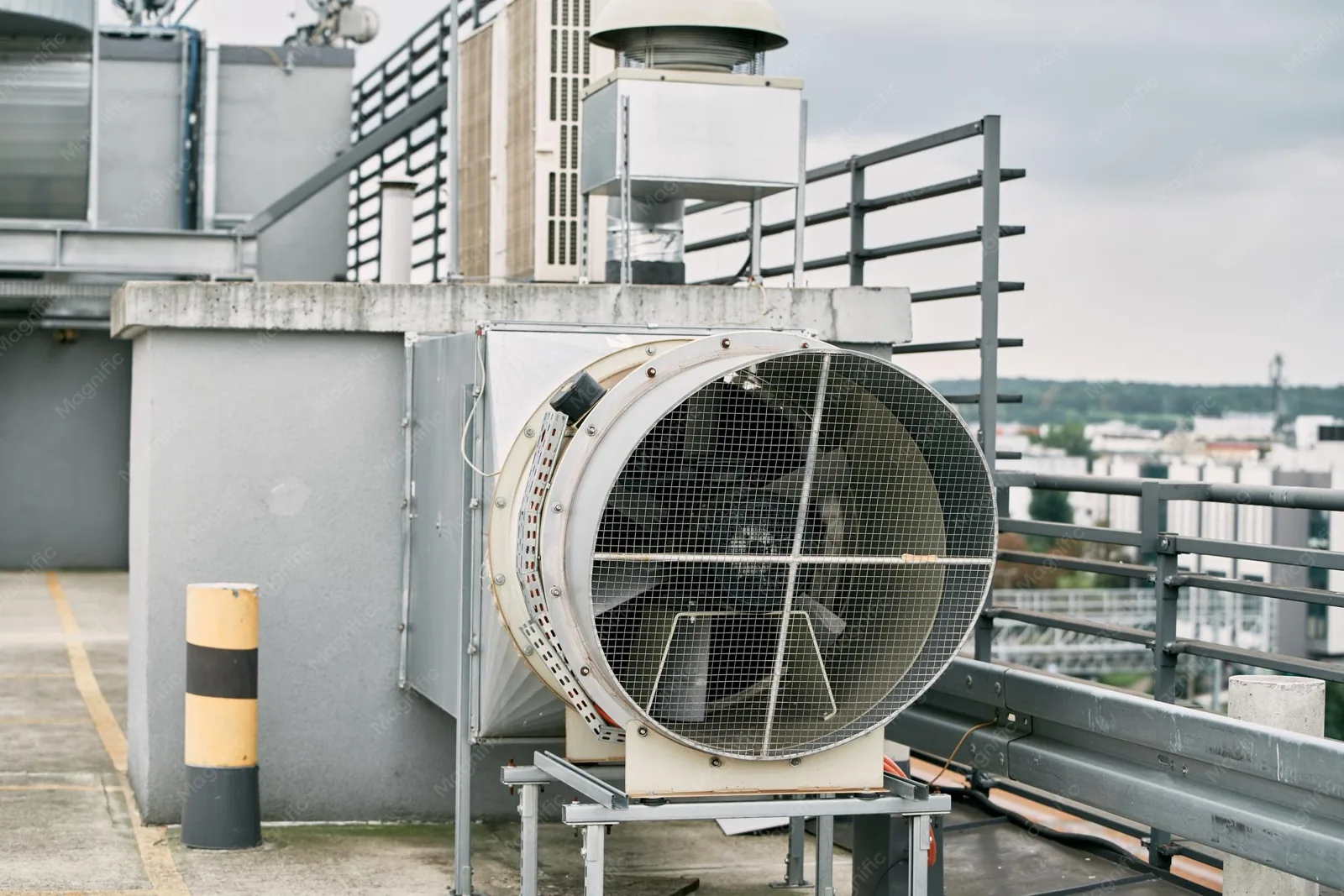
Fans, stacks and relief vents are the places where the roof meets the process. Each gets a curb or a boot sized to the pipe and the heat. Prefabricated pieces are welded in, and the details are checked before the field sheet is finished.
Splash guards and walk pads protect the sheet around each discharge. Drains near fans get strainers sized for the debris they will see. We coordinate with the mechanical trade so a fan is not reset on an unflashed curb. Fans reset on finished curbs follow the equipment curb order, and the drains around them get the same flow test as any roof drain and scupper job.
Phasing Around Food and Process Operations
Kingsport grew up as a company town, and chemical, paper and ordnance plants still sit beside its hospitals and stores. The Domtar mill site dates to 1916 and was converted in 2023, and Eastman Chemical's world headquarters is in Kingsport. The phasing plan follows the outage calendar and access rules of whichever site applies.
Food and process buildings have their own rules: product protection, sanitation, and limits on odors and dust. The plan names a work zone that keeps debris out of the process, sets quiet hours where needed and lists the person who can stop the work. Hot work permits are filed with the plan.
Permit, Weather and Inspection
Kingsport's Building Department receives a KEE reroof as a stamped plan set and a PDF. Above $25,000 the contractor must hold a State of Tennessee license and show workers' compensation and liability coverage, and a food or process owner may ask for sanitation and insurance forms of its own as well. The submittal goes in as the sheet is ordered.
KEE stays flexible when the thermometer drops, and the record here has touched minus 18 F, but a weld still needs a dry sheet, and rain falls on about 133 days a year for a total near 45 inches. Field work is set for milder weeks, with a rain buffer in every phase. Highs of 104 F bring the opposite limit for adhesives and for crews working on dark surfaces.
Closeout, Cleaning and Punch List
The plant representative and the superintendent walk the roof with us at closeout. Seams, flashings and drains are checked and photographed, and open items are listed with an owner and a date. The weld log, the discharge map and the warranty papers go into the package.
The discharge map guides cleaning. A roof under heavy oil exposure needs a cleaning visit each season, and the map shows which areas come first. Where exposure is light, TPO may be the better sheet. A manufacturer in Phipps Bend sends the same items.
Commercial Roofing Questions
When is KEE worth its extra cost?
When oil, fat or solvent exposure is heavy and continuing. We recommend a discharge survey first. A single small fan may not justify KEE, and a roof under process exhaust may. The survey data goes into the comparison with standard PVC.
How do you weld KEE on a contaminated roof?
We wash the overlap with an approved cleaner and let it dry before welding. We recommend test welds at the start of each shift and an extra probe check after the first season. Contamination affects repairs more than new work.
Does KEE stay flexible in a Kingsport winter?
It is formulated to stay flexible in cold weather, but welds still need dry sheets. Kingsport has recorded lows near minus 18 F. We recommend scheduling the main field work for milder weeks and using winter for survey and permits.
How do you protect product during roof work?
Work zones keep debris out of the process, openings are closed at the end of each shift and quiet hours are written into the plan. We recommend a named contact who can stop the work. Product protection is agreed before the first section opens, and the agreement is part of the written plan.
What belongs in the closeout package?
The weld probe log, the discharge map, photographs, the material list and the warranty papers. We recommend that the discharge map be a deliverable. It tells the facility team where to clean and how often.