Change control comes first on a data center reroof, because no roof work starts until the facility team has approved it as a risk to uptime. We ask for the change-control form, the critical-load map under the roof and the list of rooms that cannot take a drip. The phasing plan is then built to keep every protected room dry on every day of the job.
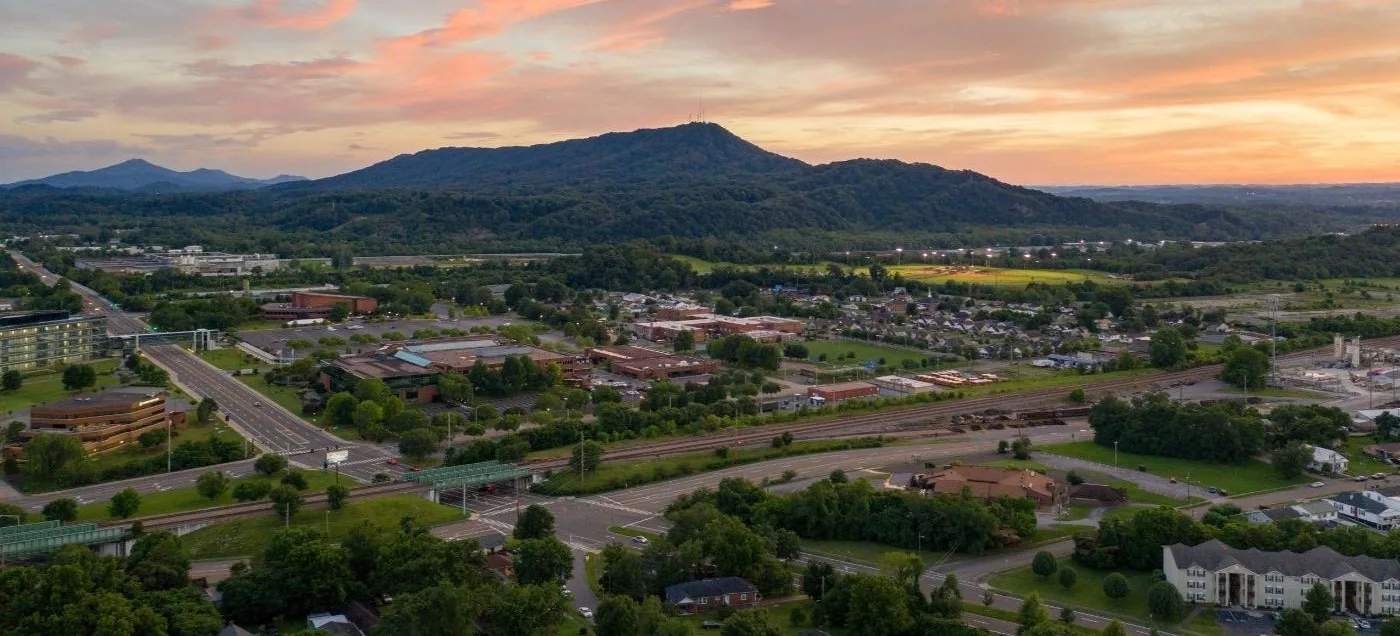
Data centers and equipment rooms near Kingsport, TN, may sit in an office campus, a technology park or a plant. The roof over them carries chillers, condensers, generators and exhaust, so it is both a weather barrier and an equipment platform. The sequence has to protect the first function while the second keeps running. A manufacturing plant with a control room, or a technology park with a shared equipment hall, raises the same questions, and the answers go into the same plan.
Change Control and Critical-Load Map
We obtain the critical-load map from the facility lead. It shows which roof sections sit over servers, switchgear, battery rooms and cooling plant. Those sections open last, on the driest days, and are sealed before the crew leaves. Sections over corridors, storage and offices go first.
The change-control approval names the dates, the crew, the equipment and the rollback steps. If a leak is found, who is called, who isolates the room and who starts the recovery? Those answers appear in the plan before the first tear-off. A facility team that has them on paper approves faster than one that is asked to improvise. The plan also names the day-by-day weather trigger: which forecast cancels a critical section, and who makes the call. We send the draft early, so the facility team can mark it up before the change-control meeting.
Security, Badging and Escort Rules
Data center campuses control entry. Crew names go in advance, badges are issued at the gate, and escorts walk the crew to the roof hatch. We submit identification, training records and the equipment list, then confirm the day's escort and the hours the crew may work.
Tools and materials are inspected at the gate. Phones and cameras are restricted in some areas, and photographs for the record are taken only in areas that allow them. The plan includes a procedure for a crew member who needs to leave the roof and cross a secure area, so no one is stranded or unescorted. Roof hatches are logged open and closed, and a hatch found open or unsecured is reported to security at once, with the time and the crew member who found it. A radio check at the start and end of each shift confirms every crew member is accounted for.
The same discipline applies on sites near Bristol and Johnson City, where interstate access along I-81 and I-26 brings crews and material in from several directions. The security office receives the route and the arrival window for each truck, so a gate guard never meets an unexpected vehicle. Anything that arrives outside the window waits at the gate until it is cleared, and the driver is told how long the hold will last.
Rooftop Equipment, Curbs and Vibration
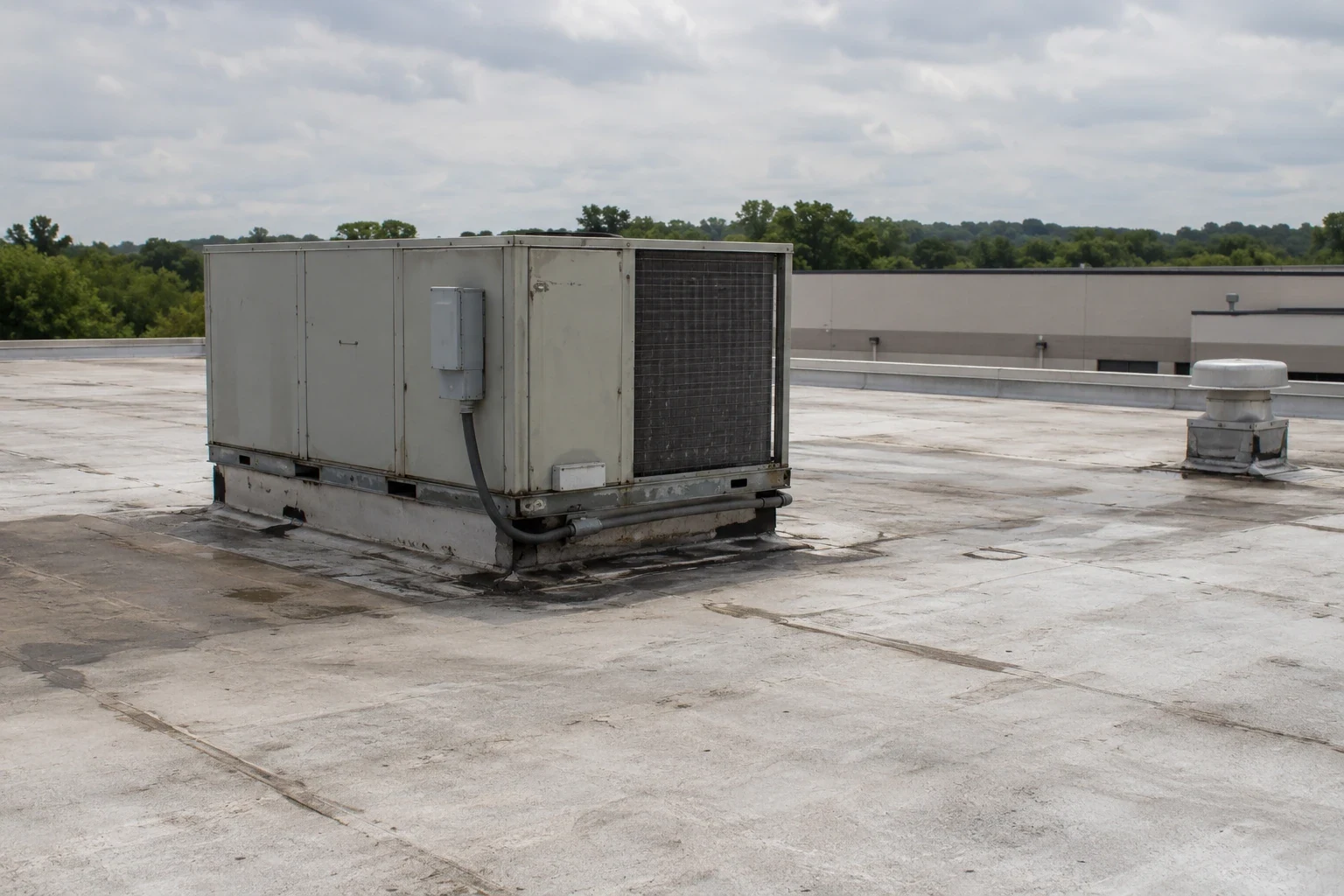
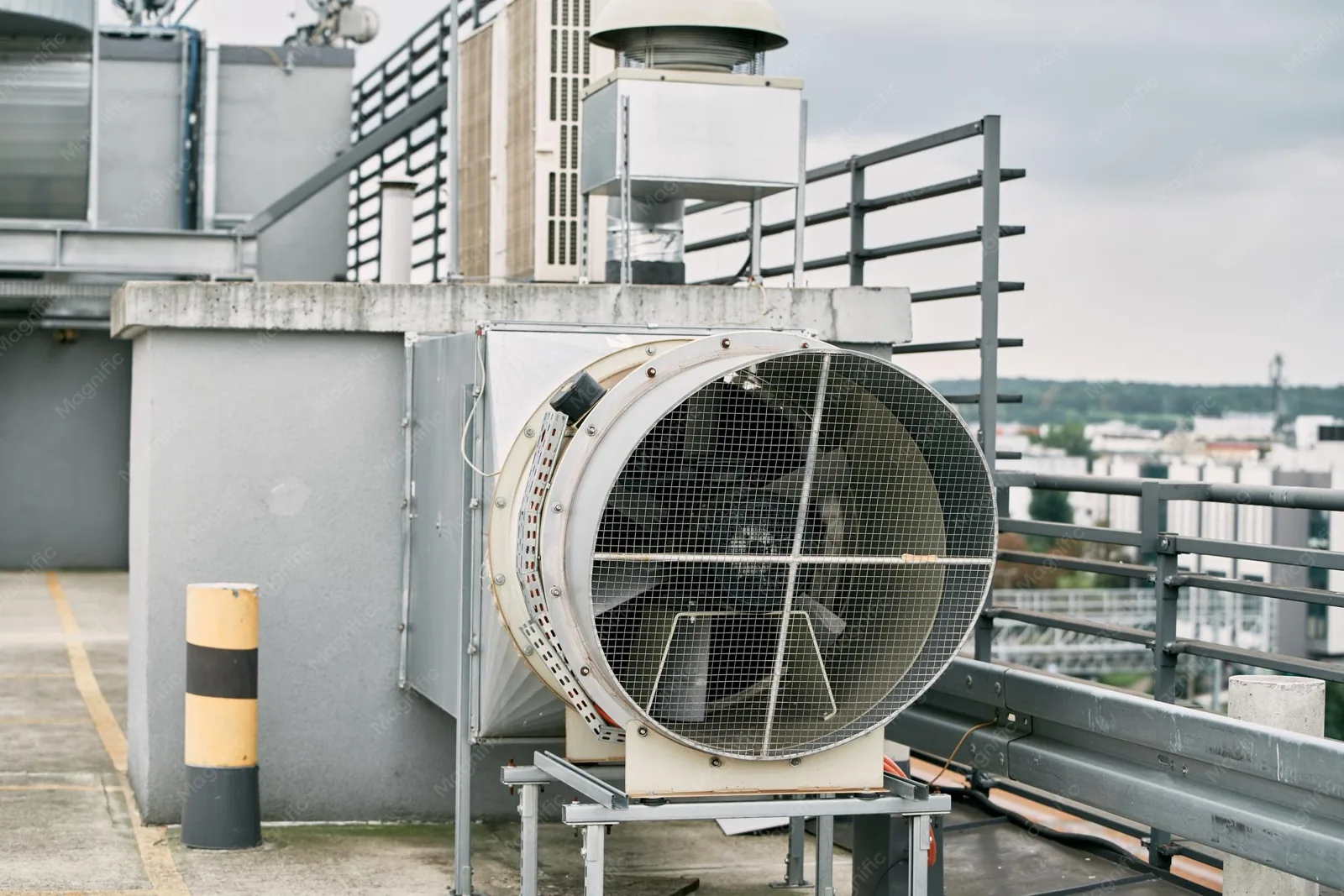
Chillers, dry coolers and exhaust fans sit on rails or curbs, and their flashing is the most likely leak point. We inventory each unit, check the curb height and flashing, and schedule disconnects only when the facility team approves a shutdown. The curb and support details are rebuilt with the unit still in place wherever possible.
Vibration from large equipment loosens fasteners and fatigues membrane at the curb. We check the sealant and the fasteners and add isolation pads where the contact is hard. Walkways to the equipment are protected with pavers or pads so service technicians do not wear through the membrane. Where a path crosses a seam or a drain, the pad is set so water still flows. The punch list records each pad and its position.
Moisture Survey and Dry-In Discipline
Before a data center roof is opened, an infrared moisture survey maps any existing moisture so the new work starts from a known condition. Cores at flagged spots confirm what is there. Findings go to the facility lead with a plan for each.
The dry-in discipline is stricter than on a warehouse. Temporary protection is staged before the section opens. A second layer of membrane or a tested temporary cover goes on at the end of each shift. A water alarm or a spotter below the section watches during the work, and the foreman checks the interior at the start of each day. If any sign of water appears, the section is stopped, the room is protected and the facility lead is called before the crew resumes.
Permit Submittal and Code
The permit file for a data center roof travels beside the change-control file. Our submittal states the roof assembly, the insulation thickness and the wind and fire ratings, and it carries the sealed drawings and PDF that the Building Department expects from a commercial filer.
We file while material is on order, and inspection stops sit in the phasing plan so the facility team sees each hold point on its own calendar.
Weather Holds and Hail Exposure
Rain inside a data center is an incident, so the weather rules are strict. The schedule holds a section closed whenever the forecast shows rain inside the work window, and the year's total near 45 inches makes that a frequent call.
Coils and fins on rooftop equipment are vulnerable to hail, so a warning triggers a check of each unit as well as the membrane. Every hold is logged, and the facility lead is told the same day.
Closeout and Turnover Record
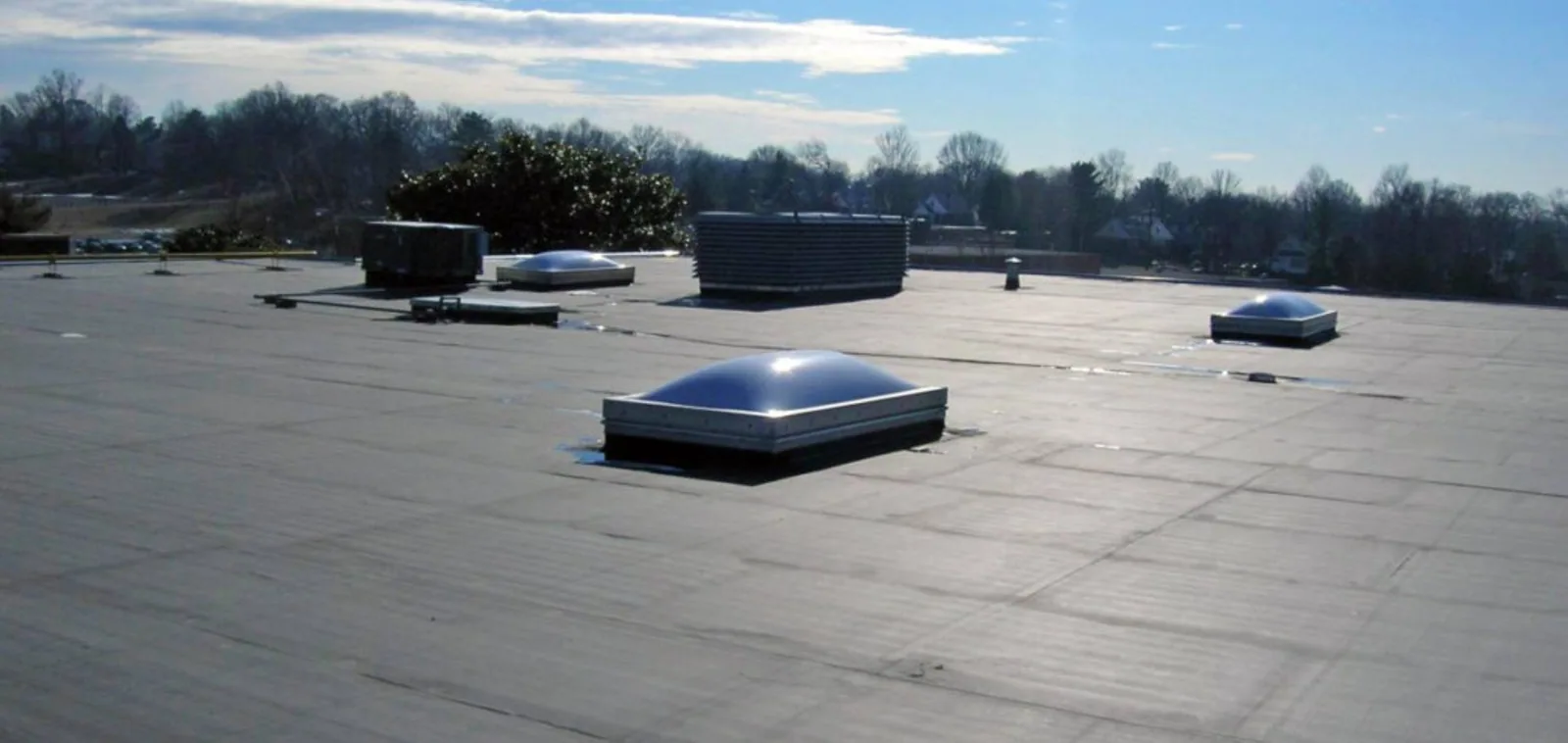
The last day is a walk with the facility lead, a moisture re-check of the new roof and a handover record that lists every roof penetration and drain, so future equipment work starts from a map instead of a guess. Photographs of each curb and flashing go in the same file.
The same sequence applies to a building in West Stone Drive Technology Park or in downtown Kingsport, and to an equipment room inside a larger office building. In each case the facility team keeps the rollback notes from change control with the roof file.
Commercial Roofing Questions
How is a data center roof protected from leaks during work?
By sequence and discipline. Sections over critical loads open last, on the driest days, and are covered again before the crew leaves, with the cover tested. A spotter watches the room below, and the foreman checks the interior each morning.
Who approves the roof work?
The facility team, through its change-control process. We provide the plan, the dates, the crew list and the rollback steps, and work starts only after approval.
Can rooftop chillers stay running during a reroof?
Usually. We flash curbs with the units in place where possible and request a shutdown only for the tie-ins that need it. The shutdown, if any, goes through change control.
What are the security rules for the crew?
Advance names, badges at the gate and escorts to the roof. Tools are inspected, and restricted areas follow the site's own rules, which we collect before mobilizing.
What does the facility team send before a price?
The critical-load map and the change-control dates come first, then the site plan and roof access points. The phasing plan follows, and the price comes after it.