The scan for a moisture survey in Kingsport, TN is timed for the evening, after a warm and clear day, because that is when a wet roof shows itself. Saturated insulation soaks up heat during the day and gives it back slowly after sunset, and an infrared camera records the difference. The scan produces a map of suspect zones. The cores that follow decide what those zones contain. Together they tell an owner how much of the roof is wet, where it sits and whether the choice is a patch, a section replacement, a recover or a full tear-off.
Scan Method and Timing
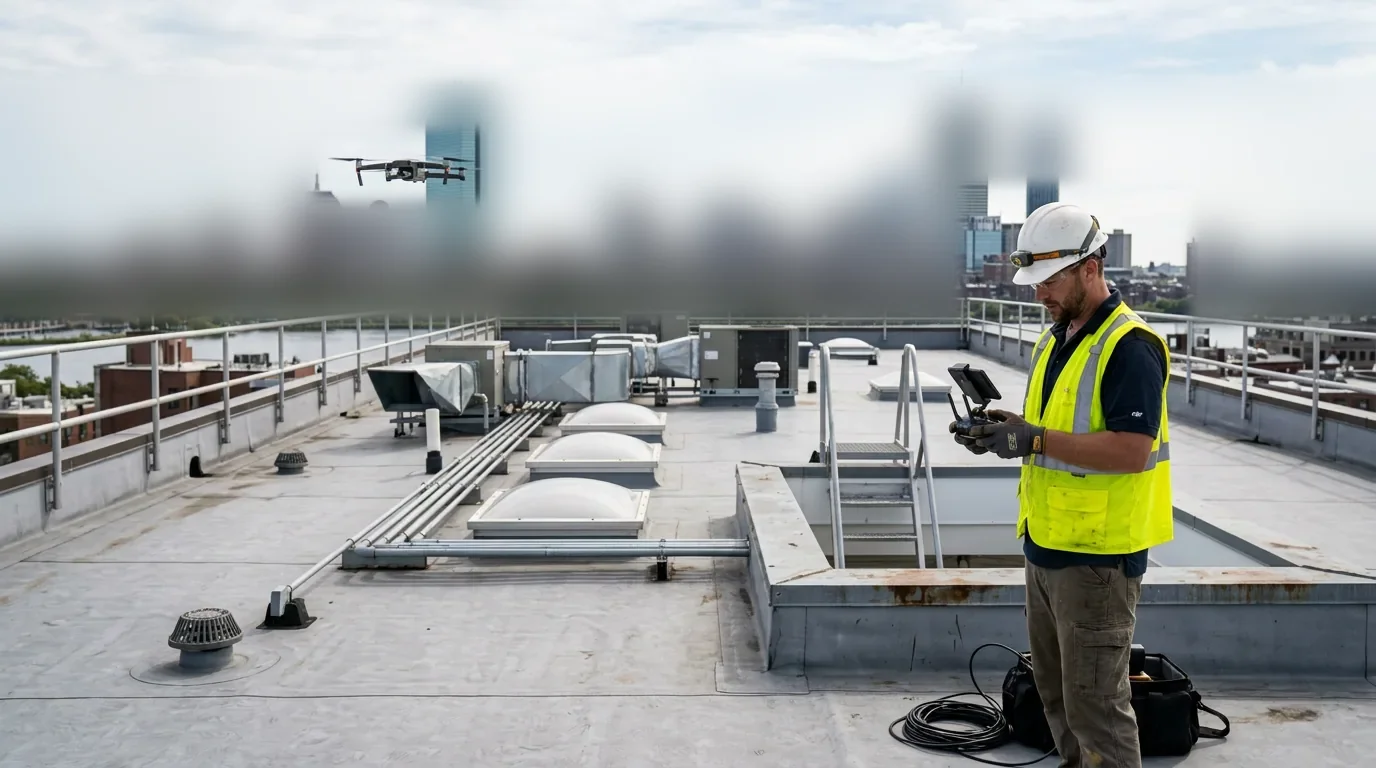
We walk or fly the roof in a grid, capturing thermal and visible images side by side. The best conditions are a sunny day with no recent rain, followed by a calm, clear evening, with the scan starting shortly after sunset and finishing before the roof cools to ambient. Wind, cloud cover and standing water change the readings, so we record the conditions and set a backup date.
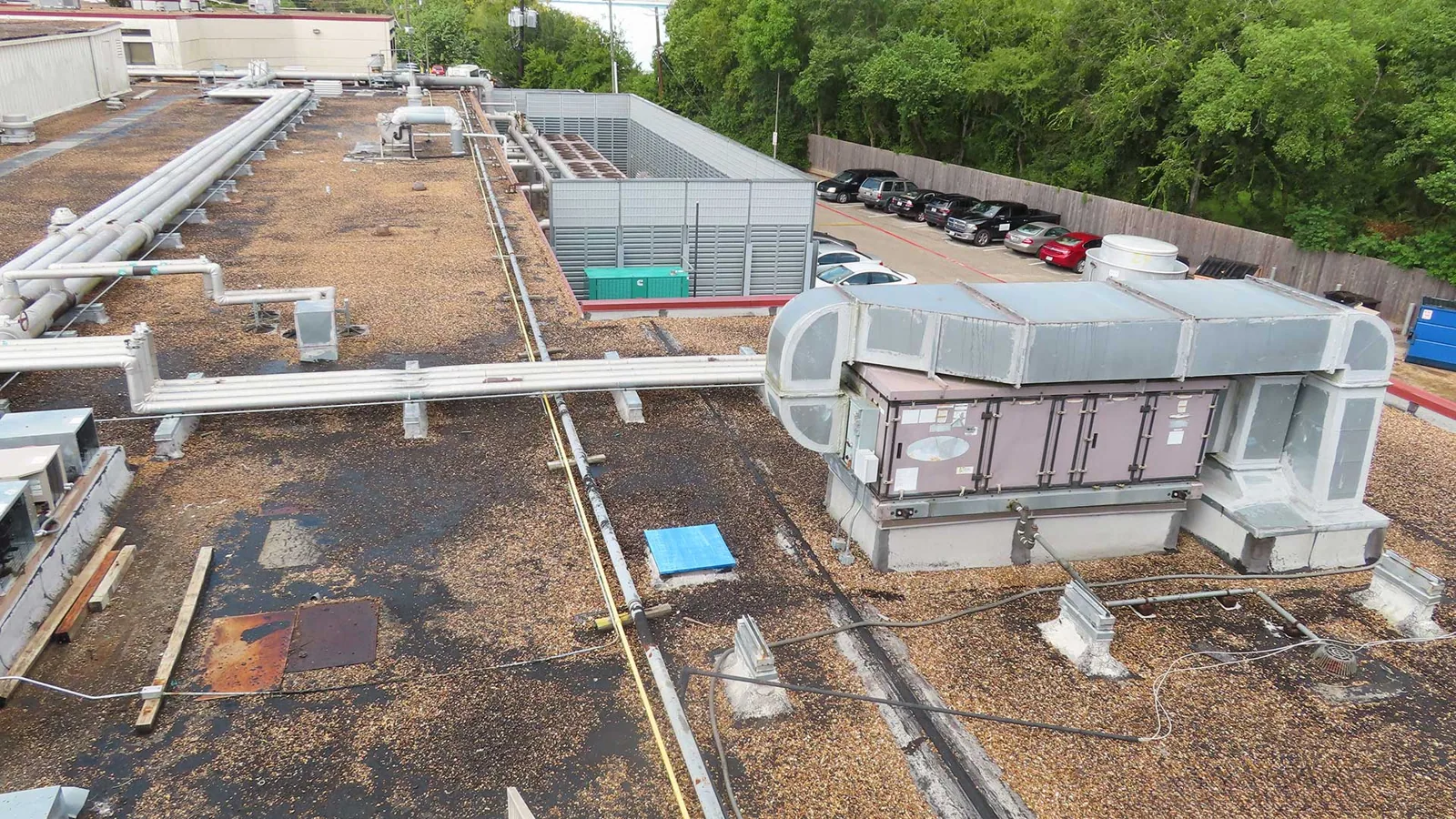
On large roofs the thermal data may come from an aerial pass, as in a drone roof inspection, with a crew on the roof marking anomalies with paint or flags as the images arrive. On smaller roofs, a handheld camera and a walked route are enough. Either way, the output is a map with outlined zones and a description of each. Each outlined zone gets a number, an approximate area and a note on what else could produce the same signature, such as a thick insulation layer or a patched section, so the core plan targets the right questions. We also mark rooftop equipment, skylights and drains on the map, since heat from those features can mimic moisture.
Core Cuts and Confirmation
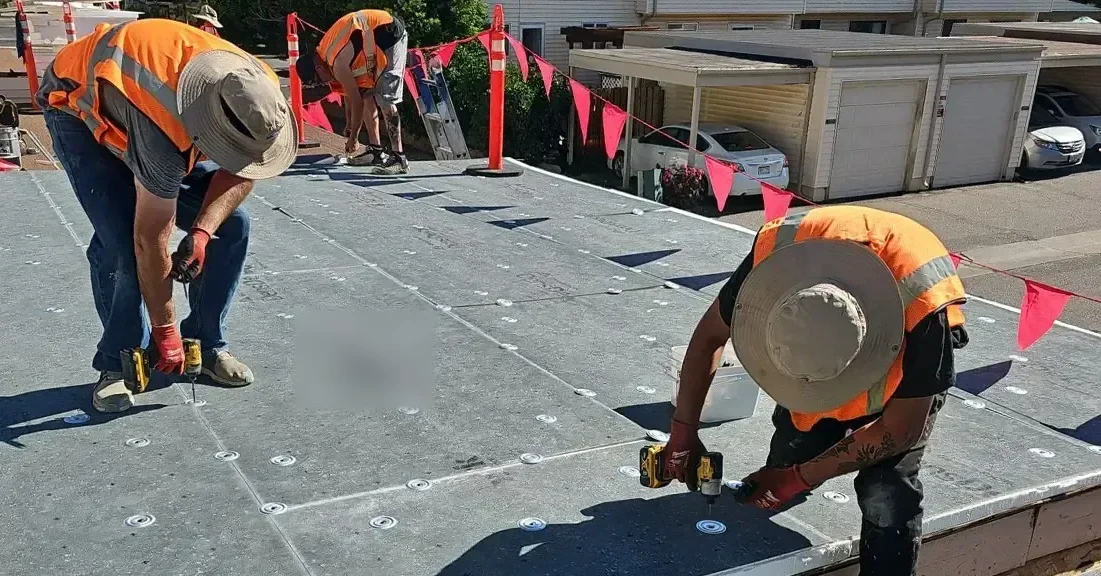
A thermal anomaly can be saturated insulation, but it can also be a thick area of insulation, a patched section, a column line or a layer change. For that reason, we cut cores, usually small circular samples, in the suspect zones and in at least one comparison zone that looks normal. We check each core for moisture, insulation type and condition, deck state and the membrane layers above.
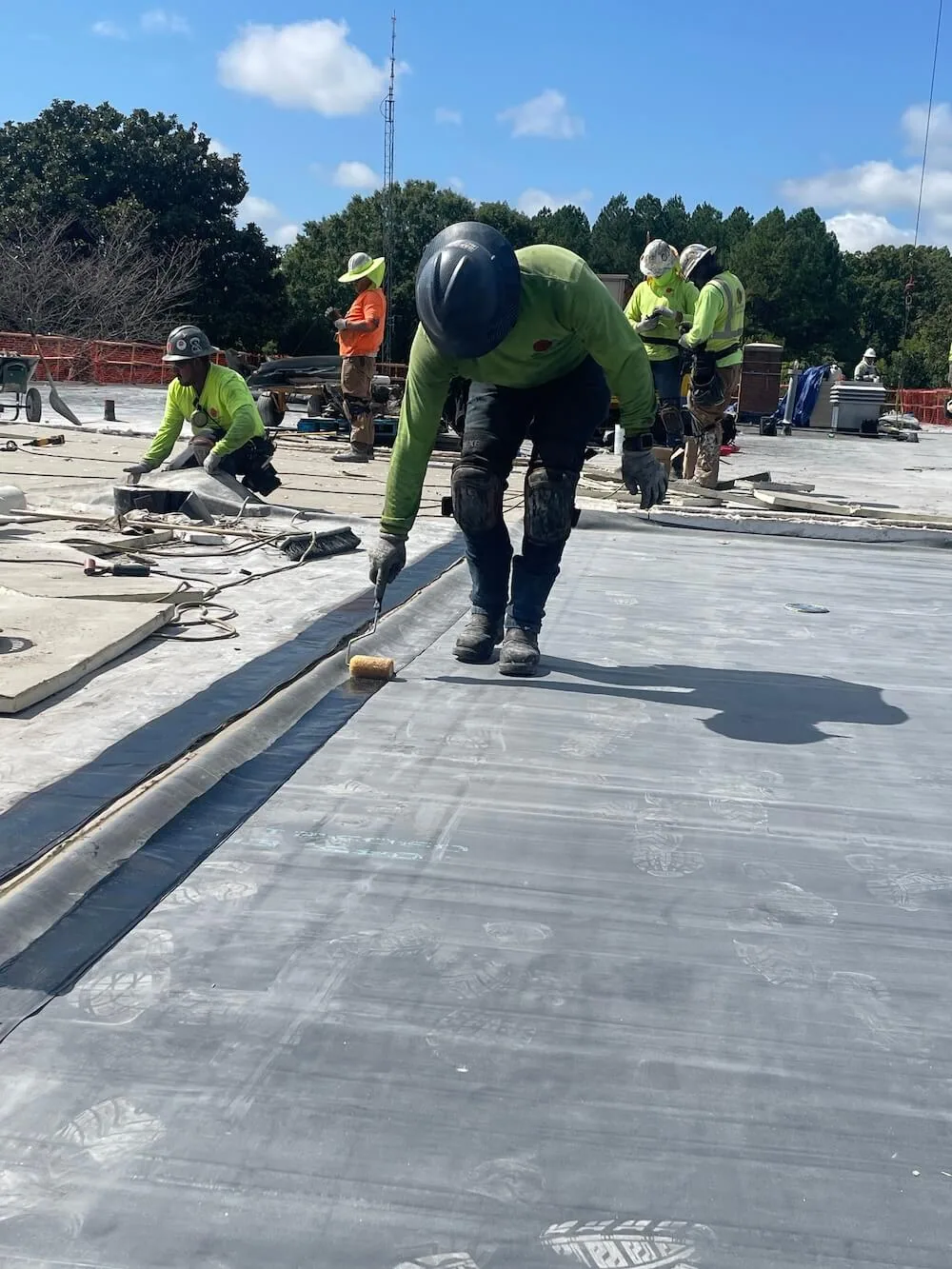
Cores are labeled on site, photographed beside a tape measure and bagged when a sample is needed for identification. The crew keeps the cutter, the patch material and a vacuum on the roof so the hole is clean when it is sealed. Each core hole is sealed the same day with a patch that matches the membrane. We record the core location on the plan with its result, so the map becomes a set of confirmed findings. The survey states which zones are wet, which are dry and which are uncertain, and the uncertain ones receive additional cores.
From Map to Decision
The wet area drives the decision. If the wet zones are small and isolated, we cut them out, replace the insulation and patch the membrane. If they are scattered across the roof, a section replacement may be more economical than many small repairs. If most of the roof is wet or the deck is damaged, a full commercial roof replacement becomes the sound choice.
A roof recover is possible only when the insulation is dry or when the wet zones are removed before the new layer goes on. The survey gives the owner and the lender the evidence for that choice, with the numbers behind it, and it protects against a recover over wet material that would fail within a few years.
Why Kingsport Roofs Take On Moisture
A small breach in a Kingsport roof has many chances to admit water, since precipitation totals about 45 inches a year. Cold winters, with a record low near minus 18 F, bring freeze and thaw cycles that open seams and sealants, and water that gets in can sit in the insulation for months. Summer storms add wind-driven rain, and the county's severe thunderstorm warnings pair 60 mph gusts with hail.
Hail bruises can break the membrane's surface without leaving a visible hole, and the water that follows spreads through the insulation. A survey after a hail event finds that hidden moisture before it becomes a stained ceiling.
When a Survey Pays Off
A survey earns its cost before a purchase, a lease renewal, a capital request or a warranty claim. A buyer looking at a building on Fort Henry Drive or along Stone Drive wants to know what is under the membrane before the price is set. A facility manager at a manufacturer in the Phipps Bend park would use the map to justify repairing the dry sections and replacing the wet ones. A manager of a downtown Kingsport building under renovation uses it to decide whether the roof will outlast the interior work.
The survey also supports due diligence roof surveys for transactions, where the buyer needs a roof report with evidence and a repair budget.
The Moisture Report
Reports are delivered in a fixed order so a reader can follow the logic from scan to core to cost. The report includes the thermal map, the core log with photos, a roof plan marking wet, dry and uncertain zones, and a recommendation for each. It lists the repair quantities, such as the area of insulation to replace, so a bid can be priced from it. It notes the limits of the method: roofs with ballast, dark membranes in shade or reflective metal can hide or distort a thermal reading, and in those cases we rely more on cores.
Owners with several buildings can feed the results into a long-term plan; the data supports preventive roof maintenance by showing which roofs to watch and which to fund first.
Commercial Roofing Questions
How accurate is an infrared scan on its own?
It is a screening tool. It shows where heat behaves differently, and saturated insulation is one cause of that. Other causes include thick insulation, patches and structure. Cores turn the screen into a finding, and the report separates the two. We rely on the cores for any decision that involves cutting out or replacing insulation.
Can you scan a ballasted or coated roof?
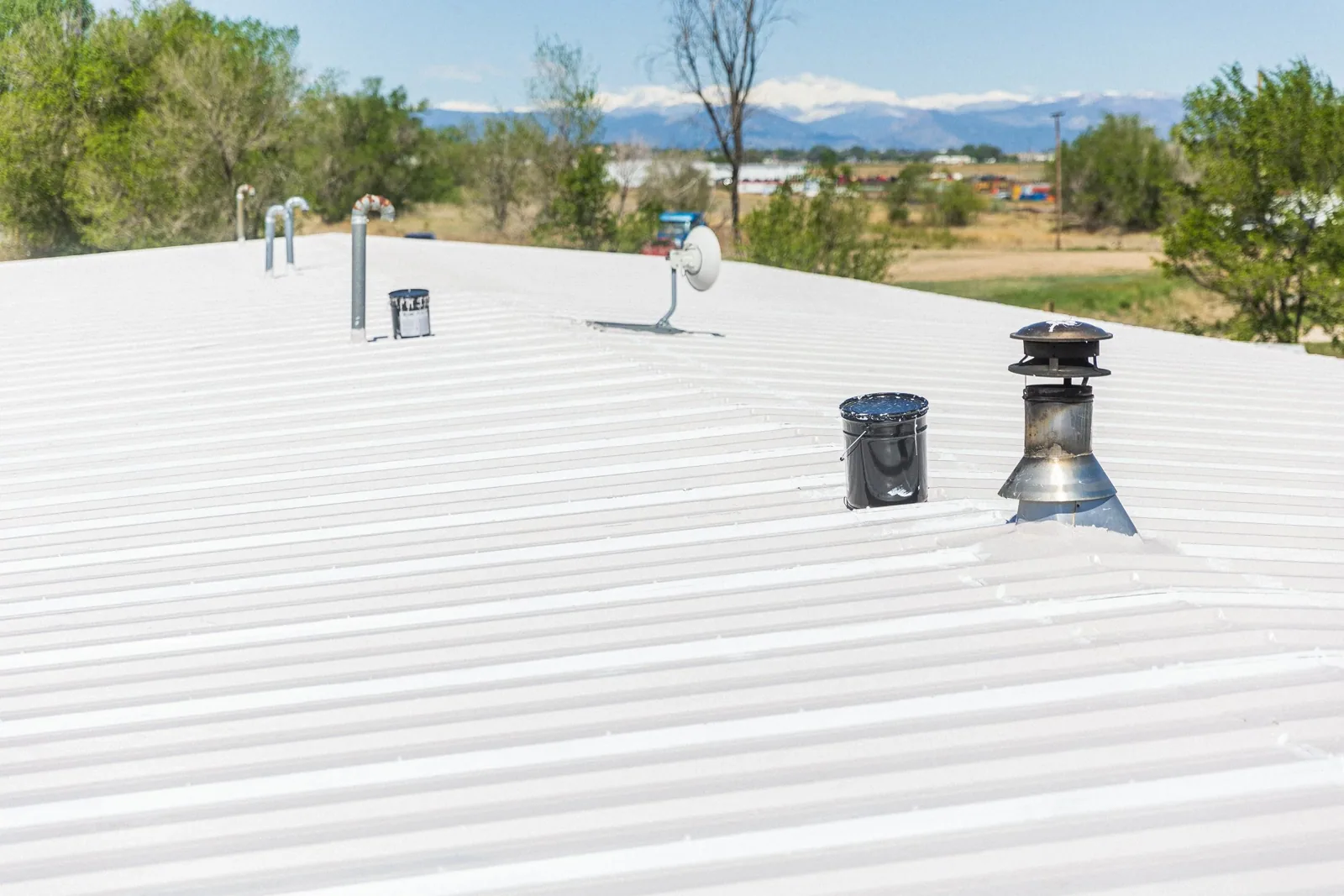
Yes, but the method changes. Ballast hides the membrane and holds heat unevenly, so we may use moisture meters and cores on a grid instead of relying on the camera. Coated roofs scan well when the coating is uniform. We explain on site which method suits the roof and what the limits are.
Does the survey interrupt the building?
The scan happens on the roof in the evening and does not touch the interior. Core cuts are small and sealed the same day. If rooftop equipment must be shut down or a lift is needed, we coordinate the timing with the building contact.
Who should receive the report?
The owner, the property manager and, where relevant, the lender, insurer or buyer. We format it so a reader who has not seen the roof can follow the zones and the recommendations. If the survey supports a claim, we organize the photographs and the core log in the order an adjuster expects.
What does a wet result mean for the budget?
It means the insulation in those zones needs to come out, and that sets a quantity. We price the cut-out and replacement per area, and we show the difference between repairing the wet zones and replacing a section or the whole roof. The map lets the owner choose the phase that fits the budget year.