An EPDM job begins with the choice of attachment, because it sets the order of everything else. A ballasted sheet needs a roof that can carry stone. An adhered sheet needs a clean, dry substrate and a warm day. A mechanically attached sheet needs a deck that holds a fastener. In Kingsport, TN we settle that choice with the engineer before we order a single roll.
The sequence then runs in order: prepare the deck, install insulation and cover board, lay the sheet, splice or tape the seams, flash the details and inspect. Each step names the next trade, and each is checked before the next begins.
Substrate, Insulation and Attachment Choice
Core cuts show what lies under the existing roof, and a moisture scan shows where insulation has taken on water. The results decide whether the old layers come off or stay. We then pick the attachment method and write it into the scope.
Ballasted EPDM puts stone or pavers on a loose-laid sheet, which is quick but heavy. Fully adhered EPDM is bonded with adhesive and suits roofs with limited load capacity. Mechanically attached EPDM uses plates and screws. We compare the three against the deck, the wind exposure and the schedule, then price the choice the structure supports.
Insulation goes down in staggered layers, with joints offset between them. Cover board follows where the specification asks for it. Tapered pieces go at drains, and crickets are built behind curbs. A drain set high is lowered now, since it cannot be fixed after the sheet is down. The insulation order is sized from the moisture scan, so the crew is not waiting on a second delivery.
Large Sheets, Splices and Tape
EPDM comes in very wide rolls, which means few seams across the field. That is a strength, since seams are where leaks begin. Seams that do exist are joined with primed splice tape or seam adhesive, and the quality of the splice depends on cleaning and priming.
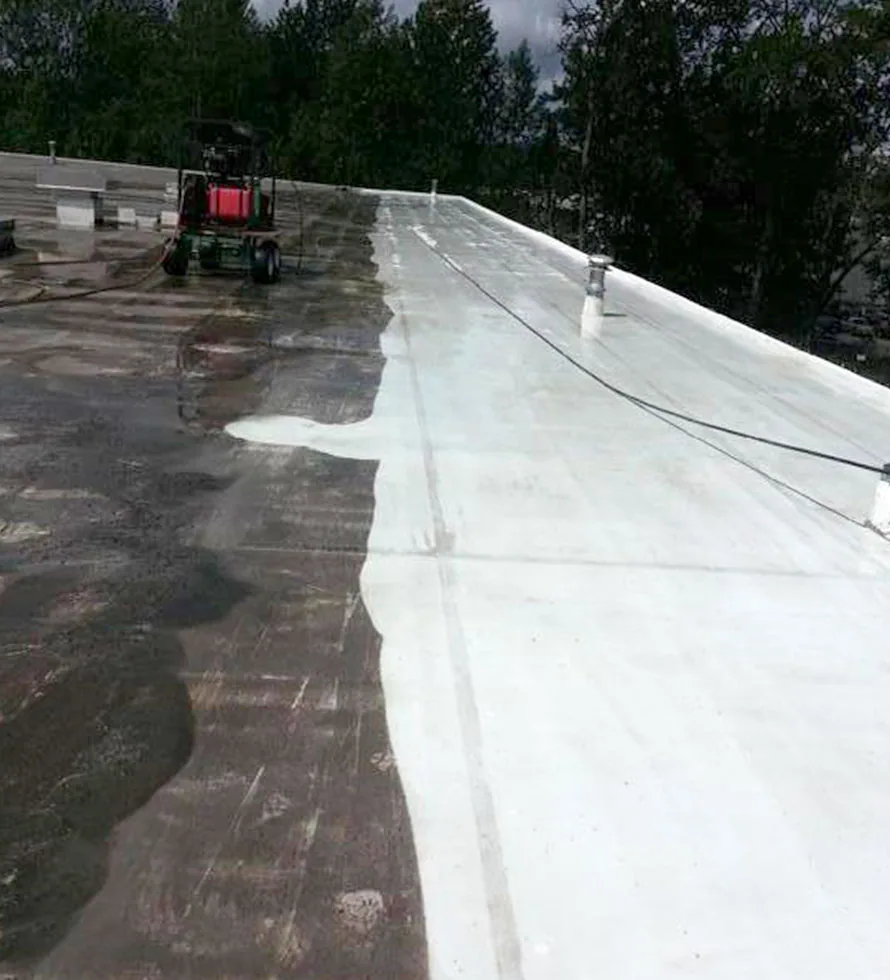
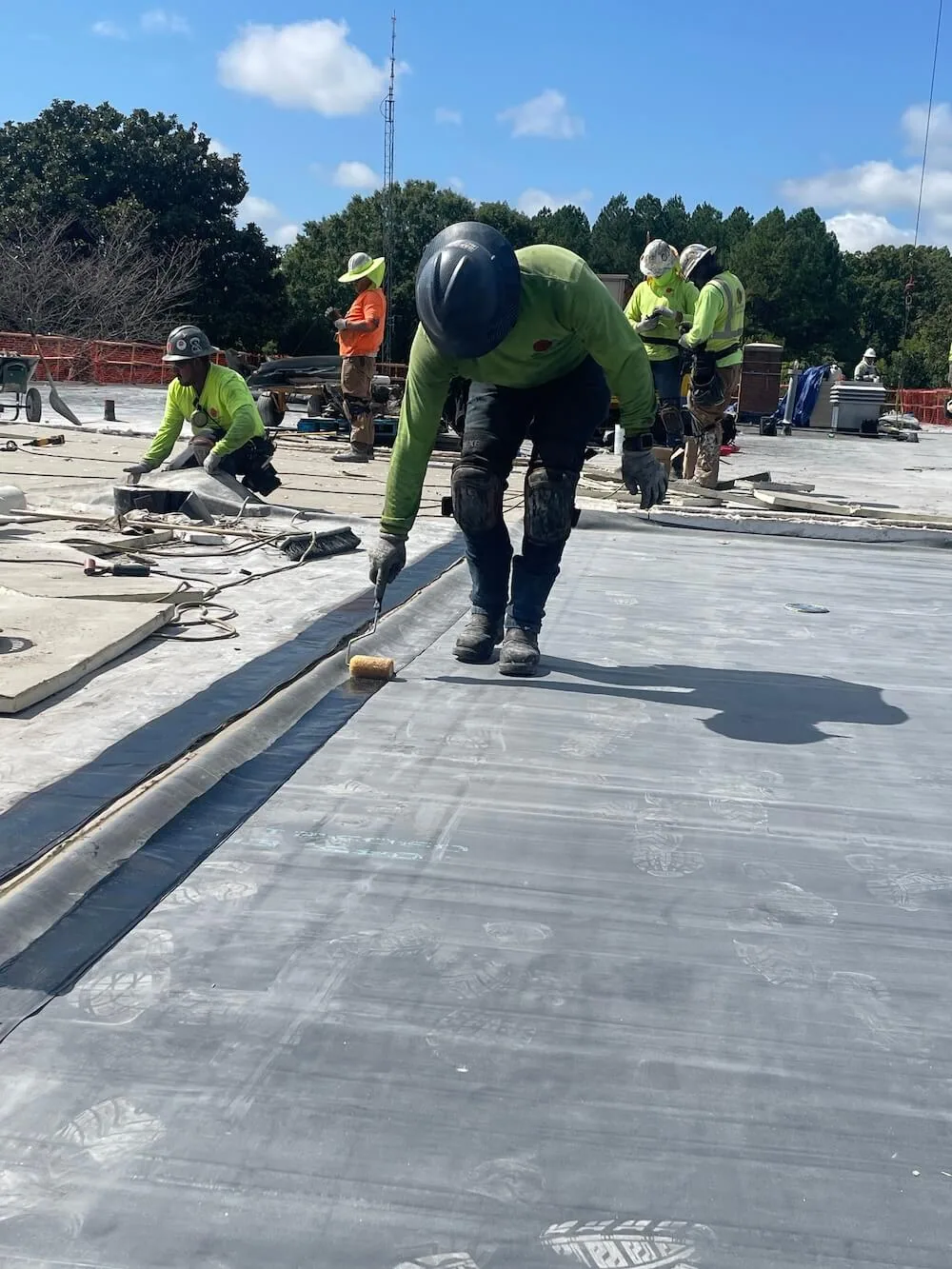
An installer cleans the overlap, applies primer, lays the tape and presses it with a roller. A test splice is made at the start of each shift. A probe check follows, and open splices are repaired the same day. Cold and damp mornings delay priming, so the crew starts after the surface is dry, and the plan includes the delay.
Sheet handling takes care too. A wide EPDM sheet is heavy and unwieldy in wind. It is unrolled, positioned and allowed to relax before it is attached, which takes time on a cold morning. Wrinkles are worked out before the seam is made, and the sheet is never stretched tight. A sheet that is pulled too tight pulls back at corners later, and a sheet laid with wrinkles traps water.
Flashing, Corners and Penetrations
The sheet is turned up walls and curbs and finished with termination bars and sealant. Inside corners need extra material so the sheet does not bridge. Pipes and conduit get boots or pitch pockets sized for the line. EPDM shrinks a little with age, so details are cut with a generous allowance.
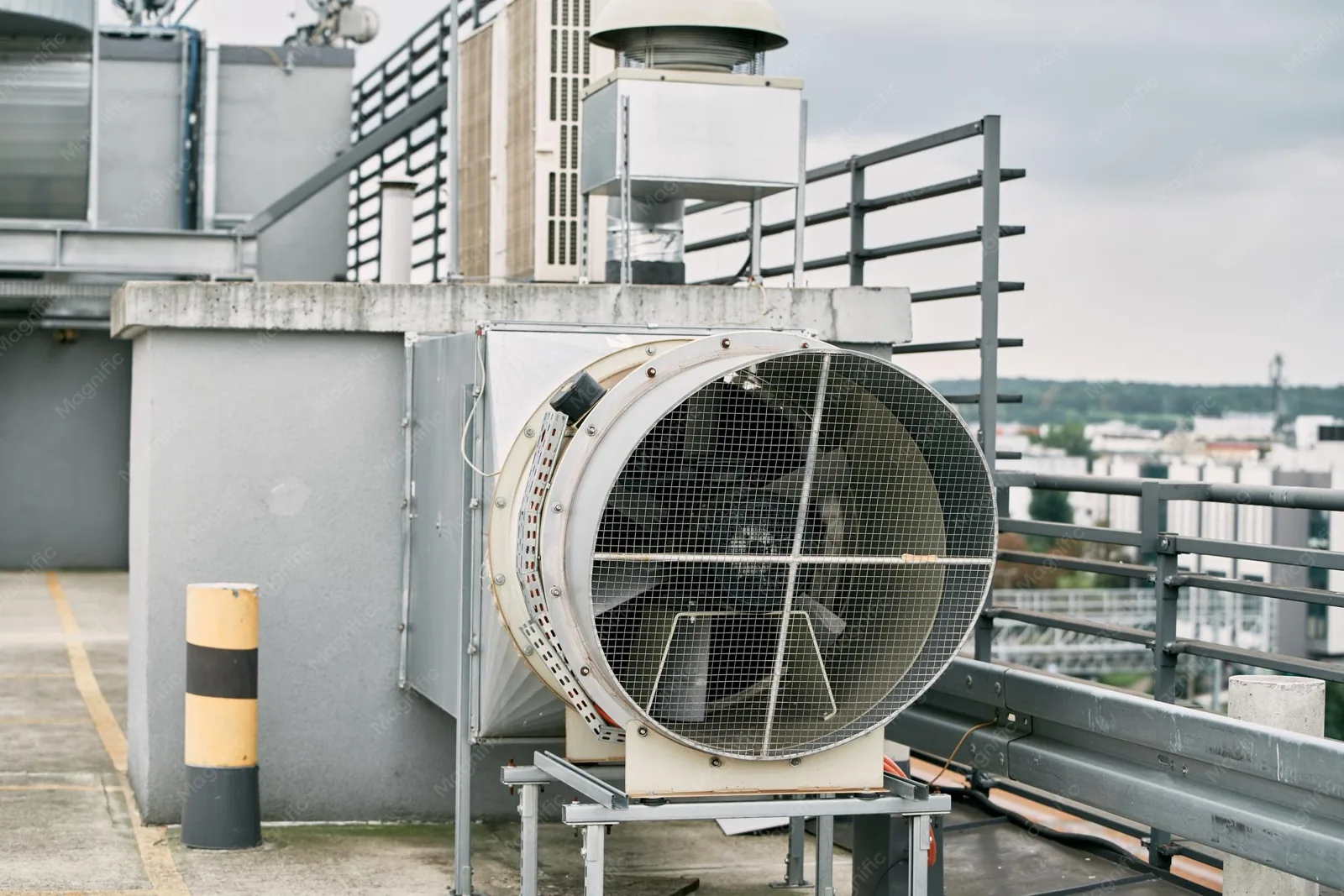
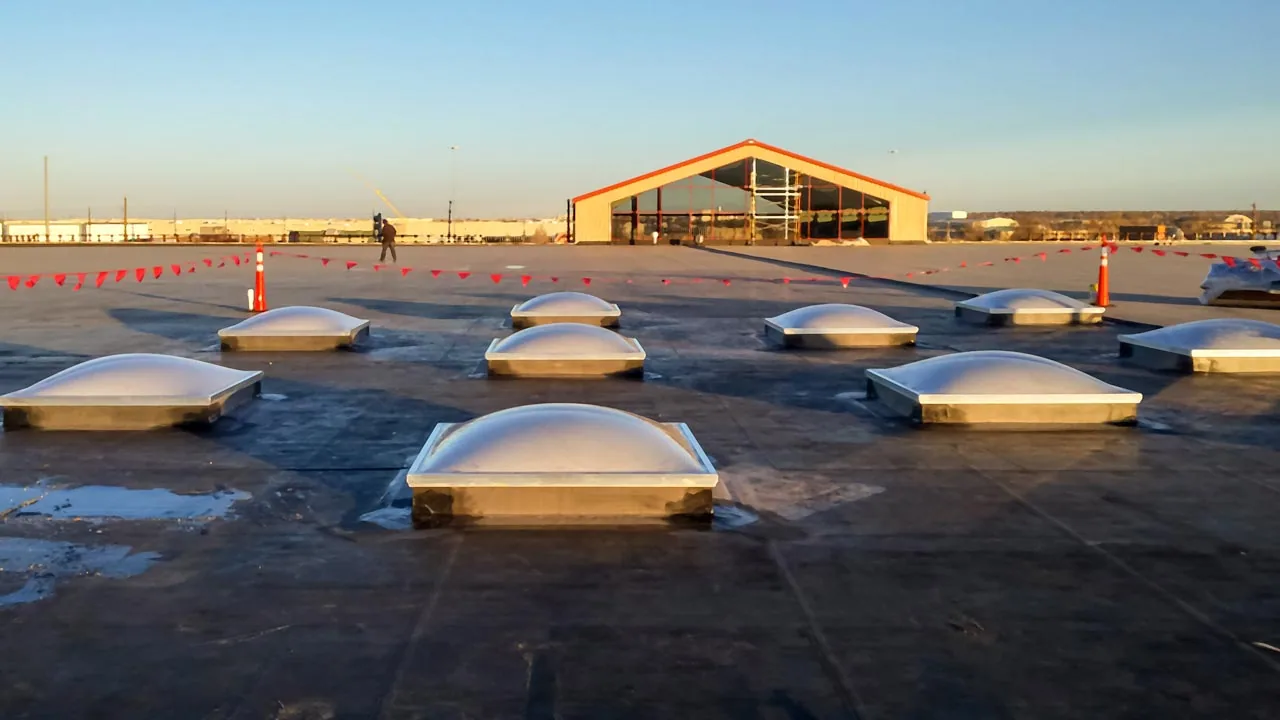
We build details before the field is finished, so a rain does not find an open edge. Rooftop units are reset on finished curbs, with a coordination call to the mechanical trade. The same order governs equipment curb work, and a skylight flashing job is staged alongside it.
Ballast Handling, Laydown and Crane Picks
Ballasted roofs add a material-handling step. Stone has to come off before tear-off and go back, or be replaced, after the sheet is down. That means a laydown area, a conveyor or crane, and a haul route for the stone. The crane pick location is set before the first section opens.
Weight on a deck while the stone is staged can exceed what the structure holds, so we spread loads and check with the engineer. The stone is stockpiled away from the roof edge. On a job run section by section, the stone travels with the crew and every section is closed before the shift ends.
Phasing Around Plants, Parks and Retail
Norfolk Southern rail serves Phipps Bend Industrial Park, southeast of Surgoinsville, and the Tri-County Industrial Park at Piney Flats was put together from seven tracts totaling 780 acres. Parks like these set access rules, shutdown calendars and delivery windows, and the phasing plan follows them.
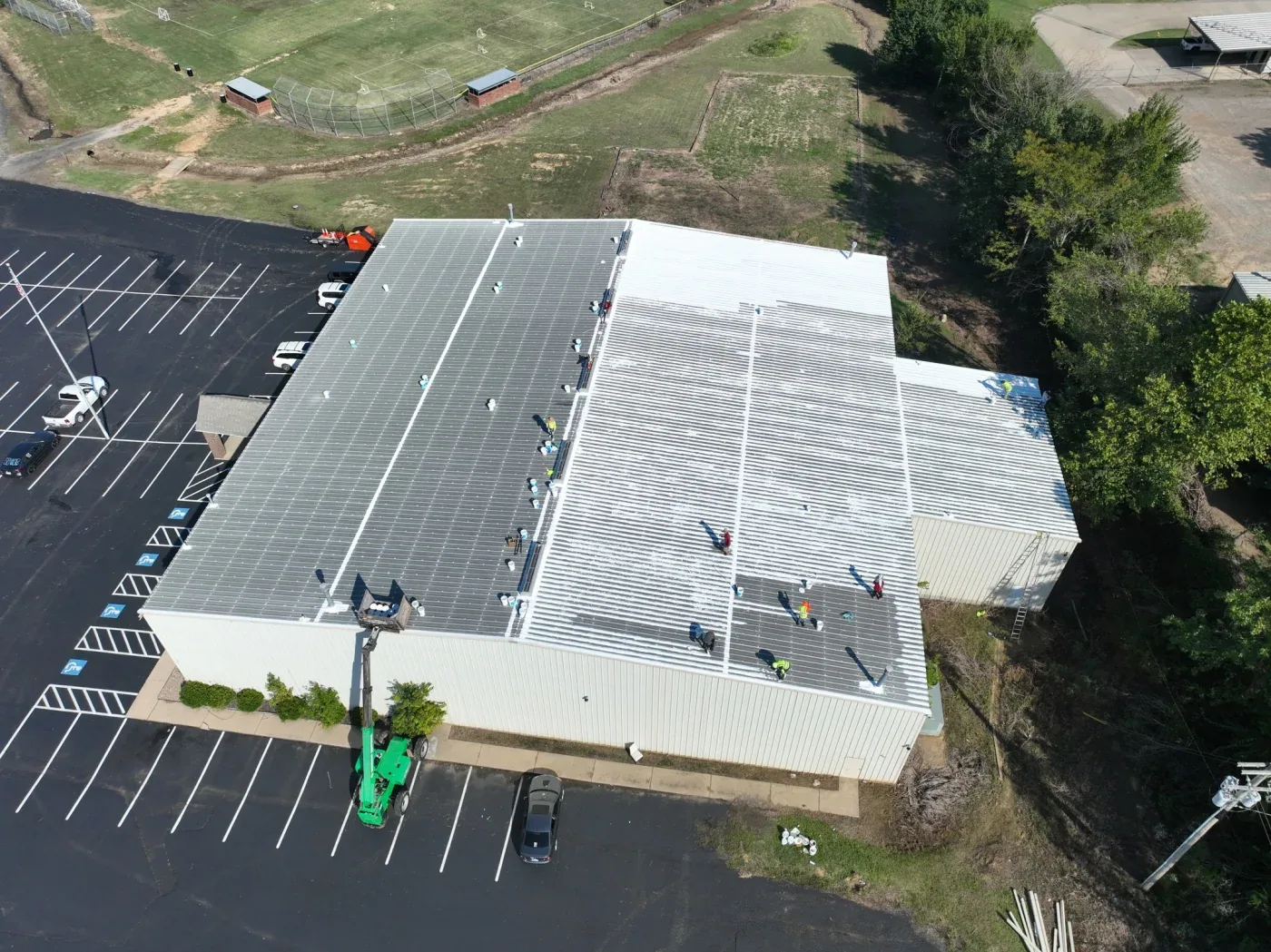
A warehouse roof may be worked in sections while operations continue. A plant may wait for an outage. A retail strip may need night work. The phasing plan names each window, the handoff to the next trade and the person who can stop the job.
Permit, Weather and Inspection
Kingsport treats an EPDM reroof as permitted work: the commercial filing is a stamped set of plans with a PDF, and a contract above $25,000 needs the state contractor license and proof of insurance behind it. We send the package once the attachment choice is made, because a ballasted, adhered or mechanically attached sheet changes the loads the plan reviewer checks.
Adhesive and tape need dry surfaces and a minimum temperature, and the local record explains the buffer: about 133 days of measurable precipitation a year, around 45 inches, and swings from minus 18 F to 104 F. Every phase carries a spare day and a tarp-and-dry. The standard black sheet warms in sun, so summer afternoon work is limited by heat on the surface and the crew starts early.
Closeout and Punch List
The superintendent joins us on the roof for the closeout walk. We check every splice, flashing and drain, photograph each one and list what is open with a name and a date. The splice log, the photographs and the warranty papers make up the package. If the owner wants a comparison, a TPO or PVC alternate is priced beside the EPDM option, and so is a full replacement. An owner in Piney Flats sends the same items.
Commercial Roofing Questions
Ballasted, adhered or mechanically attached: which EPDM method is best?
The structure and the schedule drive the choice. Ballast is quick and heavy. Adhesive suits limited load capacity. Plates and screws need a deck that holds fasteners. We recommend a structural check and a wind review before choosing. Kingsport warnings have cited 60 mph gusts.
How do you handle stone ballast during a reroof?
We stage it away from the roof edge, spread the load and move it with the crew section by section. We recommend a crane pick, a laydown area and a haul route in the plan. Ballast removal and replacement is a separate line in the bid.
Why are EPDM seams a concern if the sheet is so large?
Fewer seams mean fewer leak points, but each seam depends on cleaning and priming. We recommend a test splice at the start of each shift and a probe check afterward. Open splices are repaired the same day.
Can EPDM be installed in cold or damp weather?
With limits. Primer and adhesive need dry surfaces and minimum temperatures. We recommend scheduling the main field work for milder, drier weeks, and using the coldest stretch of the year, which has reached minus 18 F, for survey and permits.
What does the permit require?
The city receives a stamped plan set and a PDF, and the Tennessee contractor license and insurance proof accompany any contract above $25,000. We recommend filing the submittal when materials are ordered.