A rooftop equipment job starts with the shutdown, not the crane. Someone has to tell us which unit can stop, for how long and who locks it out. In Kingsport, TN that answer comes from a plant engineer or a facilities manager, and it sets every date that follows. We ask for it before we ask for drawings.
With the shutdown window in hand, we build the sequence: survey the curb, order the parts, set the crane pick and close the roof the same day. Each step depends on the one before it. The same sequence applies to a manufacturing plant roof in the Phipps Bend park, to a retail center on Fort Henry Drive and to a renovated building downtown.
Equipment Inventory and Access
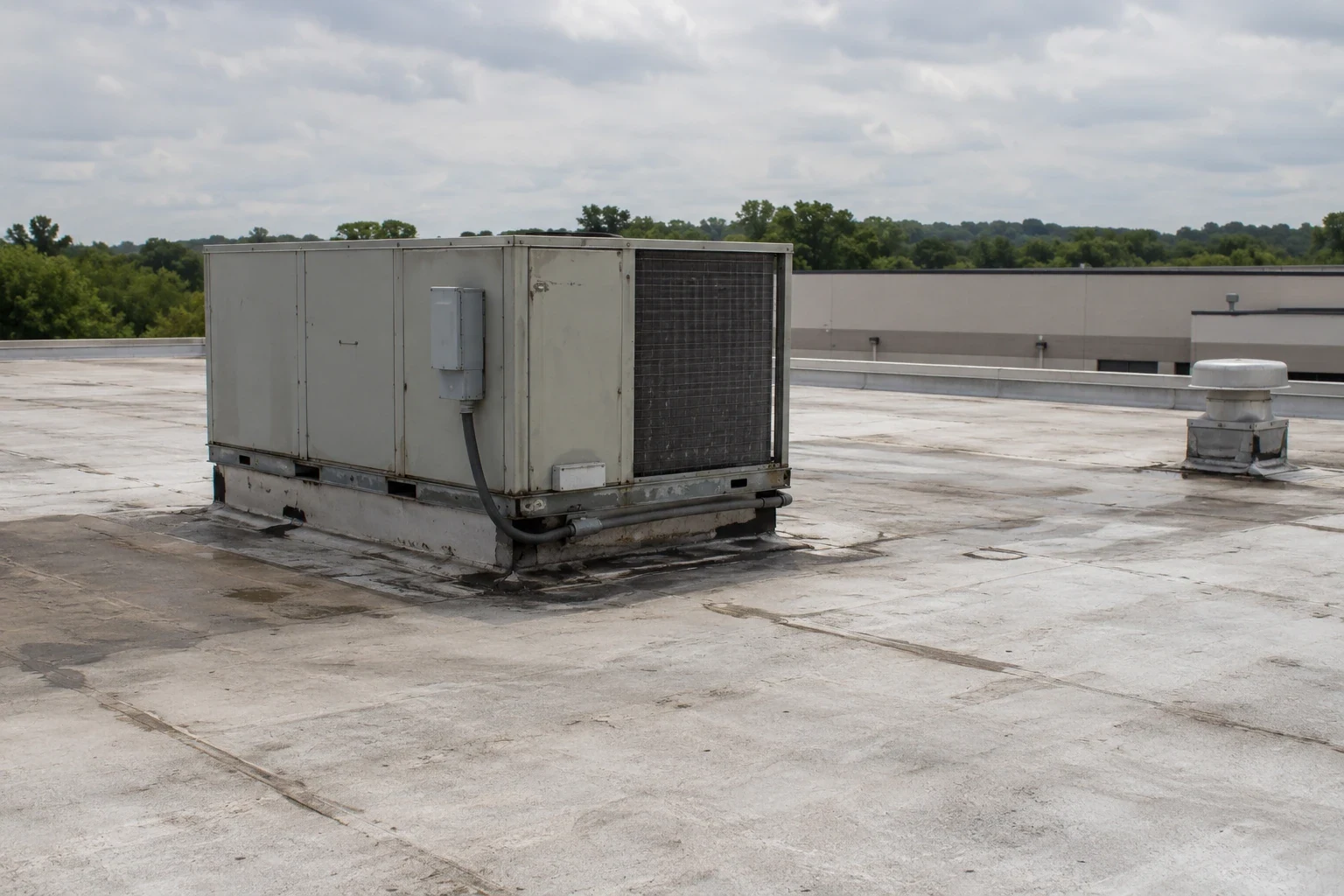
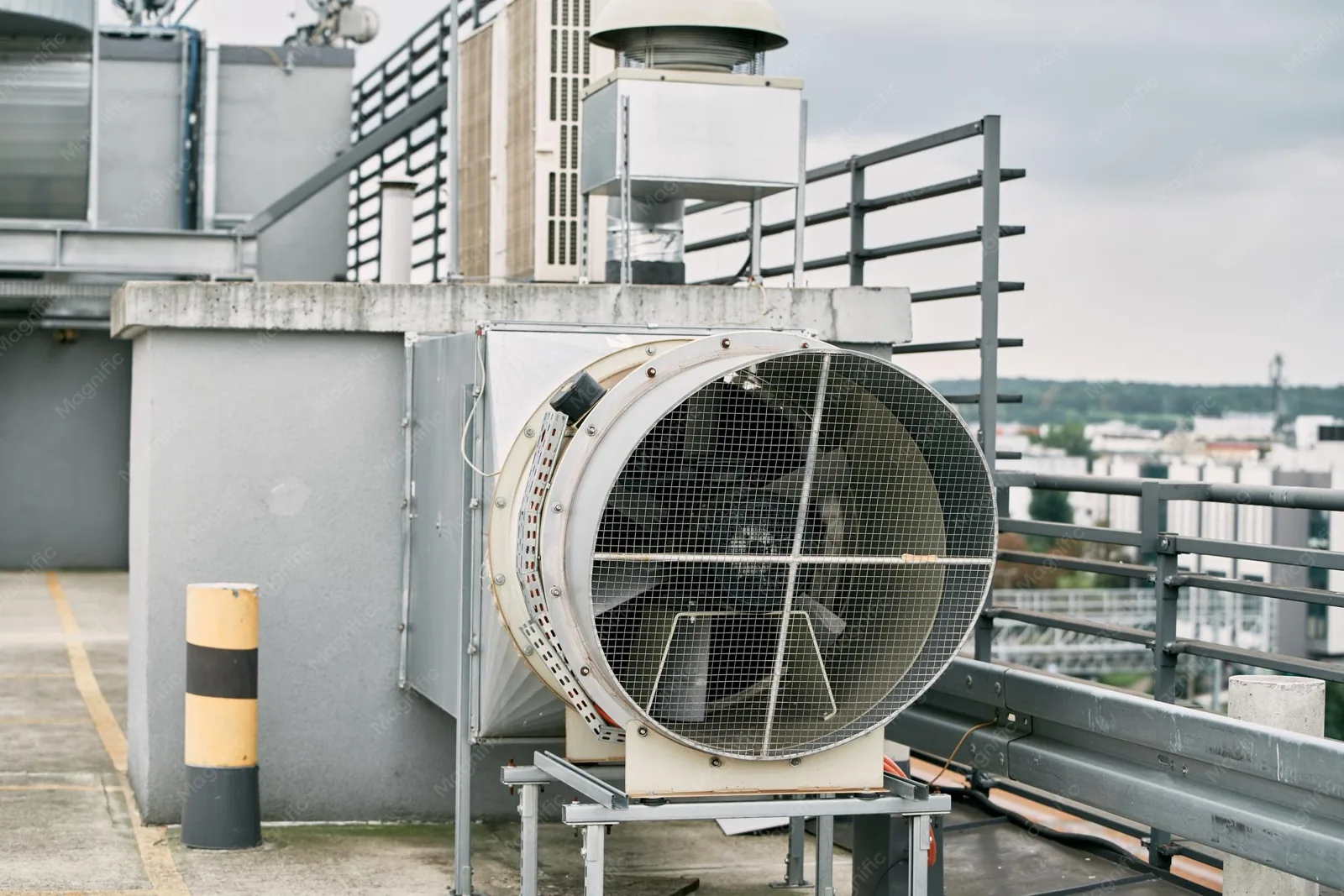
We start by listing every unit, stand, pipe support and conduit run on the roof, with a photograph and a location mark for each. The list shows what is original, what was added later and what has no curb at all. Access comes next: the ladder or hatch, the route across the roof and the weight the deck can carry at each point.
That information goes to the general contractor before pricing is locked. A curb that sits near a roof edge needs different staging from one in the middle of the field. A unit that is too heavy for the hatch needs a crane pick, and the crane needs a haul route and a laydown area. We write all of it into the phasing plan.
Downtown buildings under renovation add a further constraint. Kingsport has several downtown renovations underway, and a renovated building may have a new unit set on an old roof. The downtown Kingsport street grid limits where a crane can stand. We ask the general contractor for the street-closure permit and the delivery window, then we place the pick inside them.
Curb Construction and Flashing Detail
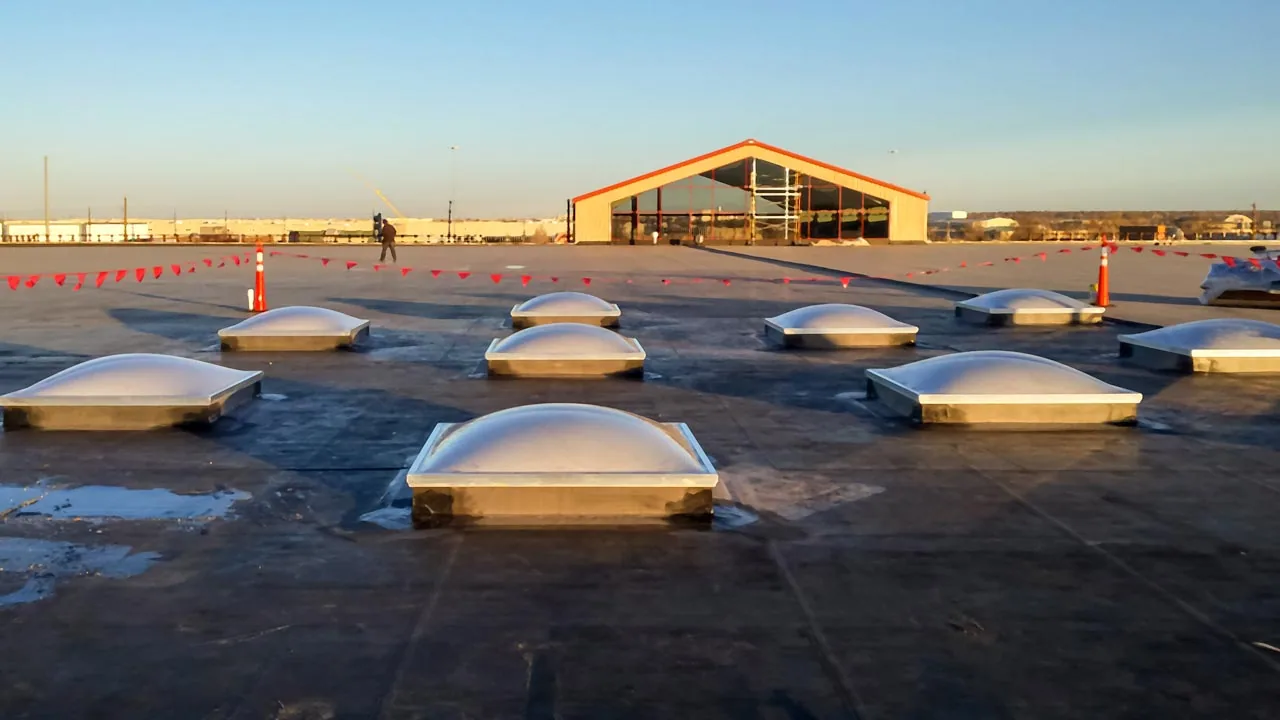
A curb raises the unit above the roof surface, and the membrane turns up the curb and ties into counterflashing on the unit. Each of those joints is a place where water can enter. Cracked sealant, loose counterflashing and corners that were never fully lapped are the common findings.
When we rebuild or replace a curb, we set the new curb on a solid substrate, extend the insulation under it and flash the membrane up its full height. The corners get prefabricated or hand-formed pieces, depending on the system. After flashing, we check the unit's counterflashing for a tight lap and fresh sealant. That joint is the one the next inspector will look at first.
Pipe, Conduit and Equipment Supports
Pipes and conduit cross the roof on supports, and each support presses on the membrane. Fixed supports bolted through the sheet leak. Rollers or pads that sit on a protective layer do not. We replace failed supports with versions that spread the load and leave the membrane intact.
Where a pipe passes through the roof, we install a boot or a pitch pocket sized to the pipe and the movement expected. Heat on a process line changes the choice of material. We confirm line temperatures with the plant before we order. A boot rated for ambient heat will not survive a hot steam line, and replacing it costs a second outage.
The Crane Pick and the Unit Swap
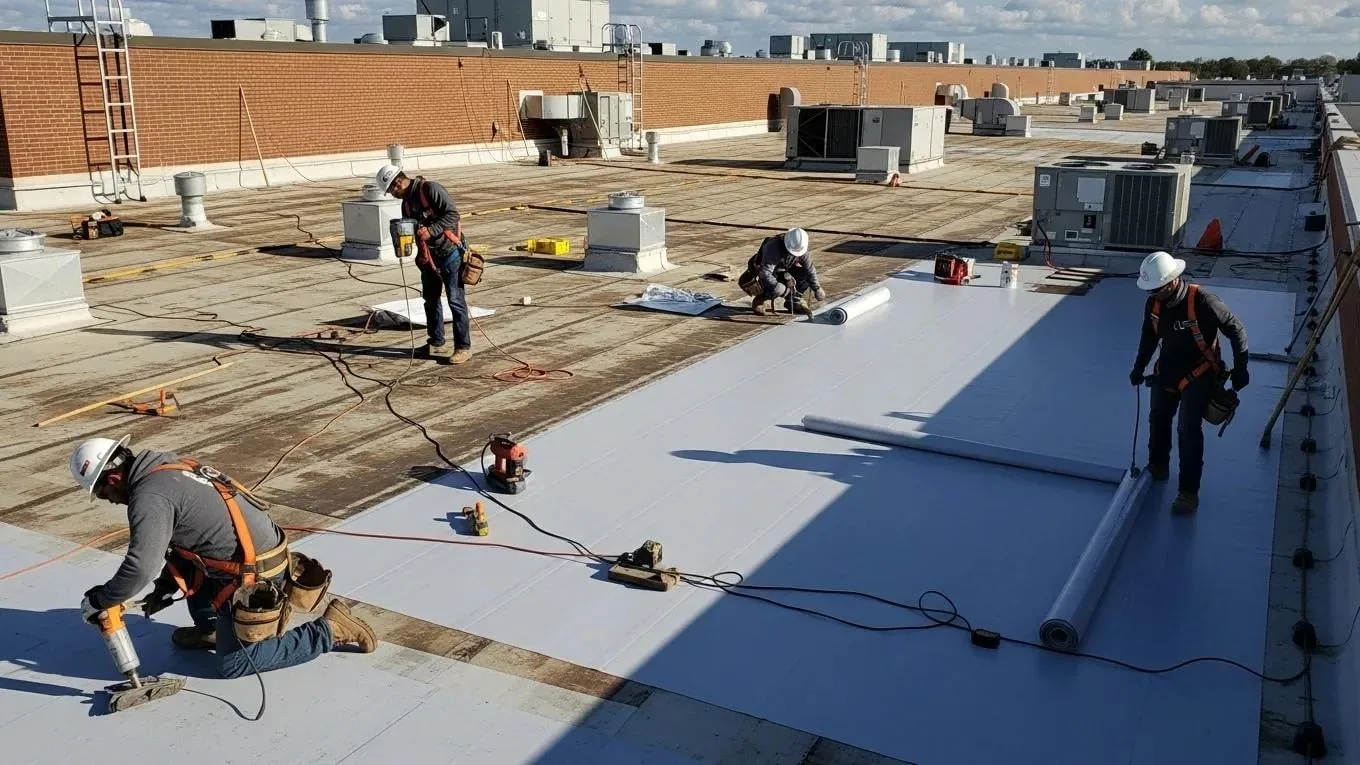
On swap day the order is fixed. Lock out the unit. Disconnect the services. Lift the old unit. Inspect the curb while it is open. Repair what the inspection finds. Set the new unit. Reconnect. Close the flashing. Each step has a person assigned to it.
The crane pick sits at the center of the day. It needs a ground location, a swing radius and a clear route for the delivery truck. We confirm all three with the site's safety lead the week before. If wind forecasts reach the gust levels the National Weather Service Morristown office has warned about, with gusts of 60 mph cited for the area, the pick moves to the next day. Gusts that high can also lift a roof sheet that is open, so we never leave a section undone overnight.
Phasing Around Operations
Industrial and medical sites often run around the clock. Kingsport's largest employers include Eastman Chemical, Holston Valley Hospital, BAE Systems and Kingsport City Schools, and a campus of that kind sets its own access rules, outage calendar and hot work permit procedure. The plan follows whichever apply to the building in question.
Night shift work, weekend windows and turnaround outages all change the sequence. A unit that serves a process area may only be available during a turnaround. A unit that serves an office can be worked on a weekend. For the work that must happen with people inside, occupied building reroofing methods apply, and we protect the space below. The phasing plan places each unit in its window and names the handoff to the next trade.
Permits, Inspection and Weather Windows
A unit swap that touches the roof membrane runs through the Kingsport permit desk. The commercial filing is a stamped plan set with a PDF, and review takes time, so the package is submitted as soon as the unit schedule is firm and the permit is in hand by the outage date. A job above $25,000 needs the state contractor license and the insurance certificates in that same package.
Weather is a scheduling input on swap day as much as on a tear-off. Roughly 133 days a year bring measurable rain, annual totals come to about 45 inches, and recorded lows near minus 18 F mean adhesive and sealant at a new curb need heat and cure time written into the plan. Highs of 104 F are the opposite problem for a black membrane under a crane pick.
Closeout and Punch List
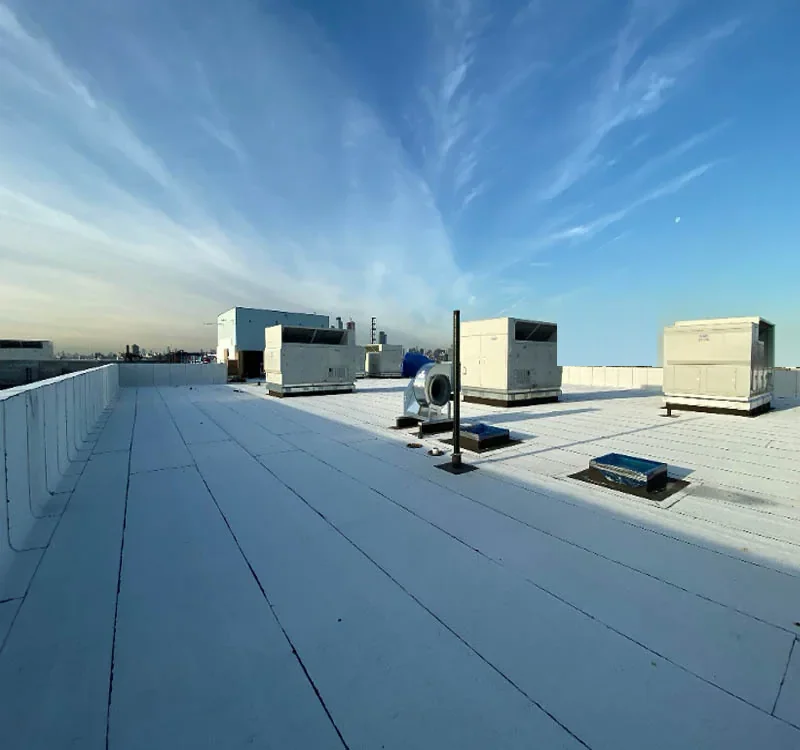
At closeout we walk the roof with the superintendent. Each curb, flashing and support is checked against the plan, photographed and signed off. Open items go on a punch list with a name and a due date, and the roof is swept, debris hauled off and the drains confirmed clear.
The closeout package includes the photographs, the permit sign-off and the material list for each curb. The repair record, the inspection history and the equipment list stay together, so the next unit swap starts from a known roof. Related work on skylight and penetration flashing follows the same sequence. The curb detail also depends on the membrane. A TPO sheet is welded up the curb, while an EPDM sheet is adhered and tied in with tape or liquid flashing, so we order curb corners to match.
Commercial Roofing Questions
What do you need before you can price a unit swap?
The roof plan, the unit schedule and the shutdown window. We recommend also sending the access route and the crane location, because both change the cost. With those in hand we build a phasing plan and return a price that includes the curb work, the flashing and the closeout walk.
Should curbs be replaced when the unit is replaced?
If the curb is sound, the flashing is tight and the new unit has the same footprint, you can keep it. We recommend opening the curb during the swap and inspecting before deciding. A curb that rots or cracks under the old unit will fail under the new one.
How do you handle hot steam or process lines on the roof?
We ask the plant for line temperatures and movement before we order materials. We recommend a written confirmation, because a boot rated for ambient heat will not survive a hot line. The right product costs more up front and avoids a second outage.
What happens if wind stops the crane pick?
The pick moves to the next day, and no roof section stays open overnight. We recommend building a buffer day into the outage window. Kingsport sees wind gusts and hail in severe thunderstorm warnings, and a buffer is cheaper than an extended outage.
Who submits the permit for equipment work?
We prepare the submittal package, and either we or the contractor of record files it, depending on the contract. We recommend starting the permit when parts are ordered. The city requires a stamped plan set and a PDF for commercial work, and review takes time.