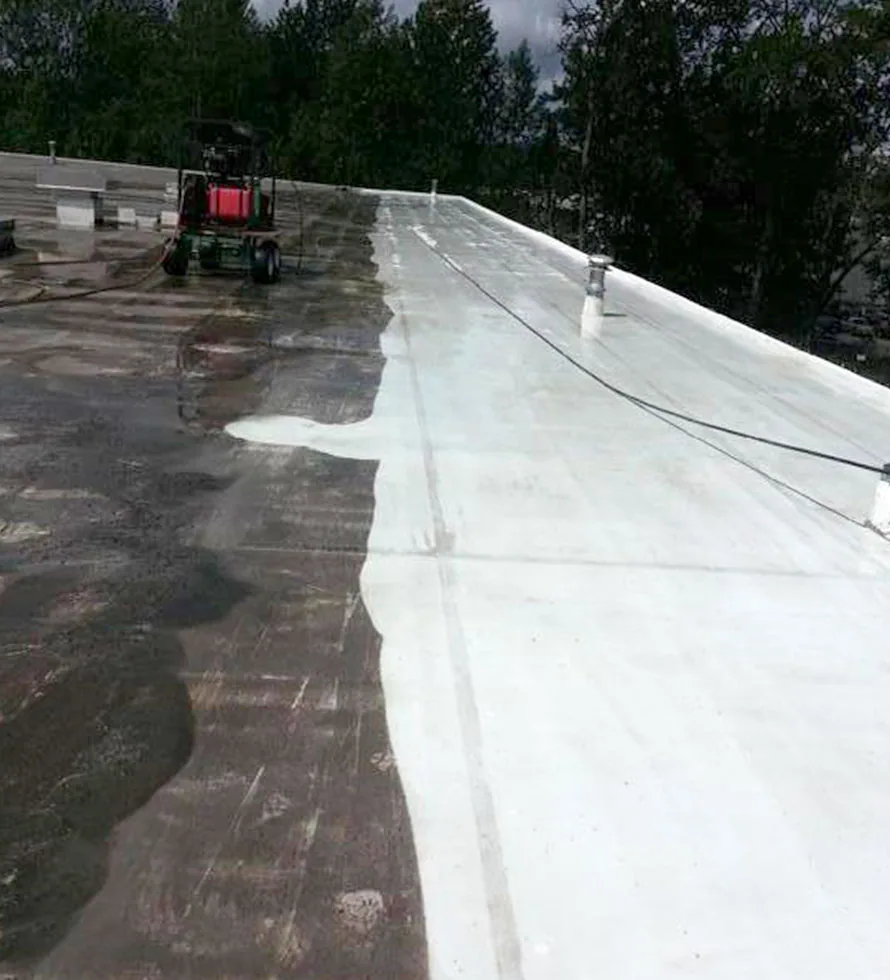
Nothing on a modified bitumen job moves until the hot work decision is made, because it sets the method, the crew and the permit. Torch-applied, hot-mopped, cold-applied and self-adhered sheets all exist, and the site decides which one is allowed. In Kingsport, TN that decision goes through the plant or building safety office before pricing is locked.
Once the method is fixed, the sequence follows: prepare the deck, lay insulation, install the base sheet, install the cap sheet, flash the details and inspect. A fire watch closes each day.
Choosing the Application Method
A torch-applied sheet is heated at the underside and rolled onto the substrate. A hot-mopped sheet is set in asphalt from a kettle. A cold-applied sheet uses adhesive. A self-adhered sheet peels from a release liner and sticks. Each method has a different fire risk, a different crew and a different weather limit.
Industrial parks add their own rules. Phipps Bend Industrial Park, southeast of Surgoinsville and served by Norfolk Southern rail, is the kind of ground where fire-lane and hot-work policies may come from the park or from each tenant. We ask each tenant for its rules and match the method to the strictest one that applies.
On campuses with combustible materials, process hazards or sensitive occupants, flame is often restricted or banned. We ask for the hot work rules before we write the scope. Where flame is allowed, the permit names the area, the cutoff time and the fire watch. Where it is not, we price cold-applied or self-adhered systems and show the cost difference.
Deck, Insulation and Base Sheet
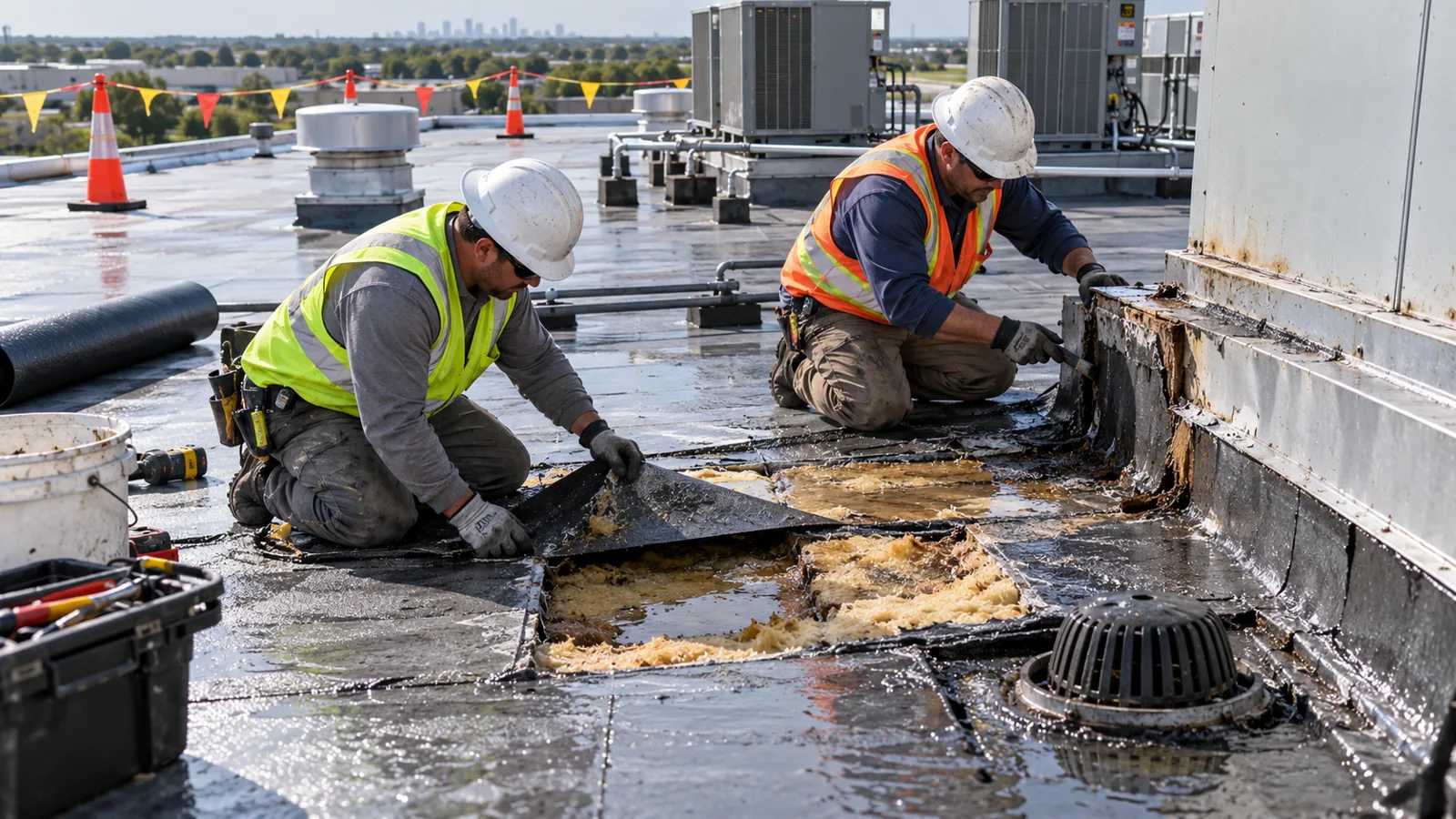
We inspect the deck as the old roof comes up. Damaged deck is flagged, photographed and priced by unit. Insulation goes down in staggered layers and is fastened or adhered per the specification. Cover board is added where the specification asks for it.
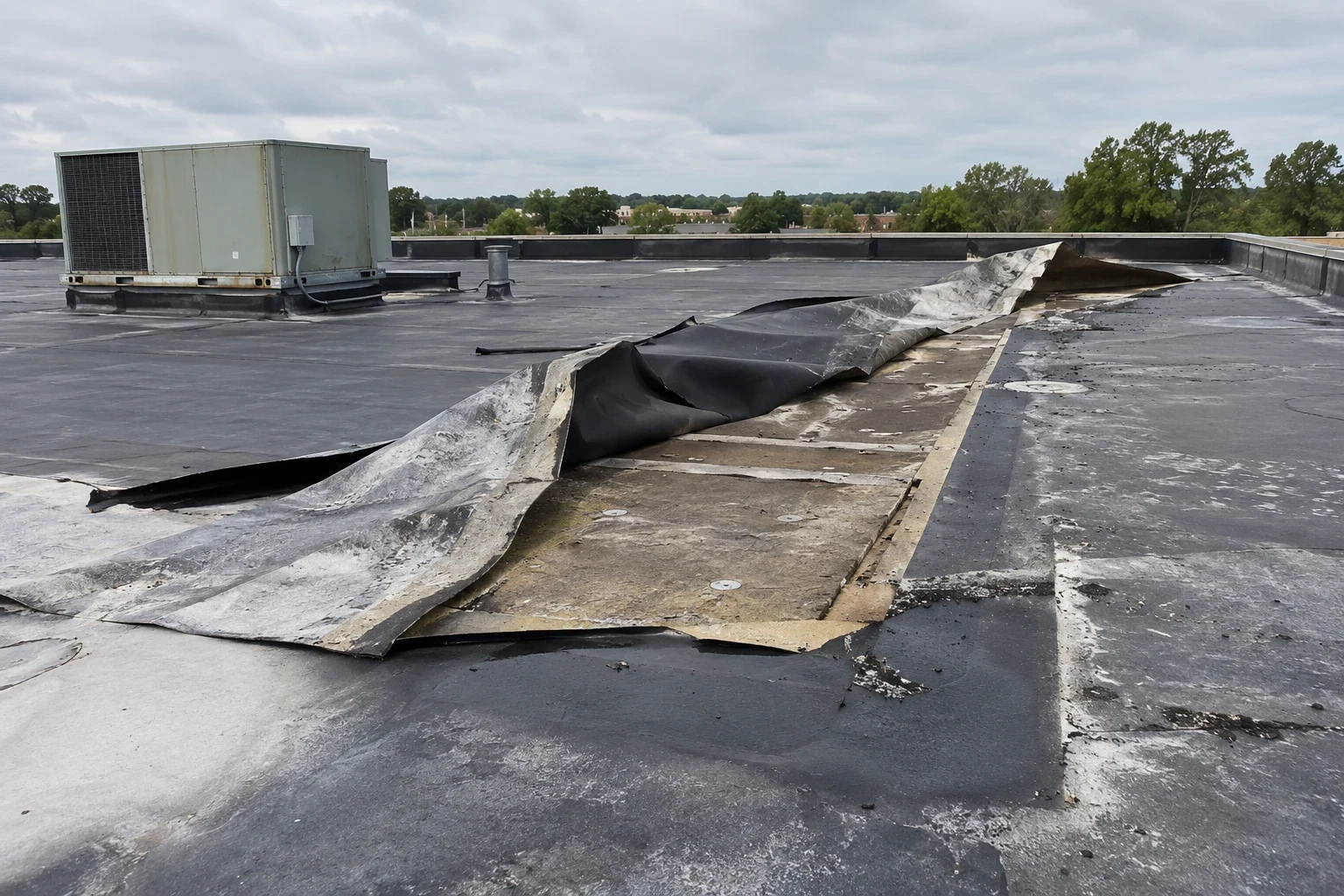
The base sheet comes next. It is fastened or adhered to the substrate and laps are staggered. A base sheet that is not flat or not fully bonded will ridge or blister later, so the crew checks laps and edges before the cap sheet arrives. The laydown area for rolls, fuel and adhesive drums sits away from loading docks and air intakes.
Fuel storage is its own item. Propane cylinders are stored upright, secured and away from heat, and the number on the roof is limited to what one shift needs. The site plan marks the cylinder location and the extinguisher stations. At the end of each day, cylinders come off the roof or go to a designated cage. The safety lead signs the layout before the first torch is lit.
Cap Sheet, Laps and Granule Surface
The cap sheet is the weathering layer. Its laps are staggered from the base sheet's laps, so no seam sits over another. Heat or adhesive bonds the laps, and a bead of bitumen should show at the edge of a well-made lap. We probe laps along a sample length and repair any that lift.
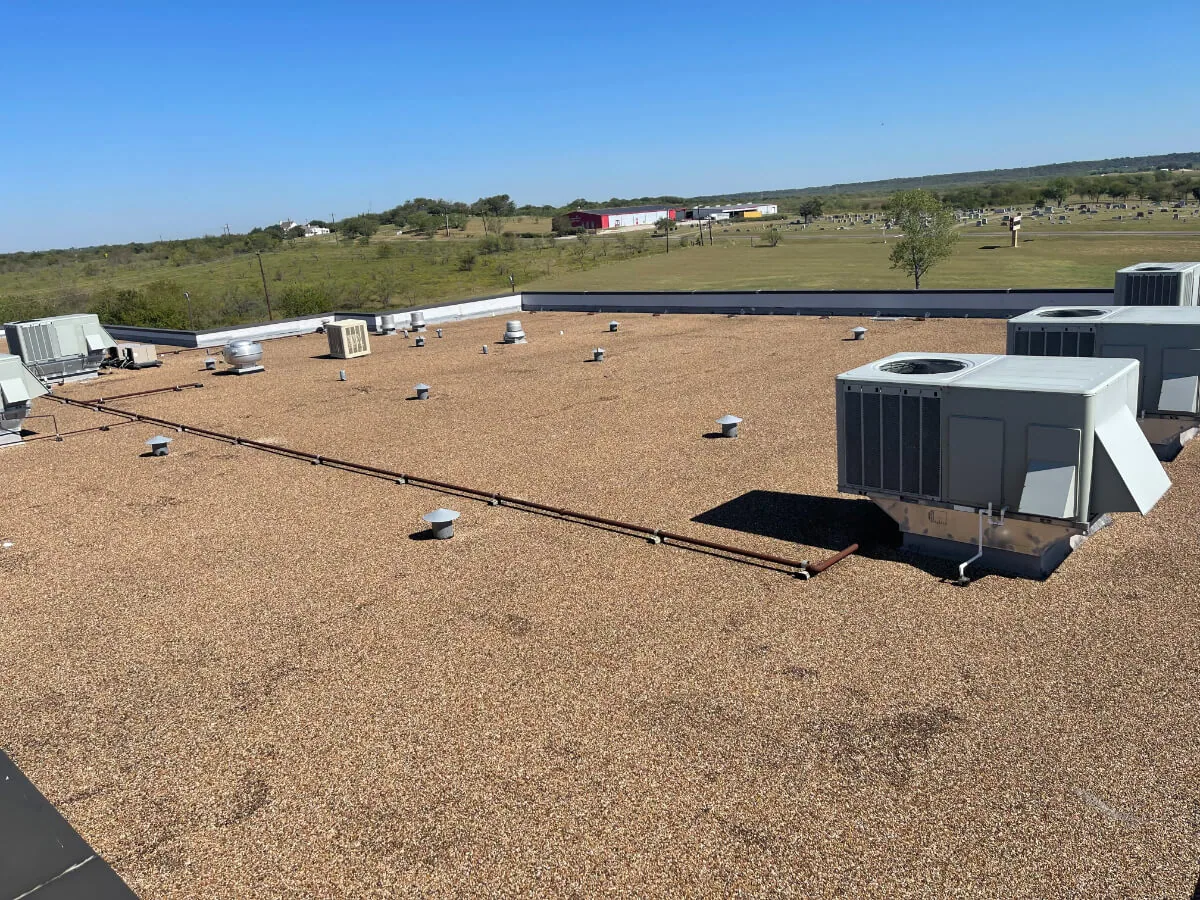
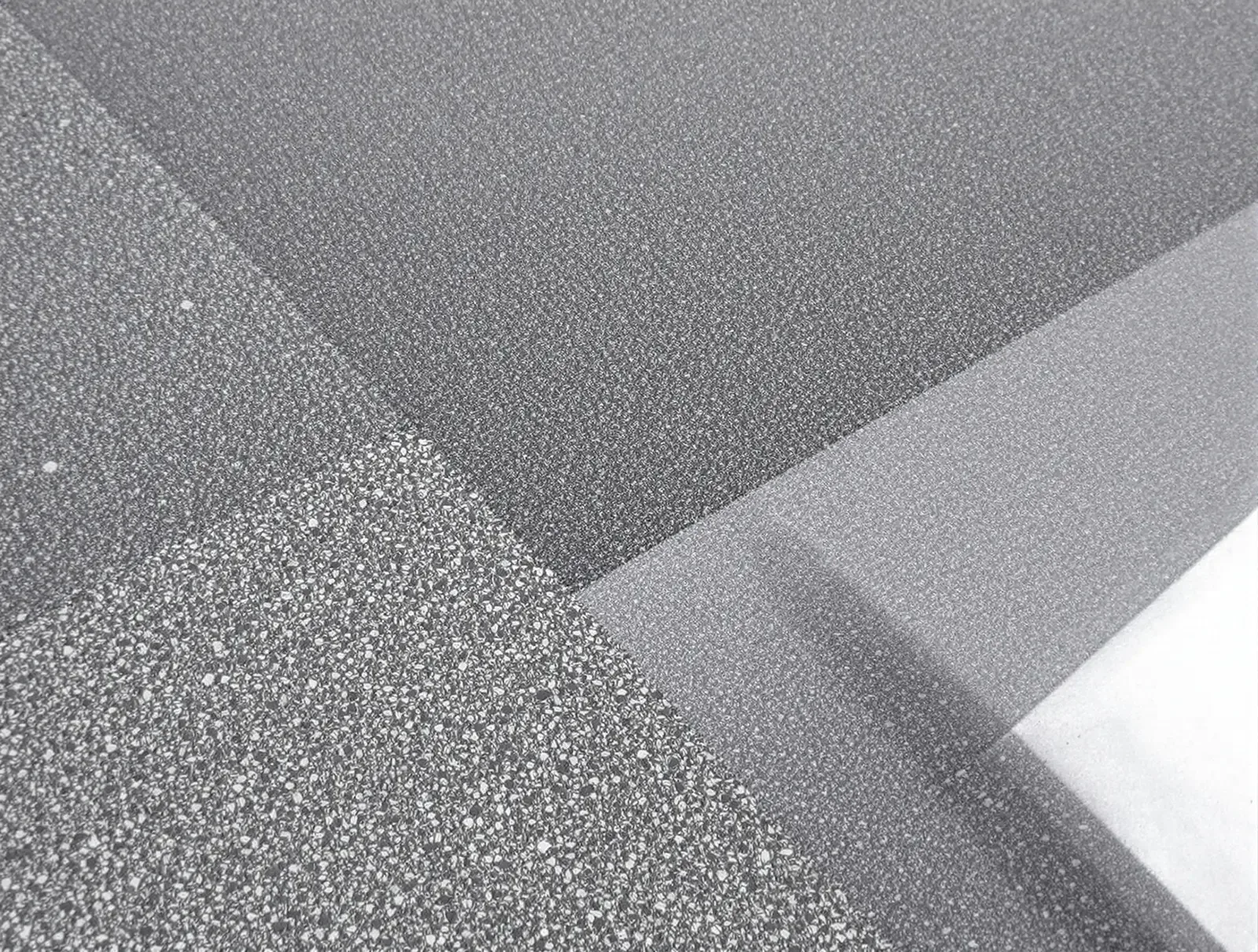
Granules protect the asphalt from sunlight. They also hide small defects, so we check the sheet before the surface settles. Walk pads go along routes to rooftop units. A dark cap sheet in Kingsport summers can reach high surface temperatures; recorded highs have reached 104 F, so the crew starts early and breaks at midday when the surface is too hot to handle.
Flashing, Curbs and Drains
Modified bitumen flashings are built up in layers: a base flashing sheet turned up the wall and a cap flashing lapped over it. Metal counterflashing finishes the top. Each curb, pipe and drain gets its own detail, and each is inspected before the next trade arrives.
Where the existing roof ties into new work, we stage the tie-in at the end of each day and cover the open edge. Penetrations follow the order used for skylight and penetration flashing, and each drain gets the flow test used in roof drain work. A drain set high is lowered before the cap sheet goes on.
Fire Watch, Permits and Phasing
The city roof permit for a bitumen job is a stamped plan set with a PDF, and the contract threshold of $25,000 brings in the Tennessee license and insurance certificates. The hot work permit is a different document altogether, filed with the site's safety office, and it is requested at the same time as the city filing.
Fire watch continues for a set time after the last flame goes out. A watcher walks the roof and inspects the space below. Kingsport's industrial base includes the Domtar mill, converted in 2023 from a site dating to 1916, and chemical plants with their own rules. The plan follows whichever rules apply.
Weather Windows and Inspection
Asphalt and adhesive need dry surfaces, and rain reaches Kingsport roofs on about 133 days a year, a total near 45 inches, against a temperature record from minus 18 F to 104 F. Wind is the other limit on torch work, since Morristown warnings have put gusts of 60 mph and hail into county forecasts. The forecast gets checked before each opening, and a section closes early if conditions turn.
Inspection runs section by section. Laps are probed. Flashings are checked. Drains are flow-tested. The superintendent walks each section before the crew moves on, and the results go in the log with photographs.
Hail is a separate inspection item. Warnings for Sullivan County have cited hail with expected damage to roofs, siding and trees. After a hail event, the cap sheet is checked for fractured granules and bruised reinforcement, and the findings are dated. A hail damage repair scope is kept apart from the original installation record.
Closeout and Punch List
The building manager and the superintendent walk the finished roof with us. Laps, flashings and drains are checked against the plan, and each open item leaves with a name and a date. The permit sign-off, hot work log, photographs and warranty file make up the package. If the owner wants a comparison, a multi-ply built-up roof or a TPO sheet is priced beside the bitumen option. An owner in downtown Kingsport sends the same items.
Commercial Roofing Questions
Can modified bitumen be installed without a torch?
Yes. Cold-applied and self-adhered sheets avoid open flame. We recommend asking the site's safety office what is allowed before the scope is written. The cost difference between methods is shown in the bid, so the owner chooses with the numbers in hand.
What is a fire watch?
A person who walks the roof and the space below for a set time after the last flame goes out. We recommend writing the duration into the hot work permit and the contract. The watch ends only when the area has been checked and signed off.
How are laps tested on a bitumen roof?
We probe a sample length of each lap, look for a bead of bitumen at the edge and repair any lap that lifts. We recommend a lap log with locations and photographs. The log goes into the closeout package.
What weather stops a bitumen job?
Rain, standing water and high wind. Torch work is limited by gusts, and Kingsport warnings have cited 60 mph. We recommend a spare day in every phase and a tarp-and-dry staged on the roof. No section is left open overnight.
Who files the hot work permit?
The roofer prepares it, and the building or plant safety office approves it. We recommend filing it with the work plan, not after it, since review can take as long as the material order. Kingsport's roof permit is a separate filing.