
Pinning down the date comes first on a hail claim. Before anyone climbs, we ask for the date and time of the storm, the weather alert that covered the address and the last roof inspection on file. A hail record without a date cannot be matched to a warning, and a roof without a prior inspection leaves the adjuster guessing about what came before.
Hail damage in Kingsport, TN arrives with the same storms that bring wind damage, and a cold snap can follow with ice damage on a damaged roof. Our plan walks the repair in order: confirm the event, survey the roof, document the marks, protect any opening, repair and close out. Every step lists what it needs and who takes the handoff.
The First Step Is the Event Record
We collect three items before the survey. The storm date and time from the owner or the building log. The warning or alert for the area, if one was issued. The most recent roof inspection or repair record. Together they let us read the roof against a known event and not against a vague memory.
In one example, the July 4, 2026 warning from the National Weather Service in Morristown told Sullivan and nearby Washington counties to expect 60 mph gusts and hail and damage to roofs, siding and trees. A warning is a regional notice, not proof of damage at one address, so the roof survey decides what is actually there.
The owner's insurance contact and the broker are noted too, so the adjuster's visit can be scheduled before the survey ends. A call on day one saves a second site visit.
If the owner has no prior inspection on file, the survey itself becomes the baseline. It records the roof as it stands after the storm, so any later event can be measured against it.
Access, Staging and Survey Equipment
Hail surveys need good footing and good light. We ask the building contact for the hatch key, the best time of day and the hours when the space below is quiet. A small laydown area at the access point holds chalk, a test square, a scale and photograph markers.
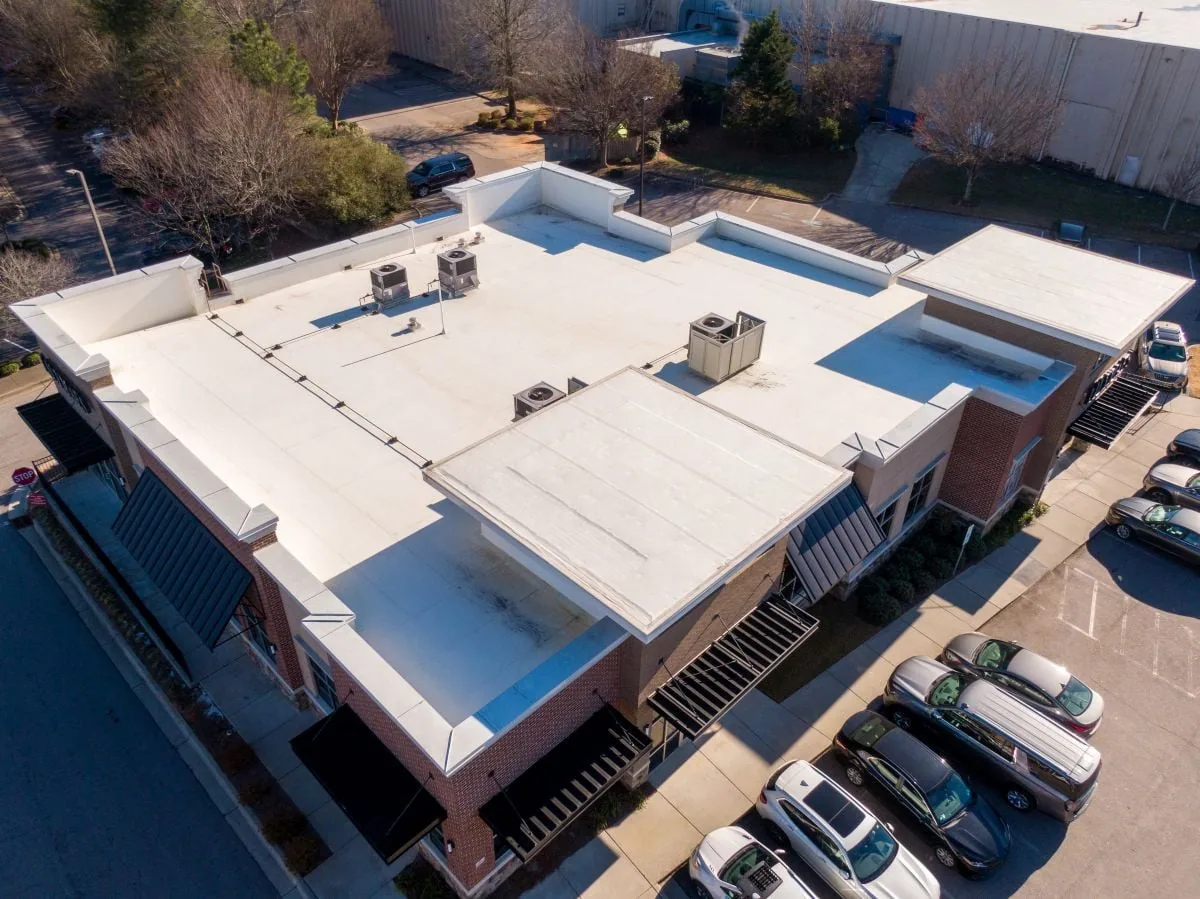
Where roofs are large or hard to reach, a drone flight comes first, with hands-on checks at the spots the images flag. A drone roof inspection scans the whole surface in one pass and saves foot traffic on a wet or fragile roof.
Wet or icy roofs are surveyed from the ground and by drone until they are safe to walk. The report says which method captured each mark.
Sequence of Work, Survey to Repair
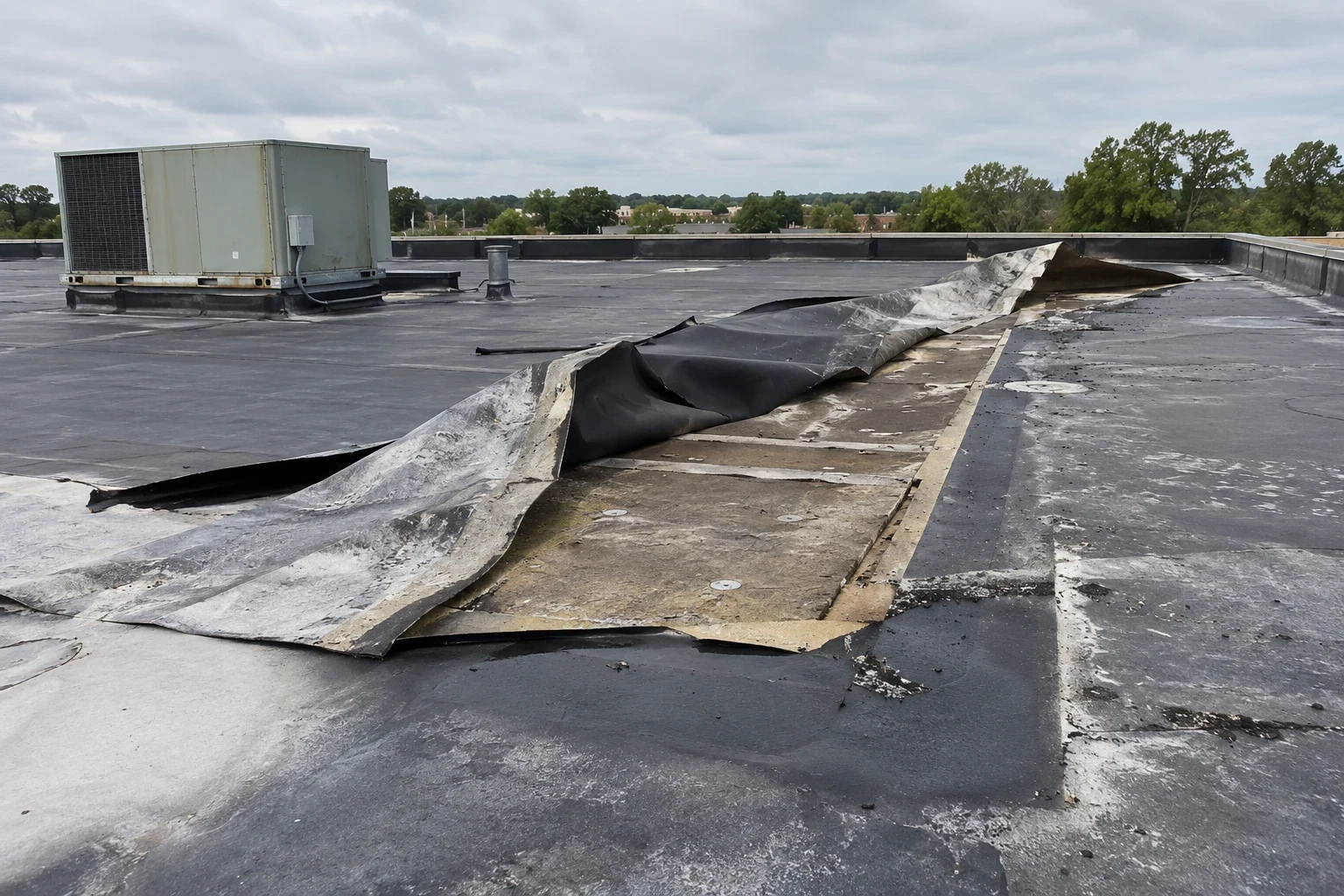
The survey divides the roof into test squares and counts marks in each. Bruises, fractured coatings, punctures, dented metal and displaced granules or stone are logged by type, size and direction. Soft spots are tested with a probe, and a moisture survey maps any saturated insulation under suspect areas.
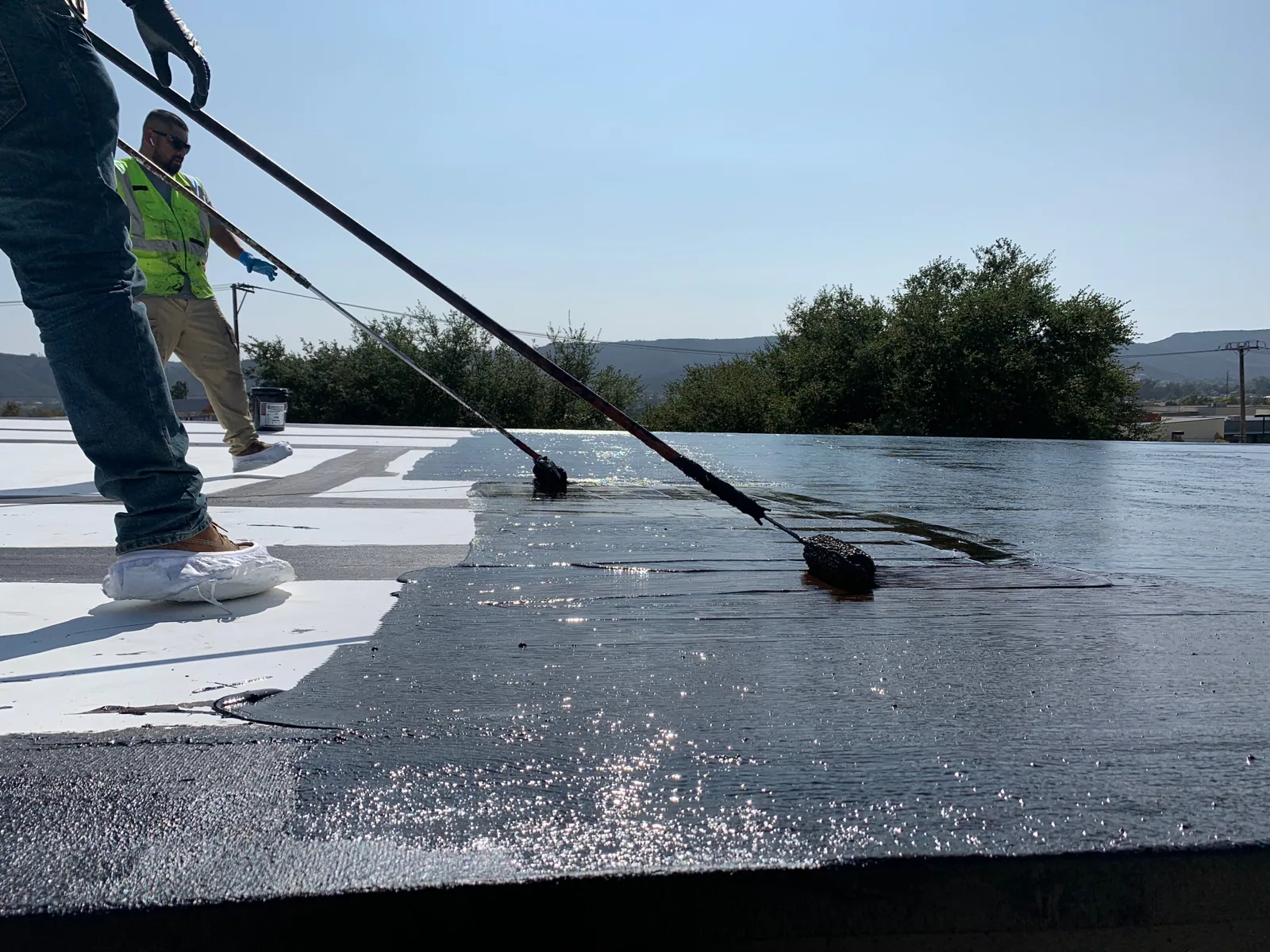
The repair sequence follows the findings. Punctured membrane is cut out and patched. Fractured coating is recoated or replaced. Dented metal is replaced where it has lost its seal. Where damage is widespread, the scope compares section replacement with a silicone coating restoration and with full replacement. A storm damage roof repair scope lists each option with the evidence behind it.
Test squares are marked in chalk and photographed before and after the count. Each square is the same size, and the count is repeated on every roof section so sections can be compared with each other.
Skylights, vents and rooftop units get their own check. Hail can crack a skylight dome or dent an exhaust hood without marking the membrane nearby, so each is photographed and rated before the field work is priced.
Phasing Around Operations and Carrier Visits
Claims have waiting points. Before permanent work starts the adjuster may want a visit, and the carrier may ask for another look. The plan holds permanent repairs until the adjuster releases the area, and temporary protection keeps the building dry in the meantime. The protection is photographed and checked after each rain.
For commercial buildings with tenants, repairs are phased around trading hours and deliveries. A claim sequence for a retail strip on Stone Drive differs from one for a plant, but the order of steps is the same.
Temporary protection on a hail-damaged roof is usually small: patches over punctures, caps over dented vents, tape-sealed seams. Each piece is numbered on the plan and photographed, so the carrier sees what was done to hold the roof until the visit.
Inspection, Permit and Claim File
Spot repairs seldom need a permit. Section or full replacement does, and the Kingsport submittal goes in as soon as the scope is agreed, which lets the permit and the materials land together. Under a manufacturer warranty, the file names who must hear about the loss and the date they were told.
The claim file is built in the order the work happened: event record, photographs, test-square counts, moisture map, scope with evidence for each line and permit record. A claim documentation package like this answers most of the carrier's questions before they are asked.
When a roof has been hit more than once, the file separates the events by date. A mark that was there before the storm in question is logged as prior wear, and the earlier inspection record shows it.
Weather Windows Between Storms
Hail comes with thunderstorms, and thunderstorms come in bursts. Sullivan County logs just four tornadoes between 1680 and 2025, so wind and hail drive most storm repairs here. The schedule keeps a crew ready for the next warning and a list of what is strapped down when one posts.
With about 133 wet days a year, no section stays open past the afternoon. Neighboring cities share the pattern: Bristol, Tennessee averages about 41 inches of precipitation a year, and Johnson City about 45, so a storm there is planned the same way.
Summer storms are the likeliest to carry hail, and summer heat is the next constraint. With highs of 104 F on record, repairs on dark membrane start early, and adhesive working times are checked against the roof surface and not the air.
Closeout and Punch List
To finish, the owner walks the roof beside us and we photograph the punch list. The finished file contains the event record, survey counts, the repaired-area plan, product sheets, the warranty file and the permit record.
Any area the carrier has not yet released stays listed, dated and assigned until it is signed off.
Commercial Roofing Questions
Does a hail warning mean my roof is damaged?
No. A warning covers a region. We recommend a roof survey that counts marks in test squares and records what the surface shows.
How soon after a storm should the roof be inspected?
As soon as it is safe and dry. We recommend photographing the roof within days, since weather and foot traffic change the marks.
What marks count as hail damage?
Fractured coatings, bruised or punctured membrane, dented metal and displaced stone or granules in a pattern. Random wear does not follow a direction.
Can a coating fix hail damage?
On a dry, sound roof with minor marks, a coating can restore the surface. We recommend a moisture survey first, since saturated insulation changes the answer.
Who decides coverage?
The carrier does. We document condition and cause and recommend sending the file in the order the work happened.
Does a hail repair require a permit?
Spot repairs usually do not, and section replacements do. We recommend confirming with the Building Department before the scope is final.