Winter roof work starts in the fall, with a drain walk. Before the first freeze, the crew needs the roof plan, the drain locations and a key to the hatch, and the building contact needs to know who will be on the roof after a storm. A drain cleared in October is cheaper than a pond found in January.
Snow in Kingsport, TN is light by northern standards, but ice is not. A freeze after a thaw can lock a drain, split a coping joint or lift a flashing. Our plan walks the work in order: fall check, storm response, spring survey, repair and closeout. Every step lists its prerequisite and its handoff.
By spring, the fall photographs and the storm entries together show what the winter changed, and the repair scope follows from them.
The First Step Is a Fall Drain Walk
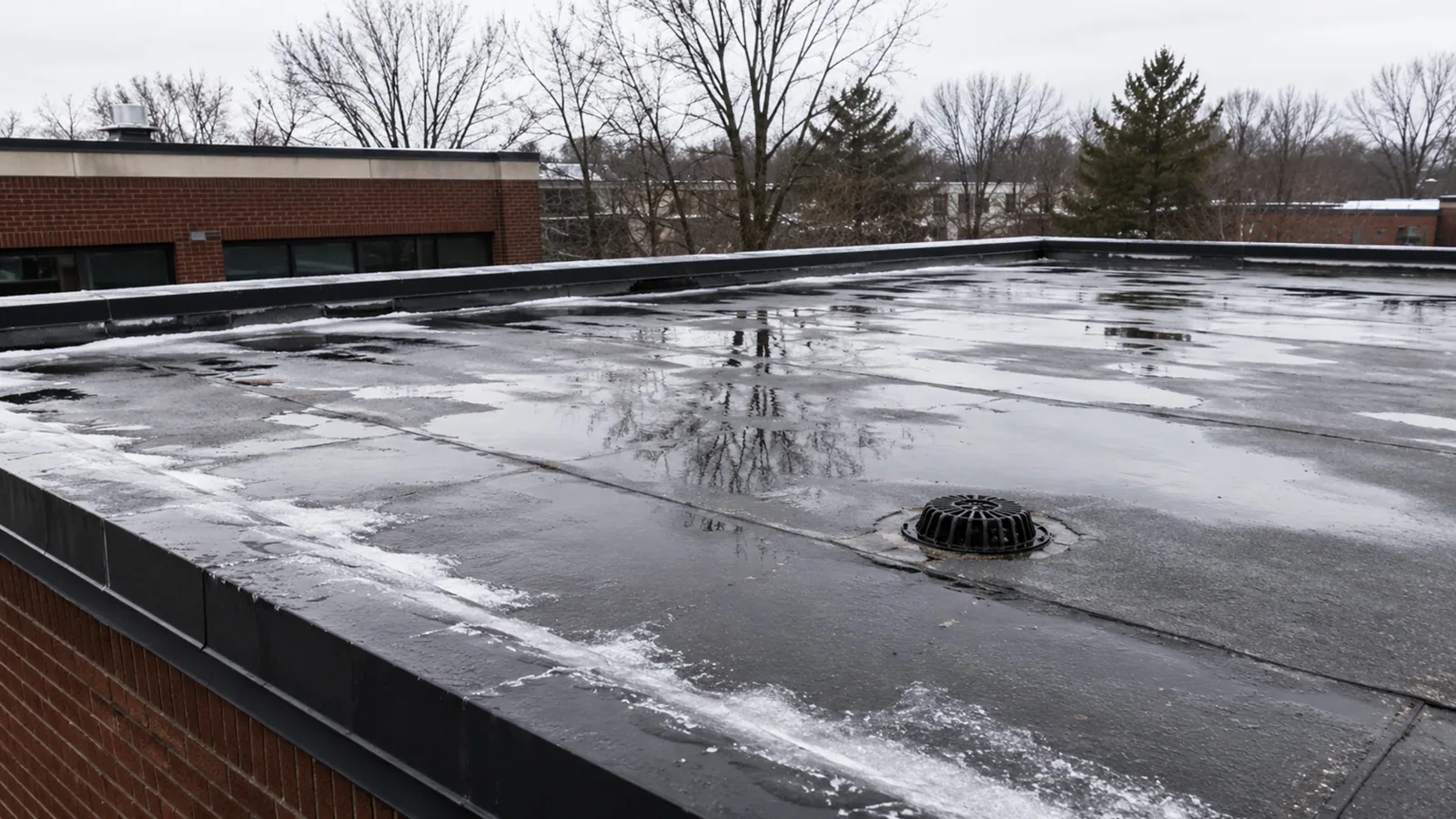
The fall walk clears leaves and debris from every drain, scupper and gutter, flushes each outlet with water and logs the flow. Coping caps, sealants and rooftop equipment curbs get a quick check. Anything marginal goes on a list for repair before the first hard freeze.
With the roof plan marked and the list in hand, the building contact knows where water will go in a thaw. The same marked plan is used for the storm walk and the spring survey, so the three visits read as one record.
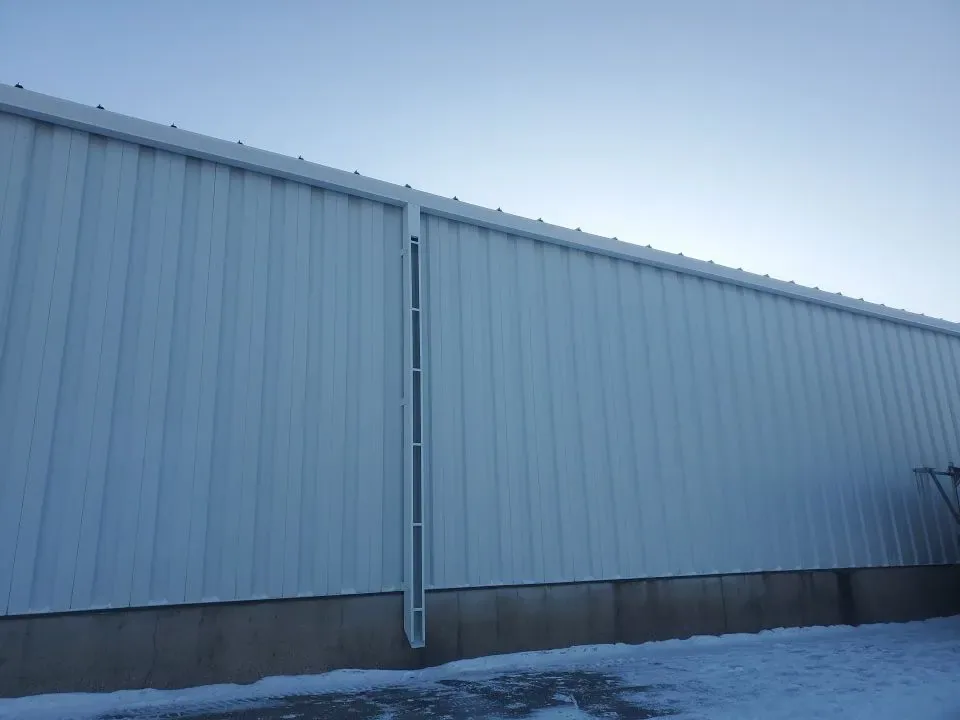
The fall list also notes snow-retention and guard details on metal roofs, since a slide of wet snow can take out a gutter or an awning below. Where a building has them, each guard is checked for attachment before winter.
Access, Staging and Safe Footing in Winter
Ice changes the access plan. Ladders and lifts need clear, salted approaches, and a standing seam metal roof needs extra care because frost makes it slick, roof hatches need to open without a fight and the route across the deck must be free of frost. We ask the building contact to clear the approach and tell us where the safest route runs.
Staging is kept small in winter. Materials come up in the morning and are strapped or covered at night. A small laydown area at the hatch holds sealant, patch stock and a thermometer, and anything temperature-sensitive stays in a heated truck.
Roof hatches that freeze shut are noted on the plan, with the key holder and the person who can free the hatch. A crew that arrives to a frozen hatch loses the morning, so the call comes the day before.
Sequence of Work, Thaw to Test
The storm response runs in a fixed order. Clear ice from drains with heat or steam, never with a pick. Check the drain bowl for cracks. Look for ice-lifted flashing and open seams along the coping. Apply temporary seals where cold limits permanent repair. Photograph everything.
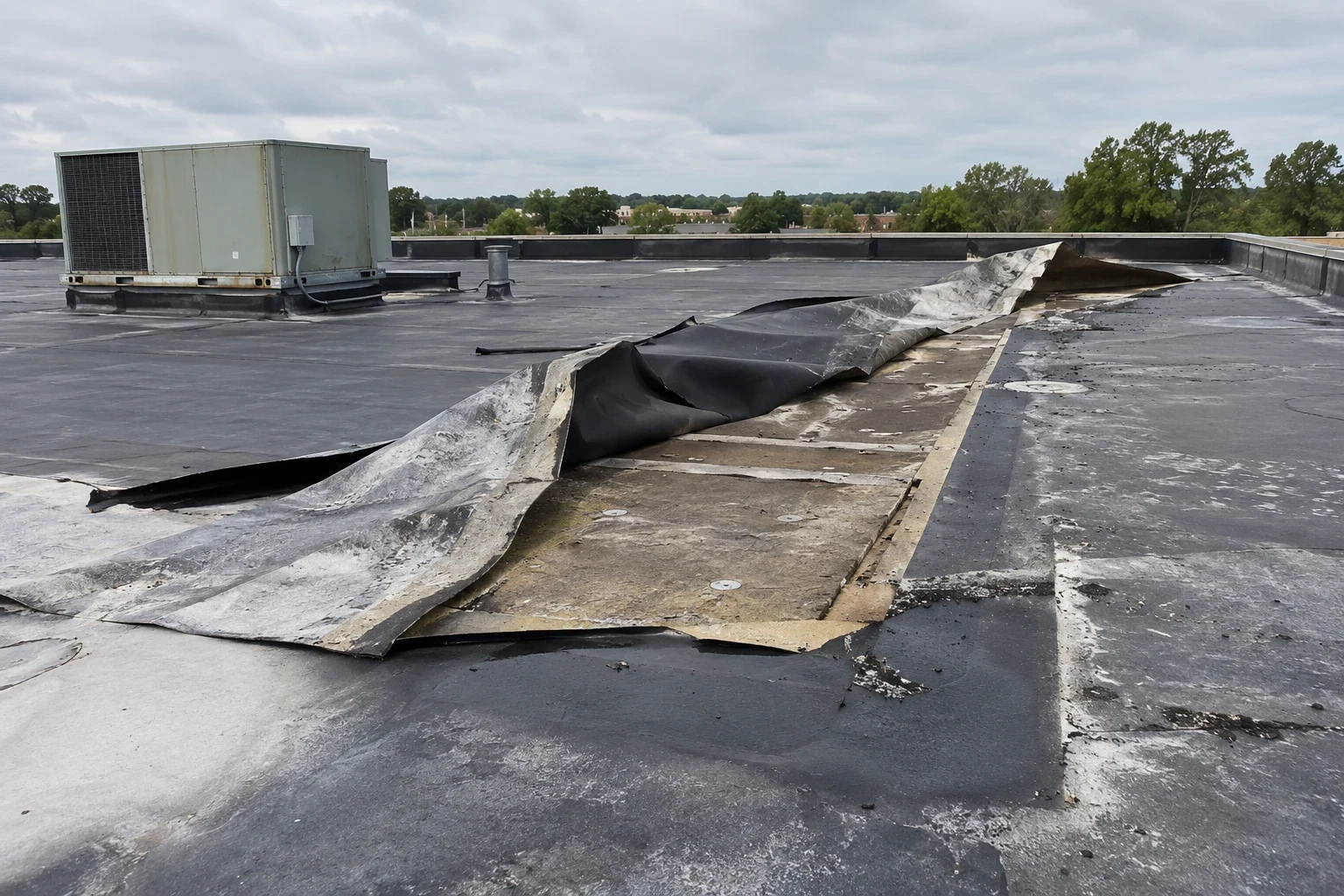
The spring repair follows the survey. Cracked drain bowls are replaced. Flashing that pulled away is re-sealed or replaced, the same way a flashing failure is handled, and coping that shifted is re-seated with edge metal and coping clips. Open seams are welded or bonded in the first mild window. A drain and scupper repair scope gives the outlet size, the bowl and the clamping ring at every location.
Gutters, where they exist, are cleared and checked for ice weight. A gutter pulled from the fascia by ice is repaired with new brackets, and the run is re-sealed at its joints.
Phasing Around Operations in Winter
Winter repairs are small and quick, but they still touch occupied space. We schedule drain and flashing work for the quietest hours, shut down rooftop units only when the mechanical contractor confirms, and leave tenants a written note of the day's work.
Plants and campuses keep winter calendars of their own, with heating loads, holiday shutdowns and limited staff. We ask for those dates before the visit and place the work around them. For wet spring conditions, the plan keeps a ponding water check on the list.
Between storms, the plan sets who walks the roof after a freeze: the building engineer, a facilities lead or the roofing crew. Having a named person avoids the case where everyone assumes someone else looked.
Inspection, Permit and Records
Small winter repairs seldom need a permit. Replacing sections of membrane or edge metal usually does, and a call to the Building Department confirms it. A warranty on the roof adds a notice step, with the file naming who must hear about ice damage before repairs begin.
Photographs are taken from the same positions in fall, after each storm and in spring. Anyone can flip through the three sets and see what the winter did. The set goes to the owner and, if a claim follows, to the adjuster.
Where ice damaged a roof covered by an insurance policy, the file keeps the dated storm photographs, the temperature record for the week and the repair scope together, so the adjuster sees cause and effect on one page.
Weather Windows in a Mild-Snow Winter
Snow in Kingsport totals only about 5.1 inches a year, mostly in January and February, yet the record low sits near minus 18 F. A light snow followed by a hard freeze is the usual trouble: meltwater refreezes in drains and at edges. Johnson City, about 25 miles south, sees about 15.6 inches, so a roof there carries more snow and a different plan.
Rogersville, wetter than Kingsport at about 48.8 inches a year, shows how much the region varies. Rain is the other half of the year. Wet days run to about 133 a year, and Morristown thunderstorm warnings have named 60 mph gusts and hail, so a winter plan includes a post-storm check that covers wind and hail damage as well as ice.
Heat belongs in the same plan. A summer reading of 104 F on record softens sealants installed in winter, so the first warm-season visit rechecks every temporary seal and replaces it if it has moved.
Closeout and Punch List
Once spring repairs are done, the building contact and we walk the roof and the punch list is photographed. The finished file contains the fall, storm and spring photograph sets, the repaired-area plan, product sheets and any permit record. A date for next fall's drain walk goes on the owner's calendar.
A drain bowl on back order stays listed, dated and assigned.
Commercial Roofing Questions
Does a light-snow area still need a winter roof plan?
Yes. Ice at drains and edges causes most winter damage here, and a freeze after a thaw does it fast. We recommend a fall drain walk and a post-storm check.
Should snow be shoveled off a commercial roof?
Only if an engineer says the load is a concern, and then with care. Shovels cut membrane. We recommend leaving removal to trained crews who log where they worked.
How do you clear a frozen drain?
With heat or steam, not with picks that can crack the bowl. We recommend checking the bowl for cracks afterward and logging the method.
Can ice damage be repaired in winter?
Temporary seals can go on in cold weather. Permanent repairs wait for the temperature range the materials need. We recommend a dated plan for the first mild window.
What is an ice dam?
Meltwater that refreezes at a cold edge and backs water under the roofing. We recommend checking edge details and insulation where a dam forms.
When is the best time for the spring survey?
After the last hard freeze and before the spring rains. We recommend the same photograph positions as the fall set.