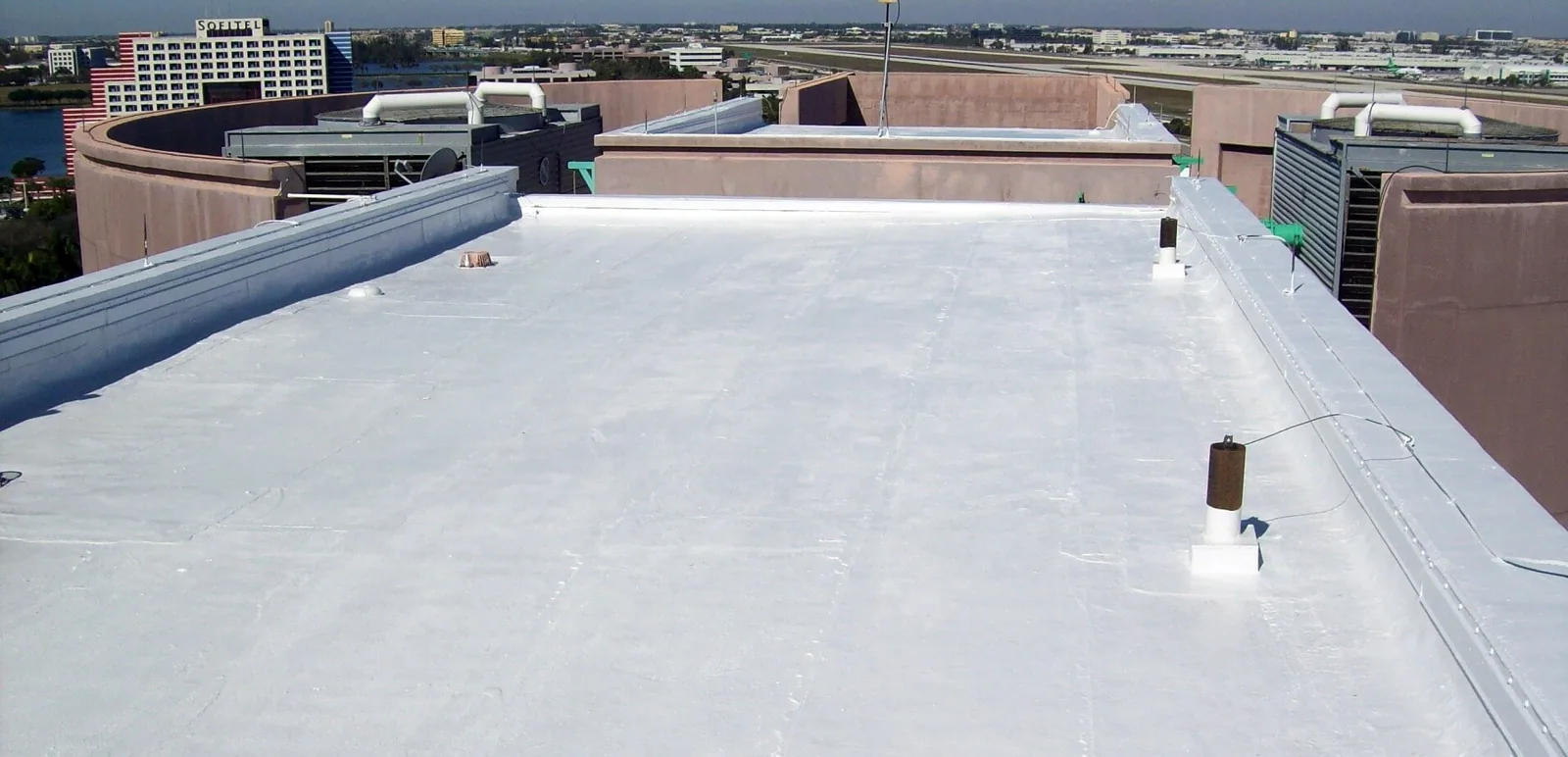
The first visit to a ponding roof happens on a dry day, two days after rain, so the water that is still standing tells us where the low spots really are. Before that visit we need three things: the roof plan, the drain locations and a contact who can open the hatch. Everything else, from the tear-off sequence to the crane pick, follows from what the survey shows.
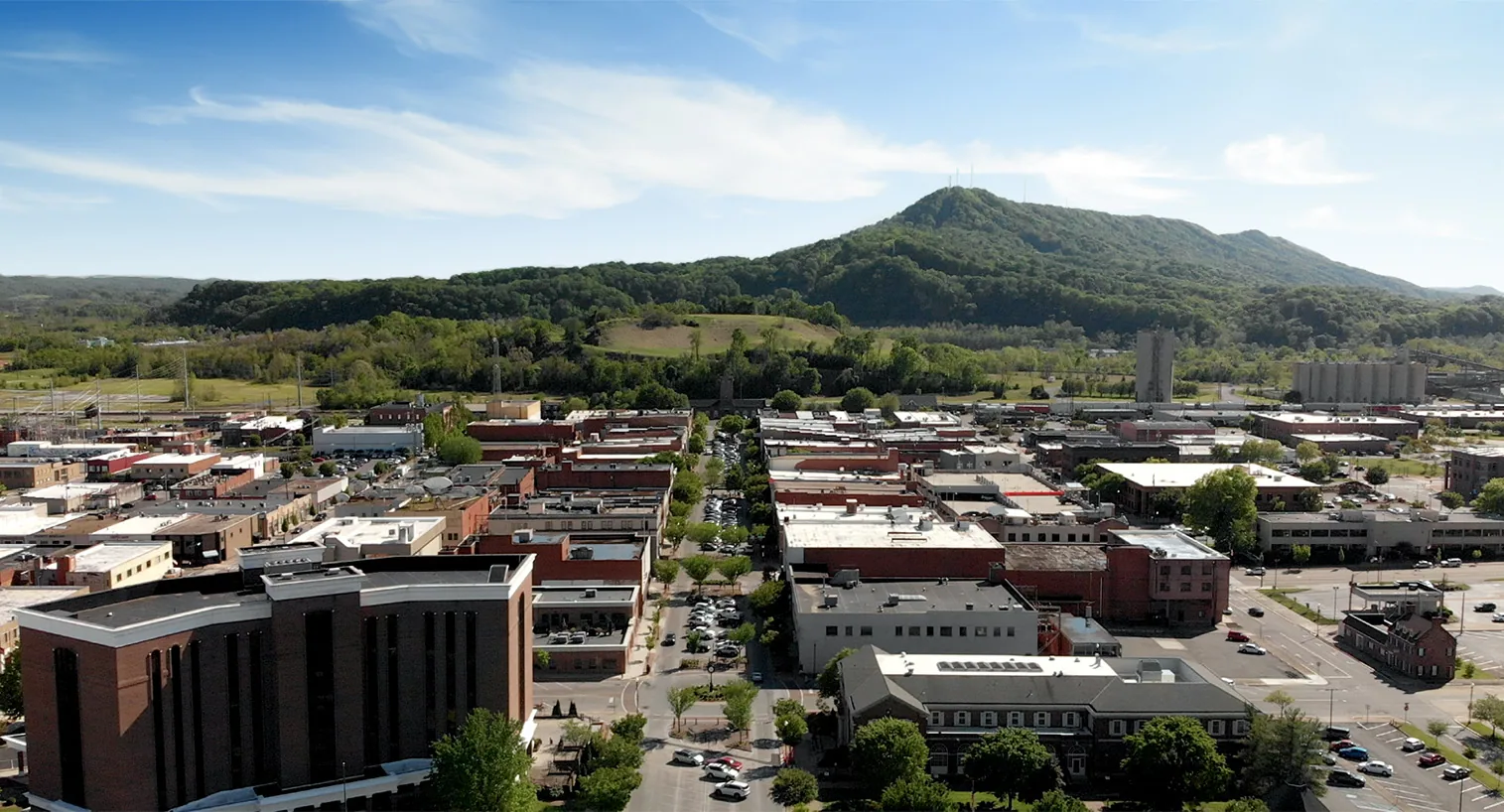
Ponding in Kingsport, TN builds up on low-slope roofs that see rain on most weeks of the year. Our plan walks the repair in order: clear the drains, measure the ponds, choose the fix, stage the work and close it out. Each step names the handoff to the next, and a ponding roof often turns up a seam failure or a flashing failure beside the pond.
The First Step Is a Dry-Day Survey
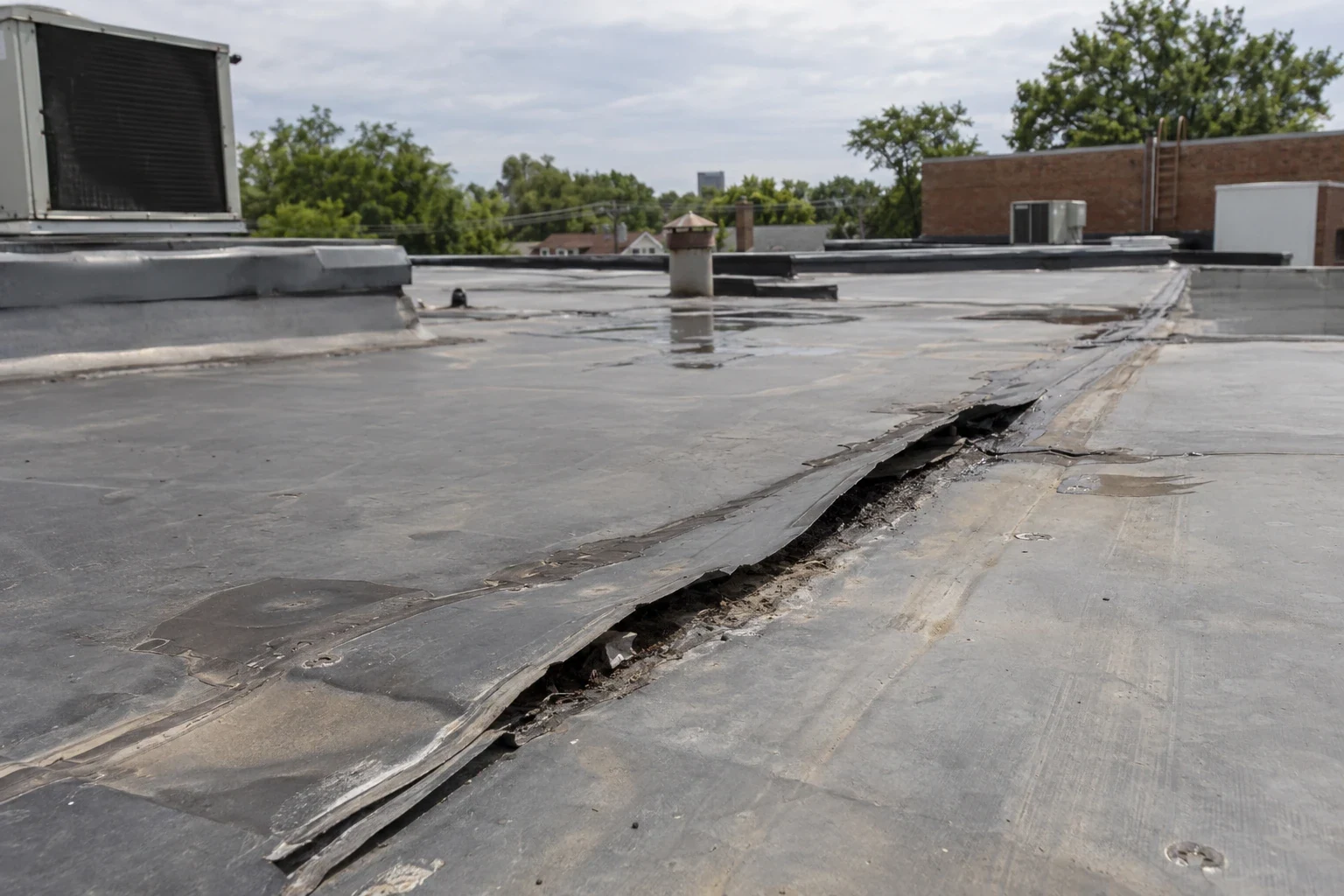
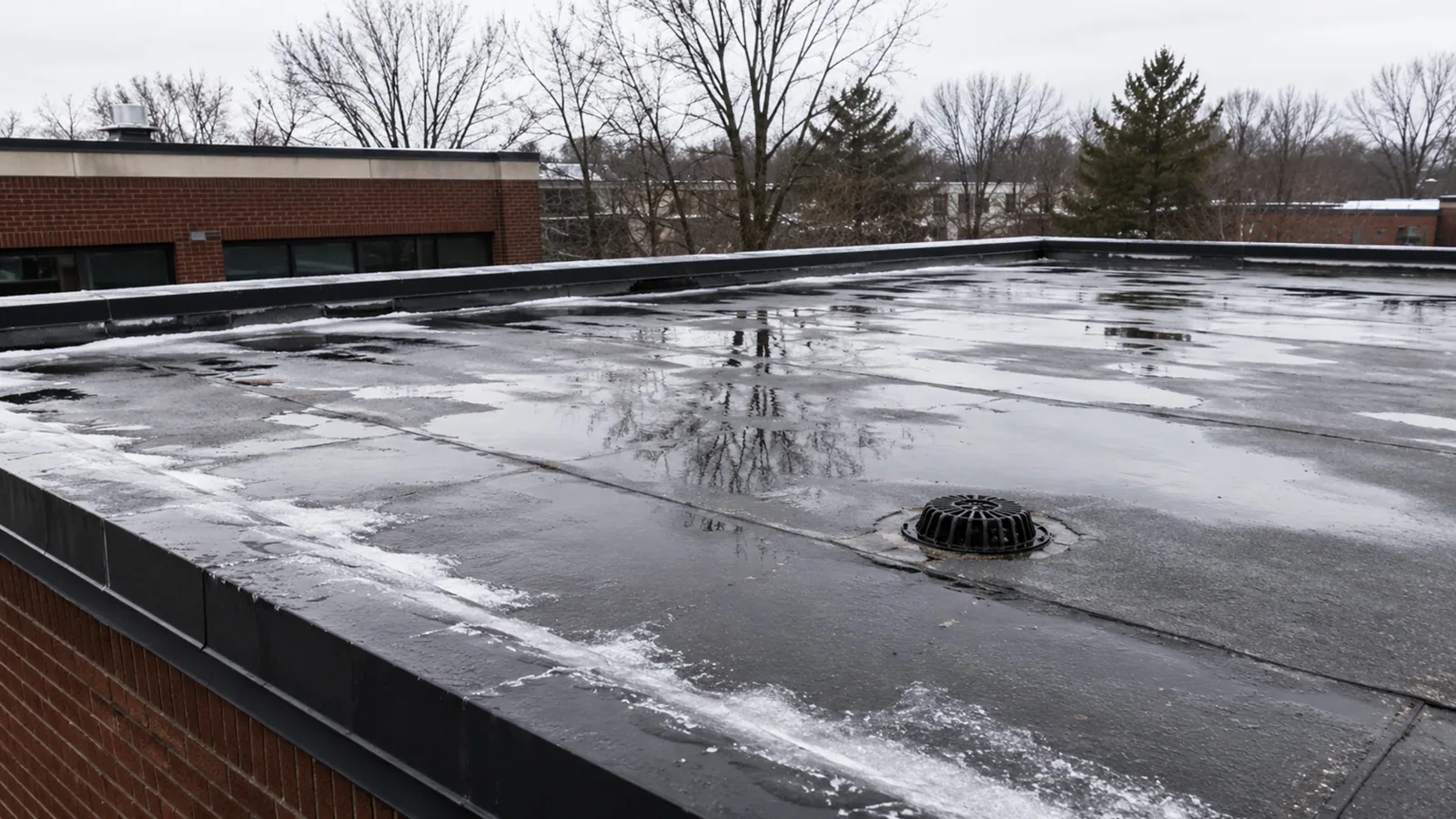
We walk the roof with a level and a tape. Each pond is photographed, measured in depth and traced onto a sketch plan, and the nearest drain is flushed to see whether water leaves. A drain that runs slowly gets a camera check on the line below the bowl if the building contact allows it.
Standing water that lingers more than a day or two after rain is the trigger for a repair scope. Short puddles near drains are normal. A pond that leaves a ring on the membrane or sits in the same place after every storm is the one that gets priced.
Drain locations are checked against the roof plan, since drawings often show drains that were moved or capped. Where plan and roof disagree, the roof wins and the plan is corrected in the file.
Access, Staging and Hoist Plan for Drainage Work
Drainage work often means cutting into the roof near a drain bowl or adding tapered insulation across a large area. That calls for a laydown area close to the work, a material hoist away from the dock and a debris chute that avoids tenant entrances. We mark all three on the site plan.
On a large retail or industrial roof, the hoist is placed where it can serve several work areas, so the crew is not carrying rolls across the deck. A crane pick for tapered board or drain bodies is scheduled for the first hours of the morning.
Roof drains tie into storm lines that belong to the building or the municipality. Before a bowl is replaced, we confirm who owns the line below it and whether the flow can be tested, so a new bowl is not connected to a line that is already clogged.
Sequence of Work, Cause by Cause
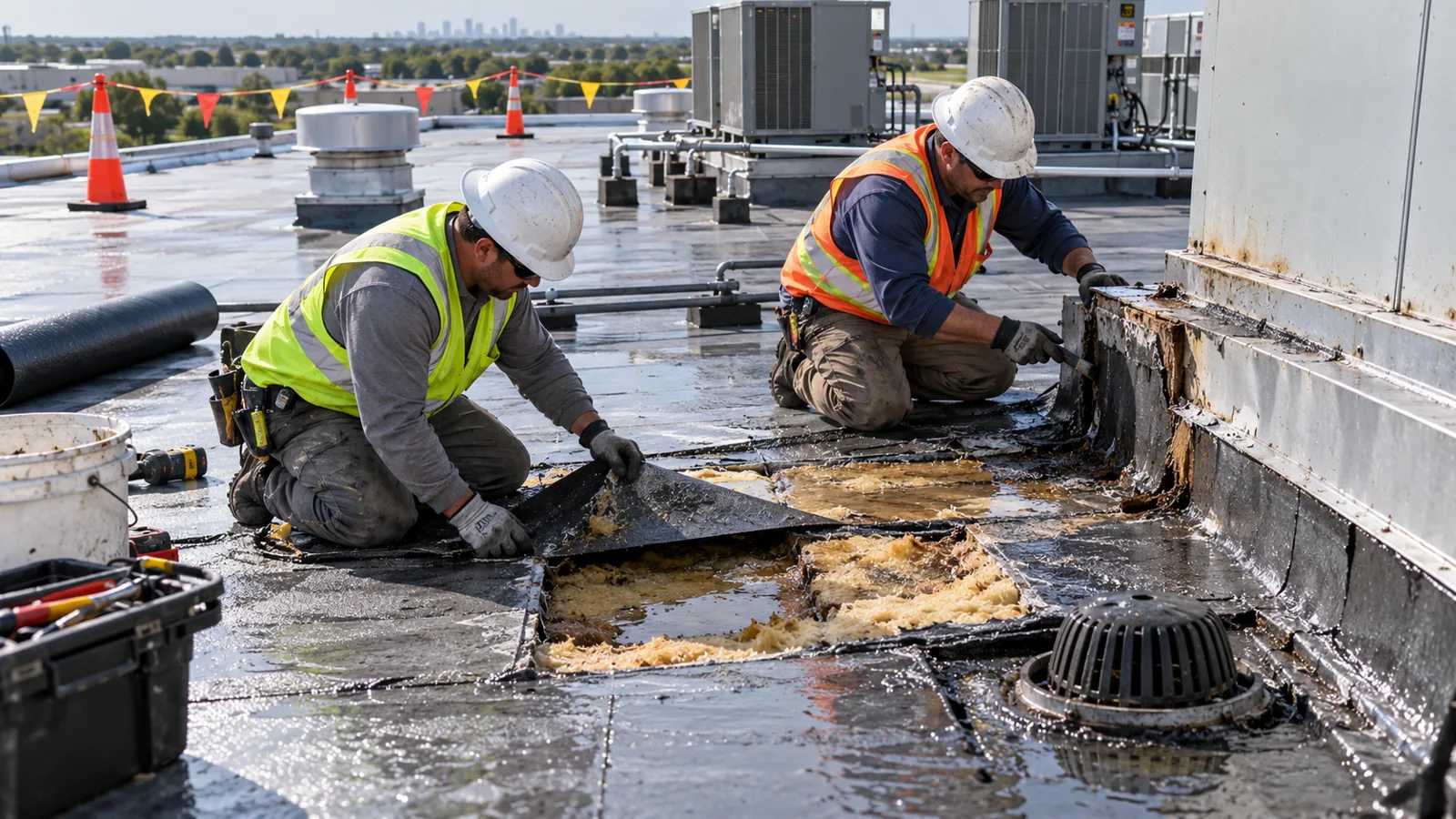
The repair follows the cause. For a clogged or high drain, the sequence is clean, flush, reset the bowl and reflash. For a sagging deck, it is survey, tapered insulation, new TPO membrane and new flashings. For compressed insulation under heavy equipment, it is cut out, replace, tie in and cover.
Each step is photographed before the next begins. Drain work comes first on any roof, because water must have somewhere to go before the rest of the repair makes sense. A drain and scupper scope lists outlet size, bowl type and clamping ring for each location.
Where tapered insulation is added, a cover board goes over the insulation before the membrane, and the slope is checked with a level at each drain before the membrane is installed.
Overflow scuppers are checked at the same time. A scupper set too high or blocked by a liner turns a normal storm into a deep pond, and lowering or clearing one is often the cheapest fix on the roof.
Phasing Around Occupied Space
Ponding repairs are often done in sections, because the roof cannot be opened in one piece. The plan starts over the least sensitive space, closes each section against rain before the shift ends and leaves tenants a written note of the day's work.
Kingsport has retail roofs where tenant turnover calls for exactly this kind of planning. Fort Henry Mall lost Sears in 2017 and JCPenney around October 2020, and Rural King took the old JCPenney space in May 2025, while Stone Drive owners have been talking with brokers about new tenants, much like the large-format retail sites elsewhere. A roof plan for a vacant or partly leased building also records who gets notified if a pond overflows while the space is empty.
Kingsport's snow totals only about 5.1 inches a year, yet a January freeze can lock a drain and hold a pond for days. The winter plan lists who checks drains after a freeze.
Inspection, Permit and Warranty Notice
A drainage repair that adds insulation or changes the membrane usually needs a Kingsport permit. Before the scope is fixed we check with the Building Department, then send the submittal ahead of the delivery. A roof under warranty brings a notice step: the file names the manufacturer contact to call before work starts.
The inspector's visit goes on the calendar. Slope is verified at each drain with a level and a photograph before the membrane goes down, and the inspector sees the same photographs.
If an engineer is needed to confirm that the deck can carry added insulation, the review is requested at the same time as the permit and its letter goes into the submittal.
Weather Windows for Drainage Repairs
Wet days number about 133 a year in Kingsport, with a total near 45 inches, and Rogersville nearby runs wetter at about 48.8 inches. That frequency means ponding shows up often and repairs need dry windows. We keep a weather buffer and open only what the crew can close the same day.
Hail and gust warnings matter too, since a clogged drain can turn a thunderstorm into a roof full of water. When a warning posts, drains are checked first and loose material second.
Summer heat is part of the plan as well. Highs of 104 F on record soften some membranes, so a pond that sits on a soft membrane in July is measured again in October before the repair is final.
Closeout and Punch List
When the work is done we wait for the next rain, or flood-test a section with a hose where the owner allows it, and confirm the water leaves. The punch list records any pond that remains, with a depth and a date. The closing folder lists the revised plan, product sheets and permit record.
A drain body on back order is the sort of loose end that stays listed, dated and assigned.
Commercial Roofing Questions
How long can water sit on a commercial roof before it needs repair?
A day or two after rain is the usual limit. Water that remains longer, or that leaves a ring on the membrane, is a candidate for repair. We recommend a dry-day survey to measure the depth.
Can a clogged drain be fixed without a roof repair?
Often. Cleaning, flushing and resetting the bowl restores flow. If the bowl sits above the low point of the deck, the fix changes to a new drain or a sump.
When is tapered insulation the right answer?
When the deck holds water and the drains cannot move it. We recommend adding taper only with a new membrane, so the slope and the waterproofing are installed together.
Does ponding void a manufacturer warranty?
Some warranties limit coverage where water stands. We recommend reading the warranty file before the repair and notifying the manufacturer if the terms require it.
Do small ponds matter?
They can. A shallow pond that leaves a ring after every rain tells us where the deck is low, and it may deepen as the deck moves.
How do you test the repair?
We watch the next rain or run a hose test if the owner allows it. The result goes on the punch list with a date.