Seam repair starts with a grid. Before anyone welds or glues a single lap, the roof is divided into squares on the plan, and every seam in every square gets probed with the same tool and the same pressure. That grid is the first thing we ask the building contact to approve, because it tells the owner that the whole roof was checked and not only the leak.
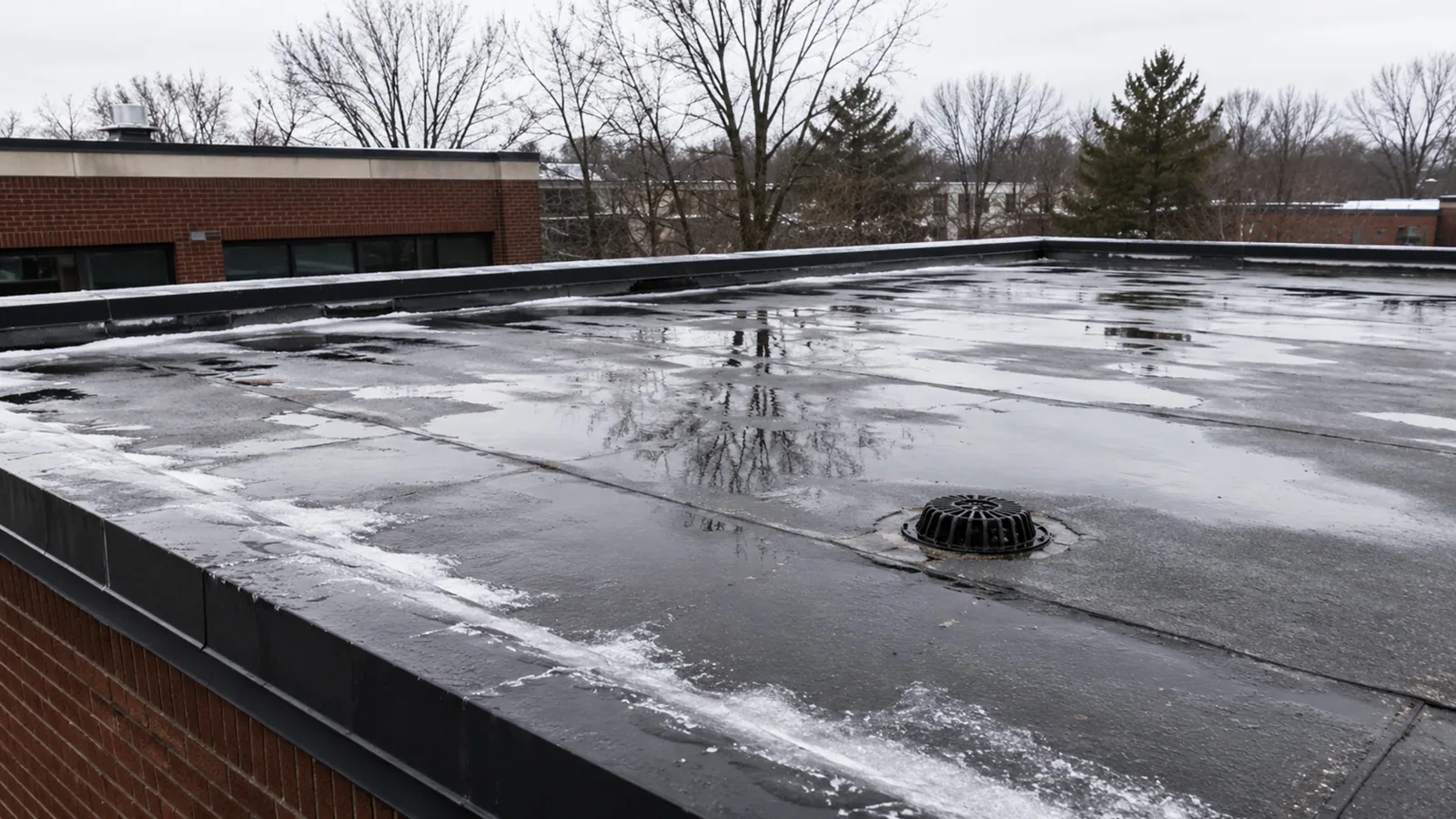
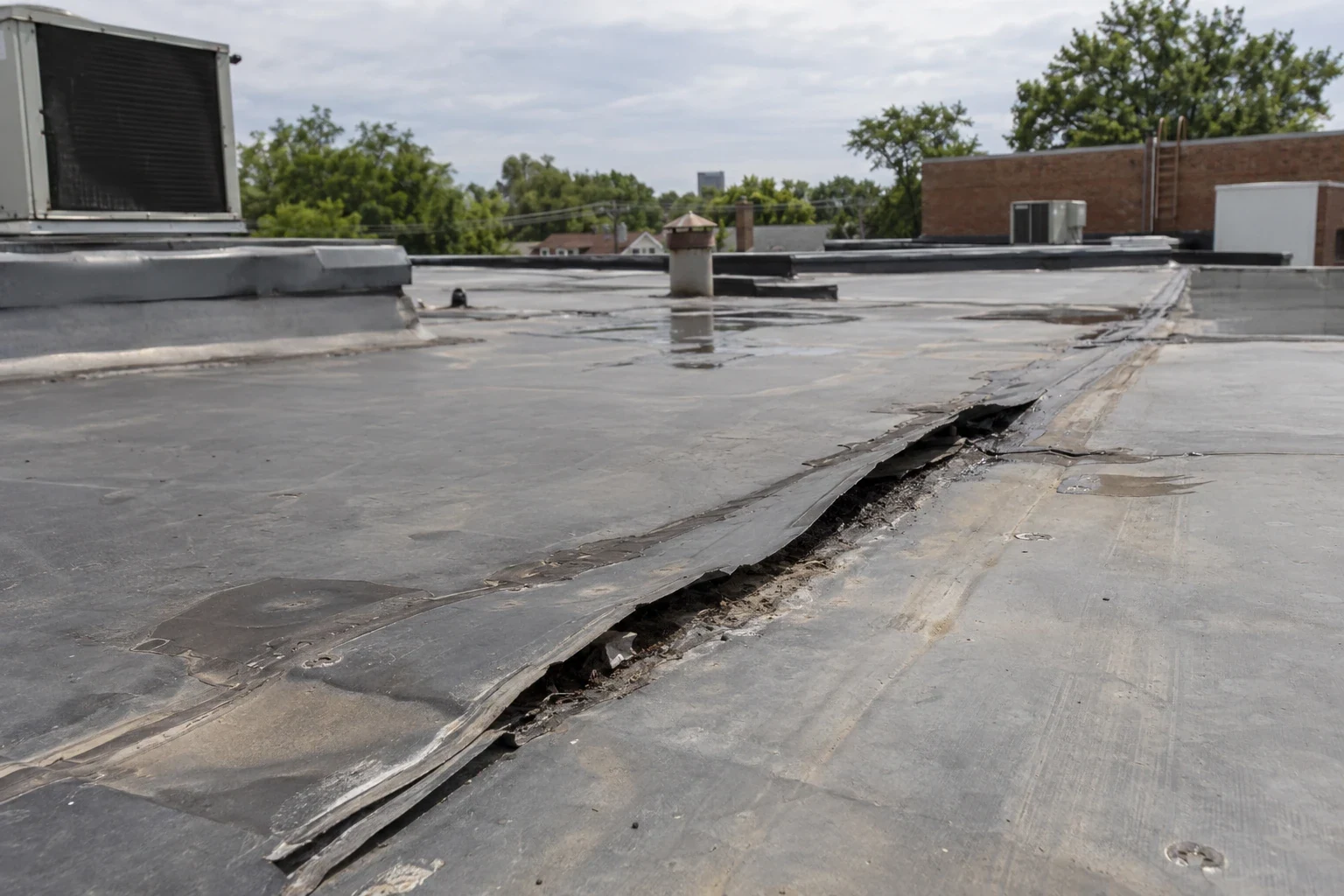
Seam failure in Kingsport, TN follows the roof's membrane type: open laps on single-ply, lifted bitumen on modified roofs, ridged felts on built-up. Our plan walks the repair in order: probe, map, clean, repair, test and close out. Every step has a prerequisite and a handoff, and an open seam beside a pond or a curb often points to a ponding water or flashing failure problem that gets repaired in the same visit.
The First Step Is the Probe Grid
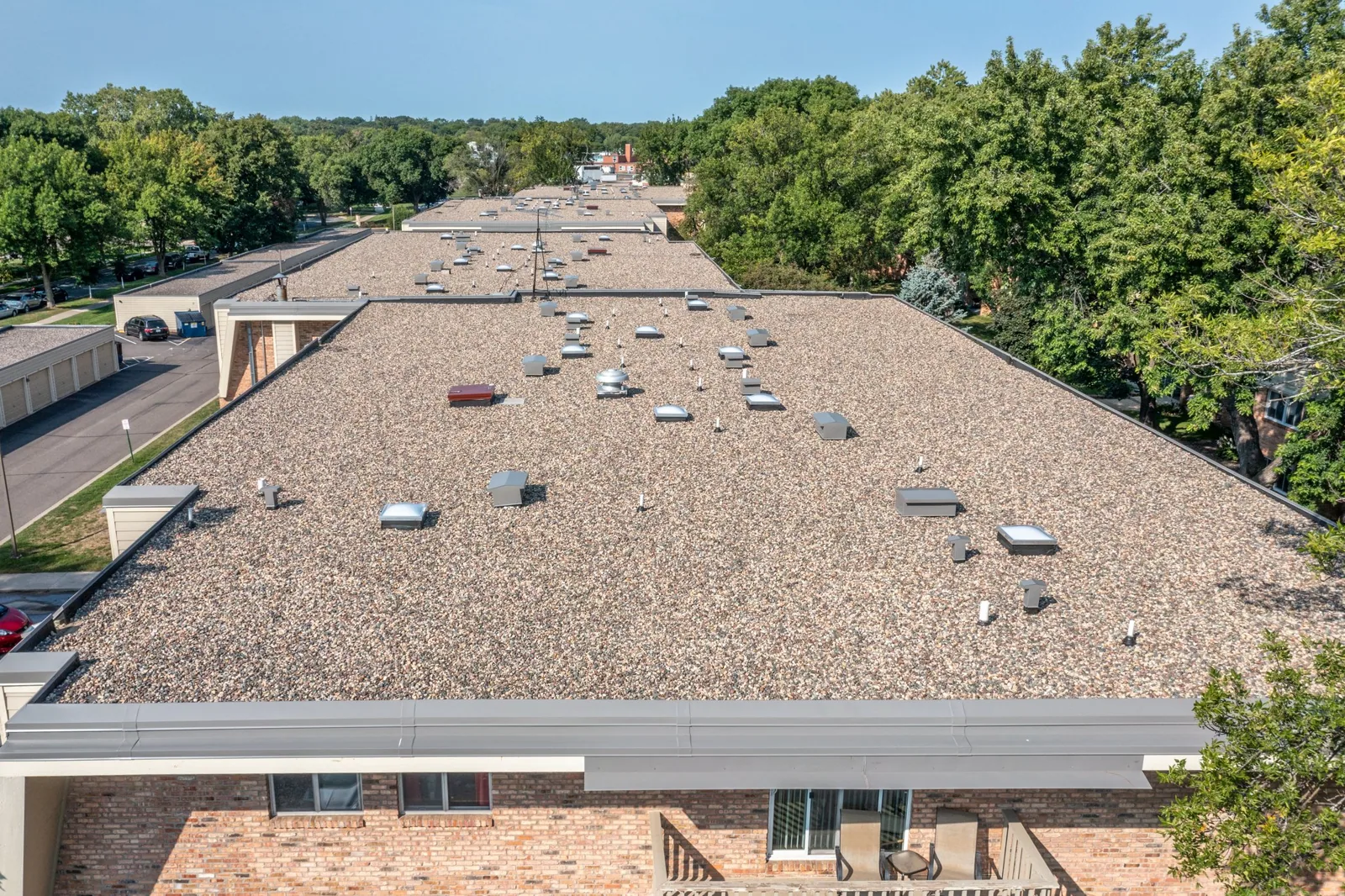
We need the roof plan, the membrane type if it is known and the access point. With those in hand we mark a grid, walk it square by square and slide a probe along each seam. The result is a map with three colors: bonded, partly bonded and open. Where a stain inside lines up with an open lap, the map feeds a leak repair work order.
Photographs are taken of every open seam with a scale beside it. We also note whether the gap is clean or full of dirt, because dirt means the seam has been open through weather and the insulation under it deserves a look.
The grid also fixes the order of the repair. Squares with the most open seams go first, and squares with clean, bonded laps go last or not at all. The map is the schedule, and it goes to the building contact before any equipment is unpacked.
Access, Staging and Equipment for Welding Work
Seam repair needs power, tools and a clean surface. We stage a small laydown area at the access point with welding equipment, cleaner, primer and patch stock, and we ask the building contact for a power source or bring a generator on a stand away from the membrane.
Hot-air welders and torches have hot work rules on many sites. We ask for the site's permit process before we pack the equipment, and we plan for a fire watch where it is required. Cold-applied adhesives are the alternative where open flame is not allowed.
Phipps Bend Industrial Park near Surgoinsville, described as one of the largest industrial parks in northeastern Tennessee and served by Norfolk Southern rail, is the kind of site where gate times and badge checks may head the access list.
Equipment cords are kept off the membrane on blocks, and the generator stays at the roof edge, where fuel can be handled without crossing the field.
Sequence of Work, Clean to Probe
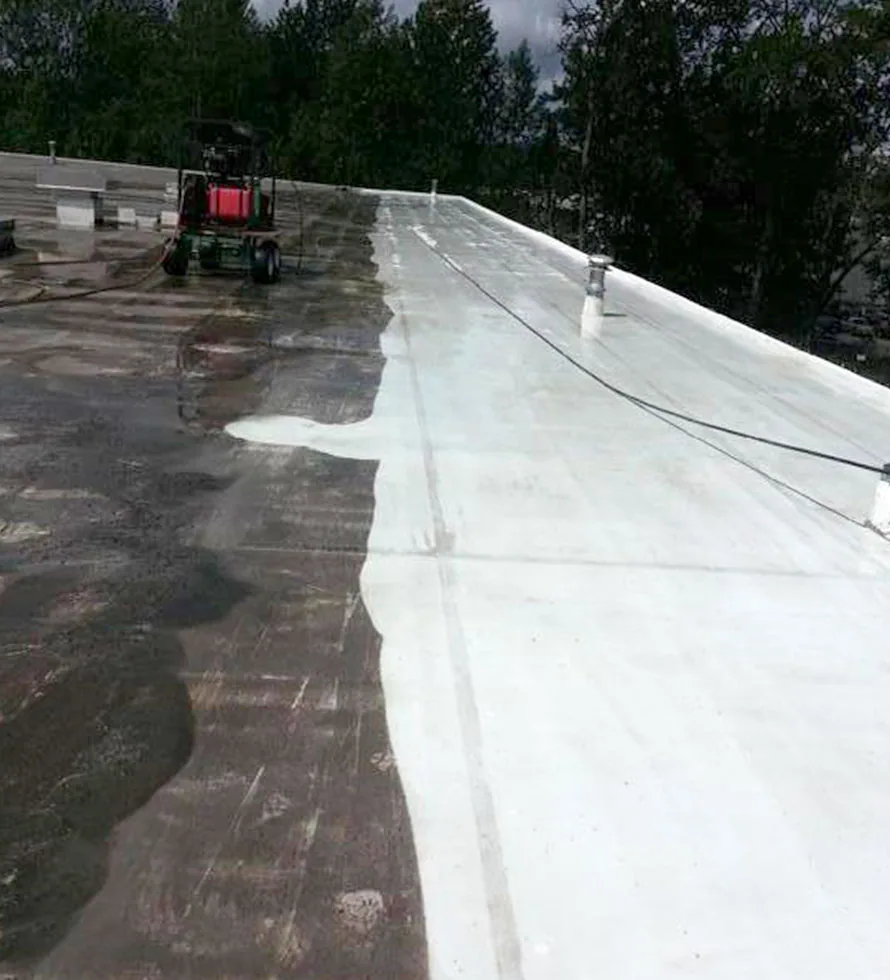
The sequence is the same on every seam. Clean the lap with the cleaner the membrane maker specifies. Prime if the manufacturer calls for it. Weld, bond or torch a patch or cover strip over the open seam, rolling it from the center outward. Let it cure for the stated time. Probe the repaired edge and log the result.
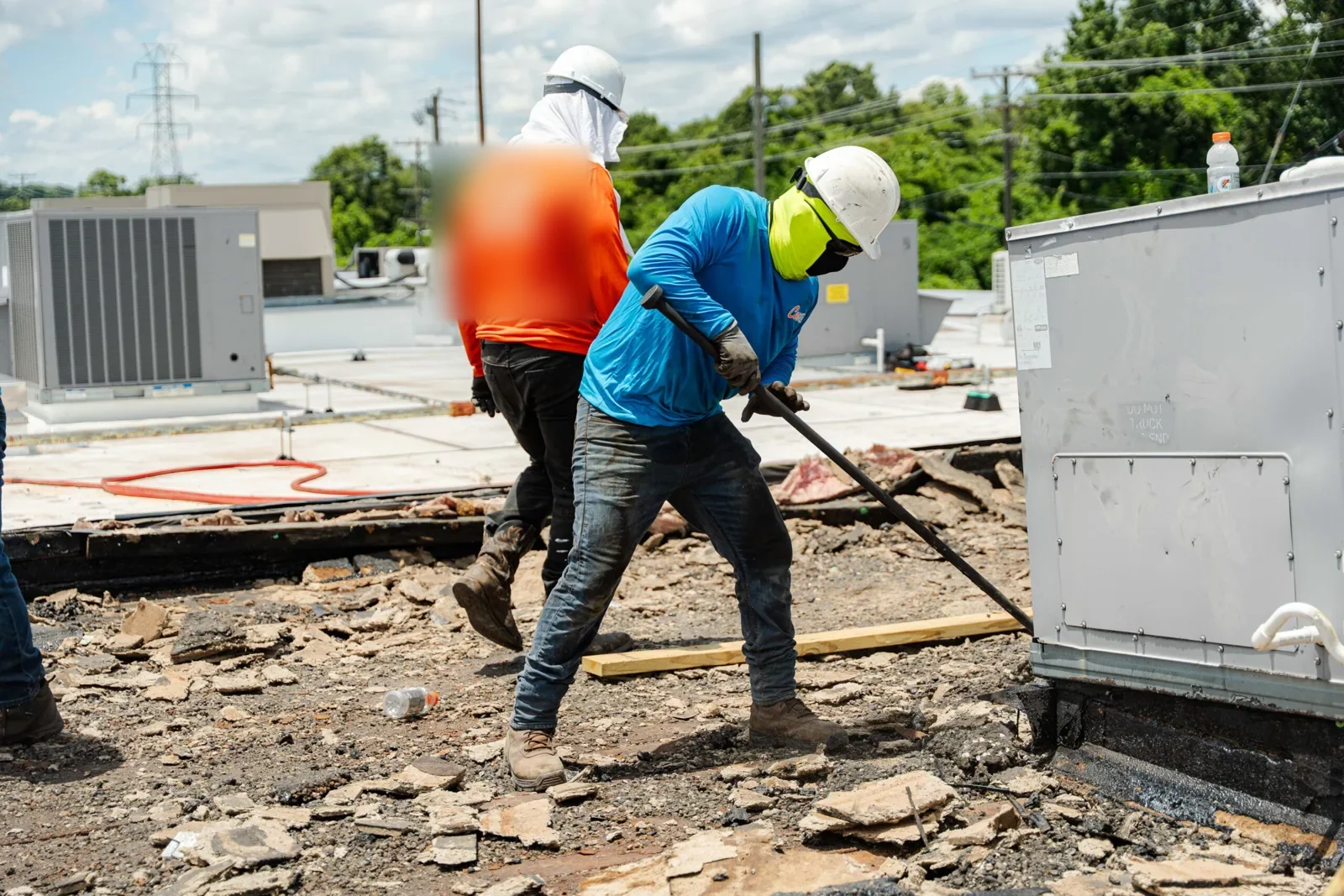
Roofs with a lot of open seams are repaired by zone, so one square is finished and probed before the next begins. A TPO or PVC roof gets heat-welded repairs, while modified bitumen gets torch or cold-applied strips.
Corners and T-joints get their own step. A patch at a T-joint is cut with rounded corners, welded in two passes and probed on all three edges. Square corners lift first under traffic and wind, so the scope specifies a radius.
Phasing Around Operations and Weather
Seam work is quiet compared with tear-off, so it fits many occupied buildings without special hours. Welding and torch work still produce fumes and heat, so air intakes below the work area are covered or closed during the repair, and the mechanical contractor confirms the shutdown.
Industrial sites such as the Tri-County Industrial Park in Piney Flats, assembled from seven tracts totaling 780 acres, are large enough that seam repair may cover several buildings in one program. The plan then runs zone by zone, building by building, with one sheet per roof.
Between visits the plan calls for a check of the repaired seams after the first heavy rain. Any seam that has moved goes back on the list before the crew demobilizes.
Inspection, Test and Permit
Seam repairs of limited size rarely need a permit. Larger scopes, especially those replacing membrane across a section, do. We confirm with the Kingsport Building Department which applies and send the submittal for larger scopes while materials are ordered.
Every repaired seam is tested before it is accepted: a probe along the edge, a pull test on a cut sample where the membrane allows, and a visual check for wrinkles. The test log goes to the owner and the inspector together, with the same photographs.
If the membrane is under a manufacturer's warranty, the file lists who must be told before the repair, and which products the maker accepts. A repair made with the wrong adhesive can void coverage, so the check comes before the first seam is cleaned.
Weather Windows for Welds and Adhesives
Temperature decides what can be done on a given day. Kingsport has recorded lows near minus 18 F and highs of 104 F, and many welds and adhesives have limits at both ends. The plan lists which seams get a temporary strip in cold weather and which wait for a mild day.
Wet days run to about 133 a year, so the crew opens only the zone it can finish and test before the afternoon forecast. Gusts carried by thunderstorm warnings also matter, since patch stock can blow off a roof; staged rolls are strapped or taken down.
Summer is a second test. A dark membrane on a 104 F day can soften at the seams, and the hot-air welder runs hotter than the surface, so welds are made early and checked again once the roof has cooled.
Closeout and Punch List
After the last square is tested, we go over the roof with the building contact and photograph the punch list. In the closeout folder go the seam map before and after, the test log, the product sheets for patch and adhesive materials and any permit record.
A seam waiting on a warm window stays on the list with a date and a name, so it is never forgotten.
Commercial Roofing Questions
How do you know a seam is open?
A probe slides under the edge and finds no bond. Dirt or water in the gap means it has been open a while. We recommend probing on a grid so the whole roof is covered.
Can seam repair be done in winter?
Some materials allow it and some do not. We recommend a temporary strip in cold weather and a scheduled repair in the first mild window. The plan lists which seams wait.
Does a seam repair need a permit?
Small repairs often do not, and larger scopes do. A call to the Building Department before the scope is final settles it.
What causes seams to open?
Thermal movement, poor bonding at the original install, ponding water and foot traffic. The map of open seams usually points to which one.
Do open seams mean the roof needs replacing?
Not by themselves. A few open seams on a sound roof are a repair. Widespread failure on an aging roof points to replacement, and the map shows.
How are repaired seams tested?
With a probe along the new edge and, where the membrane allows, a pull test on a sample. Results go in the log with the date.