The first call about an emergency roof in Kingsport, TN is answered with four questions: where is the water entering, is anyone at risk, what is below the opening and how do we reach the roof? The answers set the order of the response. A crew with tarps, sheeting, fasteners and sealant leaves with a plan, not a guess. We answer at any hour, on weekends and on holidays, because water does not wait for a work week. The goal of the first visit is a roof that sheds water by the time we leave, with the permanent repair scheduled while the building keeps operating.
The First Hour
The first hour is intake, safety and a clear picture of the damage. We ask for photos, the location of any exposed electrical equipment and the name of the on-site contact who can open doors and gates. If power, gas or fire systems are involved, we ask the owner to have the building cleared by the proper responder before anyone climbs. A roof with standing water, ice or lifted membrane is treated as unsafe until the crew sets edge protection and fall controls.
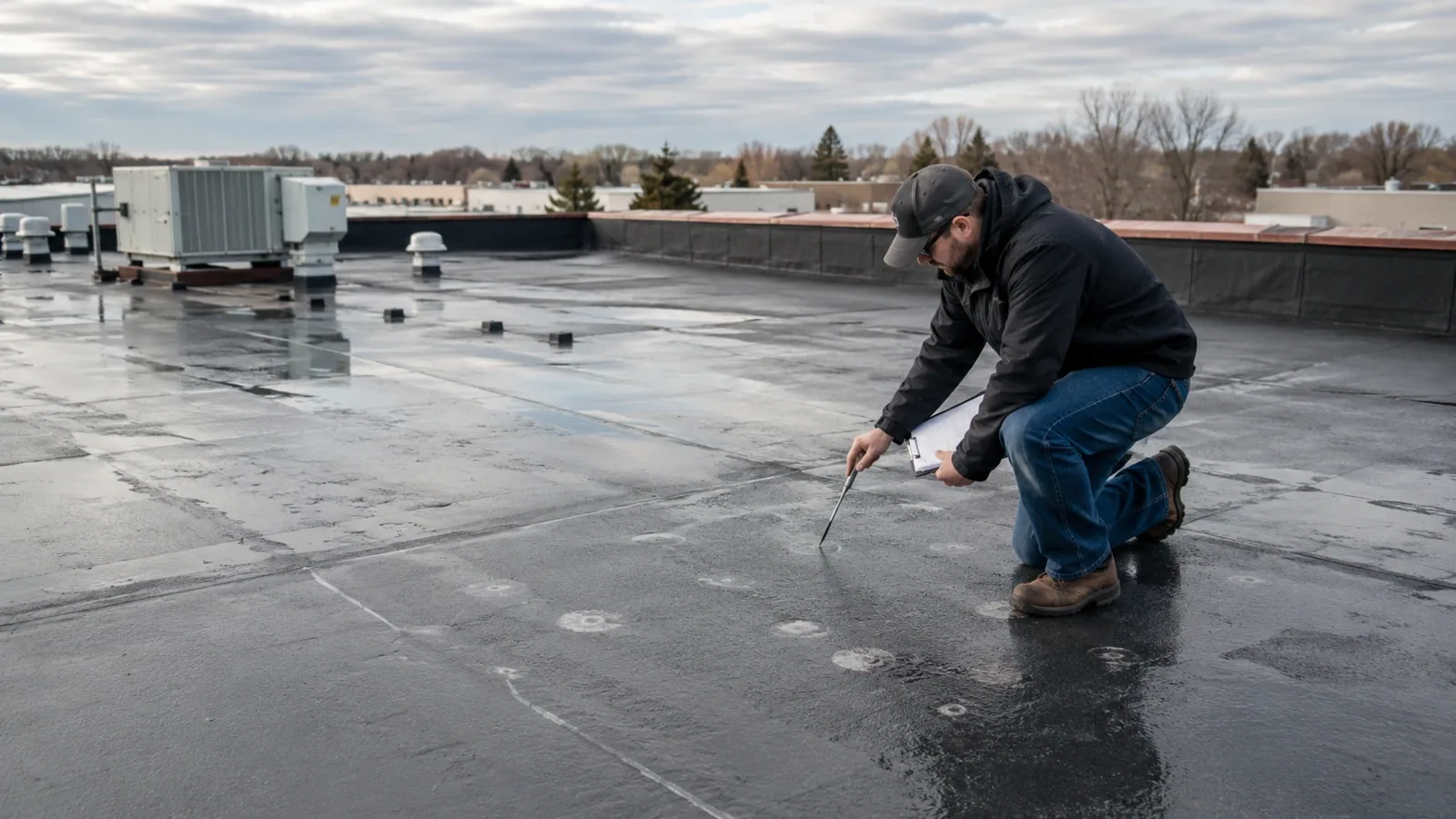
On arrival the lead walks the roof, marks the opening, checks the deck for soft spots and confirms the temporary measure. Only then does the crew start laying material. This sequence takes minutes, and it prevents the second injury or the second leak.
Tarping, Sheeting and Dry-In
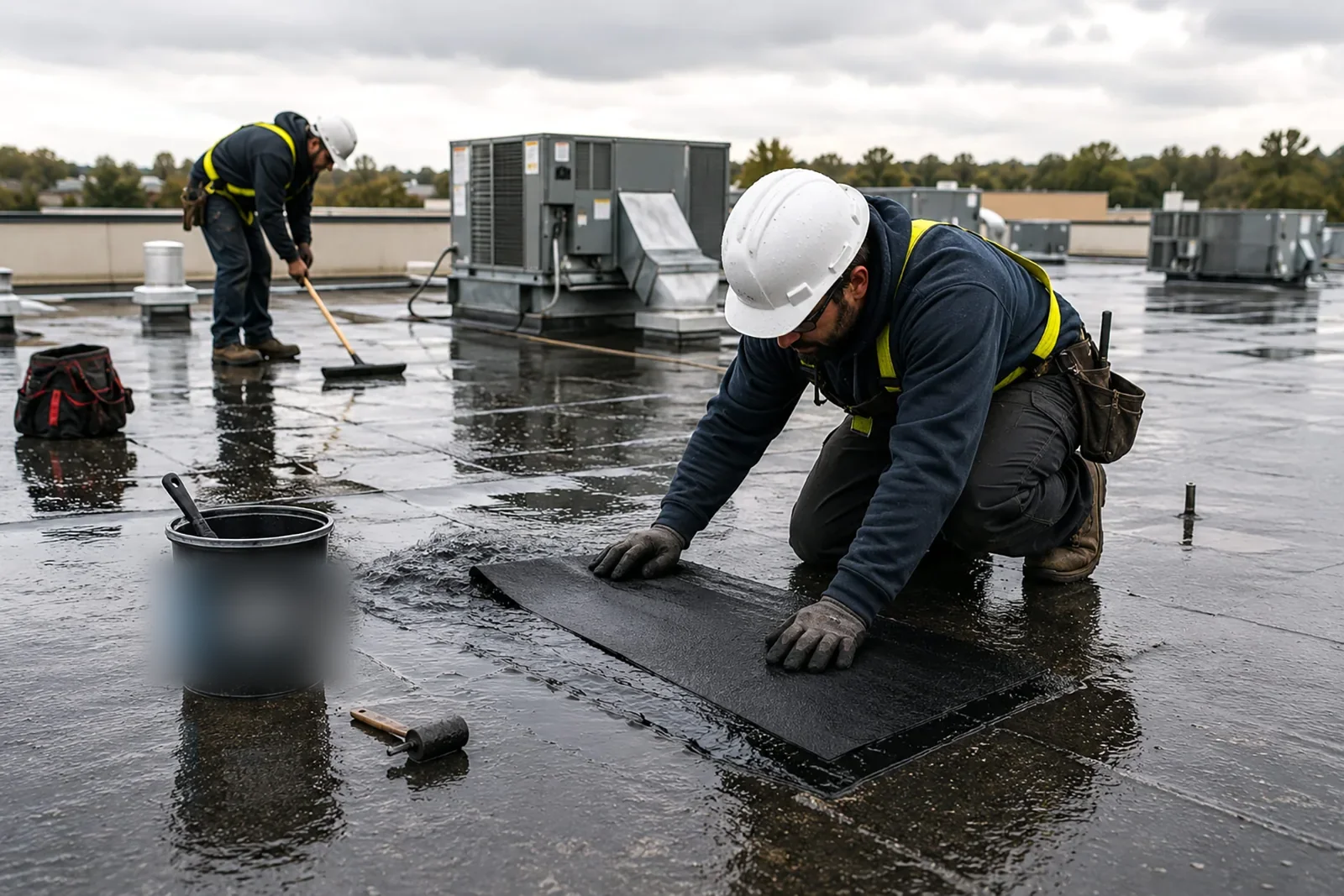
A good temporary cover reaches past the damage on every side, runs uphill of the opening and is fastened to solid substrate, not to loose membrane. Wood strips or sandbags hold the edges against wind. We seal the seams, lap the sheeting so water runs off and protect any rooftop equipment that was exposed. If the deck is damaged, we cover and flag it to keep the crew and later visitors from stepping through.
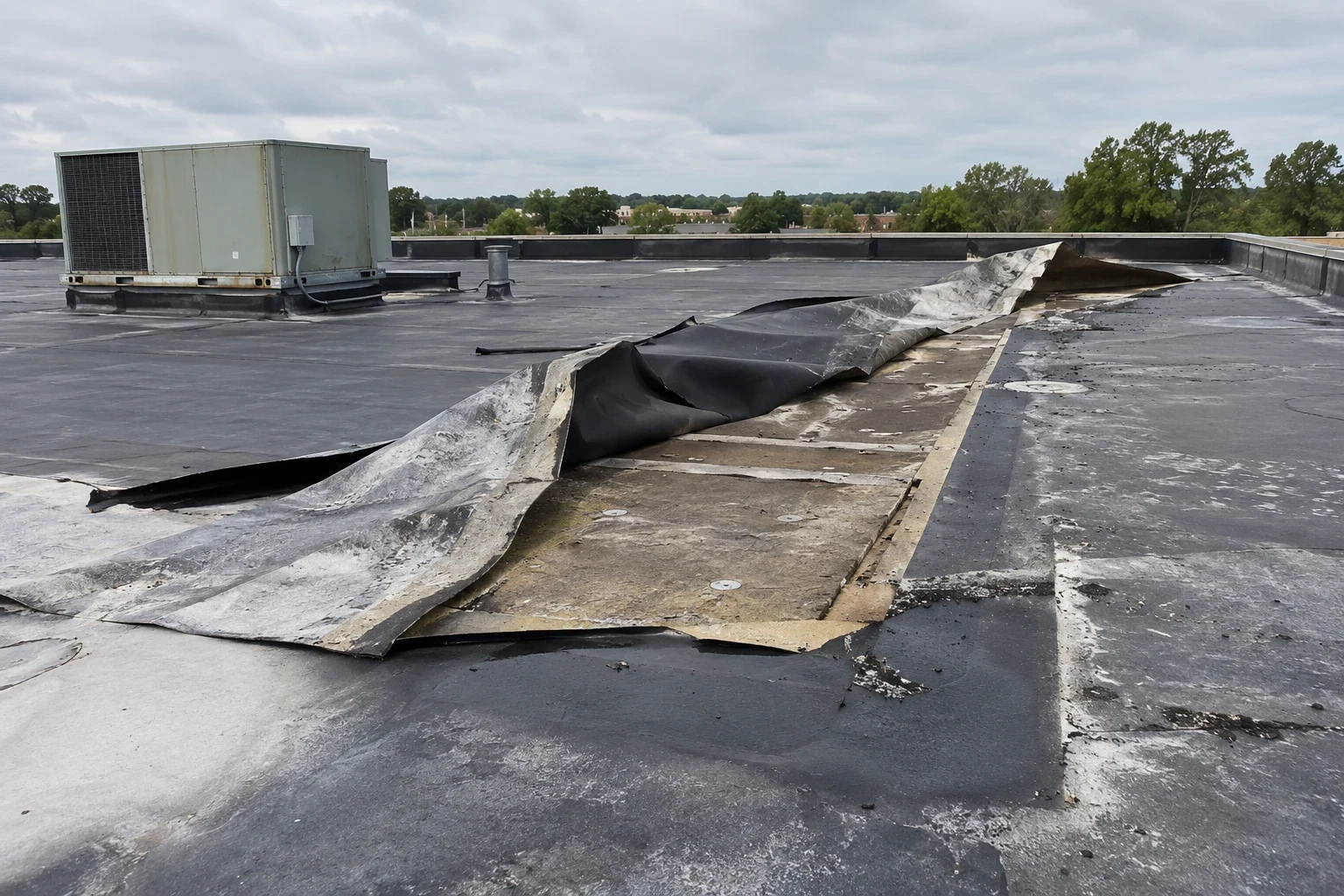
Where wind has peeled back a section, we re-fasten the loose membrane, seal the edge and tie the repair to sound roofing. Large openings may need panels or board over the deck. The temporary measure is tagged on the roof plan with the date, so it enters the permanent commercial roof repair list immediately.
Protecting the Interior
While the crew works above, a second person protects what is below. Water in a ceiling cavity can travel to light fixtures and electrical boxes, so shutting off power to the affected zone is the first interior step. We move or cover inventory, shut off water at affected ceiling tiles and advise the owner to cover electrical panels. Wet vacuums and fans are the building owner's or a mitigation contractor's work, and we coordinate with them so drying starts the same day. Documentation also begins here: photos of the interior damage, the roof opening and the temporary work.
Those photos matter later. An insurer needs timestamped images of the cause and the extent, which our roof insurance claim assistance work assembles into a package the adjuster can follow.
Kingsport Storm Patterns
Severe thunderstorms are the usual emergency trigger in Sullivan County. Morristown forecasters have issued warnings for the county citing 60 mph gusts and hail, the July 4, 2026 warning among them. Sullivan County has only four recorded tornadoes, the most recent an EF1 on July 27, 2014, so straight-line wind and hail matter more than tornadoes.
Wind tends to find the perimeter first: edge metal, coping, corners and rooftop equipment panels. Hail bruises membranes and cracks cover boards. Winter adds a different emergency: Kingsport averages about 5.1 inches of snow a year, with lows near minus 18 F, and ice dams at drains can back water under flashings. Each pattern needs its own temporary measure, taken up after the dry-in as wind damage repair or snow and ice damage repair.
Emergency Access by Building Type
Access decides the response time. At a plant in the Phipps Bend park, the crew needs gate clearance and the location of the safest roof ladder. At a hospital such as Holston Valley or another medical building, the response is coordinated with facilities, with dust and noise control agreed before work starts. Along the Stone Drive corridor and Fort Henry Drive, we need to know which stores are open and where customers walk.
For large retail roofs, a lift or a crane may be the only practical way to bring material up. We ask for a staging location in the first call so the temporary work does not wait on a delivery or a permit for a lane closure.
From Dry-In to Permanent Repair
The day after an emergency, we return with a fuller survey. We check the deck, the insulation and the surrounding flashings, then write a scope for the permanent repair. If the damage is limited, the fix is a section replacement. If the storm exposed older problems, the scope may grow to a storm damage roof repair package or a larger plan. We give the owner a written comparison with timing and options.
The scope lists what was found under the temporary cover: saturated insulation by area, deck panels that need replacement, flashings that lifted and any equipment that moved. Each item carries a method and a sequence, so the permanent repair can be ordered, scheduled and inspected in a single pass. Temporary measures should not sit for months. We set a date for the permanent repair at the time of dry-in, and we track it until the work is done.
Commercial Roofing Questions
What does a crew need from us on the first call?
Tell us where the water enters, whether the area has been cleared, what equipment sits below the opening and who can meet the crew. Photos help if they can be taken safely from inside. We also ask about roof access, any gate codes and whether a lift can reach the damaged area. We then give an arrival window.
Will the temporary repair hold through another storm?
A properly fastened and sealed cover is built to shed water and resist wind for the short term, but it is not a permanent roof. We tell you how long we expect it to last given the forecast and the materials used, and we set a date for the permanent fix. If a severe storm is forecast, we recheck the cover before it arrives.
Do you handle the insurance side?
We document the damage and the temporary work with photos, measurements and a written description, then give you a package for the adjuster. We do not set the claim, but we make sure the cause and extent are on record. Keep any damaged materials we remove until the adjuster has seen them, if the building allows.
What if the deck is damaged or wet?
A damaged deck changes the response. We flag the unsafe area, keep traffic off it and cover the opening. Saturated insulation under the cover is documented and removed during the permanent repair, since leaving it in place causes mold and loss of insulation value. Structural concerns are passed to the owner's engineer before heavy work begins.
Can you respond to a roof on a holiday or at night?
Yes. Emergency calls are answered at every hour, and a crew is dispatched based on the severity and the access. At night, we use lighting and added safety controls, and we may limit work to the dry-in only until daylight allows a full survey. Holidays follow the same rule.