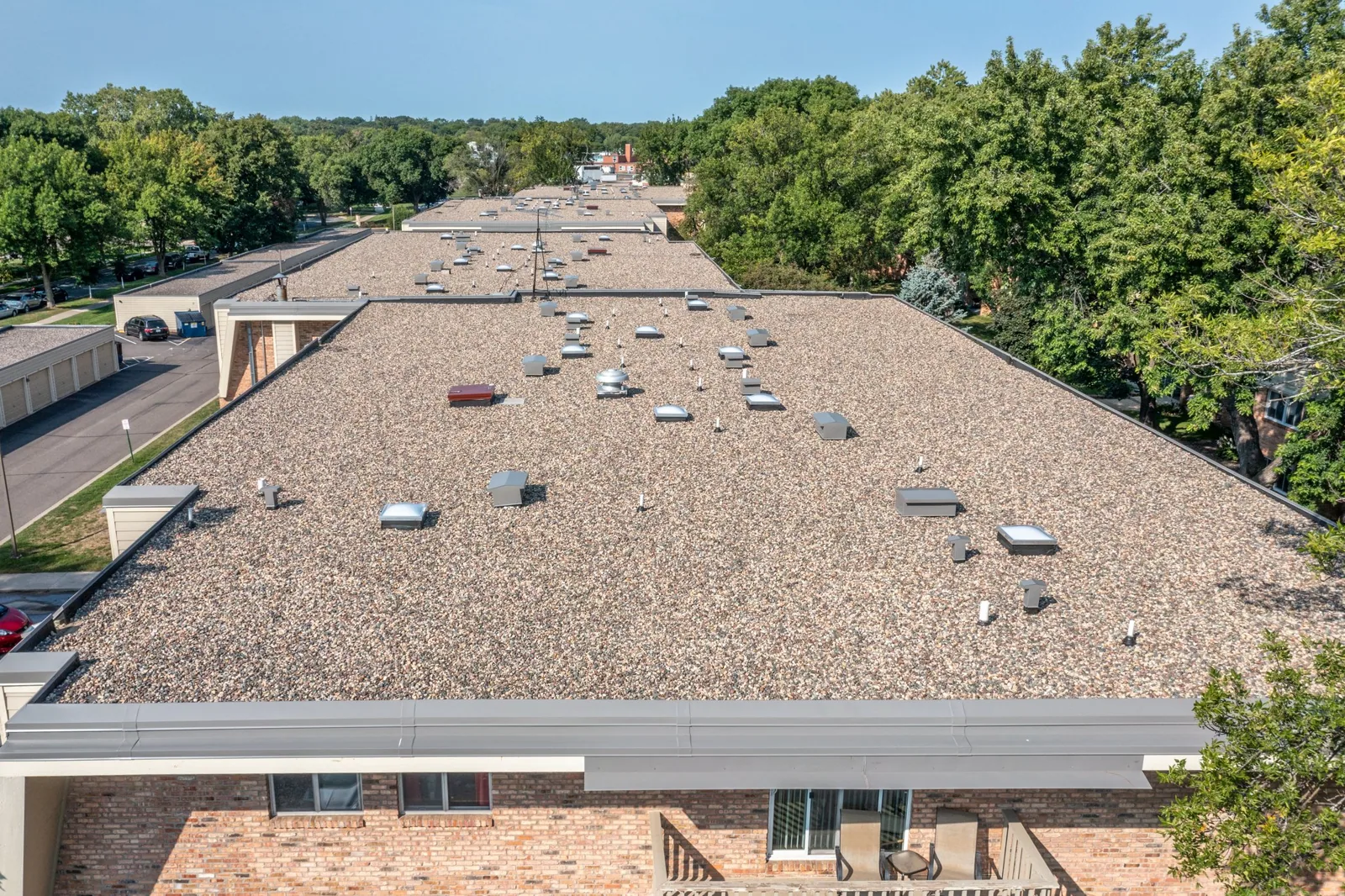
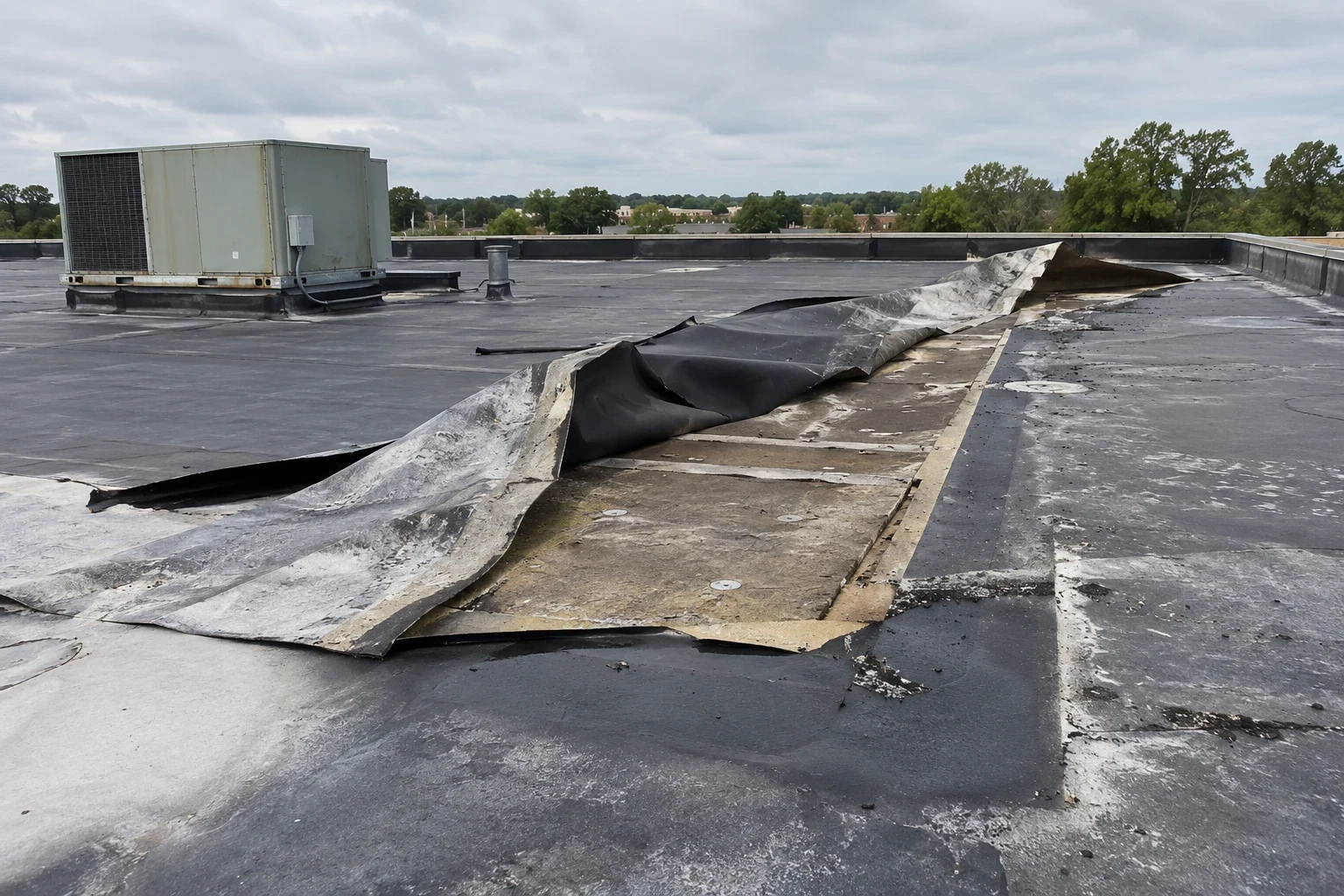
Before anyone repairs a wind-torn roof, the damaged edge has to be made safe to stand beside. A peeled membrane flapping at a parapet can drag fasteners and metal with it, and the first crew on the deck needs a cleared route that stays away from the open perimeter. An emergency roof repair crew uses the same route. We start with that route, the access point and the laydown area, then build the repair around them.
Wind damage in Kingsport, TN is mostly a story of straight-line gusts and edge failures, not tornadoes, and it often calls for storm damage roof repair in a hurry. Our plan walks the repair in order: secure, dry in, repair, tie in, close out. Each step names what must be in place before it begins and who takes the handoff afterward.
The First Step Is a Safe Perimeter
On arrival we check the access route, the roof hatch or lift position and any debris on the ground below the damaged edge. A section of lifted coping or loose metal is a falling hazard, so the first photographs come from the ground, and a safe zone is fenced before anyone climbs.
Next we walk the roof inward from the cleared route. We mark loose membrane, missing fasteners and lifted flashings on a sketch plan. The sketch becomes the first draft of the repair scope, and it tells us how much material to stage and how many crane picks the job will need.
Access, Laydown Area and Crane Picks After a Gust Event
After a storm the lot is often littered with debris and other contractors' vehicles. We ask the building contact for a clear corner, mark a laydown area away from the loading dock and plan a material hoist that avoids the damaged side of the building. If the repair needs a crane, the pick is set for the early hours when traffic is light.
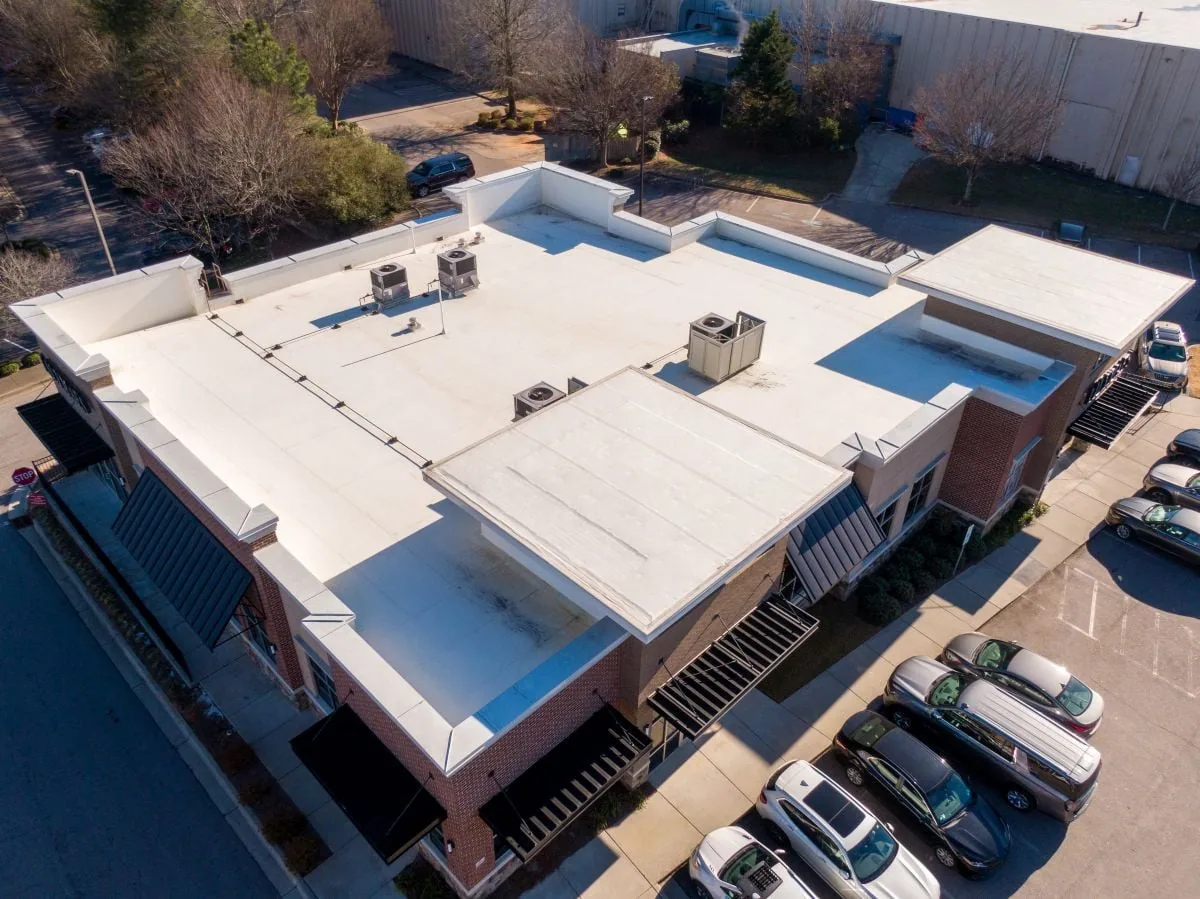
Where roofs are shared, such as retail along Stone Drive or downtown buildings under renovation, we tell neighbors the hours of the crane pick and the haul route. A short notice avoids a call to the building manager in the middle of the lift. When hail comes with the wind, the hail damage record joins the same file.
Sequence of Work, Edge First
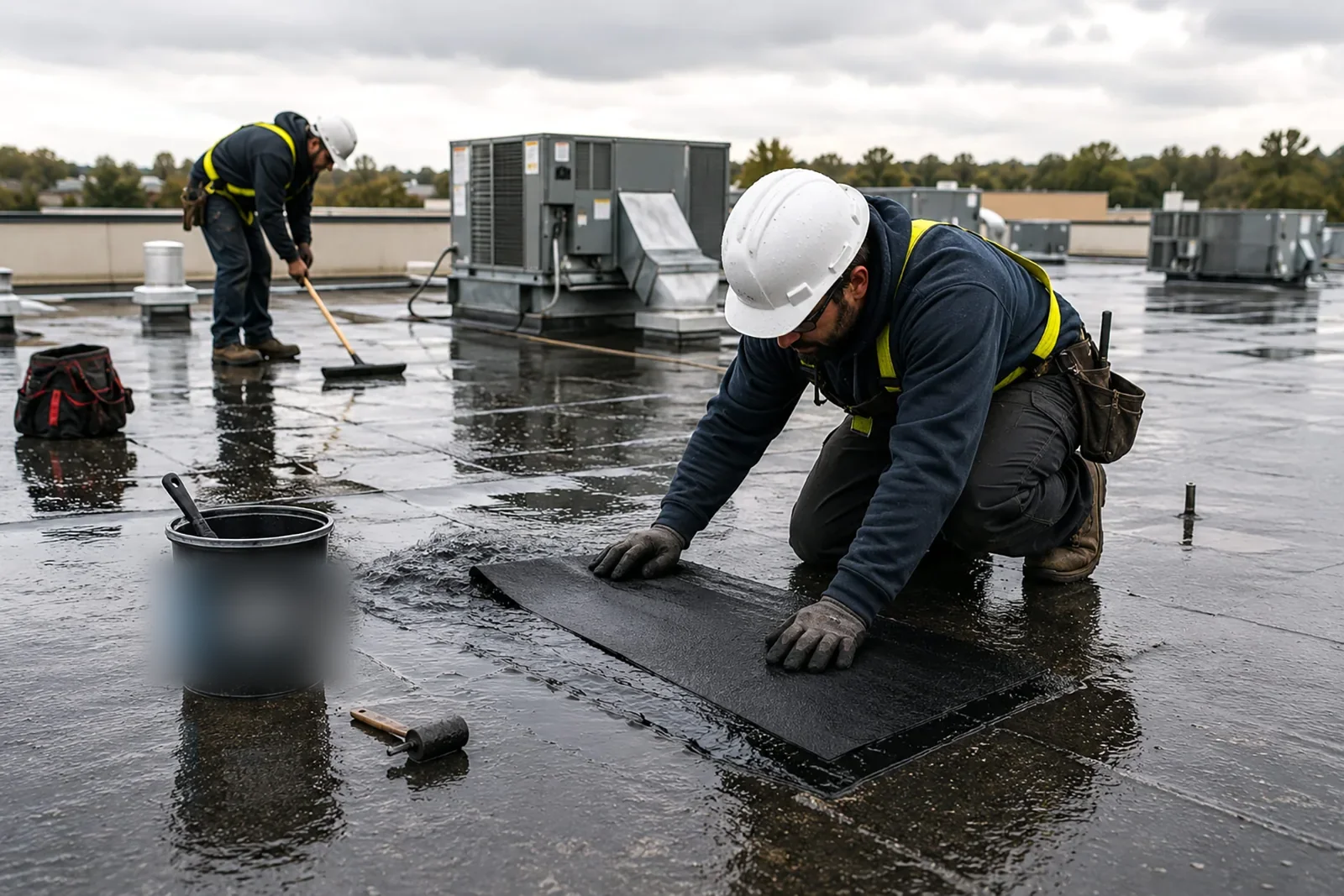
The repair sequence works from the perimeter inward. Temporary dry-in goes over any open section first. Loose membrane is cut back to sound material. Fasteners and plates are replaced to match the original attachment pattern. New membrane or patches are bonded or welded, and flashings are reset with new termination bar and sealant, the same steps used for a flashing failure.
Edge metal comes last in the roofing sequence and first in the inspection. Coping caps are re-seated with new clips, gaps are closed with a continuous cleat, and the inspector looks at the perimeter before the crew leaves it. A coping and edge metal scope lists the clip spacing and sealant type for each run.
Each repaired section is checked for a continuous bond before the crew moves on. A probe along the new seam, a pull on a sample of fasteners and a look at the sealant bead are the three checks, and the results go on the daily sheet.
Phasing Around Operations and Tenants
Wind damage rarely respects tenant lines. A lifted edge over a loading dock may need work that blocks trucks for a day, and a torn field over a showroom may need interior protection. We phase the repair so the most exposed areas are dried in first and the noisier work runs in off hours.
Industrial sites add their own rules. They control who may enter, and Holston Army Ammunition Plant, across the river from Church Hill, is the plainest example; a repair after a gust event follows the same access and hot work procedures as planned work. For insurance and restoration projects, the sequence also includes photographs at each stage.
If a section cannot be repaired the same day, temporary protection is fastened to the deck, not weighted with loose stone, and photographed. The next shift starts by checking that it is still in place.
Inspection, Permit and Documentation
Repairs that replace roofing material usually need a Kingsport permit. A call to the Building Department settles whether a patch or a section replacement triggers one, and the submittal can go in while materials are in transit. The inspector's visit is booked ahead of the first fastener.
The photograph set follows the sequence: ground view of the damage, roof-level views of each torn area, close-ups with a scale, and a repeat of each frame after the repair. The set goes to the owner, the adjuster and the building file in the same order.
Weather Windows Between Gust Events
The National Weather Service office in Morristown has warned Sullivan and Washington counties of 60 mph gusts and hail, and it expects roofs, siding and trees to take damage. Only four tornadoes are on record for Sullivan County between 1680 and 2025, the latest an EF1 on July 27, 2014, so gust events matter far more than tornadoes for the roof edge.
That shapes the schedule. We repair in the dry stretch after a front, keep a crew ready for the next warning and secure staged material whenever one posts. The plan lists the call tree and the first four things we strap down.
Church Hill sits on rolling hills overlooking the Holston River, with Bays Mountain rising to the south, and a roof on higher ground may see gusts earlier. The strap-down list is adjusted site by site.
Closeout and Punch List
At completion we walk the perimeter and field with the building contact, photograph the punch list and pull-test a sample of fasteners along the new edge. The folder that follows lists the repaired areas on a plan, the product sheets and any permit record.
A back-ordered cap or a delayed inspection stays listed, dated and assigned, until it is signed off.
Commercial Roofing Questions
What should a building manager do first after a wind event?
Photograph the roof edge from the ground, keep people clear of the perimeter and call for a safety check before anyone goes up. We recommend a written note of the time and the gust report if one exists. Emergency protection can start the same day once the route is cleared.
Can wind-damaged edge metal be repaired without replacing it?
Often, when the metal is straight and the clips are intact. We re-seat the cap with new clips and a continuous cleat. If the metal is bent or the substrate is soft, we replace the section and record why.
Does wind damage require a permit?
A repair that replaces roofing material usually does. We recommend confirming with the Building Department before work starts and starting the submittal while materials are ordered.
How do you handle a repair over an operating plant?
We follow the plant's access, orientation and hot work rules, and we phase the repair around its schedule. We recommend sending the site plan and outage calendar so the sequence can be set before pricing.
What proof should an owner keep for a claim?
Dated photographs from the ground and the roof, a marked plan, the repair scope and the product sheets. We recommend keeping them together in the building file.
Why do roof edges fail first?
Wind pressure is highest at edges and corners, so attachment there carries the most load. A loose clip or a short row of fasteners at the perimeter can start a peel that travels inward.