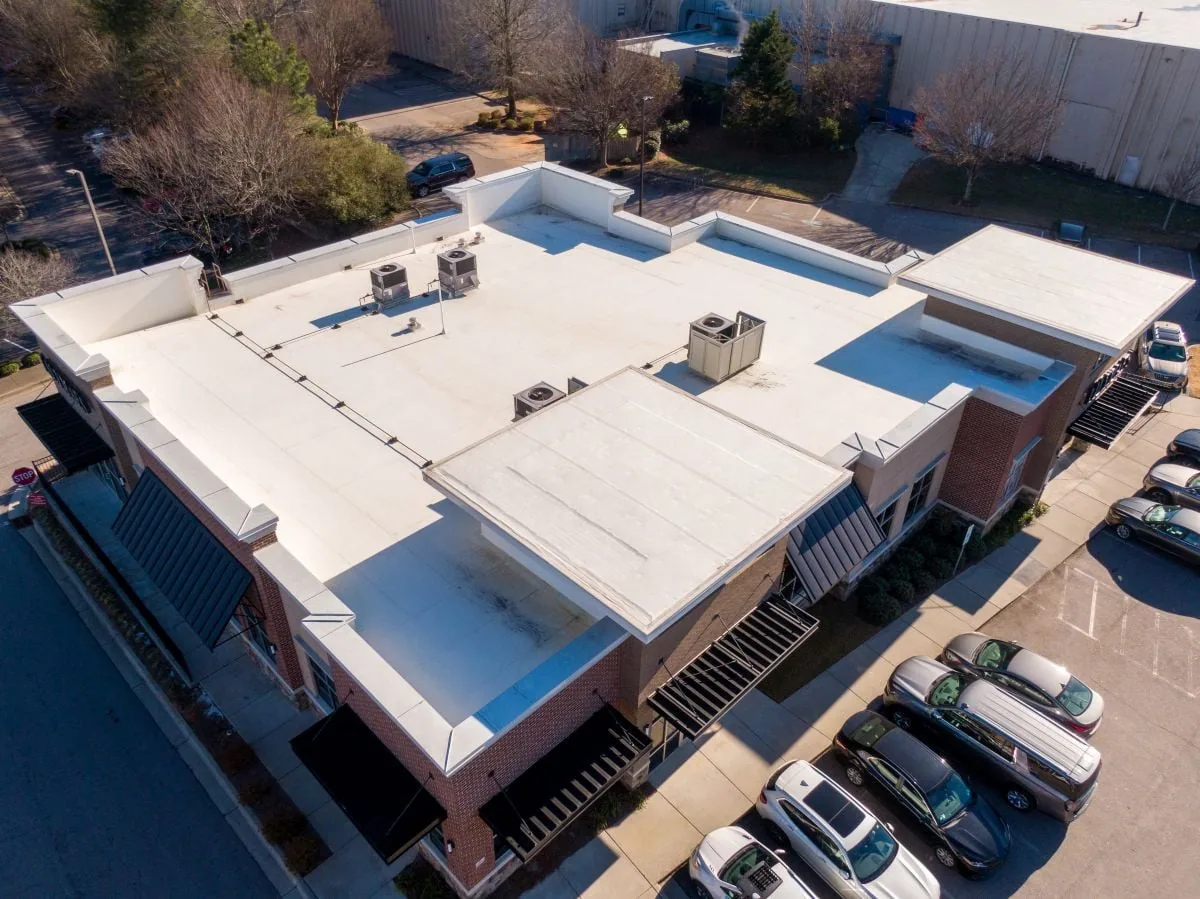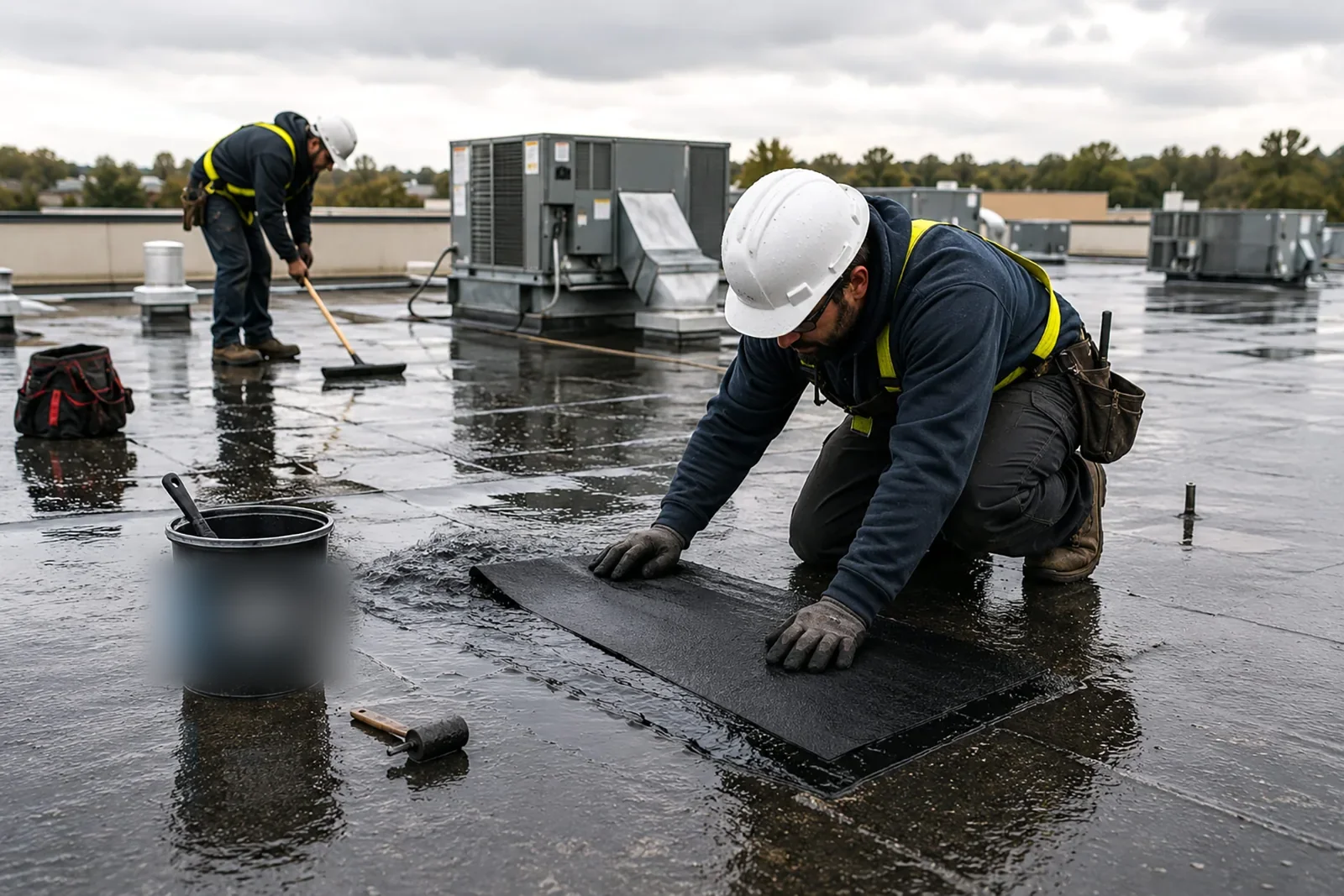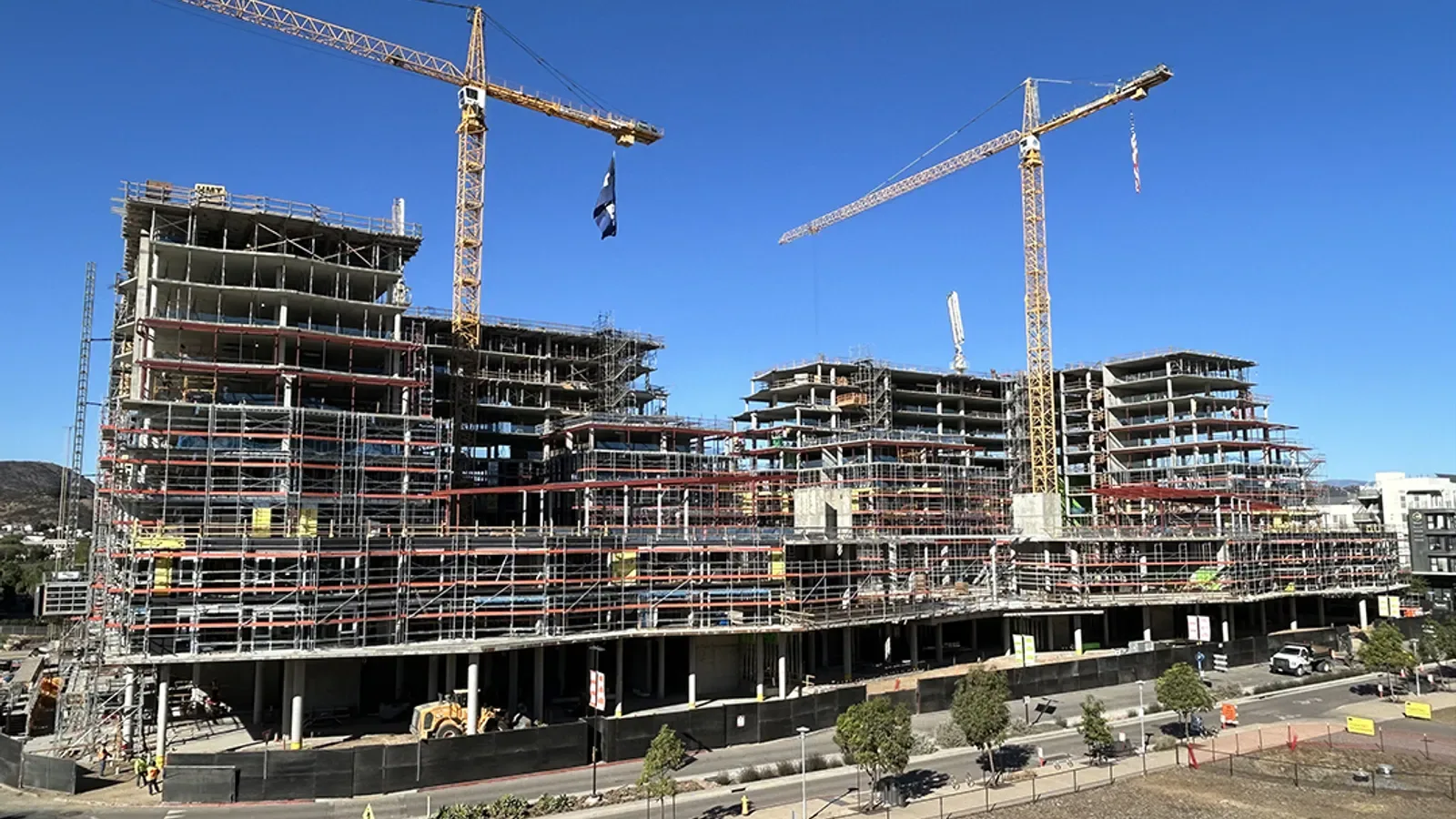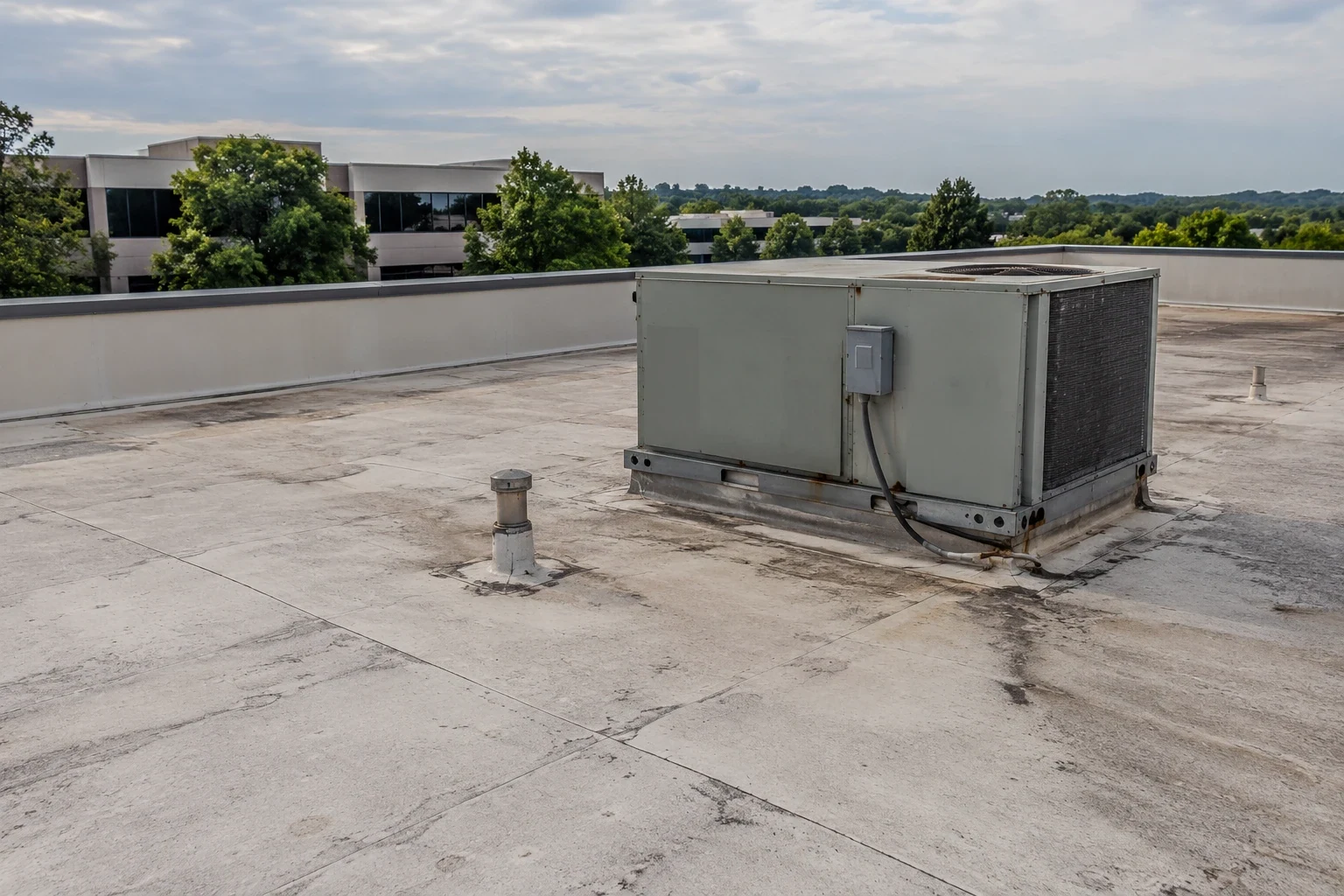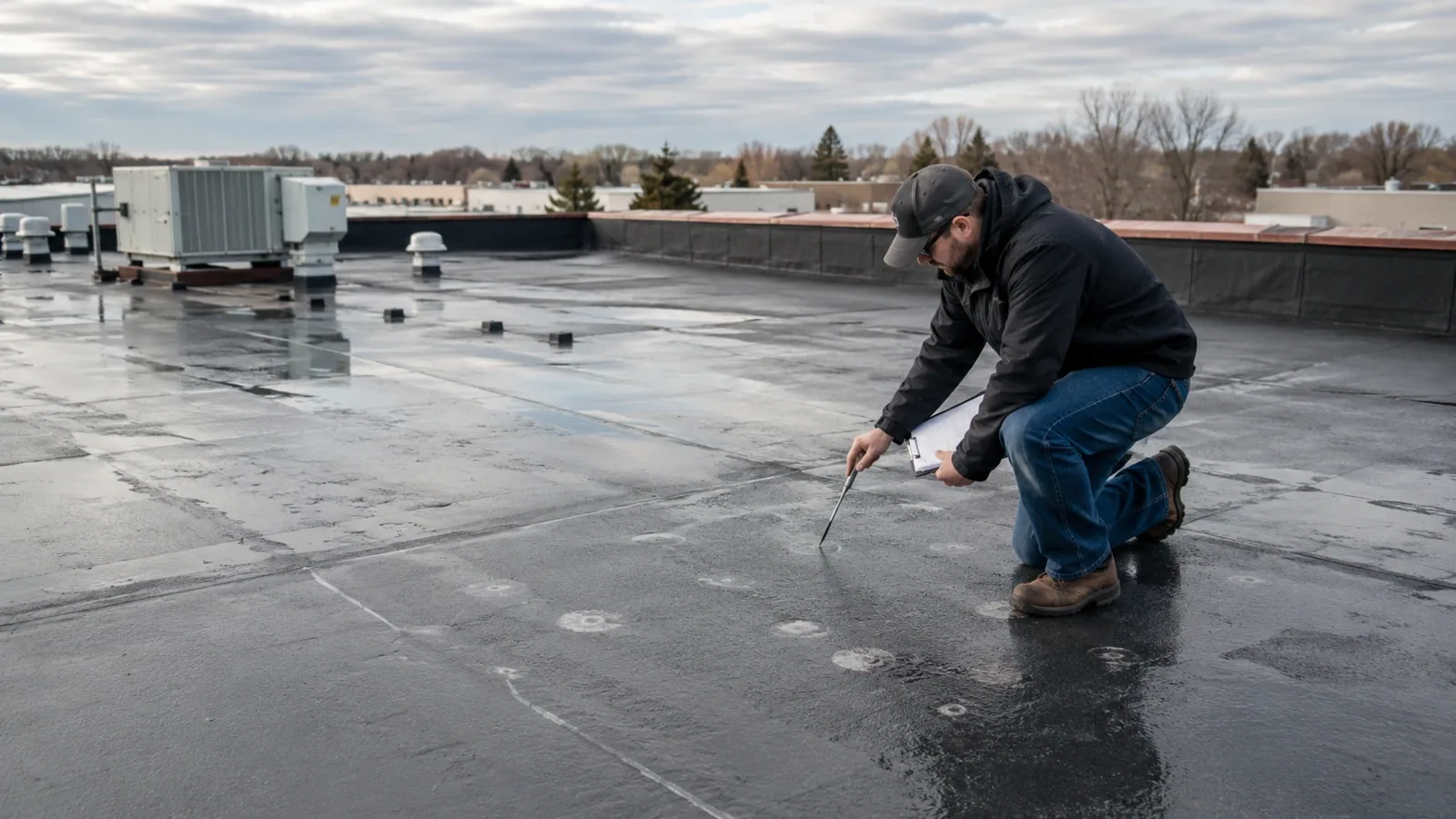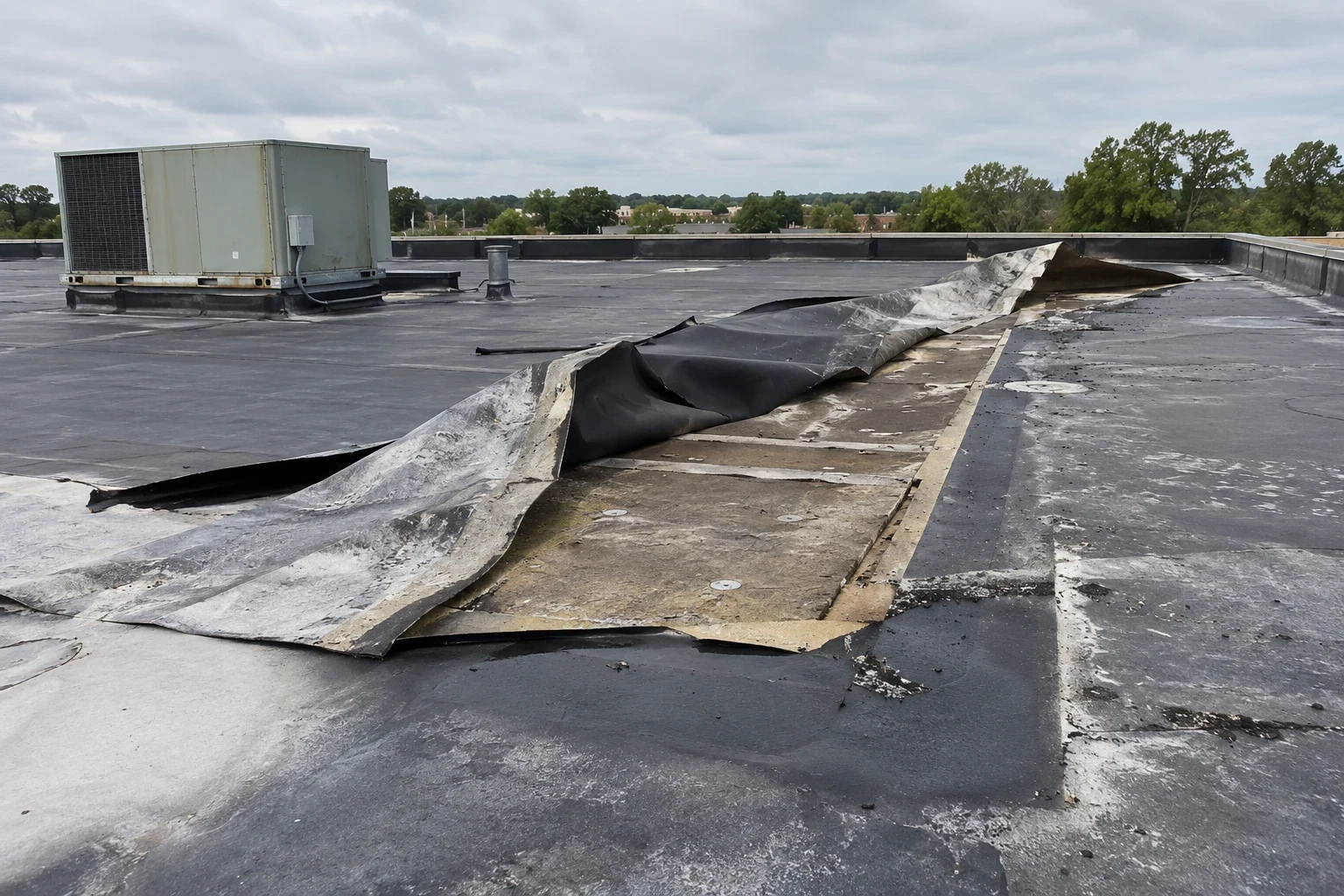
Making the roof safe to stand on comes first after a storm, because nothing else can start until someone has checked the deck, the edges and the power lines. We ask for the site contact, the date and time of loss and any engineer's clearance before we send a crew, and then we run the response in a fixed order.
The repair itself is storm damage roof repair. Adjusters and restoration firms working commercial claims in Kingsport, TN need a roofing partner who documents first, protects second and repairs third. Our sequence puts photographs, dry-in and the written scope on the same timeline as the claim, so the carrier and the owner see the same facts.
The First Step Is a Safe Deck
On arrival we check the access route, look for downed lines and walk the perimeter from the ground. If the deck or parapet looks compromised, the roof stays closed until an engineer clears it, and the clearance goes in the file.
Once the roof is open to us, we photograph the whole building before touching anything: wide shots, mid shots and close frames with a scale. The photographs carry the date and time, and they are the first entry in the claim record.
Utilities are part of the check. Gas, electric and communication lines near the roof edge are noted on the site plan, and the crew stays clear until the utility confirms they are safe.
Access, Laydown and Dry-In Staging
A storm site is often crowded with other trades, fallen debris and restricted lanes. We agree on a laydown area with the owner or the restoration firm, set the haul route around damaged parking and mark where a crane pick can stand. Temporary protection materials are staged near the roof access so a dry-in can start the same day.
Emergency work follows the same rules as planned work. An emergency roof repair crew reports to the site lead, uses the agreed route and logs each piece of protection it places.
If a neighboring building shares the lot, we tell its manager what we are doing and when. A tarp that blows off a damaged roof can land next door, and a call on the first day avoids a second claim.
Sequence of Work From Loss to Repair
The sequence runs in this order. Photograph and document. Place temporary protection. Take samples and moisture readings where water may have entered. Write the scope. Submit the permit if the repair needs one. Repair. Close out.
Each step names its handoff, to a general contractor where one is hired, and a property manager where the building has one: the adjuster receives the photographs and the scope, the restoration firm receives the protection log, and the owner receives the schedule. A claim documentation package built this way lines up with the carrier's estimate line by line.
Moisture readings are taken at a grid of points and marked on the plan, so the restoration firm can plan drying and the adjuster can see where water went. Samples are labeled with date and location.
Debris removal is its own step. Broken membrane, saturated insulation and fallen materials are bagged and labeled by area, and the labels match the plan grid so the adjuster can tie each bag to a photograph.
Phasing Around Inspections and Approvals
Claims have waiting points. The adjuster may need to inspect before permanent work starts, and the carrier may ask for a second opinion. We plan the temporary protection to last through those waits and log its condition on each visit.
A July 4, 2026 NWS Morristown warning for Sullivan and nearby Washington counties named 60 mph gusts and hail, with damage to roofs, siding and trees expected, which is the kind of notice that precedes a claim. Sullivan County has only four recorded tornadoes from 1680 through 2025, so straight-line wind and hail damage drive most storm claims in the region.
The most recent tornado on the county record was an EF1 on July 27, 2014, and the strongest an F2 in 1944. That history is a reason to plan for wind and hail first, but a tornado file follows the same sequence when one occurs: document, protect, scope, permit, repair.
Carriers sometimes request a second inspection by an engineer. The plan holds permanent work until that visit is done, and the temporary protection log is updated with the engineer's findings.
Permit, License and Documentation Path
A storm repair still needs a Kingsport roofing permit, reroofs included, with stamped plans filed as a PDF. The Building Department reviews the repair under the IBC and the IECC.
The permit submittal is filed once the scope is agreed, which lets the permit and the first delivery land together. A copy of the permit record goes to both the restoration firm and the adjuster.
Weather Windows After the Storm
A roof left open in Kingsport will see rain, with wet weather on about 133 days a year and roughly 45 inches in total. Temporary protection goes on first, and permanent work waits for a stretch of dry days. Gusts of 60 mph can lift an unsecured tarp, so protection is fastened to the deck and checked after each warning.
Neighboring areas see different totals. Hawkins County's Rogersville is wetter, at about 48.8 inches of precipitation a year, and Johnson City, some 25 miles south, sees about 15.6 inches of snow, well above Kingsport. Since the temperature record spans roughly minus 18 F to 104 F, the scope flags the items that need temperature windows.
Overnight forecasts are checked before the crew leaves, and extra protection goes on if gusts above 40 mph are predicted. The decision and the forecast source are written in the daily log.
Closeout, Punch List and Claim File
When repairs finish, we walk the work with the restoration lead and photograph the punch list. The claim file closes with the as-built drawing, material sheets, the warranty file, the permit record and the protection log.
Items still open remain listed with a date and an owner until each is closed.
The restoration firm's final invoice package includes the photographs, the protection log and the scope with each line's evidence, so the carrier can reconcile the claim without another site visit.
Commercial Roofing Questions
What should happen in the first day after a roof loss?
Make the roof safe, document it, and cover the opening. We recommend photographs before any protection goes on, and a written log of each piece of protection placed. The adjuster should receive the photographs the same day.
Who decides when permanent repairs begin?
The owner and the carrier. We recommend a written release from the adjuster before any demolition, and we start the permit submittal in parallel so there is no gap.
How do you handle supplements?
We document what the tear-off finds with photographs at each stage, and the scope shows which items were visible before and which were found. We recommend submitting the supplement with that evidence and the written scope.
What licenses does a claim repair require?
The licensing threshold is $25,000: above it, the roofer must be a Tennessee-licensed contractor. The city requires a permit for roofs, including reroofing.
Does hail always mean replacement?
No. A regional hail warning is not proof that any one roof was damaged. We recommend an inspection that records what the surface shows, then a scope sized to the damage.
Can you work with the restoration firm's schedule?
Yes. We recommend a shared calendar with drying, framing and roofing dates, so trades do not collide and the building is closed in by the date the interior crews need.