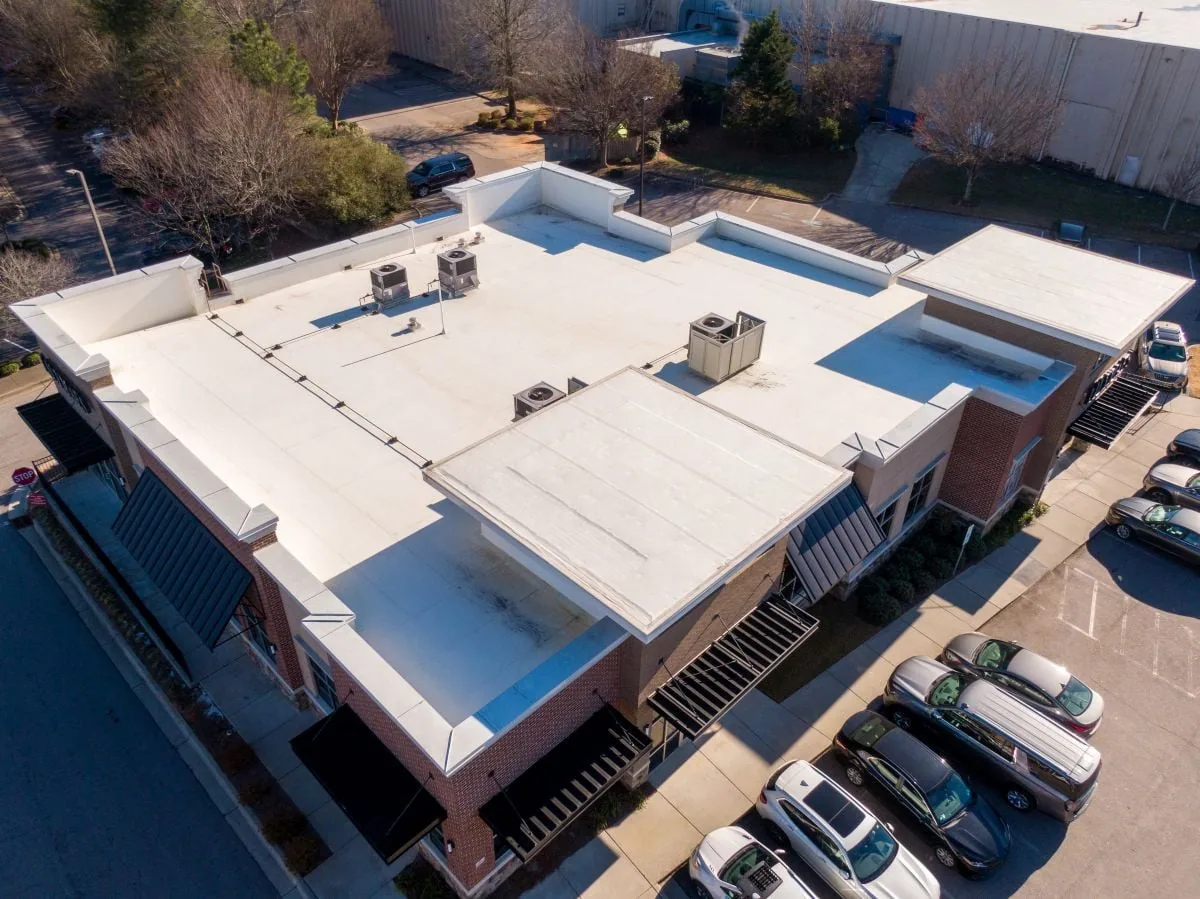
The first step after a storm at a Kingsport, TN building is a safe access route, and that has to be settled before anyone climbs: who clears the roof, whether the structure is sound, where the debris is and how the crew gets to the roof without crossing an open loading area. We ask for photographs of the damage, the time of the storm and the location of any water inside. Then we send a crew to make the building safe and dry. Assessment and repair follow in order, each with its own record, so the owner and the carrier read the same file.
Safe Access and Site Control
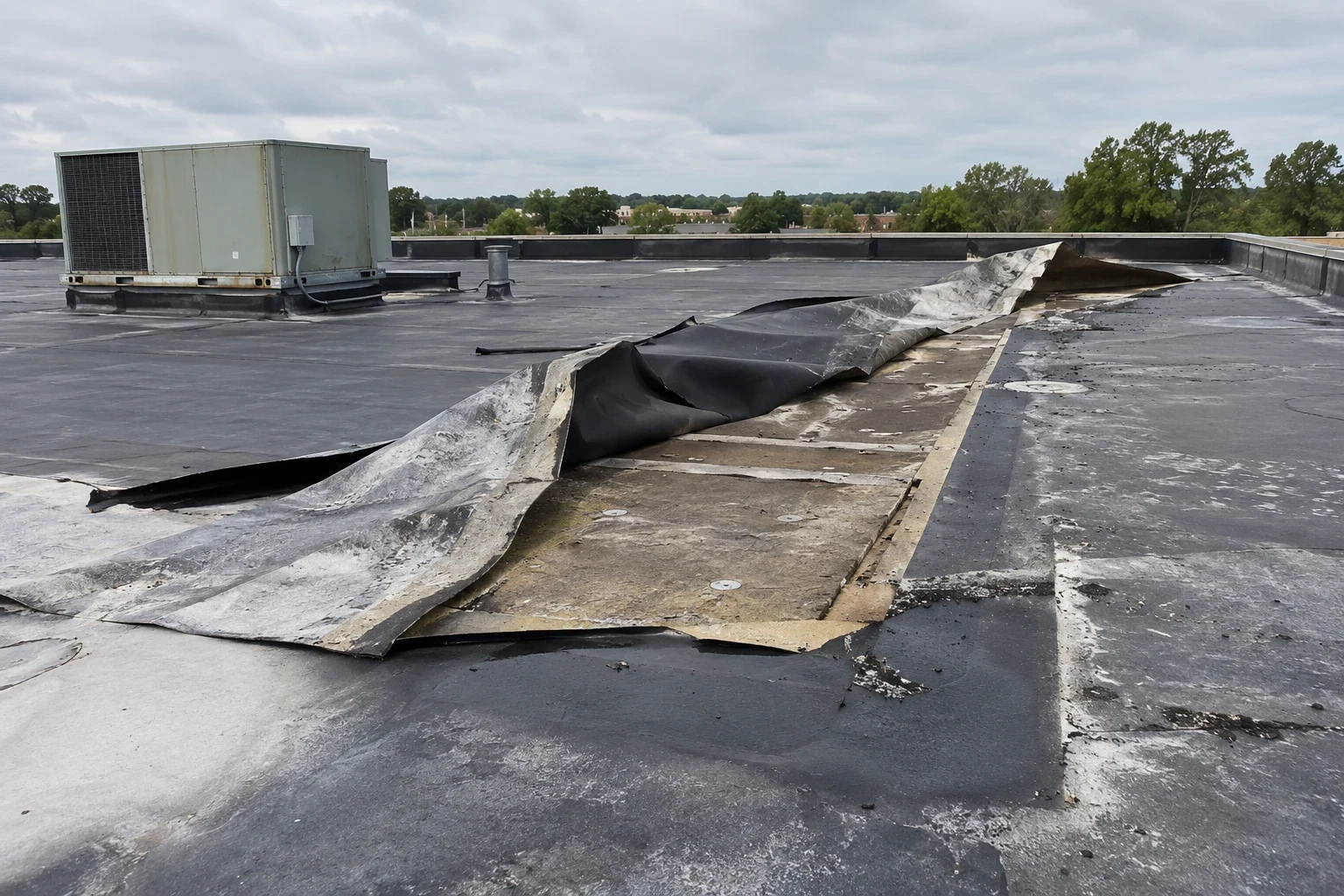
Wind can leave loose metal, lifted membrane and unsecured units on a roof, and each is a fall or strike hazard. Before a crew steps on the field, we check the access point, look at the edge from the ground and identify any area that should not be walked. At a plant or campus, we confirm the entry rules and whether an escort is required.
Ground-level hazards are controlled too. Debris that has fallen on a walkway or a dock apron is flagged, and the work area is fenced when overhead work starts. This takes a short phone call and saves a day later. Fall protection is set before the first step on the field. Tie-off points are checked, since wind-lifted edge metal can fail under a harness line. If the roof has lost parapet or railing sections, the crew works from the interior side or from a lift until they are restored.
Temporary Dry-In Before Anything Else
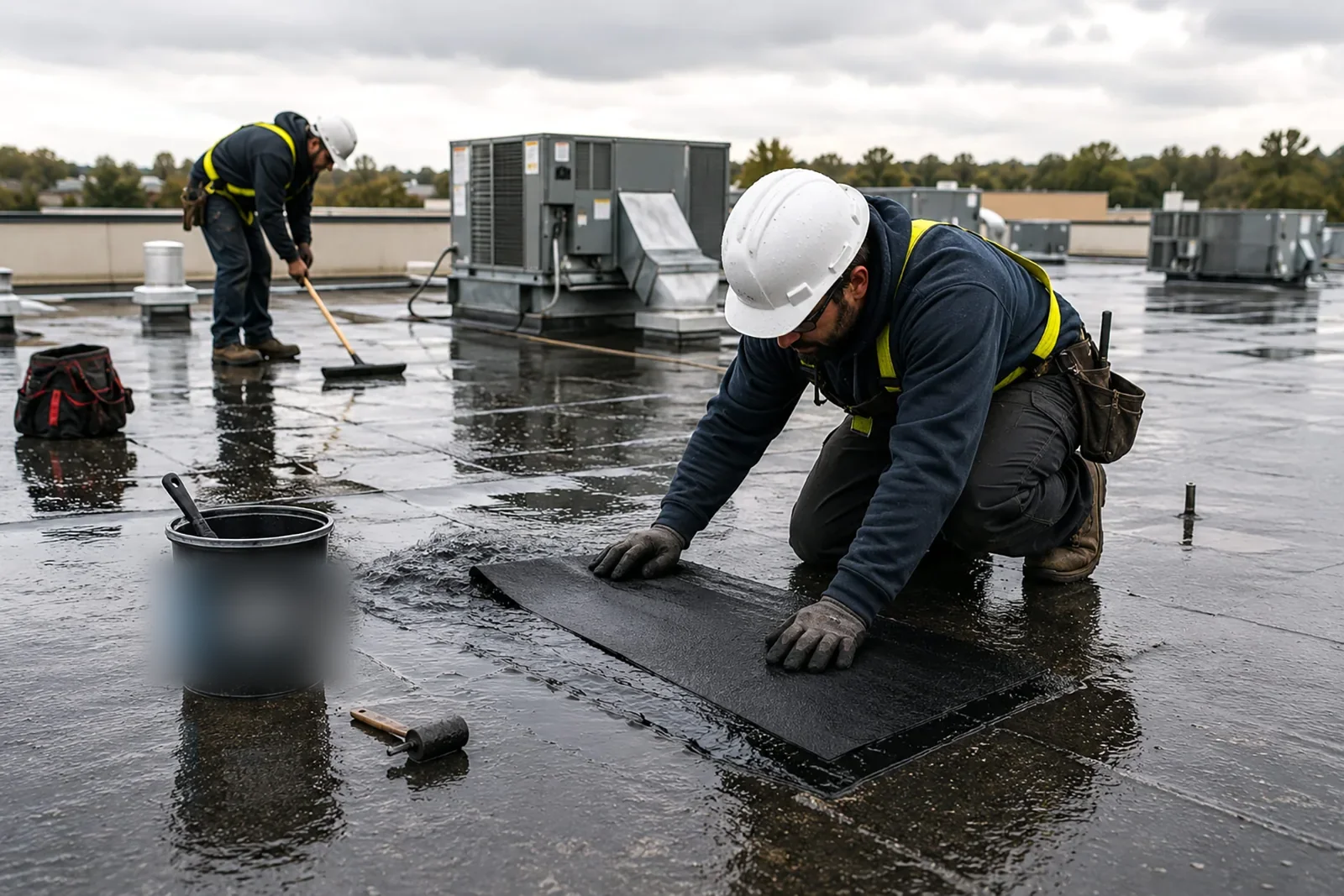
If water is entering, the next step is the dry-in. A tarp is secured over the opening, edges are battened or ballasted so wind does not take it, and loose membrane is cut back and covered. Where water has already entered, interior protection goes down: plastic over equipment and stock, and a path for water to drain without pooling.
Each temporary measure is photographed and logged by roof area, with materials used and the time placed. That record shows the building was protected promptly, which matters if a carrier asks. It also keeps the permanent scope clean, because the dry-in is separate from the repair. Weather checks continue through the work. A tarp that held through the night is inspected each morning, because gusts can loosen battens and a slow drip becomes a stain on the ceiling grid. Where the opening is large, the crew frames and sheets it, not just tarps it, so the cover stays in place through the next round of gusts.
Documented Assessment
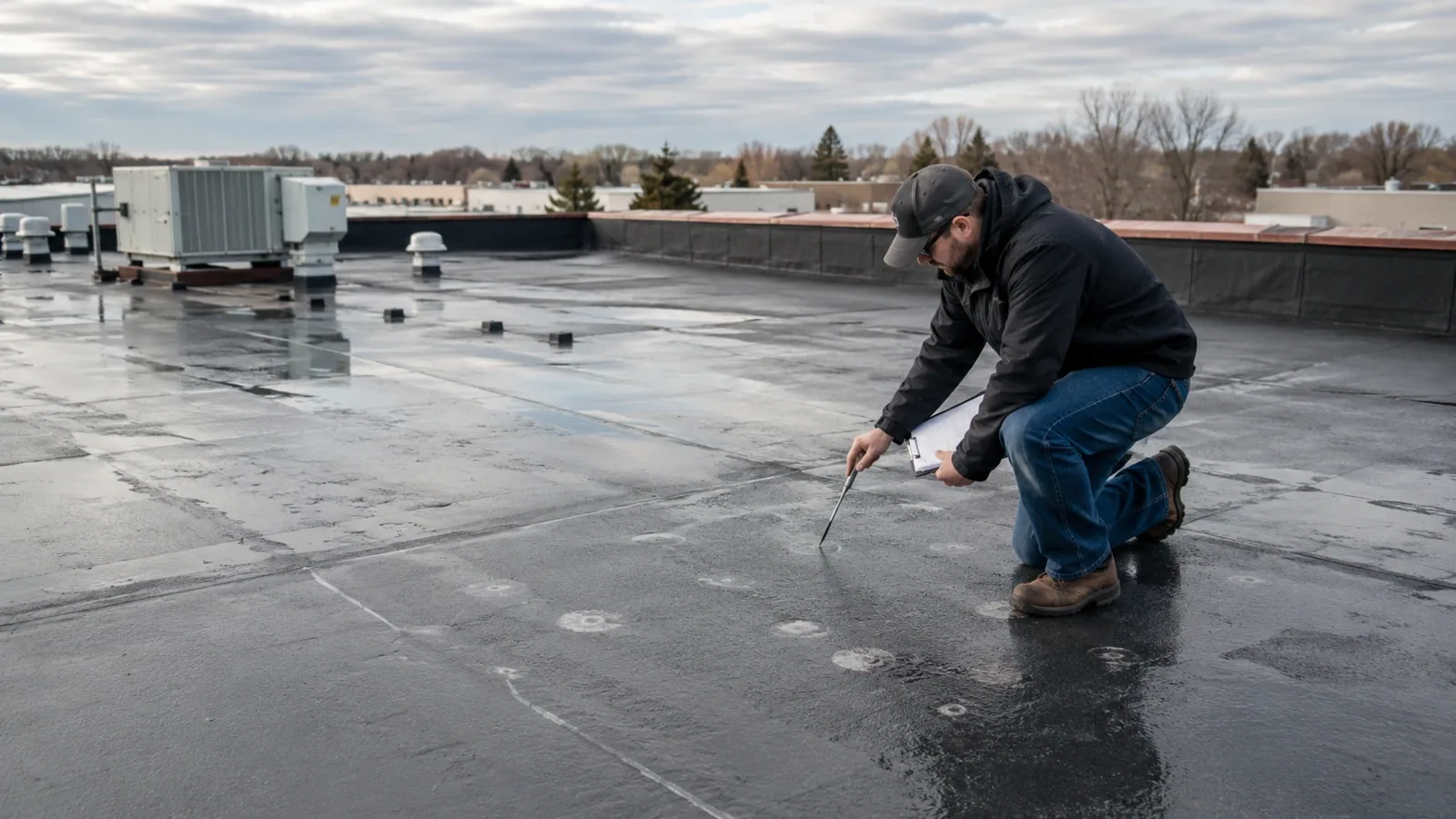
The assessment covers the whole roof, not only the area where the water showed. We walk the perimeter, the field, every curb and every penetration. Damage types are logged separately: hail impacts on membrane and metal, wind-lifted edges, displaced coping, torn flashing, damaged units and debris punctures. Each finding gets a photo, a location on the plan and a measurement.
Findings that predate the storm, such as old patches and corrosion, are noted too, so the claim reflects the event. Where we suspect trapped moisture, an infrared moisture survey maps it. The written report separates storm damage from wear and recommends a scope for each. Mechanical units get a look too. Wind can shift a unit on its curb, crack a refrigerant line or bend a screen. We report each finding for the mechanical contractor, since it sits outside the roofing scope but belongs in the same file.
What the Kingsport Weather Record Suggests
Warnings from the National Weather Service office in Morristown for Sullivan County and neighboring Washington County have named gusts to 60 mph and hail, and listed damage to roofs, siding and trees as the expected result, as in the warning of July 4, 2026. The tornado record is thin by comparison: four recorded in Sullivan County since 1680, the strongest an F2 in 1944 and the latest an EF1 on July 27, 2014. For a Kingsport roof, straight-line wind and hail are the likelier causes.
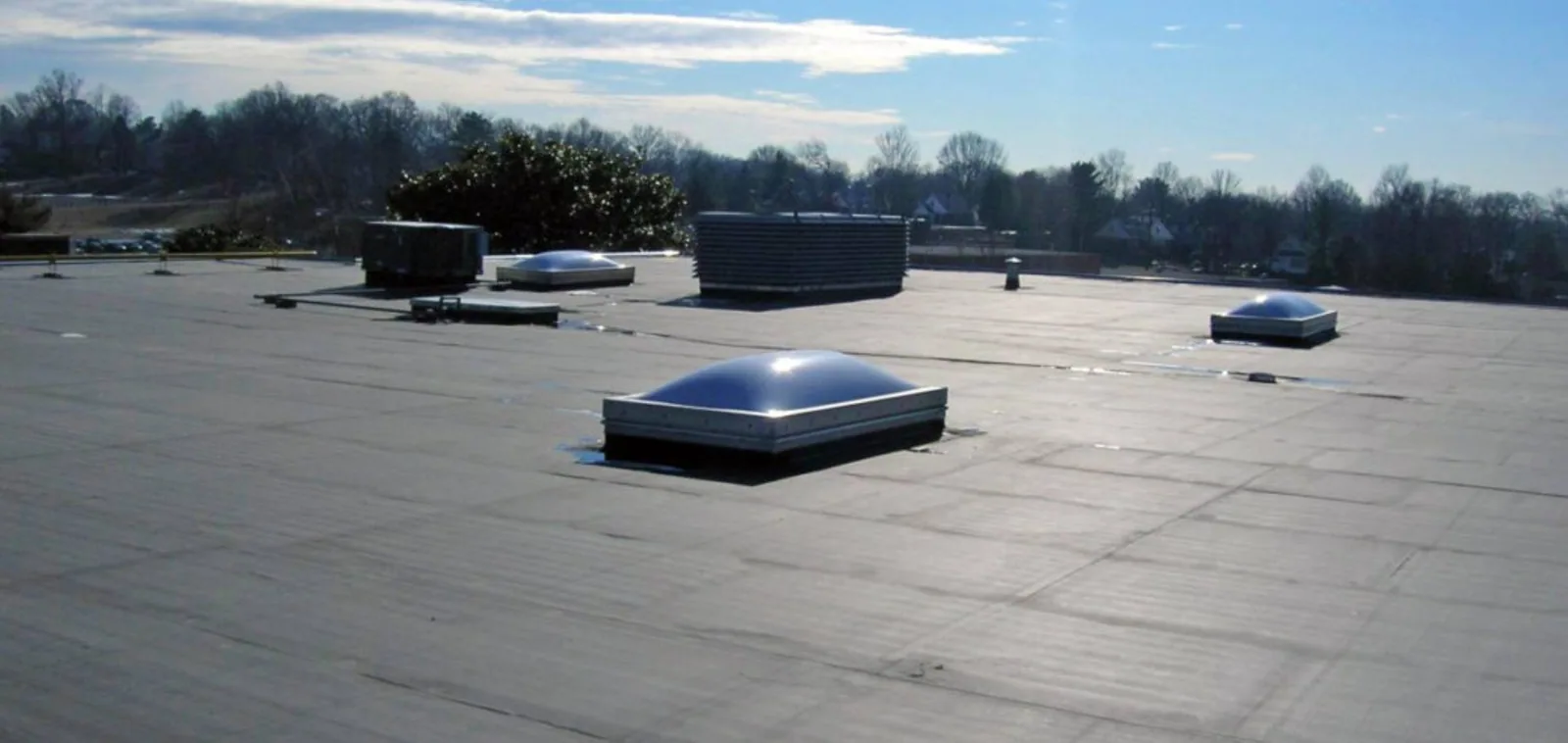
That shapes the inspection. We look hard at edges, coping and rooftop units for wind, and at membrane surfaces, metal panels and skylights for hail. The report states which damage type each finding matches.
Repair Scope and Sequence
Repairs follow the findings. Displaced coping is reset and sealed. Torn flashing is cut out and replaced. Punctured membrane gets a welded or adhered patch. Damaged units are reported to the mechanical contractor. Where damage covers a large area, we price a section replacement against a patch program and show both.
The sequence puts safety items first, weather-tight items second and finish items last. Each step names the handoff to the next trade or the next day. Torch or welding work waits for the permit and the fire watch. Material orders are placed as soon as the scope is agreed, since lead times can set the schedule. The punch list is walked with the owner's representative before the crew demobilizes, and each item is closed with a photo.
Permit and Claim Steps
Roof permits, reroofing included, are required in Kingsport, with stamped plans and a PDF for commercial submittals. A storm repair that grows into a replacement above $25,000 needs a contractor with a Tennessee state license and proof of workers' compensation and liability coverage, so the permit submittal begins while materials are ordered.
For the claim, we hand over the photo log, the roof plan with locations, the damage descriptions and the scope. Our roof insurance claim assistance arranges that file for the adjuster. After a storm that opens a seam, emergency roof repair is the first call, and the repair record becomes part of the hail damage roof repair or wind file. Keep every invoice from the dry-in. They belong in the claim file, with the date and the roof area each covers.
What We Need From You
Send the storm date, photos, the roof plan if there is one, the access rules and the name of the person who can approve emergency work. Name the tenant contacts for properties on Fort Henry Drive or in downtown Kingsport. With that, the dry-in can start the same day. If a tenant or a department controls access to the roof, name them. A call to the right person before the crew arrives saves an hour at the gate. Tell us also which areas below the roof are the most sensitive to water, so interior protection goes there first.
Commercial Roofing Questions
What should I do before calling after a storm?
Photograph the damage from the ground, note the time and the location of any interior water, and keep people clear of the area. Please stay off the roof. Call with those details so the crew can plan safe access.
Does a temporary repair affect an insurance claim?
A dated, photographed temporary repair protects the building and shows prompt action. It is logged separately from the permanent scope, so the claim stays clean.
How do you tell hail damage from age-related wear?
By pattern and location. Hail impacts spread across exposed surfaces, while wear concentrates at seams, drains and flashings. Each finding is photographed with a scale and a plan location.
Is a permit needed for a storm repair?
Kingsport roof permits cover reroofing. A small repair may not need one, but a section replacement does, and above $25,000 the contractor needs a Tennessee state license.
How fast can a dry-in start?
Same day when access and approval are in hand. Send photos, the roof access rules and an approver, and the crew can be on the way.