The first step in a roof claim at a Kingsport, TN property is the loss record, and it needs to exist before the adjuster does: the date and time of the event, the policy contact, the photographs taken that day and the name of the person who can give the adjuster roof access. We build the file around those items. Our job is documentation and coordination. We record what the roof looks like, separate the damage from older wear, write the repair scope in lines the adjuster can check and schedule the work around the carrier's visit. The decision on coverage stays with the carrier and the policy. Owners with several buildings can keep one claim format, so the second claim is a repeat of the first.
The Loss Record
A loss record has four parts. The event: date, time and the weather as it was reported. The building: address, roof sections and who occupies each. The damage as first seen: photos from the ground, interior photos and any note from staff. The steps taken so far: tarping, drying, notices to the carrier and to the landlord if there is one.
We help owners assemble it in the first day or two, while memory is fresh and the roof is unchanged. Photos taken before a temporary repair matter most, so we ask that nothing be removed or swept up until the crew has photographed it. Keep a single folder for the claim. Notices, emails, photos, invoices and the adjuster's contact details all go in it, filed by date. When a supplement is needed three months later, the folder answers most of the questions before anyone asks them.
Condition Before and After the Event
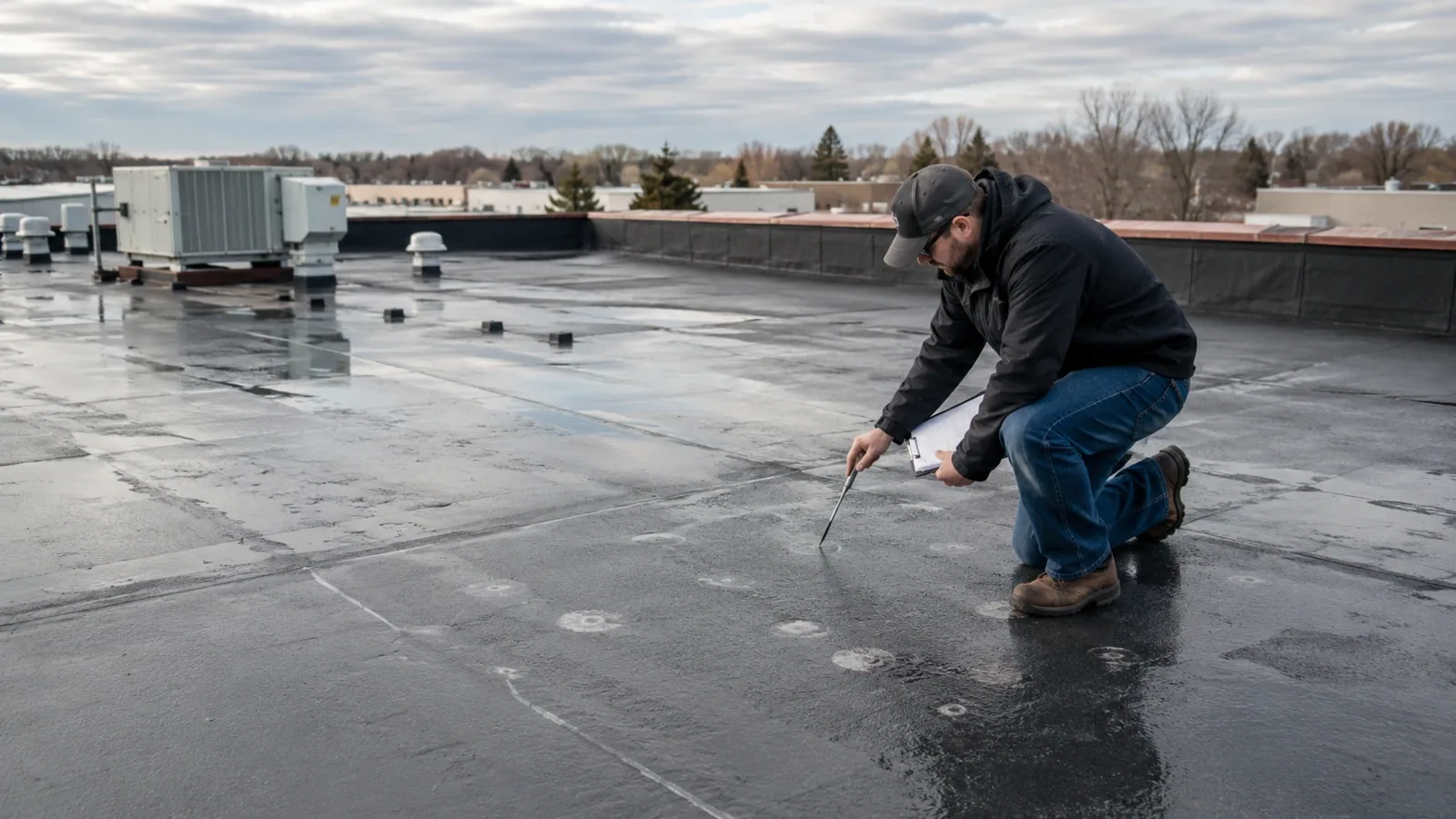
An adjuster has to decide what the event caused. That is easier when there is a record of what the roof looked like before it. Past inspection reports, maintenance registers, repair invoices and aerial images all help. If none exist, our walk records old patches, corroded fasteners and ponding stains, so those are not mistaken for storm damage.
Our commercial roof inspection report is built to serve here. It lists the roof sections, the findings by number, a photograph for each and a note of whether the finding is consistent with the event, with wear or with both. Where moisture below the surface is in question, an infrared moisture survey adds a map. Dates matter in this file. A maintenance entry from last spring that shows clear drains and sound seams is worth more than a page of description, because it fixes the condition before the event.
The Adjuster Visit
We ask the carrier for the visit date as early as we can, and we arrange access: the hatch or ladder, the escort if the site needs one, the lift if the roof is too steep or fragile to walk. A crew member goes up with the adjuster, carrying the plan, the photo log and a tape. When the adjuster marks an area, we mark it on the plan.
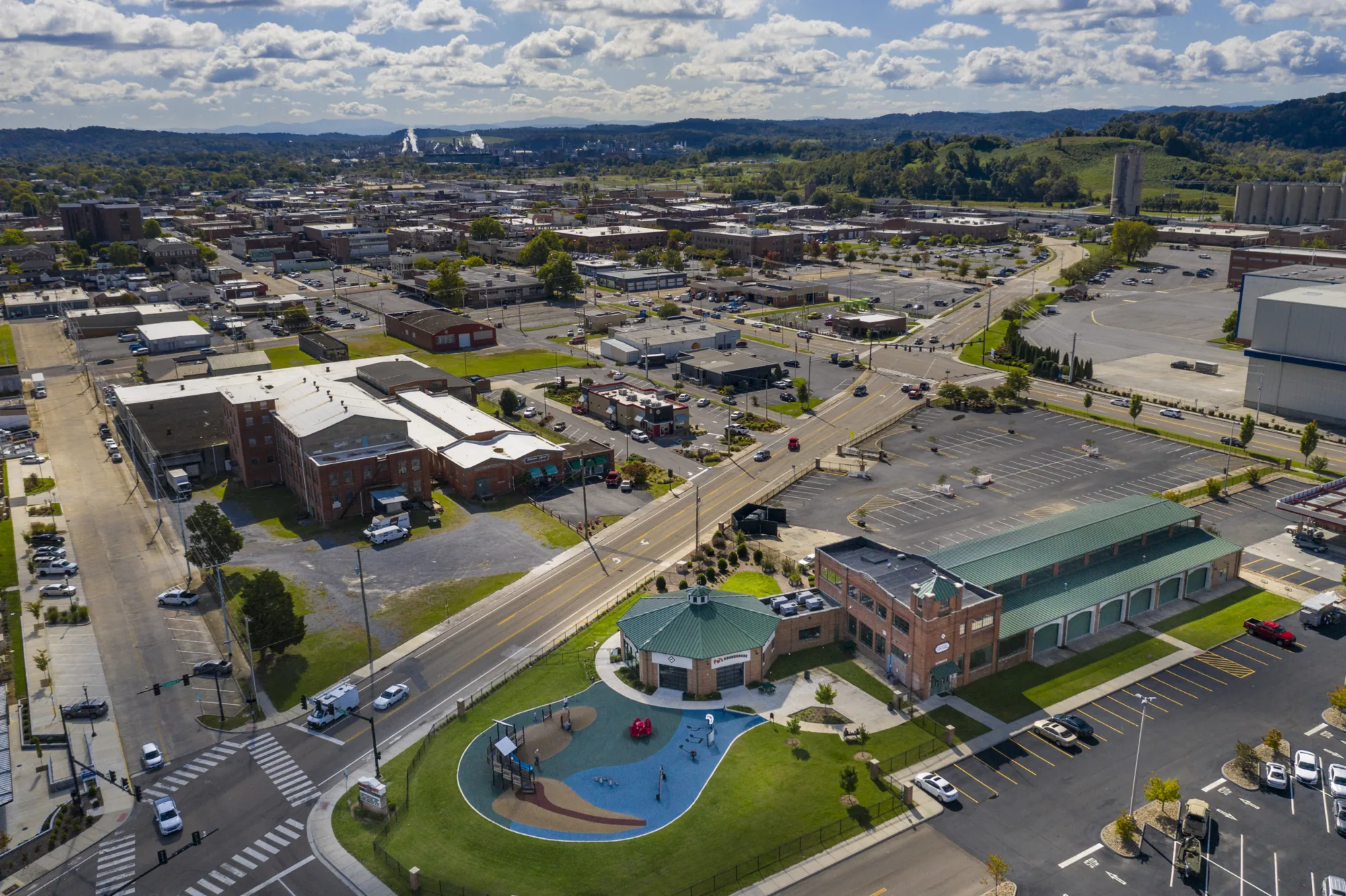
At a plant, a hospital campus or a retail center on Fort Henry Drive, the visit has to fit the access rules and the operating calendar. We confirm both with the site contact, and we make sure the adjuster knows about any restricted area. The visit is a working meeting, and a prepared one goes faster. Bring the lease too, if the building has tenants. The carrier may ask who is responsible for the roof, and the answer shapes who submits the claim. We help owners find the right clause and put it in the file.
Scope Lines the Adjuster Can Check
A repair scope that reads as a list of lines is easier to review than a lump sum. Each line has a roof section, a task, a quantity and a price: remove and replace coping, patch membrane, replace flashing, reset a unit, tear off and replace a section. Code items, such as added insulation needed for a replacement, are separate lines, so the adjuster can see what is repair and what is upgrade.
The city's building department issues the permit for reroofing work, and a commercial submittal goes in with a stamped set of plans and a PDF copy. Past $25,000 the contractor of record must also be licensed by the state and carry workers' compensation and general liability insurance. The department enforces the International Building Code together with the International Energy Conservation Code, and the 2024 editions appear on its page for contractors. Permit fees, plan stamping and code-driven items each get a line of their own.
Reading the Local Storm Record
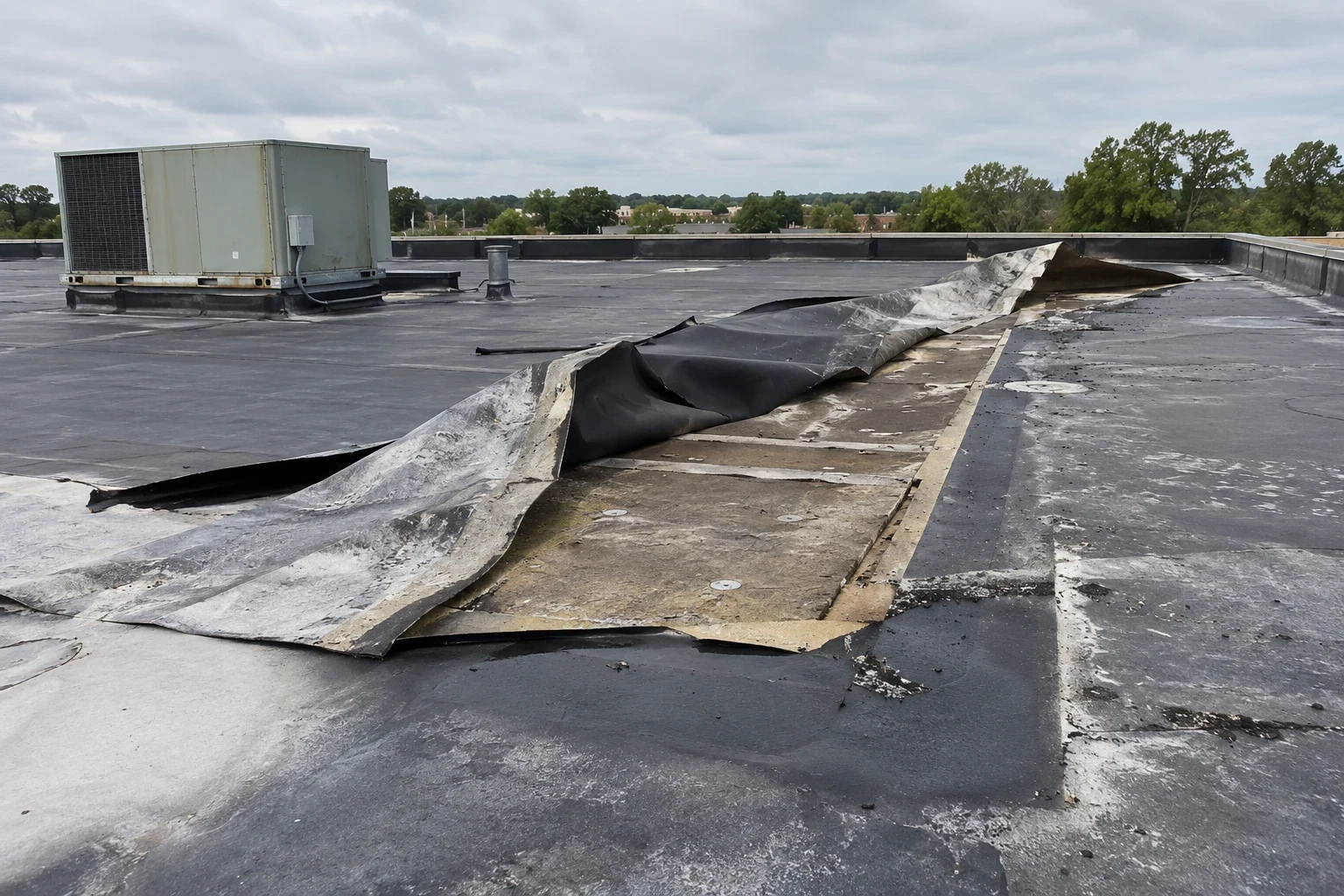
Severe thunderstorm warnings issued from Morristown for Sullivan and Washington counties have named gusts to 60 mph and hail, and have listed roofs among the things likely to be damaged. Only four tornadoes are recorded in Sullivan County since 1680. For most local claims the question is straight-line wind or hail, and the findings are matched to that cause.
That context goes into the file as a short paragraph, with the date of any warning that covered the property. It does not replace field findings. It helps the adjuster see why the pattern on the roof looks the way it does. Our storm damage roof repair process and the hail damage roof repair findings feed the same file. Where a tenant reports the leak first, the tenant's report goes in the file with its date and time. A report from the same morning as the storm fixes the timeline better than a memory a week later.
Repair Sequencing After Approval
Once the carrier approves a scope, the permit submittal, the material order and the phasing plan start together. Temporary protection stays in place until the permanent work closes the area. Supplements are documented when hidden damage turns up at tear-off, with photos taken before the area is covered.
At closeout we hand over the photo log, the daily records, the permit sign-off and the warranty papers. The file closes with the roof section list and a note of the next inspection date, so the claim leaves a usable roof register behind. Disputes happen, and a good file shortens them. When the carrier and the owner disagree on a quantity, a measured plan with photos usually settles it faster than a long exchange of letters. We keep the measurements current as the work proceeds.
What We Need From You
Send the loss date, the policy contact, the photos and the roof access rules. For properties on Stone Drive or in downtown Kingsport, add the landlord and tenant contacts. We will start the loss record the same day. If the carrier has sent a form or a request list, send it with the rest. We match the documentation to what the carrier asks for, so the file is read once.
Commercial Roofing Questions
What should I photograph before anything is moved?
The roof edges and field from the ground or a lift, every visible tear or dent, the interior stains and any debris. Take wide and close shots with a date. Nothing should be swept up until it is photographed.
Do you decide whether the carrier covers the damage?
No. Coverage is decided by the carrier under the policy. We document the roof, separate damage from wear and write the scope in checkable lines.
Can I start a temporary repair before the adjuster arrives?
Yes, and we recommend it, provided the damage is photographed first. A dated dry-in protects the building and shows prompt action. Keep the invoices.
What if hidden damage appears during tear-off?
We stop, photograph it and document the extent. A supplement request goes to the carrier with those photos, before the area is covered.
Does a roof claim need a permit?
A repair that turns into a replacement does. The city's permit rules reach reroofing, and a large job over $25,000 needs a state-licensed contractor.