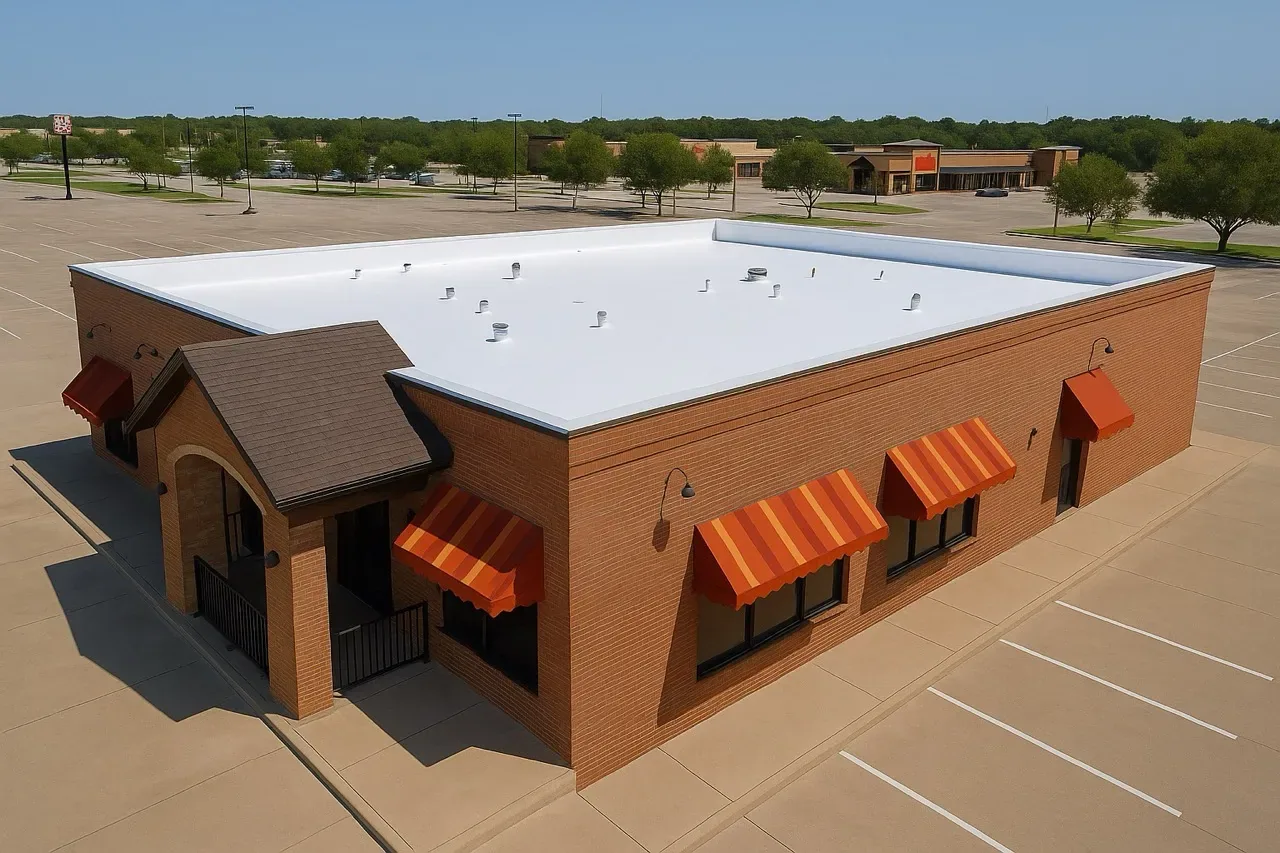
Nothing on a plant roof gets opened until the outage calendar is in hand, because the roof over a process unit can only be opened when that unit is down or isolated. We ask the plant manager for the turnaround schedule, the access rules and the safety orientation requirements before we ask for the roof plan. The phasing plan comes from those dates, and the city permit filing follows.
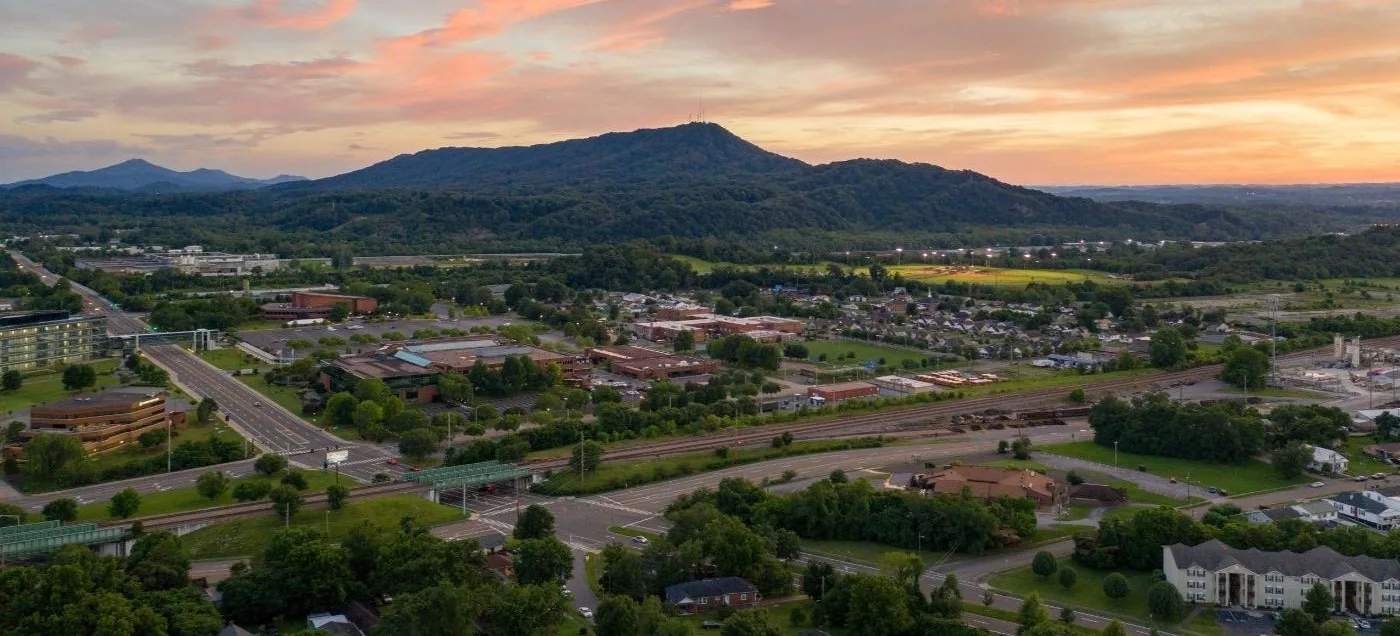
Kingsport, TN, grew as a planned industrial city, and chemical, paper and ordnance manufacturing still make up a large part of its base. Manufacturing roofs there sit over reactors, paper machines, assembly lines and storage, and each use dictates a different order of work. The sequence holds for any plant: access, isolation, tear-off, dry-in, tie-in, inspection, closeout. A flex industrial building and a warehouse on the same campus follow the same order, with fewer isolation steps.
Turnaround Outage Windows
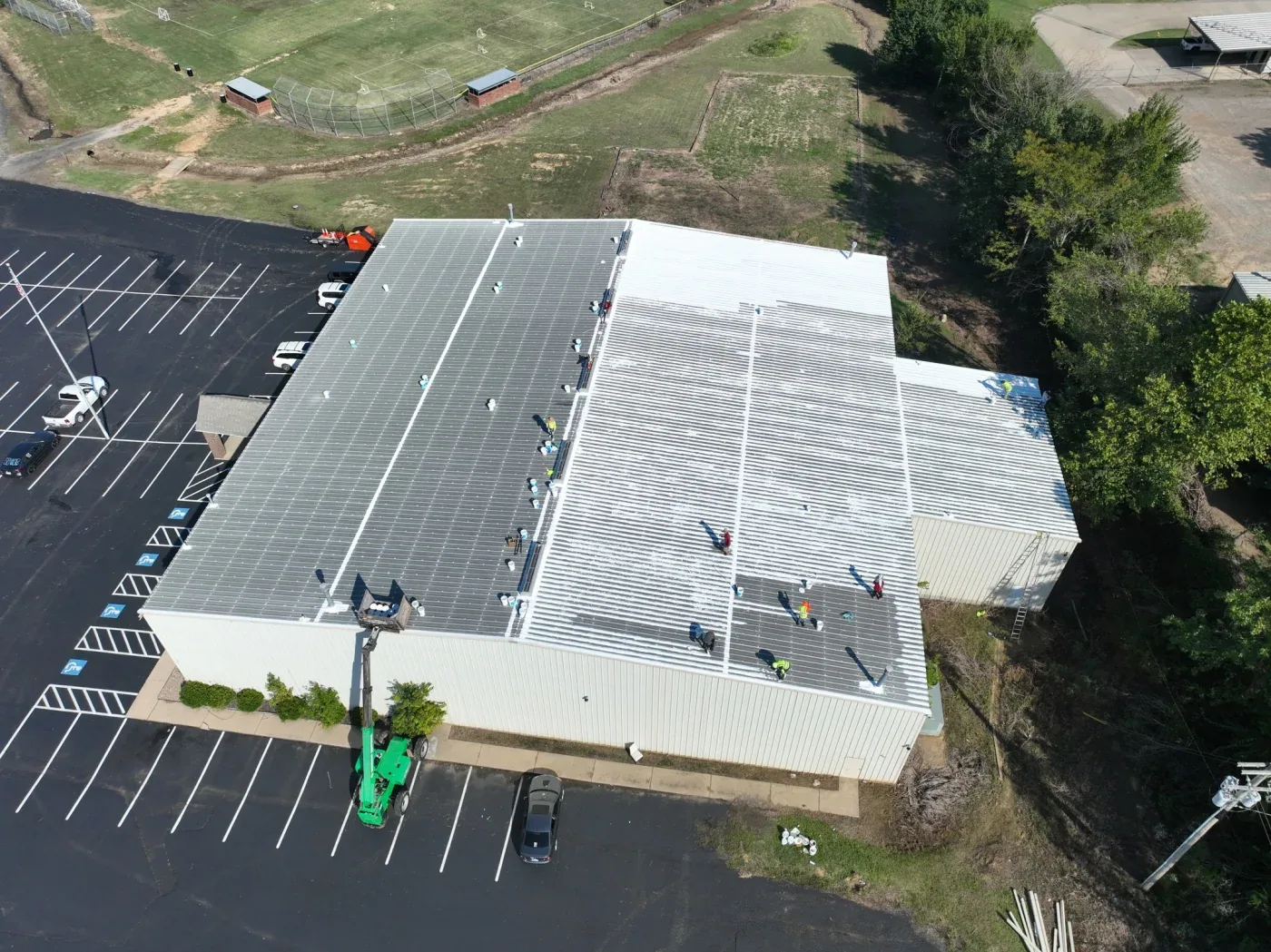
A turnaround outage is the best time to reroof over a process area, because the equipment below is shut, the area is cleared and the plant has already arranged contractor access. We fit the roof sections into the outage so that each is removed and dried in before restart. The sections over critical equipment go first.
Outside an outage, work proceeds under a permit-to-work system, with the area supervisor signing each day's scope. We prepare for both cases, and the work follows the occupied building sequence when the plant stays live. The plan shows an outage version and a running-plant version, and the plant manager chooses which one fits the calendar and the budget. The outage version is shorter on site and costs more in overtime and crane time. The running-plant version takes more days and costs less per day. Both prices appear side by side.
Plant Access and Safety Orientation
Industrial campuses require badges, orientation, personal protective equipment and gas monitors before a crew steps on a roof. We submit crew names and training records in advance, attend the orientation and carry the required monitors. Crew turnover is minimized so the orientation does not repeat mid-job. A short list of named foremen, each with a backup, covers the plant's request for continuity. Every person who goes on the roof has completed the orientation, and the safety lead keeps the sign-in sheet.
The Kingsport Eastman complex is the company's largest manufacturing facility, and Eastman Chemical's world headquarters is in Kingsport. Holston Army Ammunition Plant is government-owned and contractor-operated and has its own access rules. On sites like these, roofing runs on escorts, badging, hours set by operations and a sponsor who issues the instructions, and each site's own rules govern.
Crews also learn the plant's alarm signals, muster points and shelter locations during orientation, and the foreman repeats them at every morning briefing. Weather warnings issued for Sullivan County are relayed to the roof by radio, and the crew follows the plant's own shelter rules in addition to its own stand-down procedure.
Chemical Exposure and Membrane Choice
Exhaust from process stacks lands on the roof. Solvents, oils, acids and heat attack some membranes and leave others alone. We ask what vents onto the roof and in what concentration, then match the membrane to the exposure. A KEE membrane resists many contaminants, and a PVC membrane handles grease and many chemicals.
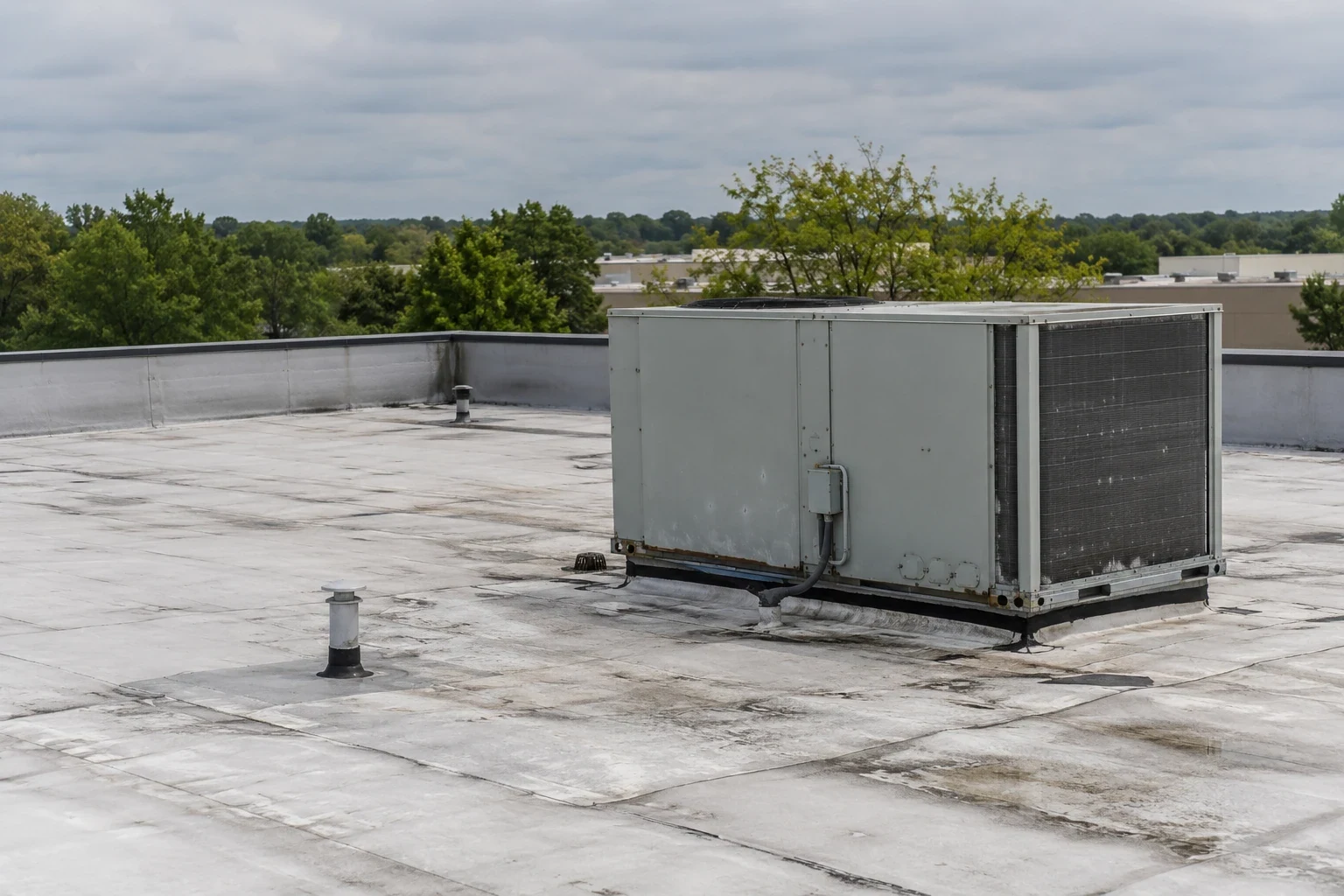
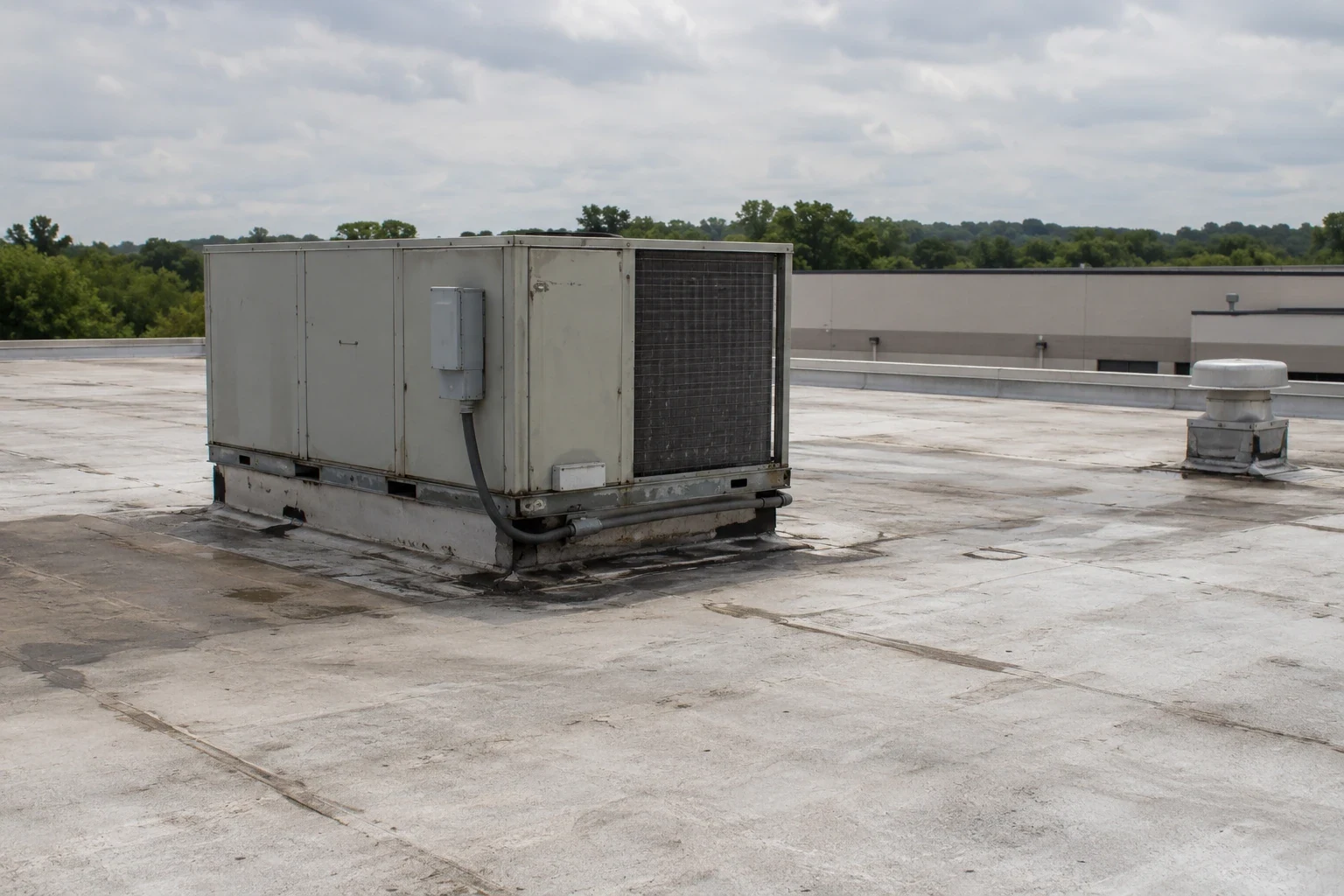
Metal roofs over corrosive atmospheres need coating checks and fastener inspection. Roof penetrations for stacks and vents receive curbs and counterflashing sized to the plant's actual equipment, so thermal expansion does not tear the seal. The choice and the reason go into the submittal. Insulation and cover board are chosen for the same exposure, since a solvent can travel through a seam and attack the layer below it.
Hot Work Permits and Isolation
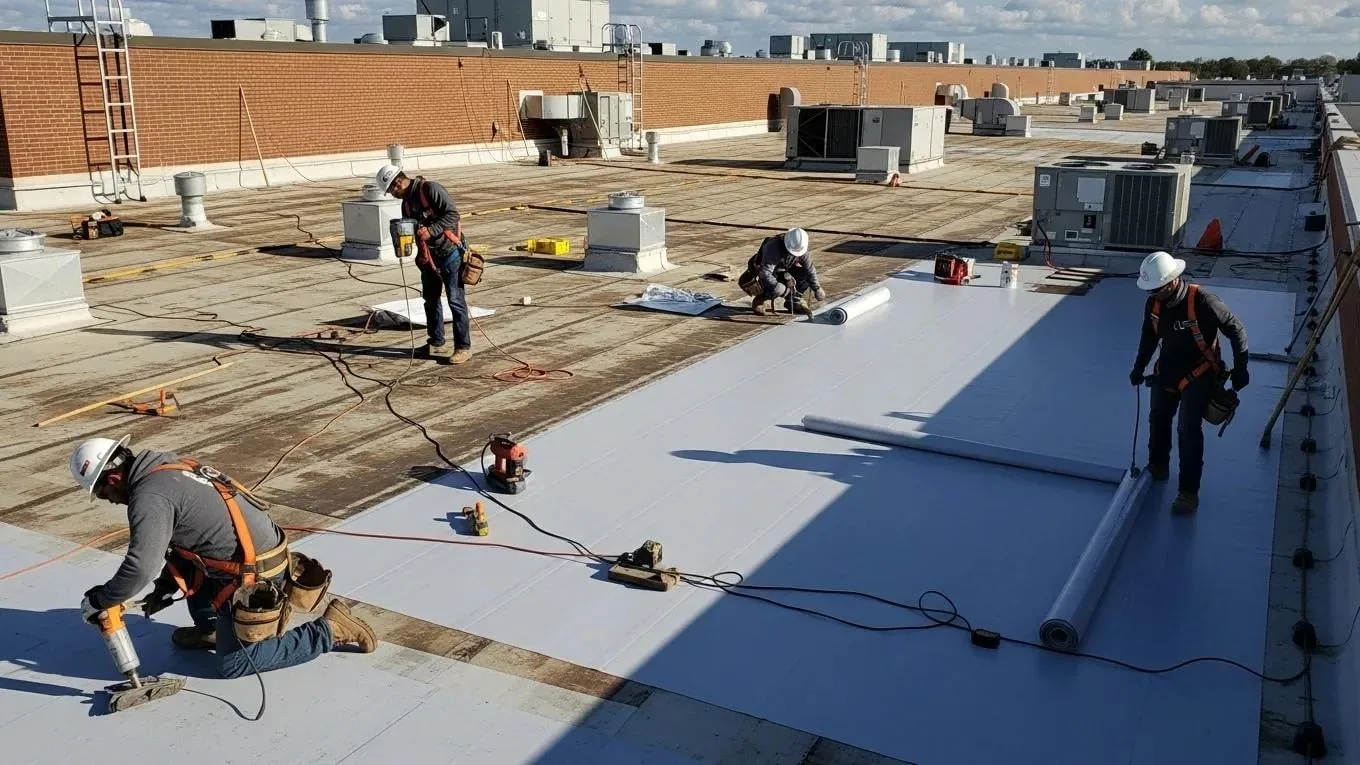
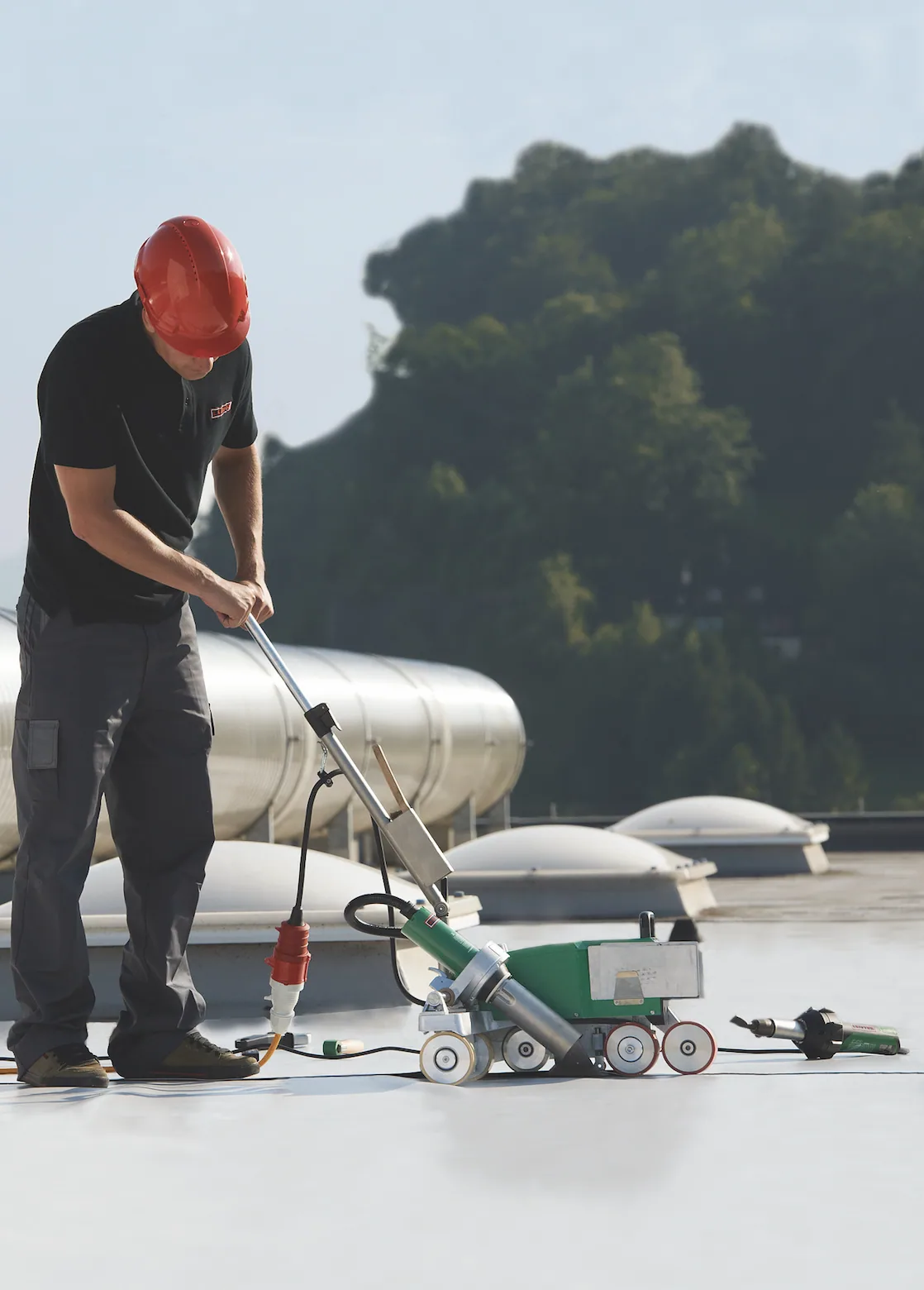
Heat welders and torches require a hot work permit, a fire watch and a check that nothing flammable is venting nearby. We obtain the permit each day from the area authority and keep the fire watch on the roof for the required period after work ends.
Where vapors may be present, we coordinate vent isolation with operations and use gas monitors on the roof. If a permit is refused for the day, the crew moves to a cold-applied task, such as deck prep or edge metal, so no hours are lost. Material stays covered and the open section is dried in by the end of the shift. The superintendent updates the daily log and the next day's plan.
Crane Picks Over Process Equipment
Cranes and hoists stage material over buildings that contain sensitive equipment. We mark the swing path, keep loads from passing over live process areas and agree the pick sequence with the plant's lifting supervisor. Each load is logged. Loads are weighed or tallied by the rigger, and the lifting plan is on the roof for the crane operator and the signal person to follow. A change in wind speed stops the picks until the operator clears them.
The laydown area sits away from rail spurs, roads and loading lines. The haul route runs from the public road, through the gate and to the pick location, and it is verified on site before the first truck. In Kingsport, U.S. 11W and U.S. 23 intersect and I-26 ends at the northwest edge, so delivery routes into the plants are short but busy.
Permit, Code and Inspection
On a plant, two permits move together: the city roof permit and the plant's own permit to work. For the city, a commercial filing means sealed drawings and a PDF copy, which we assemble from the survey and the phasing plan.
The Domtar mill site goes back to 1916, and its 2023 conversion now turns out about 600,000 tons a year of recycled liner board and corrugated medium, a reminder that a plant's use can change faster than its roof. We ask about planned equipment before choosing a system, so the permit does not need an amendment later.
Weather Allowances and Closeout
Weather planning on a plant roof is a short list of limits. Rain reaches Kingsport on about a third of the days, and each limit has a hold, with an owner on the plant side who is told the same day.
When a warning is posted, the crew secures material, covers open sections and leaves the roof. Closeout follows the last section: a punch list, a walk with the plant representative and a turnover package of as-builts, material data and inspection records for a site near the West Stone Drive Technology Park or in Church Hill, across the Holston River from the ammunition plant.
Commercial Roofing Questions
Can a plant roof be replaced while the unit below runs?
Sometimes. It depends on the process, the hazard classification and the plant's permit rules. We prepare both an outage version and a running-plant version of the plan, and the plant manager picks the one that fits the calendar.
How do process exhausts change the roof system?
They set the membrane. Solvents, oils and acids soften some materials, so we ask what vents onto the roof and match a resistant system. The reason goes into the submittal so the plant's engineers can review it.
What do you need for plant access?
Crew names, training records, orientation dates and the required protective equipment. Send the access rules early and we will fit the crew to them.
How are crane picks planned over equipment?
With a swing path that avoids live process areas, agreed with the lifting supervisor. Each load is logged and the laydown area is placed away from rail and road traffic.
What closeout documents come with the job?
The as-built roof plan, the material data, the inspection records, the closed punch list and the upkeep steps, with warranty papers when the system has a warranty.