Leak work in Kingsport, TN starts with a request for three items: photos of the ceiling or wall where the water shows, the time of the last rain, and the nearest safe roof access. With those in hand, the crew knows which section of the roof to open first and which tools to bring. The trace follows the water backward, from the interior mark to the deck, through the insulation and out to the membrane. Most of the work is deciding where to look. Once the path is known, the repair itself is usually brief, and the confirming visit after the next rain shows whether it held.
Tracing the Path From Inside to Out
Water travels along decks, down fasteners and across insulation joints before it drips from a ceiling tile. We start at the interior mark, check the deck type above it and look for the highest nearby roof feature that could admit water: a curb, a drain, a pipe boot, a parapet joint or a seam. Interior light, staining patterns and the direction of the fall help narrow the area.
On the roof, we check the surface for visible punctures, open laps and lifted flashings. If the cause is not obvious, we use moisture meters, infrared imaging or a controlled water test, which isolates one section at a time. An infrared moisture survey maps saturated insulation across the roof when the leak is wider than one spot.
Common Sources on Low-Slope Roofs
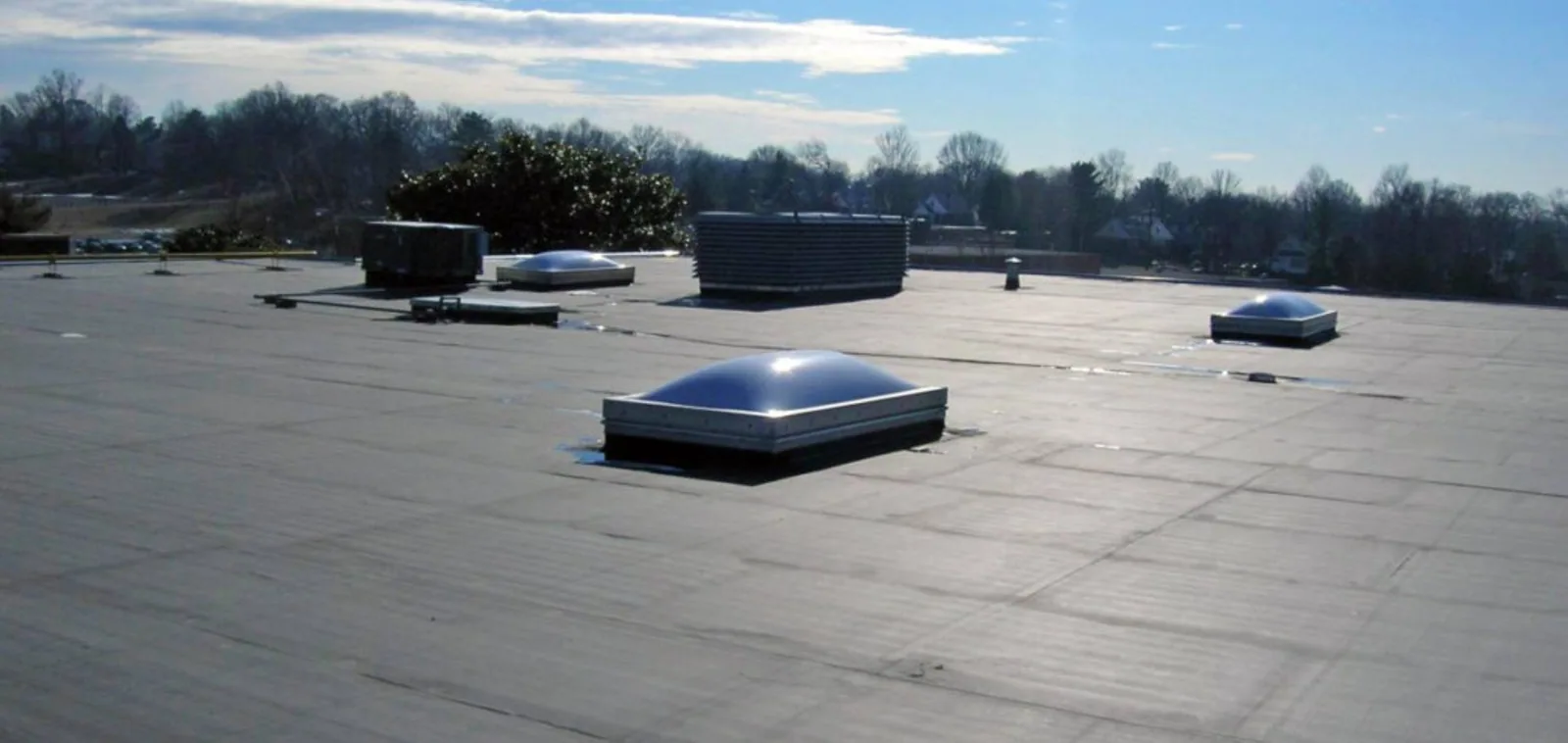
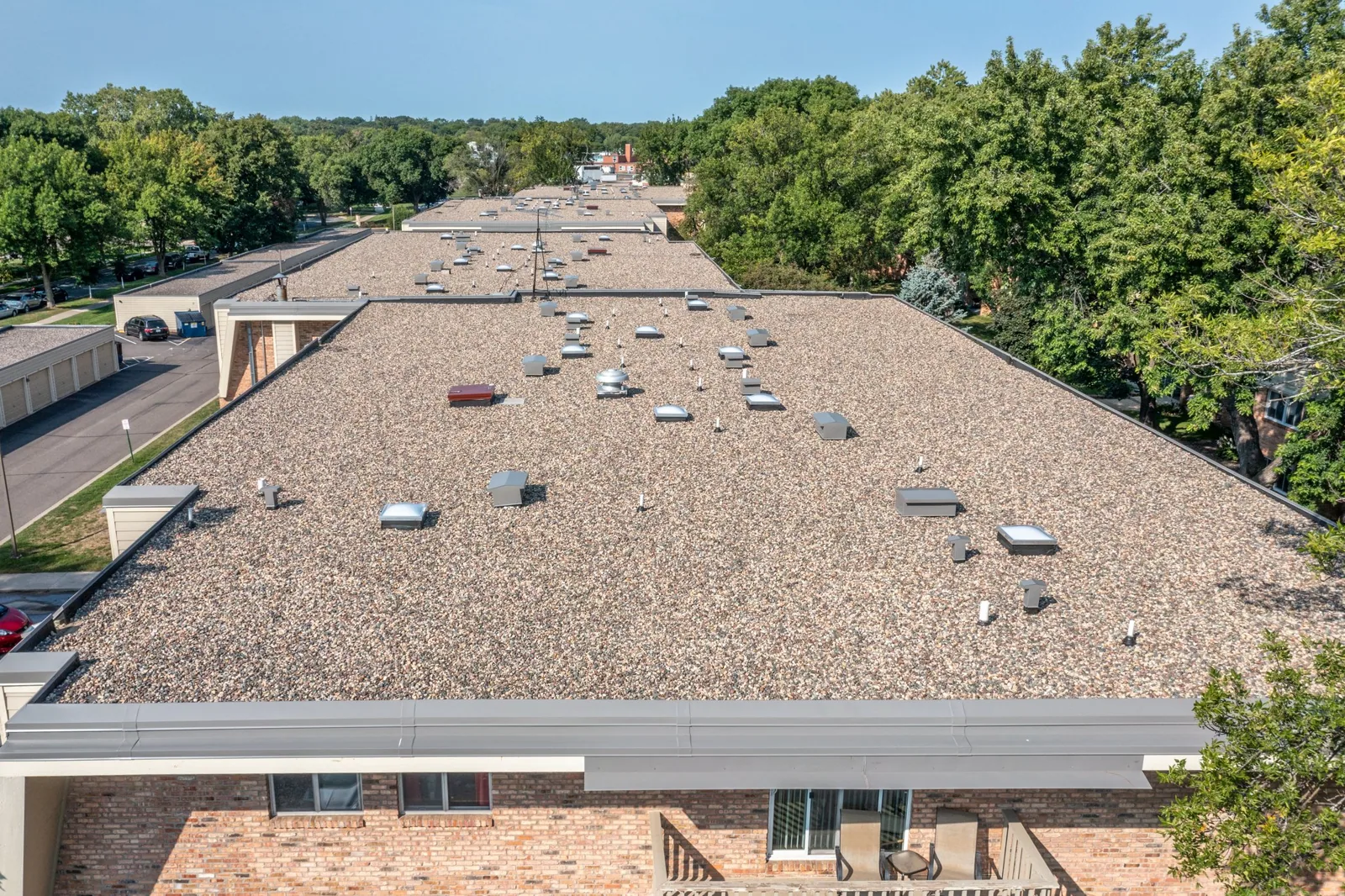
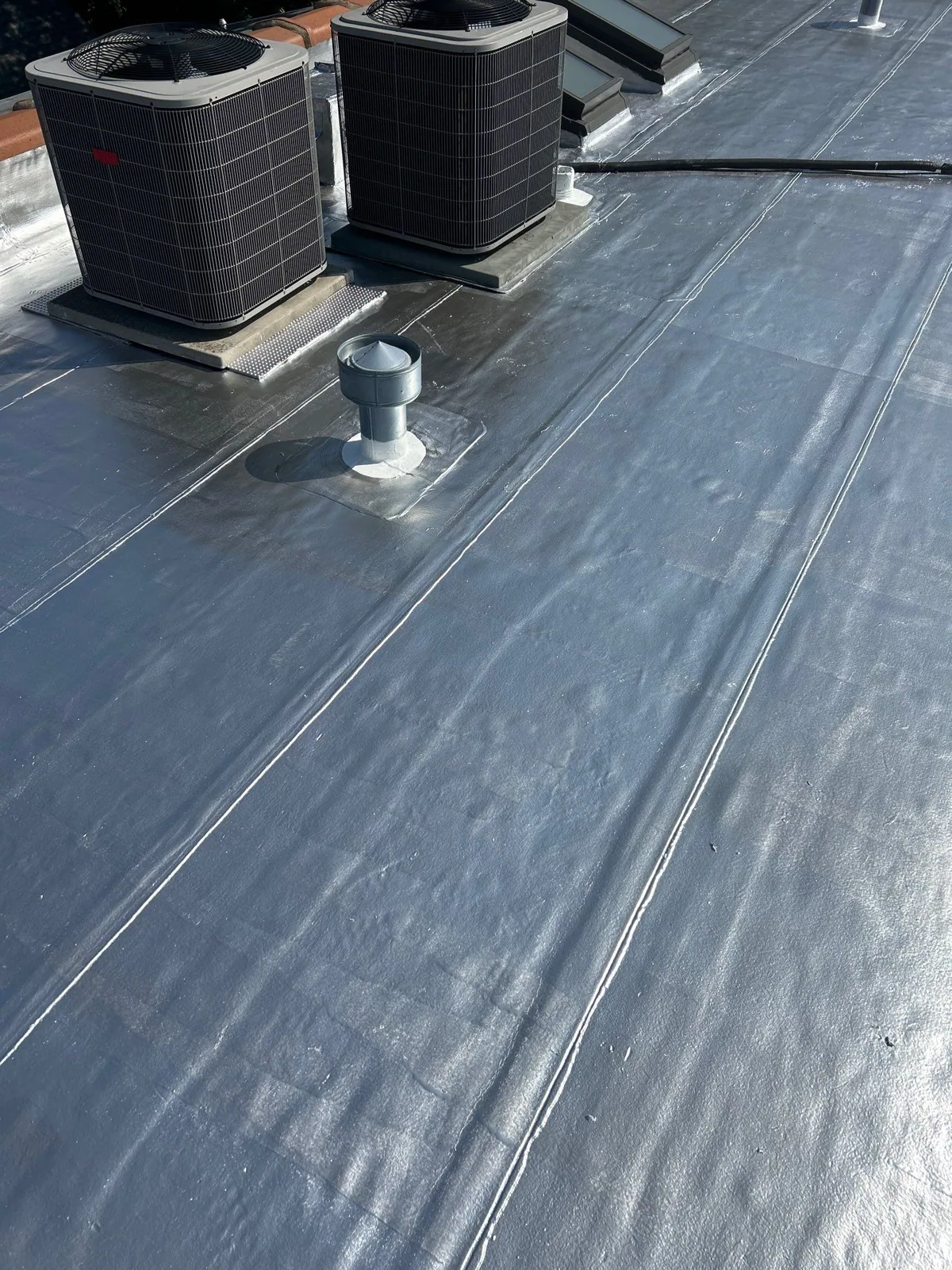
A short list covers most leak sources. Penetrations with aged boots or dried sealant. Base flashings that have pulled away from a wall. Seams that opened under thermal movement. Drains with a broken clamping ring or a cracked sump. Edge metal that lifted and let water behind the membrane. Rooftop equipment with failed curb flashing or a missing counterflashing.
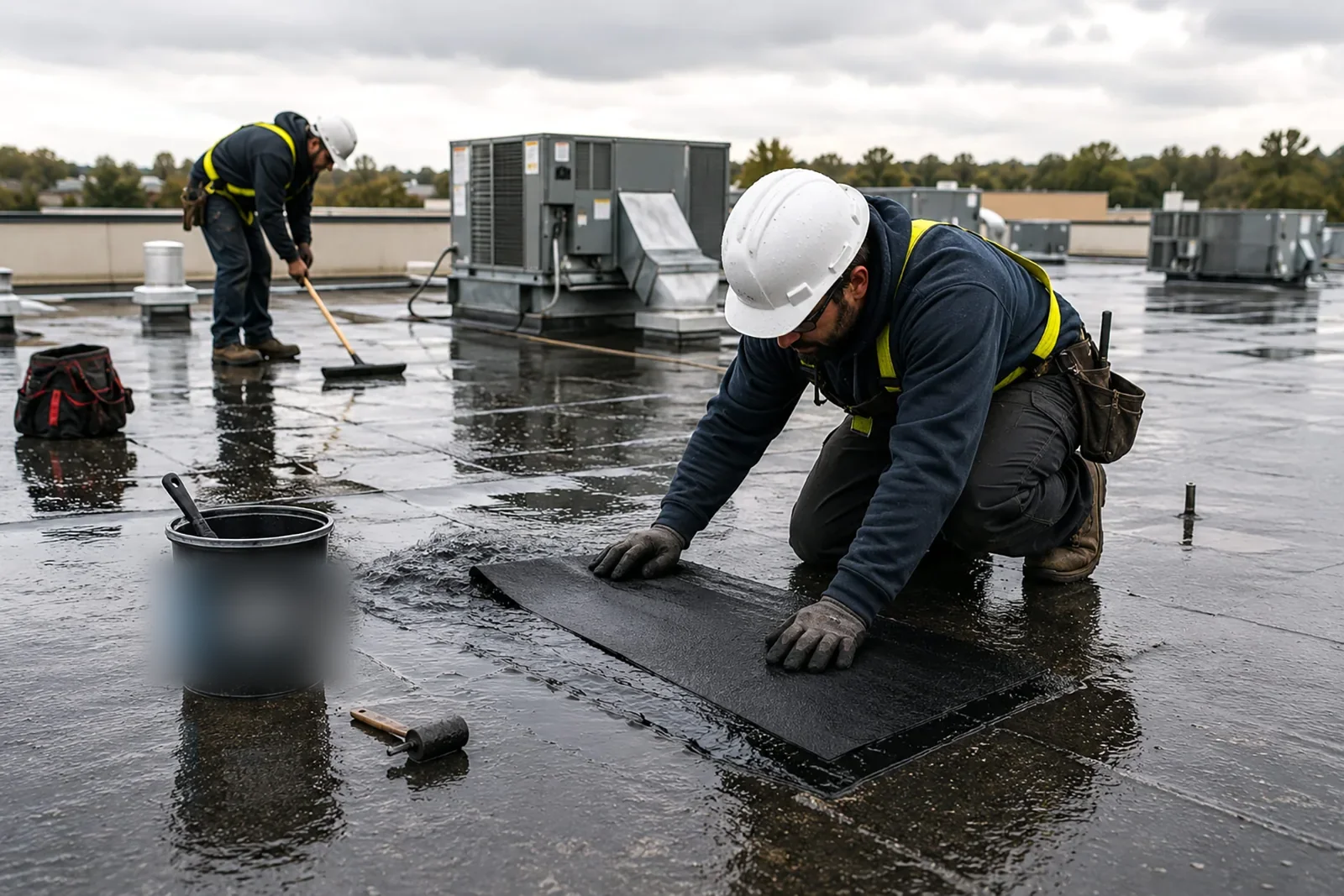
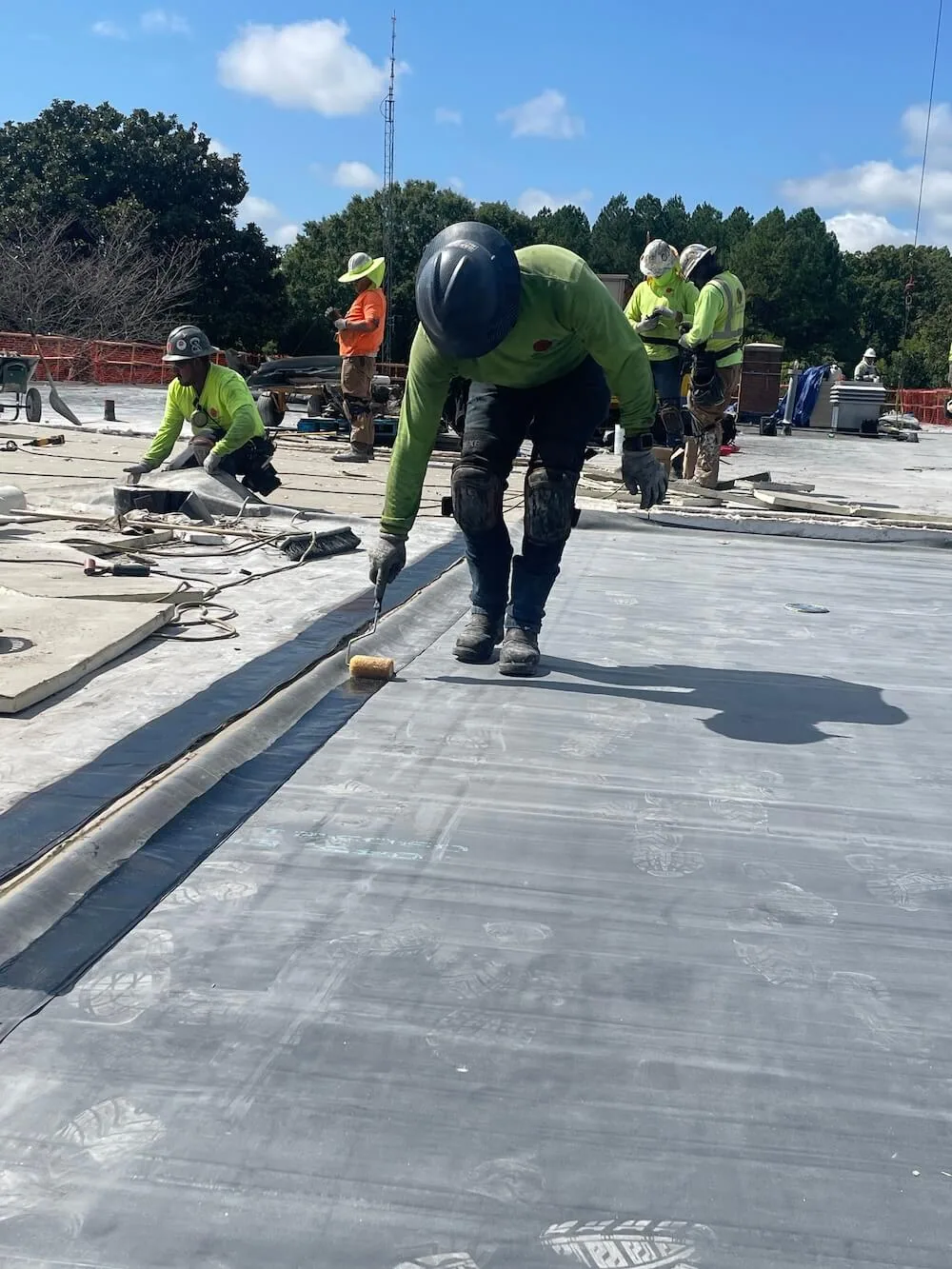
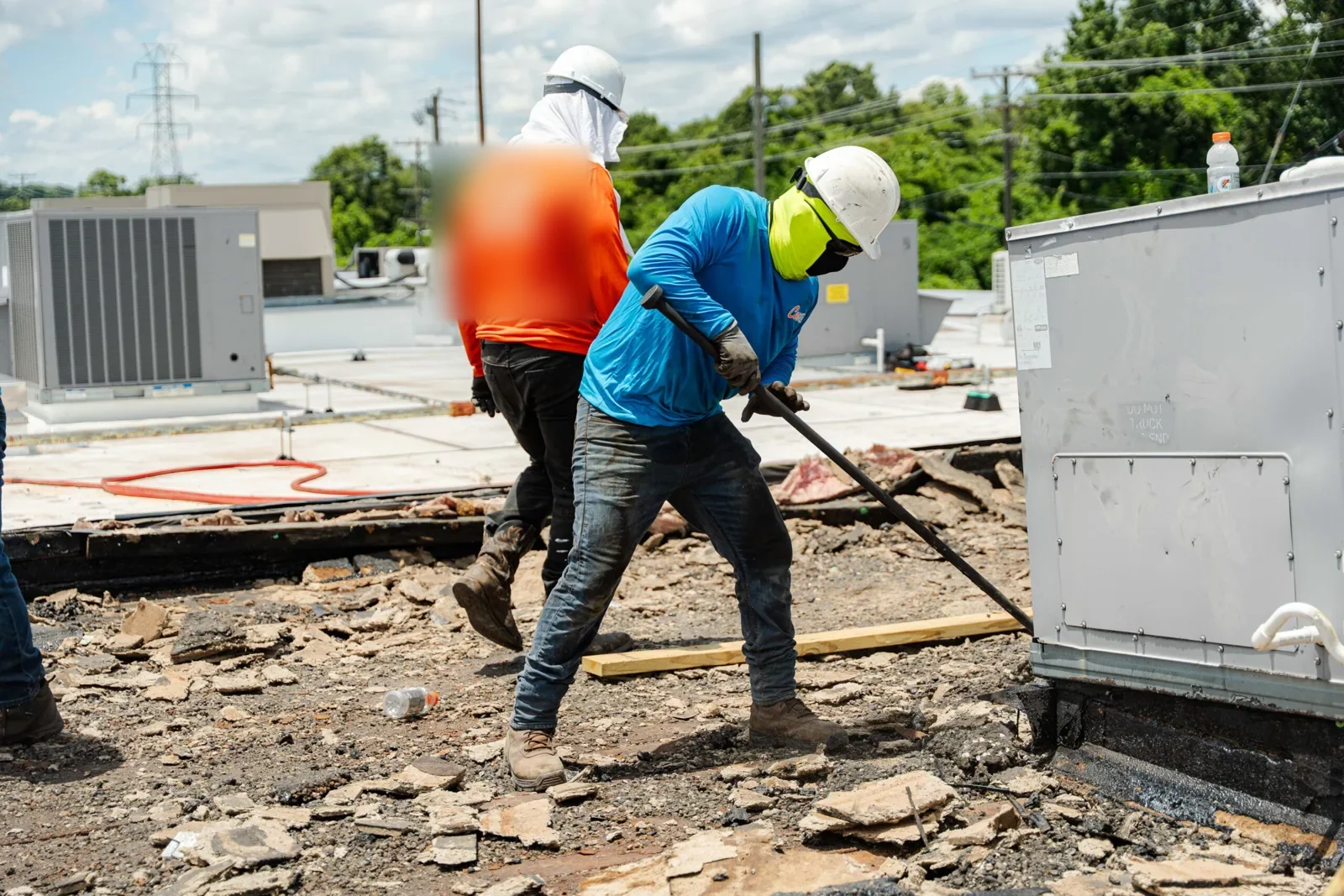
Each source has its own repair. A wall base that has pulled loose is rebuilt as failed flashing, with new termination bar and sealant. A hole in the field gets a welded or bonded patch sized past the damage, as in membrane puncture repair. The method follows the membrane type and the building use.
Temporary Dry-In Versus Permanent Repair
Some leaks need a same-day stop and a later permanent fix. A temporary patch, tarp or sealant keeps water out while materials are ordered or a rooftop unit is shut down for the real repair. We mark temporary work on the roof plan, so it does not get forgotten. A temporary patch left in place for years becomes the next leak.
For active leaks during a storm, our crew can respond with emergency roof repair and return later for the planned fix. The permanent repair is written up with the cause, the method and the photographs, so the facility manager has a record for insurers, tenants and the next roofer.
Leak Timing and Kingsport Weather
Rain falls on about 133 days a year in Kingsport, adding up to roughly 45 inches, so most leaks show up with ordinary rain, not only with storms. Freeze and thaw cycles are the other pattern. The city has recorded a low near minus 18 F, and snow, averaging about 5.1 inches a year, melts into drains and gutters that may still be frozen. Ice at a scupper sends water back under the edge metal.
Summer thunderstorms test details with wind-driven rain. Severe thunderstorm warnings for Sullivan County mention 60 mph gusts and hail, and such storms push water sideways under flashings and through lifted laps. A leak that appears only in storms often points to an edge or wall detail, not the field of the roof.
Leaks by Building Type
A leak in a plant means different things than one in a clinic or a shop. At a manufacturing site, which in this region includes the Phipps Bend park, water on a production floor or near electrical gear needs immediate coordination with the plant manager, and the crew works around shifts. At a hospital or other medical building, a category that includes Holston Valley Hospital in Kingsport, the leak is routed through infection control and facilities before access is granted.
Along Fort Henry Drive and the Stone Drive retail corridor, the issue is tenant impact: ceiling tiles, merchandise and customer access. We trace the leak and coordinate repairs during off hours. In downtown Kingsport, where buildings are under renovation, a leak can damage new interior finishes, so the repair is staged with the general contractor's schedule.
Confirmation After the Next Rain
A repair is not closed on the day it is finished, and the follow-up has its own routine. We note the weather on the day of the repair, record the moisture readings around the patch and leave a dated photo set with the building contact. After the next rain, a quick walk or a reading from below confirms the area is dry, and the result goes into the file. We ask the building contact to report after the next rain, and we return if water appears. When the first repair does not stop the leak, the trace was incomplete, and we widen the search. Multiple leaks in one area often point to saturated insulation, which a patch cannot fix. In that case we map the wet area, price the cut-out and replacement, and give you the choice of repairing the section now or folding it into a larger project later.
If the survey shows widespread saturation, the next step is a larger repair or a commercial roof replacement. For buildings with recurring leaks, a preventive maintenance visit twice a year catches the details before the water does.
Commercial Roofing Questions
What should we collect before the crew arrives?
Interior photos with dates, the room and ceiling location, the time of the last rain and any equipment that sits on the roof above the spot. Access details help as well: where the ladder or hatch is, who holds the key and whether a lift can reach the area. With that, the first visit usually ends with a located source.
Why does the leak show up far from the actual hole?
Water follows the path of least resistance. It runs along the deck flutes, down a fastener or across an insulation seam before it drops into the building. On a steel deck, the water can travel several bays. That travel is why the trace starts inside and works outward, instead of patching the roof right above the stain.
How do you test when the source is not visible?
We isolate sections and wet them one at a time with a hose, starting at the low end and working up. A second person watches the interior for the first drip. A controlled test shows which detail leaks and rules out the others. For large roofs, an infrared scan taken in the evening finds the saturated insulation before the test begins.
Will the leak come back after a patch?
It can, if the patch addressed a symptom and not the cause. A patch over a seam that keeps moving will open again. For that reason, we describe the cause and the repair method on the work order, and we recommend a follow-up after the next rain. A recurring leak points to a deeper problem, such as saturated insulation or a failing flashing system.
Does a leak repair affect the roof warranty?
Repairs made with approved materials and methods keep most manufacturer warranties intact, but some warranties require the manufacturer to approve the repair method first. Tell us whether the roof carries a warranty before we start. We then follow the manufacturer's repair method and document the work with photos for the warranty file.