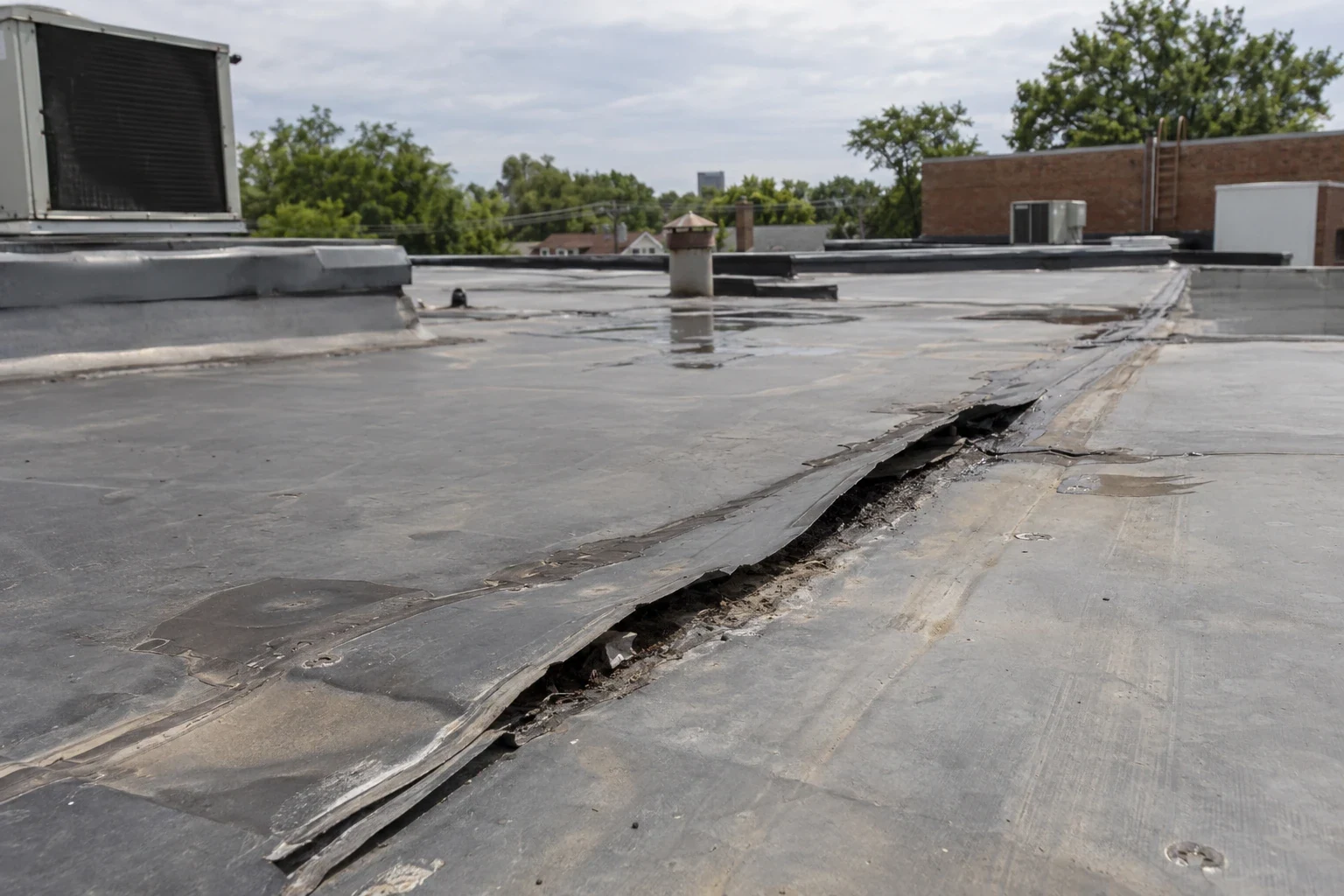
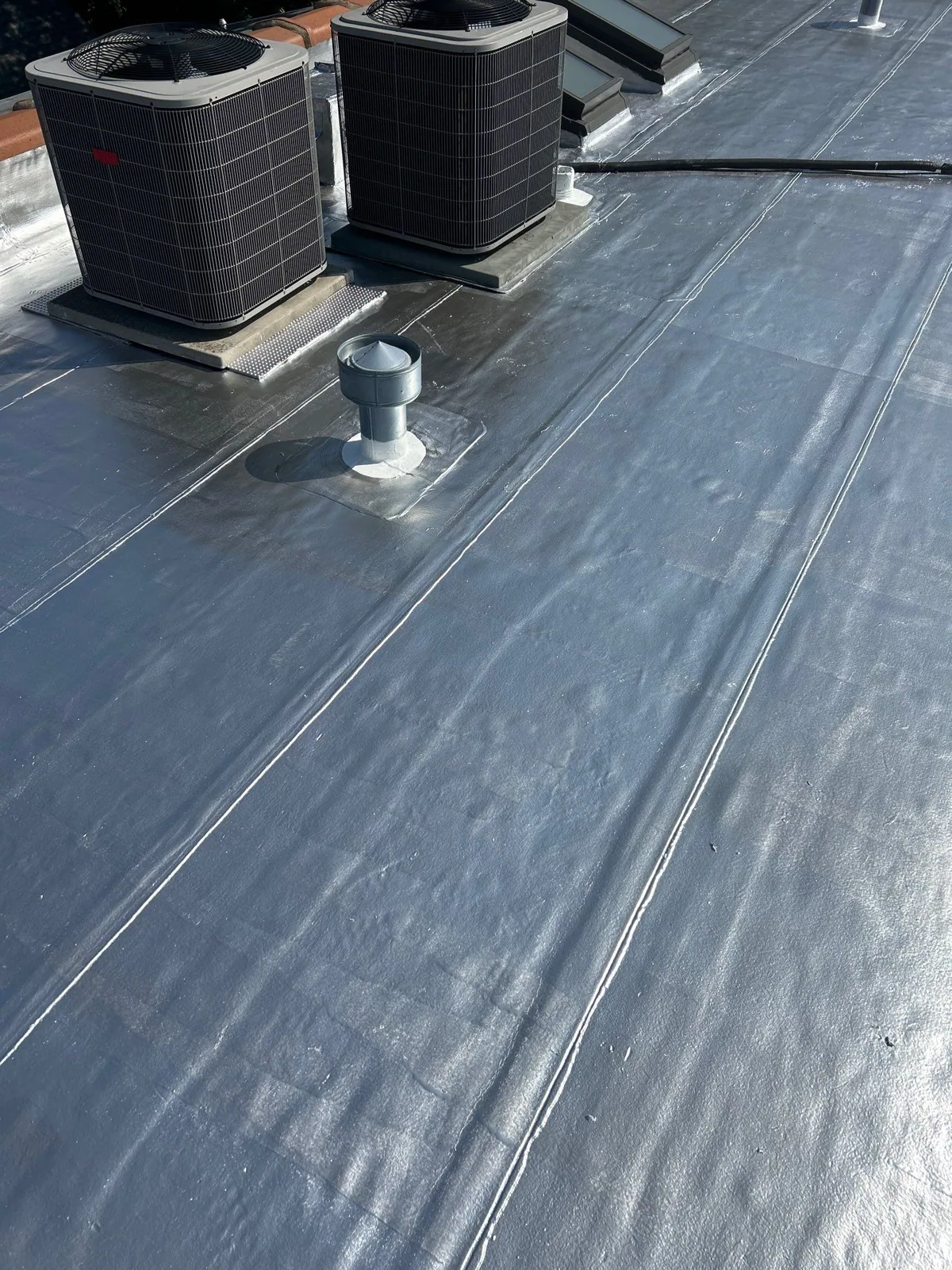
A puncture repair starts with the route, not the hole. Before the first patch goes down, we need to know how technicians reach the rooftop units, where the hatch opens and which path crosses the most membrane. The holes are where the route has already done its damage, and the route is what will do it again unless it changes.
Punctures and traffic wear in Kingsport, TN cluster around the equipment that service crews visit most. Our plan walks the repair in order: map the routes, find every break, repair in sequence, set the pads and close out. Each step has a prerequisite and a handoff, and a cut across a lap can open a seam failure while a kicked curb can start a flashing failure.
The First Step Is the Traffic Map
We walk from the hatch to each piece of equipment and mark the path on the sketch plan. Worn strips, scuffs and crushed insulation are photographed along the path with a scale beside them. Punctures are circled and numbered.
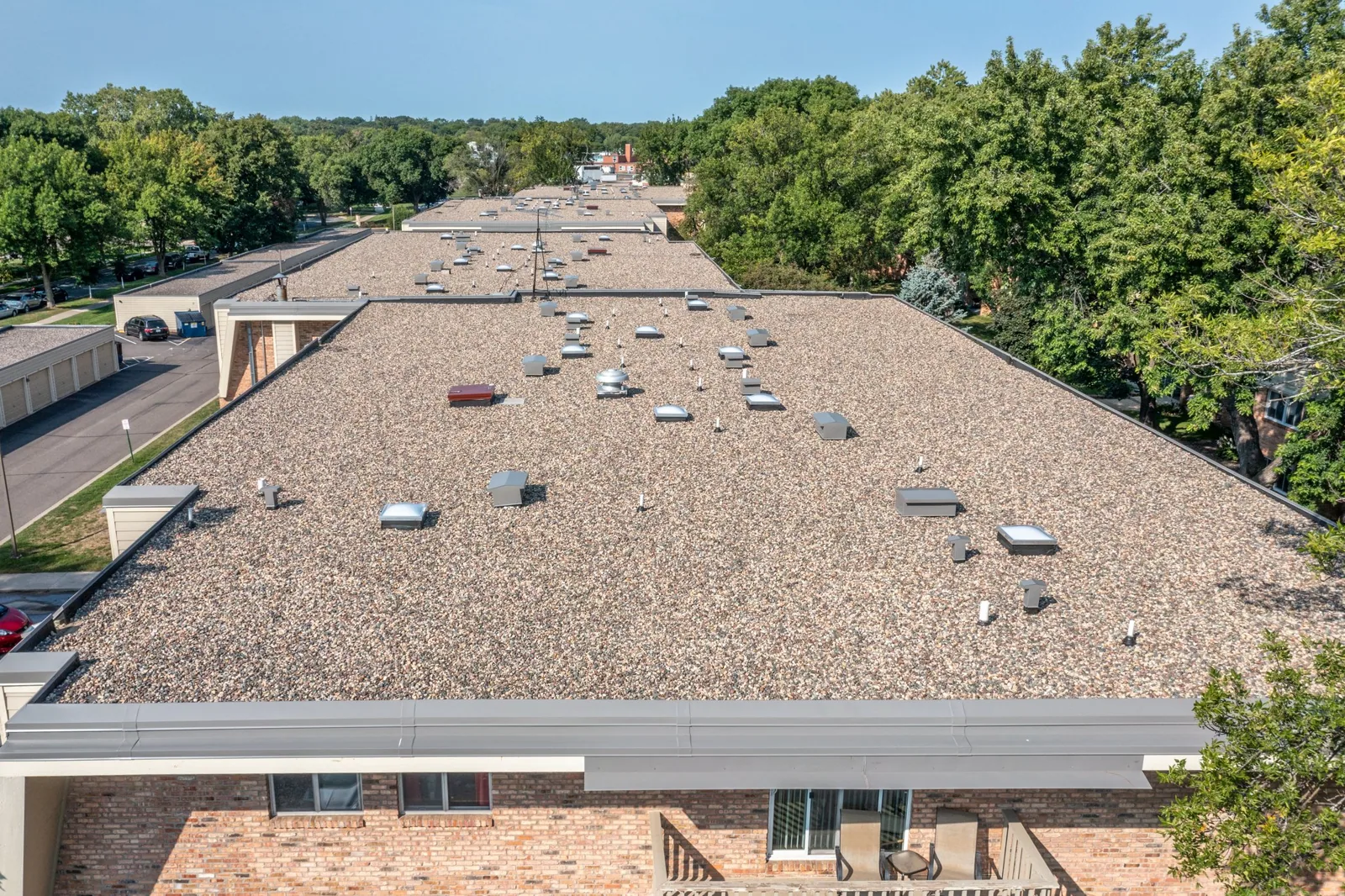
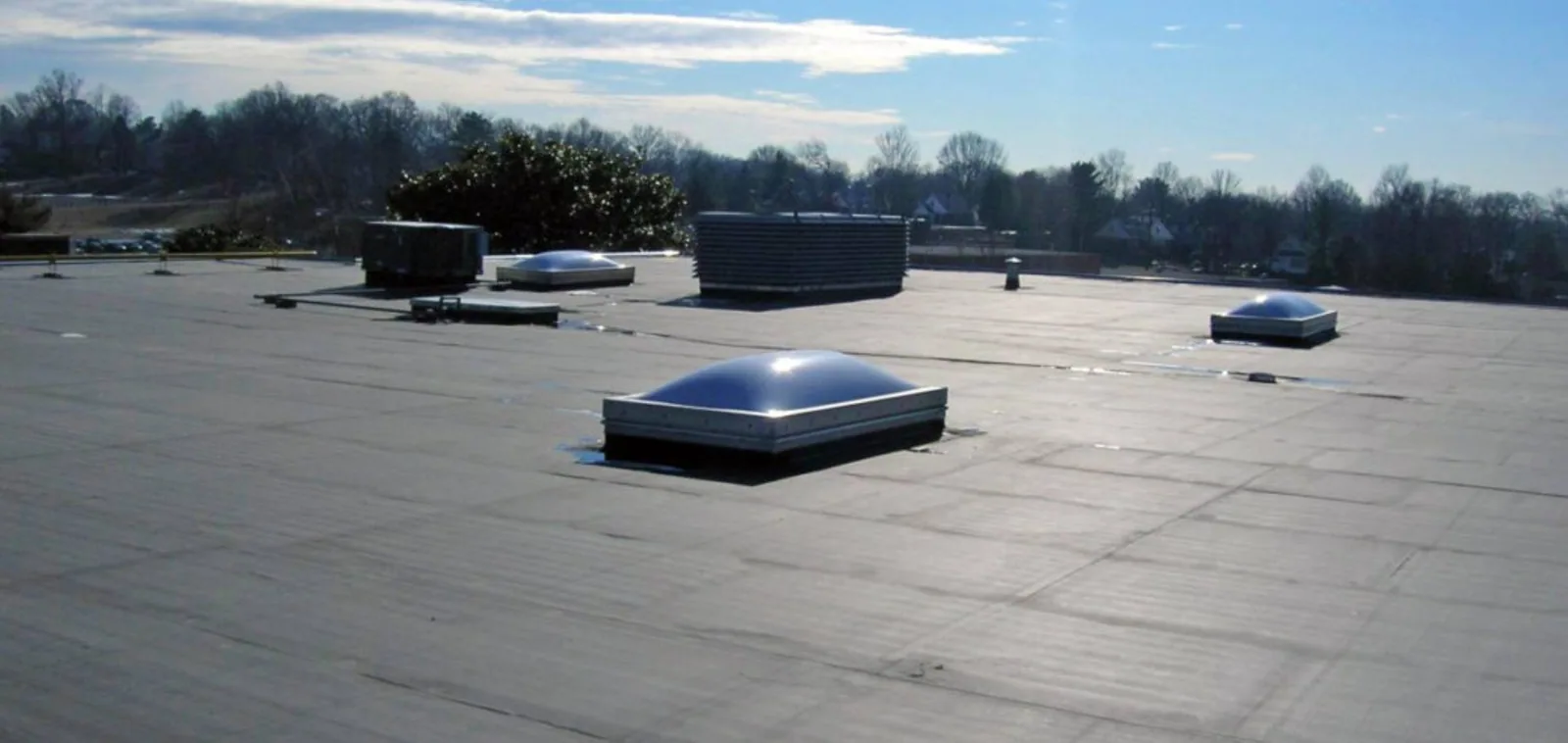
A roof with a few units has a few routes. A roof with dozens of units, vents and exhaust fans has a web of them. The map tells us how many walk pads the repair needs and in what order the work should run.
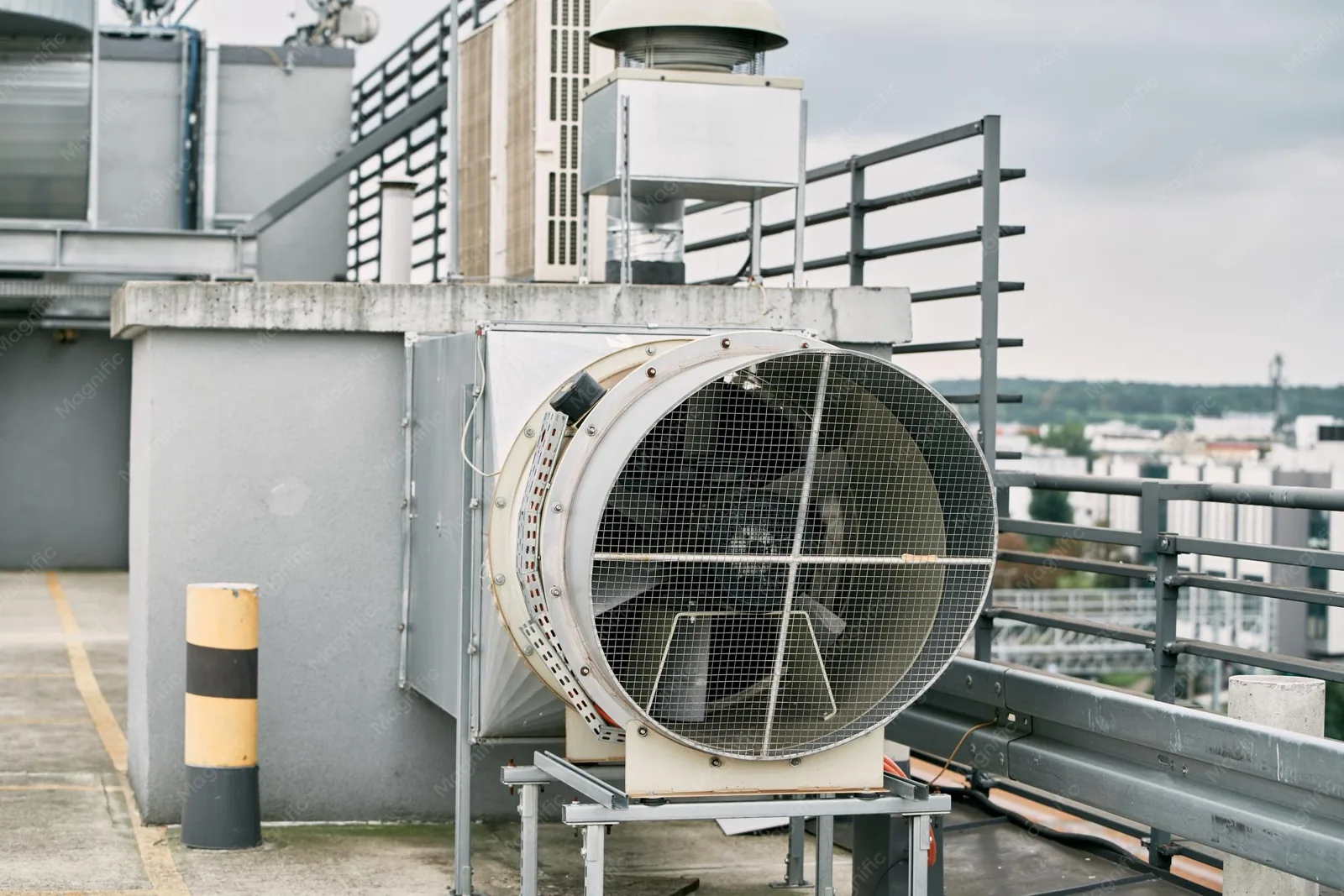
Routes are also checked against the equipment schedule. A unit that is visited monthly deserves a pad even if the membrane looks sound today, and a unit that is retired should lose its pad and have its curb capped. The map goes to the building contact for comment before any work starts.
Access, Staging and Material Hoist for Small Repairs
A puncture repair does not need a crane, but it does need access. We ask for the hatch key, the ladder or lift position and the best time to be on the roof without disturbing the space below. A small laydown area at the hatch holds patch stock, adhesive, walk pad rolls and tools.
On a busy campus, such as a hospital or a plant with a security gate, we ask for the badge procedure before the day starts. Holston Valley Hospital employs 1,355 people in Kingsport, and a hospital roof has constant service traffic, so access for the crew is scheduled with the facilities lead.
Sites reached from U.S. 11W or the end of I-26 at the northwest edge of the city get a haul route marked from the nearest arterial to the gate, and a note of the gate hours. Roofs on the Holston Army Ammunition Plant grounds follow the operator's badge and escort rules, so access is requested well ahead of the repair date.
Sequence of Work, Dry to Walk Pad
The sequence for each puncture is the same. Cut back damaged membrane to a clean circle or rounded rectangle. Remove wet or crushed insulation and replace it with matching board. Prime the surrounding area. Install a patch large enough to overlap sound membrane on every side. Weld or bond it. Probe the edges.
When every hole on a route is repaired, walk pads go down along the route itself. Pads are laid in a continuous path with gaps for drainage, welded or bonded to the membrane, and ended at the equipment curb so technicians never step off the pad. A rooftop equipment curb and support scope lists the pad layout.
Crushed insulation is cut out to a square, not a circle, so replacement board fits without gaps. The new board is fastened or adhered to match the old, and a cover board goes over it when the roof system calls for one.
Phasing Around Service Schedules
Equipment service happens on its own calendar. We ask the mechanical contractor for the schedule and avoid scheduling pad work on the day a technician is due to arrive. If a unit must be shut down for a curb repair, the shutdown time is agreed with the building contact and logged.
BAE Systems is among the largest employers in both Kingsport and Hawkins County, and plants like it run shift schedules that shape when a roof can be visited; a site near Church Hill or across the county line follows its own gate rules. The plan names the shifts and the quiet hours, and the crew works to them.
Where the roof is shared, such as a medical office park or a plant with several tenants, one pad layout covers all of them, and each tenant's technicians get the same marked plan.
Inspection, Test and Permit
Small patches rarely need a permit. Larger repairs that replace sections of membrane may, and the Building Department can say which applies before the scope is final. Where a warranty covers the roof, the file names the manufacturer contact to notify before the first patch.
Every patch is tested before the crew leaves it: a probe along the edge, a visual check for wrinkles and, where the membrane allows, a pull test. Results are logged with photographs. A moisture survey follows when a puncture has been open through a rain.
Weather Windows for Patches and Pads
Adhesives and welds have temperature limits. Temperatures in Kingsport have ranged from about minus 18 F to 104 F, so the same patch may be a hot-air weld in April and a temporary cold patch in January. The plan lists which holes get a temporary seal and which wait for a warm window.
Ponding left by a puncture can become a ponding water problem, and with rain on about 133 days a year the next storm is never far off; thunderstorm warnings out of Morristown add 60 mph gusts and hail to the mix. Patch stock and pad rolls are strapped or brought down at the end of every shift, and no puncture is left uncovered overnight.
Ice makes foot traffic riskier in the cold months. The plan limits routine rooftop visits on freezing mornings to what is essential, and walk pads are cleared of frost before anyone steps on them.
Closeout and Punch List
With the pads down, the building contact walks each route with us, the punch list is photographed and a marked plan shows every route, pad and repaired hole. The closeout folder carries the marked plan, product sheets and test records. A preventive maintenance visit is set for the first spring.
A pad roll on back order stays listed, dated and assigned.
Commercial Roofing Questions
Can a small puncture wait until spring?
We recommend not waiting. Water enters in every rain and freezes in cold snaps, so a small hole widens. A temporary patch holds until the permanent repair can be made.
Do walk pads actually reduce damage?
Yes, along the routes they cover. We recommend laying them in a continuous path to each unit and ending them at the curb. The punch list should record any route not yet covered.
How do you find a puncture that is not visible?
A moisture survey maps saturated insulation, and a probe around worn areas finds soft spots. We recommend a survey whenever a stain appears inside and no hole can be found.
Who is responsible when a contractor causes the damage?
That is a contract question. We recommend photographing the roof before and after any work by another trade, so the record shows when the damage happened.
Can punctures be repaired in winter?
A temporary patch can go on in cold weather. The permanent repair waits for the temperature range the material needs, and the plan lists the date.
How often should traffic routes be reviewed?
Twice a year and after any major rooftop work. We recommend updating the same marked plan each time.