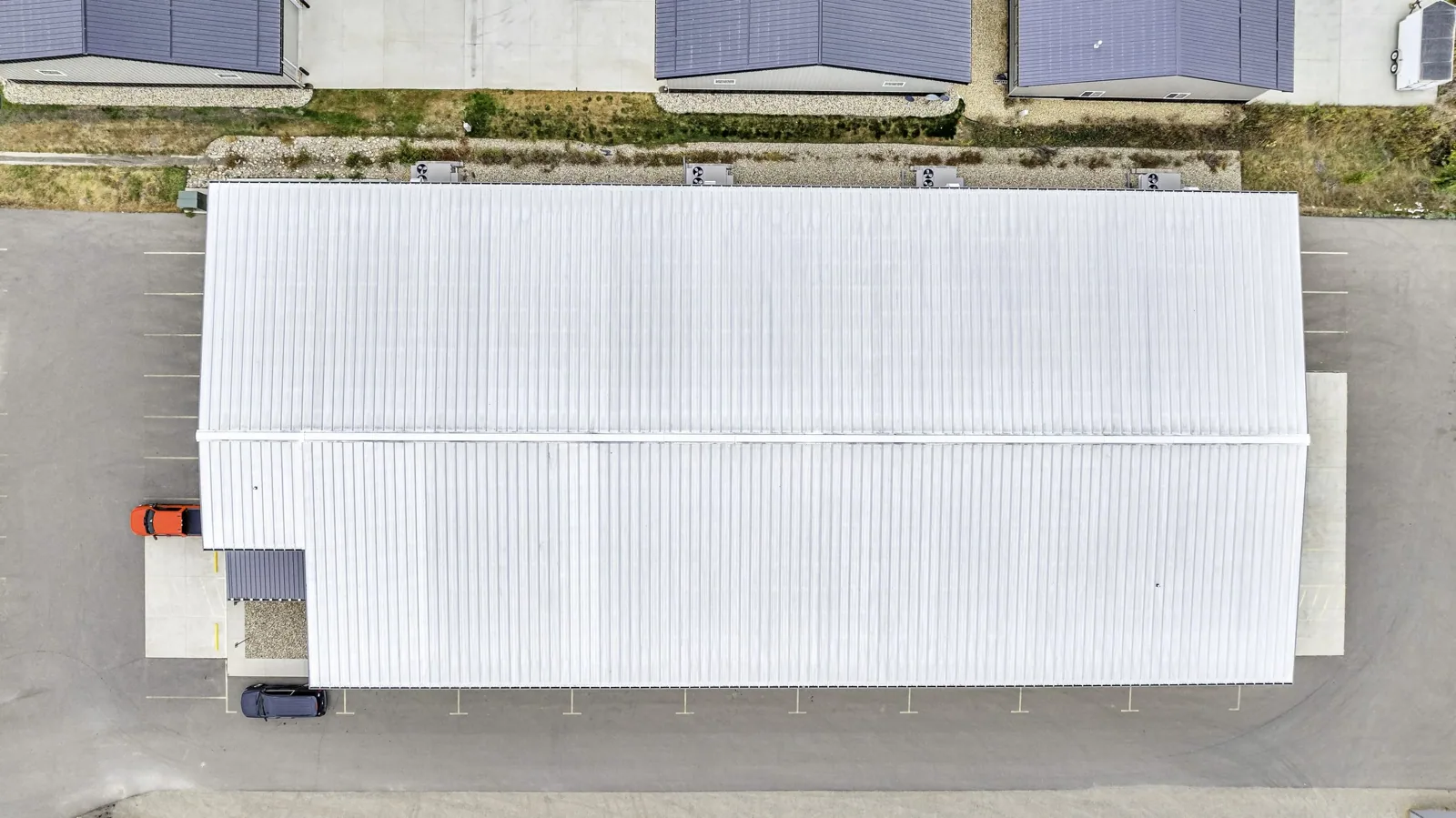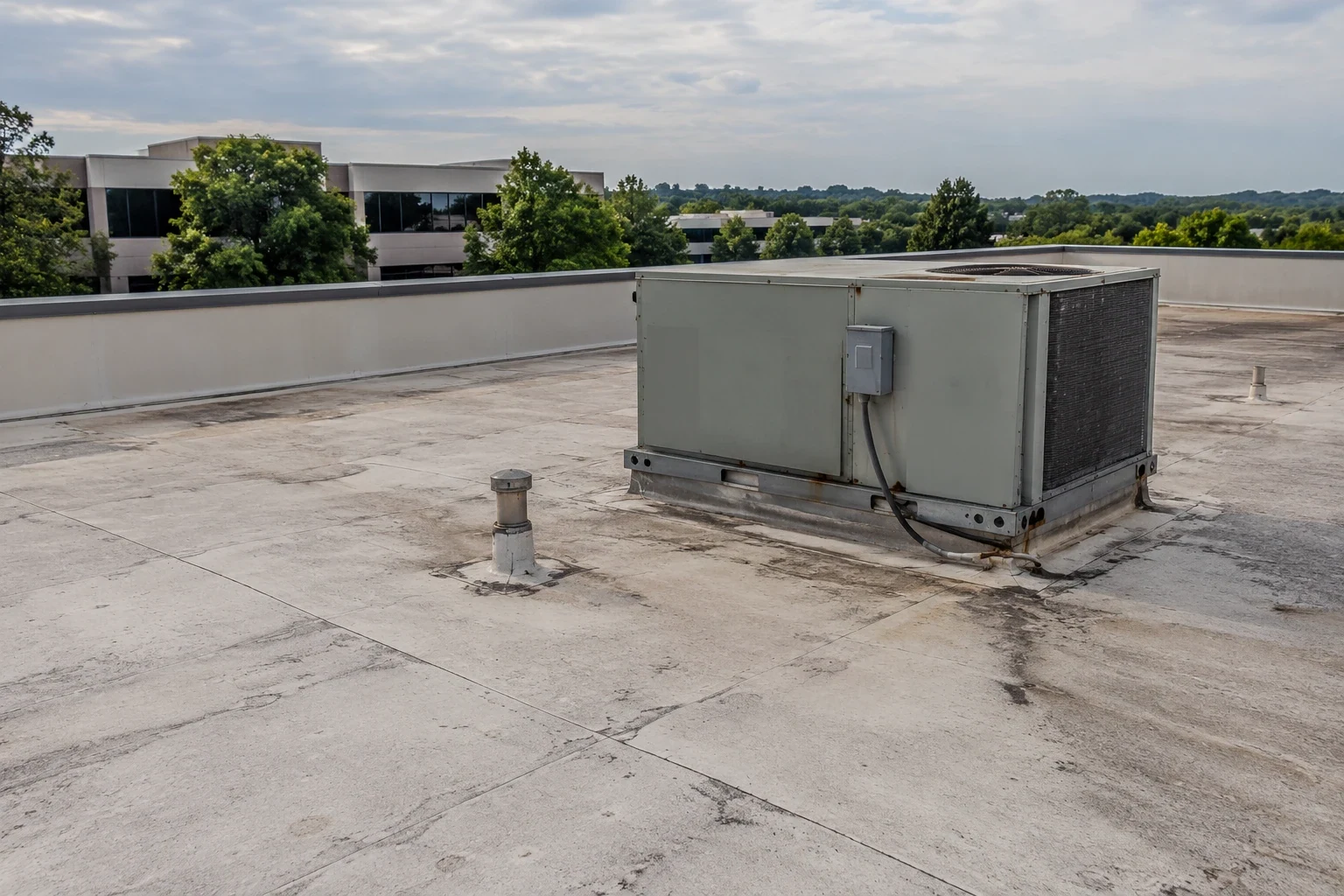
Before a crew mobilizes on a managed building, the property manager needs three things in hand: the roof access point, the tenant contact list and the quiet hours written into the leases. Everything else in the job hangs on those three. We ask for them first, then build the phasing plan around them.
Property managers in Kingsport, TN run roofs on retail strips, office buildings and mixed-use centers that stay open while the work goes on. Our job is to put a sequence on paper that the manager can hand to tenants and the owner, and then to follow it day by day.
The First Step Is Access
On the first visit we locate the roof hatch, the ladder or the exterior stair, and the key holder. We note whether a lift can reach the roof edge from the lot and whether a material hoist can stand clear of the loading zone. That decision fixes the haul route for every day that follows.
Next we count the roof sections and mark which tenant sits below each one. The count turns a single roof into a list of work areas, and the list is what the manager uses to schedule notices.
The last item on the first visit is the safety walk: fall protection tie-off points, parapet height and the location of any skylights. They go on the site plan so the superintendent sees them before the first load goes up.
Access and Staging on a Working Lot
A managed property rarely has spare ground. Customers park where the laydown area would be, and fire lanes cannot be blocked. We mark a staging corner on the site plan, usually at the building's service end, and keep it fenced and lit.
Deliveries are timed for the quiet hours in the leases. Debris leaves by chute or hoist and goes into a container that is emptied before the next shift. At the end of each day the lot is swept and the fire lane is checked before the crew leaves.
Where a roof can only be reached from the street side, we move the hoist to the back and use a crane pick for the heavy loads, scheduled for the first hour of the day before traffic builds. The crane pick, the road closure and the spotter are all listed in the plan.
The Sequence of Work, Bay by Bay
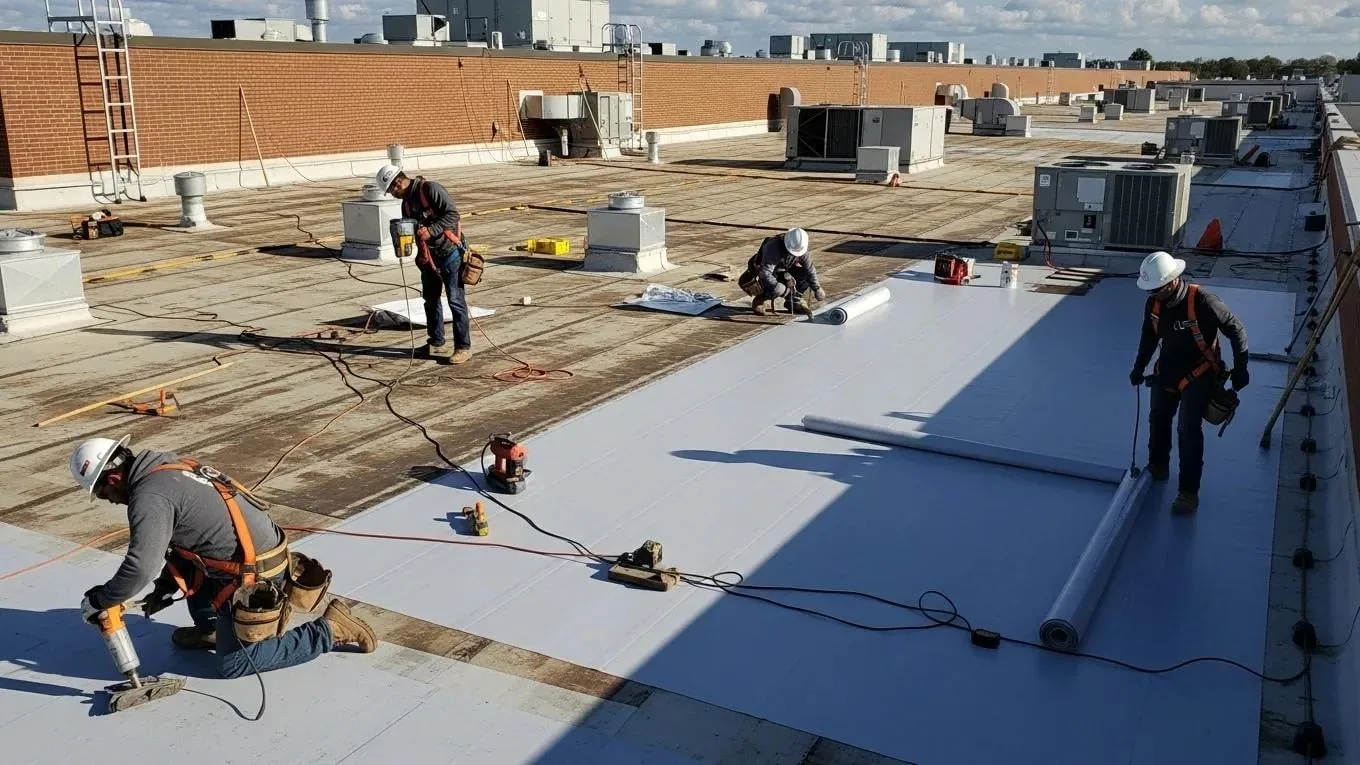
For a strip center or a mixed-use building, the tear-off sequence runs one bay at a time. A bay opens at sunrise, closes by late afternoon and gets photographed before the crew moves down the roof. A tenant whose space sits under an open bay gets a call the evening before.
The manager receives a daily note, the same one a general contractor would expect, with the bay finished, the bay opened and the bay planned for tomorrow. If a bay cannot be dried in, we stop opening new ones, so the building never carries more exposure than it can cover.
For larger roofs, reroofing an occupied building follows the same pattern, with night shift work scheduled where daytime noise is not acceptable.
Phasing Around Tenants and Lease Terms
Tenants notice noise before they notice water. Fastener work and tear-off go to the hours the leases allow, and quiet tasks fill the remaining time. Restaurants get their grease exhaust protected and their service hours respected, and offices get the loud work early or late.
In 2022 the owners of Kingsport Pavilion on Stone Drive, Fort Henry Mall off Fort Henry Drive and Greenacres were talking with brokers about new tenants, and on a property like that a roof project has to avoid tenant move-ins. We ask for the move-in calendar and place the loudest phase away from it.
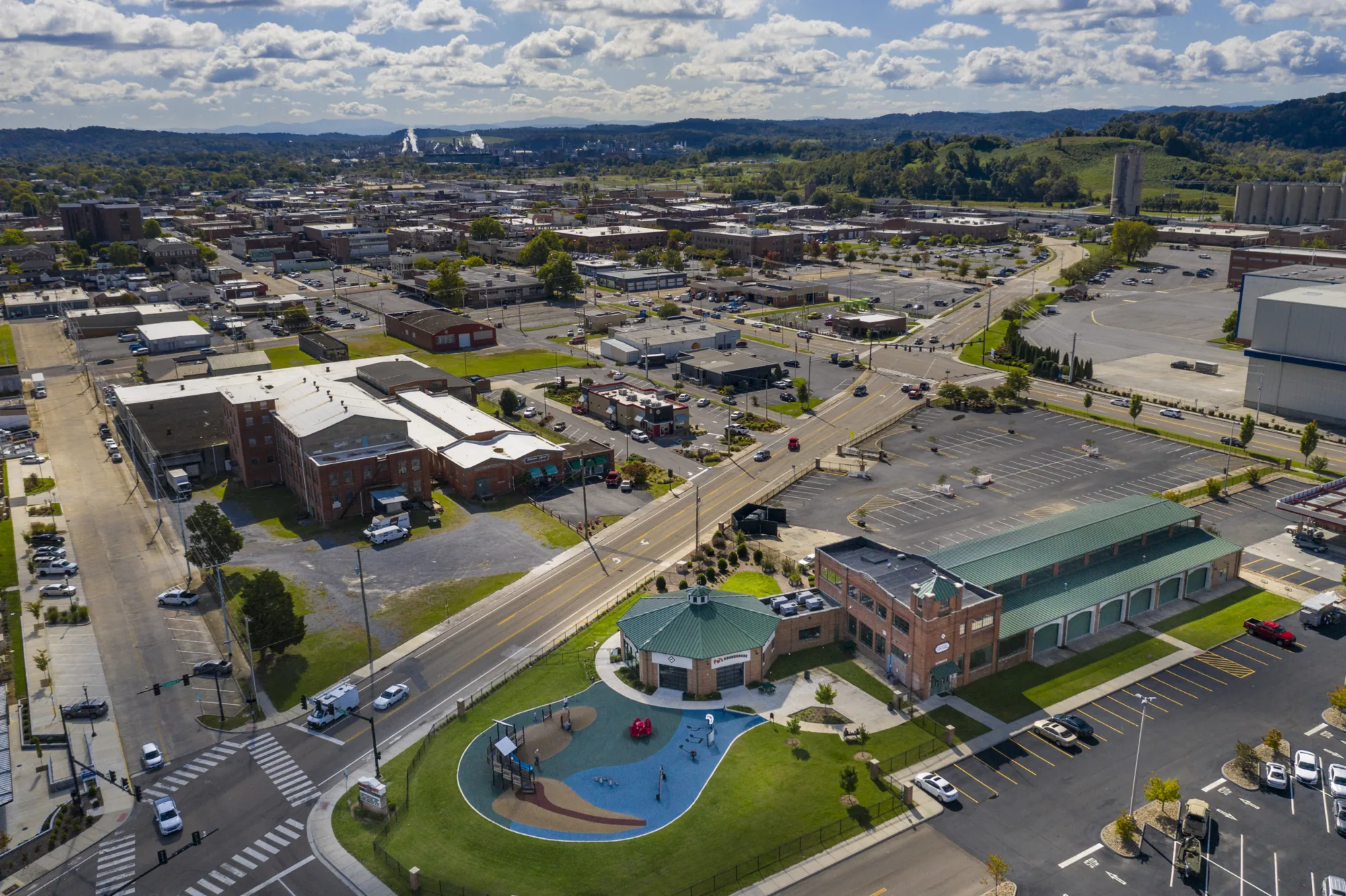
Downtown properties add a different calendar. Renovations are underway on the Kingsport Grocery and Citizens Supply buildings, and 32 townhomes are planned on adjacent lots, so downtown Kingsport carries its own construction traffic. A roof job there needs a haul route that avoids those sites and a staging plan that does not take on-street parking the neighbors rely on.
Inspection, Permit and Submittal
A roofing permit is required in Kingsport, and a reroof counts. For commercial work the submittal carries a stamped plan set and a PDF copy. Once a job passes $25,000, the contractor also needs a Tennessee state license and must show workers' compensation and general liability coverage.
Inspectors measure the finished roof against the city's IBC and IECC requirements. The submittal goes out while materials are on order, which lets the permit and the first delivery arrive in the same week; we also tell the manager which days the inspector needs the hatch open.
Weather Windows in Practice
Rain falls on roughly 133 days a year in Kingsport, adding up to about 45 inches, so a clear morning is worth using. We build a buffer into the schedule instead of a promise, and we open no more roof than the crew can close before the afternoon forecast.
The National Weather Service office in Morristown has issued severe thunderstorm warnings for the county that cite 60 mph gusts and hail. The plan names what gets secured when one posts: loose membrane, staged rolls and the material on the lot. The manager gets the call list in writing.
Closeout and Punch List
At the end of each phase we walk the finished bay with the manager, record items for the punch list and photograph the completed work. The final folder holds the as-built drawing, product sheets and warranty file for the owner's records.
The punch list goes to the tenant contact as well as the owner, so a stain that appears in March has a date and a bay number attached.
Commercial Roofing Questions
How do you keep tenants informed during a phased reroof?
We recommend a written notice to each tenant the week before their bay opens and a call the evening before. The notice names the work hours, the noisy tasks and the contact on site. The manager sends it on its own letterhead, and we supply the dates.
What should a manager gather before the first site visit?
Send the lease clauses on roof access and quiet hours, the tenant contact list, any prior roof reports and the building's insurance contact. With those in hand we can mark access, bay boundaries and notice dates on the first pass.
Can the roof stay open overnight?
We advise against it. Each bay should be dried in before the crew leaves, and the plan should include a reserve of materials for an early close if the forecast changes. Open edges on a managed building become a tenant claim quickly.
How does the permit affect the start date?
Expect the submittal to run alongside the material order. Commercial work goes in with a stamped plan set and a PDF, and the contractor's license and insurance proof ride along. Our advice is to fix the start date only once the permit is in hand.
Should a manager phase work across more than one building?
Usually yes, and a multi-site program makes it routine. Rank the buildings by condition, then schedule the worst first and the quietest tenants last. A shared calendar keeps crews and notices from colliding.
Who receives the closeout package?
The manager receives it, and a copy goes to the owner, which matters most to investors who hold through a manager. It holds the as-built plan, product data, photographs and the warranty file, so the next manager inherits the roof's history.