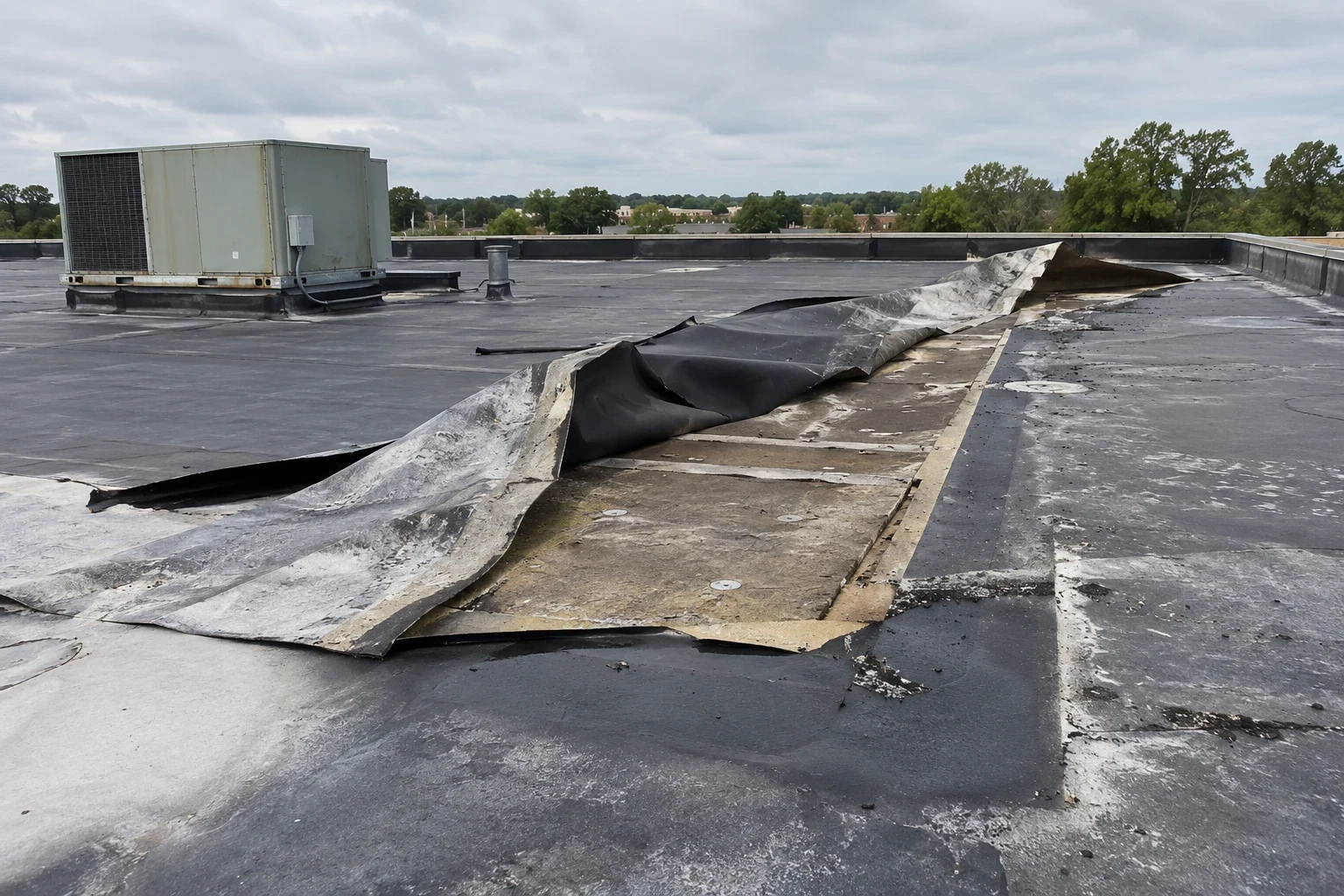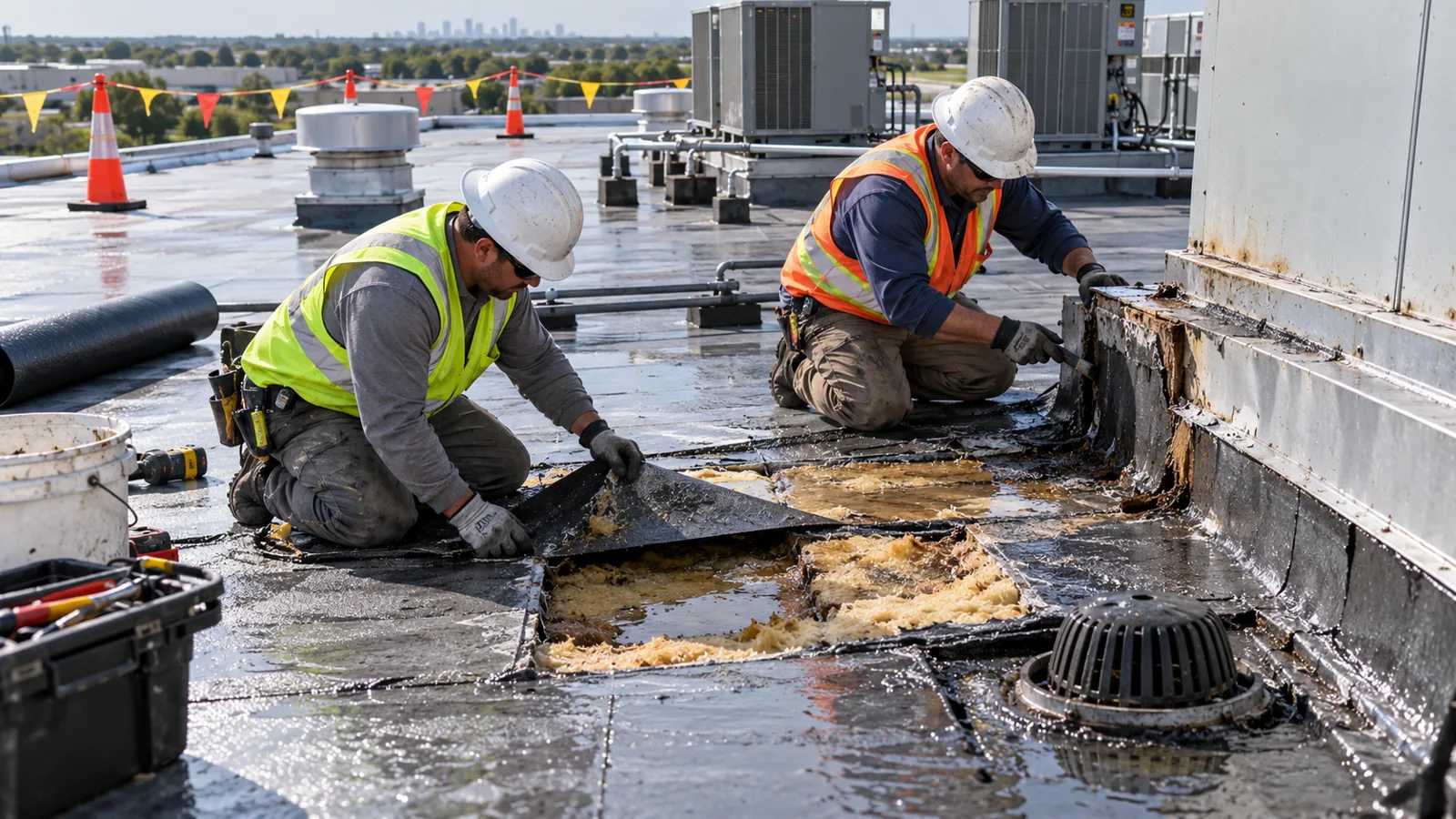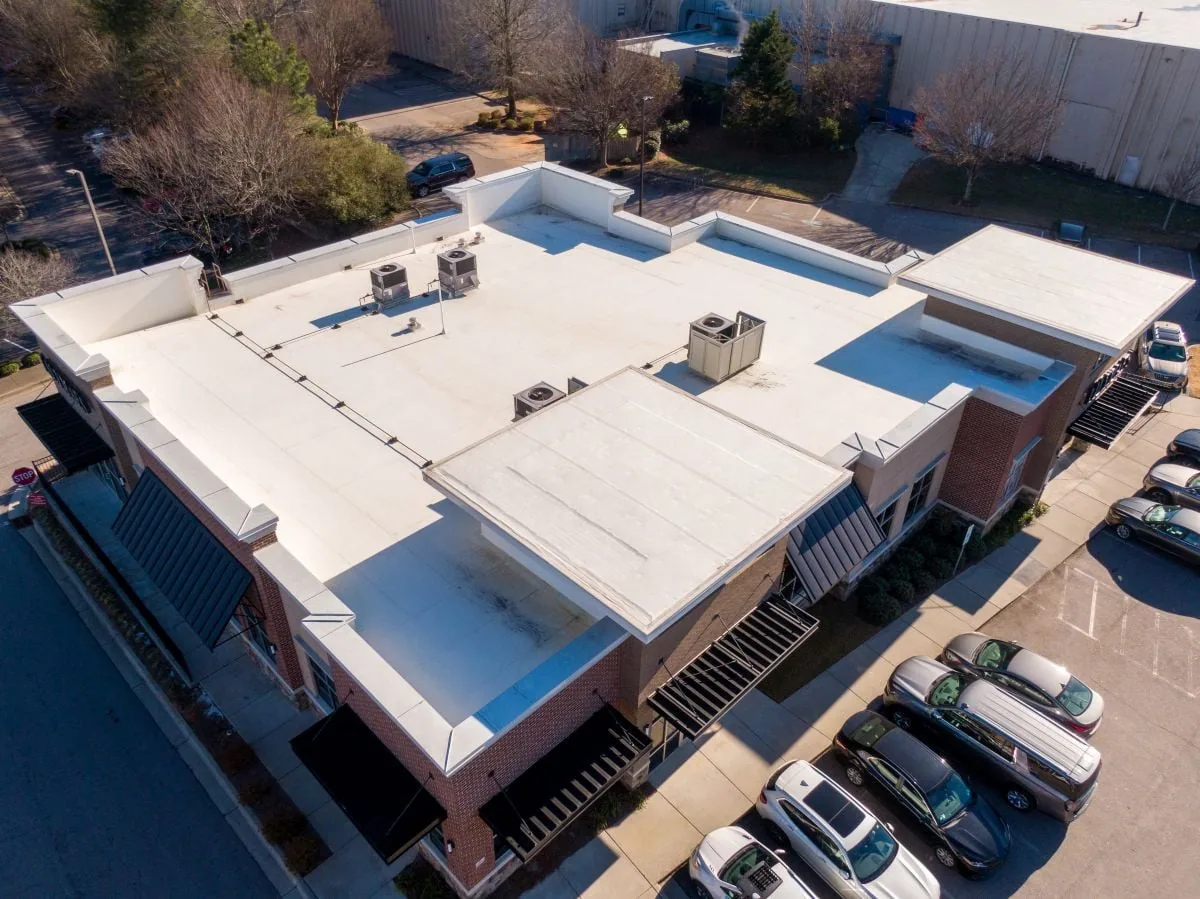
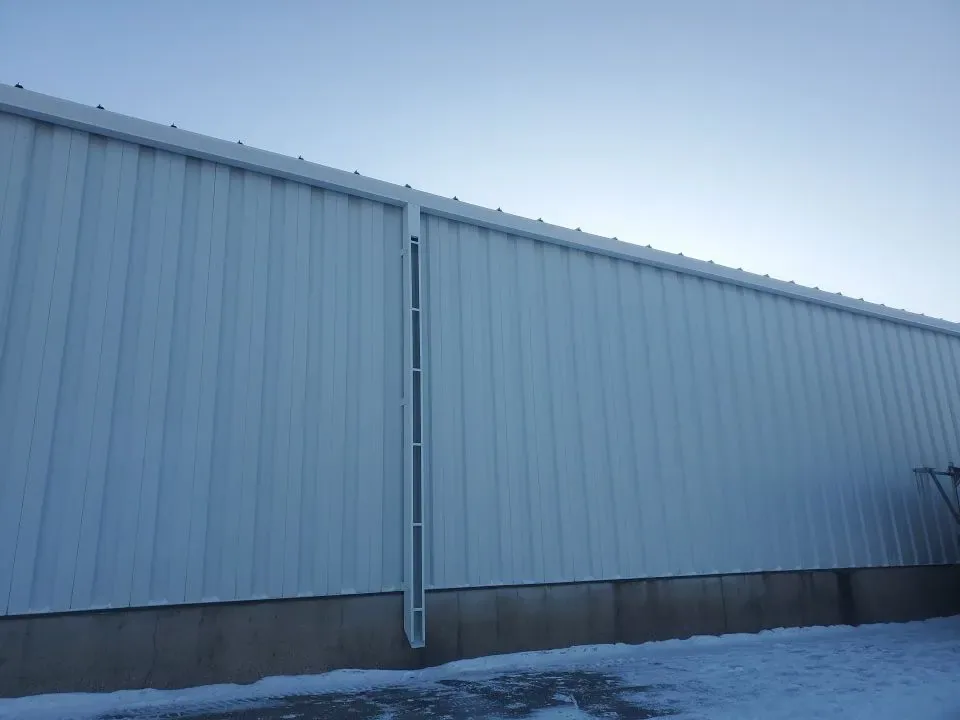
Perimeter work at a Kingsport, TN building starts with a lift or ladder position for each elevation, so the first thing we settle is where the equipment can stand without crossing a loading area or a customer entrance. From the lift, we survey the edge in a continuous pass: coping caps, drip edge, fascia, gutters, downspouts and every joint between them. We measure the run, count the splice points and photograph the fasteners. That survey gives us a linear-foot take-off and a priority list. The edge is where wind lifts a roof first, so it is also where repairs return the most protection for the least money.
Perimeter Survey and Take-Off
We record each elevation of the building separately. For each, the survey notes the metal type and gauge, the profile, the attachment method and the condition. Common findings are loose cleats, fasteners that have backed out, open joints, cracked sealant, dents from hail or impact and corrosion at cut edges.
The take-off lists lengths by profile and corner counts, since corners cost more than straight runs. It also lists special pieces: scuppers, expansion joints, transitions at a wall and any custom corner. A roof that looks simple from the ground often has dozens of these. Photographs are taken at a distance and up close, with a scale in the frame. A dent that looks cosmetic from the ground may sit over a gap in the cleat, and a close shot shows it. The photo set becomes the baseline for the next survey.
Wind Load and Attachment
Edges take the highest uplift on a roof, so the attachment decides whether metal stays on in a gust. Severe thunderstorm warnings for Sullivan County have named 60 mph gusts, and a cap that is held by one row of short fasteners into old blocking can peel in a storm like that. We check what the metal is fastened to, how far apart the fasteners sit and whether the continuous cleat is intact.
After a gust, wind damage roof repair starts at the same edge. Replacement edge metal is specified with a continuous cleat on the exposed side, fasteners into sound substrate at the spacing the design calls for, and sealed laps. Where the existing blocking is rotted, it is replaced before the metal goes on.
Coping, Parapets and Wall Tie-Ins
Parapet coping covers the top of the wall and sheds water away from it. A joint that opens lets water into the wall cavity, where it runs down behind the flashing and appears inside as a stain far from the source. We check the joints, the cleat, the slope of the cap and the sealant at each splice.
Tie-ins where a roof meets a wall get a separate check. Counterflashing must lap the base flashing by enough to shed water, and the reglet or termination bar must be sealed. A coping repair often turns into a flashing repair, and we price both together so the wall is closed in one visit. Where the wall is masonry, we also check the mortar joints just below the cap. Water that gets past coping often shows first as efflorescence or a damp patch on the wall face, and those marks help us trace the entry point.
Gutters, Downspouts and Discharge
Rain or snowmelt falls on roughly 133 days a year in Kingsport, about 45 inches in all, which keeps gutters and downspouts working most weeks. Where the gutter sags, the lower row of roofing takes the overflow. Where the downspout ends at a wall, the foundation or the paving takes it. We check the pitch, the hangers, the joints and the outlets.
Replacement gutters are sized for the roof area they serve, and downspouts get extensions or splash blocks. If a downspout ties into an underground line, we find where it goes and report what we can reach. Gutter guards are a maintenance question, and we say plainly when one will help and when it will not. Ice is a factor in a colder year. Kingsport has recorded lows near minus 18 F, and a gutter full of debris holds water that freezes, pulls hangers loose and splits seams. A fall clean-out is the cheapest protection.
Lift Access and Phasing
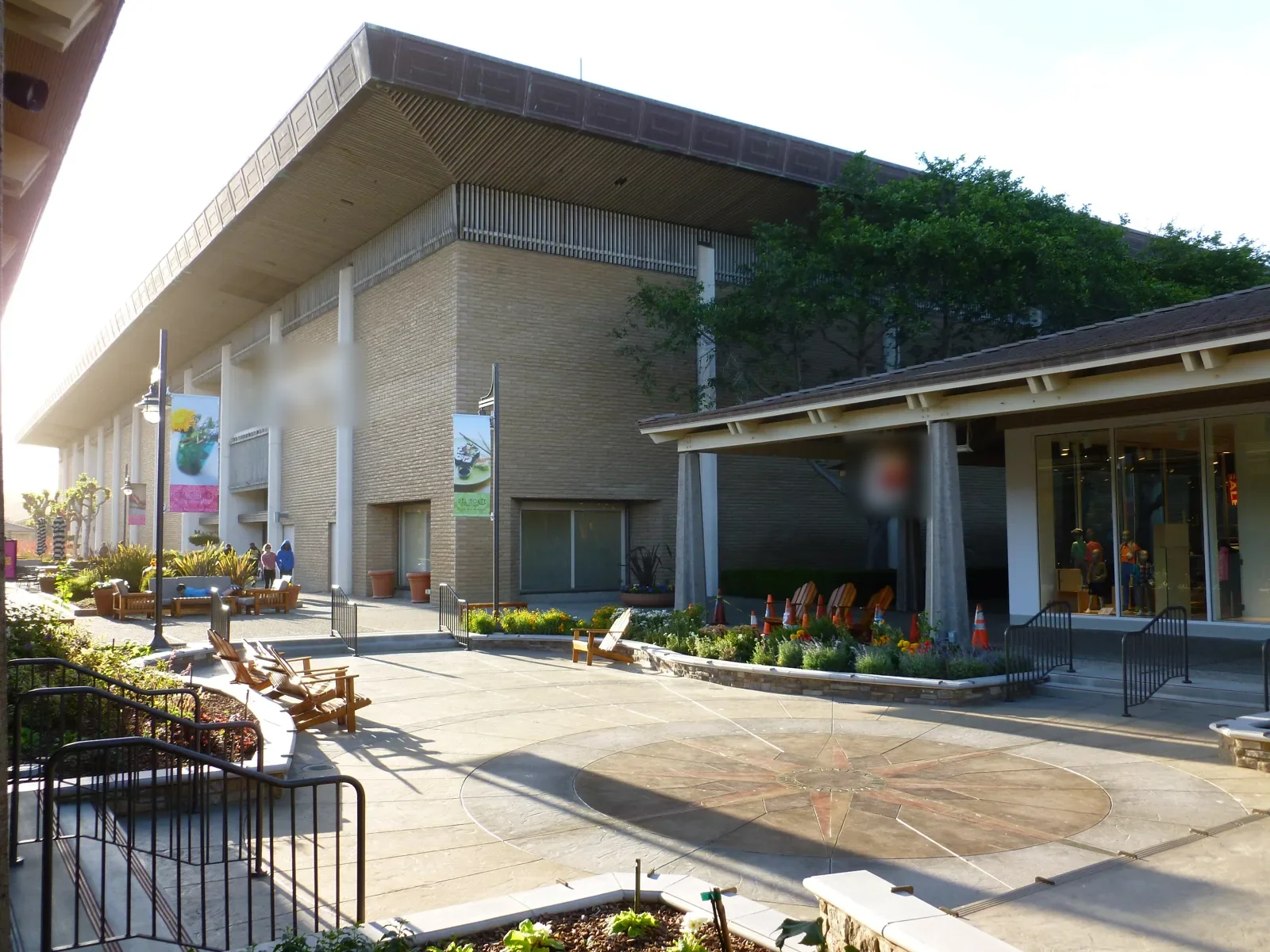
Edge work is outside work, and it runs by elevation. Retail buildings along Stone Drive and around Fort Henry Mall need lifts placed away from entrances and drive lanes, with barricades and a spotter. A plant or campus may restrict lift movement to certain hours, and a hospital such as Holston Valley Hospital limits noise near patient areas.
We build a phasing plan with the elevations in order, the lift positions marked and the handoff to the next day named. Temporary caps protect open edges overnight. The plan accounts for the hot work permit when torch or welding is needed, and for the fire watch that follows. Material is staged where trucks can unload without blocking a fire lane, and the lift is parked off the slope. Wind limits for the lift are respected, so a gusty day may move a shift. The schedule carries a few of those days as a buffer.
Permit, Warranty and Closeout
Minor edge repairs seldom need a permit, but replacing edge metal as part of a reroof does. Kingsport's building department issues roof permits, and a commercial submittal includes a stamped plan set plus a PDF. Above $25,000, the contractor of record must hold a Tennessee contractor license with workers' compensation and general liability proof. We flag the line early.
At closeout we walk the perimeter with the owner's representative against the punch list and hand over the take-off, the photographs and any manufacturer's edge warranty. A related roof drain and scupper check is done at the same time, and edge damage from a storm is logged the way any storm damage roof repair is.
What We Need From You
Send the building elevations if you have them, the roof access points, the lift restrictions and the calendar for any outage or turnover. Tell us about tenants along the perimeter and the hours when parking is least busy. For shopping center roofing or a plant in the Phipps Bend area, add the site contact. If the building has a warranty on the roof, send it. Edge changes can affect the terms, and we match the work to what the manufacturer requires.
Commercial Roofing Questions
How do you know if edge metal is failing before a storm?
From the lift. We look for loose cleats, open joints, cracked sealant and backed-out fasteners. We recommend a perimeter survey every year or two, and after any gusts that reach 60 mph.
Can coping be repaired, or does it need replacing?
Repair works when the metal is sound and the cleat holds. Open joints are resealed and loose fasteners replaced. Replace when the metal is corroded, dented along its length or the substrate is rotted.
What does edge metal cost to replace?
It is priced by the linear foot, with corners and special pieces counted separately. The take-off gives a figure for each elevation, so you can phase the work.
Do gutters need to be sized for the roof?
Yes. Undersized gutters overflow, and the water lands on the wall or the paving. We size by roof area served and add extensions at the outlets.
Does edge replacement need a permit?
A replacement done as part of a reroof does. Kingsport requires permits for reroofing, and above $25,000 the work needs a licensed Tennessee contractor.