Receiving and stocking schedules set the hours for a big-box reroof, because trucks, pallets and floor crews decide when the crew can load material and move equipment. We ask the store manager and the regional facilities lead for the delivery calendar, the sales-event calendar and the corporate real estate approval path. The phasing plan is then built to keep the sales floor, the stockroom and the receiving dock dry and open on every working day.
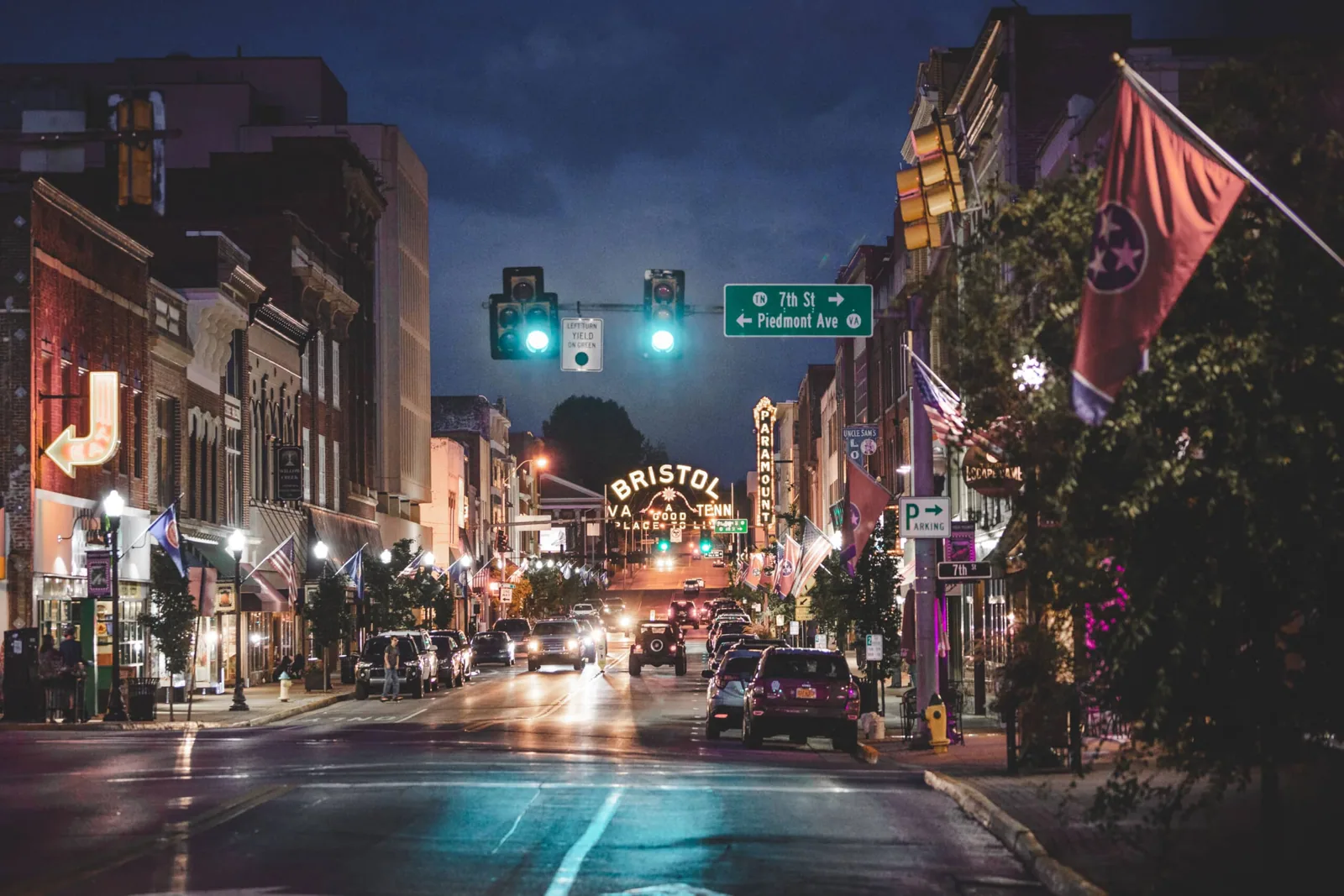
Big-box stores in the Kingsport, TN, area sit along Stone Drive, around Fort Henry Mall and at the Pinnacle in Bristol, TN, a 240-acre shopping district off I-81 and U.S. 11W with more than 69 stores. Rural King took the former JCPenney space at Fort Henry Mall in May 2025, and Ashley Homestore planned to move into the former Best Buy building on Stone Drive. Large boxes change tenants and layouts, and the roof has to follow. A grocery store in the same retail node adds refrigeration to the list, and the plan treats it as a separate zone.
Corporate Approvals and Contractor Requirements
National and regional retailers often require pre-approved contractors, insurance certificates, specified membranes and a written scope that matches their standards. We ask for the corporate roofing specification, the warranty form and the real estate contact at the start. If the retailer uses a program manager, we send the schedule to that person as well.
Lease terms matter too. A tenant may be responsible for the roof, or the landlord may be, and the approval path differs. We ask who signs, who pays and who accepts the warranty, then align the proposal with those answers so approval does not delay the order. If the retailer wants a specific membrane, thickness or fastening pattern, the proposal states the match, and any deviation is explained.
Sales Floor, Stockroom and Receiving Dock
The sales floor cannot close, and a ceiling tile that drips on a product aisle costs the store sales and merchandise. We map the roof sections to the departments below, ask which departments hold the most valuable or most water-sensitive product and plan those sections for the driest, shortest windows.
The stockroom and receiving dock set the heavy traffic. Trailers arrive in the early hours, and dock plates, forklifts and pallet jacks run in the same space the crew uses to reach the roof. We select an access route that avoids those paths and keeps the crew off the floor, usually an exterior ladder or lift away from the dock, and we load material only when the dock is quiet. The first load is a short one, to prove the route, and the dock supervisor signs off before the full delivery follows.
Rooftop Units, Refrigeration and Roof Loads
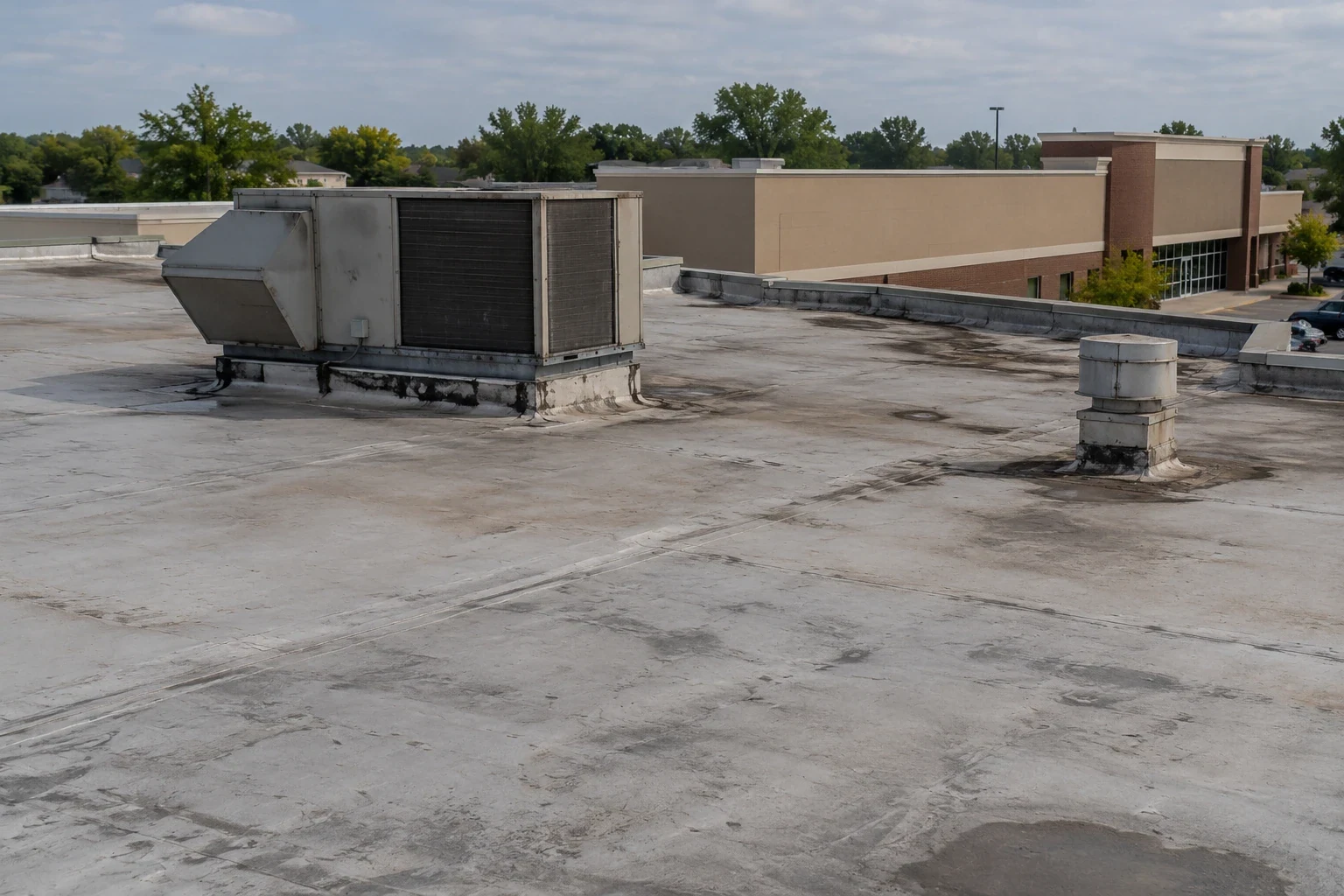
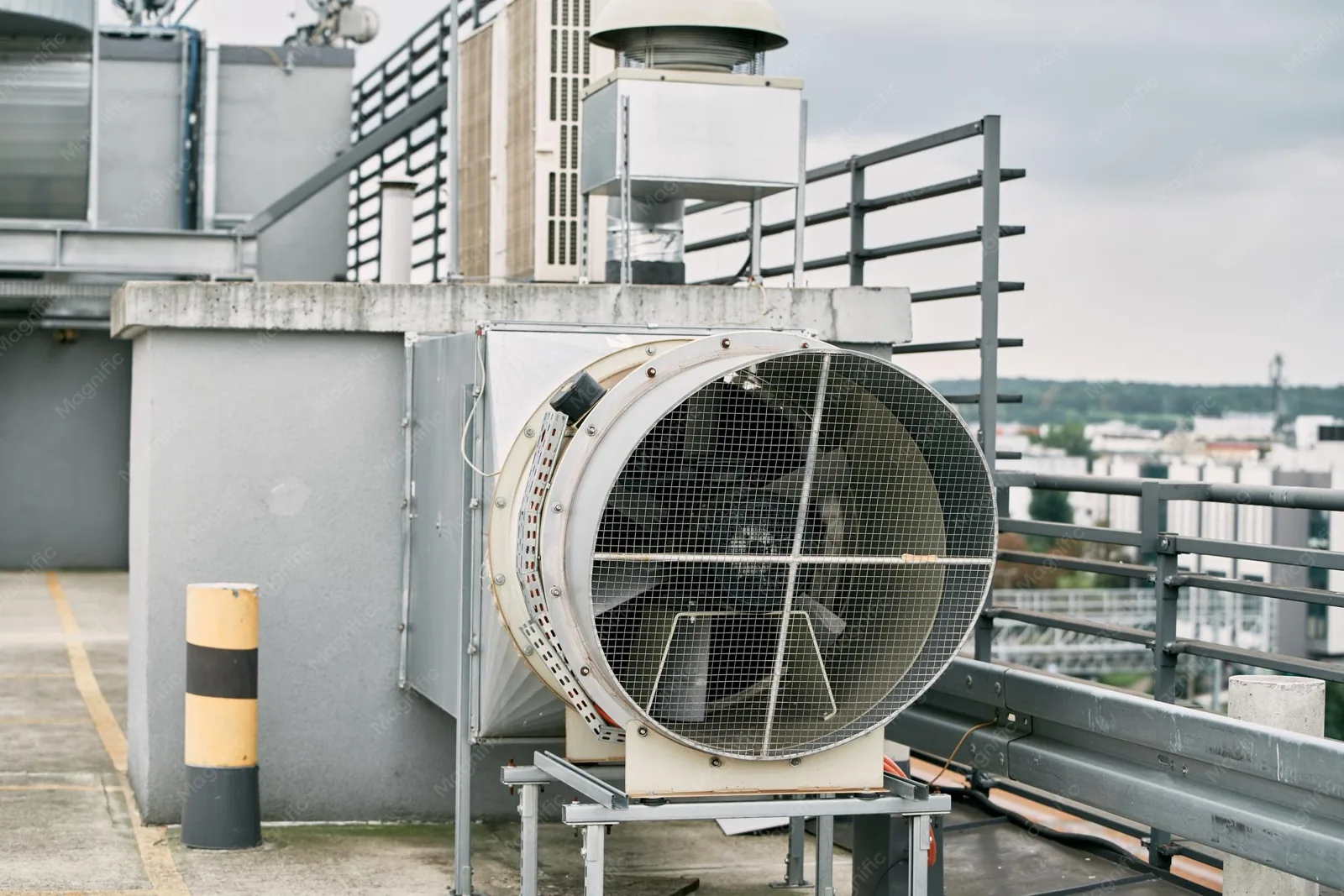
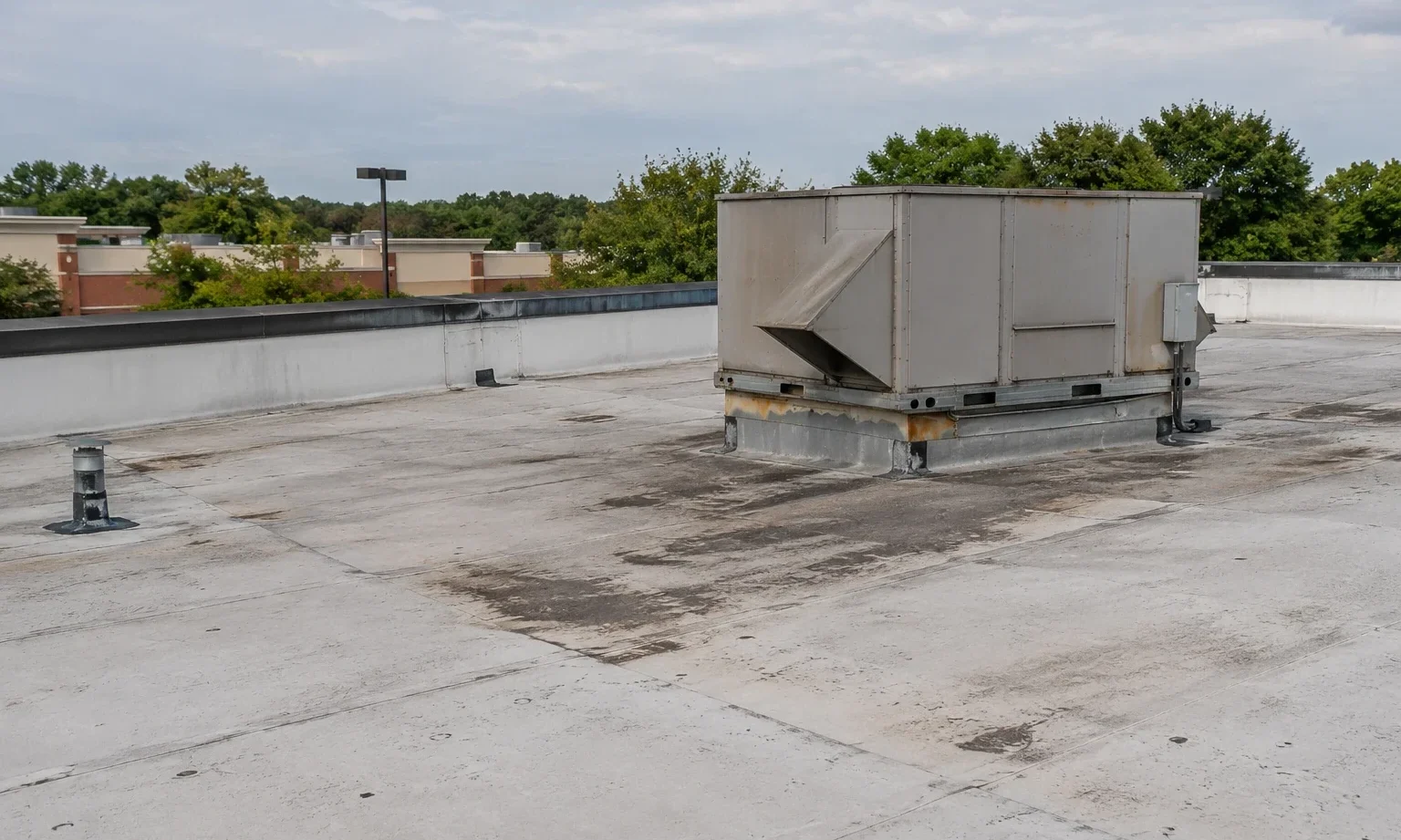
A big-box roof carries heating and cooling units, refrigeration condensers, exhaust fans and sometimes solar or telecommunications equipment. Each unit has a curb and a service path. We inventory them, check the curb height and the flashing, and note the weight and location of each. A stack of cover board or a pallet of membrane is a concentrated load and is placed over columns.
Where a unit must be lifted, the mechanical contractor is scheduled with the roof crew. The curb and support work is done in one visit so the curb is not left open between trades. Walk pads protect the membrane from the service traffic that follows. The pads follow the path from the roof hatch to each unit, and the plan marks where a pad crosses a seam or a drain.
Large-Area Sequence and Dry-In Lines
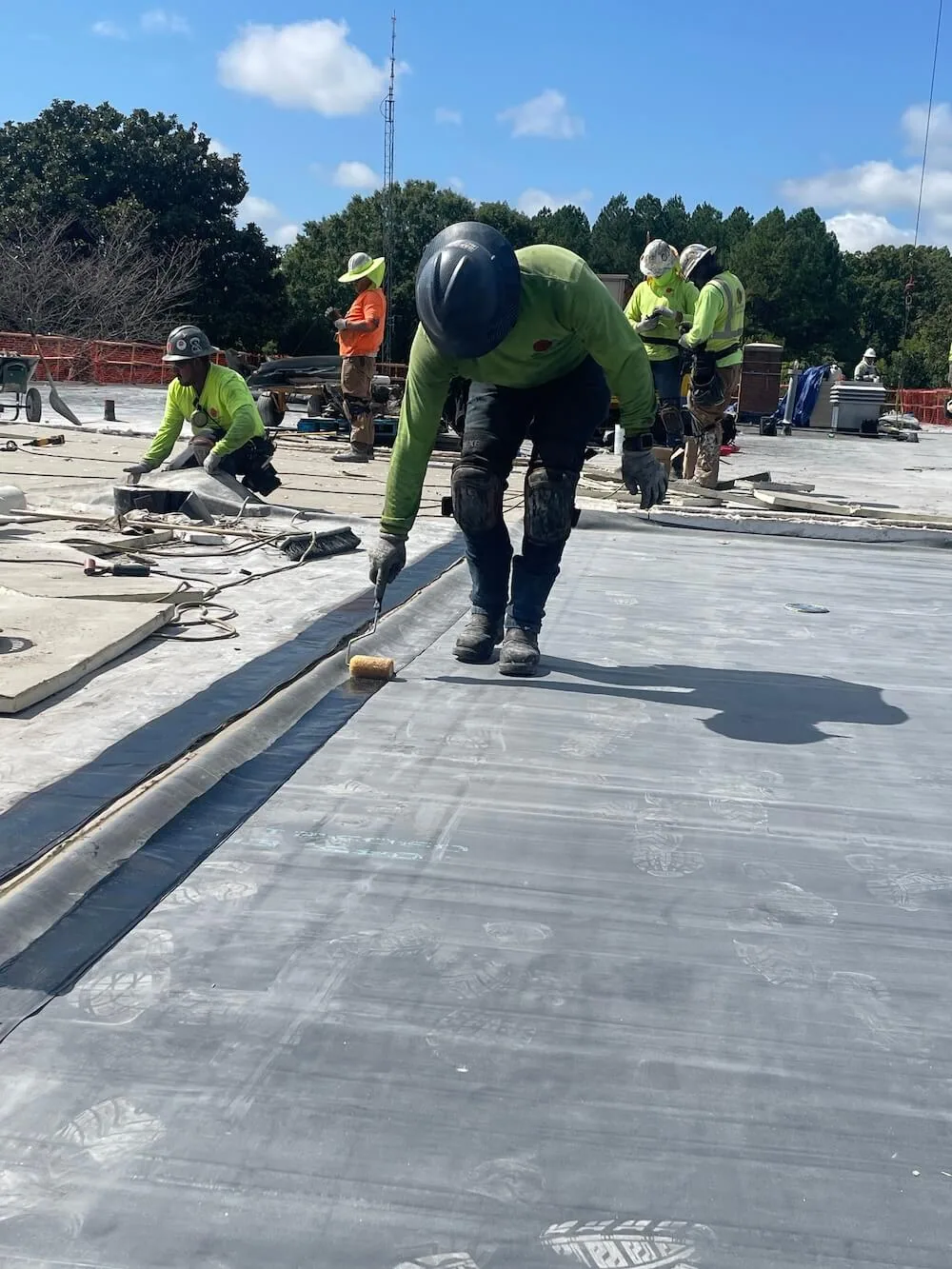
A big-box roof is large enough to take several days or weeks, and each day must end with a dry-in line. We divide the roof into bays tied to columns, remove or recover one bay at a time and close every bay with membrane before the shift ends. A replacement and a recover differ in how the bays are opened, but both end each day with the same dry-in discipline.
The foreman logs each bay with a seam probe and a photograph. Wind is a larger factor on a long roof, so loose insulation is fastened as it is laid, and rolls of membrane are weighted before the crew leaves. A gust forecast ahead of a shift cuts the bay size, and the foreman decides at the morning briefing. The regional facilities lead receives a daily summary.
Parking Lot, Crane Pad and Customer Routes
A big-box lot is wide, but customers use the part nearest the entrance. The crane pad, dumpster and material stack go on the opposite side of the building, away from the front door and the garden center. Barricades and spotters protect pedestrian routes, and fire lanes stay clear.
The haul route from the public road is checked on site. Stone Drive and Fort Henry Drive carry retail traffic, and U.S. 11W and U.S. 23 intersect in Kingsport, so deliveries are timed to miss the afternoon rush. The plan includes the exact route, the gate and the unloading spot for each truck, and the driver receives it in writing before leaving the supplier.
Garden centers, tire and lube bays and outdoor display areas often sit along the walls where the crane would stand, so the plan marks them and keeps the crane clear. Cart corrals and pickup zones are moved with the manager's approval and put back at closeout. The foreman walks the perimeter each evening to confirm nothing has been left where a customer or an employee could reach it.
Permit Submittal and Inspections
A big-box filing often has two tracks: the city's and the retailer's. The retailer may add its own approved-contractor list, a written specification and a warranty form, and those are collected before the order.
Stores in Bristol, Johnson City or Virginia towns fall under other offices, so we identify the authority for each site and place its inspections on the schedule. In Kingsport, reroofing is permitted work reviewed against the 2024 code editions.
Weather Buffers and Closeout
The job ends with a punch list, a final walk and the retailer's warranty form completed alongside the as-builts, material data and inspection results. Big boxes in Bristol or along Stone Drive receive the same set, and a shopping center with several tenants adds a tenant matrix.
Thunderstorm warnings stop the work. Loose material comes off the roof, open bays are covered and stores hear of any hold the same day.
Commercial Roofing Questions
Can a big-box store stay open during a reroof?
Yes. We work the roof bay by bay with a daily dry-in, so the sales floor stays dry, material loads when the dock is quiet and the crane works away from the front entrance.
Who approves the roofing work?
It depends on the lease and the retailer. We ask who signs, who pays and who holds the warranty, then align the proposal and the schedule with that path.
How are heavy materials kept from overloading the roof?
Pallets are placed over columns and spread across several bays. We confirm weights with the structural engineer when the roof has a history of added units.
What if a unit has to be lifted?
The mechanical contractor and the roof crew work together in one visit, with the curb flashed before the unit returns. The store's cooling or refrigeration is down for the shortest possible time.
What should a regional facilities lead send first?
Start with the corporate roofing specification, the delivery calendar and the sales-event dates. Add the site plan and the roof access points, and the phasing plan can be drafted, with pricing after it.