Silicone coating work begins with an adhesion test on a cleaned patch, because everything depends on whether the product will bond to the roof you have. We clean a few square feet, apply the coating, let it cure and pull on it. In Kingsport, TN the test runs weeks before the crew mobilizes, so the product choice is settled before the contract is final.
The sequence follows: moisture survey, wash, repair, reinforce, prime where needed, coat and inspect. Each stage hands off to a named trade and carries its own weather limit.
Adhesion Test, Moisture Survey and Go or No-Go
A moisture survey finds insulation that has taken on water, and core cuts confirm it. Silicone cannot fix a saturated roof; it covers it. Wet sections come out before coating, or the scope changes to replacement. The adhesion test and the survey together make a go or no-go decision.
A short report with photographs carries the results to the general contractor. If the roof passes, the scope is written with coverage rate, preparation steps and cure times. If it fails, the report says why and prices the alternative. A failed test found now costs a day. A failed coating found after the fact costs the roof.
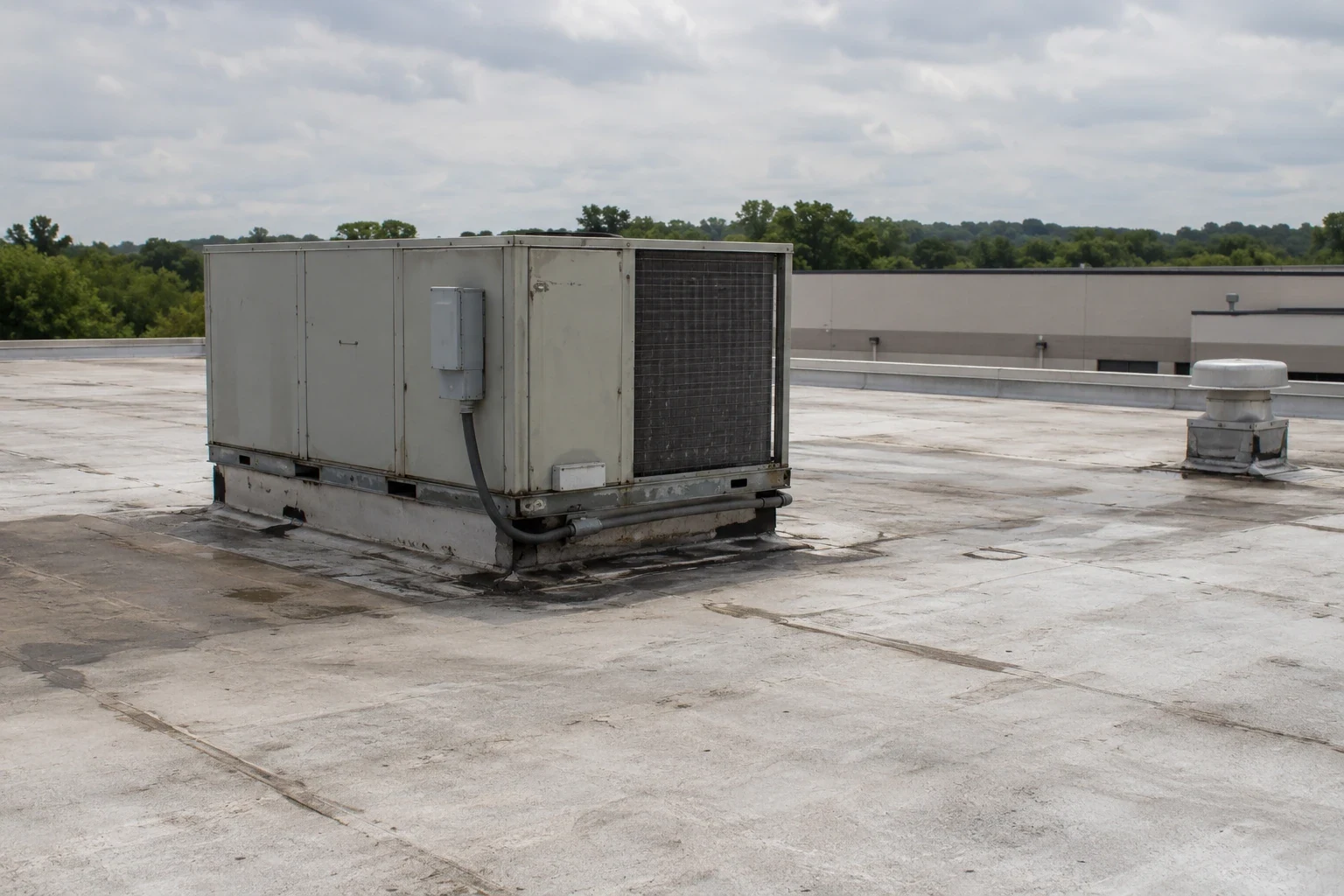
Compatibility is the other half of the test. Silicone does not bond to every existing coating, and some existing coatings must be removed first. We identify what is on the roof, test a patch and record the product names where we can. Over a TPO or a metal panel the answer differs from the answer over a bitumen roof, and the report lists each substrate we tested.
Washing, Repair and Reinforcement
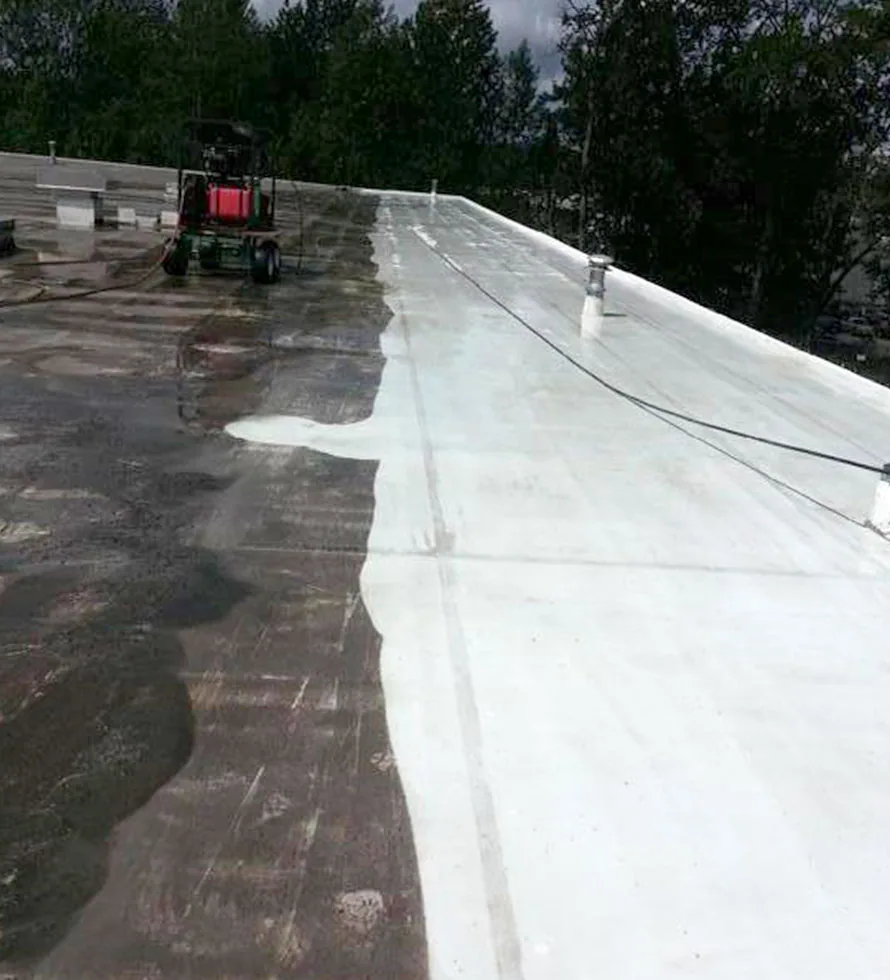
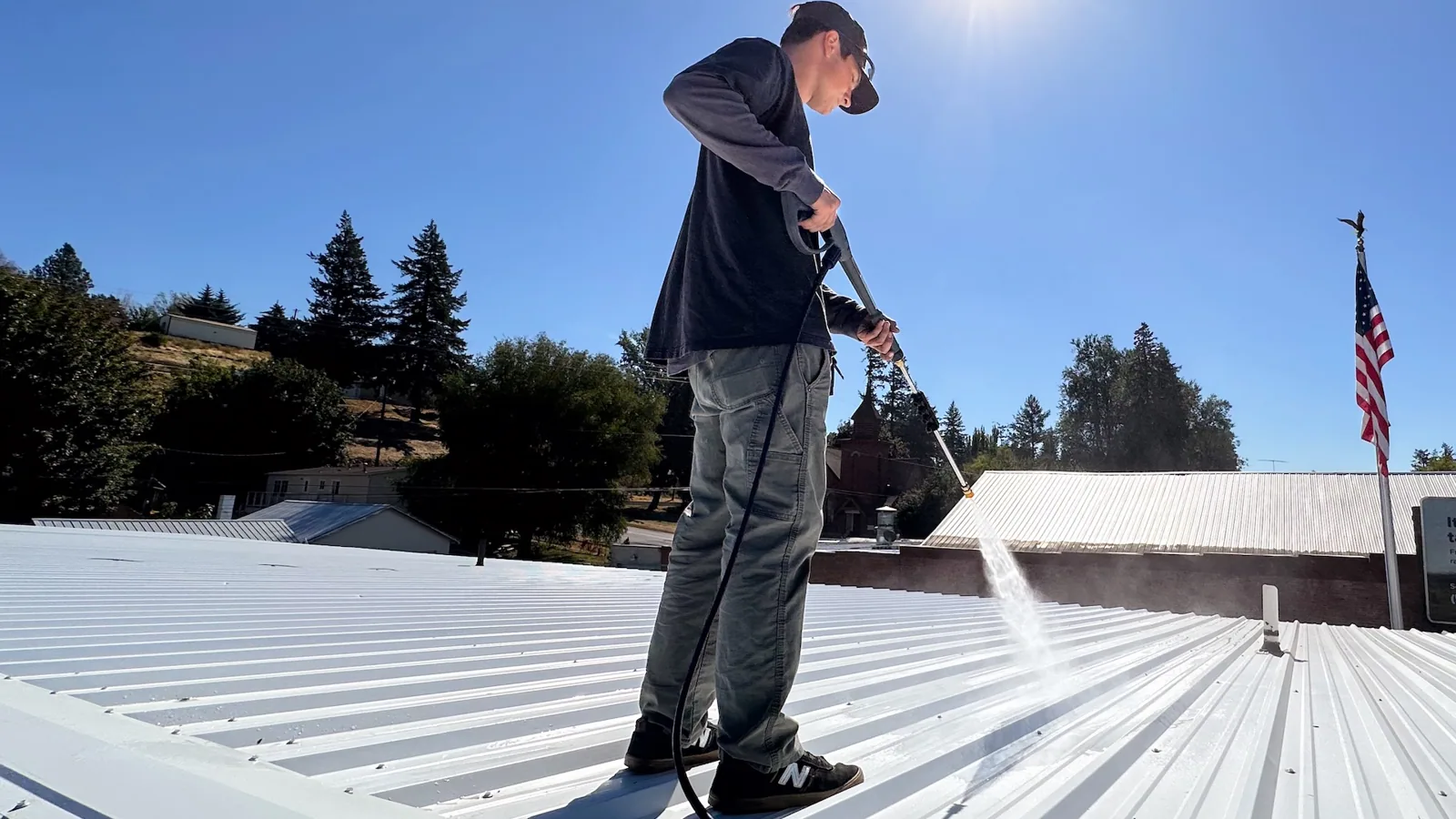
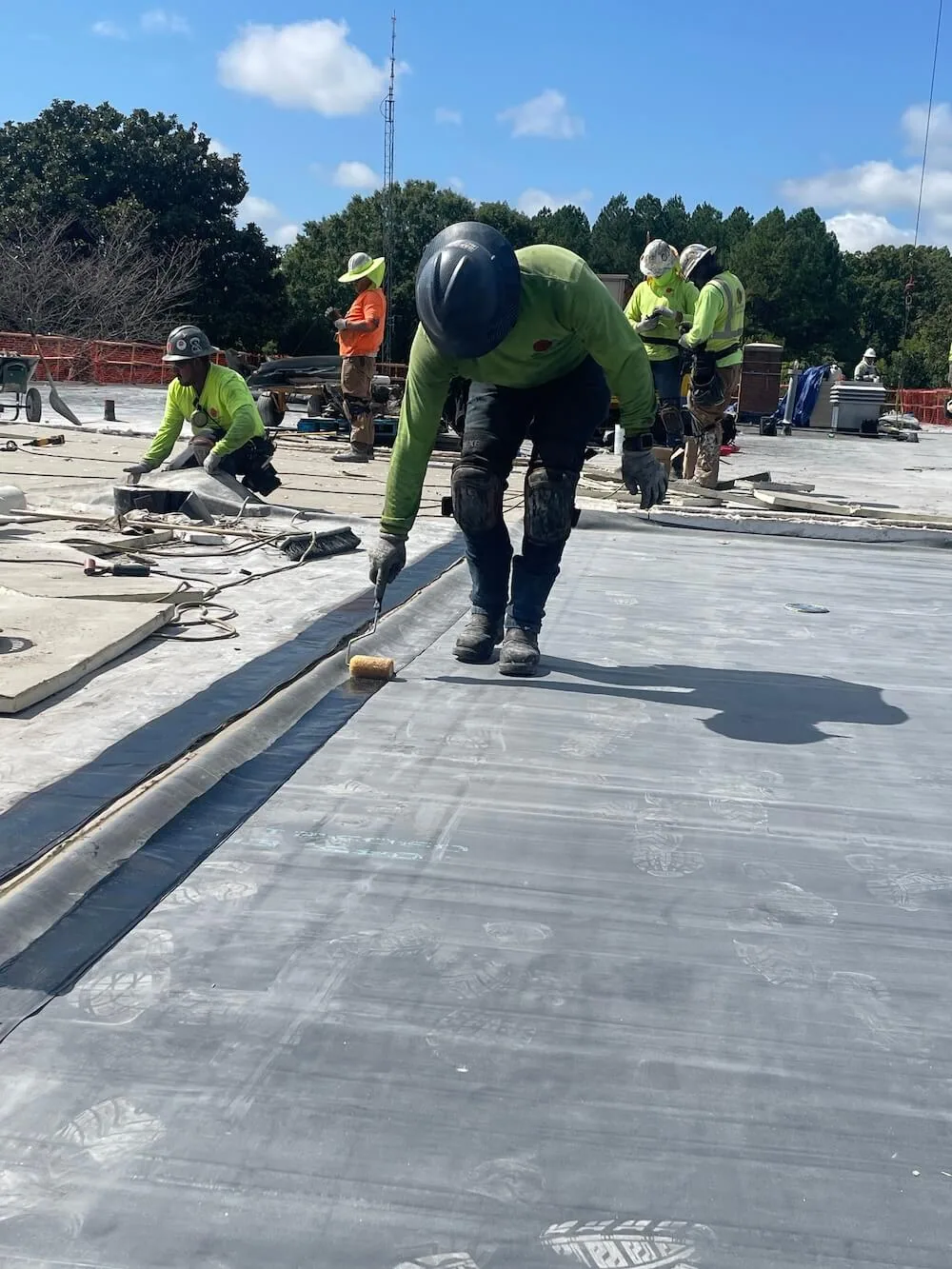
The roof is power-washed to remove dirt, mildew and oxidation, then allowed to dry. Seams, laps and flashings are repaired. Open seams are re-sealed or re-welded, cracked flashings are replaced and punctures are patched. Seams and details get fabric reinforcement bedded in coating before the field coat.
Preparation takes longer than the coating itself. In damp weather the drying step can take days. We include it in the phasing plan and do not mobilize the coating crew until the surface passes a dryness check. Drains are cleared and flow-tested, since silicone tolerates ponding but not a blocked drain and a flooded roof.
Fabric reinforcement deserves its own line. A seam or a flashing that moves will crack a coating laid straight over it. Fabric bedded in the first coat bridges the movement. We cut the fabric to the detail, press it into wet coating and cover it with a second coat. Each reinforced detail is photographed and located on the plan, so the next inspection can check it.
Coating Coats, Thickness and Cure
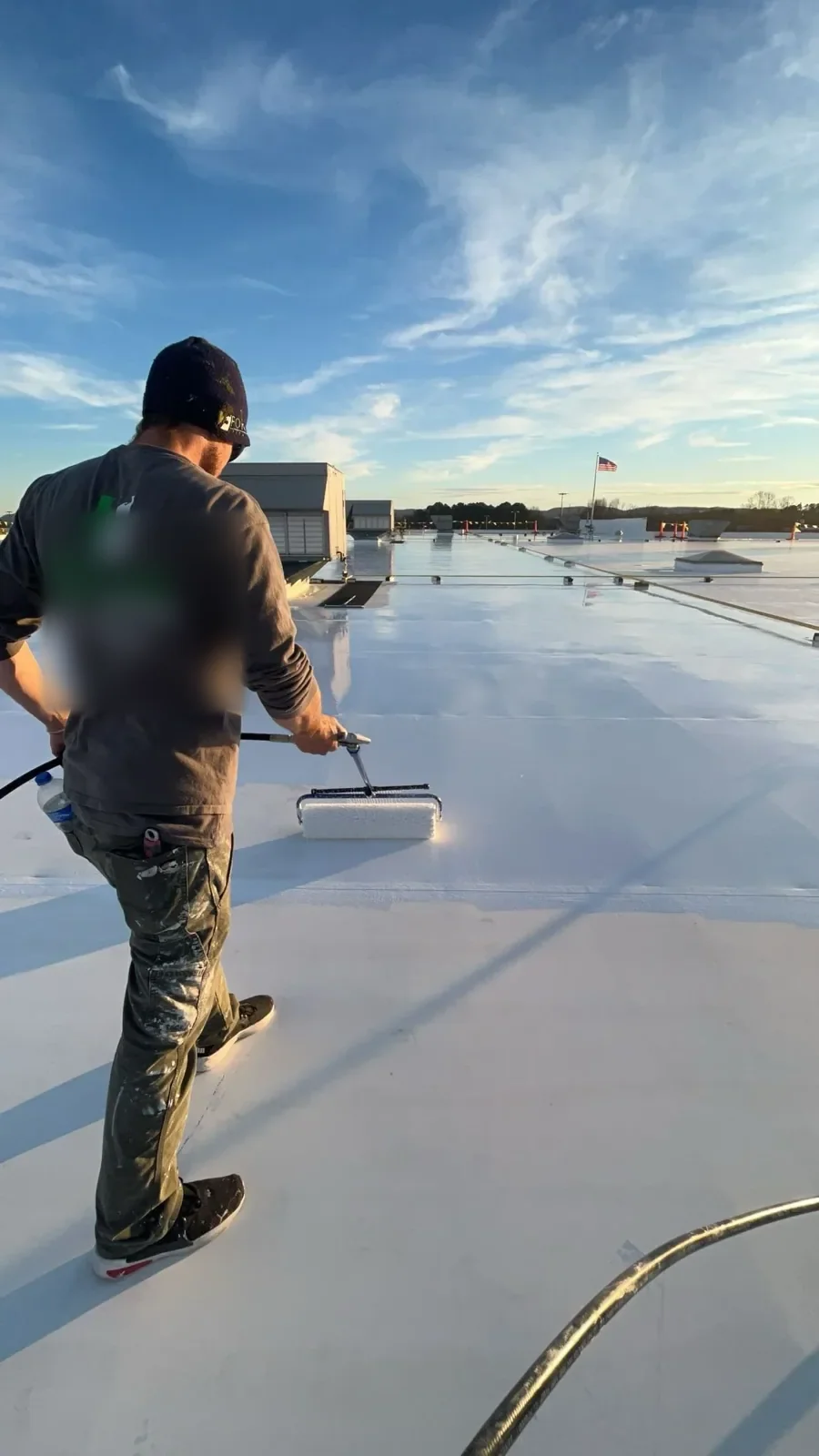
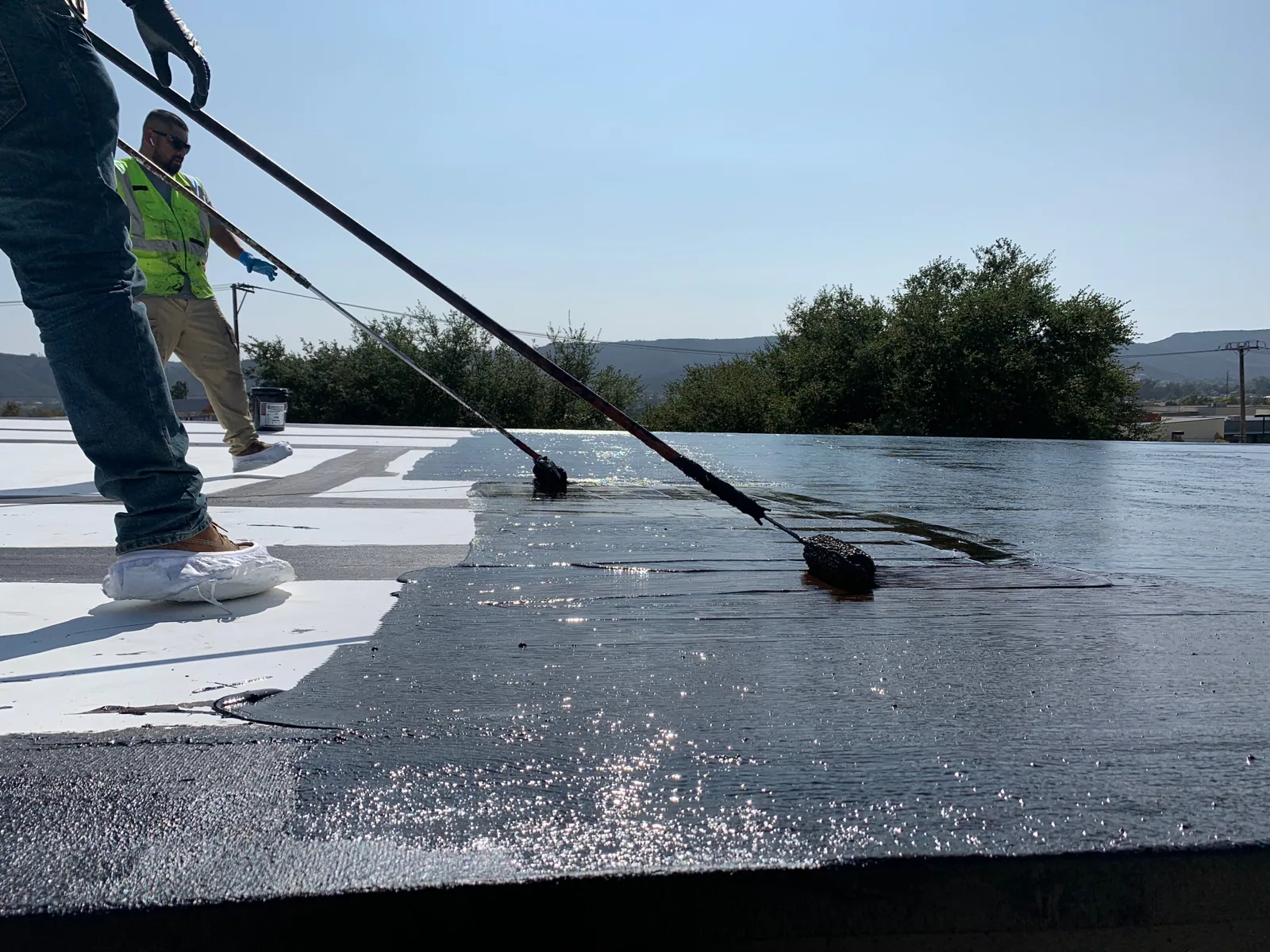
Silicone is applied in one or two coats by spray or roller. Coverage rate sets thickness. The crew gauges wet film while spraying and measures dry film once the coating has cured, logging each reading by area with a photograph. Any thin spot gets another coat before the crew leaves, and the daily report carries the numbers to the general contractor so nobody waits for closeout to see them.
Cure time depends on temperature and humidity, and rain before cure can wash out the coating. Annual precipitation here comes to about 45 inches, spread over roughly 133 days. We apply only when the forecast gives a dry window long enough for the coat to cure, and a tarp stays on the roof for a passing shower.
Ponding, Drains and Winter Behavior
Silicone is chosen for roofs that hold water, because it tolerates standing water better than several other coatings. That does not remove the need to fix drainage. We map ponding after rain, measure depth and mark the low areas. If the pond returns each time, a new drain or tapered insulation belongs in the next capital plan.
The thermometer has gone as low as minus 18 F and as high as 104 F, with only about 5.1 inches of snow in a year. Silicone stays flexible through that range. It still needs a clean surface in spring, because dirt cuts reflectivity and holds moisture. The maintenance schedule is part of the closeout package.
Wind and hail are the storm items. Storm warnings from Morristown for the county have listed 60 mph gusts and hail, with damage expected to roofs, siding and trees. A coating job that is half done when a storm arrives leaves wet sections and loose material on the roof. We stage the work so each section is coated, cured or protected before the forecast turns, and we never leave uncured coating exposed to a storm.
Occupied Buildings and Plant Campuses
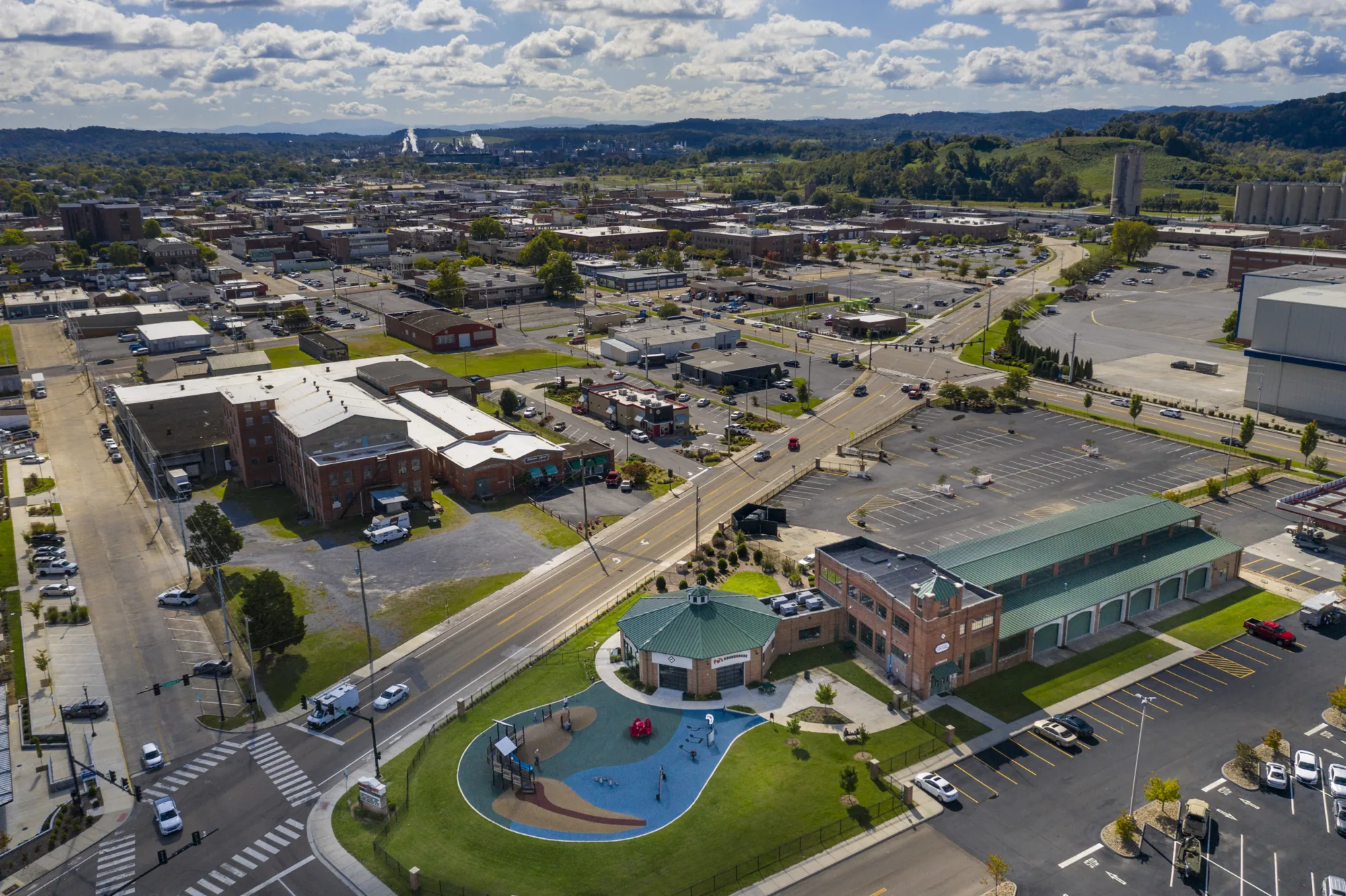
Coating avoids tear-off, which suits buildings that cannot stop. Kingsport's industrial base and institutions run on schedules, and a coating job fits within them when the plan is clear. The phasing plan follows the outage calendar, quiet hours and intake locations.
Odor from solvent-based products can reach intakes. Intake closures and the notice to occupants are named in the plan, and the safety lead approves both. Work zones are small, and traffic across the roof is controlled. Newly coated areas are closed to foot traffic until the product cures, which can take a day or more. A manufacturing plant roof, a school and a retail center each get a different schedule.
Permit, Warranty and Inspection
A silicone recoat or restoration can still be permitted work, so we check with the Kingsport Building Department before the schedule is final. When a filing is needed, it is a stamped plan set and a PDF reviewed under the 2024 building and energy code editions, and past $25,000 the Tennessee license and insurance proof join it.
A silicone warranty ties coverage to how the roof was prepared, how thick the coating went on and how it is maintained. We read those terms before the work starts and record compliance in the closeout package. The superintendent and the building manager walk the finished roof with us, and open items leave with a name and a date.
What We Need From You
Send the roof plan, the roof age and whatever warranty papers survive. Send the outage calendar and the intake locations. Where the owner wants options, roof coating restoration and an acrylic coating are priced on the same scope, and a replacement bid can sit beside them. A retail owner in the Stone Drive corridor sends the same items.
Commercial Roofing Questions
Why run an adhesion test before bidding?
Because silicone only works if it bonds to your roof. We recommend a cleaned test patch pulled after cure. A failed test costs a day. A failed coating costs the roof, and the test report shows why.
Can silicone go over a roof with saturated insulation?
No. It covers the problem and traps the moisture. We recommend a moisture survey and core cuts before the scope is written. Wet sections come out first, or the scope changes to replacement.
What does silicone do about ponding water?
It tolerates standing water better than several other coatings. We recommend mapping ponding and fixing drainage anyway. A repeat pond means a new drain or tapered insulation belongs in the capital plan.
How is coating thickness verified?
Wet film readings are taken during application and dry readings after cure, logged by area. We recommend writing the log into the contract. Thin spots are recoated before the crew leaves.
What stops a coating job?
Rain before cure, a wet surface and temperatures outside the product range. We recommend a spare day in each phase and a dry window long enough for the cure, because wet days are common here.