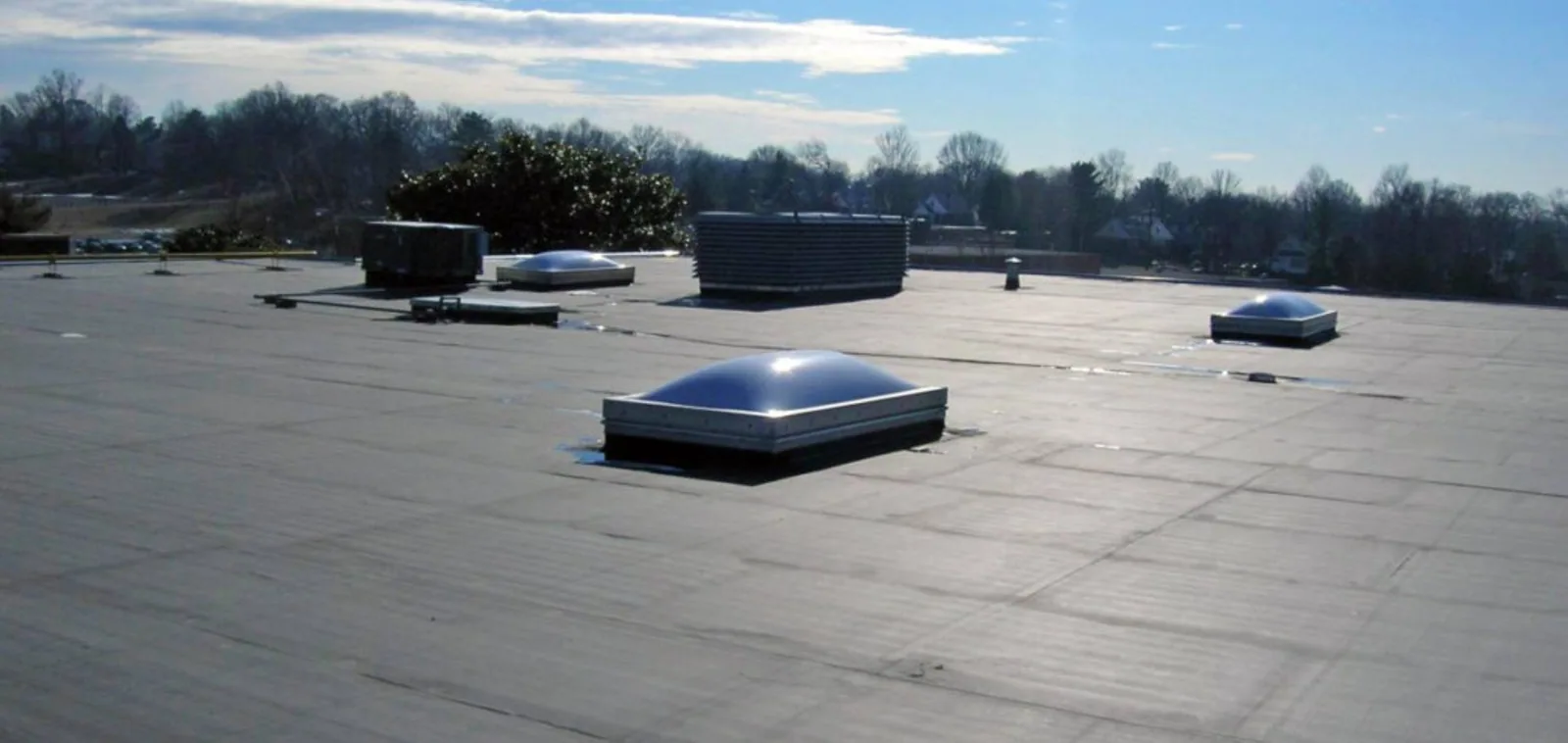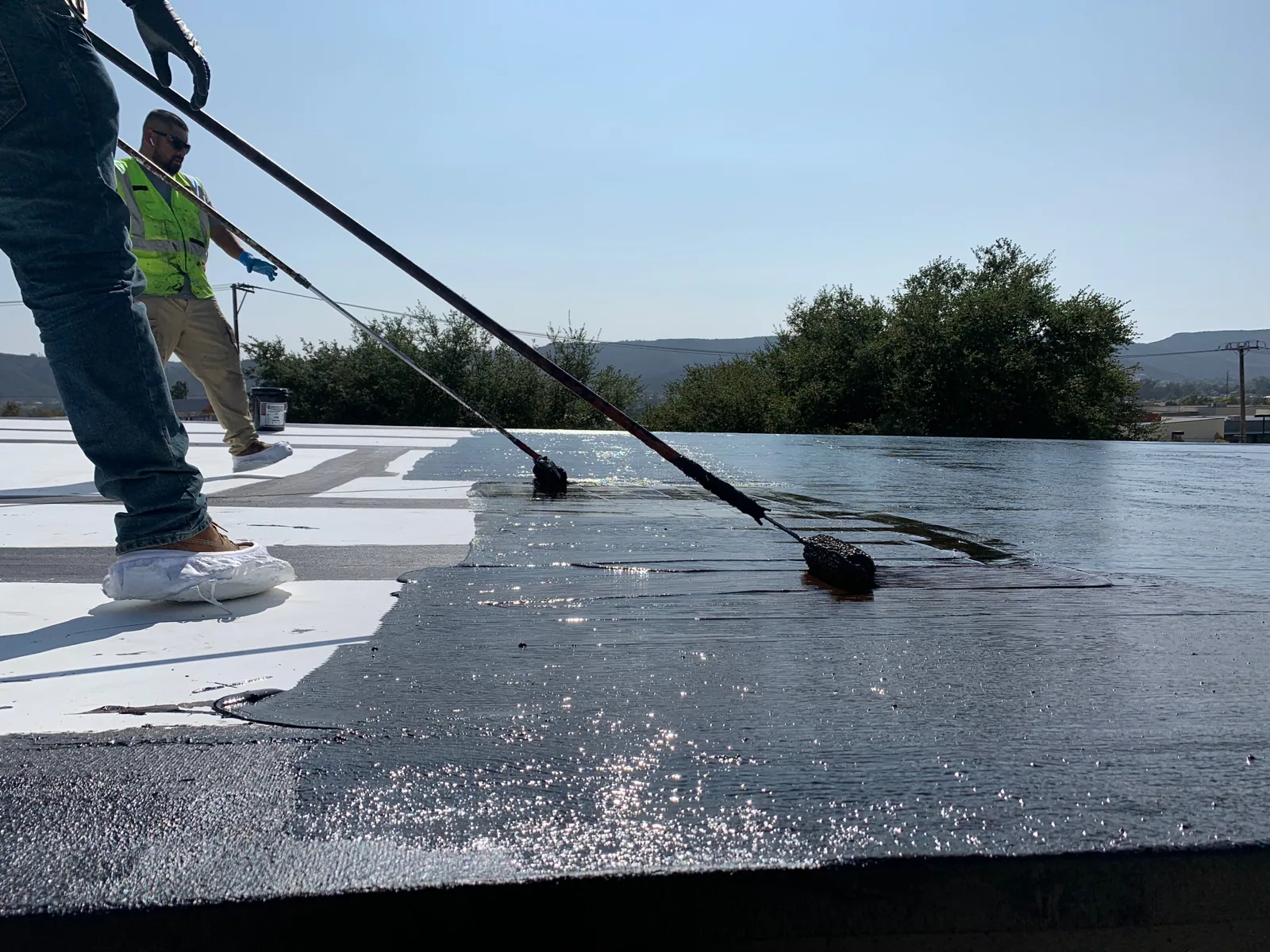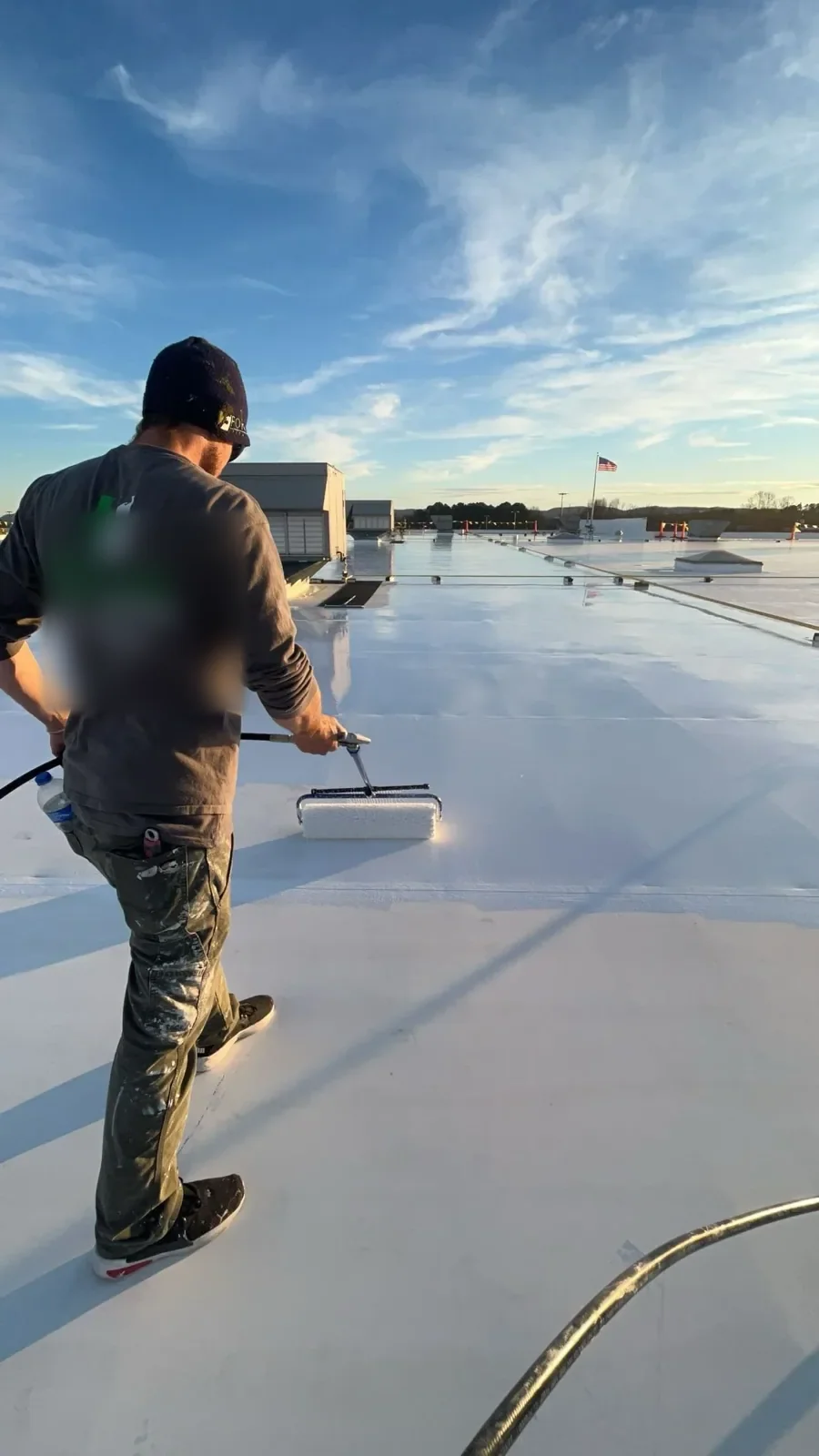
Before a coating crew mobilizes at a Kingsport, TN building, the roof has to pass an eligibility review, and that review depends on three items being in hand: the roof plan, the repair history and permission for core cuts. We test whether the existing membrane or metal is sound enough to hold a coating, whether the insulation below is dry and whether the drains move water. Only then do we write a coating schedule. A coating restores a roof that still has life in it. It does not stand in for a replacement on a roof that has already failed, and the review is where that line is drawn, in writing, before anything is ordered.
Eligibility Review and Test Cuts
The review begins with a moisture map. An infrared moisture survey on a clear evening shows where insulation holds water, and a handful of core cuts confirm what the scan suggests. Each cut is photographed, logged by location and patched the same day. We read the layers, measure the insulation and check the deck where it can be seen.
A roof qualifies when the surface is intact, the insulation is dry, the seams and flashings can be made sound with repair and the drains clear. A roof that holds moisture across a large area, or that has a deck in poor shape, does not. We say which in the report, with the cut photos beside it. On industrial property, the review also asks what the plant discharges onto its roofs, a question that matters at a site like the Eastman complex or the Domtar mill. Process exhaust, mist and residue change which coating is suitable, and the plant engineer is the right person to answer.
Repair-First Sequence
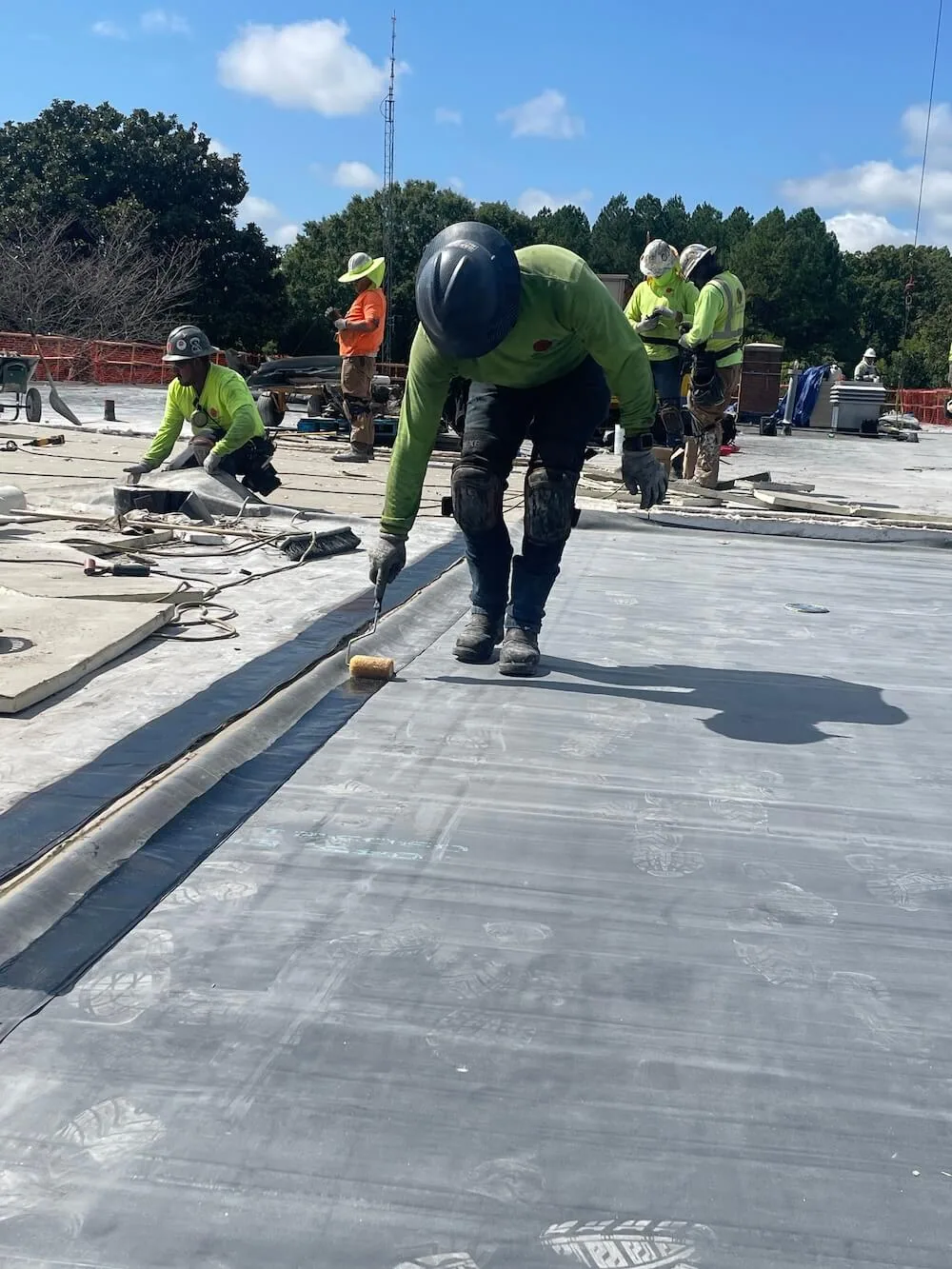
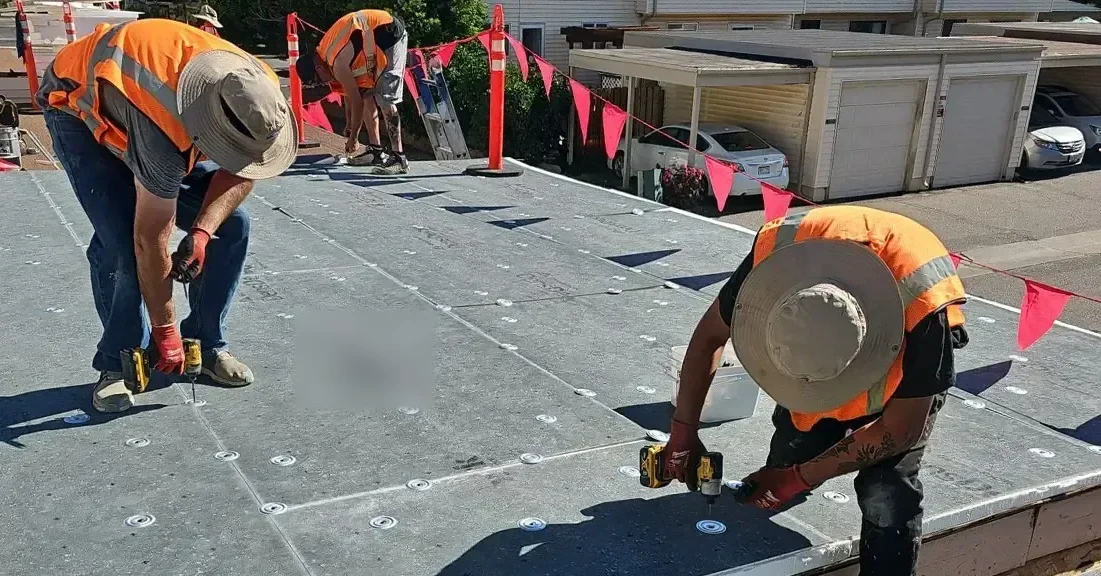
A coating covers a roof. It does not repair one, so repairs come first. Open seams get new tape or welded patches. Cracked flashings are cut out and replaced. Loose fasteners are tightened or replaced. Rusted metal is wire-brushed and primed. Pipe boots that have split are rebuilt, and curbs get reinforcing fabric and mastic at their corners.
Each repair is marked on the roof plan and photographed before the surface is cleaned. The list also becomes the punch list at the end. If the repair list grows past a point the owner has set, the schedule is paused and the question goes back to the owner: keep repairing, or move the money to a commercial roof replacement. Seam repairs are probed before the coating goes on, and fasteners are pulled at a sample of locations to confirm the deck still holds them. A coating over a loose fastener hides a problem for one season.
Surface Preparation and Primer
A coating bonds to a clean surface. Power washing removes dirt, chalk and loose granules, and a detergent pass handles oils near exhaust fans. We let the roof dry fully, then test adhesion on a small patch before the full run. Some surfaces need a primer, such as aged metal and some thermoplastic membranes, and the primer is chosen for the substrate and the coating product.
Runoff from washing is directed to drains, with filters in place, and kept off walkways and vehicles. At a plant, the washing schedule is tied to the outage calendar and to any restrictions on water discharge, which the plant contact identifies in advance. Rooftop units are covered and their intakes sealed during washing and spraying, and the building contact confirms the intake list before we start. Odor and overspray are the two complaints a coating job can generate, and both are prevented by planning, not by apology.
Application Windows and Cure
Coatings go on within a temperature range and need dry weather through cure. Because precipitation reaches about 45 inches a year across roughly 133 days, a dry window in Kingsport has to be picked, not assumed. The recorded range runs from about minus 18 F to 104 F, and neither end suits application. Spring and early fall are the working seasons, with a buffer in the schedule for afternoon storms.
We check the forecast daily and the surface temperature before each pass. A section is only started if it can be finished and cured before rain. Between sections, edges are left cut straight with a clean lap, so the next day picks up cleanly. Retail roofs near Fort Henry Mall are worked in bays that can be finished in one day, and the coating is kept off customer entrances and drive lanes with overspray control and barriers.
Thickness, Coats and Warranty Conditions
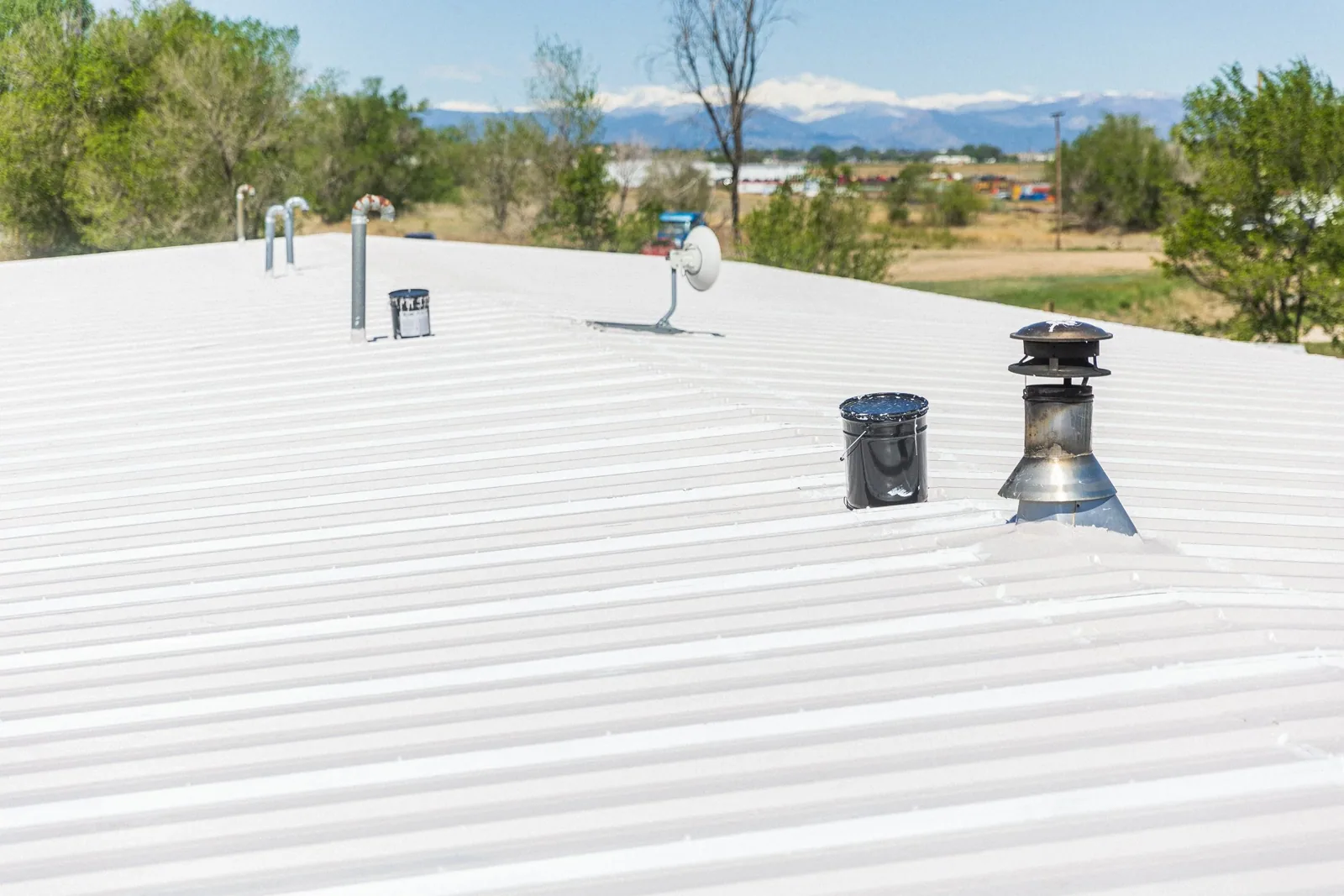
Service life follows the thickness, so we measure it. Wet film gauges are used during application and dry film readings are taken after cure. Seams, flashings and corners get reinforced coats. The number of coats and the target thickness come from the product data and the condition of the substrate, and the readings go on the roof plan by section.
Any warranty comes with conditions, such as a maintenance schedule and a recoat interval. We put those in the closeout file, and we add a calendar date for the first inspection. A coating that is cleaned and checked on schedule lasts longer than one that is forgotten, and the file proves which one you have. The first preventive roof maintenance visit is booked before the crew leaves.
Permit, Closeout and Punch List
Permit rules apply to roofs in Kingsport, reroofing included, and a commercial submittal carries stamped plans plus a PDF. A coating job may or may not need one depending on scope, so we check with the building department first. Above $25,000, Tennessee requires a state contractor license, along with proof of workers' compensation and liability coverage.
At closeout we walk the roof with the owner's representative against the punch list. We hand over thickness readings, photos, product data and the maintenance calendar. For buildings in Stone Drive shopping areas or on a plant campus, the walk is scheduled around operations. Alternatives are the roof recover overlay and a silicone roof coating system, chosen at the review. Alongside the closeout set, we send a two-line summary for the budget file: what was coated, what it cost per section and when the next recoat is due.
What We Need From You
Send the roof plan, past repair records, warranty papers and the access rules. Tell us which areas below the roof are sensitive to odor or fumes, and where the fresh-air intakes sit. Send the outage or turnover calendar so the phasing plan can be built before pricing is locked. If a lender or an insurer needs the report in a particular form, tell us. We match it. Tell us too whether tenants have been warned, and whether any area below the roof must stay free of odor on specific days.
Commercial Roofing Questions
How do you decide whether a roof can be coated?
By testing. A moisture scan, core cuts and an adhesion patch tell us if the surface is sound and the insulation dry. We recommend the review before any coating proposal, because a coating over a failed roof wastes the money.
What season is best for coating in Kingsport?
Spring and early fall, when temperatures sit in the product range and rain is less likely to interrupt cure. Midwinter and peak summer heat are poor windows.
Does a coated roof still need maintenance?
Yes. Drains need clearing, seams need checking and the coating needs cleaning. We set the first inspection date at closeout.
Can a coating fix a leak?
A coating seals small defects once the roof is repaired. Active leaks and failed flashings are repaired first, then coated.
Does a coating job need a permit?
Sometimes. A coating that stays within maintenance scope may not need one, while a larger scope can. Permit rules in Kingsport reach reroofing, so we check with the building department before the schedule is final.