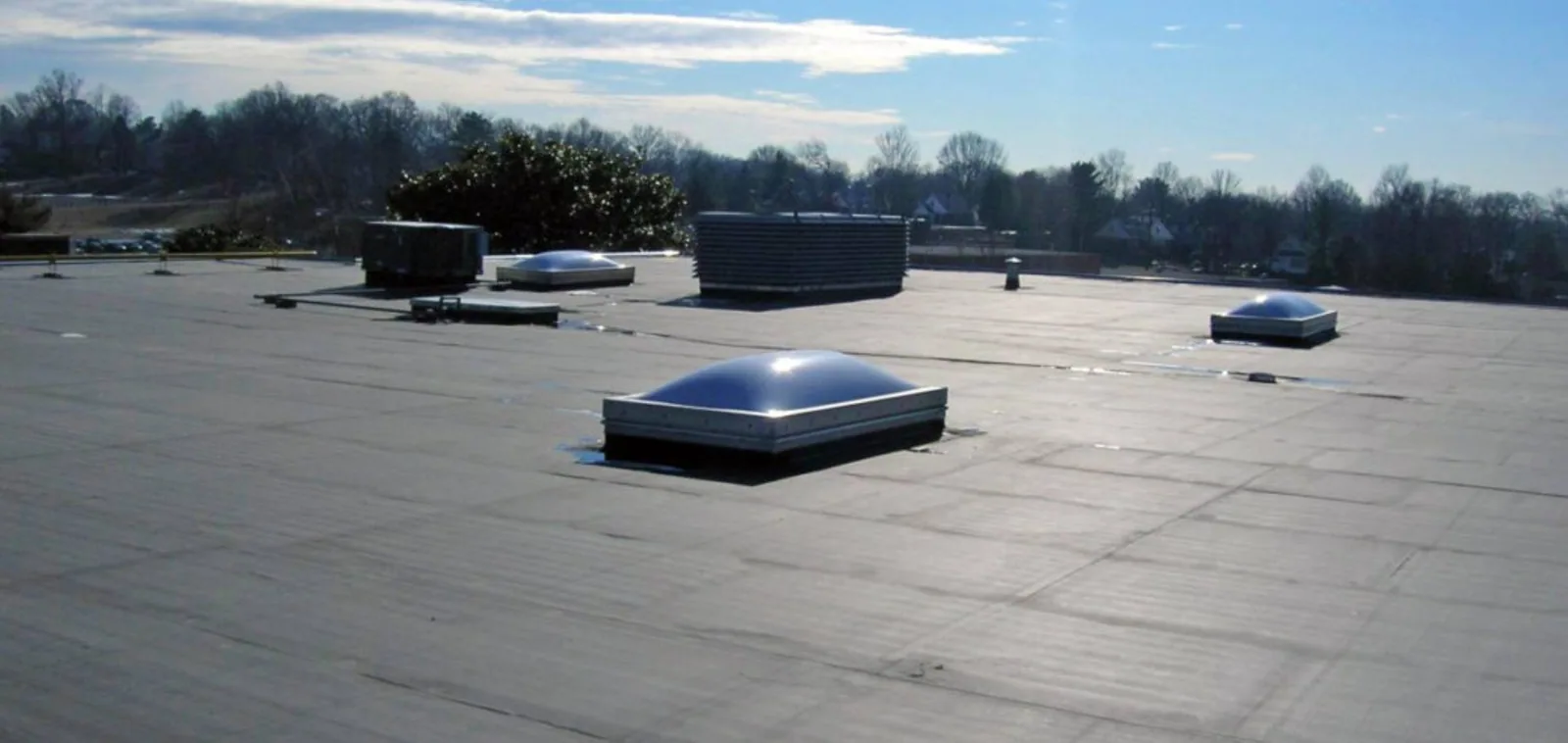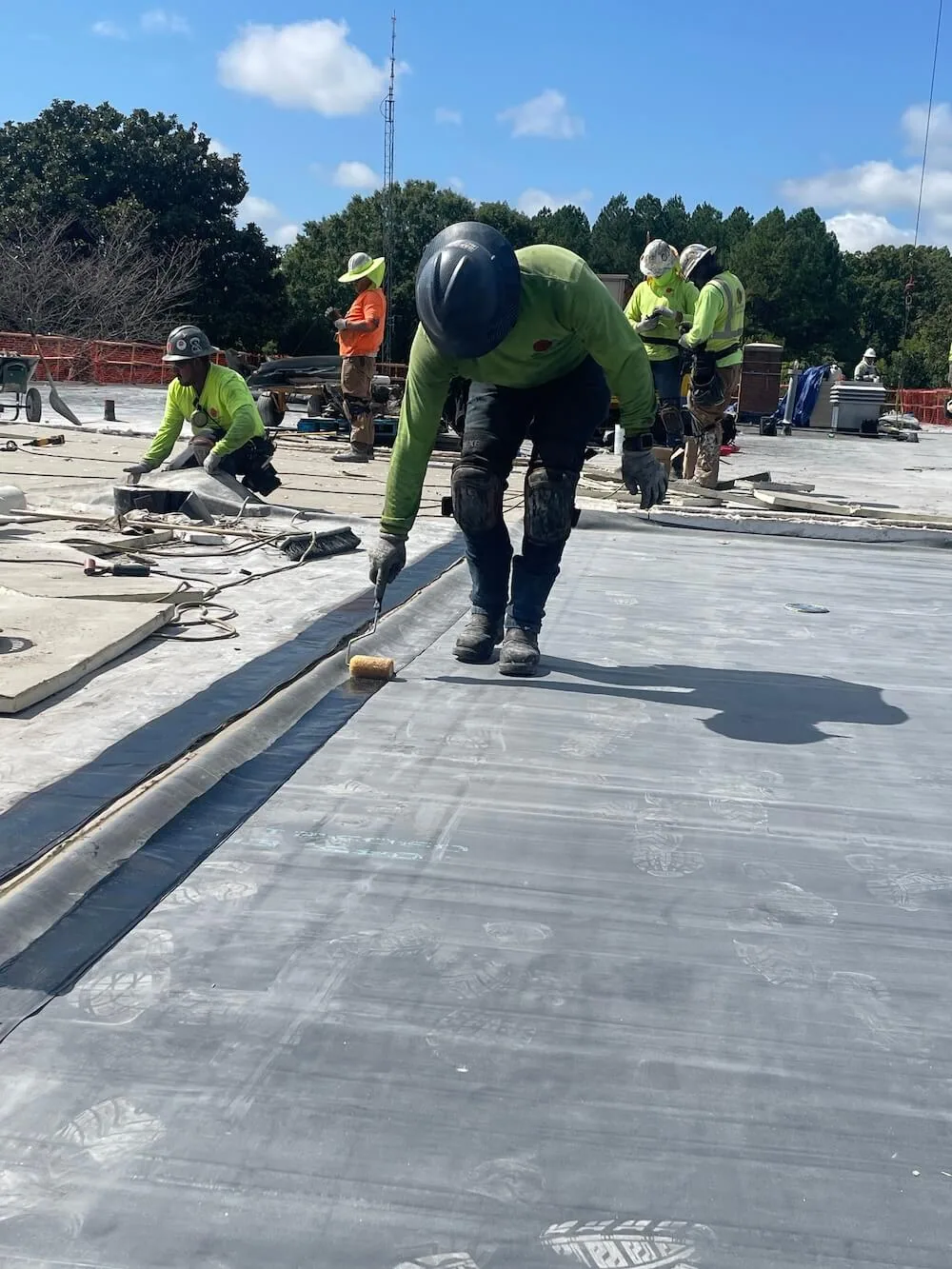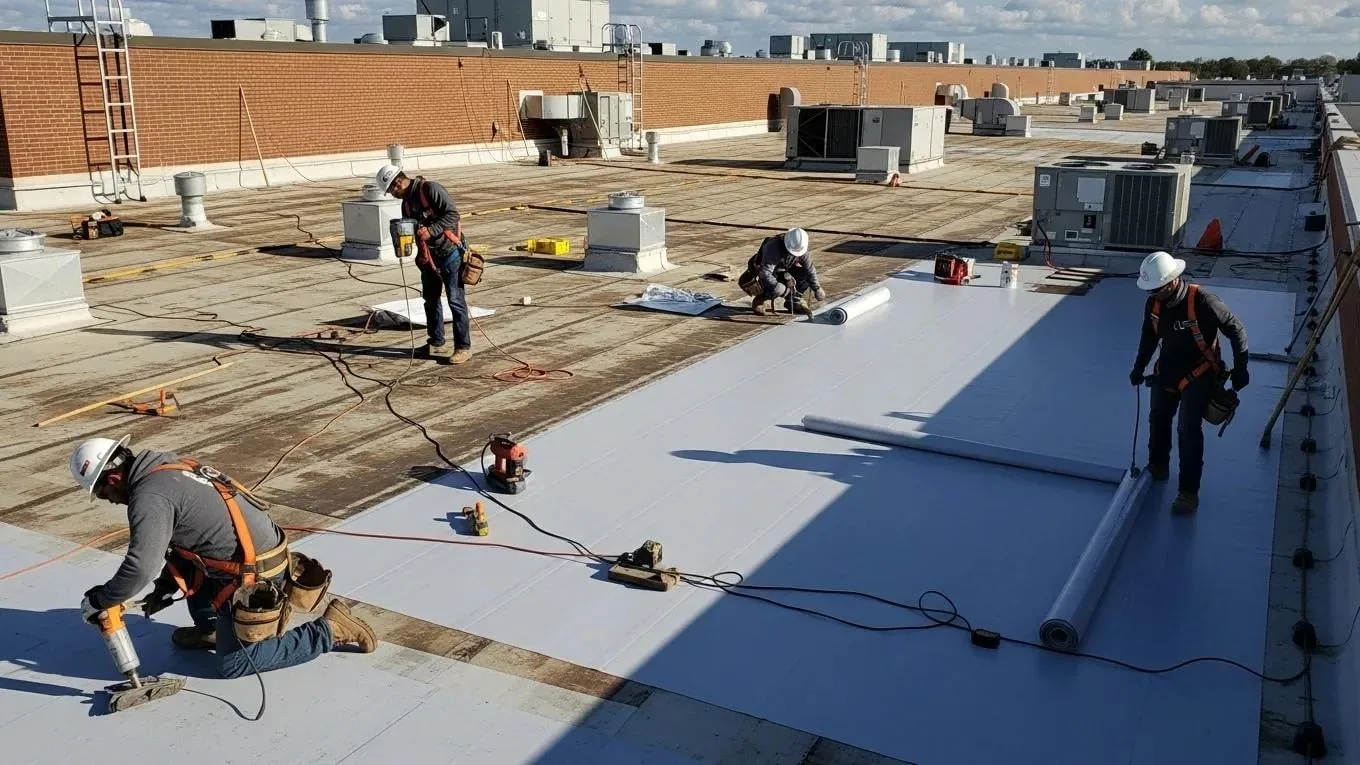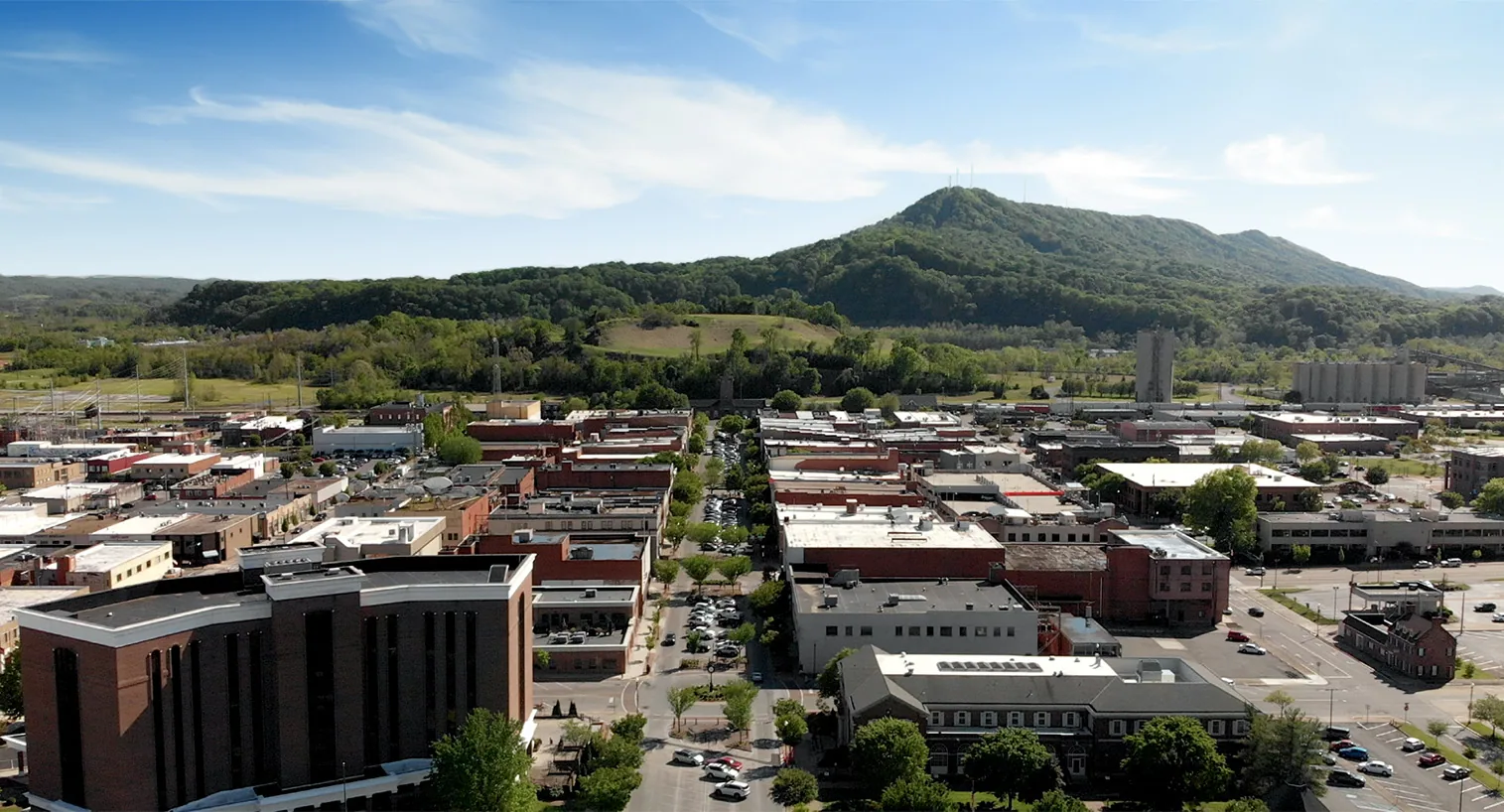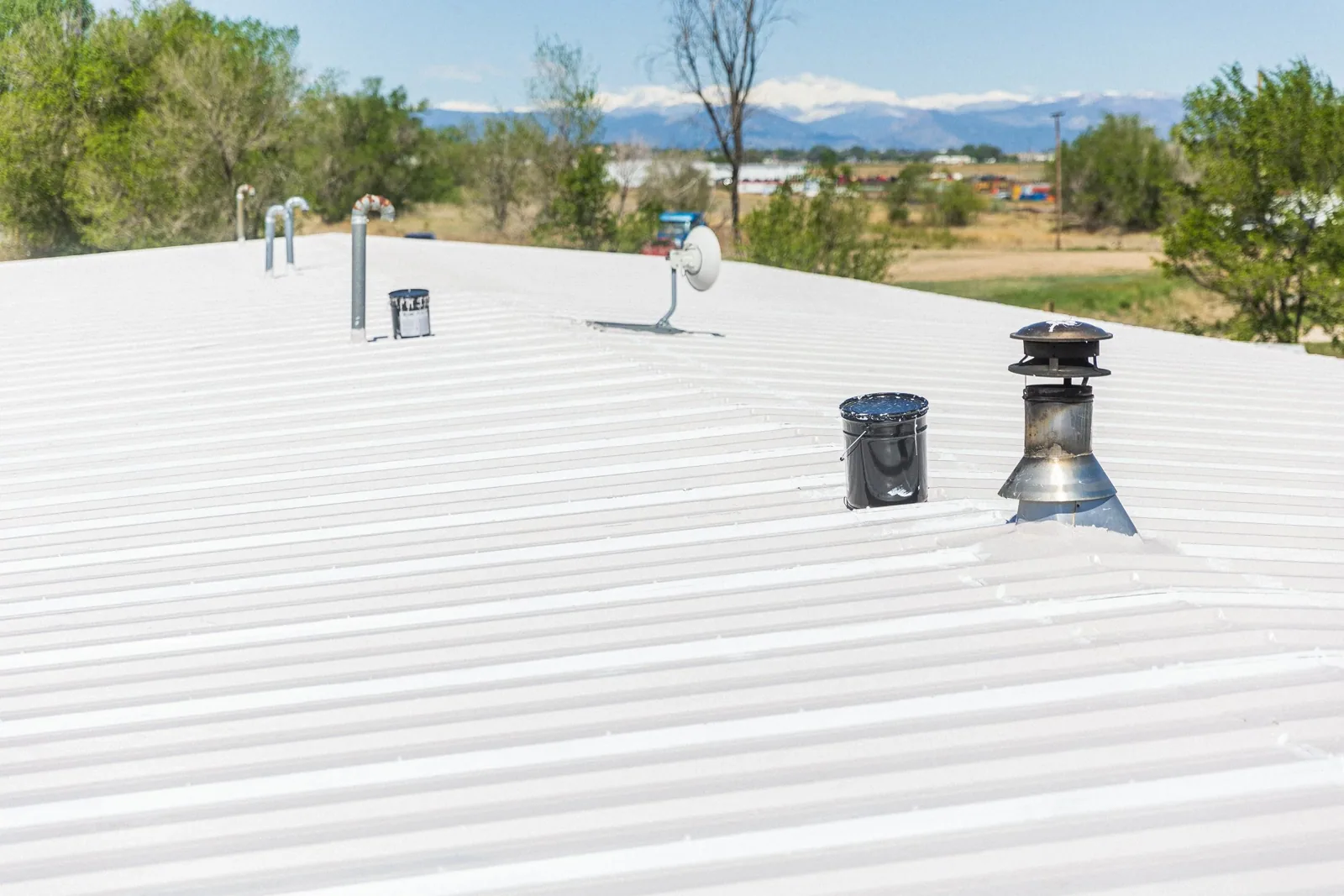
A build-up record comes first on an older commercial roof in Morrison City: how many layers are on the deck, what each is made of and how much of it is wet. Morrison City developed in the 1930s alongside Kingsport's industrial growth, but the age of any one roof stays unknown until it is opened, and drawings, where they exist, may not show the roof as it is now. We cut cores and write the layers down before we price anything.
With the build-up known, we plan the access, the permit and the sequence, and the occupant can see what each choice involves.
The Build-Up Record and Core Cuts
A core cut is a small sample taken through the roof to the deck. It shows the membrane or surfacing, each layer of felt or insulation, the cover board if any and the deck itself. It also shows moisture, which is the fact that decides repair against replacement.
On a roof that has been recovered once or twice, the layers may add up to a code limit, and the old insulation may be wet. We cut at several points, photograph each core, patch the opening the same day and mark the locations on a roof plan. An infrared moisture survey before the cuts tells us where to put them, so the cores confirm the map instead of guessing at it.
Fastener and attachment records belong in the same file. We note the type of deck, the fastener pattern where visible and any rust at the underside, because a deck that has carried moisture for years may need repair before any insulation is laid. The record is photographed from above and, where access allows, from below.
Access Between Lynn Garden Drive and U.S. 23
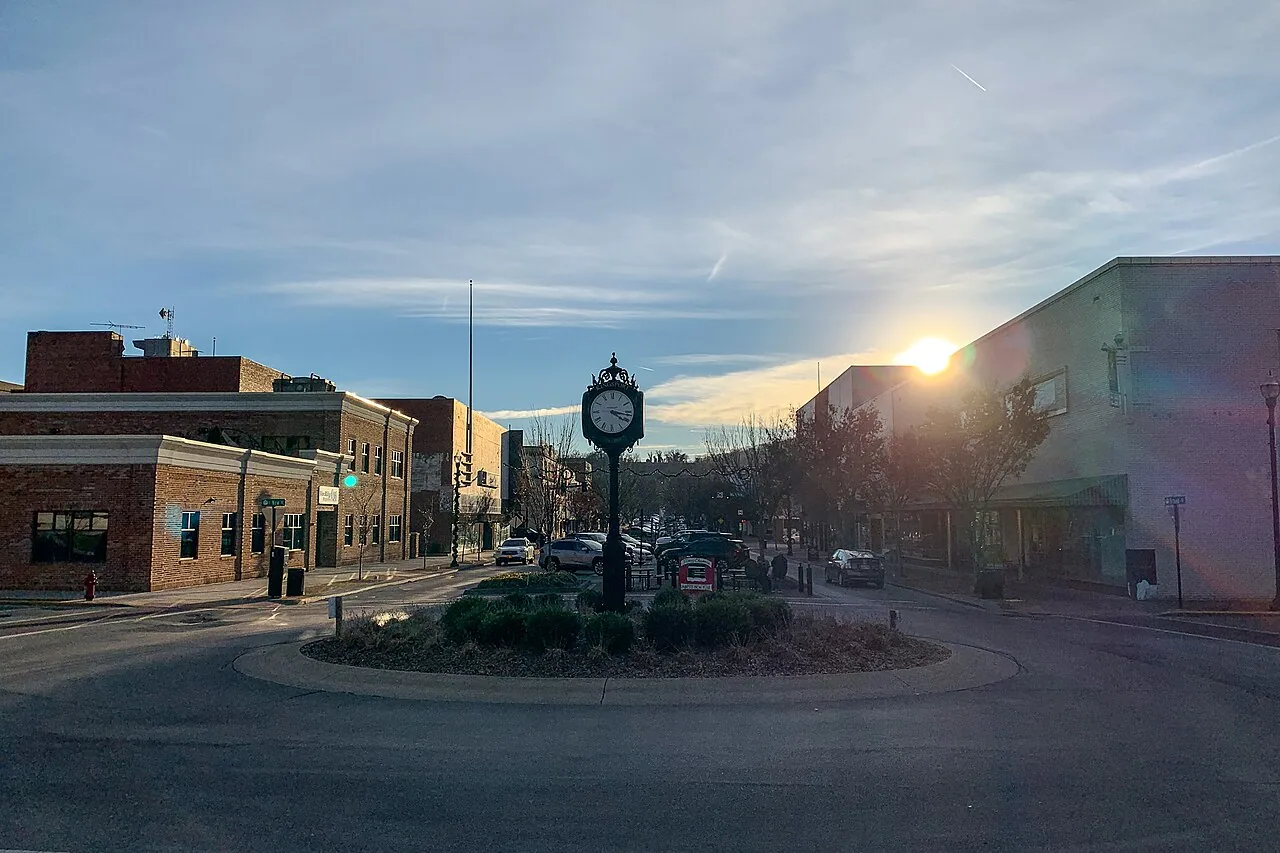
Lynn Garden Drive, State Route 36, meets U.S. 23 where the old Morrison City business district stood, and the 1980s U.S. 23 bypass removed churches and businesses from the community. Carter's Valley Road runs east and west through it, just south of the Virginia line.
That road pattern shapes the haul route. We mark the approach for the material truck, the position for the crane or hoist and the laydown area, and we confirm that the route does not cross a lot the business needs. Deliveries are timed early. A property on a bypass frontage may have little shoulder, so a spotter manages the entry and the truck leaves the same hour it arrives.
Pedestrians and neighbors are part of the route. Where a sidewalk or a shared drive runs beside the building, we mark a protected path, post signs and assign a flagger during lifts. The plan says who holds the flag and when, so the lift is a controlled event and not an interruption.
Sequence on a Roof With Unknown History
When the roof's history is incomplete, the sequence includes a hold after tear-off. We remove the top layers in a section, inspect the deck and the lower layers, and agree any change in scope with the owner before the next layer goes down. Hidden conditions are priced as unit rates in advance, so a surprise is a quantity and not a dispute.
Then the order is fixed: deck repair, insulation, cover board, membrane, flashing and dry-in, each in the same section on the same day. A commercial roof replacement done this way finishes with a punch list and a record of what was found in each layer.
Temporary protection is staged before the first tear-off. Tarps, ballast and sheeting are sized to the largest open section and stored at the roof edge, so if a shower approaches the crew closes the roof in minutes. We count the materials at the start of the day and again before the crew leaves.
Phasing Around the Occupant
Whoever is under the roof keeps their own schedule. We ask for opening hours, deliveries, shift changes and any area that cannot tolerate noise, dust or fumes, then set the noisy steps outside them. Air intakes are covered where adhesives are used, and the daily plan names the foreman and the property contact.
For a small business, the plan is simple: work in sections, close each one, keep the entrance clear. For a larger occupant, the same logic scales. The method is the one used for occupied building reroofing, and it keeps the building in use from the first delivery to the last.
Fire safety applies where heat is used. Torches, kettles and heat guns need a hot work permit, a fire watch and a cool-down check after the last flame, and we name the person responsible in the daily plan. Cold-applied and mechanically attached systems avoid the issue where the building or the insurer prefers it.
Weather Windows and Storm Buffer
Rain is the steady input in Kingsport, with roughly 133 days a year of measurable precipitation, while snow is light at about 5.1 inches and arrives in January and February. A schedule needs its spare days for rain more than for snow.
The Morristown weather office has issued Sullivan County thunderstorm warnings with 60 mph gusts and hail, and the expected damage includes roofs, siding and trees. Tarps and ballast stay at the roof edge, and a warning stops new sections from being opened. Adhesives, sealants and welds have working ranges, and the recorded extremes near minus 18 F and 104 F are the outer limits.
Permit, Inspection and Closeout
A Kingsport reroofing permit comes with a stamped plan set and a PDF for commercial work; above $25,000 the contractor also needs a State of Tennessee license and proof of workers' compensation and general liability coverage. We confirm the permit office for the parcel before we submit.
The closeout file adds the core record to the dated punch list, flashing photographs, warranty documents and roof plan. Owners with property in Lynn Garden or Orebank can use the same format. Send the site plan, the roof access points, any roof records and the occupancy calendar and the phasing plan will be built before pricing is locked.
Commercial Roofing Questions
Why cut cores before pricing a roof with unknown history?
Because the layers and the moisture decide the scope. A core shows how many layers are on the deck, what they are and whether the insulation is wet. With that, the price reflects the real roof, and the choice between recover and tear-off rests on evidence instead of a guess.
What happens if tear-off reveals deck damage?
We stop, photograph the area, measure it and apply the unit rate agreed in advance for deck repair. The owner approves the quantity before the next layer is placed. Because the rate is set before work begins, a surprise changes the total by a known amount and not by a negotiation.
Is the old roof allowed to stay under a new one?
Sometimes. A roof recover requires dry insulation, a sound deck and a layer count within code limits. Cores and a moisture scan show whether those conditions hold. When any of those conditions fails, tear-off is the sounder choice and the readings go to the owner with the recommendation.
How is the crane or hoist positioned on a bypass frontage?
After a site walk that locates the lines, the shoulder, the entrance and the loading area. We choose a position away from overhead utilities, plan a spotter for the entry and time the lift for the quietest hour. The sketch goes to the operator and the foreman, and it is checked each morning.
How do we plan for a roof whose layers nobody remembers?
Assume nothing, cut cores and write the layers down. We sample several points, photograph each core and note thickness, material and moisture. The record replaces memory, and it becomes the baseline for the next owner. The scope and the unit rates for hidden conditions are then based on what the cores show.