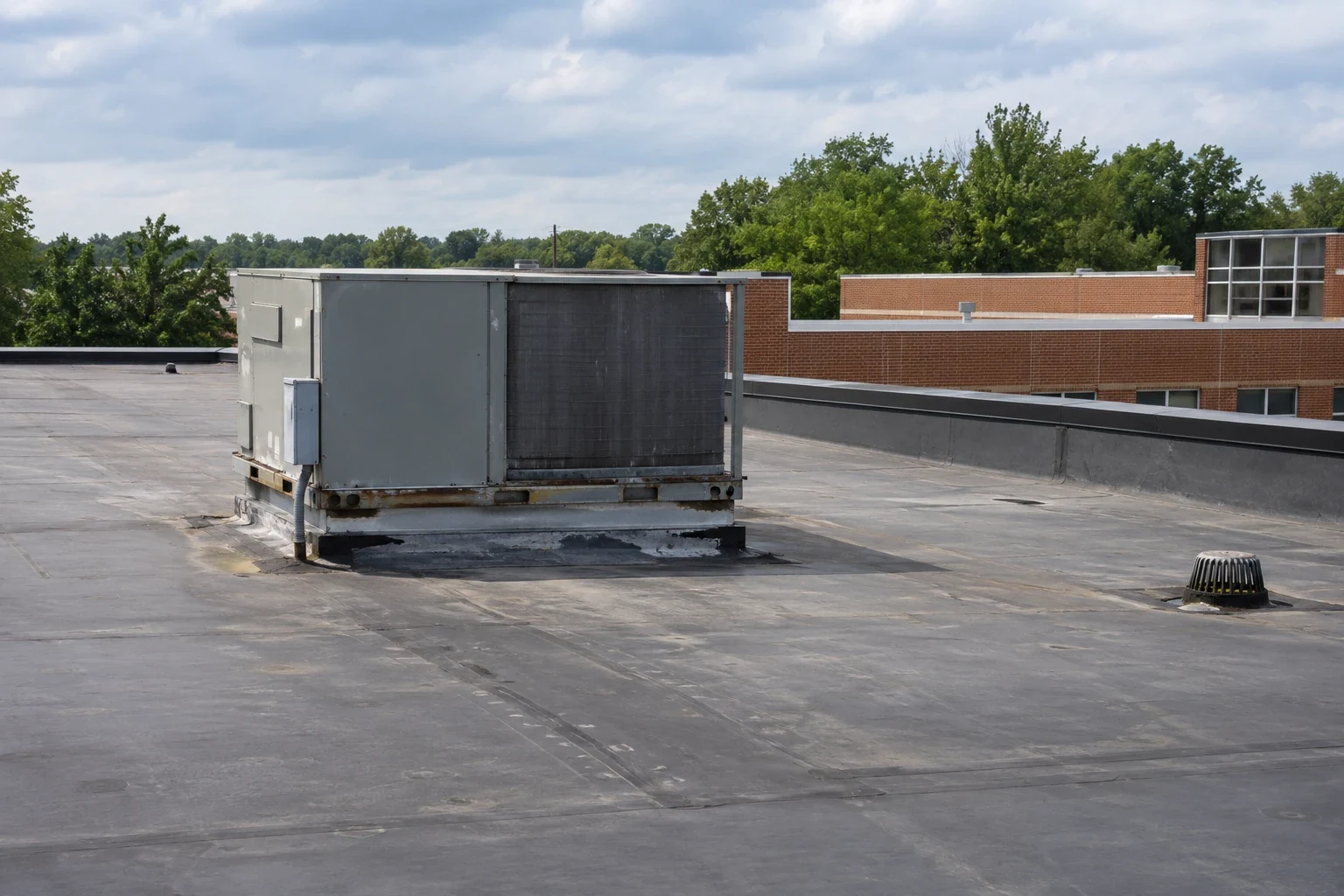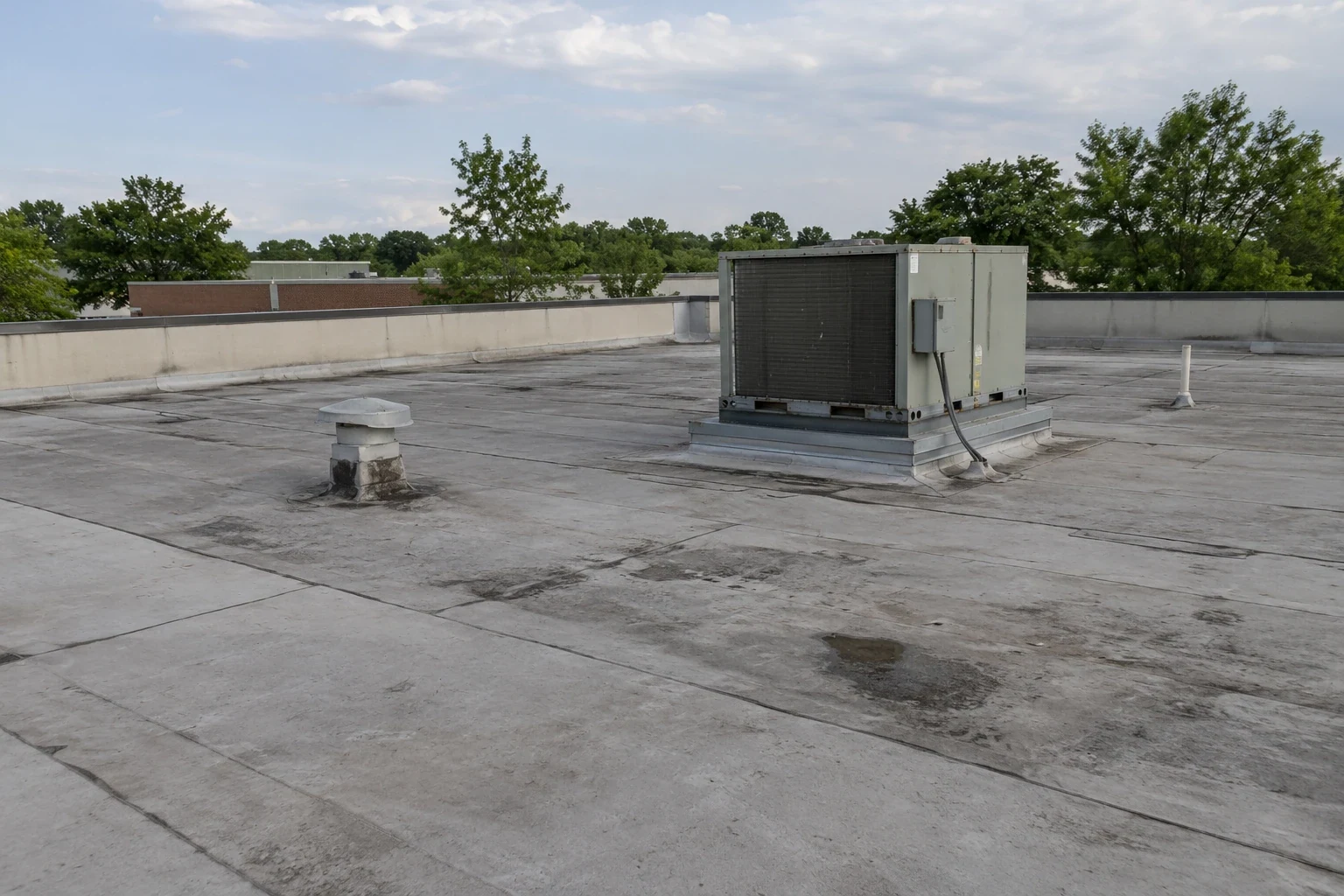
A public building starts with the procurement path, because it fixes the order of everything after it. We ask the project manager whether the work goes out as an invitation to bid, a quote or a cooperative contract, who signs the award, and when the funding expires. Those answers set the dates.
Cities, counties and public agencies in Kingsport, TN run roofs on courthouses, fire stations, public works yards and libraries that stay open to the public. Our phasing plan puts the bid, the award, the permit submittal and the construction window on one calendar, and it lists what each step depends on.
The First Step Is the Procurement Path
Before drawings, we need the bid form, the insurance and license requirements, the prevailing wage rules if they apply and the funding source. Each affects how the scope is written. A grant-funded project, for example, may require a fixed completion date that the schedule has to hit.
Next comes the walk. We identify roof hatches, ladders and lift locations, note the public entrances and mark the areas that cannot close. The result is a short access plan that goes into the bid package, so every bidder prices the same conditions, including general contractors who bid the whole building.
One more item goes in early: the owner's rule on photographs and records. Some agencies want every site photo filed in a set format, and it is easier to agree on that before the first day.
Access and Staging Around the Public
A public building has visitors, staff and often a parking lot that cannot be taken. The laydown area goes where it does not block the entrance, and the haul route avoids the customer path. Crane picks are set for the hours the building is closed or slow.
In Blountville, the Sullivan County seat and Tennessee's only unincorporated county seat, a county-building project shares streets with daily county business. In Rogersville, the Hawkins County seat, the courthouse dates to about 1835-36 and sits in a National Register historic district. Work near buildings like those calls for a staging plan that respects the street, the neighbors and the building's age.
Bristol, Tennessee and Bristol, Virginia share State Street as the state line but have separate governments, so an agency project on either side follows its own permit path. We confirm which jurisdiction applies before the scope is final.
Public lots often double as emergency overflow parking. We ask the facilities lead which spaces must stay open for deputies, ambulances or fire apparatus, and the laydown area stays out of them.
Sequence of Work on a Public Roof
The tear-off sequence starts with the sections over storage and utility space and finishes with those over public areas. Each section is opened in the morning and dried in before the building opens the next day. Fire stations and police facilities get a sequence that keeps their bays and entries clear at all times.
Penetrations and rooftop equipment are flashed as each section closes. A government building roof plan lists the equipment, the exhaust and the antenna mounts that need tie-in details.
Between sections the crew checks drains and scuppers and logs the check. Drains are flushed at the end of every day, because a clog on new work would flood it with the first rain.
Antennas, flagpoles and communication equipment mounted to the roof are located and protected before the tear-off. Their owners get a call before work starts near them.
Phasing Around Meetings, Courts and Elections
Public calendars have fixed dates: council meetings, court sessions, early voting. We ask for those dates and keep loud work and lane closures away from them. If a building serves as a polling place, the roof schedule stops for that week.
The Tri-Cities Regional Airport authority, based at the airport in Blountville, keeps its own calendar, as do school districts and municipal departments elsewhere in the region. Rogersville bought a three-acre former shopping center site in 2020 for a planned civic campus, and a campus project will have several phases of its own. The plan for each building fits into the owner's wider schedule, and a roof asset management file tracks which roofs come next.
Where two agencies share one building, such as a county office and a state branch under one roof, the plan names a single point of contact for both. Two chains of approval on one roof stall a schedule faster than rain does.
Fire stations and dispatch centers cannot go dark. The plan names a backup bay or a temporary entrance before the first section opens, and the crew leaves the apparatus floor clear at every shift change.
Permit, License and Bond Requirements
Public projects need a Kingsport roofing permit like any other, and a reroof counts. The Building Department reviews plans under the IBC and the IECC. Over $25,000, the contractor needs a Tennessee state license and must show workers' comp and general liability coverage.
For public work, bonds and prequalification add steps. We submit them with the bid and keep copies on site, so an inspector or owner's representative can ask for them at any time.
Weather Windows and Funding Deadlines
A public project often has a deadline that weather cannot move. Wet weather arrives on roughly 133 days a year and adds up to about 45 inches, so the schedule carries a buffer and a list of what finishes first if days are lost.
NWS Morristown has issued Sullivan County warnings for severe thunderstorms with 60 mph gusts and hail. When one posts, loose material comes off the roof and the project manager gets a call. Cold limits some adhesives and sealants too, with lows near minus 18 F on record, so a late-fall start carries temperature limits in the schedule.
Closeout, Punch List and Records
Each section closes with a walk by the project manager, and the punch list is photographed. The final binder includes the as-built drawing, material data, warranty paperwork, bond and insurance records and the permit record, arranged to fit the agency's retention rules.
Open items remain listed, each with a date and an owner, until the project manager signs them off.
Commercial Roofing Questions
How should an agency write the scope for a roof bid?
State the access conditions, the working hours, the staging area and the permit requirement in the bid package. We recommend a pre-bid walk so every bidder sees the same roof. Alternates should be priced separately, with the condition that triggers each.
Can public buildings stay open during a reroof?
Usually yes. We recommend a written phase plan that names the entrances kept open, the hours of noisy work and the person who can stop work. Courts and polling places need their own dates.
What licenses does the work require?
Anything over $25,000 needs a Tennessee-licensed contractor with insurance on file, and bonds or prequalification may apply too. We recommend confirming the list in the bid documents.
How do funding deadlines affect the schedule?
They set the latest finish date. We recommend working backward from that date and building in weather buffers. If funding expires, the schedule should say which sections finish first.
Do historic buildings change the plan?
They add review steps and material limits. For a building on a historic register, we recommend confirming the approval path before the scope is final.
What records should the agency keep?
Keep the as-built drawing, material data, photographs, the warranty file and both permit and inspection records. We deliver them in one folder at closeout.