Road access comes first at a Sullivan Gardens roof, because the community sits southwest of Kingsport and is reached by State Route 93, the Sullivan Gardens Parkway, which now works mostly as a bypass, and by State Route 347, Lone Star Road, running east and west. A truck bringing membrane rolls and insulation takes one of those two, so the delivery window and the turn into the lot are the first things we agree with the owner.
Sullivan Gardens is a census-designated place in southwestern Sullivan County. A commercial roof in a community of this kind gets the same treatment: a survey of what the roof holds, a sequence that closes each section by evening and a scope that shows what drives timing and cost.
Delivery Routes on the Parkway and Lone Star Road
On a bypass road, trucks move fast and shoulders are narrow. We stage deliveries so the unloading happens inside the lot, not on the highway edge, and we confirm the drive entrance is wide enough for the flatbed turning radius. If the lot is tight, material arrives in smaller loads through the day. A forklift or a small crane handles the lift, and the crane pick is chosen so the boom does not cross an occupied entrance.
Where a property sits on Lone Star Road, the same checks apply. Pedestrian paths stay open, dumpsters sit away from loading doors and the laydown area has a clear boundary that tenants can see.
School Roofs and Summer Windows
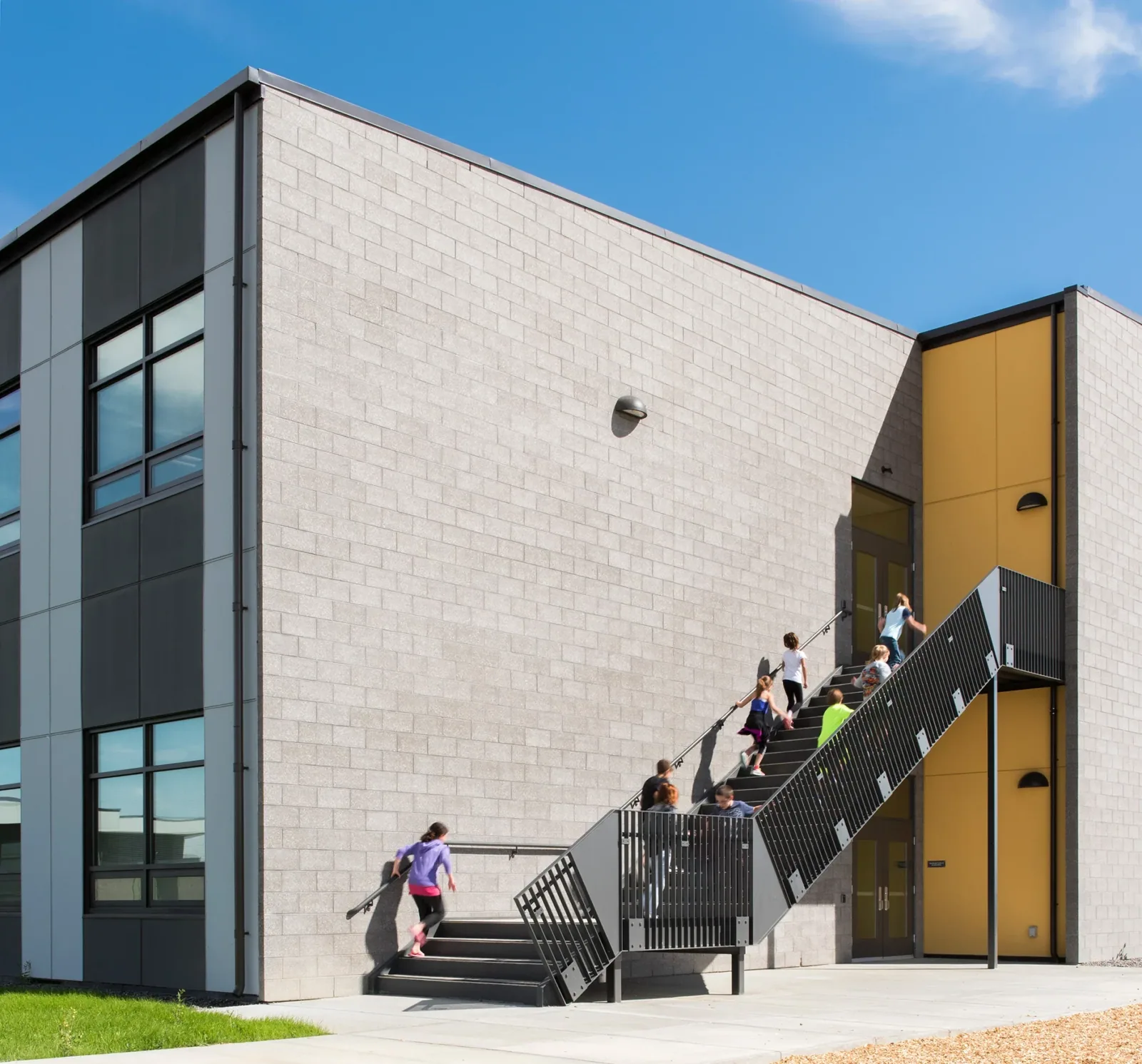
Sullivan Elementary School and Sullivan Middle School stand near the middle of the community. A school roof job runs in a fixed order: the survey comes first, the scope follows, and the heavy work is scheduled for the break between school years. Noise and dust are held to the hours when classrooms are empty, and the dry-in is verified before students return.
A school roof often includes lunchroom exhaust, gym roofs with high walls and the ramps and canopies where leaks tend to show up first, and each gets its own check. A district facilities lead gets the written scope in a format that fits a board packet.
What We Look For on a First Walk
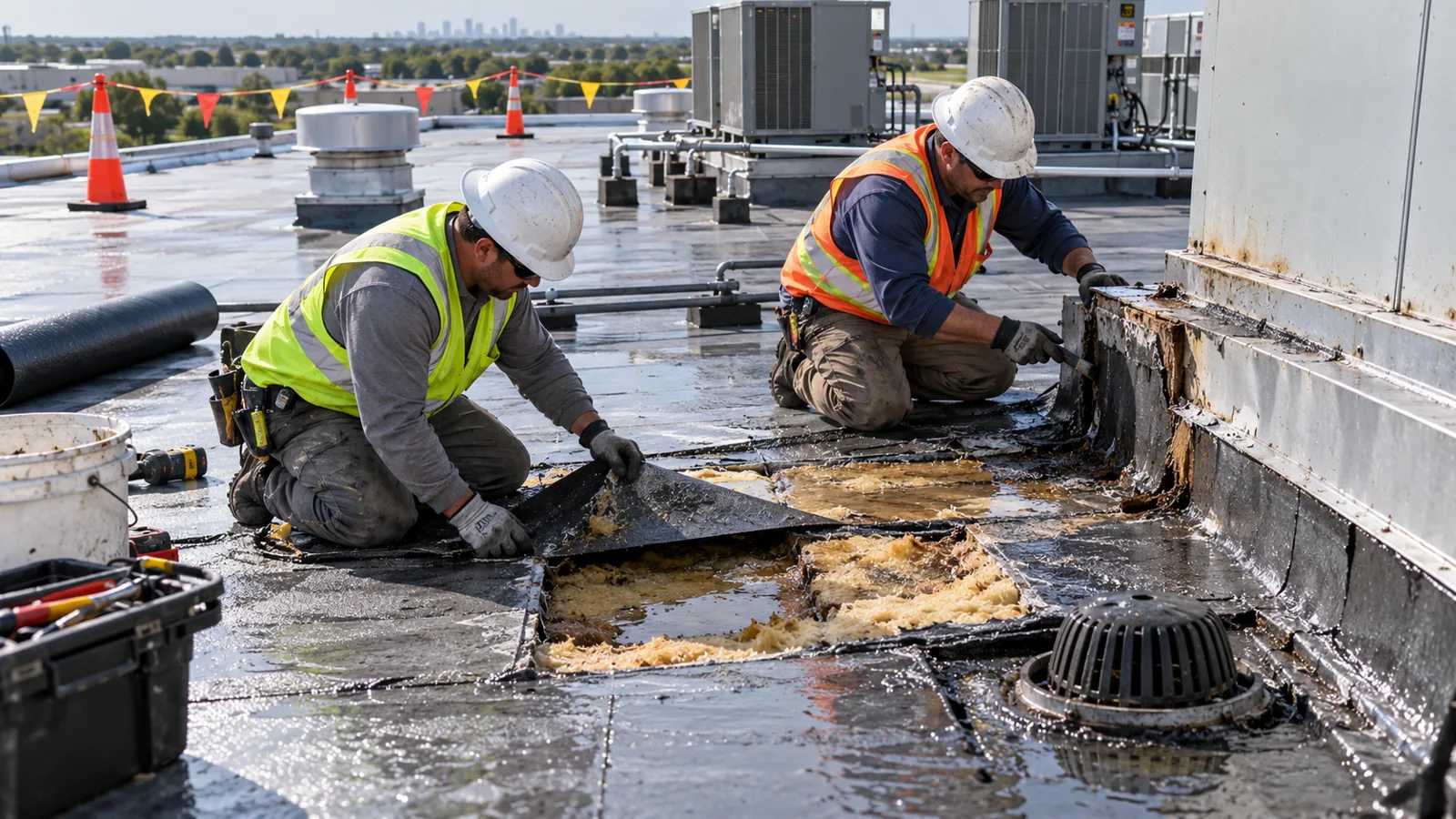
On any commercial roof in this community, a first visit follows the same checklist. We look at the field of the membrane for blisters, splits or ponding. We look at seams for lifting. We look at flashing around curbs, vents and walls, then at drains and scuppers for debris or standing water. We note edge metal that has loosened and sealant that has cracked, and we log rooftop equipment that may need new curbs. A drain that holds water for more than a day or two after rain is a finding in its own right, because the weight and the algae it brings shorten the life of the sheet around it, and clearing or resetting roof drains and scuppers is often the cheapest fix on the list.
The same visit sorts each finding by urgency. Anything that lets water in goes on the repair list with a price. Anything that will fail within a budget cycle goes on the capital list. Anything that only needs watching goes on the maintenance calendar, and we give the owner the dates so no one has to remember.
Findings go into a report with photos and a price for each item. A commercial roof inspection with that format gives an owner the information needed to decide between a patch, a coating and a replacement.
Repair, Recover or Replace
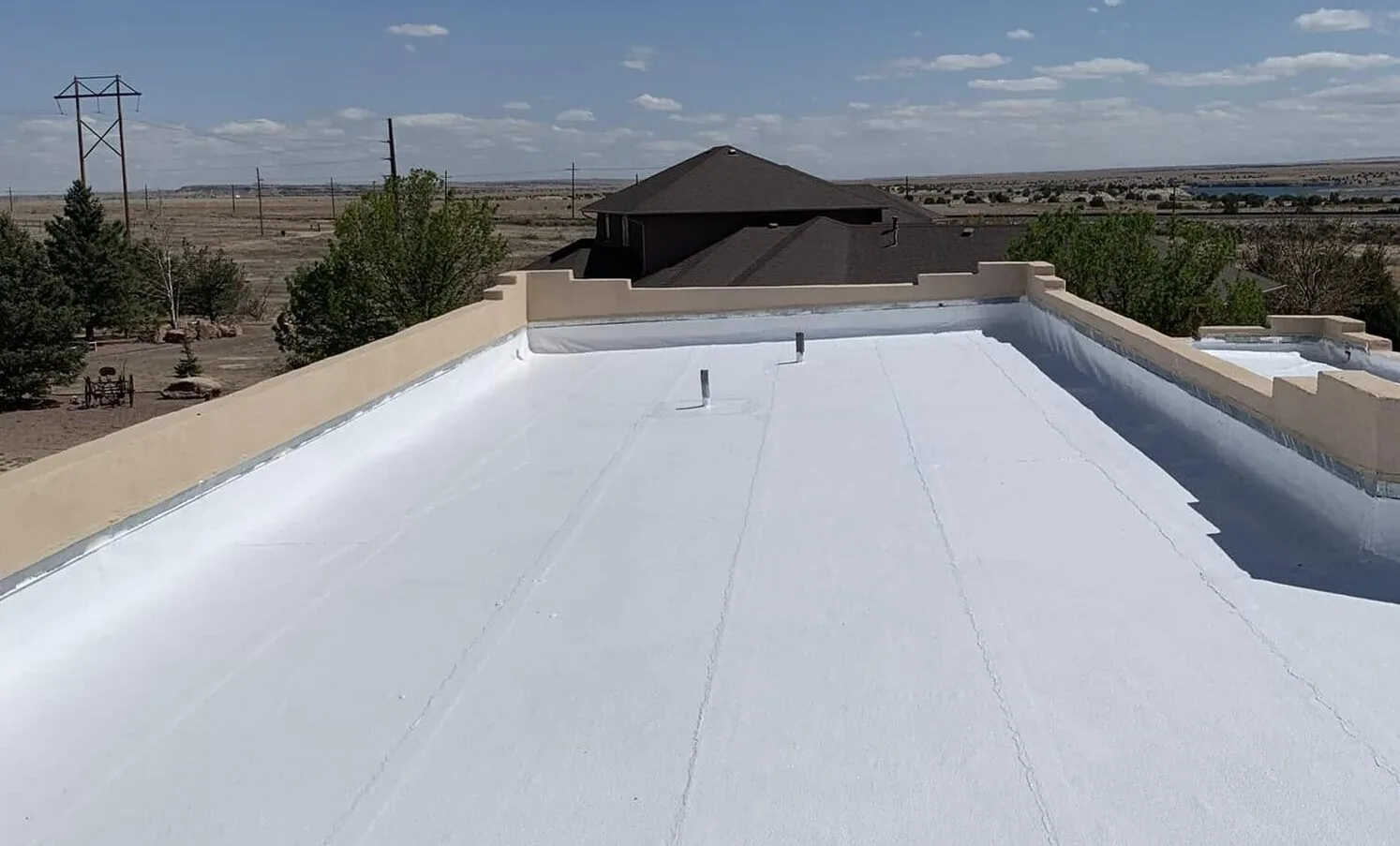
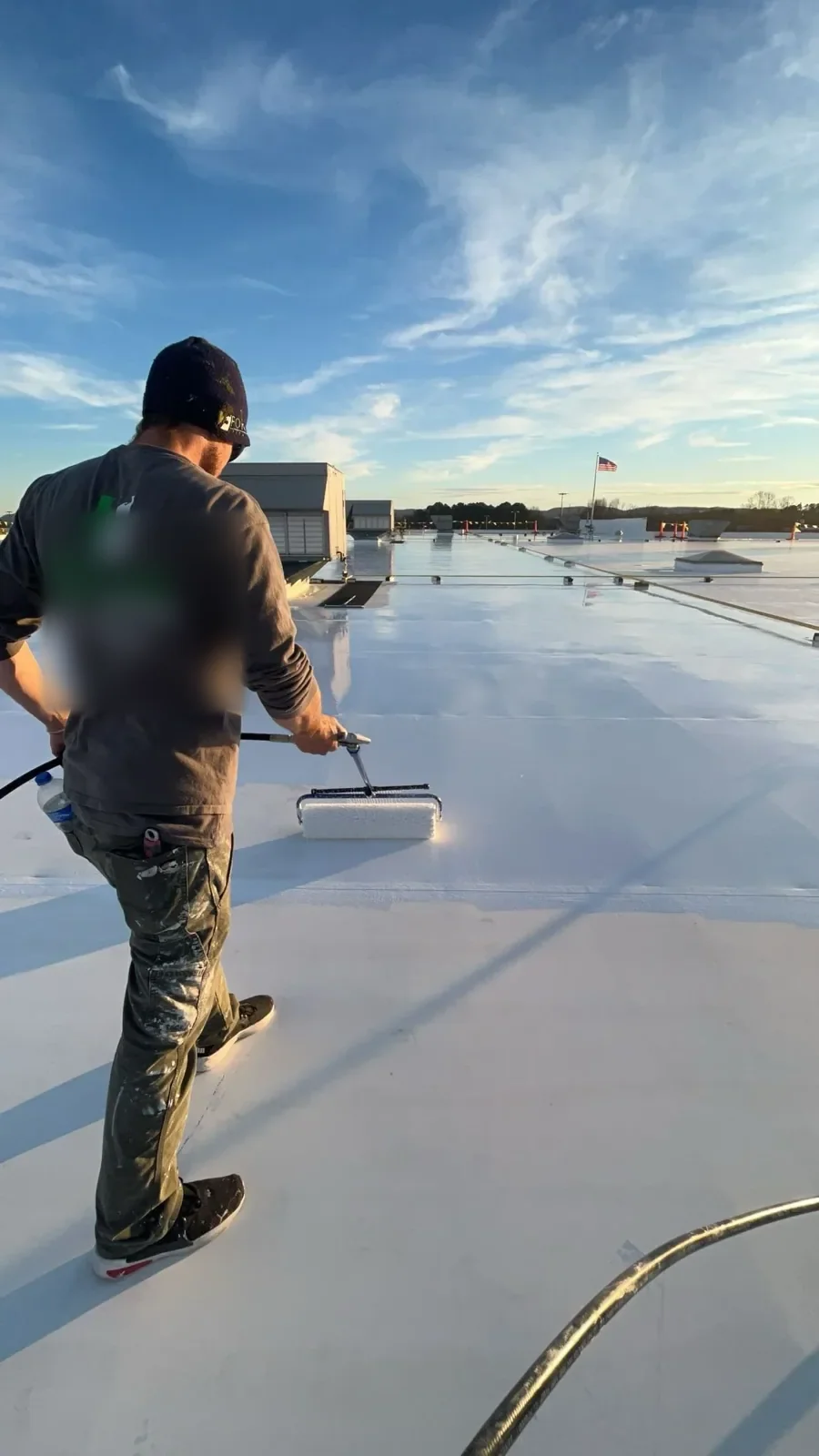
A repair is the lowest cost and the shortest timeline. A roof coating can restore a roof whose membrane is sound but weathered, provided the insulation is dry. A recover saves the tear-off. A full replacement starts the service life over and gives the owner a chance to fix slope, drainage and insulation depth. Tapered insulation can pull water toward a drain that sits too high, and a cover board protects the membrane from fastener stress and foot traffic. Those choices add cost on day one and reduce repair calls later, so we price them as options rather than burying them. Price tracks the roof area, how many penetrations pierce it, how thick the insulation runs, how hard the site is to reach and how long the dry-in window lasts.
For multi-tenant commercial buildings, the owner often needs a cost split by tenant space and a schedule that keeps entrances open. We provide both.
Weather Windows Drawn From the Region
Kingsport, next door, sees about 45 inches of precipitation over some 133 days, with lows near minus 18 F and highs reaching 104 F. Snow is light, about 5.1 inches a year and mostly in the first two months, so rain, summer heat and thermal swing are the main inputs. Local warnings have named gusts of 60 mph and hail, which puts edge metal, fastener patterns and surface protection at the top of the plan.
Straight-line wind and hail are more likely threats than tornadoes in this part of Sullivan County, where only four tornadoes appear in the record. The schedule holds a buffer for afternoon storms, and each day ends with the opening dried in. Where a forecast shows hail, panels and insulation stay under cover until the cell passes, and the crew inspects the dried-in area before restarting. A small crew can protect a small opening quickly, which is why we cut the open area to what can be closed in an hour.
Permit Submittal and Inspection
The permit office for the parcel is identified before any material is ordered. Our Tennessee packages follow the Kingsport checklist, which asks for stamped plans on commercial roofing, a state-licensed contractor on larger projects and proof of insurance. The submittal and the material order go in together, and inspections follow each stage.
If the plan reviewer asks for a revision, the material order is held until the revision is accepted, so nothing arrives on site that the permit does not cover. We keep the approved set on site and give the owner a copy at closeout.
Closeout and Handover
The project closes on a punch list covering sealant, terminations, drains and debris. What the owner takes away is a file of photos, a system description and maintenance steps, plus the dates of the next two inspections. A first look after the first heavy storm catches a drain that was not fully cleared or a seam that did not seat, while the crew is still reachable. Owners with a second building nearby, such as one in Bluff City or Spurgeon, can use the same file format to compare conditions.
Commercial Roofing Questions
Do you need to know a building is a school before quoting?
Yes, because occupancy changes the schedule. A school wants noise held to empty hours and the dry-in confirmed before students return, while a retail strip wants entrances kept open.
How do you keep trucks off the bypass?
Deliveries are staged inside the lot. Smaller loads arrive through the day when the entrance is tight, and a flagger is used if a truck must stop at the road.
When should a coating be considered?
A coating makes sense when the membrane is sound and the insulation is dry. A moisture survey confirms those conditions, and the coating is priced against a replacement so the owner sees both numbers.
What if a storm hits mid-project?
Every section is dried in at the end of the shift, so the exposure is limited to the open area. Tarps and temporary seals are staged before the forecast turns.
What goes in the handover file?
The file holds photos from tear-off through final inspection, the list of materials, the system description, the maintenance calendar and the dates of the next inspections.