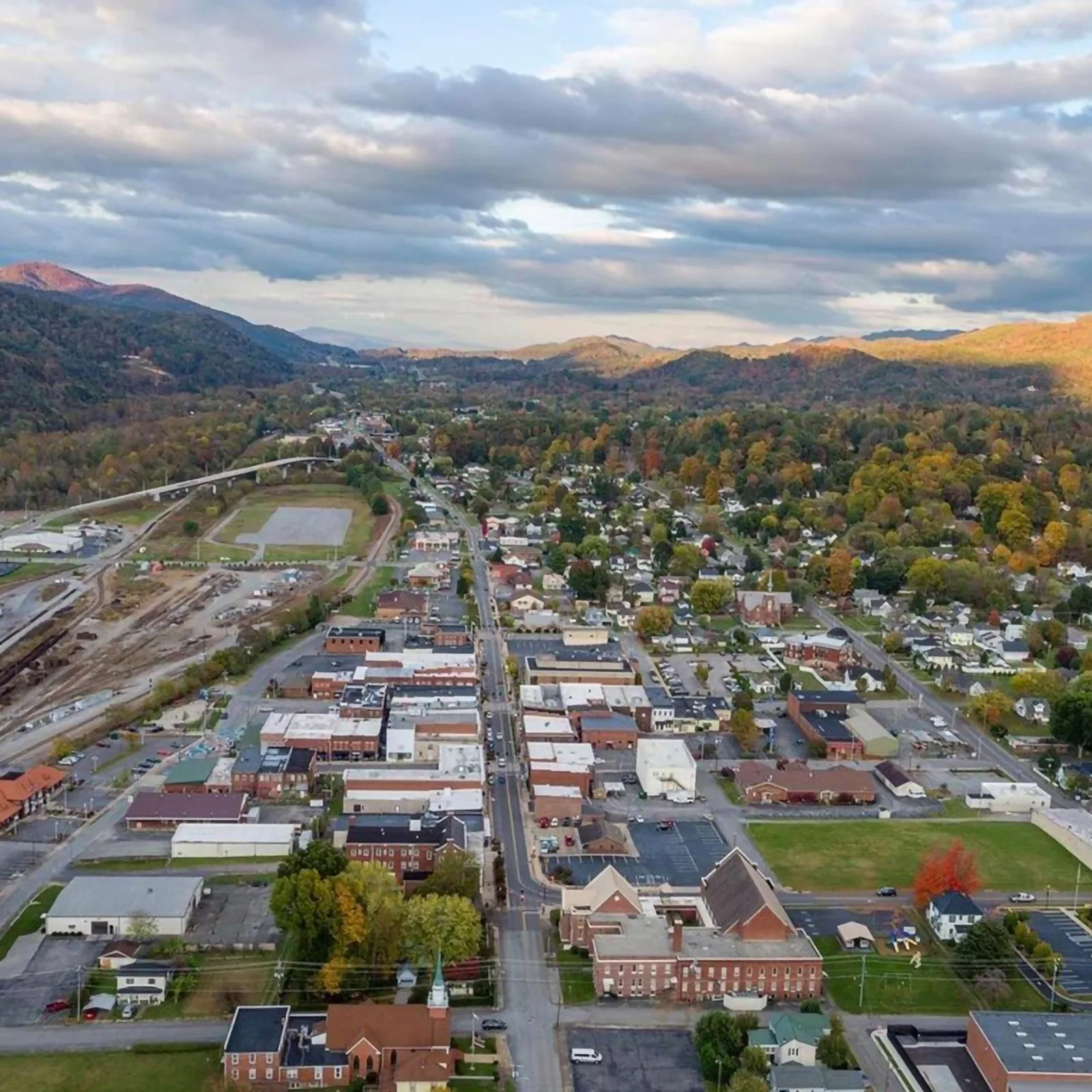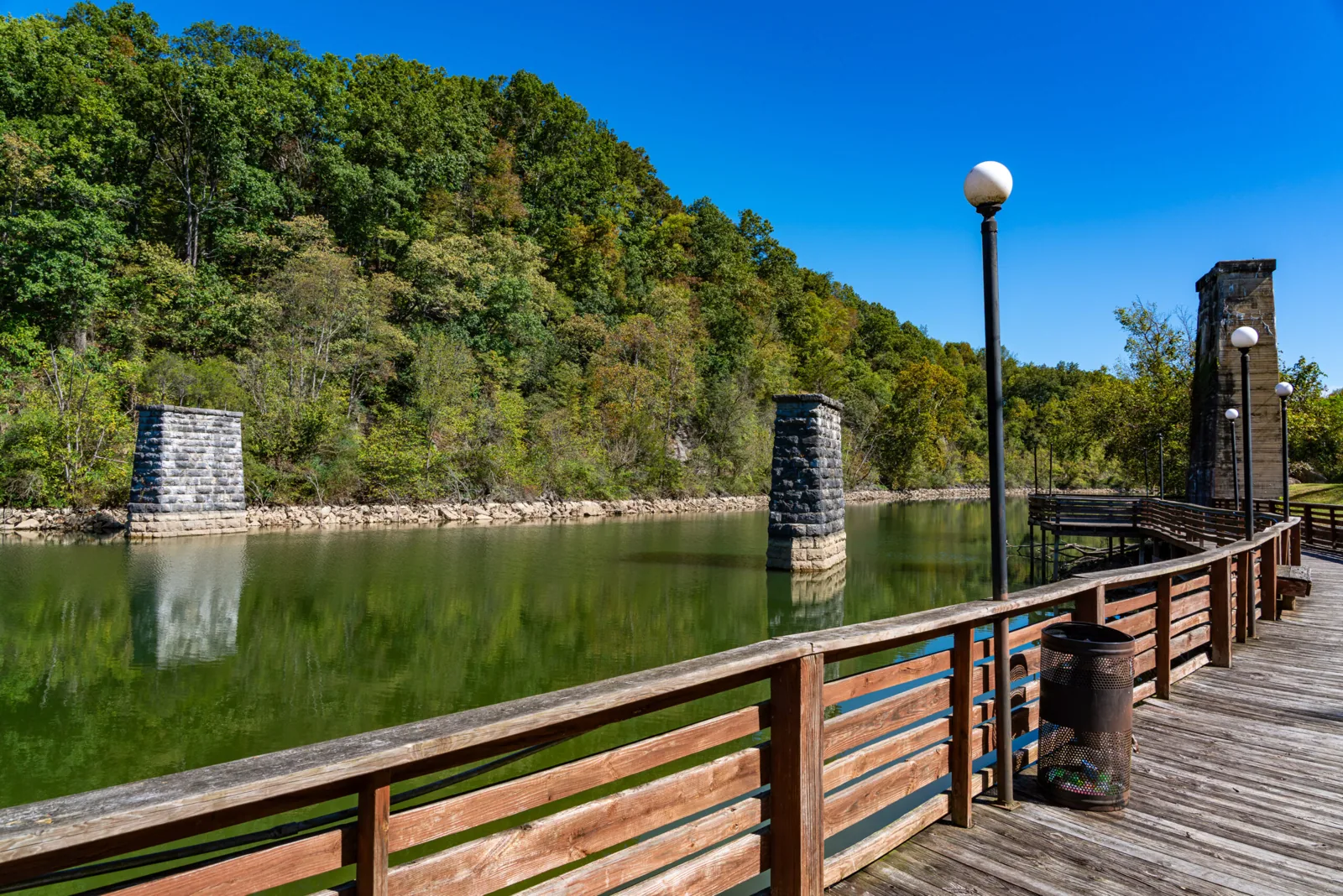
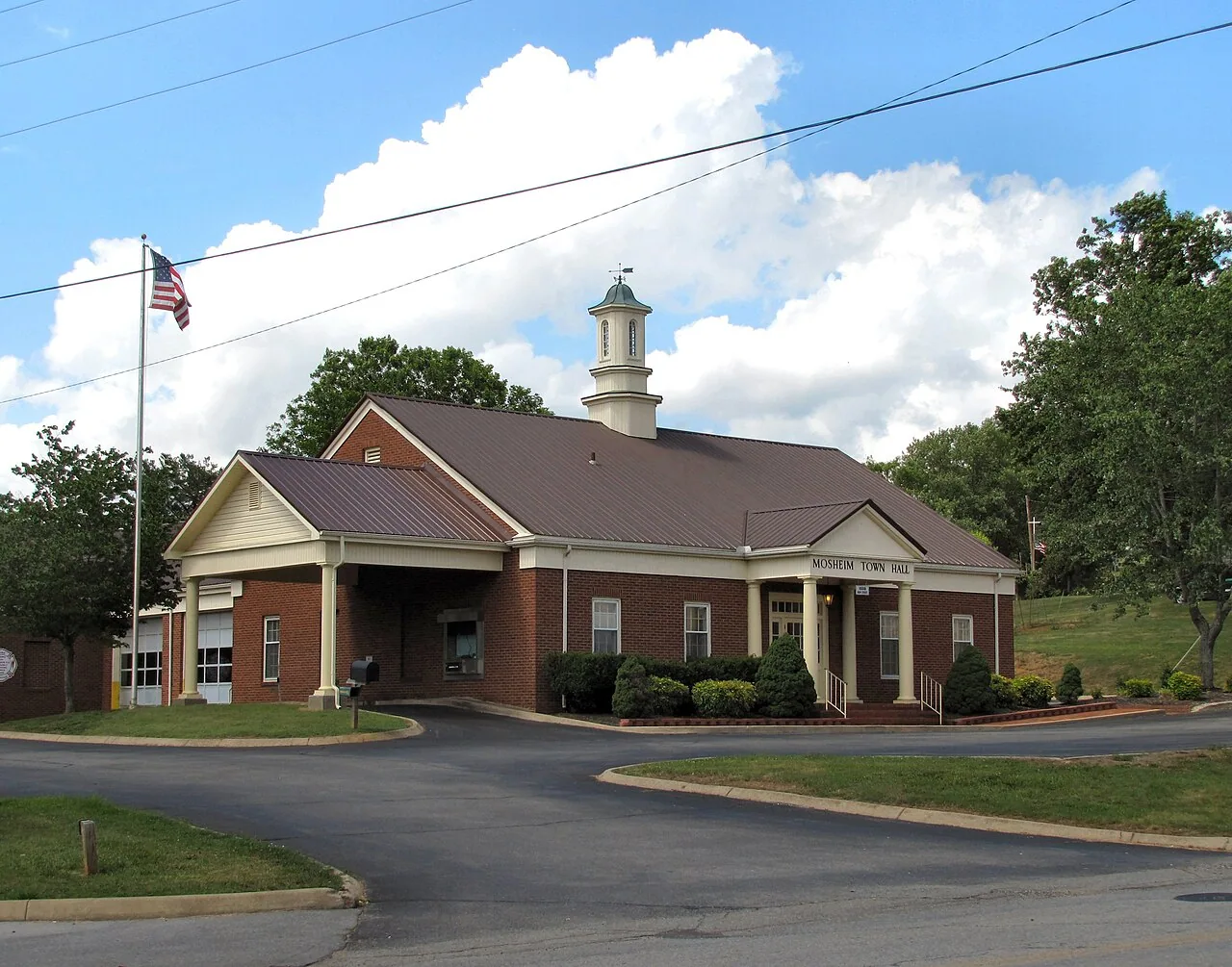
Before a crew is scheduled in Spurgeon, someone has to answer a simple question: which county holds the parcel. Spurgeon is a census-designated place of 3,978 residents that spans Sullivan and Washington counties at about 1,414 feet. The Sullivan County portion lies in the Kingsport-Bristol metro, and the Washington County portion lies in the Johnson City metro. Which county holds the building decides the permit office, the inspector and sometimes the truck route, so that answer comes before the haul route, the crane pick or the laydown area.
Whatever stands on the lot, the order of work is the same: confirm the jurisdiction, survey the roof, write the scope, file the permit and then schedule the crew.
Two Counties, Two Sets of Paperwork
A building on the Washington County side answers to different offices than a building on the Sullivan County side. We ask the owner for the parcel number or the tax record and confirm the county before the submittal is drafted. If the building is near the line, the check takes a few minutes and avoids a rejected package. The material order waits for the permit path to be clear, so nothing arrives on site that cannot be installed.
Kingsport's checklist is our working standard: permit for reroofing, stamped plans for commercial work and a licensed Tennessee contractor with insurance proof once a project passes $25,000. We use it for any Tennessee package and then adjust to what the reviewer in the actual jurisdiction asks to see, including extra drawings or a revised product sheet.
Haul Route and Laydown, Lot by Lot
The haul route is planned lot by lot. We walk the entrance, measure the turn for a flatbed, look at overhead lines and check where the dumpster can sit without blocking a fire lane. A boom truck or small crane lifts material to the roof in the morning, and the laydown area is placed away from customer parking.
If the building shares a lot with neighbors, we meet them or pass a notice through the property manager. A single phone call about the delivery window keeps the neighbors informed, and a note on the gate lists the crew lead's number for anyone with a concern.
Overhead lines deserve a second look. A boom or crane working near a service drop needs a stated clearance, and when the clearance is too tight, the pick moves or the utility is asked to cover the line. We write that decision into the plan before the truck arrives, not after.
Sequence of Work
A typical sequence runs in order.
- Survey the roof and take moisture readings.
- Write the scope, with the system, the insulation and the options.
- Submit the permit and place the material order together.
- Stage the lot and set the lift.
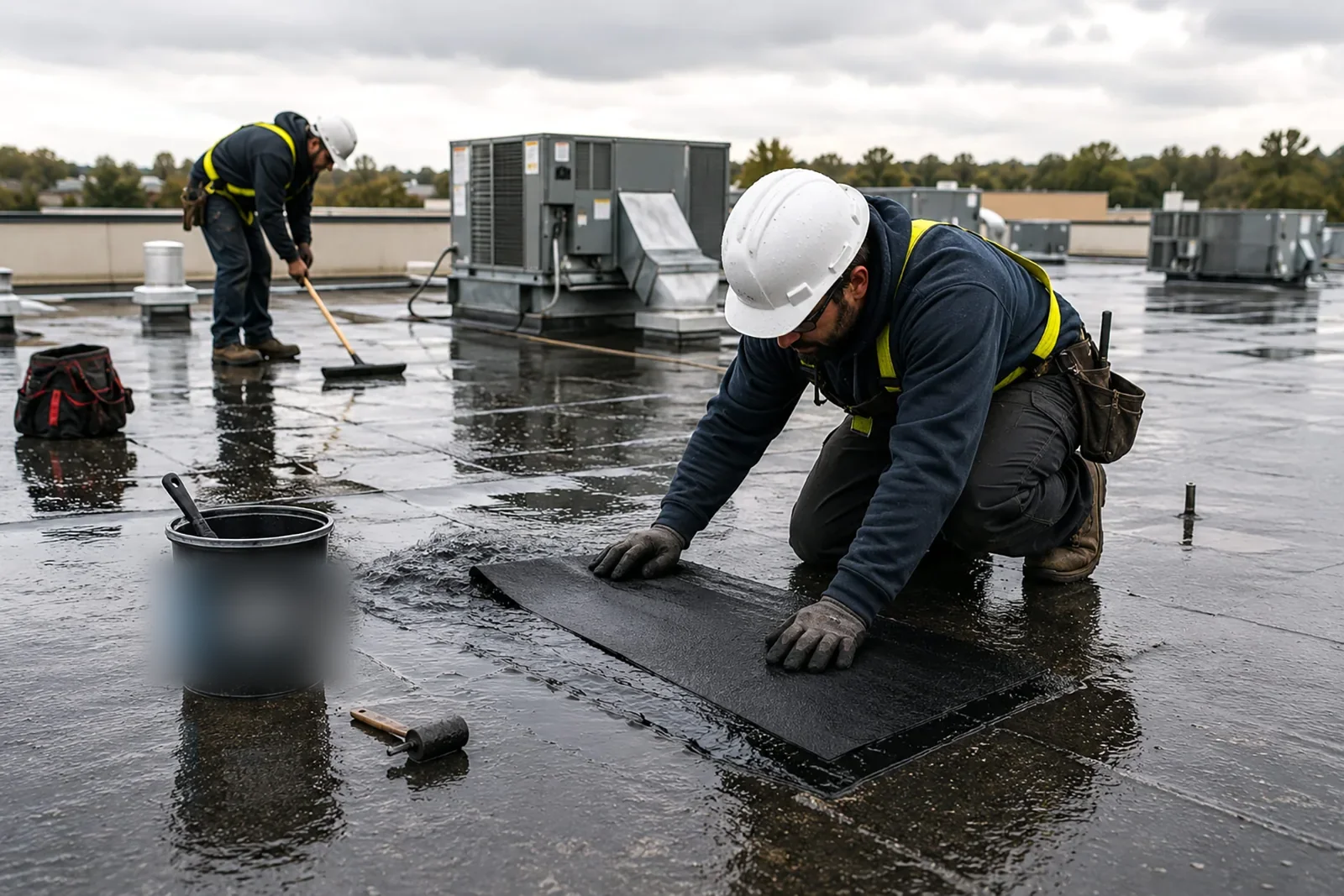
- Tear off a section and dry it in the same day.
- Finish flashing, edge metal and drains.
- Last, a punch list walk with the owner and the handover file.
On a building with several tenants, each tenant gets notice of the noisy hours, and the property manager receives the daily dry-in confirmation.
Decisions inside the sequence are made in the open. If the survey shows saturated insulation in one corner, the scope says how much is replaced and what it costs per square foot. If a drain sits too high, the scope says whether a tapered insulation package is worth adding. The owner approves each change before work moves on.
Repair, Recover or Replace
A commercial roof repair is the lowest cost and the shortest timeline, suited to a roof with remaining service life. A coating restores a sound membrane when the insulation is dry. A recover saves the tear-off. A replacement restarts the service life and lets the owner correct slope, drainage and insulation depth. A building with a long run between drains needs more tapered insulation than one with a short run, and a building with many rooftop units needs more flashing and more coordination with the mechanical trades. We show each of those drivers in the scope so owners can compare options on the same terms. A roof that is near the end of its life but still dry can often be recovered, while one with a soft deck or saturated insulation needs a tear-off, and the survey is what separates the two.
Weather Windows From the Wider Region
Kingsport gets about 45 inches of precipitation across roughly 133 days and has logged temperatures from minus 18 F to 104 F. Johnson City, about 25 miles south of Kingsport, averages the same precipitation but noticeably more snow, about 15.6 inches a year. The Washington County side of Spurgeon sits in the Johnson City metro, which sees more snow, so a roof in that portion that carries heavy equipment or a long span gets its insulation depth and structure checked against the snowier figure.
Warnings for the area have named 60 mph gusts and hail, so edge metal and fastening are primary items in any replacement. After a storm, a rapid dry-in protects the interior while the damage is documented. We photograph lifted laps, displaced metal and any hail bruising, measure each area and note the date, so the owner and the carrier read the same record. A temporary repair is built to carry the roof until the permanent scope is priced, and the permanent date is set on the day the temporary one goes in.
Closeout, Punch List and Handover
The punch list covers sealant, terminations, drains and the lot. The owner leaves with a file holding the system description, photos and maintenance steps. Owners who also hold property in Sullivan Gardens, Bluff City or the Johnson City area can use the same file for comparison. Retail and office owners can pair it with preventive roof maintenance, which keeps drains clear and seams checked between big projects, and the maintenance log tells the next buyer or lender how the roof has been cared for.
A last walk with the facility manager points out where the drains sit, how to check them after a storm and which details to report. That walk takes an hour and is recorded in the file with the date and the names of the people present, so a later owner can see who was told what and when the next inspection is due. For a larger site, Piney Flats and the Tri-County Industrial Park show how the same sequence scales to a plant roof with a crane and a shutdown calendar.
Commercial Roofing Questions
How do you confirm which county a Spurgeon building is in?
We ask for the parcel number or the tax record, then check it against county records before the submittal is drafted. That prevents a package from going to the wrong office.
Do snow loads change the plan?
Snow in Kingsport is modest, while Johnson City gets more. For the Washington County side, we review the structure and the insulation depth with the greater snowfall in mind.
Can a multi-tenant building stay open?
Yes, with sections dried in daily and noisy work scheduled for agreed hours. Tenants receive a notice and a contact for the crew lead.
What documents come at closeout?
A punch list sign-off, photos from tear-off to final inspection, the materials list and the maintenance calendar with the next inspection dates.
What if the forecast turns mid-project?
The crew closes the open area before leaving the roof, and tarps and temporary seals stay staged. The next day starts with an inspection of the dried-in area.