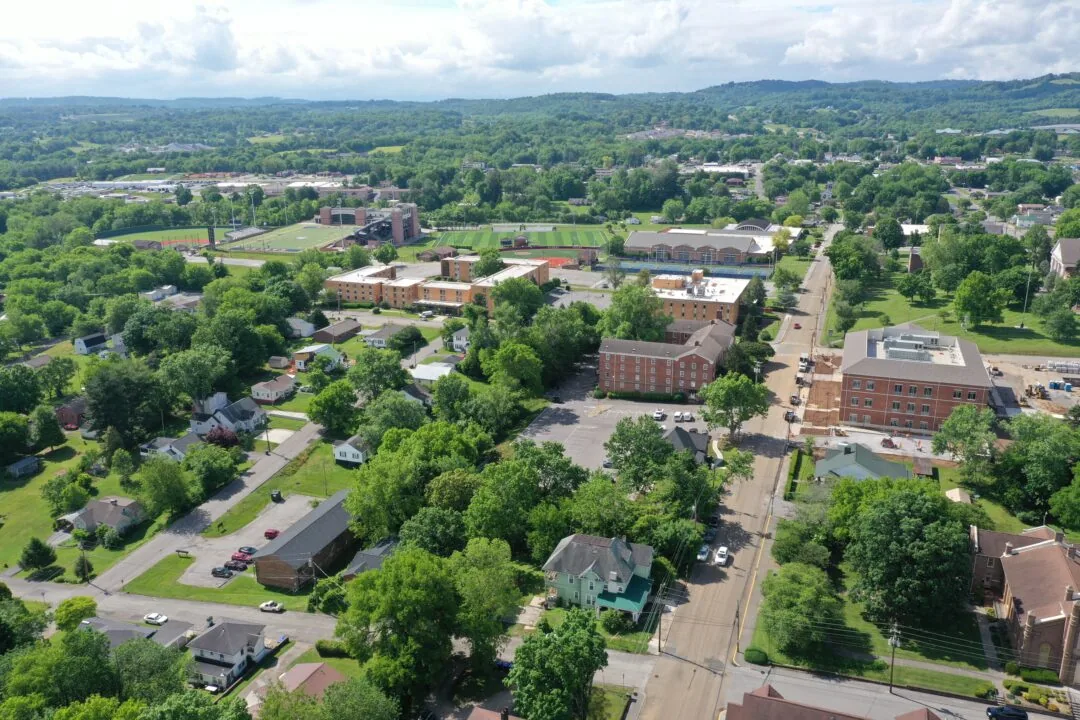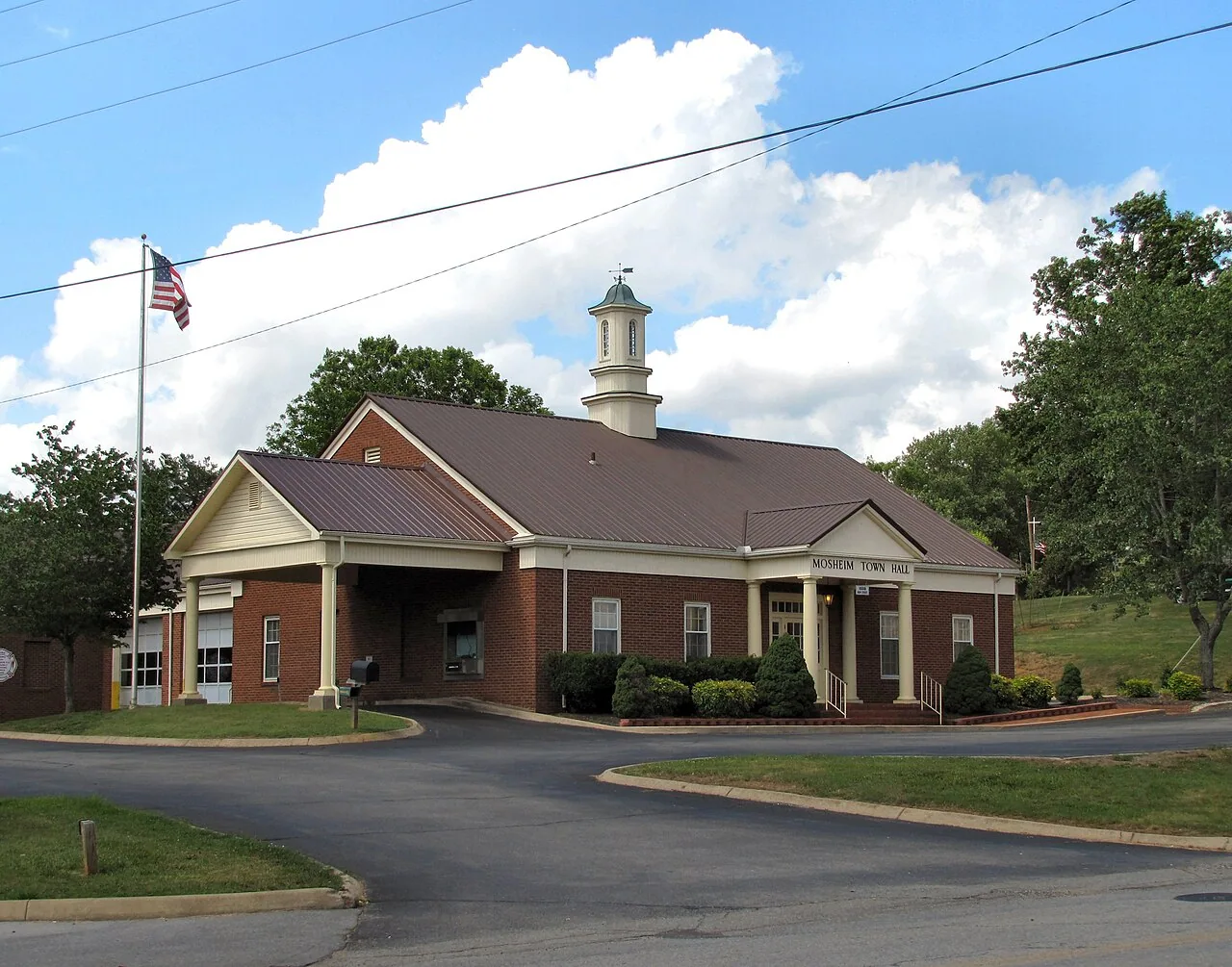
A Bluff City job begins with U.S. 11E, because that is the road every truck, crane and dumpster hauler will use to reach the lot. Bluff City is a Sullivan County community of 1,822 residents at about 1,450 feet on the Holston River, and the highway runs through it. We measure the entrance and the turn radius, learn the hours when traffic is lightest, and mark the truck stop, the crane pick and the laydown area on a plan the superintendent can mark up.
The sequence on a small commercial building is short, but each step still has an owner and a handoff, and we name both before the first truck arrives.
Highway Access and Laydown on U.S. 11E
Highway frontage lots are convenient for deliveries and awkward for storage. Material cannot sit at the road edge, so we stage inside the lot and deliver in loads that match one day of work. A telehandler or boom truck lifts rolls and insulation onto the roof in the morning, and the crew installs until the opening is dried in.
Where a business keeps customers coming through the front door, we leave that entrance open and move the dumpster to the side or rear. Where a building holds light industrial space with a loading dock, we schedule roofing deliveries away from the dock hours. The access plan fits on one page, and everyone who needs it receives a copy. We note the nearest hydrant, the power source for any equipment and the place where a crew vehicle can park without blocking a customer, so no one has to improvise on the first morning. If the lot slopes toward the highway, we also check that no loose material can roll or slide toward traffic when the wind picks up.
Industrial Park Partnerships and Light Industrial Roofs
Bluff City is one of four partners that fund the NETWORKS Sullivan Partnership industrial park effort, and a light industrial roof anywhere in the county follows a predictable path: survey, moisture readings, scope, permit, tear-off in sections and punch list. Just south, the large manufacturing sites at Tri-County Industrial Park need a bigger laydown area and a crane sized to the lift, so the staging changes with the scale.
For owners who lease space, the roof is often a shared concern with a tenant, and our written scope names who gets notified of noise, who closes the roof hatch each night and who signs the dry-in.
Sequence of Work From Survey to Punch List
The sequence is the same on a small roof and a large one, only compressed.
- Survey the field, seams, flashing, edge metal and drains, with photos.
- Take moisture readings to find insulation that has taken on water.
- Write the scope with quantities, system and options.
- Submit the permit while ordering materials.
- Stage the lot, set the crane or hoist and mark the laydown area.
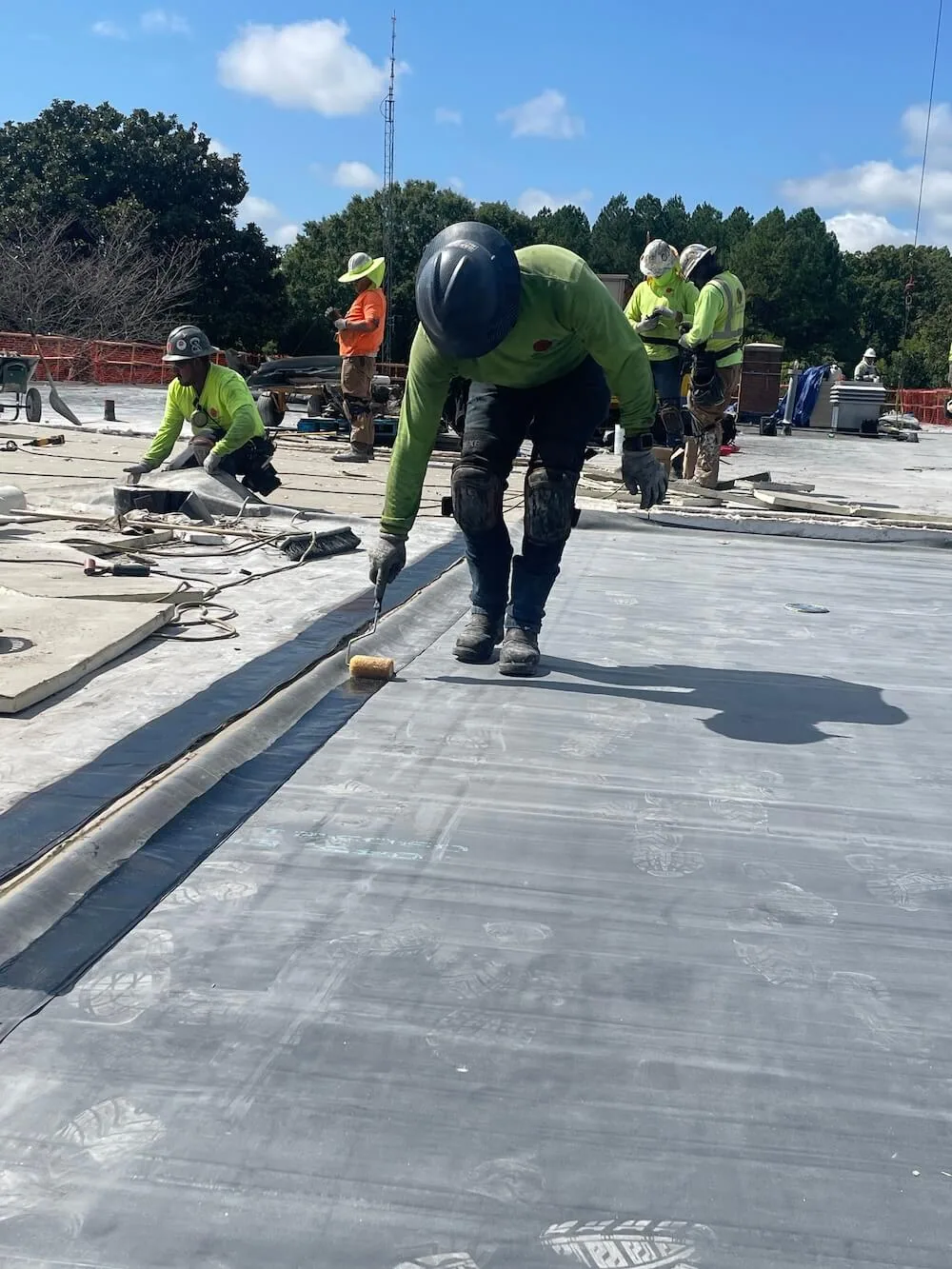
- Tear off a section, install the insulation and membrane, then dry in.
- Finish flashing, edge metal and drains.
- Finish with a punch list walk and a handover file for the owner.
The owner knows who to call if the weather changes and the schedule moves a day. If tear-off exposes a section of soft deck, the crew photographs it, measures it and calls before any extra work begins, with a price per square foot that was stated in the scope. That step keeps a hidden repair from turning into a surprise on the invoice.
Options, Timing and Cost Drivers
A repair restores a roof that has remaining service life. A coating can extend the life of a sound membrane. A recover goes over a dry roof and saves the tear-off. A replacement resets the clock and lets the owner fix slope and drainage.
Price follows the roof area, the number of penetrations, how deep the insulation is, how hard the crane has to reach and whether the building is occupied. A small building with several rooftop units can cost more per square foot than a larger, clean roof, because each unit needs a curb, a flashing and a coordinated shutdown. We show those line items so the owner can see where the money goes.
Weather Windows
Kingsport takes in about 45 inches of precipitation spread over roughly 133 days, and its record runs from minus 18 F to 104 F. That temperature swing works on seams and flashings over the years, so the details at walls, curbs and edges get the most attention in a replacement. Kingsport snowfall totals only about 5.1 inches a year, concentrated in the first two months.
Forecast warnings for Sullivan County have called out 60 mph gusts and hail, with roof and siding damage as the likely result. Tarps, sandbags and temporary seals are staged on the roof before the cell arrives, and the crew lead decides at midday whether the remaining open area can be closed in time. If it cannot, the work stops early and the opening is secured. After one passes, a hail damage review documents dents, bruises and fractures while they are fresh.
Permit Submittal and Inspection
Which authority holds the parcel is settled before material is ordered. The Kingsport rules make a handy yardstick: reroofing needs a permit, commercial submittals need stamped plans, and projects over $25,000 need a Tennessee-licensed contractor who can show compensation and liability coverage. That standard shapes the package we assemble for any Tennessee job, and we file it while the material order is placed.
Inspections follow each stage, and the inspector's comments are logged the same day. If a correction is requested, the crew makes it before the next section opens, so the permit file and the roof stay in step. Photos of the deck, insulation, membrane and flashing go into the file, so the owner can show what was under the roof on the day it closed.
Closeout, Punch List and Handover
The punch list covers sealant, terminations, drains, walk pads and debris. After the walk the owner holds a file with photos, a materials list, the system description and maintenance steps. Owners with other buildings nearby, in Spurgeon or Blountville, can use the same file to compare conditions across sites.
The file also records the first inspection date after a heavy storm. That visit looks at the drains, the edge metal and every seam near a curb, because those are the places where a small defect shows first. If something needs attention, the repair is priced from the same scope, so the owner is never starting a new negotiation to fix a detail.
Commercial Roofing Questions
What do you need to start a Bluff City roof?
Send the address, the roof access points and any date the work must be finished. A first visit confirms the quantities, and the phasing plan follows from the real conditions.
How do you protect an open storefront during tear-off?
We keep the front entrance clear, route foot traffic away from the work and install overhead protection where needed. Debris leaves the roof by chute or hoist, never over the edge.
Can small roofs be done in one day?
A small, simple roof can be torn off and dried in the same day, but a roof with several curbs may take longer. The scope states which it is before the schedule is set.
How does Sullivan County weather affect the plan?
Rain, hail and gusts all shape the calendar. We watch the forecast, keep material under cover and close each opening at the end of the shift.
When is a coating worth considering?
A coating works when the membrane is intact and the insulation is dry. We confirm that with readings, then compare the coating cost with a replacement so the owner sees both.