Before a roof capital plan can be priced, it needs a ranked list of sections and the calendar of windows when each section can be touched. Those two documents come first, and every number depends on them.
In Kingsport, TN that calendar is set by turnaround outages at plants, quiet periods in hospital wings, school summers and lease dates downtown. We collect the windows, rank the sections and then build a schedule of spending that follows them. The result is a plan the owner can put into a budget and a general contractor can build from.
The Ranked Section List
The ranking uses the condition data from the inventory: seams, flashings, edges, drains, penetrations, surface wear and any saturated insulation found by moisture readings and core cuts. Each section gets a rank for condition and a second rank for consequence, meaning what sits below it.
A section over a production line or a patient area carries more consequence than the same section over a storage bay. The two ranks multiply. A moderately worn roof over a critical space often moves ahead of a worse roof over a low-risk space, and the plan says why.
- Condition rank from inspection data and moisture readings
- Consequence rank from what sits below
- Access window for each section
- Permit and licensing steps
Options for Each Section
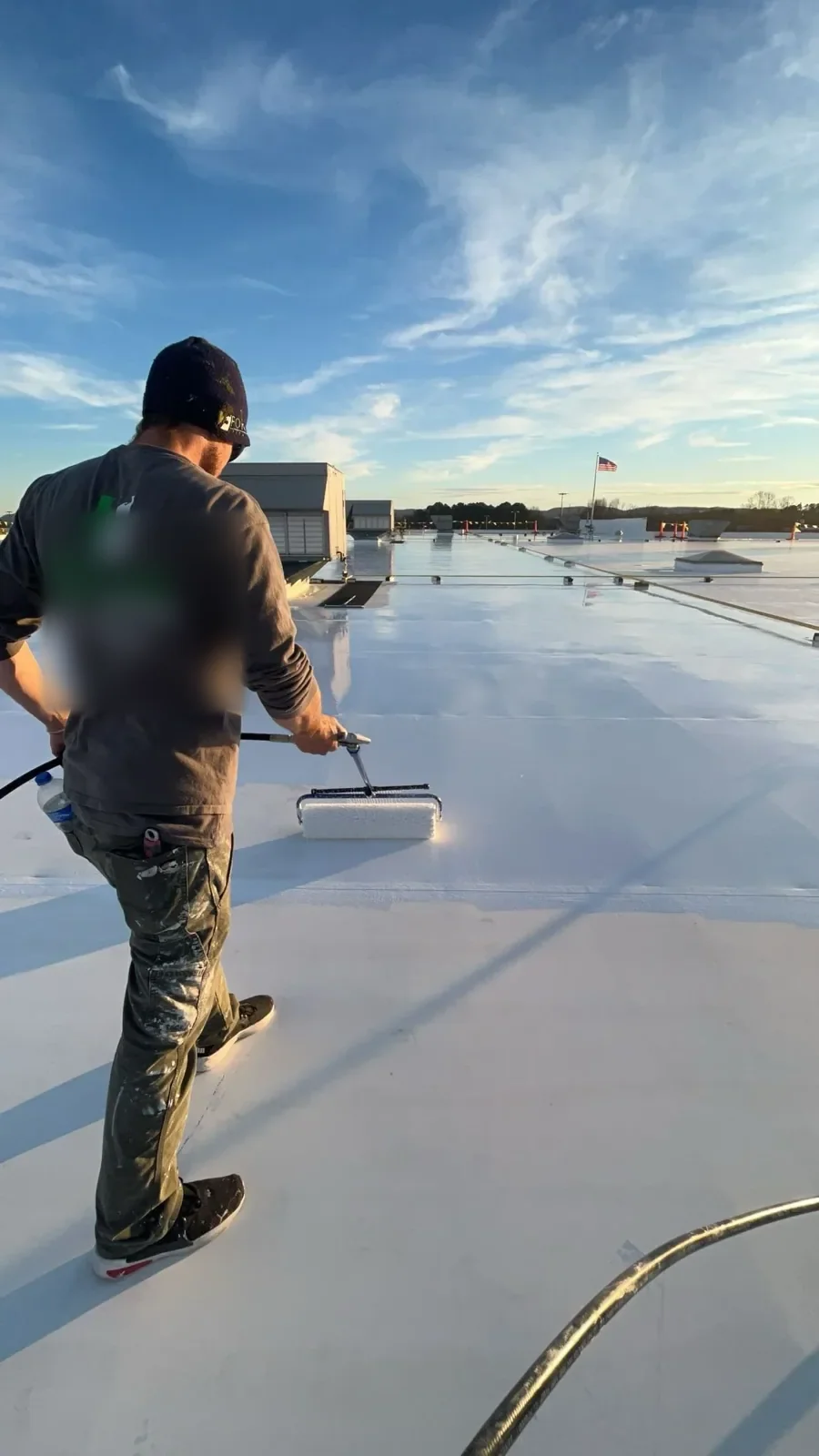
For each section we describe up to three options. Repair keeps the existing roof in service for a defined period. Restoration with a coating adds years to a roof that is dry and sound. Replacement removes the old system and installs a new one.
Each option comes with a scope, an access plan, a laydown area and a rough cost range driven by area, layers, insulation condition, equipment to move, crane or hoist use and the length of the access window. A roof coating restoration costs less than replacement and disrupts less, but it needs dry insulation. A commercial roof replacement costs more and solves more. The plan shows both, side by side, with the cost of each and the years each is expected to buy, based on the condition data and not on a rule of thumb.
Timing: When to Repair, Restore or Replace
Timing is the center of a capital plan. A repair now can defer a replacement by several years, but only if the insulation is sound. A restoration works only before the membrane fails. A replacement scheduled too late becomes an emergency job, with night shifts and temporary protection.
We mark for each section the latest responsible date for each option, and what happens if that date passes. Owners then choose whether to spend a little sooner or a lot later. Where a section carries a risk to production or patients, the plan recommends the earlier date, and it names the consequence of waiting in plain terms. The plan also notes dependencies: a section that shares drainage with a neighbor is scheduled together with it, and a section under new rooftop equipment waits for the equipment. A section next to a planned expansion waits for the crane pick and the haul route that the expansion will open. Handoffs between trades are written into the plan, so the roofer, the mechanical contractor and the general contractor each know who goes first.
Phasing Across Budget Years
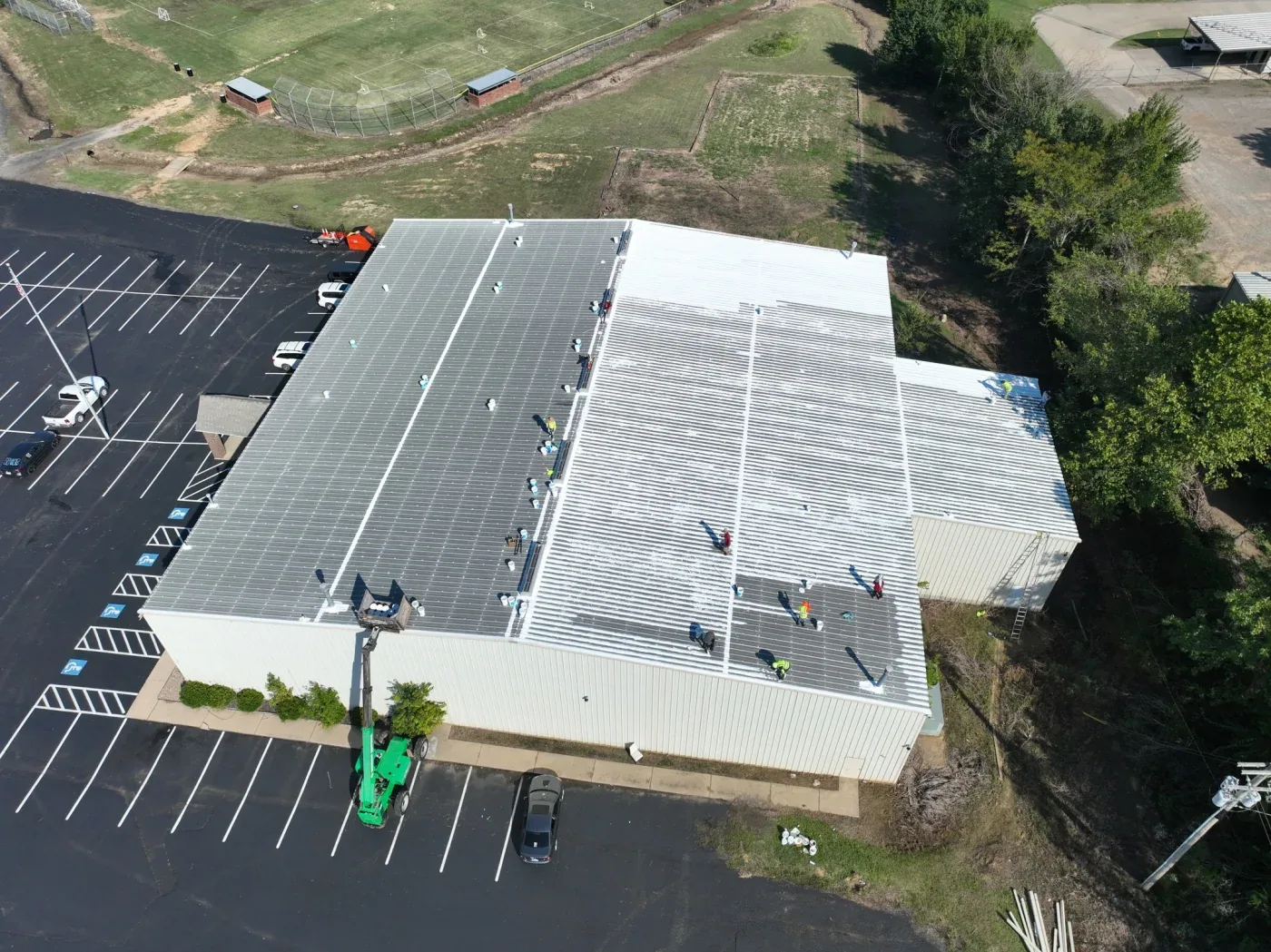
The plan spreads work across budget years in a way that matches the owner's calendar. Year one covers active leaks, failing details and sections at the end of life. Later years cover aging sections, restorations and planned replacements. Large buildings, such as a hospital wing or a warehouse, are phased by section so a single roof is never open for longer than the access window.
Kingsport owners work with different cycles. Plants plan around turnarounds. Healthcare owners plan around quiet periods in each wing, as a hospital like Holston Valley would. School owners plan around summer. The downtown buildings under renovation, including the Kingsport Grocery and Citizens Supply buildings, plan around tenant and construction steps. One plan can hold all of those cycles.
Permits, Licenses and Code in the Budget
Permits belong in the budget line as well as the schedule. A Kingsport reroof is filed with stamped plans and a PDF, a contract above $25,000 needs the Tennessee contractor license behind it, and review takes time and sometimes design fees. The building department applies the 2024 building and energy code editions its contractor page lists, so replacement scopes in the plan carry the insulation and fastening items a reviewer is likely to check, and the owner's designer confirms the requirements project by project.
Weather Buffers in the Schedule
Buffers go into each phase because weather does not keep a plan's dates. Kingsport's year is wet and wide: rain falls on about 133 days, the record runs from minus 18 F to 104 F, and the county's severe thunderstorm warnings from Morristown have named 60 mph gusts and hail. Cold-weather limits sit on certain adhesives and coatings, and the plan writes them in.
Because the schedule has buffers, a few lost days do not move the whole plan. Hail and gust warnings usually pass within a day, but a membrane that is wet needs time to dry, and adhesives need a minimum temperature to cure. Those limits are written into each phase, with the date after which a section moves to the next window. A project that was expected to take a week is scheduled with extra days, and the owner sees the buffer as a line, not a surprise.
What We Need From You
Send the site plan, the building list, the latest roof reports, your outage or turnover calendar and the budget cycle dates. If a roof asset management record already exists, send that too. We will return a ranked list, options for each section and a phased schedule. Retail owners along Fort Henry Drive and industrial owners nearby can use the same format, and a roof condition report feeds each update.
Commercial Roofing Questions
How far ahead should a roof plan look?
Far enough to cover the oldest sections and the next budget cycle. We recommend a multi-year view with the first year detailed. Update it after each inspection and each severe warning. The plan is a living document, and the first year should always carry a price.
Is restoration always cheaper than replacement?
Usually, but only on a roof that qualifies. The insulation must be dry and the membrane sound. We recommend moisture readings and cores before choosing restoration. A coating over saturated insulation fails, and then the owner pays for both.
How do we handle an unplanned failure?
Call for a temporary dry-in, then bring the section into the plan. We recommend keeping an emergency line in the budget. After the dry-in, we rank the section against the rest, so the permanent fix goes in the right year and does not displace more urgent work.
Who should approve the plan?
The people who control the budget and the access: facilities, operations and finance. We recommend a short review meeting with all three. The plan lists the windows, so operations can confirm them, and the costs, so finance can approve them.
Can one plan cover roofs at different sites?
Yes. Each site keeps its own access rules and windows, and the plan ranks sections across sites. We recommend a common format. It lets finance see the total, and each site manager sees only the section list that applies to them.