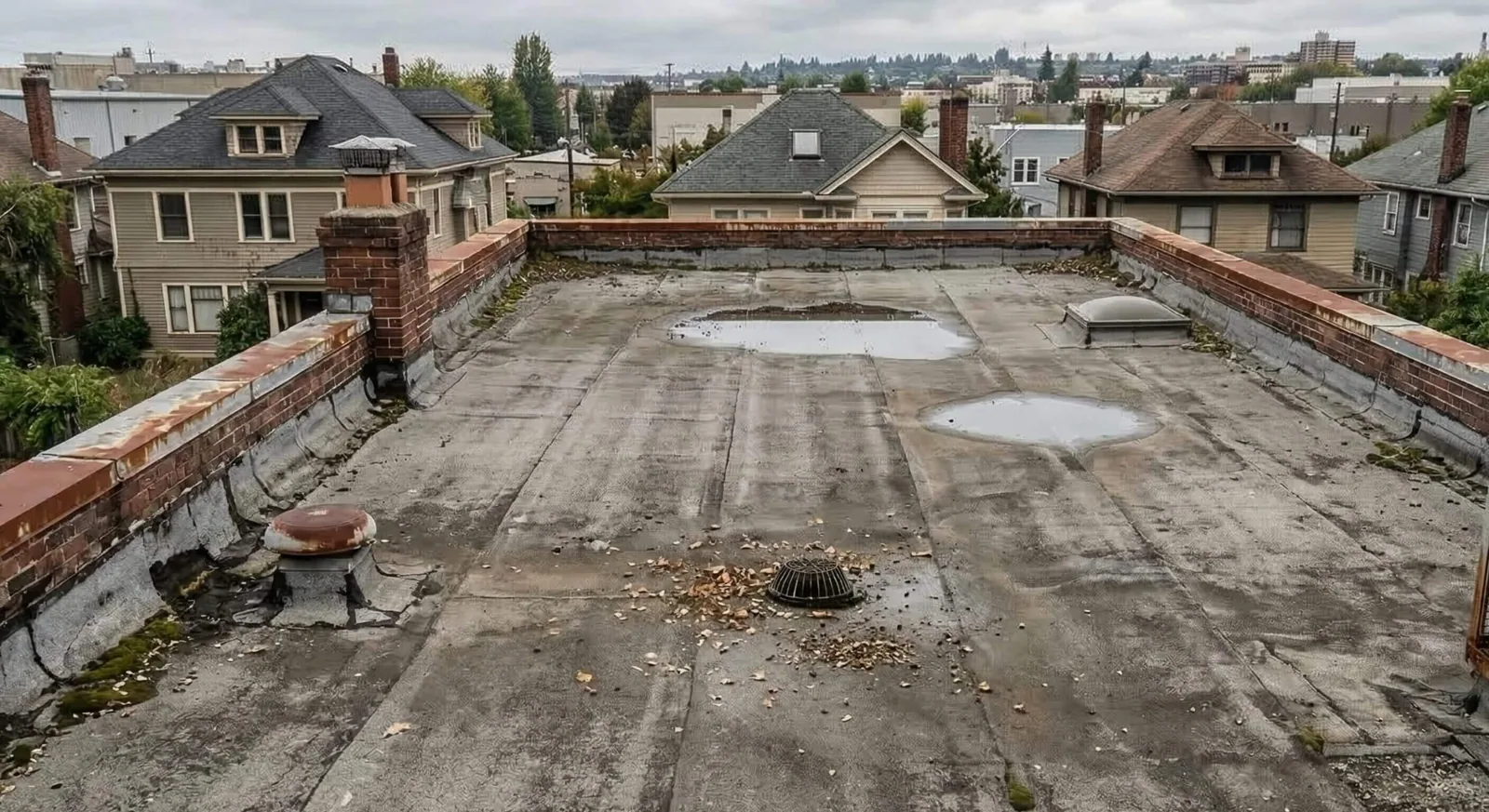
A condition report begins before anyone climbs a ladder, with a roof plan that gives every section a number and a note on how to reach it. The report depends on that plan, because a photo without a location is not evidence.
For a Kingsport, TN building the plan comes from the site drawings or a quick sketch on the first visit. We confirm the access point, any permit or badge step and the hours when roof work is allowed. Then the inspection runs in a fixed order, and the report follows that order, so a reader can find any finding in seconds.
The Roof Plan and the Section Numbers
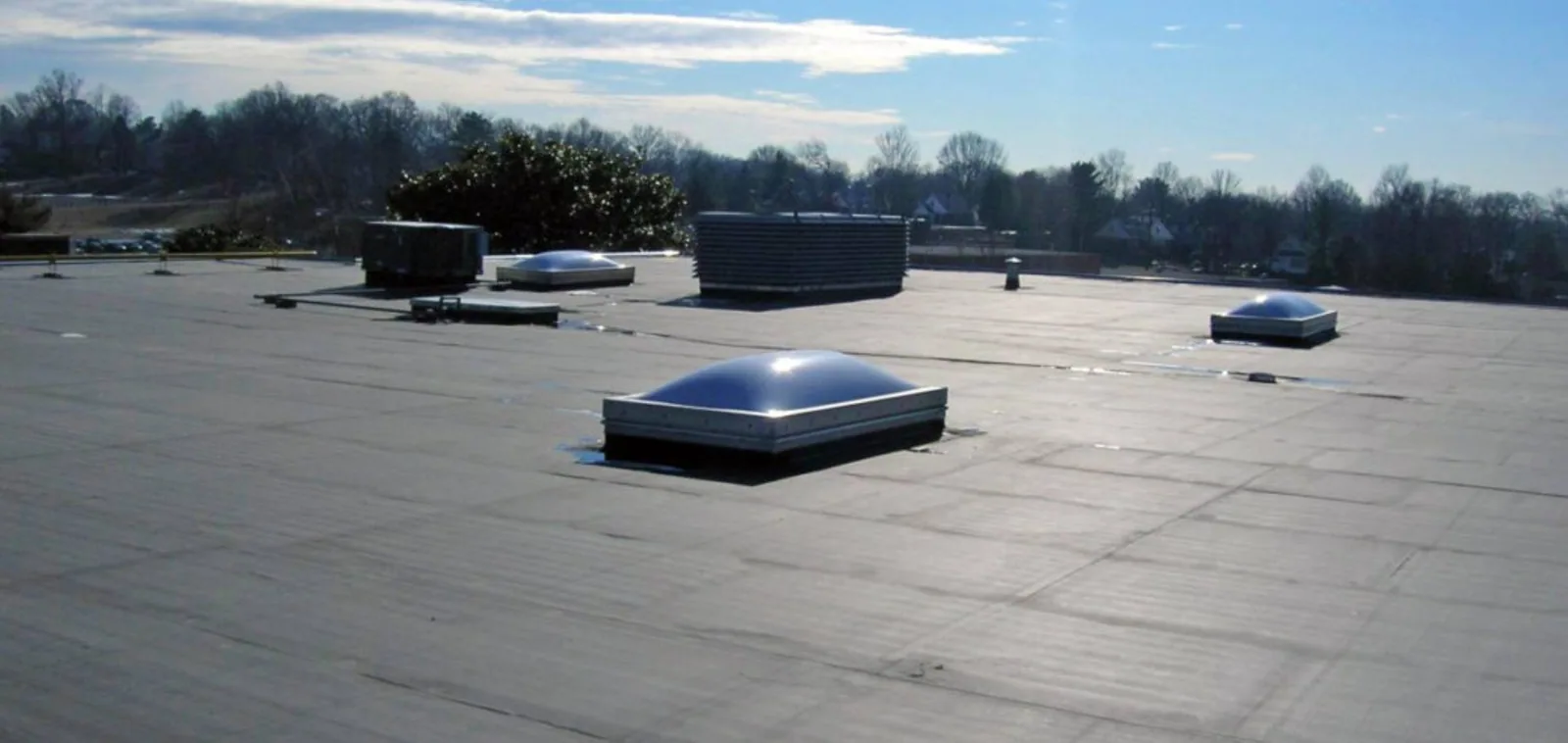
Every report opens with the roof plan. Each section carries a number, an approximate area, a system type and the building level. Rooftop equipment, drains, penetrations and prior repairs are marked on the plan with the same numbering as the photos.
That scheme lets a project manager point to a finding and a contractor price it without a site visit. It also keeps the argument short when a tenant, an insurer or a lender asks which roof a photo came from. It also lets the owner compare reports from different dates. Section 4 on the March plan is section 4 in the fall, and the change in condition is visible at a glance.
- Roof plan with numbered sections and equipment
- Access point, hatch or ladder notes
- Photo index tied to section numbers
- Space below each section, in a single line
Photos, Readings and Cores
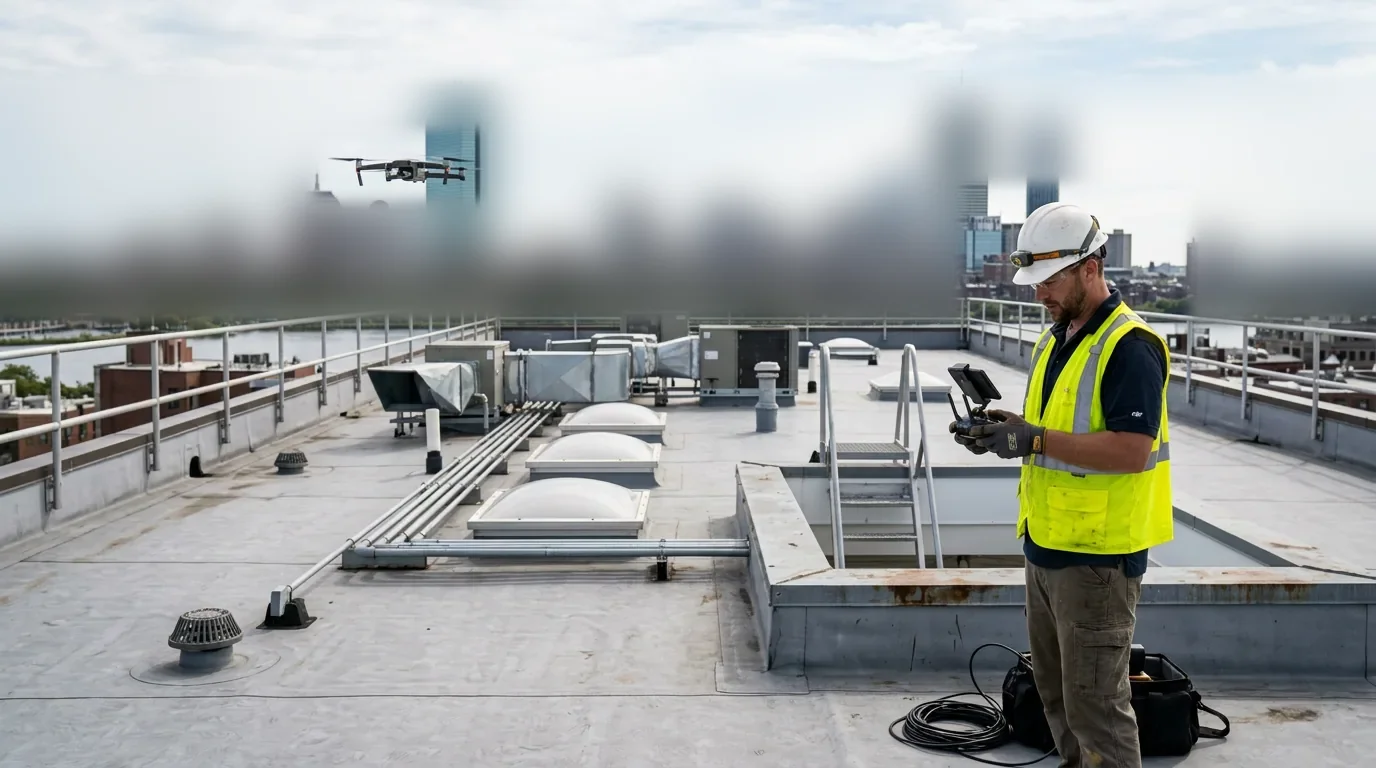
Photos come first. We shoot each section from the access point, then the edges, drains, seams, penetrations and any defect, each with the section number in the file name. Where a drone helps, as on large or hard-to-reach roofs, the images are added to the same index. A drone roof inspection shows ponding patterns and surface wear that are hard to see from the ground.
Moisture readings follow. A meter or an infrared scan marks areas where insulation may hold water, and a core cut confirms it. The report lists the reading method, the date and the location of each core. An infrared moisture survey adds a thermal image, and the report states what the image does and does not show.
Ratings and the Ranked Action List
Each section receives a condition rating in plain words, from sound to failed, and a consequence note about what sits below. The ratings are based on what the inspection found: seams, flashings, edge metal, surface wear, drainage, punctures and saturated insulation.
The action list follows. Each item states the location, the finding, the recommended action and an urgency: now, this budget year or monitor. Actions are written so a contractor can price them from the report: the quantity, the location, the existing system and the access limits all sit in the line. For a recurring problem, such as a drain that backs up after each storm, the line also names the likely cause and the check that confirmed it. A reader should not need a phone call to learn what a line means.
Reports That Respect the Operation
Reports for plants, hospitals and schools carry an extra block: the access windows, the outage or quiet-period calendar and the constraints for the work. A hospital wing may allow roof work only on certain days. A plant may allow work only during a turnaround outage. A school may allow major work only in summer.
We record those constraints next to the action list, so each recommended item has a realistic date. That turns the report into a planning document. It feeds a roof capital plan directly, much as a roof asset management record does, and it gives a general contractor the first inputs for a phasing plan.
Permits and Code Notes in the Report
The report notes which recommended items are likely to need a permit and a stamped plan set. A commercial reroof in Kingsport is filed with a PDF copy of the set, and a contract past $25,000 needs the Tennessee license and the insurance certificates, so an owner who reads the report can start the submittal while materials are ordered. The owner's designer confirms code requirements for each project.
Dates, Weather and Trend
Every report is dated and tied to the weather that came before it. Rain falls on about 133 days a year here, which is why the dates matter. When Morristown issues a severe thunderstorm warning for the county, the kind that names 60 mph gusts and hail, a short follow-up report documents any new damage.
Over time, the series of reports shows a trend. Sections that decline quickly move up the list. Sections that hold steady move down. Retail owners near Stone Drive, where Kingsport Pavilion sits, can compare reports across several centers on the same basis.
Closeout Reports and What We Need From You
The same report format serves at the end of a project. After a repair or replacement, we walk each section with the building manager and the general contractor, photograph the finished work and list any open items. The punch list uses the same section numbers, so each item points to a place on the plan.
Closed items are dated and photographed. Open items carry an owner and a target date. The closeout report is filed with the warranty documents and becomes the baseline for the next condition report. A roof that was replaced last spring then has a clear starting point, and any change at the next visit stands out against it.
To start, send the site plan, the roof access points, any earlier roof reports and the outage or turnover calendar. If a warranty applies, send the paperwork, since the report will note what the warranty requires, as in roof warranty management. We will return a dated, numbered report with photos, readings, ratings and a ranked action list that a general contractor can price.
Commercial Roofing Questions
What should a condition report include at minimum?
A numbered roof plan, photos tied to section numbers, moisture findings, condition ratings, a ranked action list and the date. We recommend asking for the access and calendar notes too. A report without them tells you what is wrong but not when it can be fixed.
How long does a report take?
For one building, the inspection is a day or less and the report follows within days. Larger campuses take longer and are done in stages. We recommend starting with the highest-risk sections so the first findings arrive before the next storm warning.
Can a report be used for a lender or buyer?
It can. A dated report with photos and readings answers most roof questions. We recommend keeping each version, so the file shows condition on specific dates. We do not give opinions on value or coverage, only on roof condition and recommended work.
Do you recommend a drone or a ground inspection?
Both have a role. A drone covers large or hard-to-reach roofs quickly and shows ponding and surface wear. A ground inspection checks seams, details and cores. We recommend combining them on large roofs and using ground visits alone on small ones.
How often should a report be updated?
Twice a year works for most owners, with an extra visit after a severe warning. Schedule one ahead of the wet months and one once gust season ends; weak sections get more frequent looks, and the trend across reports shows where the money belongs.