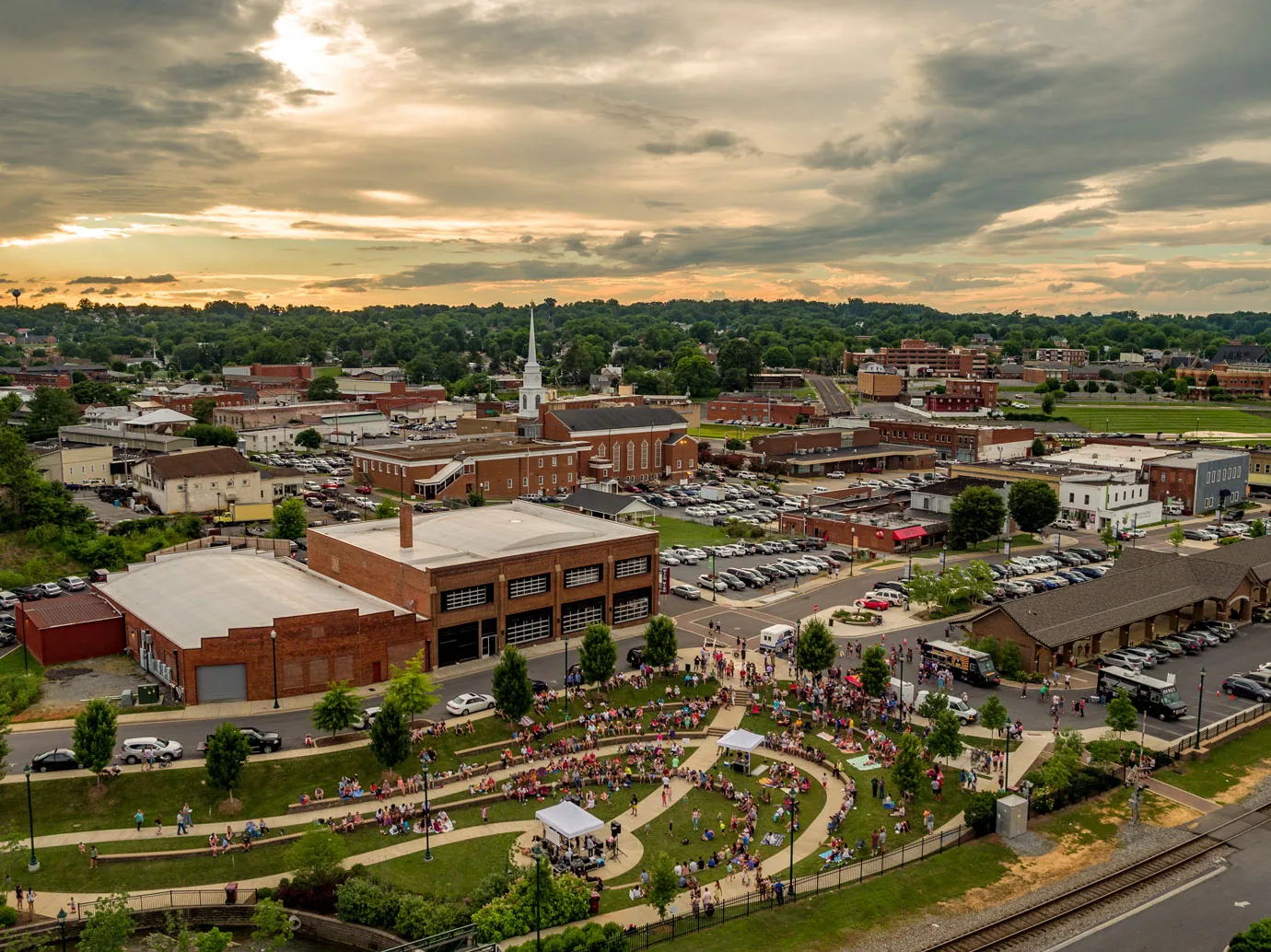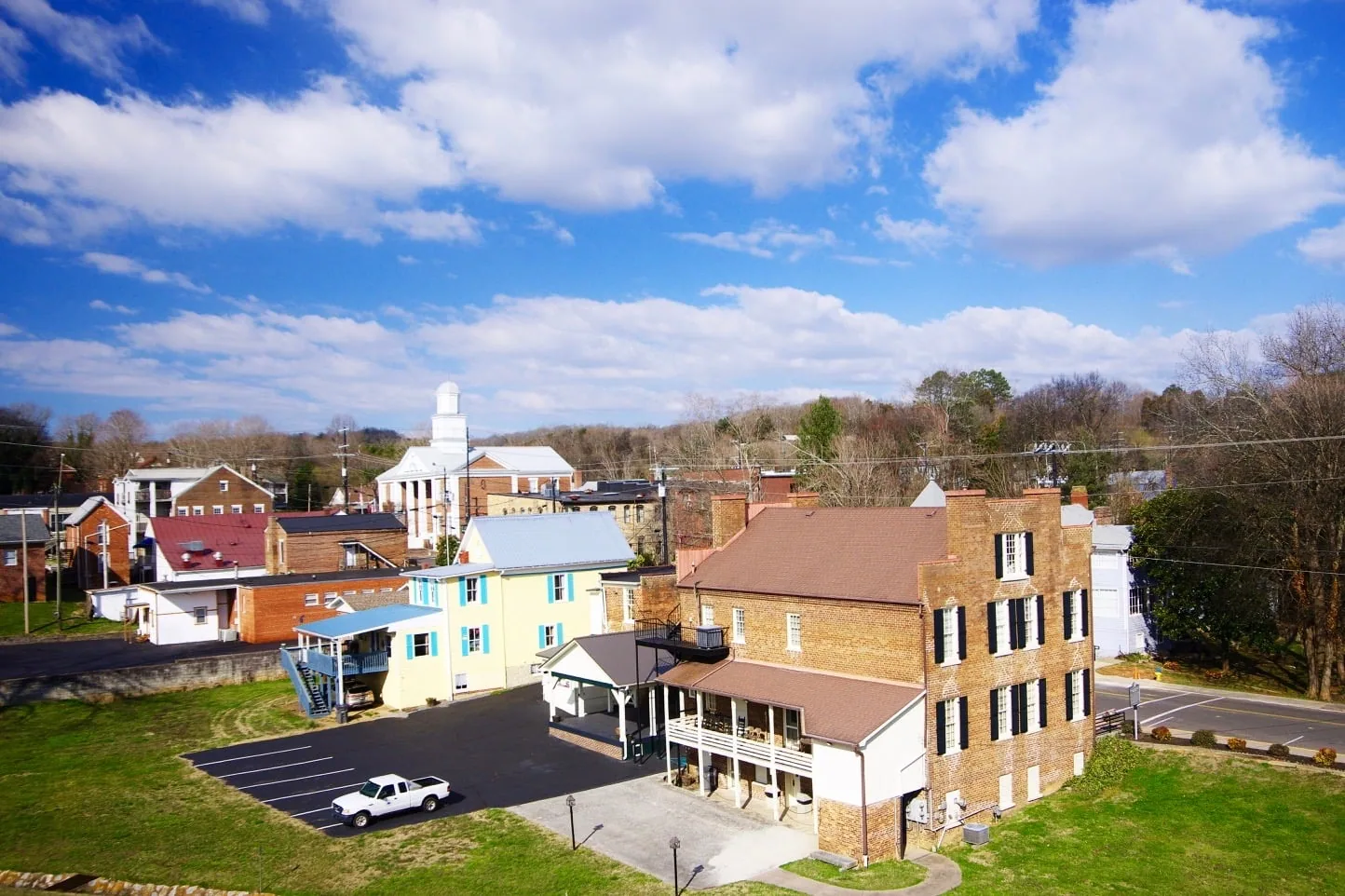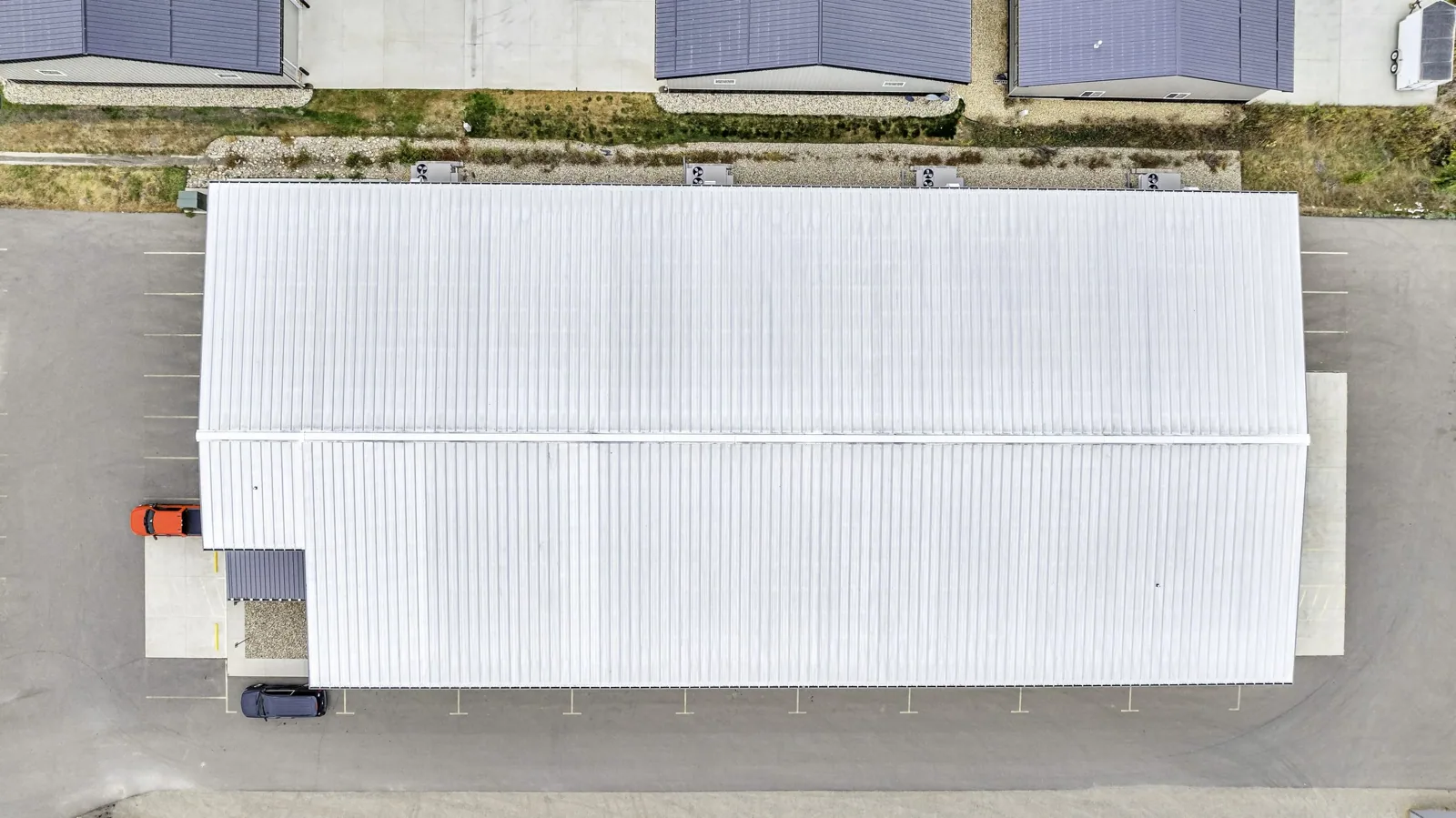
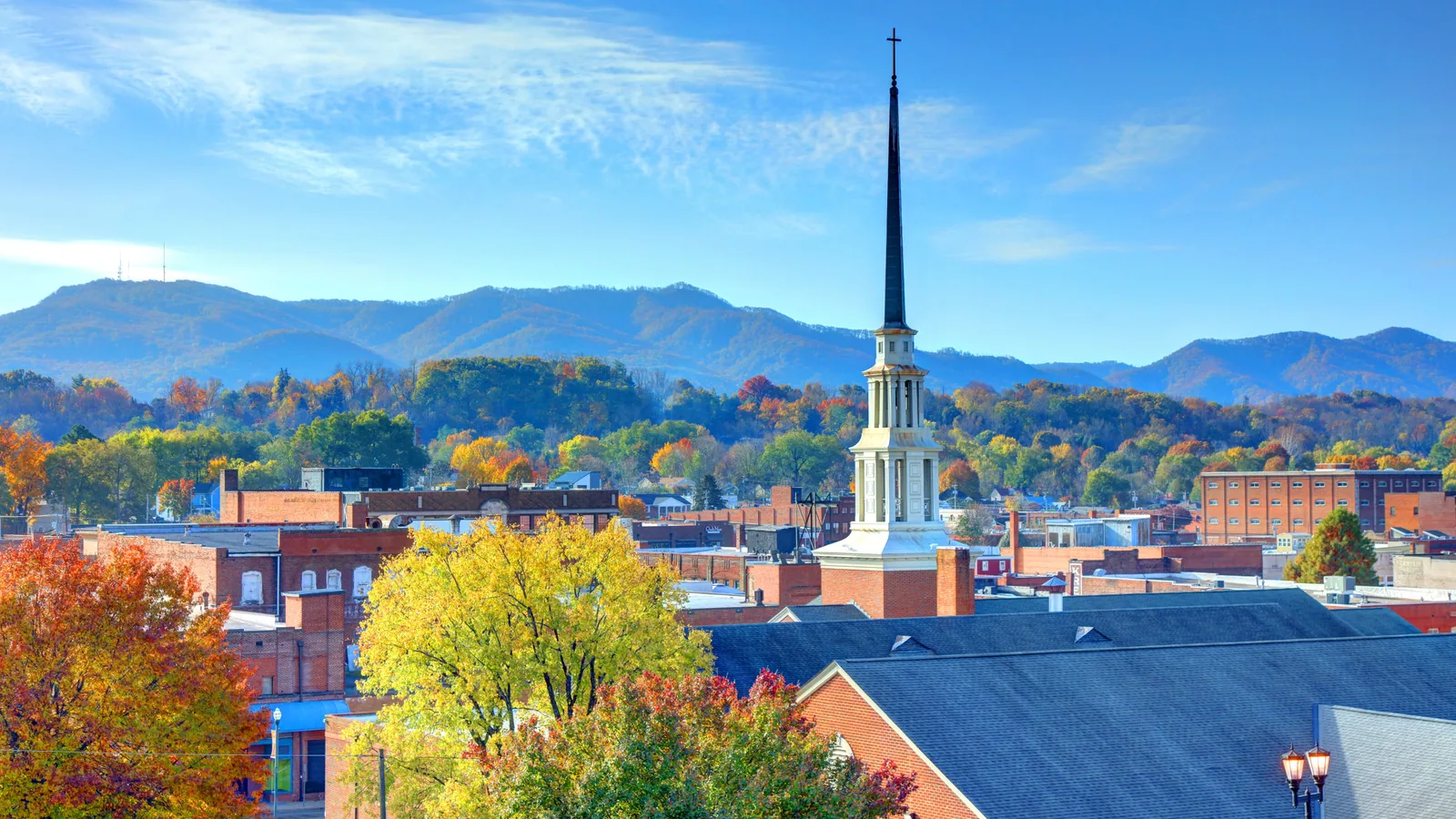
The checkout hour and the lunch rush come first on a Boones Creek roof schedule. The community's commercial strip is on I-26 at the State Route 354 (Boones Creek Road) exit, and restaurants, hotels, motels and gas stations cluster there, with Food City and Ingles grocery stores among them. Boones Creek is a Johnson City neighborhood, and a roof job at the exit has to fit around guests leaving, diners arriving and trucks pulling in for fuel.
We ask for those hours at the first conversation, then build the access plan, the permit step and the daily sequence around them.
Working an Interstate Exit Strip
Lots at an interchange exit are tight, shared and busy. Entrances double as exits, parking fields fill at predictable hours and fire lanes are narrow. Before a truck is scheduled we walk the lot, note where customers park and where delivery vehicles already stop, and mark a staging area that interrupts neither.
Where the exit road is the only access, a roofing delivery has to arrive outside the hours when traffic backs up from the ramp. Early morning is the usual window. The material goes up by hoist or boom lift, is stacked on the roof where the deck can carry it and is covered at night. Dumpsters sit on a corner of the lot where a truck can reach them without crossing the main drive.
Neighboring properties often share a driveway or a drainage swale. We tell the neighbors in advance when the crew will be on site, and we keep debris and equipment inside our own boundary.
Hotel and Motel Roofs With Guests Below
A hotel or motel roof has people sleeping under it, and the schedule is built on that. Tear-off noise starts after the checkout hour, interior ceiling protection goes up before the first section opens, and the rooms directly below the work are blocked off through the front desk. We ask for the busiest nights and keep the open area small on those days.
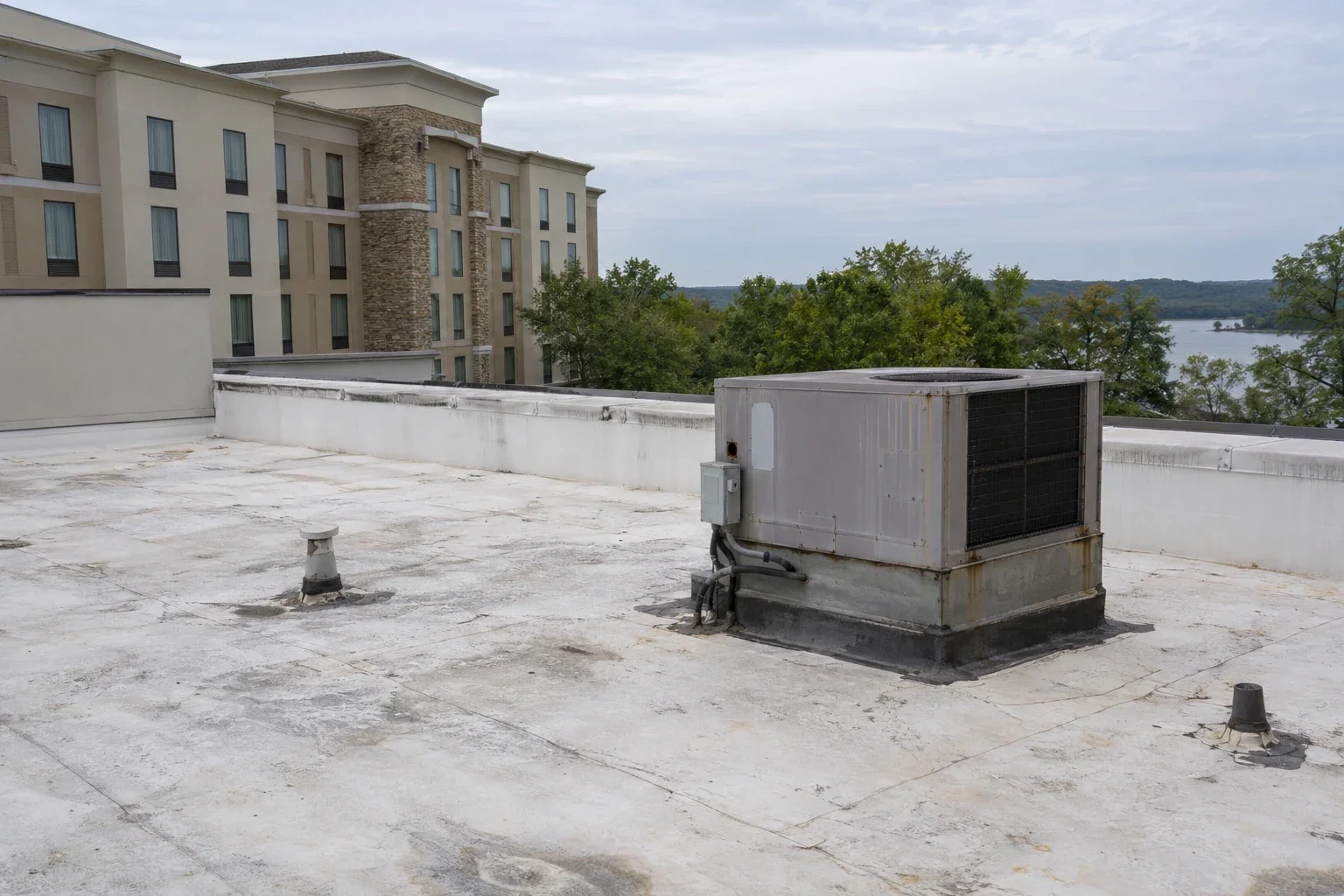
Hotel roofs often have a mix of low-slope sections over corridors and common areas and steeper or metal sections over wings. A hotel roof walk covers each section separately, records the drainage from the upper sections onto the lower ones and finds the flashing details where the roofs meet. Those transitions are common leak points because water from the higher roof is concentrated at the lower roof's edge.
Rooftop equipment, such as exhaust fans from bathrooms and kitchens, adds curbs and penetrations that need sound flashing. The mechanical contractor and the hotel's engineer set the shutdown windows, and the crew works section by section so no unit is open during rain.
Kitchen Exhaust, Grease and Hot Work Near Fuel
A restaurant roof collects grease from kitchen exhaust, and grease softens some membranes and clogs drains. The walk looks at the area downwind of each exhaust fan, the condition of the membrane there, the grease containment and the drains nearby. A roof can look sound from the edge and be degraded in a ring around a fan.
Hot work needs a different level of care near fuel. A gas station canopy or a building beside a fuel island is a place where open flame, torch-applied seams and hot asphalt require a hot work permit, a fire watch, a clear zone and agreement from the site operator. Where the operator rules out open flame, the crew switches to a welded or cold-applied membrane, and the options table prices the schedule and cost of that choice.
Restaurant owners also want to know the hours the kitchen runs, since roof work above an active kitchen can drop debris into food areas. We hang protection, seal the hood curbs and complete the sections over the kitchen at the slowest hours or on a closed day.
Grocery Roofs and Refrigeration Equipment
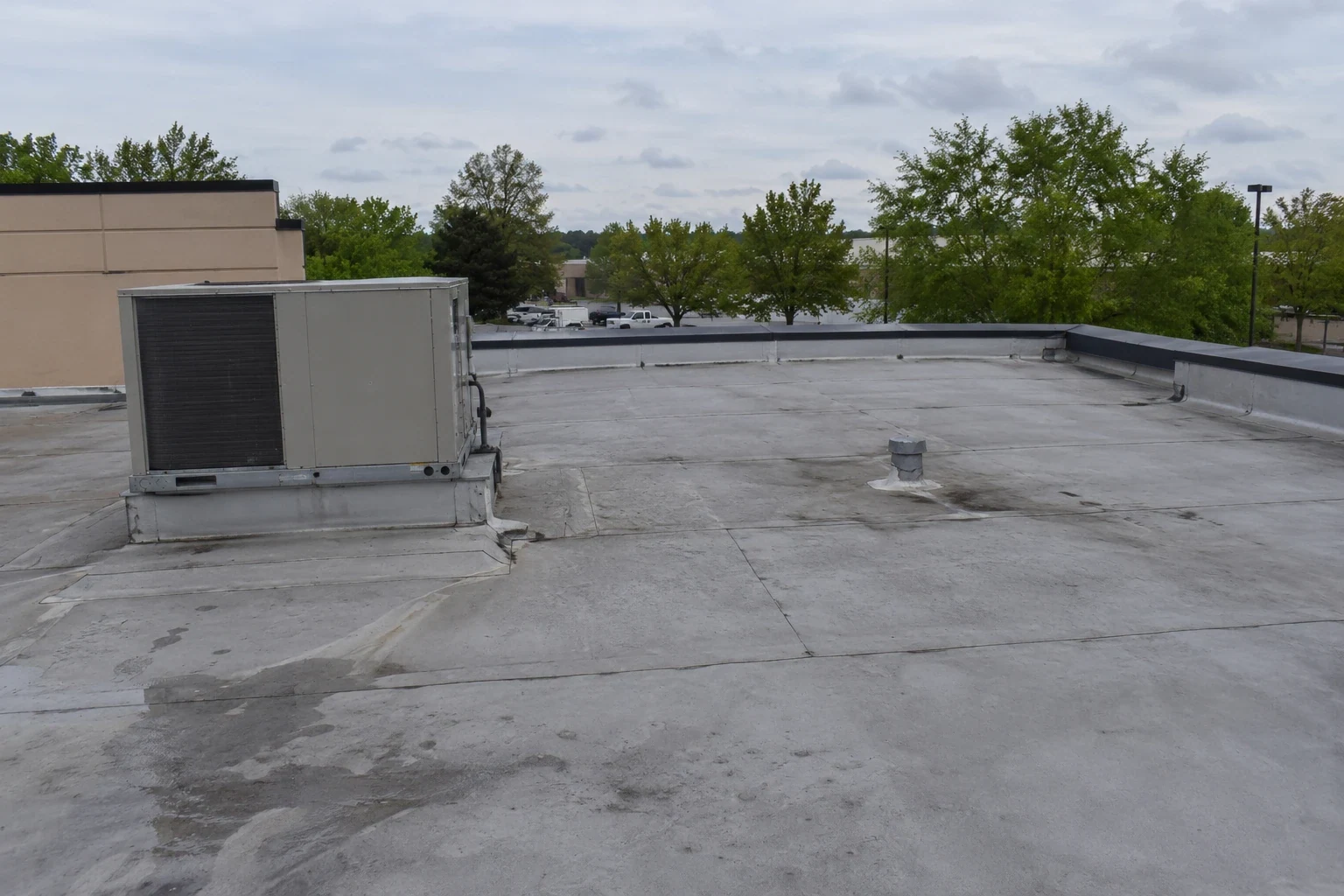
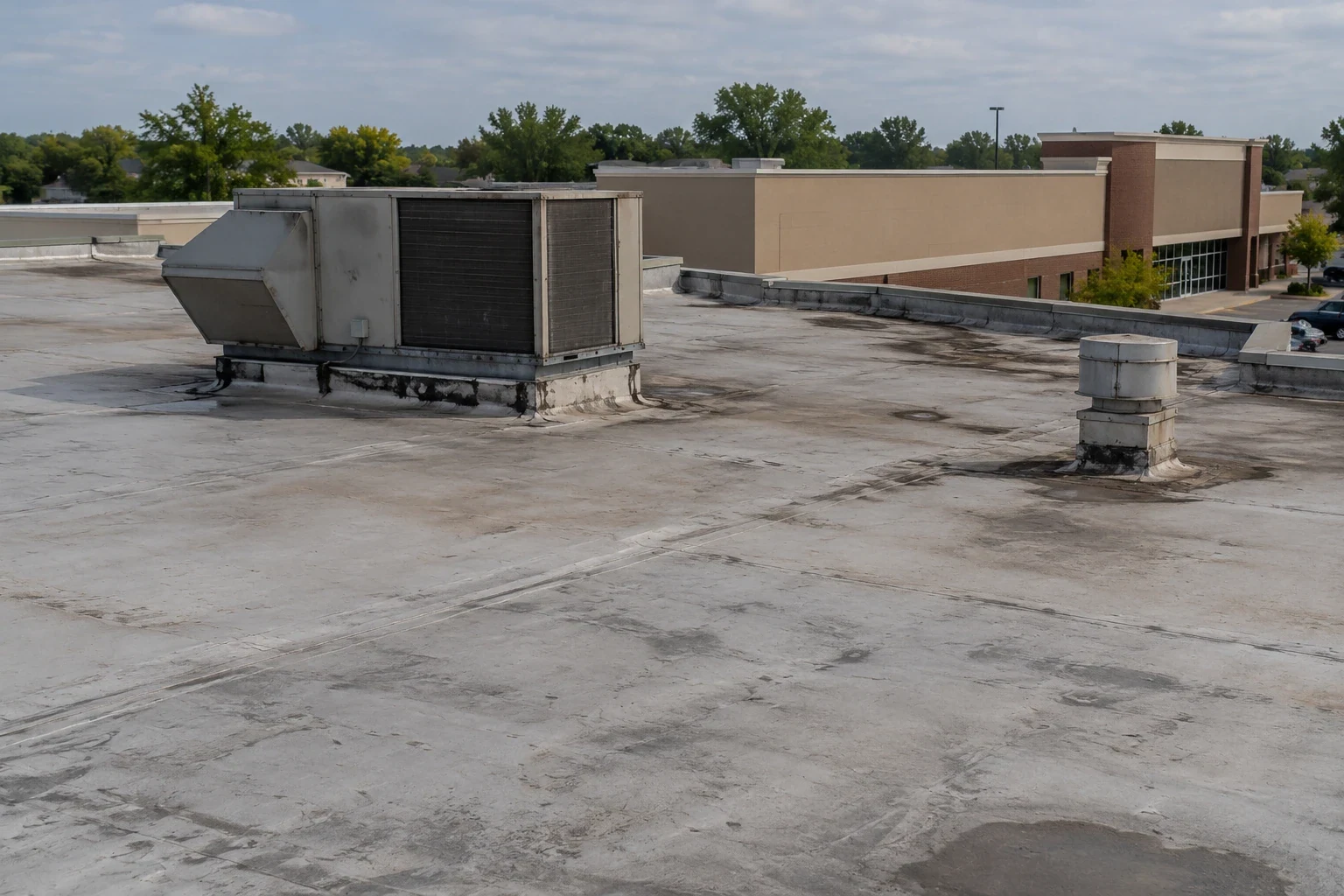
Grocery stores carry heavy rooftop refrigeration equipment, and a roof beneath it takes constant vibration and foot traffic from service technicians. The walk checks the walkway pads, the equipment curbs and the refrigerant line penetrations. A grocery store roof that is replaced needs the equipment shut down only as long as the flashing requires, which the refrigeration contractor schedules to protect stored product.
Deliveries to the store keep coming while the roof is worked on, so the plan separates the roofing crew's route from the store's delivery route. A spotter manages the crossing points, and the dock apron stays clear.
Inside, the store's ceiling and the products below the work need protection. We confirm with the store manager which aisles sit under the open section, set up temporary covers for open displays and schedule the noisiest steps for the slow part of the day. Condensate lines and drain pans on rooftop units are checked at the same visit, because a plugged line sends water into the ceiling that looks like a roof leak and costs the owner a repair that the roof did not need.
Weather Buffer, Permit and Closeout
Snow is part of the planning here, since Johnson City takes more of it than Kingsport, TN. Drains and scuppers are cleared before winter, and flashing at the base of walls is inspected because meltwater tests it harder than rain. Through the rest of the year, thunderstorm warnings across the region have cited 60 mph gusts and hail, so daily plans include a closing time, tarp and ballast reserves and a walk of the roof after any warning.
The permit comes from the office with jurisdiction over the property, confirmed in writing, and our drawings follow the Kingsport model of stamped sheets and a state license above $25,000. Closeout leaves the owner with a signed punch list, flashing photographs, the warranty documents and a plan of the roof marked with the date. Owners with other properties can compare the file with Johnson City and Gray buildings, and a multi-site roof program can set the order of the work.
Commercial Roofing Questions
How is noise controlled above occupied hotel rooms?
Tear-off starts after checkout, the rooms directly below are blocked off through the front desk and the loudest steps are done in the middle of the day. The foreman posts the plan with the front desk each morning, so guests are not placed under the work.
What does grease do to a roof membrane?
Grease can soften some membranes and clog drains, so the area around a kitchen exhaust fan ages faster than the rest of the roof. We inspect it separately, install containment where it is missing and choose a membrane and detail that suit the exposure.
Can roofing be done next to a fuel island?
Yes, with controls. A hot work permit, a fire watch, a clear zone and the site operator's agreement are required for open flame, and a cold-applied or heat-welded system avoids flame altogether. We lay out the options so the operator can choose.
How do you keep a grocery store's refrigeration running during a re-roof?
The refrigeration contractor sets shutdown windows for each unit. We flash the curb during the window, restore the unit before the window closes and protect stored product by keeping each interruption short and scheduled.
Why do transitions between high and low roofs leak so often?
Water from the higher roof concentrates at the lower roof's edge, and the flashing there takes more volume and more wear. We check these joints first, add splash protection or a diverter and replace flashing that has failed.