Service peaks decide when a restaurant roof can be worked, because the exhaust hoods, walk-in coolers and grease systems under and on the roof decide when the crew may work and what must keep running. We ask the owner or general manager for the lunch and dinner peaks, the health department inspection dates and the location of every hood, fan and cooler before we ask for the roof drawings. We then set the phasing plan by the hours when the kitchen is quiet.
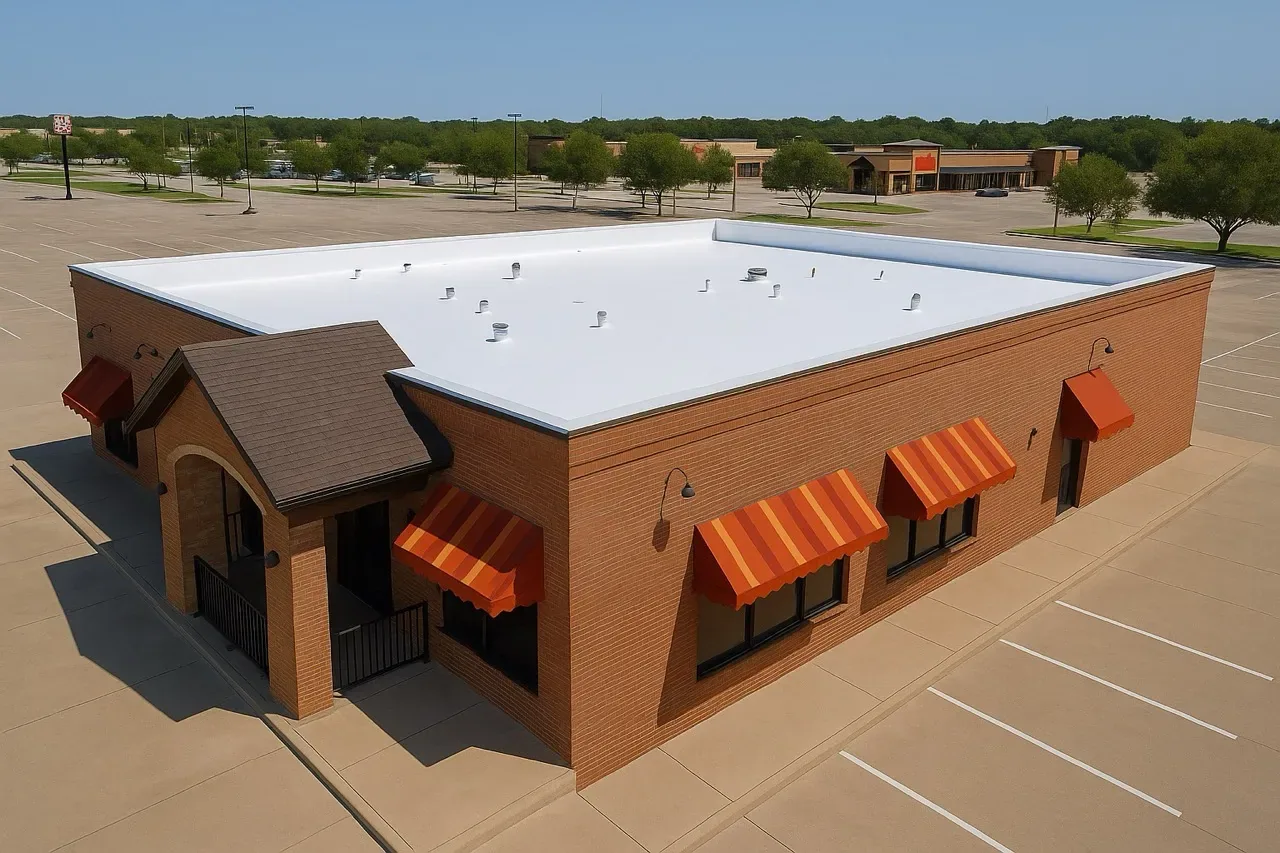
A restaurant in Kingsport, TN, may stand alone, sit on an outparcel or occupy a strip bay. Fort Henry Mall's owner has two outparcel developments under way near Fort Henry Drive, and renovations are under way downtown. A restaurant roof is a working surface, and the sequence has to respect that. A hotel with a kitchen follows much the same order, with guest rooms added to the protection list.
Service Peaks and Health Inspection Dates
A restaurant cannot lose a dinner service. We plan the loudest work for mid-morning and the quietest for the hours around peaks. If the roof is above the dining room, tear-off happens before opening or on a closed day, and the interior below is protected before the first cut.
The health department's inspection dates and the restaurant's own cleaning schedule are marked on the plan. Debris, dust and odor must not reach food, prep surfaces or the dining room. We ask the manager to name the sensitive areas, then cover intakes, seal ceiling penetrations and schedule cleaning at the end of each shift. The health inspector's list of concerns, if the restaurant shares it, goes into the plan as a set of controls the foreman checks each morning.
Exhaust Hoods, Grease and Membrane Choice
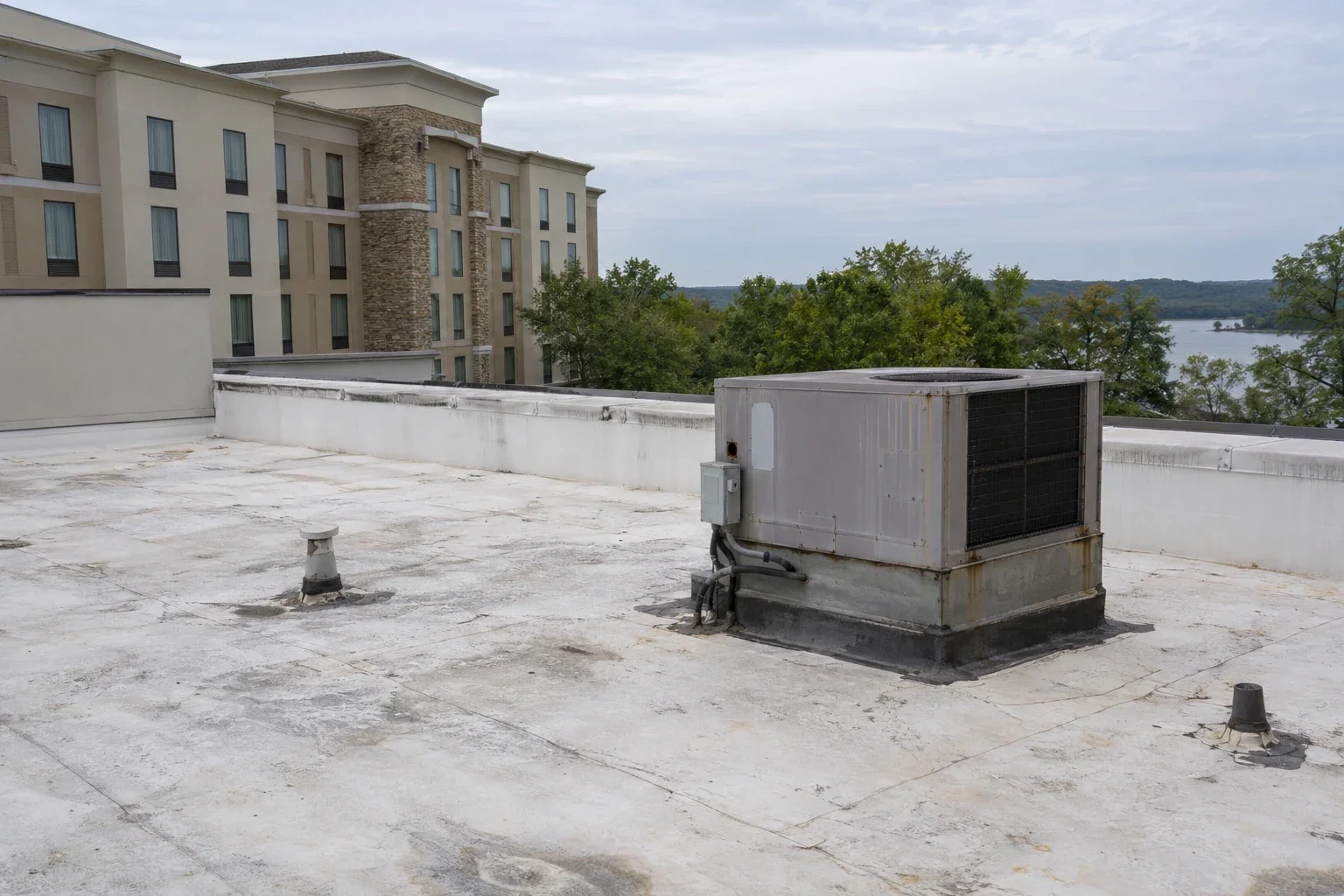
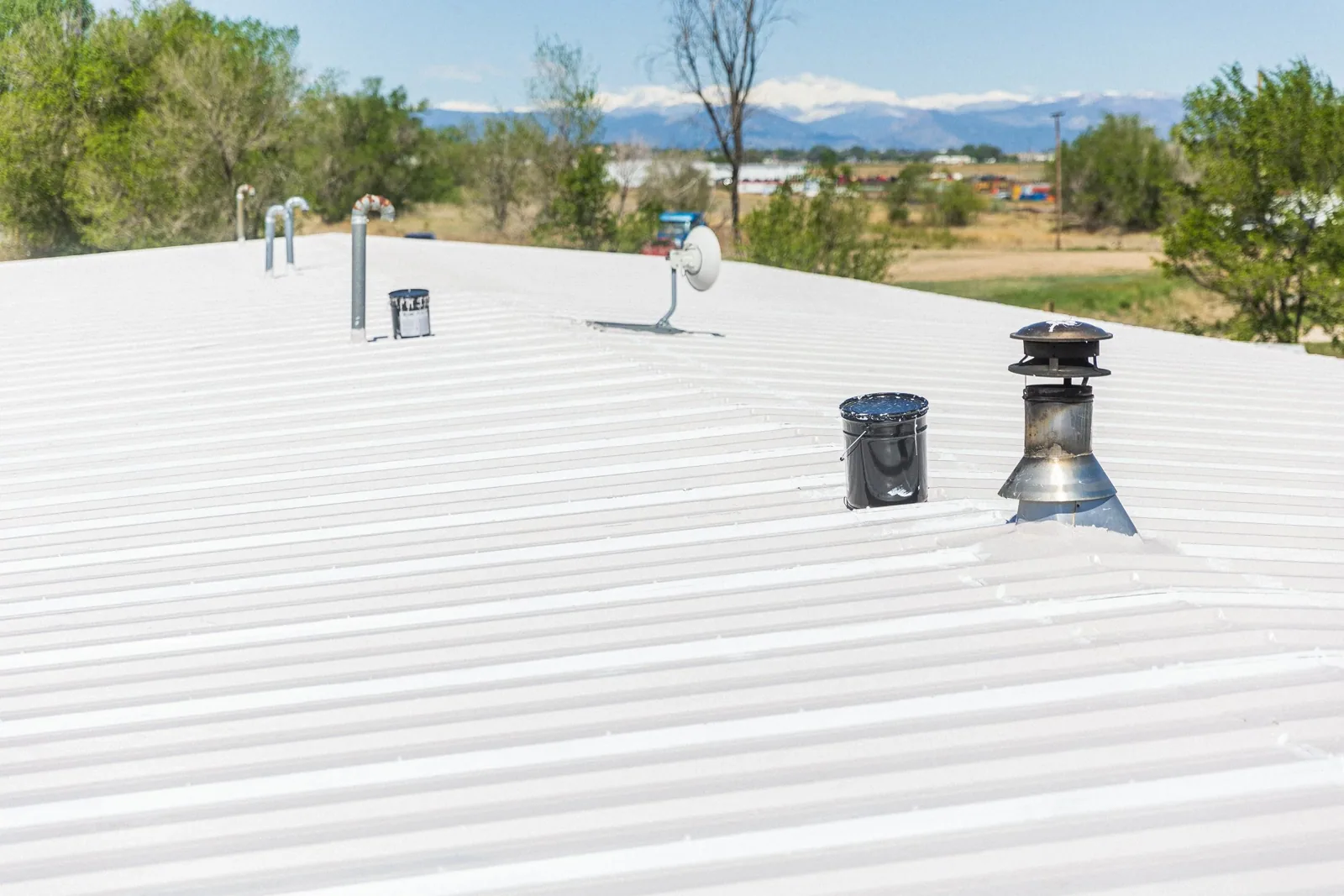
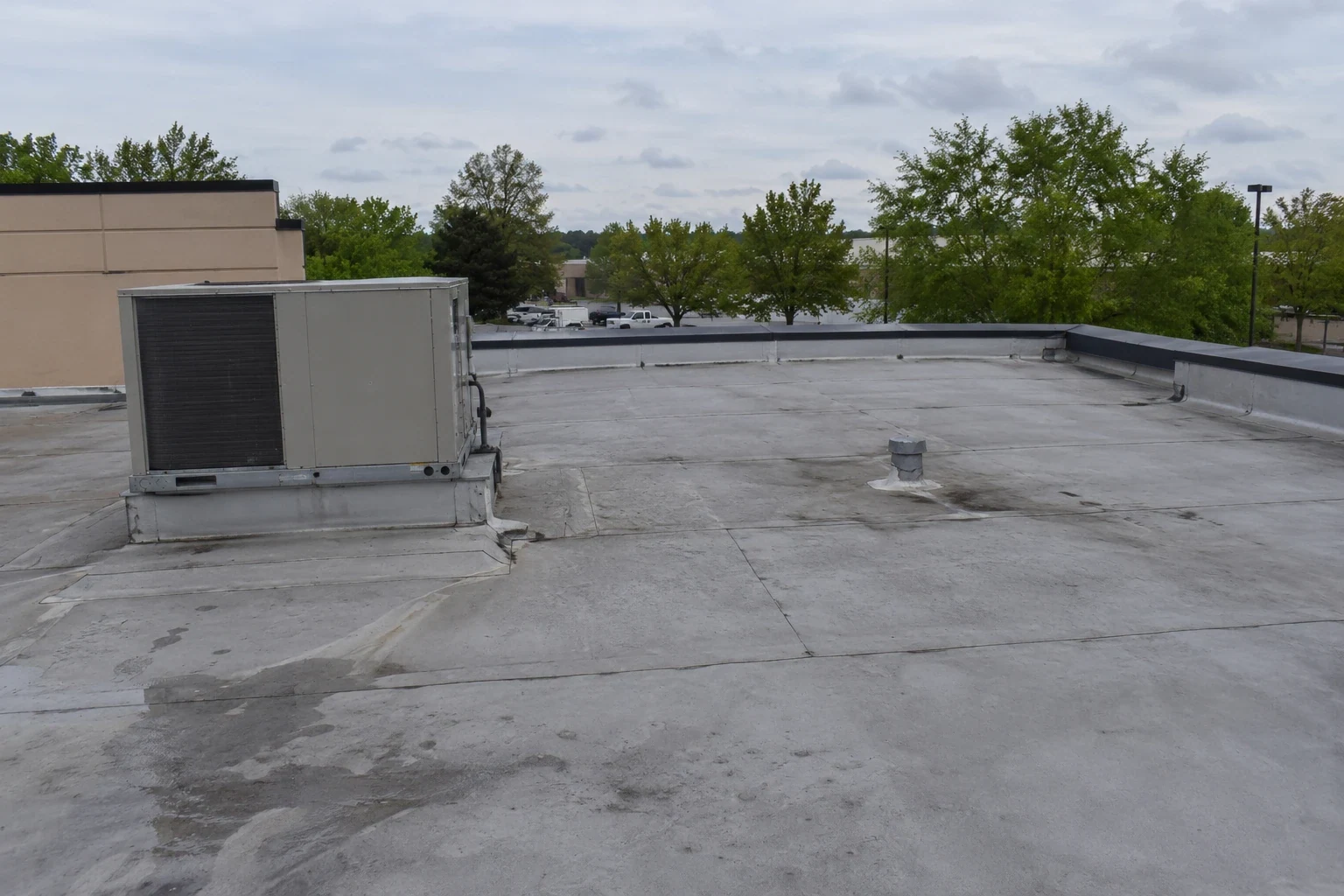
Exhaust fans discharge grease-laden air onto the roof, and grease attacks some membranes. We inspect the fan curbs, check for grease stains and probe the membrane around each discharge. A grease containment pad or a fan modification may be needed so the discharge does not land on the roof surface.
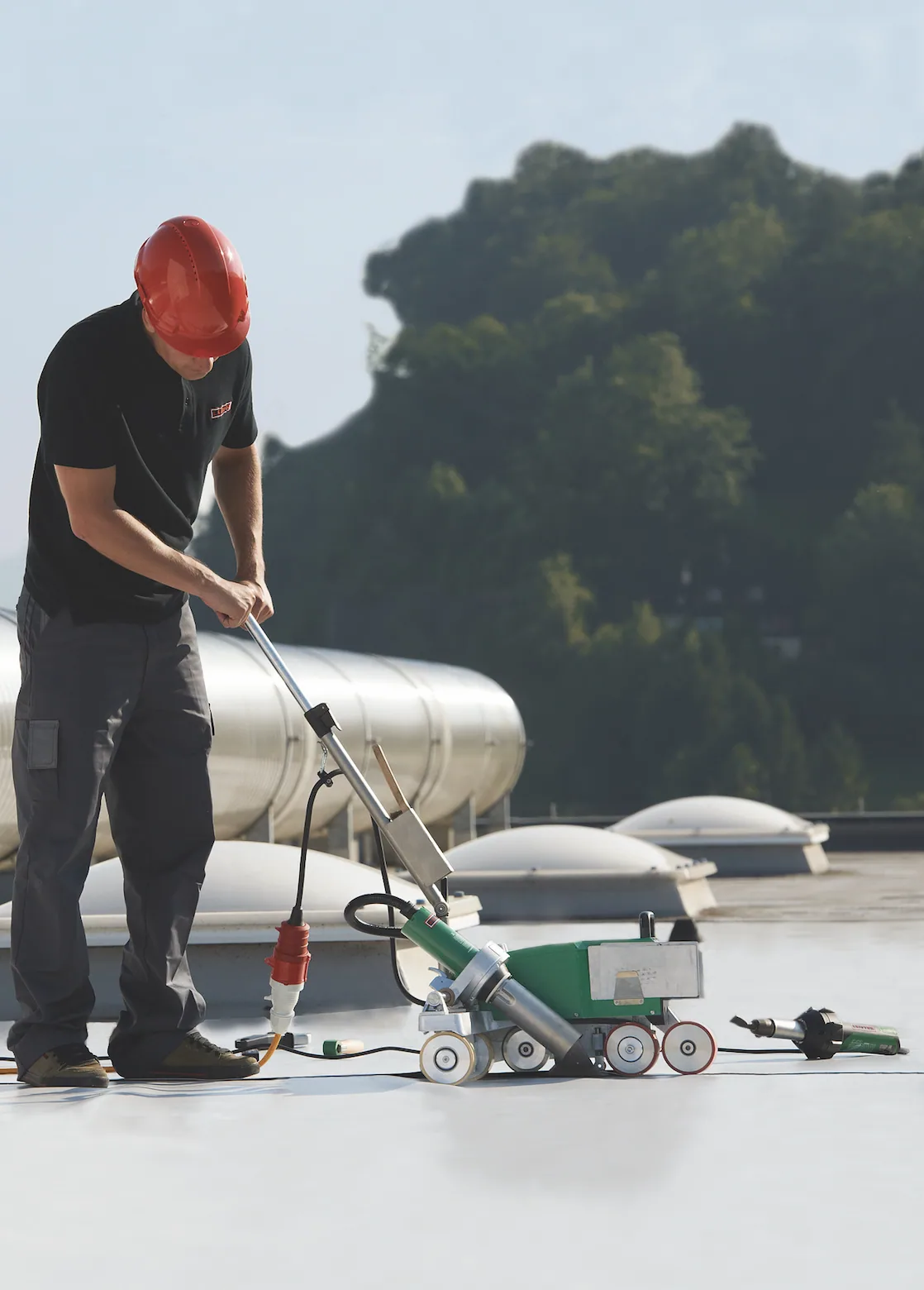
When a roof is replaced, the membrane choice reflects the exposure. PVC and KEE membranes are common near grease because they resist it better than some alternatives, and the proposal compares them with other systems on cost and on the likely cleaning schedule. The exhaust contractor is brought in when a fan needs to be raised, so the flashing and the fan return together. A raised fan sits above the roof surface on a curb of the right height, with a grease drain where the design calls for one, and the curb is flashed to the new membrane before the fan returns.
Walk-In Coolers, Condensers and Roof Penetrations
Walk-in coolers and freezers put condensers and refrigerant lines on the roof. We mark them with the refrigeration contractor, protect the lines and schedule any shutdown with the manager. Product temperature is the limit, so the roof sections over the cooler are opened last and closed the same day.
Restaurants have many penetrations for such a small roof: vents, gas lines, hood ducts, sewer vents and conduit. Each is rated on the roof plan, and the weak ones are rebuilt with prefabricated boots or welded collars. The punch list names every penetration, so the owner can verify the work. Gas lines get special care: no hot work near them, and the gas contractor confirms that each line is supported and sealed.
Parking, Deliveries and Crane Placement
A restaurant lot is small, and customers park close to the door. The crane pad, dumpster and material stack go to the back or side, away from the entrance and the delivery door. Food deliveries are a fixed part of the day, and the crane waits for them. The delivery driver's route is kept clear, and the supplier is told which door to use if the usual one is blocked.
Material loads in the hours before opening. If the roof can be reached only through the kitchen or the dining room, we plan a route that avoids food and customers and protect floors and walls along it. A ladder on the exterior is the better choice, and we ask whether one can be installed for the job. Deliveries are timed to miss the rush on Stone Drive and Fort Henry Drive, the retail roads, and at the junction of U.S. 11W and U.S. 23.
The same planning applies in Bristol and Johnson City, including near shopping districts such as the Pinnacle off I-81 and U.S. 11W. The owner's delivery schedule, the landlord's rules and the local permit office all differ, and the plan lists them in one place before the order is released.
Tear-Off Sequence and Dry-In
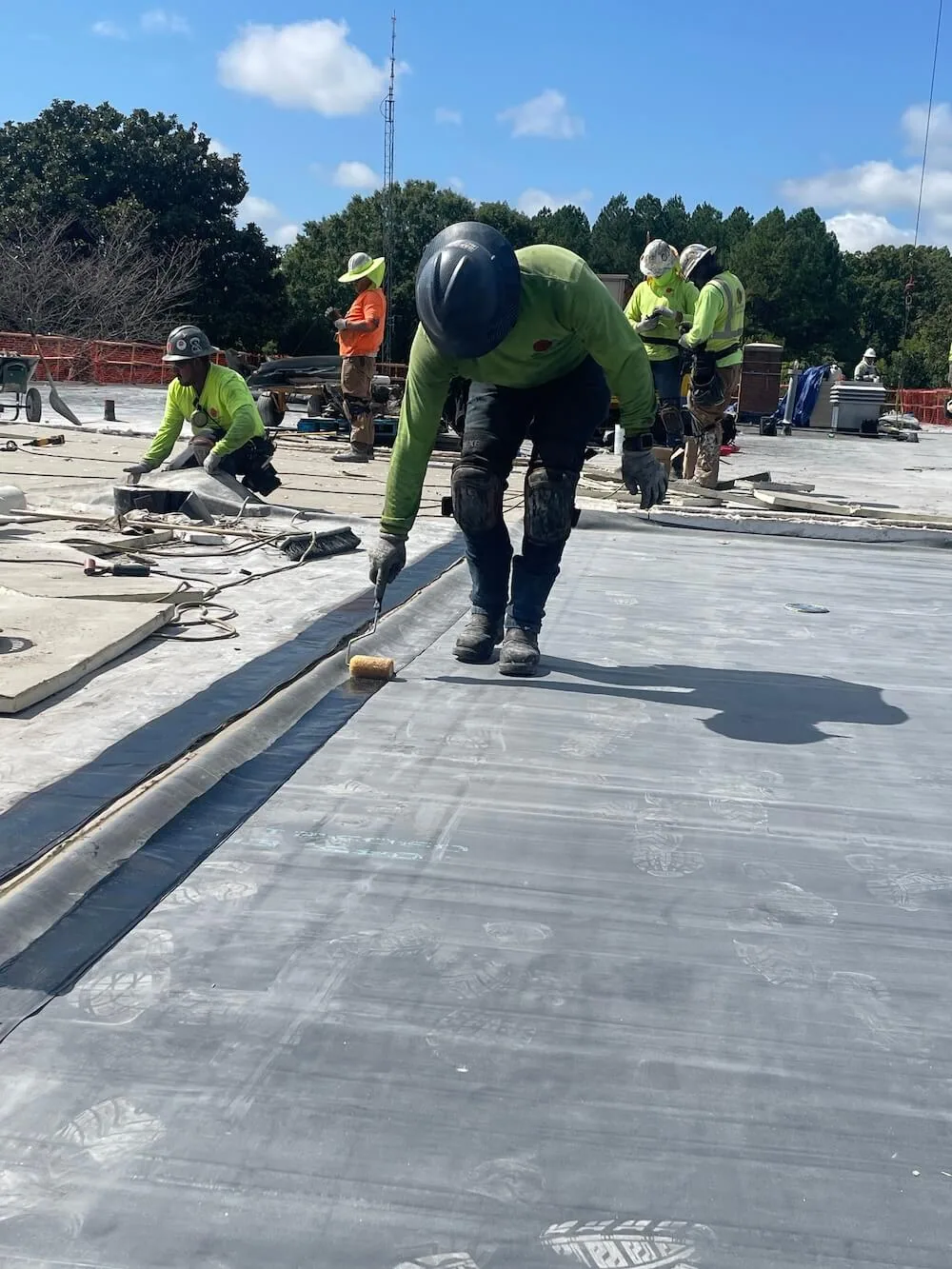
A restaurant roof is small enough to finish in a few days, and the sequence is tight. On a replacement, the old system comes off in two or three sections, each dried in before the crew leaves. On a recover, a moisture scan and cover board precede the membrane. The foreman closes each section with a seam probe and a photograph.
If rain is forecast, the section is not opened, and a temporary cover is staged beside it. At the end of the job, drains are flushed and flow-tested, and the roof is cleaned of debris before the crew leaves. A grease-prone roof gets a cleaning schedule in the turnover package, with the interval and the method.
Permit, Code and Weather
Permit paperwork for a restaurant roof is brief, and it still has to be on file. Kingsport permits reroofing, and the Building Department reviews against the 2024 code editions on its contractor page.
Rain is the other scheduling input. Warnings from the Morristown forecast office have named 60 mph gusts and hail, and a warning sends the crew home while the owner hears the same day. Hail can crack hood caps and dent fans, so each unit is checked and photographed afterward.
Closeout and Turnover
The last step is a walk with the owner and a handover of as-builts, material data and inspection results. A restaurant in the Stone Drive corridor or in downtown Kingsport receives the same file, and a restaurant bay in a shopping center adds the center's tenant matrix and the landlord's approval path, listed as separate lines.
Commercial Roofing Questions
Can a restaurant stay open during a reroof?
Usually, with a plan, and the plan is shared with the staff in a short briefing. Loud work is placed away from service peaks, the interior below the open section is protected and each section is dried in daily. Some owners choose a closed day for the heaviest tasks.
How does grease affect the roof?
It softens or degrades some membranes near exhaust fans. We inspect the discharge areas, add protection where needed and choose a grease-tolerant system for a replacement.
What happens to the walk-in cooler?
The refrigeration contractor marks the lines, and the sections over the cooler open last and close the same day. Any shutdown is scheduled with the manager and kept short.
How are dust and odor kept from the kitchen?
By covered intakes, sealed ceiling penetrations and low-odor systems where the owner prefers them. A cleaning check ends every shift.
What should the owner send first?
The lunch and dinner schedule and the hood and cooler layout matter most. With the site plan and roof access points they let us draft the phasing plan, and pricing comes after.