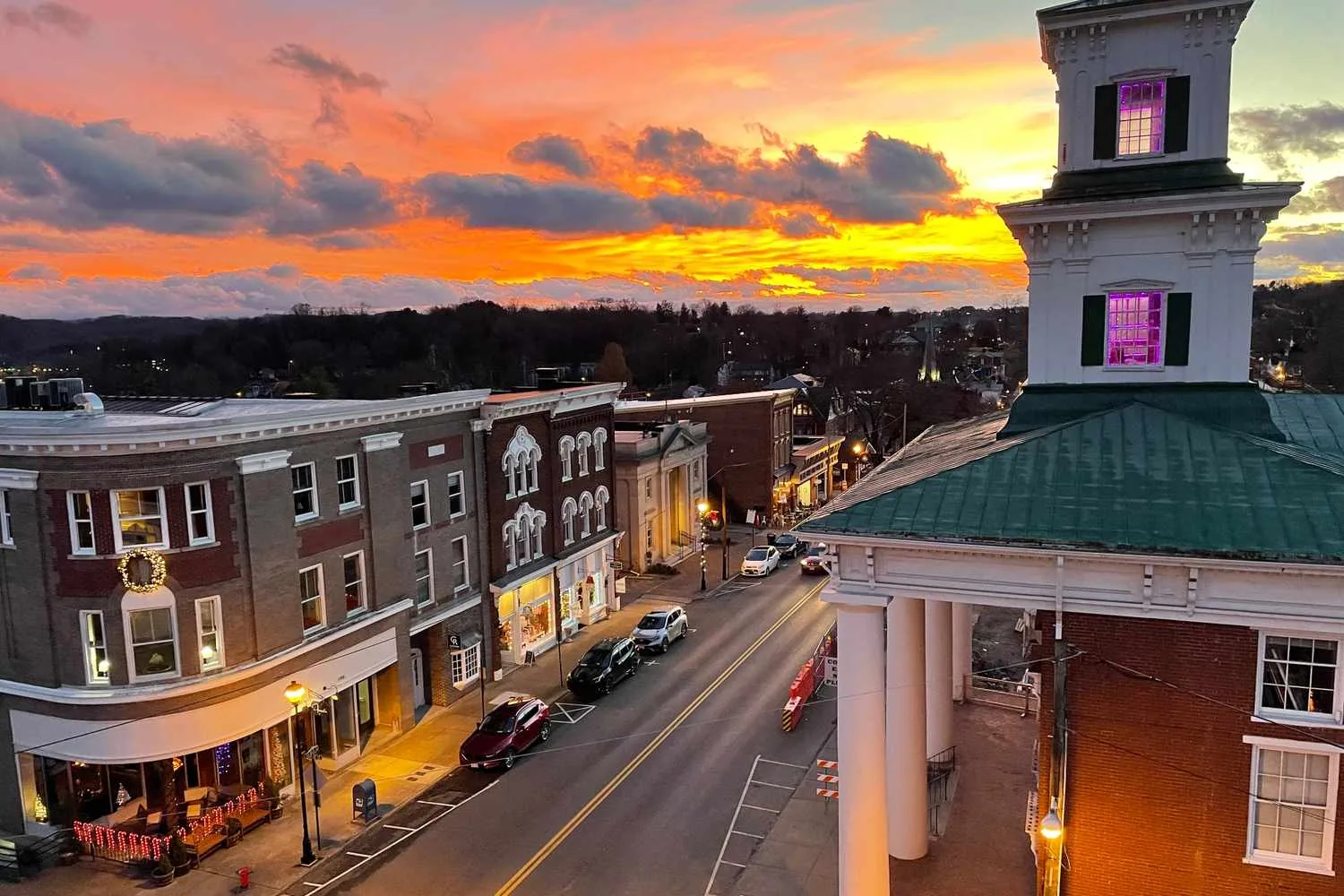
Approvals and street access come before tear-off on an Abingdon roof. Abingdon is the Washington County, Virginia seat, with 8,376 residents at about 2,087 feet, and its historic core is lined with Main Street galleries, the Martha Washington Inn, a hotel since 1935, and Barter Theatre, which opened in 1933. A roof in that setting may sit behind a parapet, above a sidewalk with pedestrian traffic or on a building whose exterior is subject to review, so we ask what approvals apply before we ask for drawings.
Once the approvals and the street plan are known, the sequence is a walk of the roof, a scope with options, a permit step and a dry-in plan for each day.
Sidewalks, Street Staging and Pedestrian Protection
On a historic street the roof is reached from a public way. A crane or boom lift on a main street needs a closure, a permit from whoever controls the right of way and a plan for pedestrians. We draw the closure on the site sketch, schedule it for the hours with the lightest foot and vehicle traffic and notify neighbors in writing before the day.
Overhead protection covers sidewalks beside the work. Debris chutes run down the back of the building where possible, and material goes up by hoist from the rear alley or lot instead of the street. Where the street is the only option, a spotter, cones and a flagger control the zone, and deliveries are kept to short windows.
Shops and galleries on Main Street keep their doors open, so entrances are protected and signs are posted. The foreman reviews the plan each morning with the property manager and confirms that the sidewalk is clear again before the crew leaves.
Roofs on Older Buildings in the Historic Core
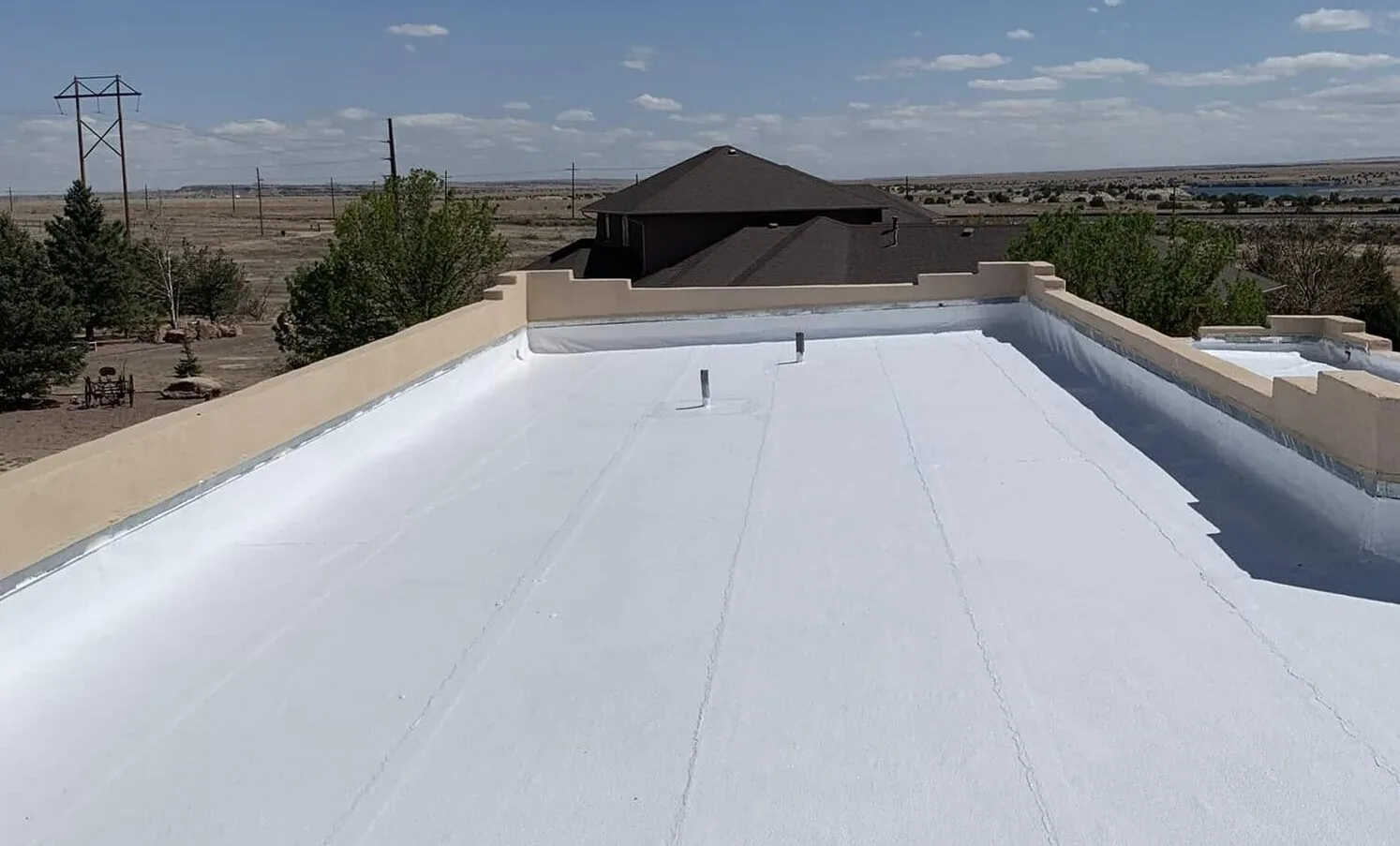
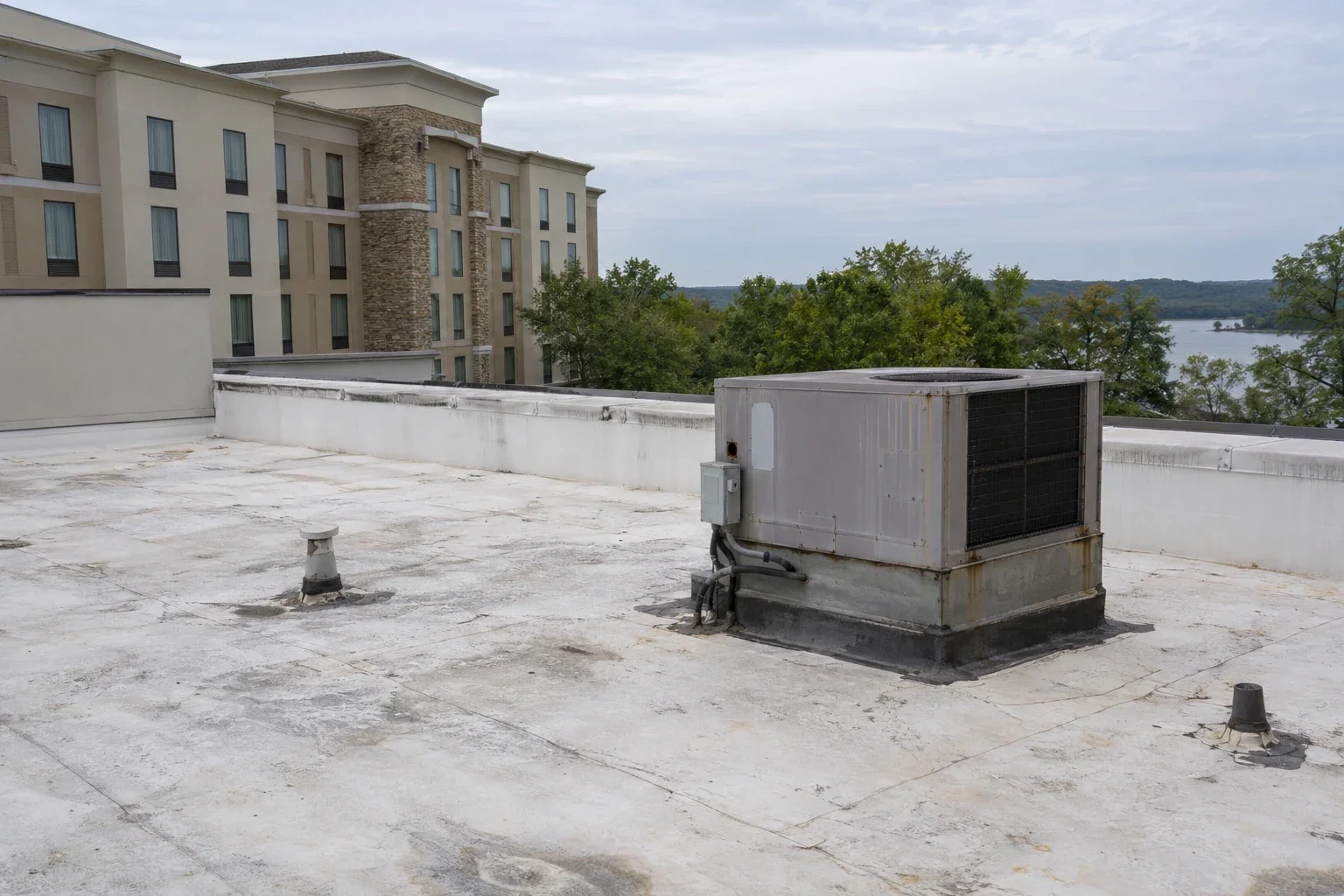
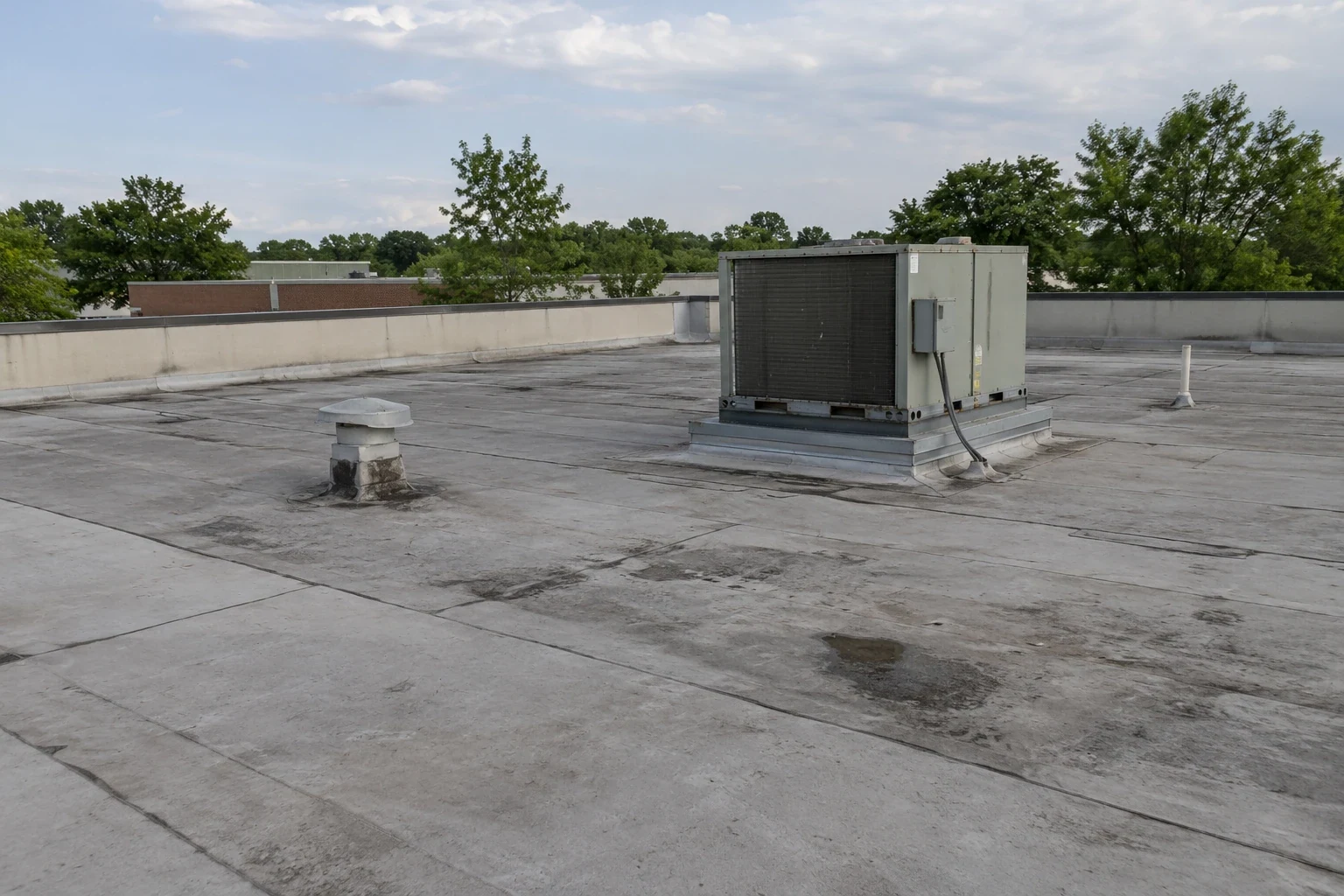
The roof type on an older building is not a given. A building in a historic core may have a low-slope roof behind a parapet, a metal section, a slate or shingle section or several different systems added over decades. We identify each on the walk and record the layers with core cuts where needed. A commercial roof inspection lists what is there, what condition it is in and which details need an owner decision.
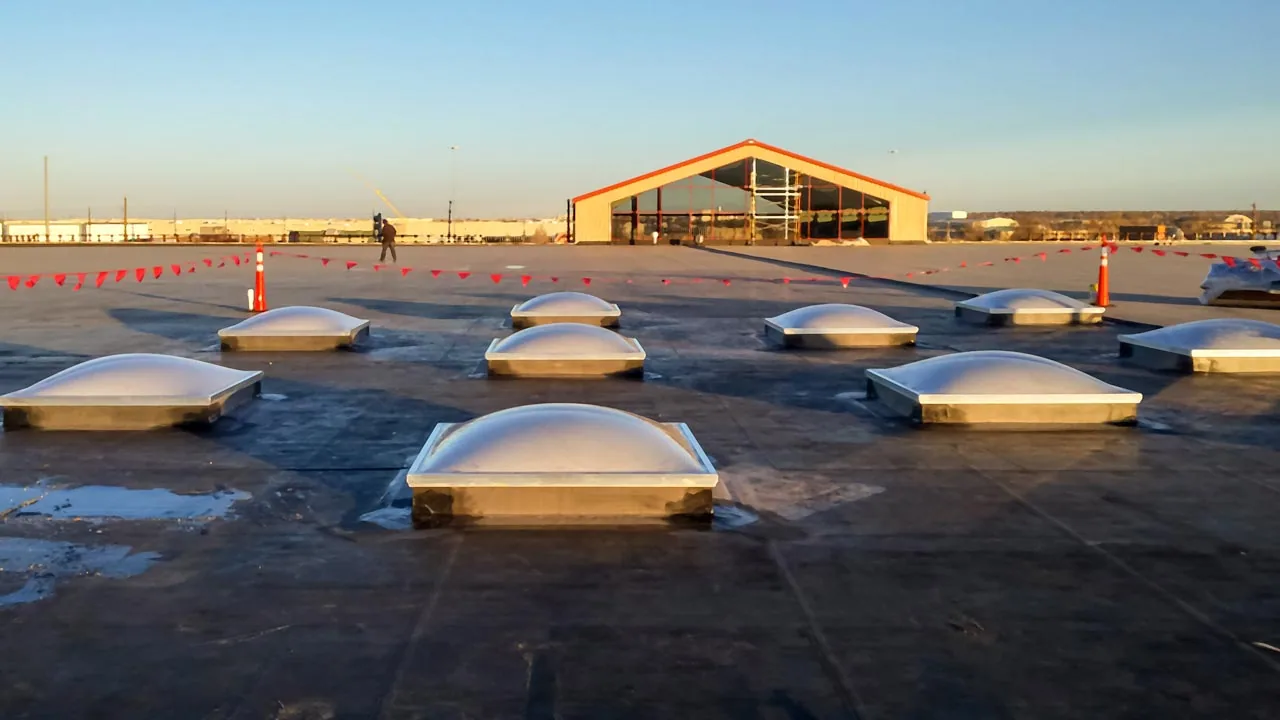
The details that matter most on older buildings are the junctions: where a roof meets a masonry wall, where a built-in gutter meets a cornice, where a chimney or a skylight breaks the surface. Failed mortar joints, cracked coping and open flashing let water into the wall instead of the room, and the damage shows up months later. The skylight and penetration flashing is checked at each of those points.
If the building is subject to a historic review, the owner supplies the requirements, and we match materials and details to the approval. Where a substitute material is proposed, the options table shows it beside the original, with the cost and the expected service life.
Hospitality, Theatre and Event Calendars
A hotel has guests, and a theatre has performances. Neither stops for roofing. For any building with hospitality or event use, we ask for the busy dates, the check-in and check-out hours and the show times, and we place tear-off in the weeks and hours that avoid them. Noisy work is kept away from performance hours, and rooms or spaces below the open section are blocked off through the front desk or the house manager.
A hotel roof or an assembly building also has life-safety systems that must stay in service. Alarms, sprinkler lines and smoke control are identified on the walk, and any shutdown is scheduled with the owner and the fire authority. Hot work gets a permit, a fire watch and a clear zone, and a heat-welded or cold-applied system avoids open flame where the owner prefers it.
County-Seat Owners and the I-81 Corridor
Washington County is served by I-81 with U.S. 11, 19, 58 and 421, and it is in the Kingsport-Bristol metro. Abingdon is the county seat, so some roofs belong to public bodies with their own approval cycles. We learn early who signs off on scope and change orders, then have the written options table ready ahead of the meeting where it will be read.
For owners along the interstate and highway corridors, the sequence is simpler: a delivery route, a laydown area and a dry-in plan. Work for a public agency brings bonding, insurance certificates and wage rules, which we gather at the outset because they can add days before a crew is cleared to start.
Owners who also hold property in Gate City or Hiltons can ask for a combined schedule, with one scope format and one set of dated photographs for every building. A single record makes it easier to see which roof needs capital first, and which can wait another season with a documented repair plan behind it. Property managers with several buildings find that this single calendar saves them from learning each roof's condition only when a leak reports it.
Weather Buffer, Permit and Handover
Before a section is opened, tarps, ballast and tie-down gear are on the roof, since NWS Morristown has warned of hail alongside gusts near 60 mph. Kingsport, TN, gets about 45 inches of precipitation a year, and its record runs from a minus 18 F low to a 104 F high.
An Abingdon roof is permitted by the Virginia office with jurisdiction, confirmed in writing before submittal. At turnover the owner gets the sign-off punch list, photographs of flashings and edges, the warranty documents and a roof plan carrying the date. Owners with buildings across the region can keep one file format for Bristol, Virginia and Abingdon, and a roof asset management plan then sequences capital work across all of them.
Commercial Roofing Questions
Who approves a street closure for a crane on Main Street?
Whoever controls the right of way, which is usually the municipality. We prepare the closure sketch, the pedestrian plan and the notice to neighbors, and the owner or we apply, depending on who the office wants as the applicant. The roof date is set after the approval is in hand.
How do you protect the sidewalk and storefronts below the work?
With overhead protection along the sidewalk, enclosed debris chutes at the rear, cones and a spotter at any street-side position. Storefront entrances stay open and are marked with signs, and the foreman confirms at day's end that the walkway is clear.
What if the building must keep a historic appearance?
The owner supplies the review requirements, and we match the materials and details to the approval. If a different material is being considered, the options table shows it next to the original with its cost and expected service life, so the owner can take the comparison to the review.
Can roofing continue while a theatre or hotel stays open?
Yes, with phasing. We keep noisy work away from performance and quiet hours, block off the space below the open section and schedule any life-safety shutdown with the owner and the fire authority. Each section is dried in before the crew leaves.
Why do parapet and cornice junctions leak so often on older buildings?
They combine masonry, metal and membrane, and each moves at a different rate with temperature. Mortar cracks, coping joints open and flashing pulls free. Water then enters the wall and shows up later inside. We inspect each junction closely and reflash it as part of the repair.