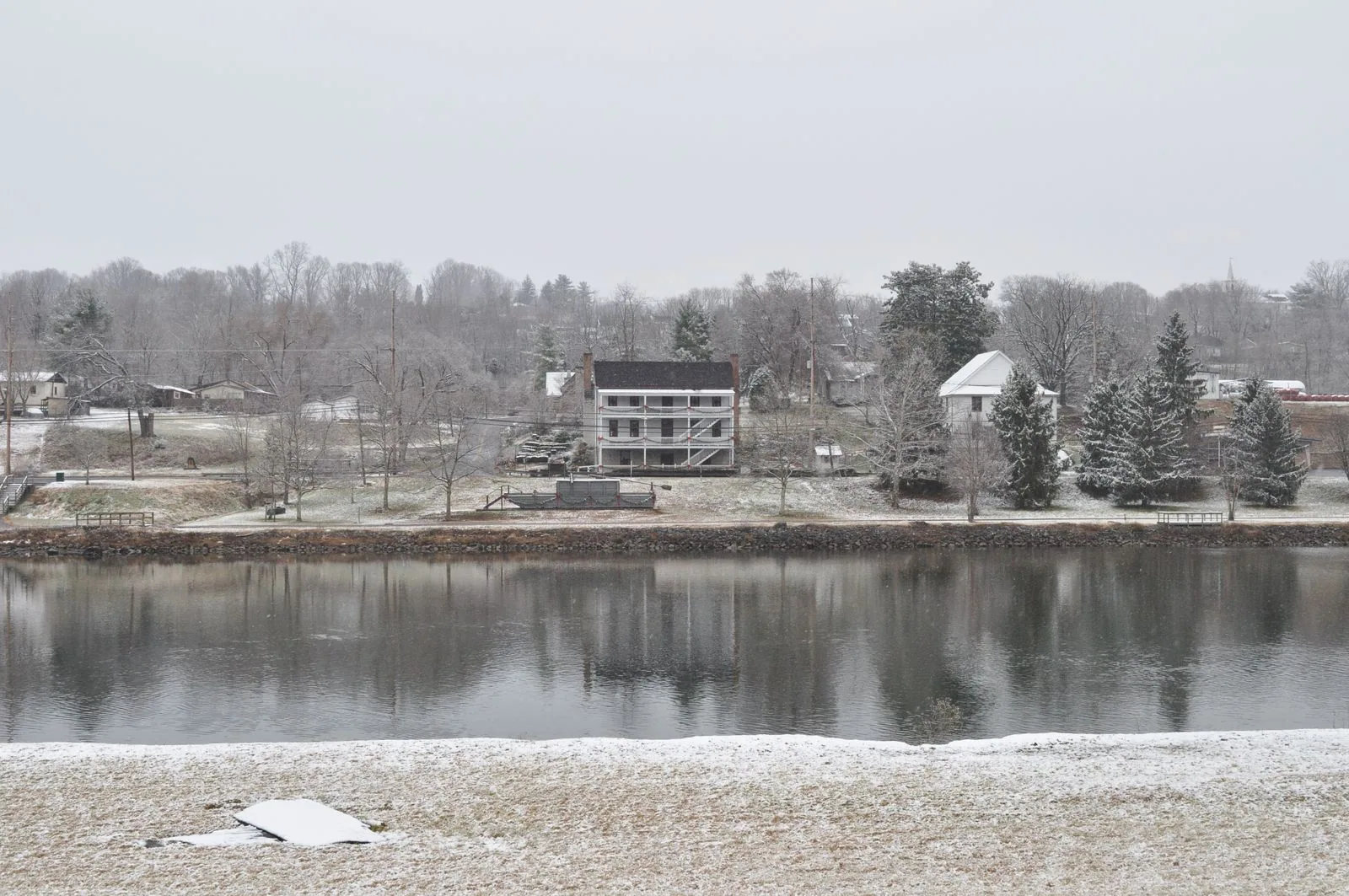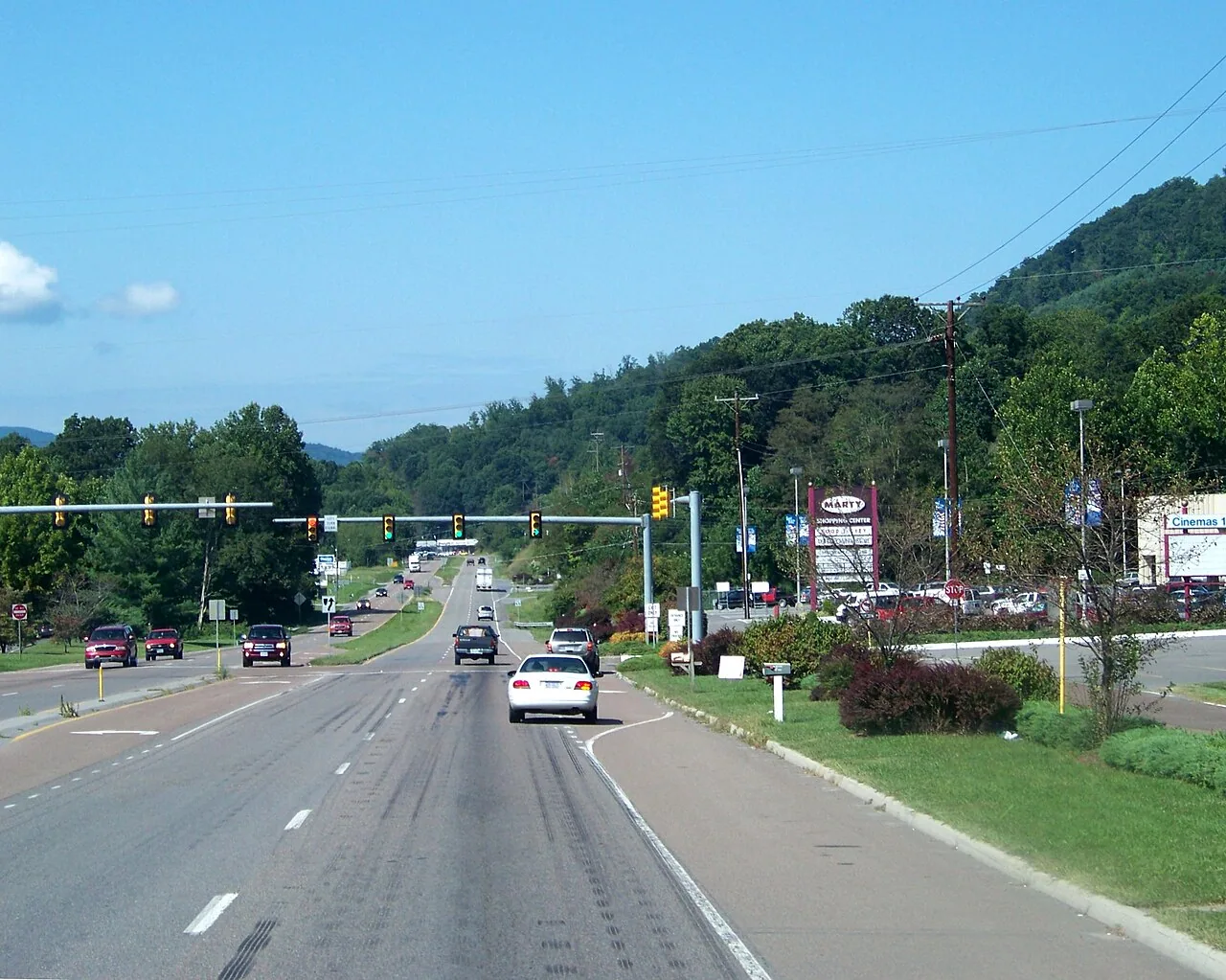
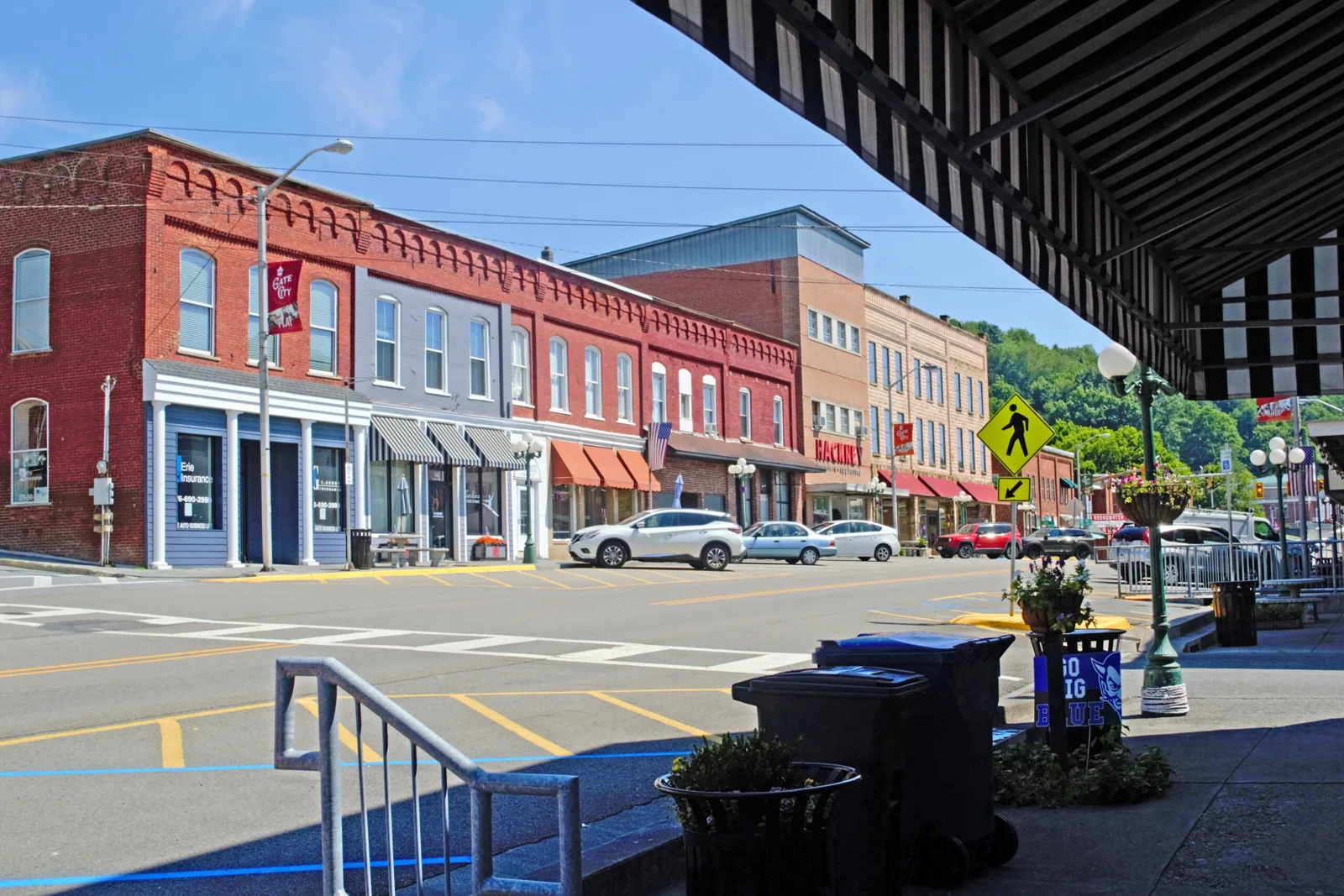
Before a roofing truck is scheduled into Gate City, we check what the highway is doing. The Virginia Department of Transportation plans to remove a large portion of the mountain at Moccasin Gap near the town, and any road work of that size can change travel times on U.S. 23 for the trucks that carry insulation, membrane and metal. Gate City is the Scott County, Virginia seat, with 2,043 residents at 1,339 feet, on U.S. 23 and 421.
With the delivery route settled, the sequence is a walk of the roof by a foreman, a written scope with options, the permit step and a short list of access windows. Small-town sites reward that order, since each step is simple when it comes in sequence.
Delivery Routes Along U.S. 23 and U.S. 421
Two U.S. highways meet the town, and both are working roads for the trucks that serve the area. A delivery plan names the route, the arrival window and a fallback if a lane is restricted. When a flatbed has to arrive on a day with road work in effect, we move the delivery to a time that avoids it and tell the foreman.
At the building, the problem is rarely the highway and usually the last hundred feet. A small commercial lot may have one entrance, overhead wires, parked customer vehicles and a dumpster already in place. We walk it, mark the truck position and ladder or hoist location on a sketch and agree the plan with the owner or manager before the first delivery.
For a mid-sized building we use a material hoist or a boom lift where a crane cannot reach, and the plan says which. Insulation and membrane for one day arrive together, so nothing sits on the lot overnight where weather or theft can reach it.
County-Seat Owners and Approval Timelines
Gate City is the seat of Scott County, so some owners answer to a board or a procurement office. At the first conversation we find out who approves the scope, who signs change orders and which meeting the roof must reach. If the roof is headed for an agenda, the written scope and options table are ready in time to be circulated beforehand.
Public and private owners alike benefit from a scope written in decision order. We list the items that threaten the interior, then those likely to fail within a year or two, then those to watch. A reader who sees only the first page still knows what must be funded now. The detail behind each line is in the roof condition report, with photographs and locations.
For a public building, public agency procedures also touch bonding, insurance certificates and prevailing wage questions. Those requirements go into the schedule from the start, because paperwork can add days before a crew is cleared to work.
Repair, Recover or Replace on a Small Roof
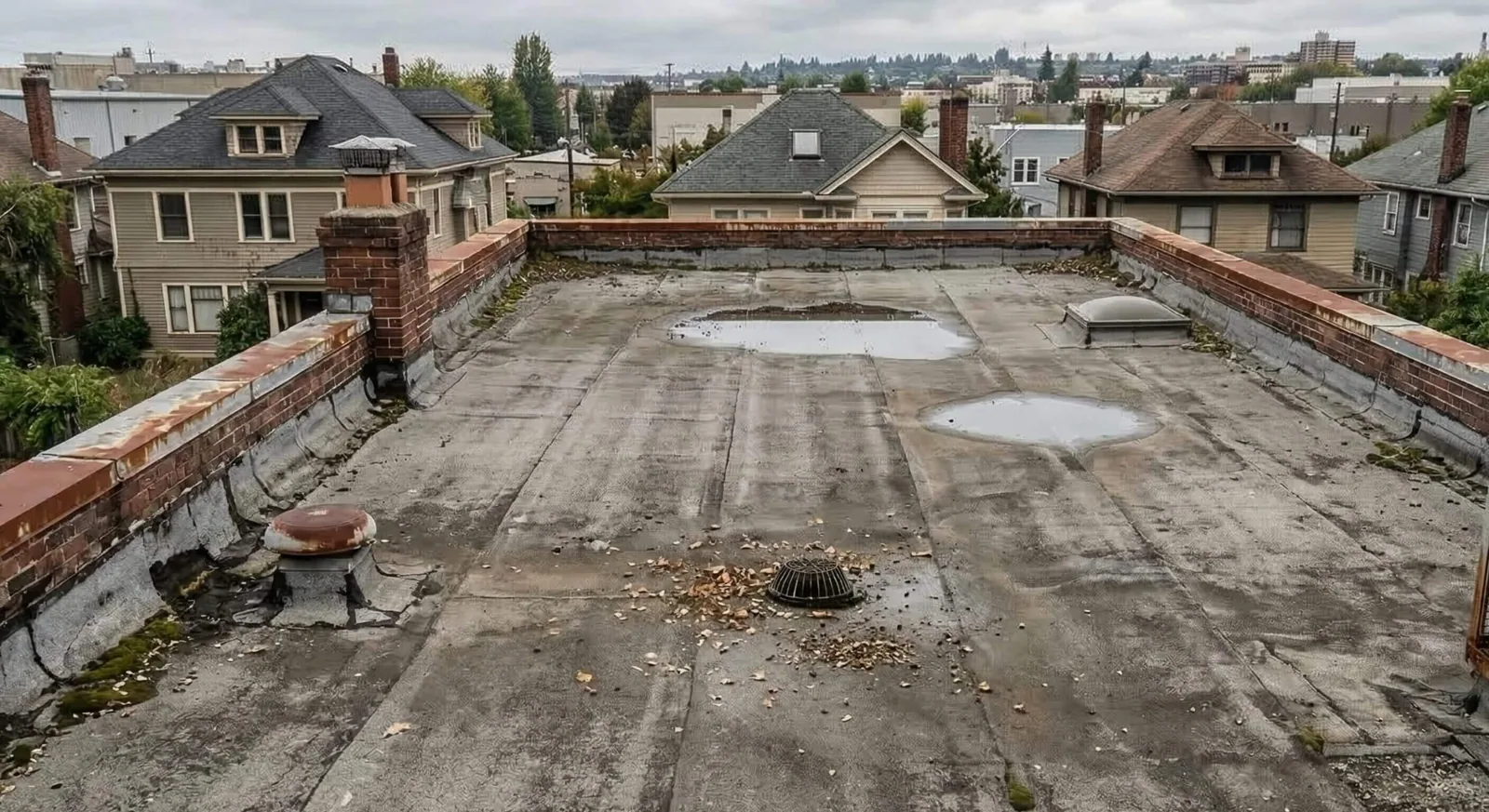
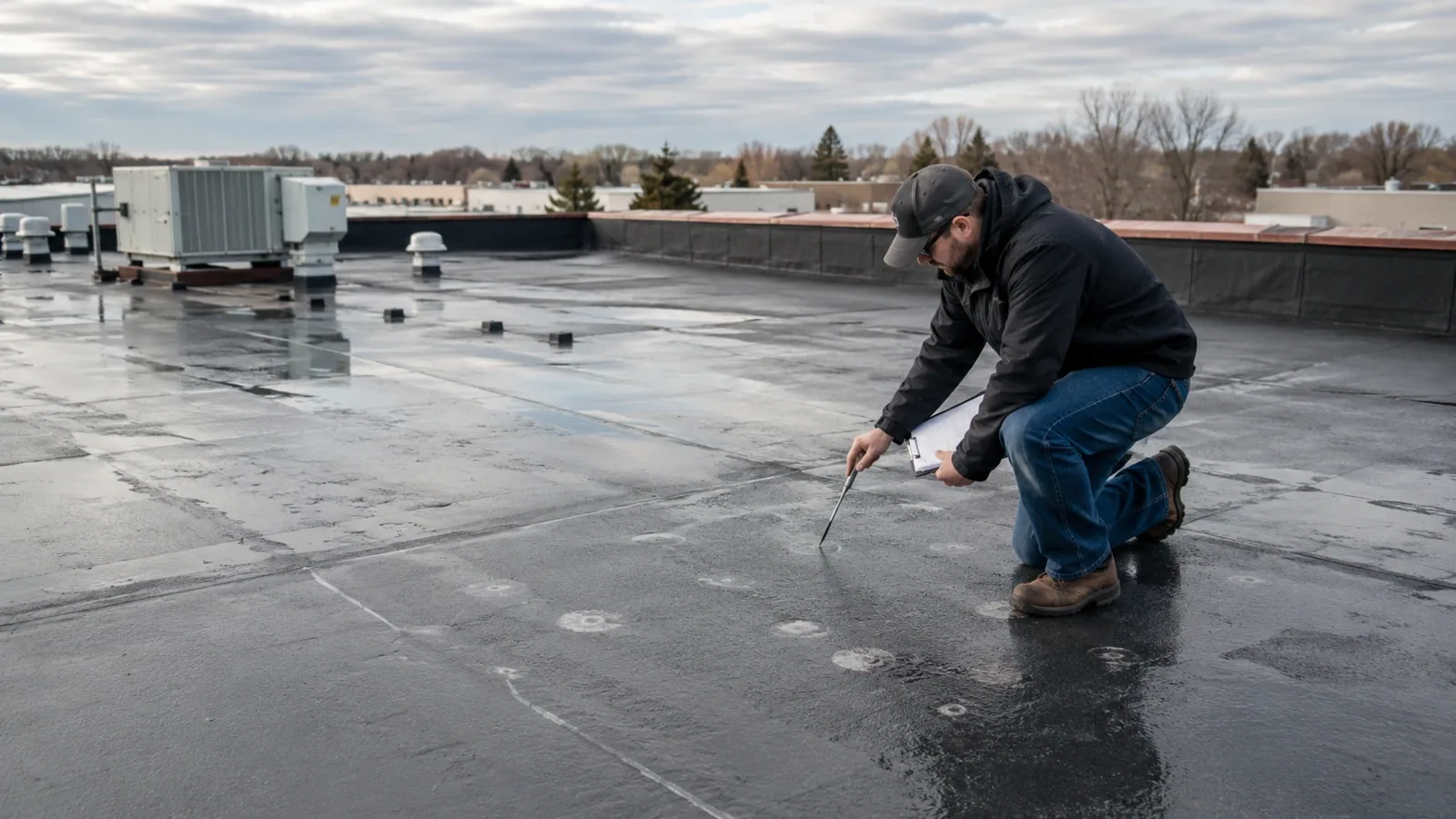
A small commercial roof makes the economics of each choice easier to see. A repair is the right answer when the damage is local and the insulation is dry; the crew cuts out the failed area, replaces the damaged material and flashes the patch into the surrounding membrane. A commercial roof repair done with the cause identified lasts longer than a patch placed over a stain.
When seams are opening and flashings are failing across the roof, the question becomes whether the insulation is still dry. A moisture survey and a few core cuts answer it. If it is dry, a recover or a coating can add years. If it is saturated, the wet areas come out. Mobilization is a larger share of the price on a small roof, so we say what it is and what the owner saves by combining repair work into one visit.
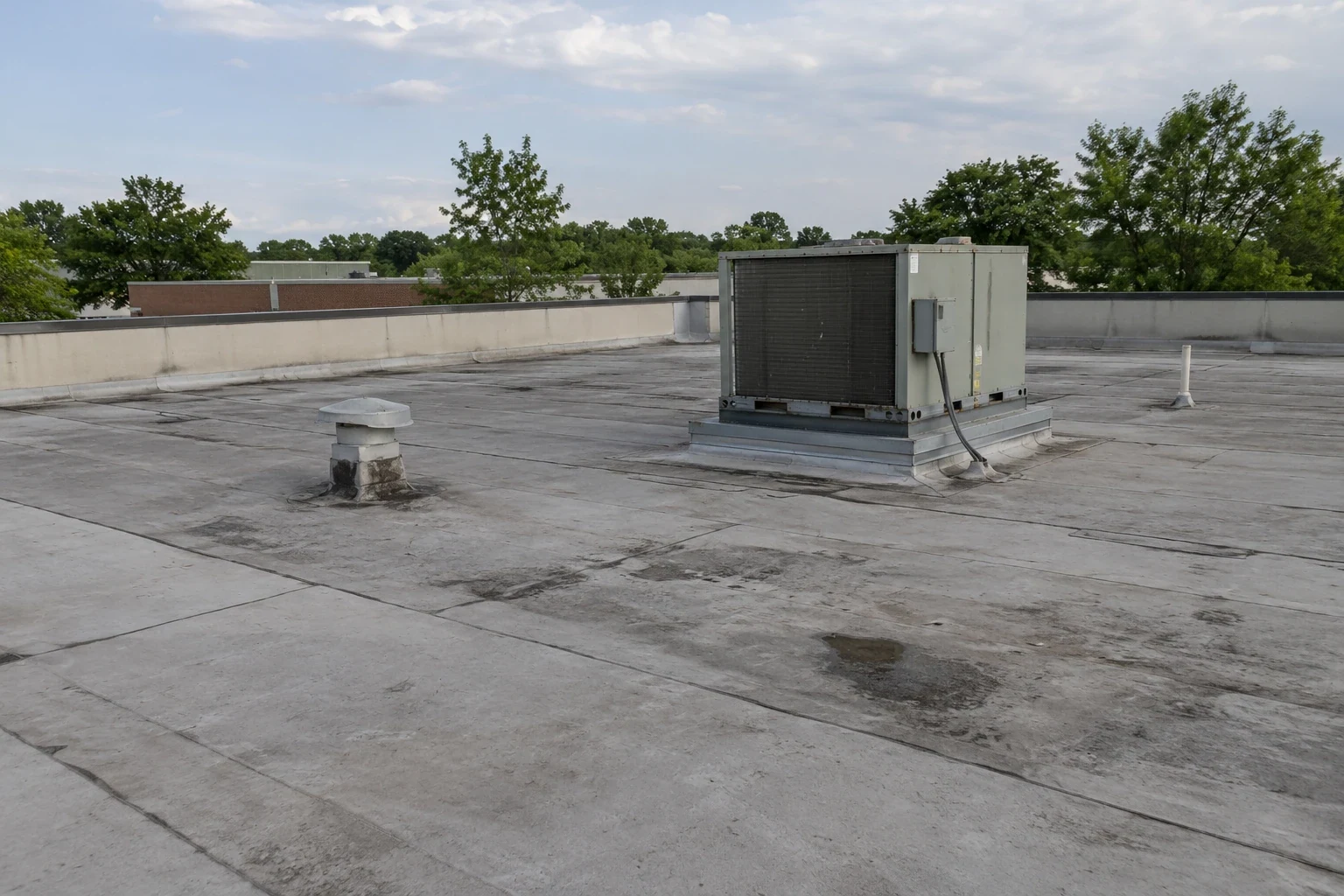
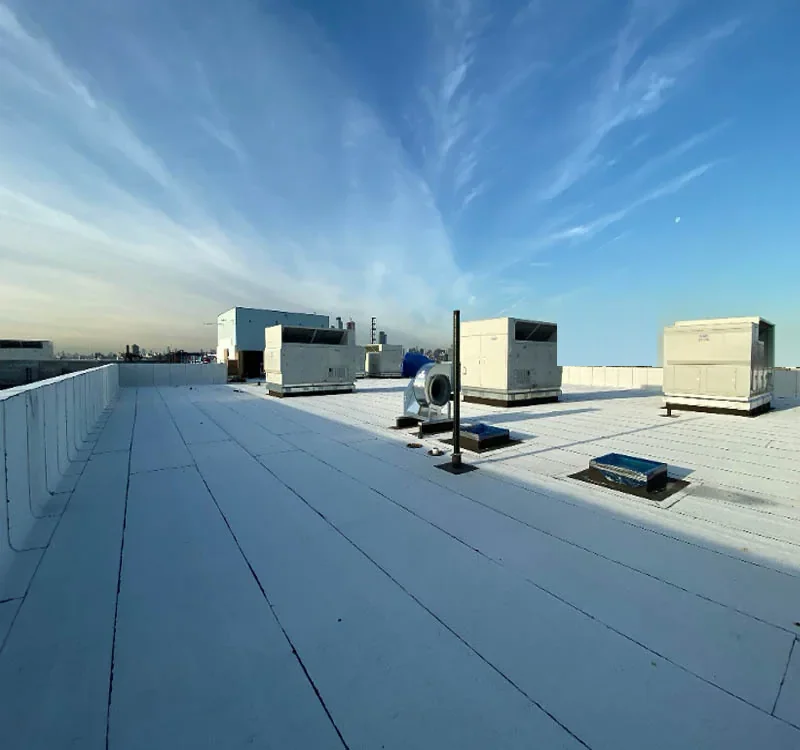
Equipment on a small building usually means one or two rooftop units. Each curb is checked for sealant failure and drainage around its base, and any unit that needs to be disconnected is scheduled with the HVAC contractor ahead of the tear-off.
Weather Buffer and Wind Exposure
Wet weather is routine for Kingsport, TN, with about 45 inches of precipitation a year, so every day's plan has a closing time built in. Kingsport has dropped to about minus 18 F and reached 104 F; adhesives and sealants carry temperature limits, and the schedule puts them in the warmer part of the day.
NWS Morristown has warned of 60 mph gusts and hail in this part of the region, a reminder that edges and loose material are the first things to go. Before a crew leaves, edge metal is fastened, ballast is placed and open membrane is sealed. After a storm, dated photographs record what we find, and an insurer will want to see them.
Corners and perimeters take the highest wind loads on any low-slope roof, so they get a closer look at the fastening pattern and the perimeter flashing. We check that edge metal is fastened to its cleat, that coping joints are sealed and that the membrane is attached at the corners and perimeter to the standard the system calls for. Loose edge metal is cheap to refasten before a storm and expensive to replace after one.
Permit Step and Records
A Gate City roof is permitted under Virginia's process, not Tennessee's. Kingsport's rules, stamped drawings and a state license above $25,000, are the reference we plan to, but we confirm in writing which office reviews the work and what it asks for before the submittal. Materials are ordered while the review is under way, and the first tear-off day is set once the approval arrives.
When the job closes, the file given to the owner covers the sign-off punch list, flashing and edge photographs, the warranty paperwork and a dated roof plan. Owners with buildings along the same corridor can ask for the same file for property in Weber City or Duffield, which makes comparison between buildings straightforward.
Commercial Roofing Questions
How does highway construction near Moccasin Gap affect a roofing schedule?
It affects delivery timing. We check the road status before scheduling each load, choose a window that avoids restricted lanes and keep a fallback arrival time. Because the crew can only start when material is on the lot, the plan carries a buffer day for the delivery.
What should a county or municipal owner prepare before asking for a scope?
Prepare the site plan, the roof access points, the approval path and the next meeting date. We build the written options table to fit that calendar, and we list the insurance and bonding paperwork the owner will want from us.
Is a small roof cheaper per square foot to replace than a large one?
Usually not. Mobilization, dumpster, permit and a minimum crew day are fixed costs, and a small roof spreads them over less area. Combining repairs into a single visit, or replacing the whole roof once instead of patching twice, keeps those fixed costs from recurring.
Who coordinates the HVAC shutdown for a rooftop unit that needs to be disconnected?
We do, with the mechanical contractor. The roof plan names the units, the disconnect order and the day each one is reconnected, and the HVAC contractor confirms its availability before we set the tear-off date.
What proof of storm damage does an insurer expect on a commercial roof?
Dated photographs of the damage, a sketch showing where each item sits and a written description of what was found. We take them right after the storm and again as repairs proceed, and our claim documentation work organizes them for the adjuster.