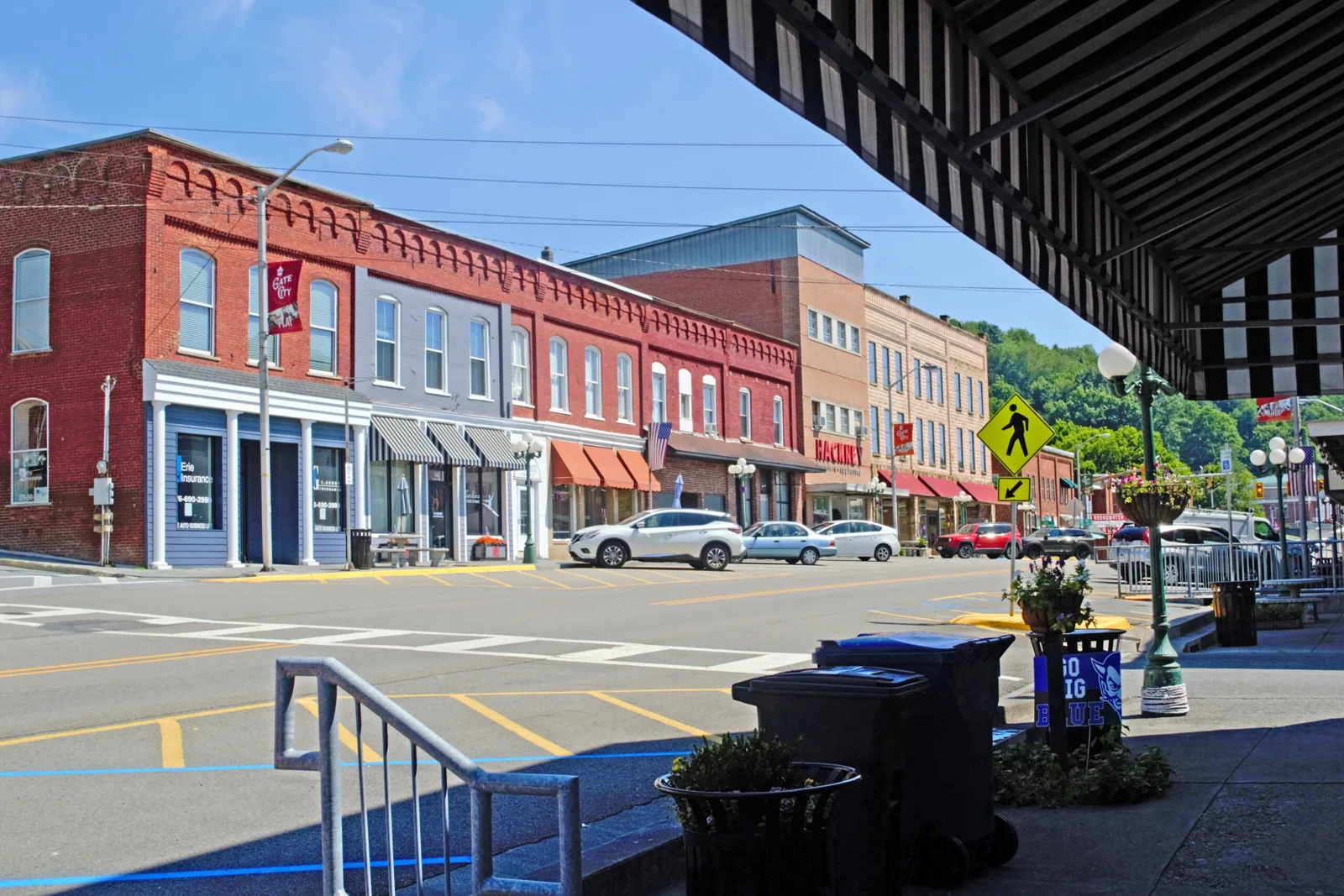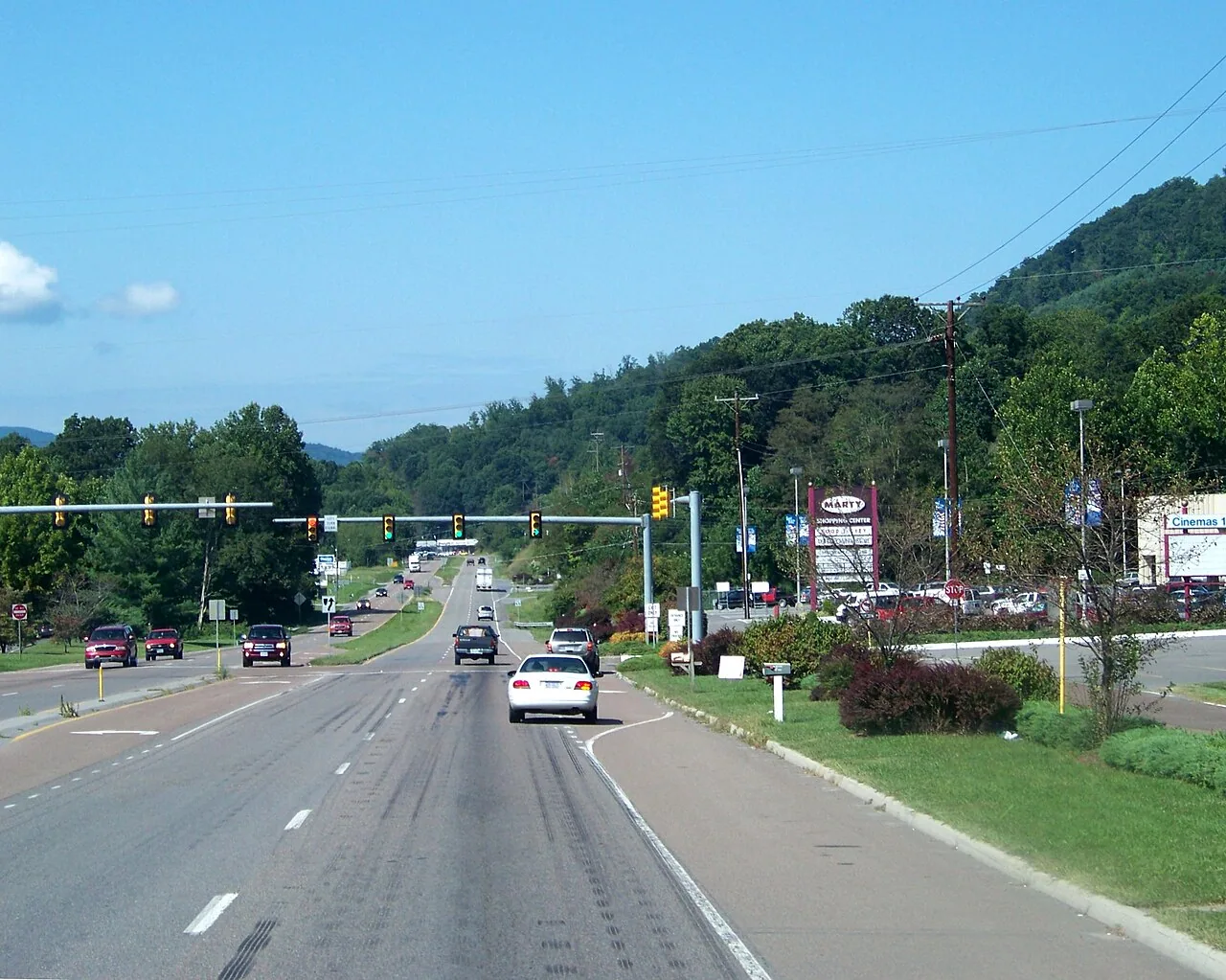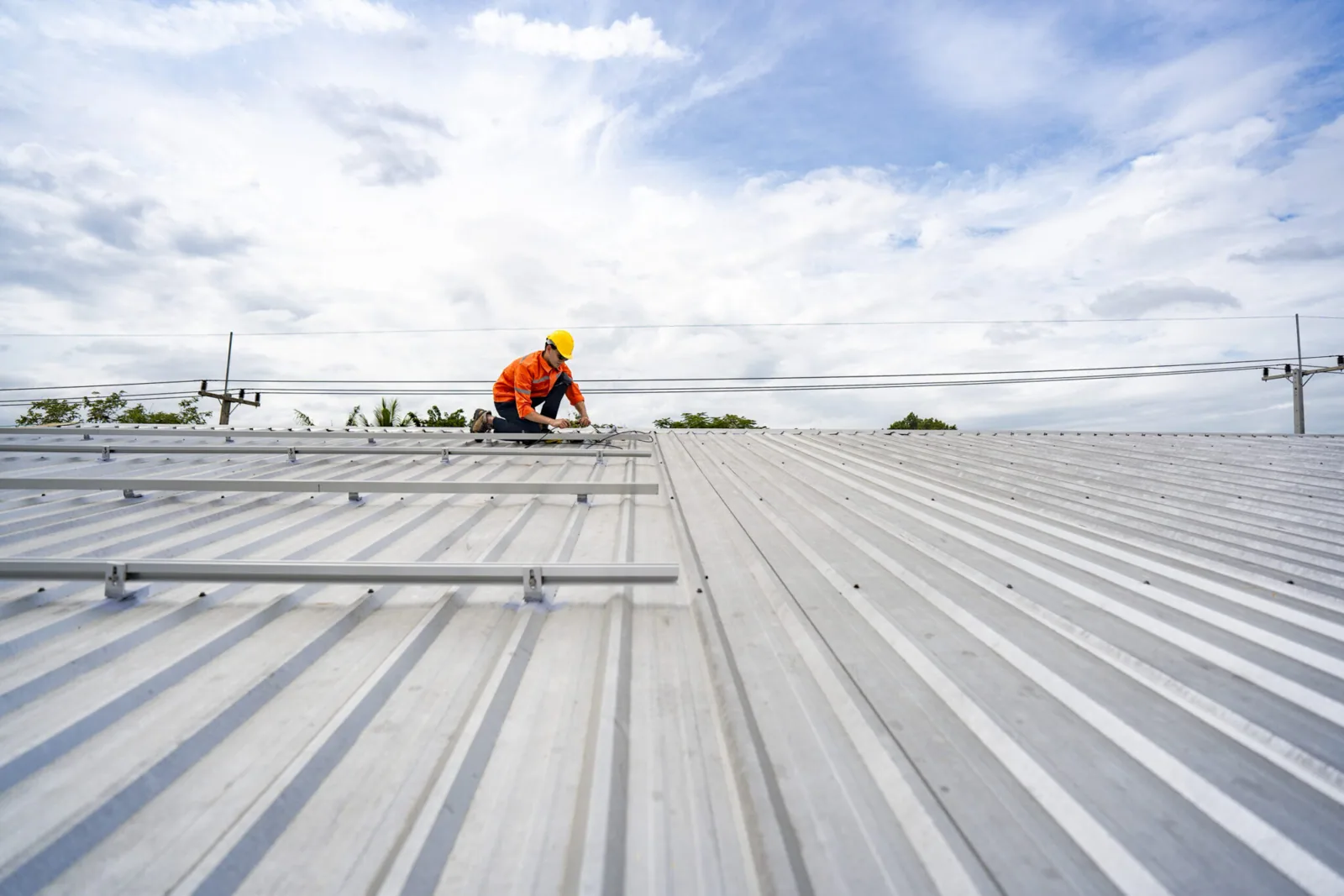
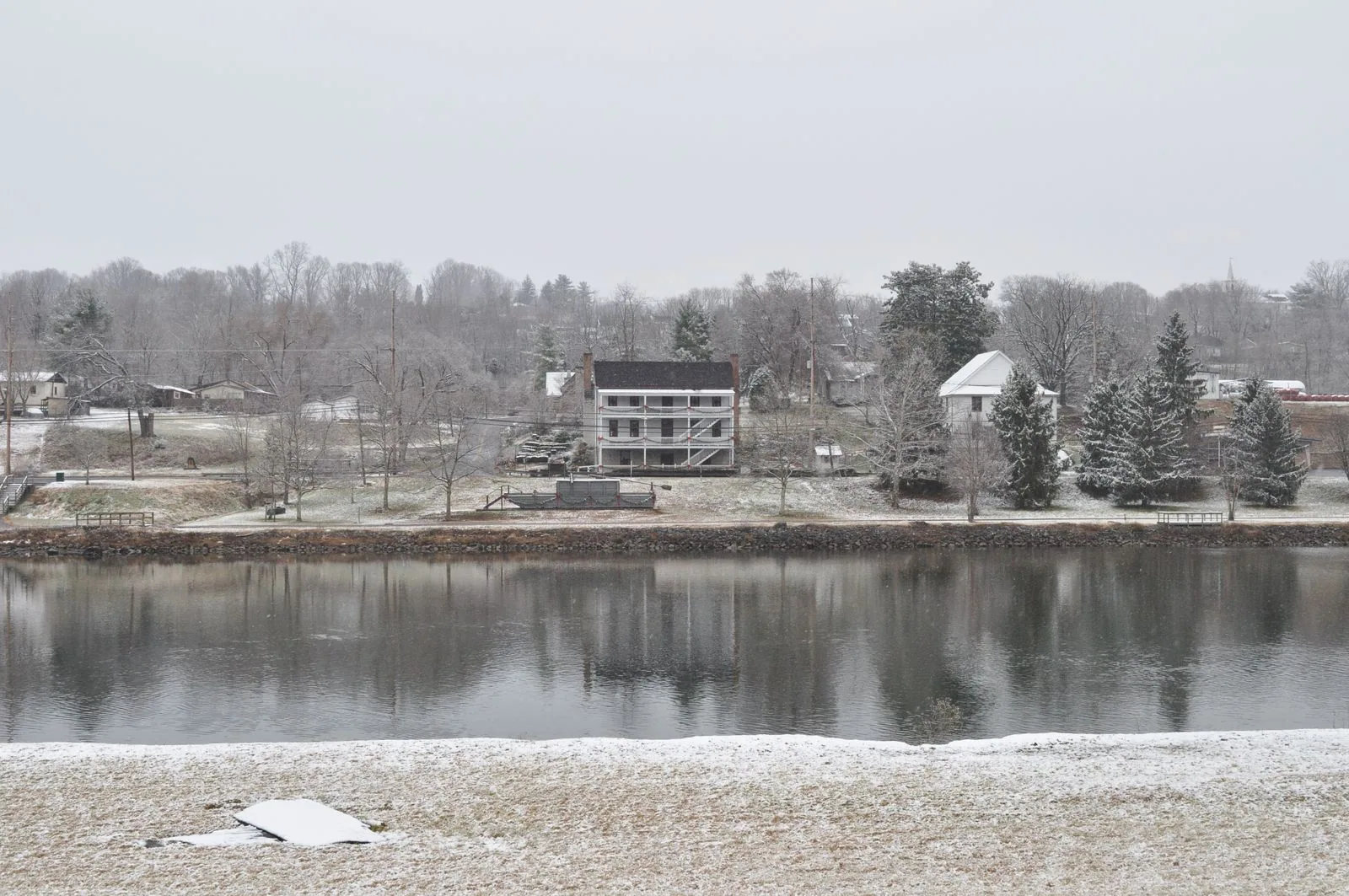
On a Weber City roof job the first line of the plan is the frontage: where the truck stops, where the dumpster sits and how customers still reach the door. Businesses and railroad tracks line U.S. 23 through town, and U.S. 23 serves as a primary north-south corridor for western Virginia, so the road in front of a commercial building is busy and the space beside it is limited. Weber City had 1,250 residents in 2020, and its commercial buildings sit close to that corridor.
We lay out the frontage and the rear access on a sketch, agree it with the owner, and only then build the tear-off and dry-in sequence.
Frontage Work Beside a Busy Highway
A building on a corridor road has an entrance that customers use all day. The roofing plan keeps that entrance clear and puts the crew's ladder or hoist at a side or rear position where possible. Where the only workable position is at the front, we set cones, assign a spotter and schedule the delivery for the quietest part of the morning.
Material for one day arrives on one truck. Insulation and membrane are carried up by hoist or crane and stacked on the roof near where they will be installed, spread over structure that can carry it. The foreman checks the load against the deck, since a stack of insulation in one spot is a point load.
Hours matter as much as position. A restaurant, a retail shop and a service business each have a different busy period, and we ask for it. Noisy tear-off work is placed in the slowest hours, and any interior ceiling protection is hung before the first section opens.
Roof Debris Control Near the Rail Line
Railroad tracks run alongside the highway through town, and a roof close to the tracks needs a debris plan that fits. Old membrane, gravel, fasteners and cut insulation can travel in wind, and none of it belongs on a rail bed. We keep tear-off in controlled sections, bag loose debris at the edge, use enclosed chutes to the dumpster and sweep the ground and roof at the end of each day.
We also ask the owner whether any access or staging area is on or near a right of way. If it is, the owner or property manager contacts the rail operator, and we adjust the plan to the answer. A crane swing over a right of way is not something a roofer decides alone.
Magnetic sweepers are part of the end-of-day routine on any roof being replaced, because stray fasteners puncture tires and leave a lot unsafe for the next customer. A modified bitumen roof with torch-applied seams also needs a hot work plan, a fire watch and a distance from fuel or stored product.
Small Strips, Stand-Alone Shops and Their Roofs
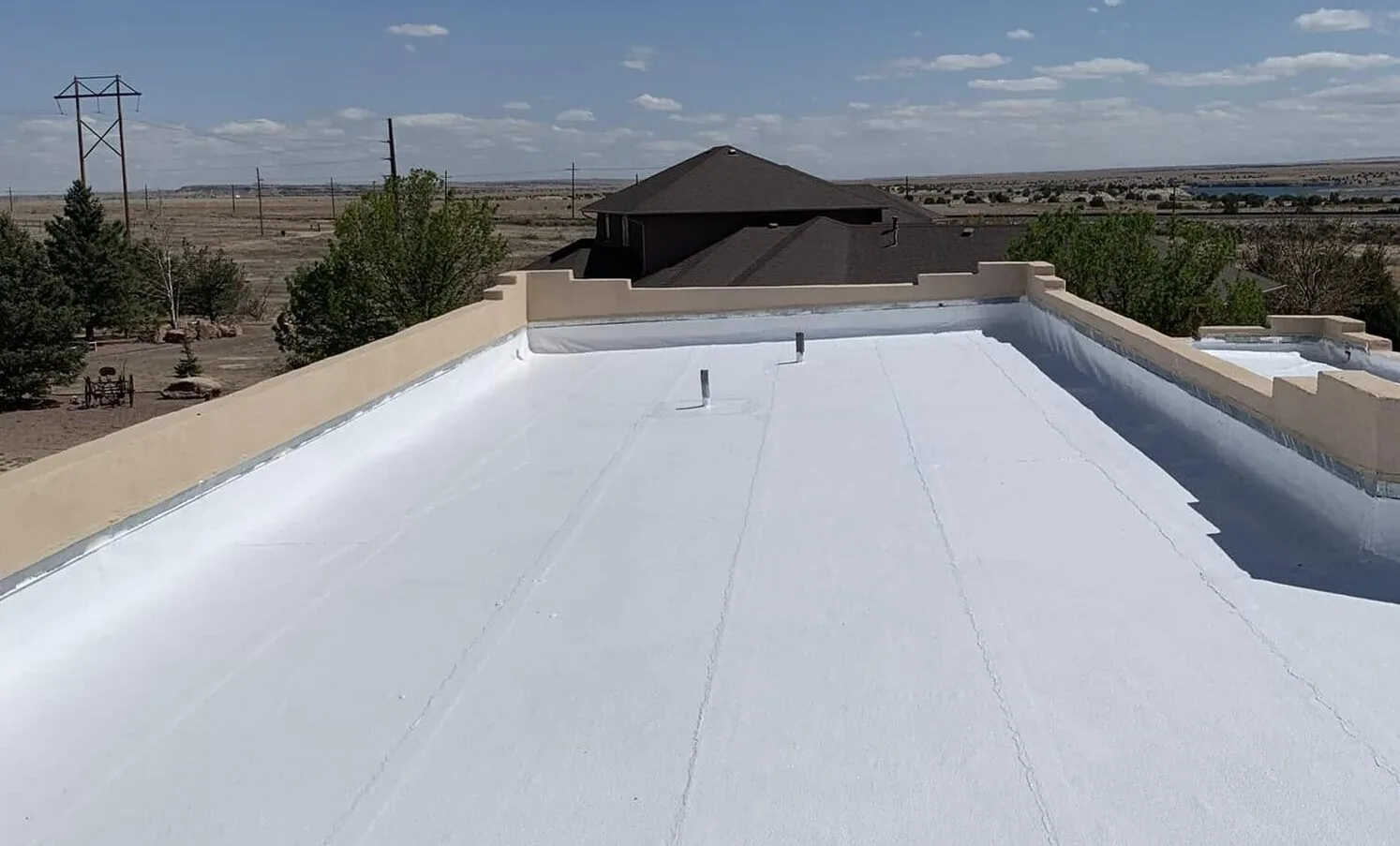
We do not assume a roof type for a building until we are on it. A short commercial roof inspection comes first, with the membrane type, seam condition, flashing, penetrations, drains and earlier patches noted on a sketch. A strip building may have several tenants under one roof or one section shared with a neighbor, and the walk finds out which spaces share drainage and which have separate roofs.
Choices for a building like this are straightforward. Isolated damage with dry insulation calls for repair. Widespread seam and flashing failure over dry insulation might call for a recover or a coating. Insulation holding water has to come out, at least in the affected areas. Each option comes with a photograph of the evidence and a price, so the owner compares like with like.
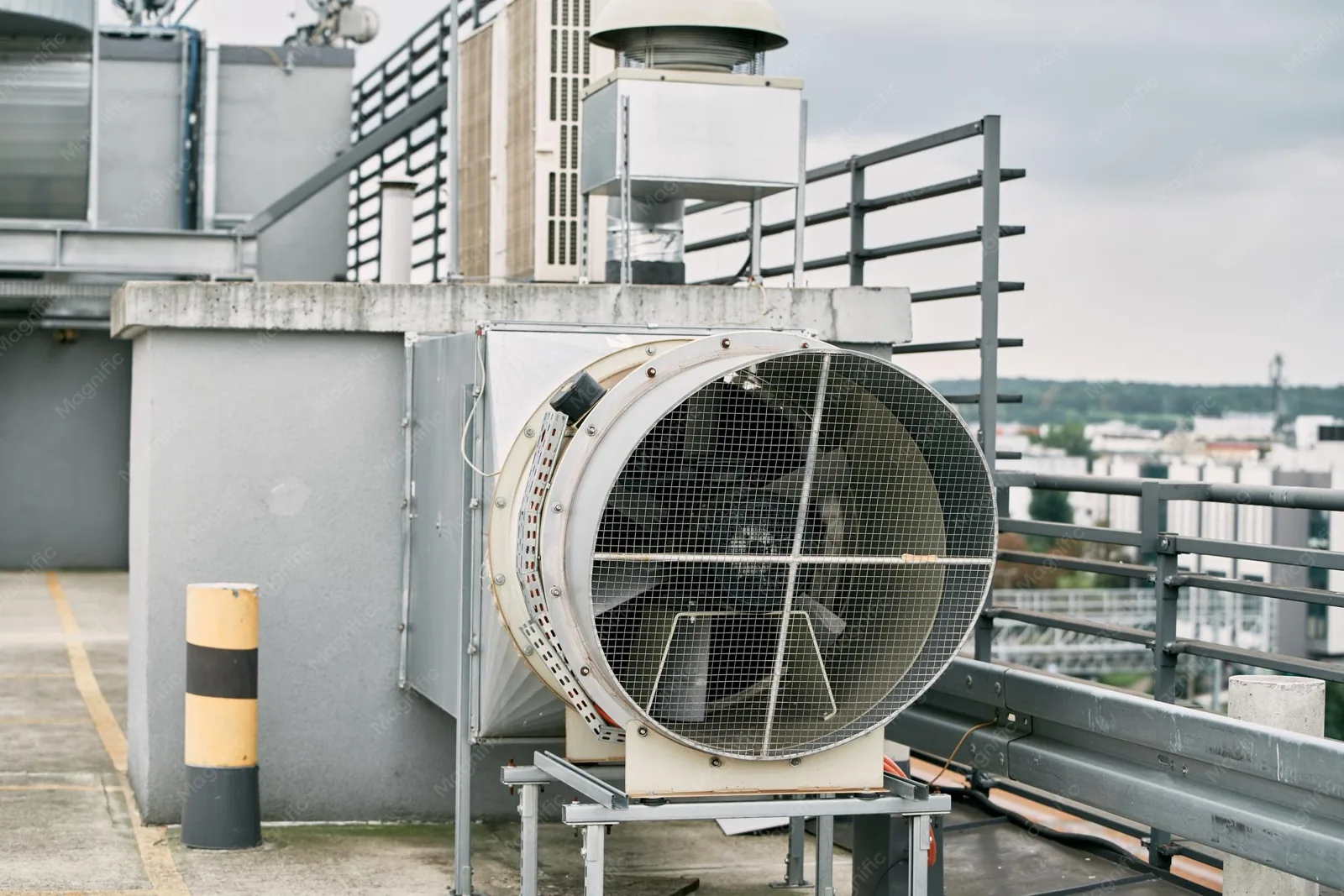
Equipment is the other recurring item. Roof units add curbs, conduit and refrigerant lines, and each one needs sound flashing. A curb or support with failed sealant is one of the most common leak sources on a small commercial building, and fixing it often costs far less than the interior damage it causes. When the unit itself is due for replacement, we ask for the new curb dimensions before the roof work is priced, so the flashing is built once to the final size and the roof is not opened a second time. Stand-alone shops get one more question: whether a parapet or a canopy edge sends water onto a neighbor's lot, since that changes where the new drainage has to go.
Wind, Rain and the Cold Range
Weber City lies south of Moccasin Gap, a natural break in the mountains cut by Big Moccasin Creek. Edge fastening and perimeter flashing get the care any exposed low-slope roof needs, since corners and edges carry the highest uplift wherever the roof sits.
Temperature range sets the chemistry. Kingsport, TN, has ranged from a minus 18 F low to a 104 F high, and primers, adhesives and sealants each have a working window inside that band. After a thunderstorm warning anywhere in the region, we walk the roofs we have open for lifted edges, bruised insulation and cracked membrane, and photograph each item with the date.
Permit, Closeout and Records
The permit for a Weber City roof comes from the office with jurisdiction in Virginia, and we confirm which one before submittal. For the paperwork we use Kingsport's requirements as a floor: stamped drawings, and a State of Tennessee license on any Tennessee job above $25,000. Whatever the Virginia office adds goes on top.
Closeout hands the owner a signed punch list, a photograph of every flashing and edge, the warranty documents and a roof plan marked with the date. The same file serves owners with buildings in Gate City and Duffield, and a warranty tracking record keeps every roof's coverage dates in one place.
Commercial Roofing Questions
How do you keep customers moving through the front door during a roof job?
We place the ladder or hoist at a side or rear position when the lot allows it, and use cones and a spotter at the front when it does not. Deliveries come in the quietest hour, and interior protection goes up before the first section is opened.
What changes when the roof is close to a railroad?
Debris control and crane planning. Tear-off is done in controlled sections, loose material is bagged at the edge, and the lot is swept with a magnet at day's end. If any staging or crane swing touches a right of way, the owner contacts the rail operator and we follow what it says.
How can I tell whether a leak comes from the roof unit's curb?
Check whether the stain sits under or beside the unit, and whether it appears only after rain. A curb with cracked sealant or a failed corner flashing sends water to the deck right below it. We confirm with a visual check and, when needed, a moisture survey that maps saturated insulation around the curb.
Which is better for a small retail roof, a coating or a new membrane?
A coating suits a dry, sound roof whose surface is worn. A new membrane suits a roof with saturated insulation or widespread seam failure. Core cuts and a moisture survey tell which condition applies, and the price for each option is shown side by side.
Does torch work near a business need special planning?
Yes. A hot work permit, a fire watch during and after the work, clear distance from stored product and fuel, and an extinguisher on the roof are all part of the plan. Where torch application is unsuitable, we propose a cold-applied or heat-welded system instead.