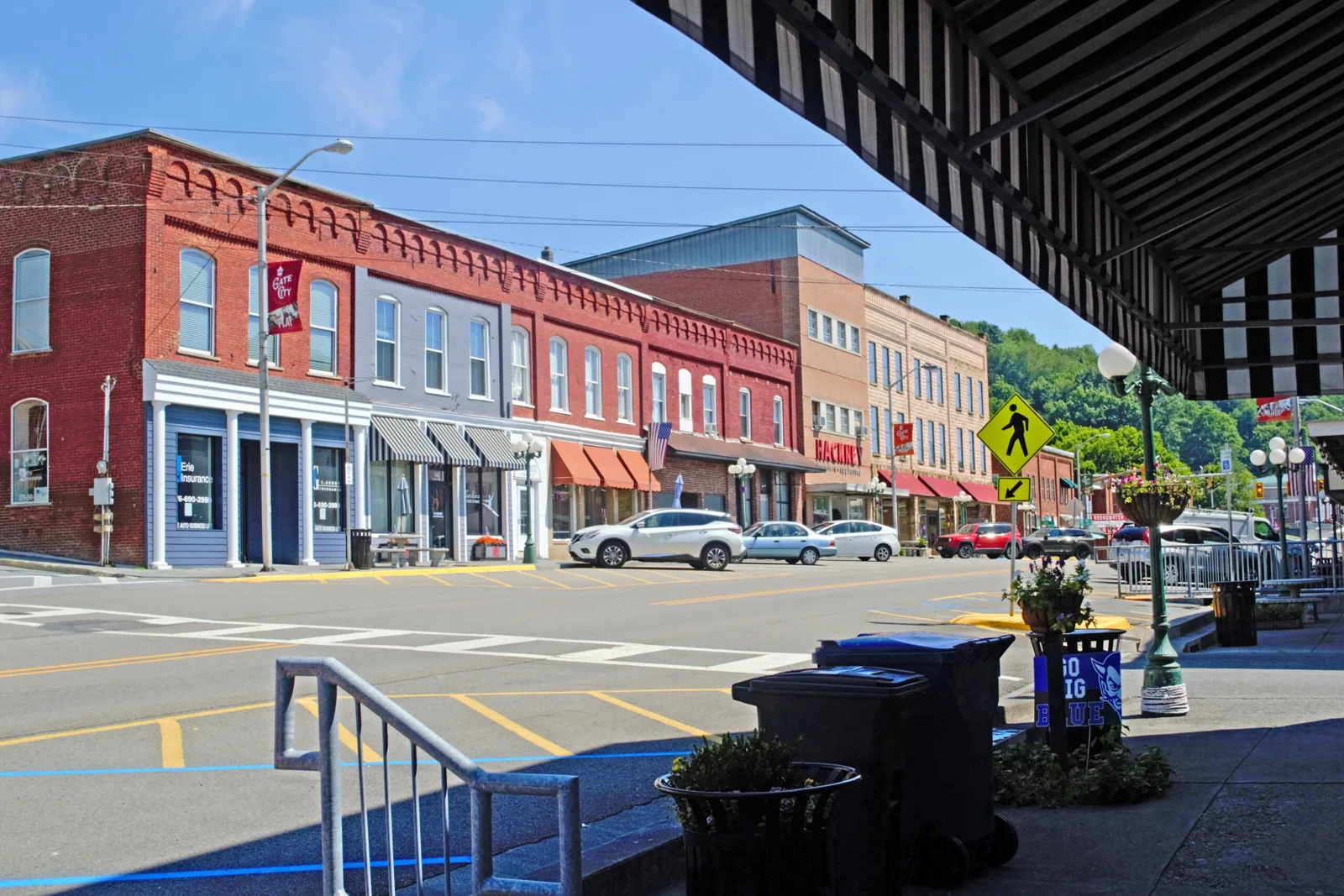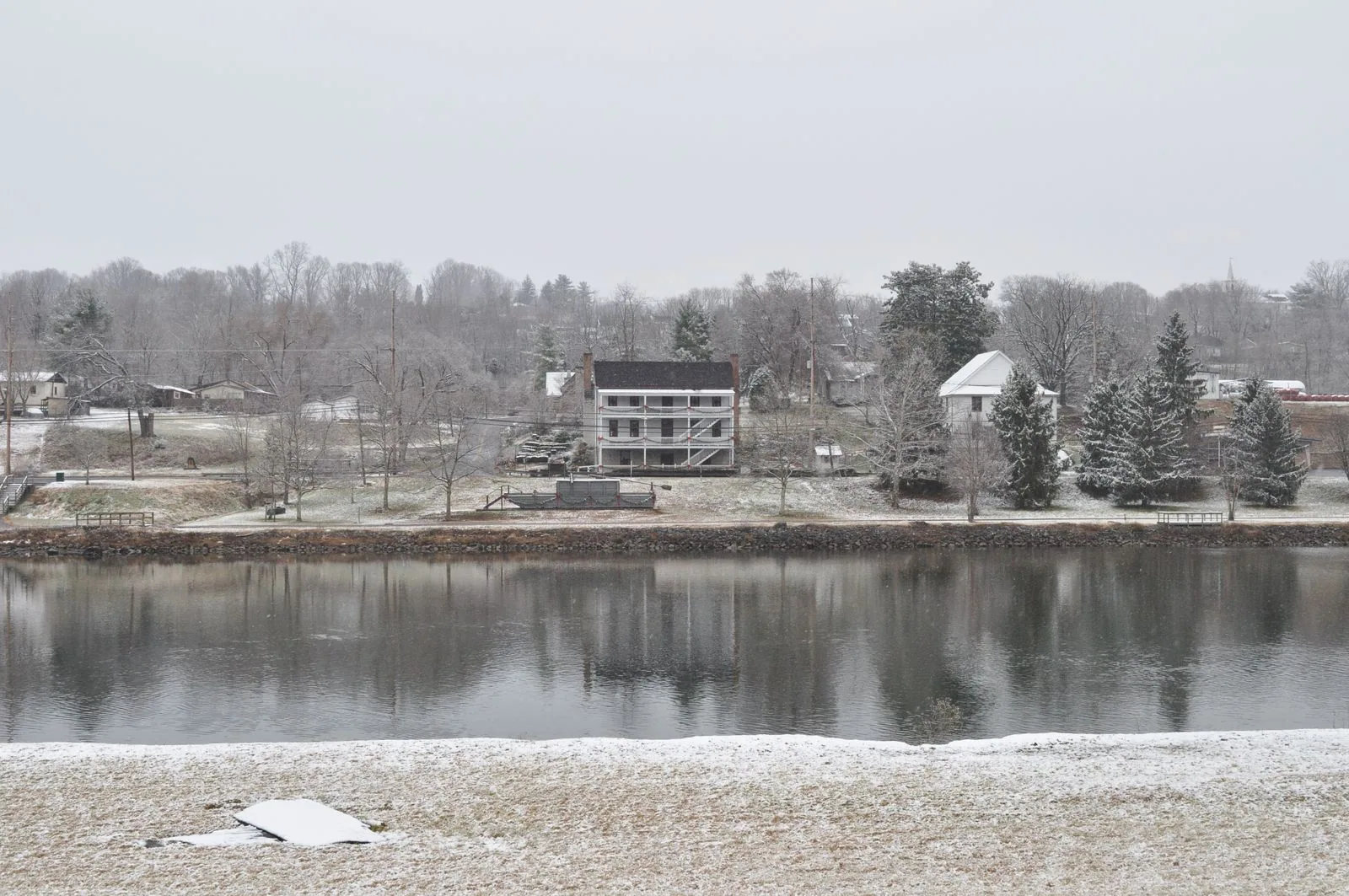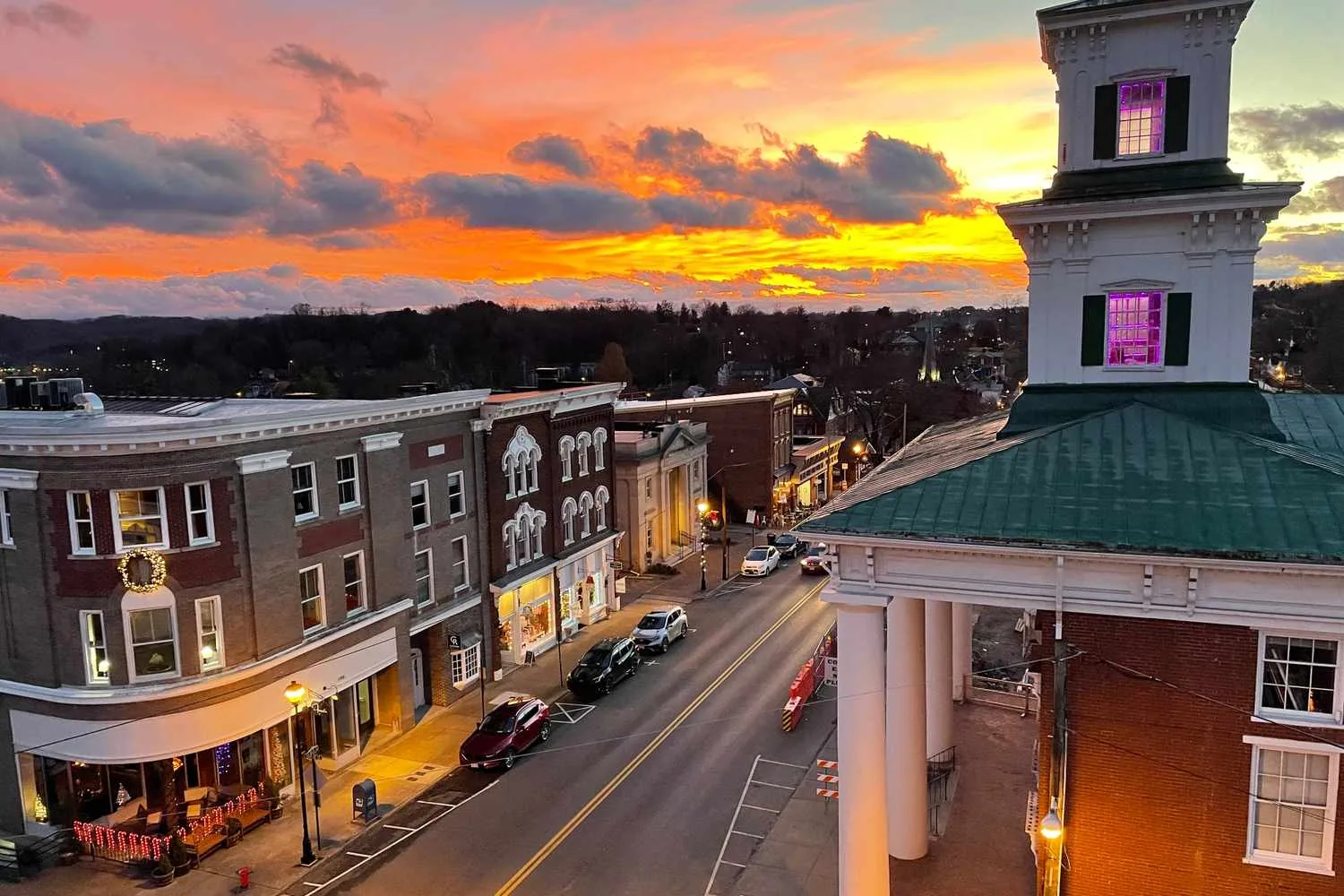
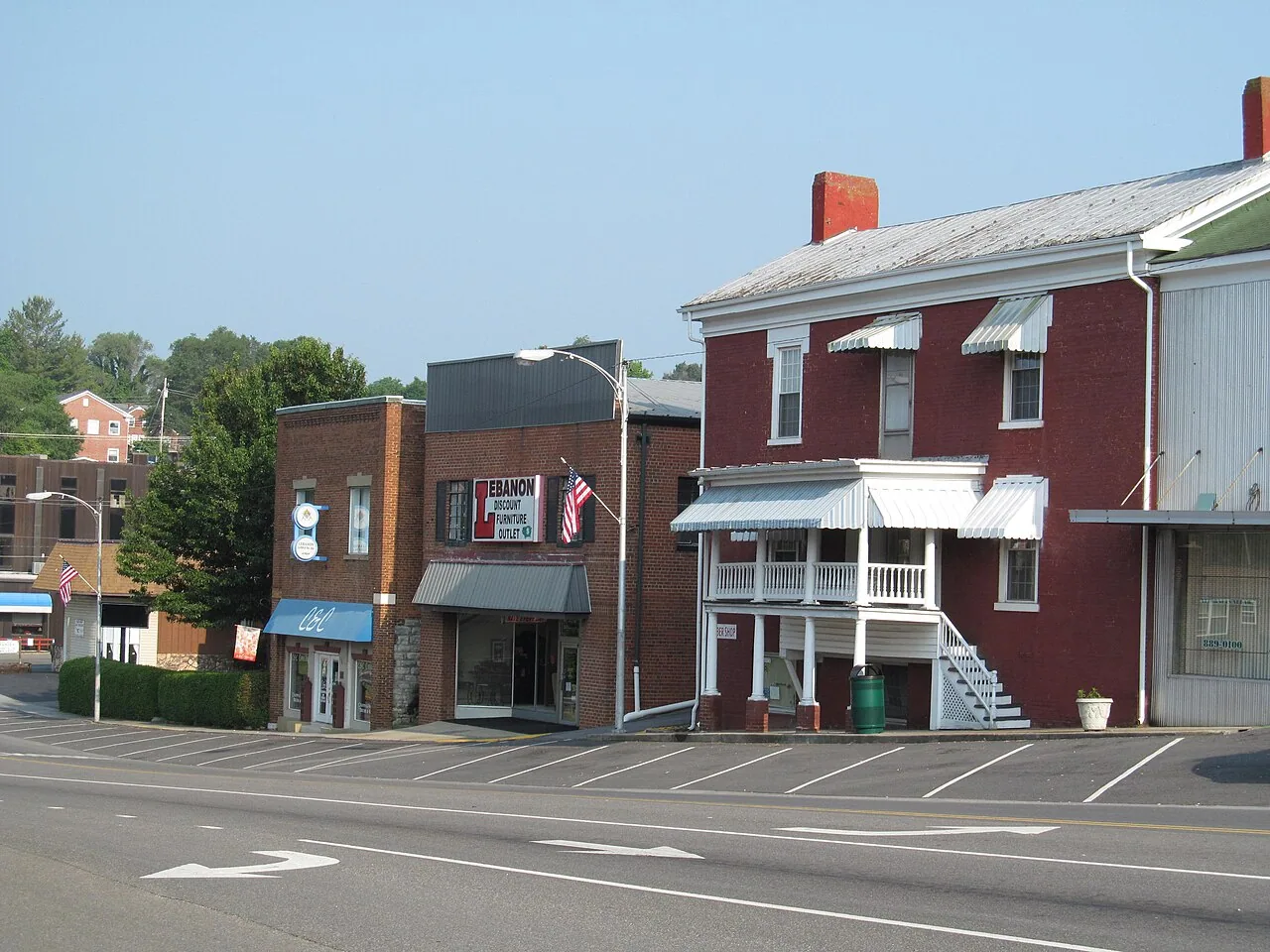
The access road is the first item on a Hiltons roof plan. Hiltons, Virginia is a community of 334 residents in Scott County along U.S. 421 in Poor Valley, with Clinch Mountain to the north and Pine Ridge to the south, and a loaded truck reaching a building here comes in along U.S. 421 or a road branching from it. We drive that approach, note the width, the grade and the clearance at the building, and put it on the site plan before a delivery is scheduled.
After the route comes the roof: a walk across it, options in writing, the permit and a dry-in plan sized for a small crew working one day at a time.
One Road In and the Last Hundred Feet
A valley setting narrows the choices for a truck. A single main road can mean that a delivery blocks the route for neighbors, and a lot beside the road may offer only one position for a boom or a hoist. We plan the stop for each delivery so that traffic can pass, set cones and use a spotter when a truck has to back in.
For a small commercial building the last hundred feet decide the job: driveway width, overhead wires at the curb cut, the slope into the lot and the room to set a ladder or lift without crossing a neighbor's property. We mark each of those on a sketch and confirm the plan with the owner.
Material for one day arrives together and goes up by hoist or lift in the order of installation. Anything not installed by evening is covered and secured, and the foreman checks the tie-downs before leaving.
What a Small Commercial Roof Needs First
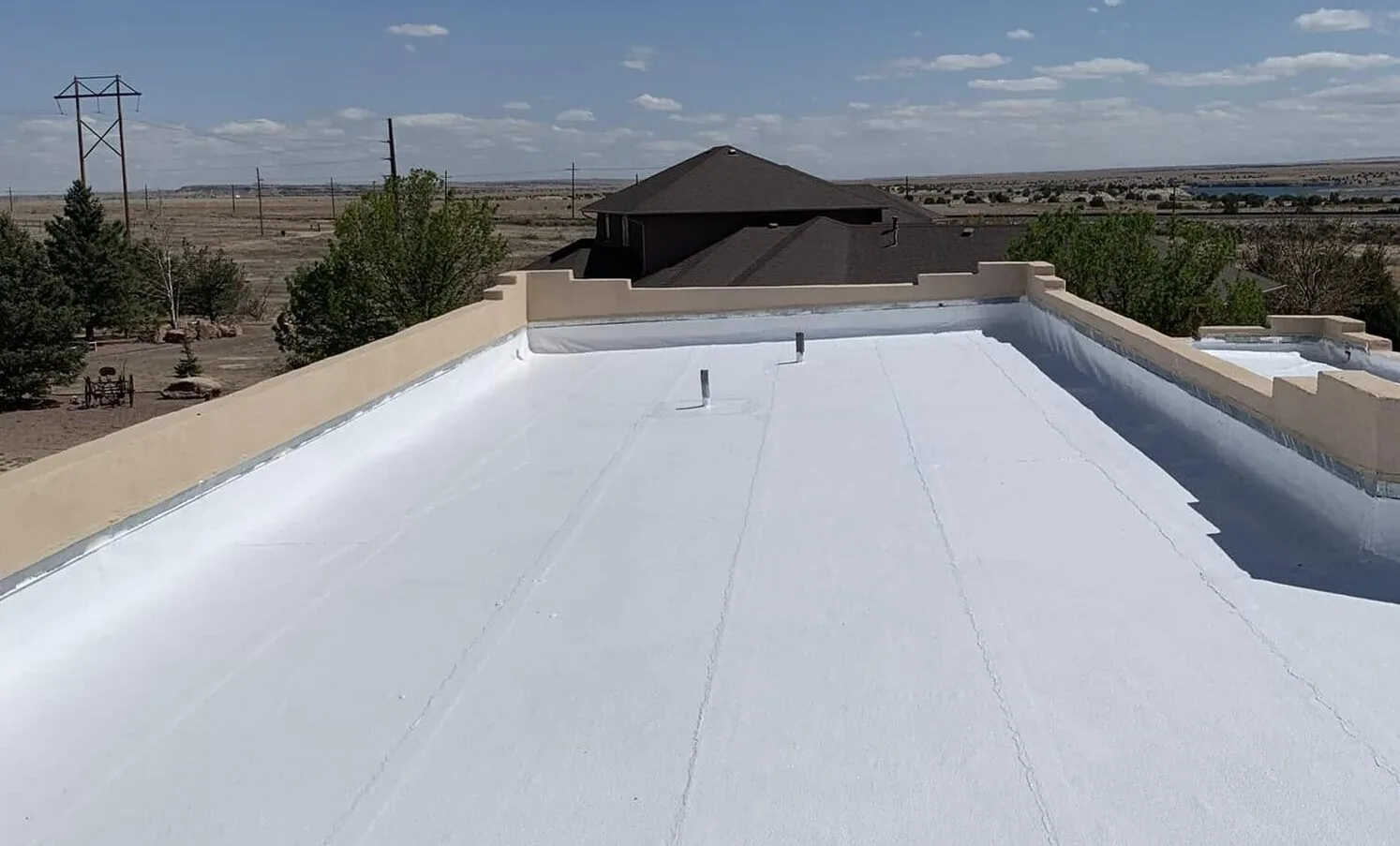
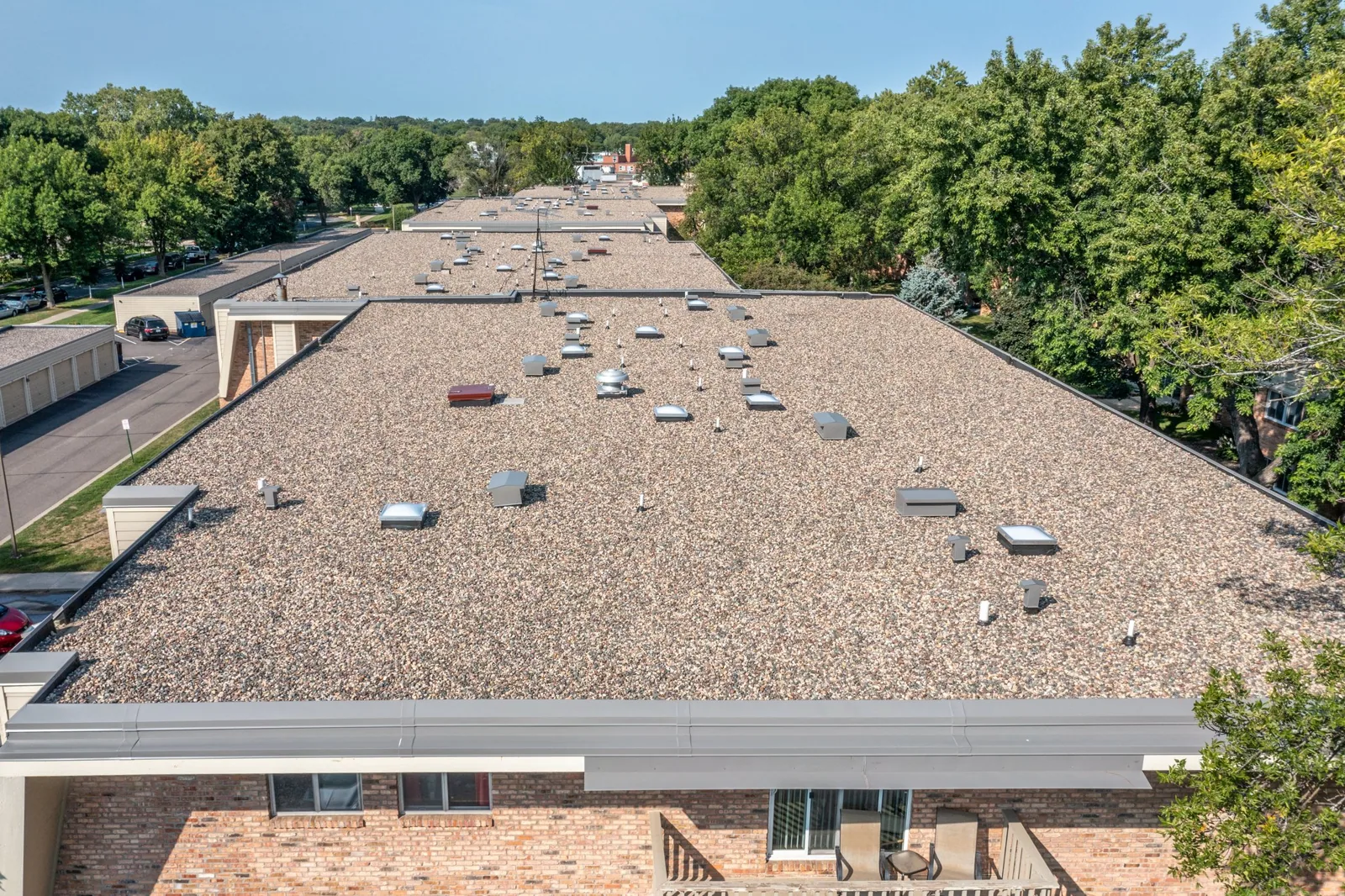
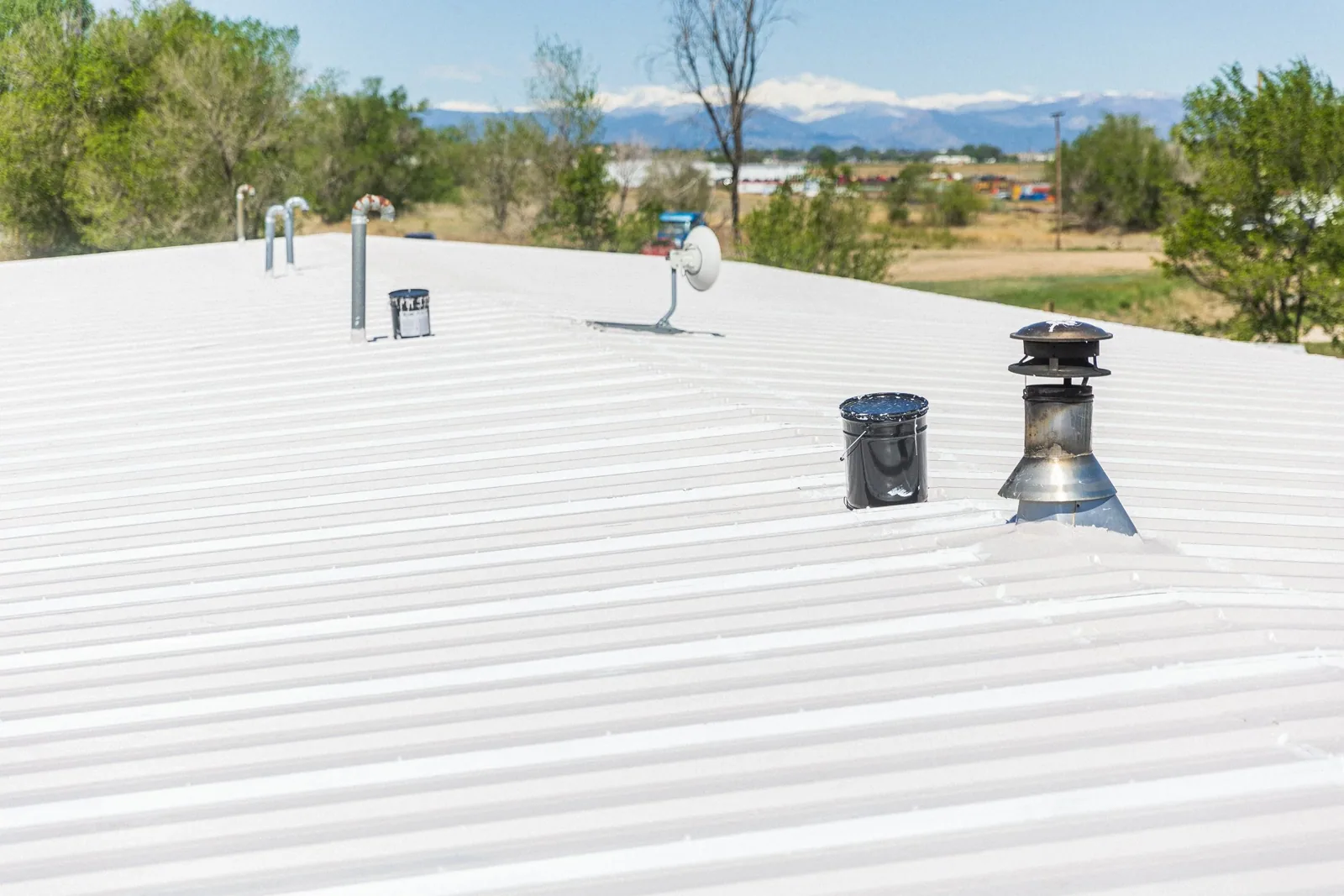
We do not assume what a building in Hiltons carries overhead. Our first visit is a short commercial roof inspection: what the roof is made of, how its seams and flashing look, where the penetrations and gutters are and what earlier repairs show. Every finding gets a photograph and a mark on a sketch.
On a roof this size, a few details cause most problems: a failed seam near a penetration, a corner where the flashing has pulled away, a gutter that holds water against the fascia and a rooftop unit curb with cracked sealant. A flashing failure found early is a small repair. Left through a season of freeze and thaw, it becomes saturated insulation and stained ceilings.
The visit ends in a ranked list: leaks and failures that reach the interior first, then items likely to fail within a year or two, then items to watch. Each line carries its evidence and the price of the fix.
Drainage gets the same attention as the membrane. We follow the water from the surface to the drain, scupper or gutter and on to the ground, because a roof that sheds well into a gutter that has pulled away from the fascia still ends up with water inside the wall. Hangers, end caps, joints and downspout outlets are checked on the same visit, and any run that holds water after rain is written up with a photograph.
Repair, Recover or Replace on a Low-Volume Site
On a small roof, mobilization is a large share of the price. A crew, a dumpster, a delivery and a permit cost roughly the same on a small roof as on a larger one, so the sensible approach is to combine work into as few visits as possible. If a roof needs three repairs, doing them together saves two mobilizations.
When seams and flashings are failing across the whole roof, the question is the insulation under it. A moisture survey and a few core cuts settle whether it is dry. A dry, sound deck can take a recover or a coating restoration. Saturated areas come out and are replaced. The owner chooses with the evidence in hand and the cost of each option in front of them.
Three things set the timing: how long materials take to arrive, how long the permit takes to clear and how much room the schedule leaves for weather. Each appears in the schedule, so the owner knows when the roof will be open and when it will be closed again. A written date for each of those three items lets the owner plan around the crew instead of waiting on a phone call.
Weather Windows in a Mountain-Bounded Valley
In Kingsport, TN, rain falls on roughly 133 days a year, so a Hiltons job plan sets a closing time every day and keeps a tarp and ballast reserve on the truck. Lows near minus 18 F have been recorded there, and a cold morning pushes primer and sealant work into the afternoon.
Severe thunderstorm warnings from NWS Morristown for this part of Tennessee have mentioned hail and 60 mph gusts. After a warning of that kind, we check the roofs we have open for lifted edge metal, loose ballast and torn membrane edges, and take dated photographs, since an adjuster looks for records made close to the storm.
Permit, Closeout and Records
Hiltons is in Scott County, Virginia, so the permit for a roof there is issued by a Virginia office, and its name goes in writing to the owner before the submittal. Our reference for what to prepare is the Tennessee city of Kingsport, which asks for stamped drawings on commercial reroofing; the Virginia office's own requirements go on top.
The turnover binder has a signed punch list, close-up photographs of each flashing and edge, warranty documents and a dated plan of the roof. Hiltons is part of the Kingsport-Bristol metropolitan statistical area, and owners with buildings elsewhere in it can keep one file format across Gate City, Weber City and Abingdon. A roof condition report gives each building a baseline.
Commercial Roofing Questions
How do you plan a delivery when only one road reaches the building?
We drive the approach, note the width, grade and overhead clearance, and choose a stopping point that leaves a lane open for traffic. Cones and a spotter manage the stop. The delivery time is set for the hour when the road is quietest.
Is a small roof worth replacing, or should the owner keep patching?
Patching holds up where damage is confined and the insulation under it is still dry. When the same areas keep failing, or the moisture survey finds saturated insulation, repeated patching costs more than a planned repair or replacement. The scope shows each option with its price.
What does a gutter problem look like compared with a roof leak?
A gutter problem shows up at the eave, the fascia or the base of the wall after rain, while a roof leak shows up at a ceiling or upper wall. We trace both on the walk and fix the water discharge first when it is the cause.
Can a roof be repaired in cold weather?
Some repairs can, but adhesives, primers and sealants have temperature limits, so the schedule places cold-sensitive steps in the warmest part of the day. If conditions do not allow a lasting repair, we make the roof watertight with a temporary measure and complete it when the weather allows.
What proof helps with an insurance claim after hail?
Dated photographs of the damage, a sketch of where each item sits and a written description made soon after the storm. We also record the roof's condition before repairs begin, so the adjuster can see what the storm changed.