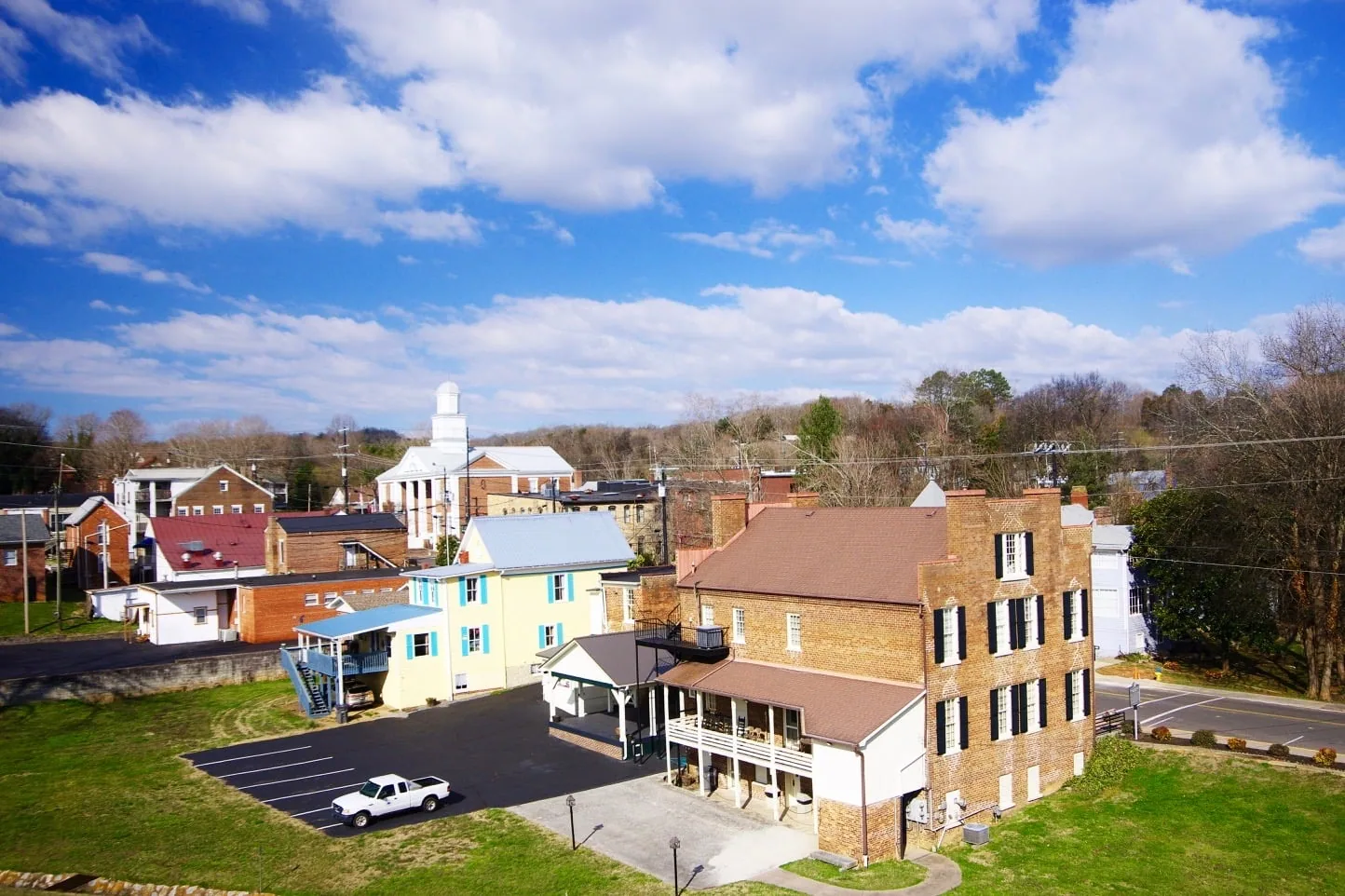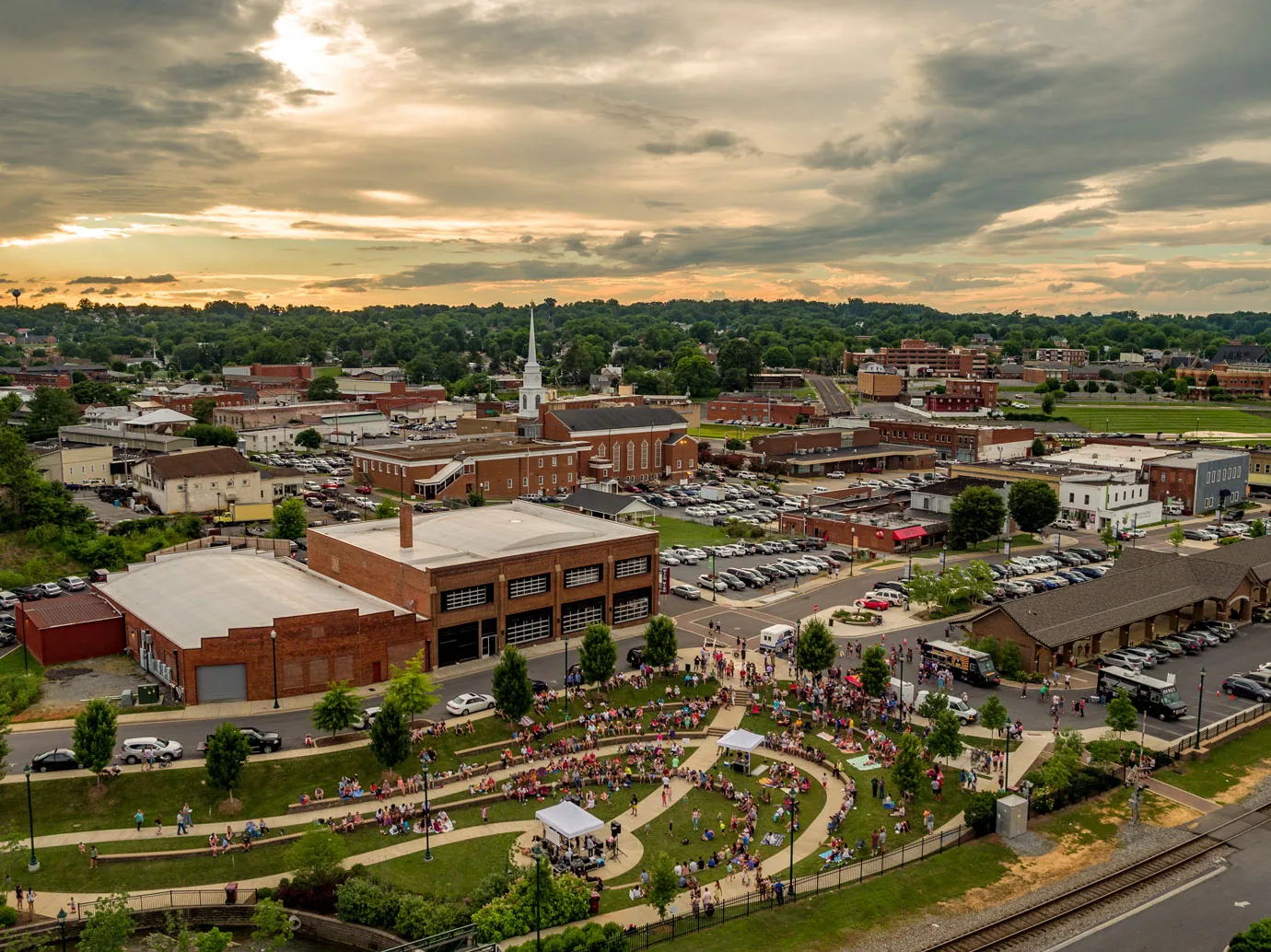
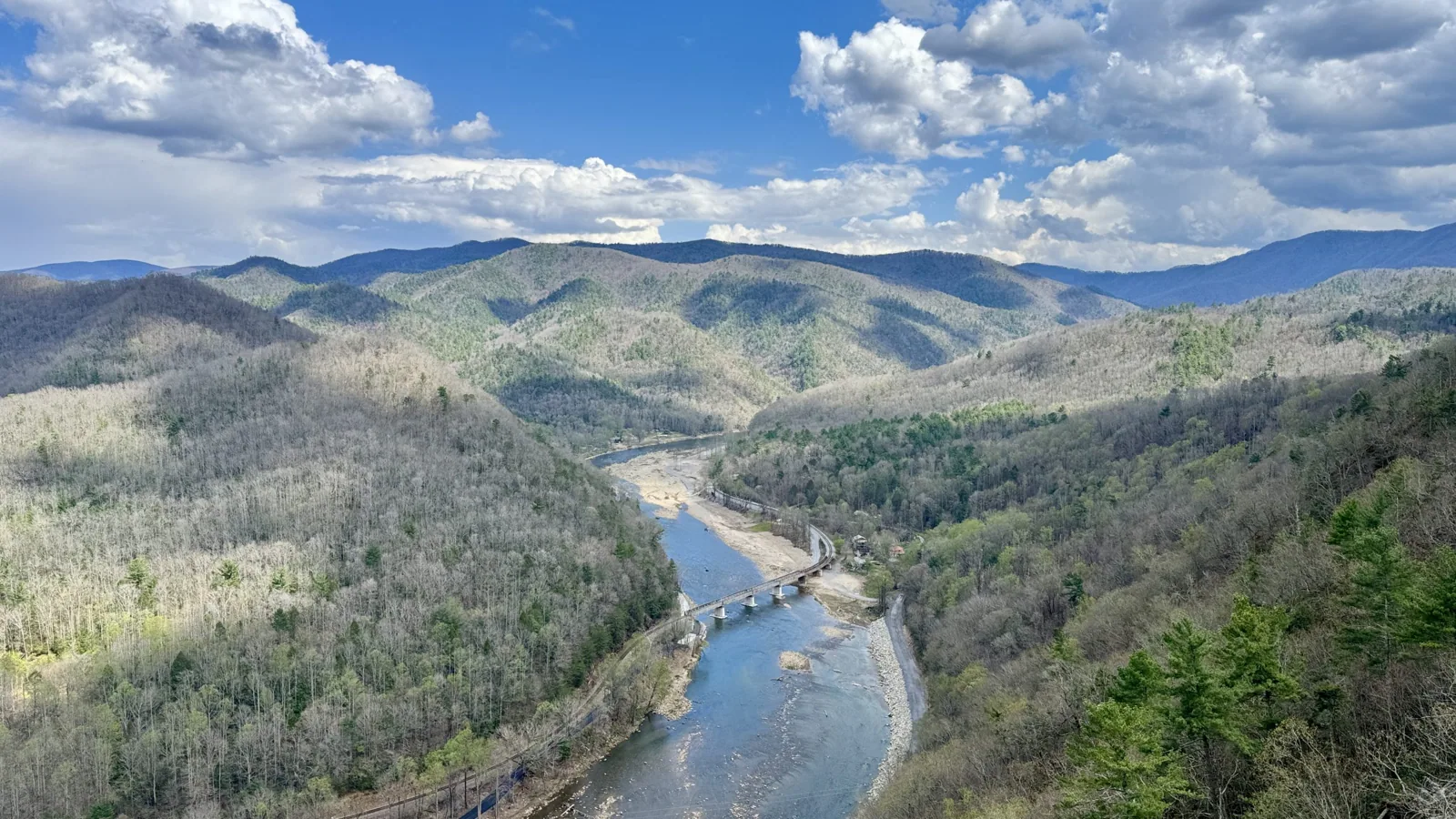
Ground conditions come first on a Fall Branch roof plan, because the community sits at about 1,499 feet at the base of Fulwiler Hill, and a lot that tilts toward or away from a building changes where a crane can stand, where a dumpster can sit and where roof water ends up. Fall Branch is a census-designated place of 1,248 residents in Washington and Greene counties, off Interstate 81 at exit 50 on State Route 93, south of Kingsport. Before we price a tear-off, we walk the lot as well as the roof.
Then the order is the same as anywhere: access route, written scope with options, permit, delivery and a dry-in plan for each day.
Exit 50 and the State Route 93 Approach
A truck bound for a Fall Branch site leaves I-81 at exit 50 and comes in along State Route 93. We drive the last stretch before scheduling, noting the lane width, the turns and the entrance to the lot, and the plan names the arrival window and a fallback if the route is blocked. A loaded flatbed is long, and some turns need a spotter and cones to stay clear of oncoming traffic.
At the building, the entrance and the room to turn decide where the truck stops. Where there is no room to turn, the truck backs in with a spotter or unloads at the roadside under traffic control. Insulation, cover board, membrane and flashing material come in the order they are installed, and a day's worth is staged at a time so nothing waits on the lot overnight.
Small sites tolerate few mistakes in this step. A misjudged turn or a blocked drive loses a morning, so the access plan is drawn on the site sketch and reviewed with the owner before the first delivery.
Sloped Ground, Crane Pads and Runoff
At the base of a hill, ground slopes and surface water moves. A crane or boom lift needs level, firm ground, and an outrigger on a soft or sloped surface is a risk to the load and the machine. We check the grade at the proposed position, probe the soil after rain and use mats or cribbing to spread the load. If no safe position exists, we choose a hoist, a conveyor or a hand-carry plan and say so in the scope.
Runoff matters to the roof as well. Roof water that discharges onto a slope above a wall runs back toward the foundation, and water that arrives from the hill above can pool against a wall. We follow the roof water from the drain or downspout to the ground, then check where it goes, because moisture inside the wall can mimic a roof leak and lead to the wrong repair.
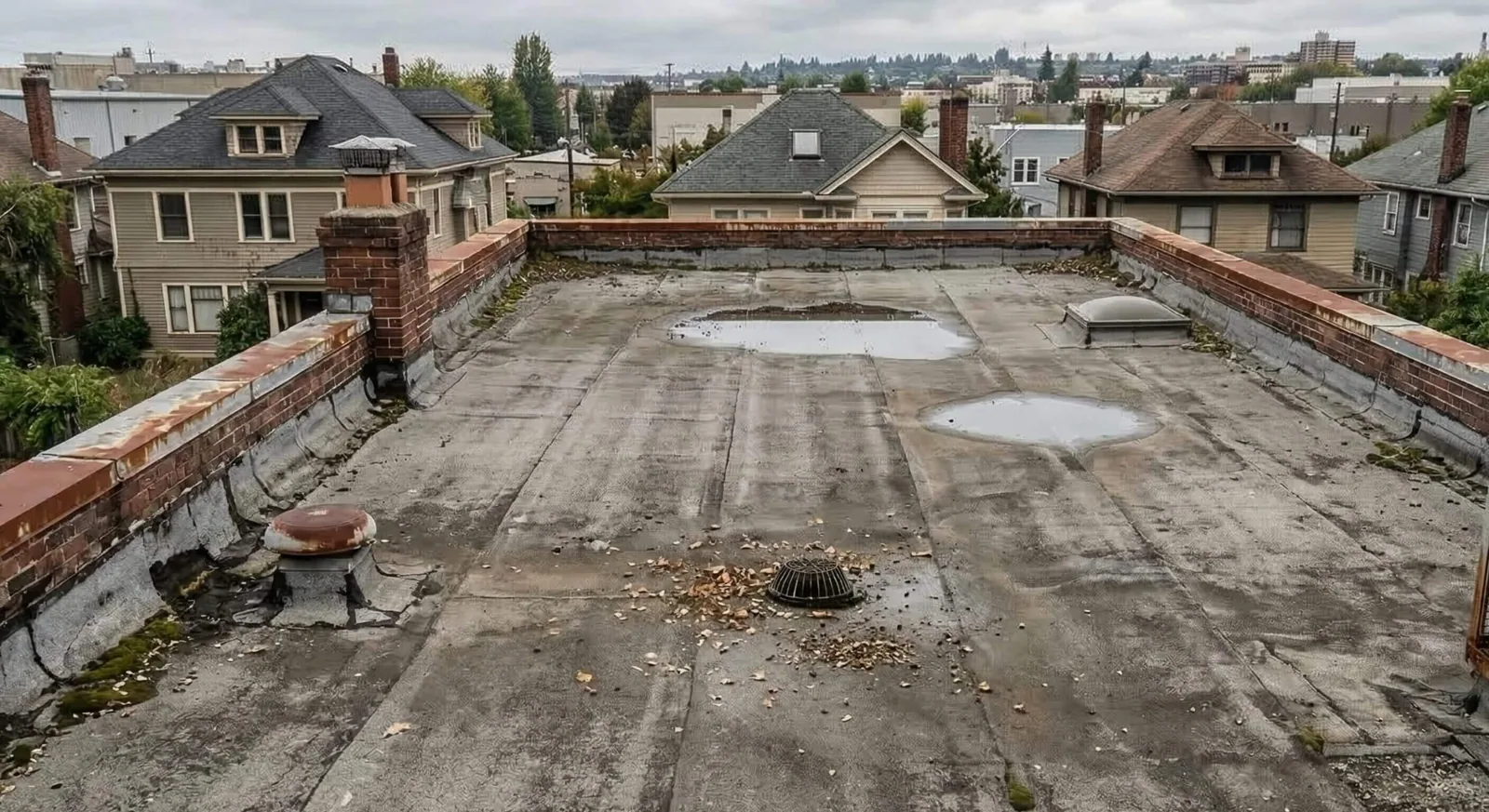
Gutters, downspouts and roof drains and scuppers get the same inspection as the membrane: hangers, joints, end caps, strainers and outlets. A drain with a missing strainer or a scupper blocked by leaves holds water on the field, and standing water ages the membrane around it faster than the rest of the roof. A downspout that ends beside a foundation wall is a cheap fix, and we write it up when we find one.
What the First Walk Records on a Small Building
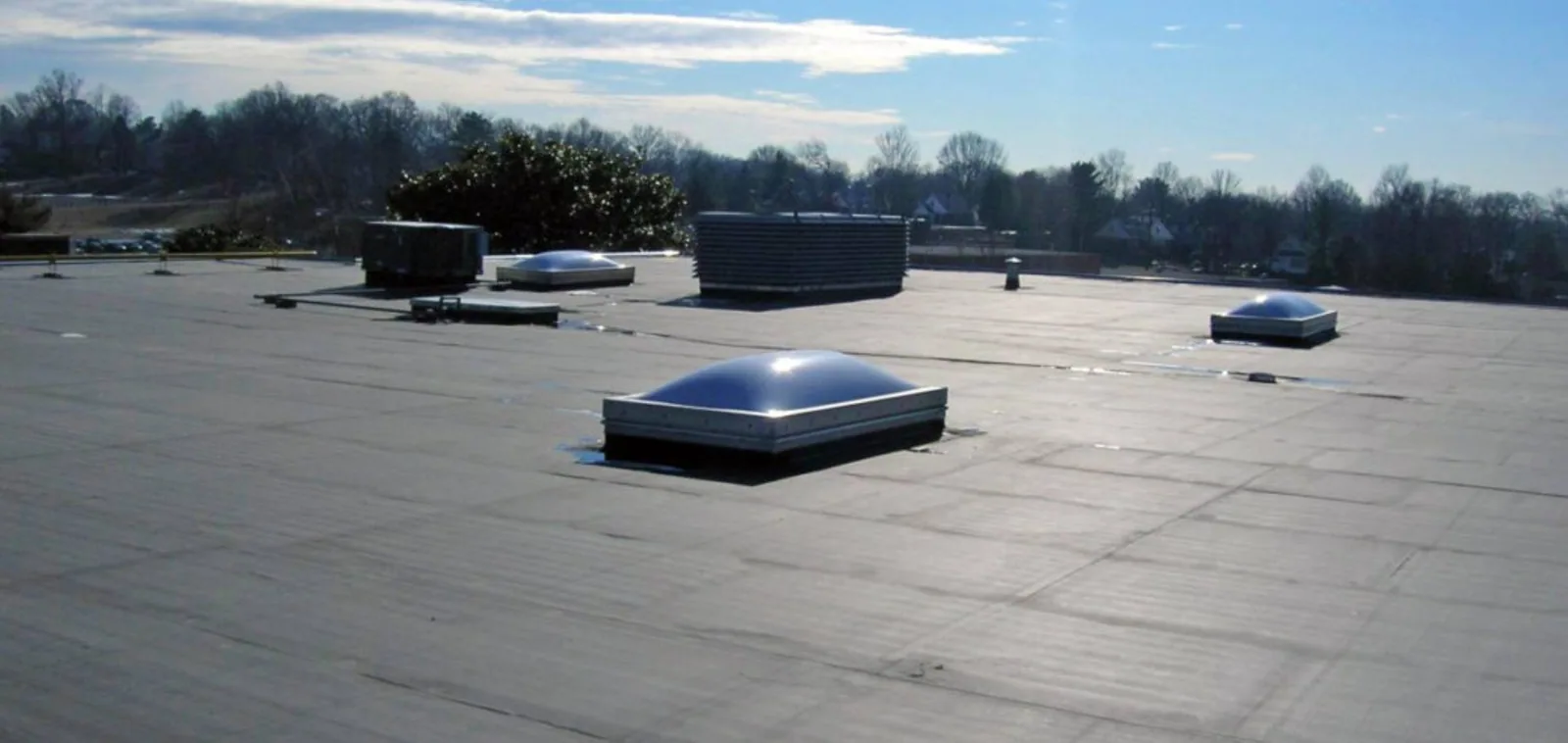
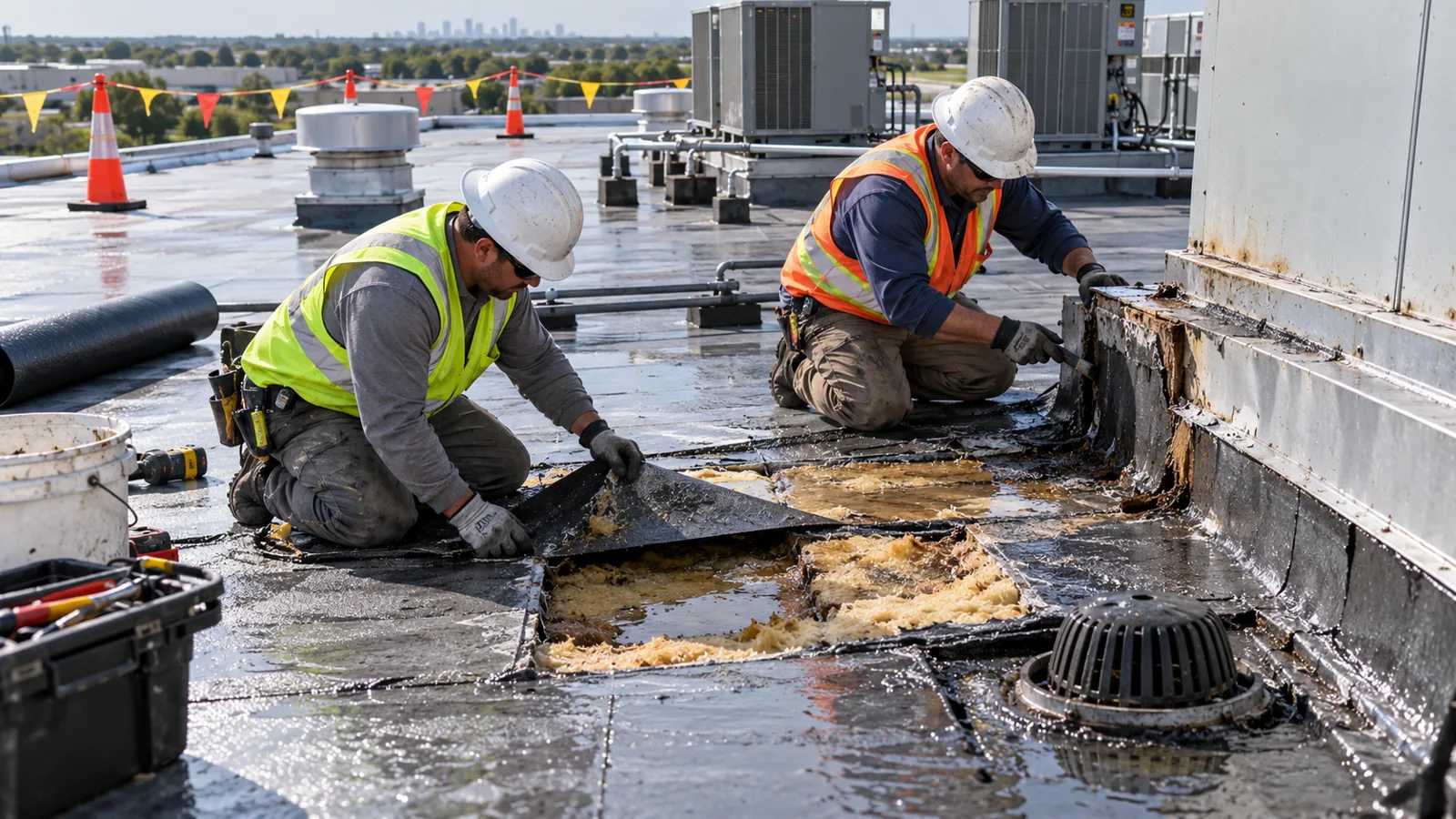
What a roof carries is established on the roof. Our first visit is a commercial roof inspection in which we log the system type, seam condition, flashing, penetrations, drains and earlier repairs, with a photograph and a sketch mark for each. Where moisture is suspected, a moisture survey and a few core cuts show whether the insulation is dry.
The findings are ranked. Anything that reaches the interior leads, followed by items likely to fail inside a year or two, then items to monitor. The owner gets the evidence and a price for each.
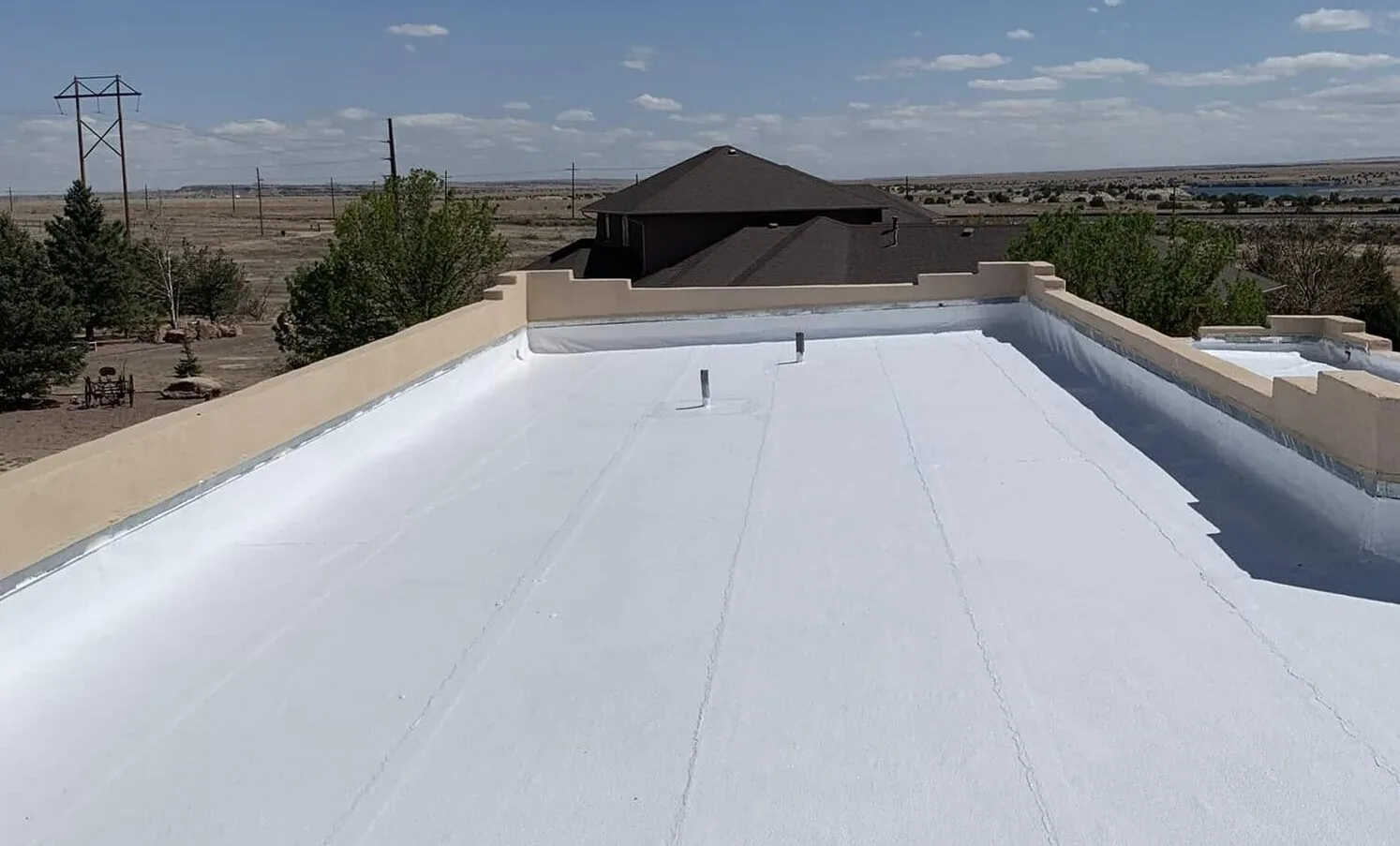
Repair, recover or replacement then becomes a choice with facts behind it. Local damage over dry insulation suits repair. A sound deck under a worn membrane with dry insulation suits a recover or a coating. Saturated insulation means tear-off of the affected areas, and the scope puts a number on how much.
What Drives Cost and Timing on a Small Site
On a small roof, fixed costs make up much of the price: mobilization, a dumpster, a permit and a minimum crew day. That makes the number of visits the largest lever. Combining repairs into one visit, or replacing once rather than patching repeatedly, spreads the fixed costs. The scope shows the cost of each path so the owner can compare.
Delivery time on materials, the length of the permit review and the weather margin all move the date. We list each in the schedule, and we do not name a tear-off day until the approval and the delivery date are confirmed. When the owner needs the roof dry by a lease, financing or inspection date, we work backward from it and name the date by which each decision has to be made. Small sites also have little room for storage, so a late delivery costs a crew day and a repriced dumpster swap.
Weather Buffer, Two-County Permit and Records
Hail and 60 mph gusts appear in the severe thunderstorm warnings NWS Morristown issues for Sullivan County, so tarps, ballast and tie-down gear are on the roof before a section is opened. Kingsport, TN, gets measurable precipitation on about 133 days a year, and the plan leaves room in the schedule for it.
Fall Branch spans Washington and Greene counties, so we confirm in writing which office has jurisdiction over the parcel before the submittal. The paperwork follows Kingsport's example: stamped sheets, a PDF copy and, on a Tennessee job above $25,000, a licensed contractor. At turnover the file includes a signed punch list, photographs of the work, warranty documents and the roof plan with its date, and it carries over to buildings in Gray and Johnson City. A roof condition report sets the baseline.
Commercial Roofing Questions
What if there is no level place for a crane?
We use a hoist, a conveyor or a boom lift, or carry material by hand in smaller loads, and the scope names which. If a crane is still the best tool, we use mats or cribbing to spread the load and confirm the ground after rain.
How do I tell a roof leak from water coming off the hill?
Look at timing and location. Moisture at the base of a wall after rain points to runoff or a downspout, while a stain at a ceiling or upper wall points to the roof. We trace both on the walk and fix the discharge first when it is the cause.
Which county office issues a permit for a building in Fall Branch?
The county where the parcel falls decides it, since the community spans Washington and Greene counties. We confirm the office in writing before the submittal and follow its requirements.
Is it cheaper to patch twice or replace once on a small roof?
Replacing once is often cheaper over a few years, because mobilization, a dumpster and a permit recur with each visit. If the damage is local and the insulation is dry, a single combined repair visit can be the better path. The scope shows both numbers.
What does the crew do before leaving each day?
It closes the open section, seals the membrane edges, sets ballast and ties down loose material. The foreman then photographs the roof and notes the next day's starting point in the daily plan.