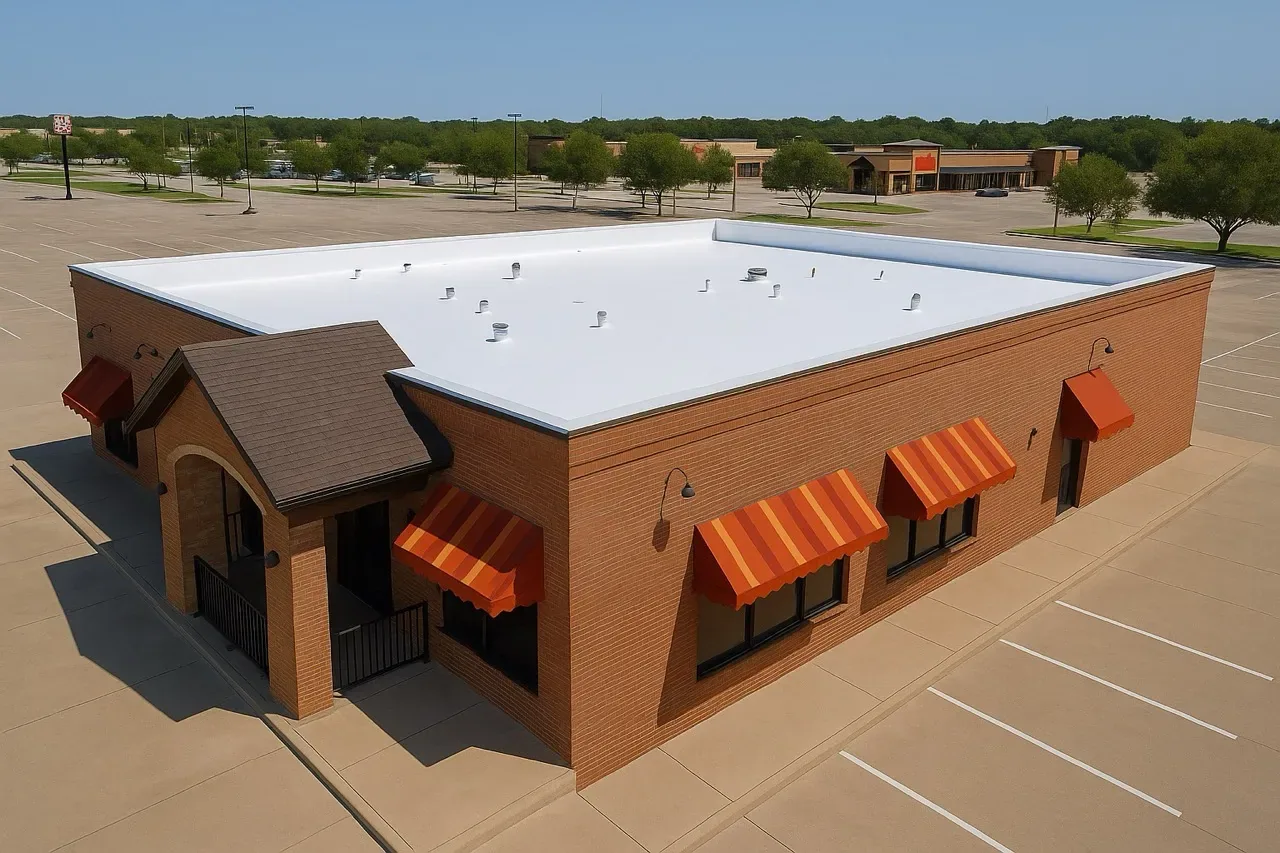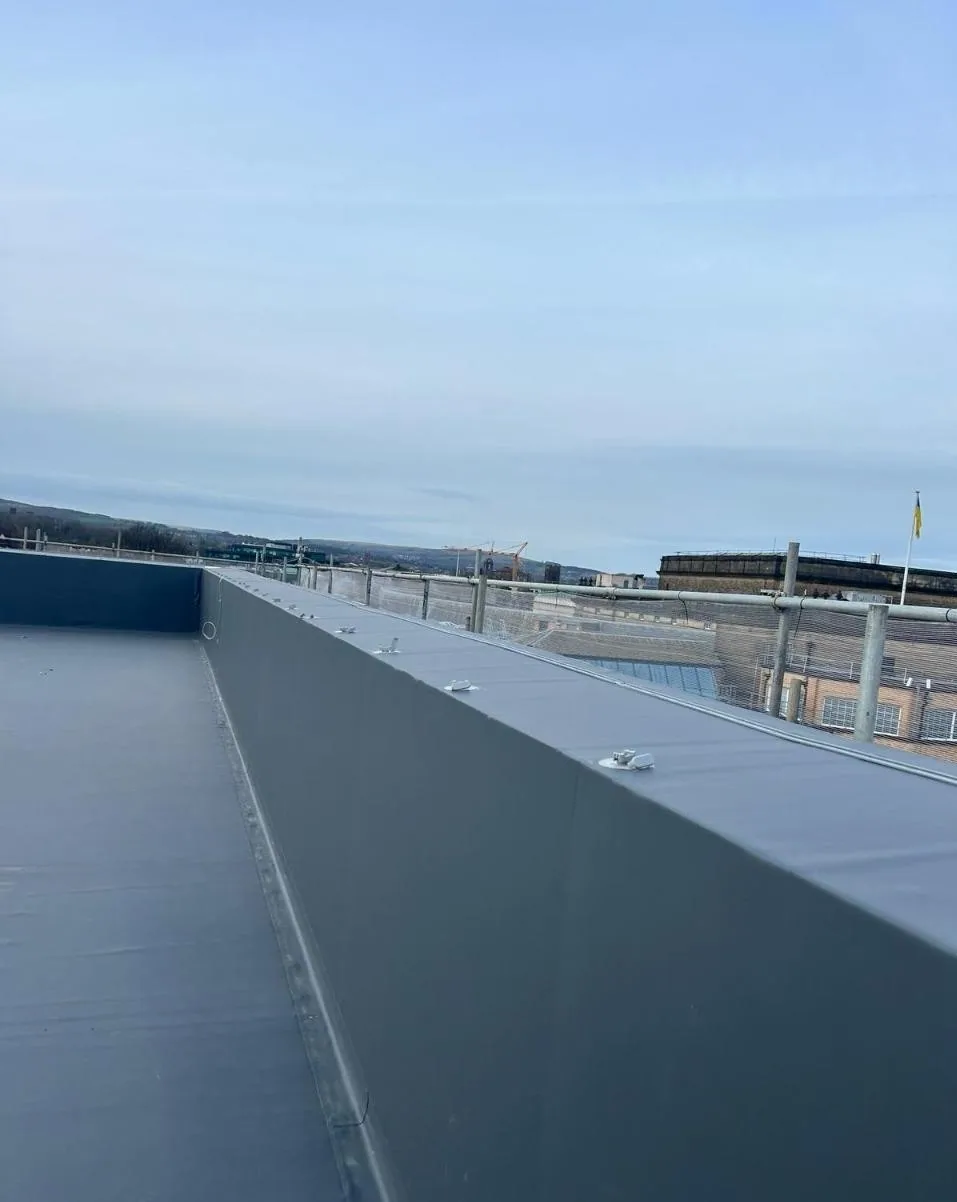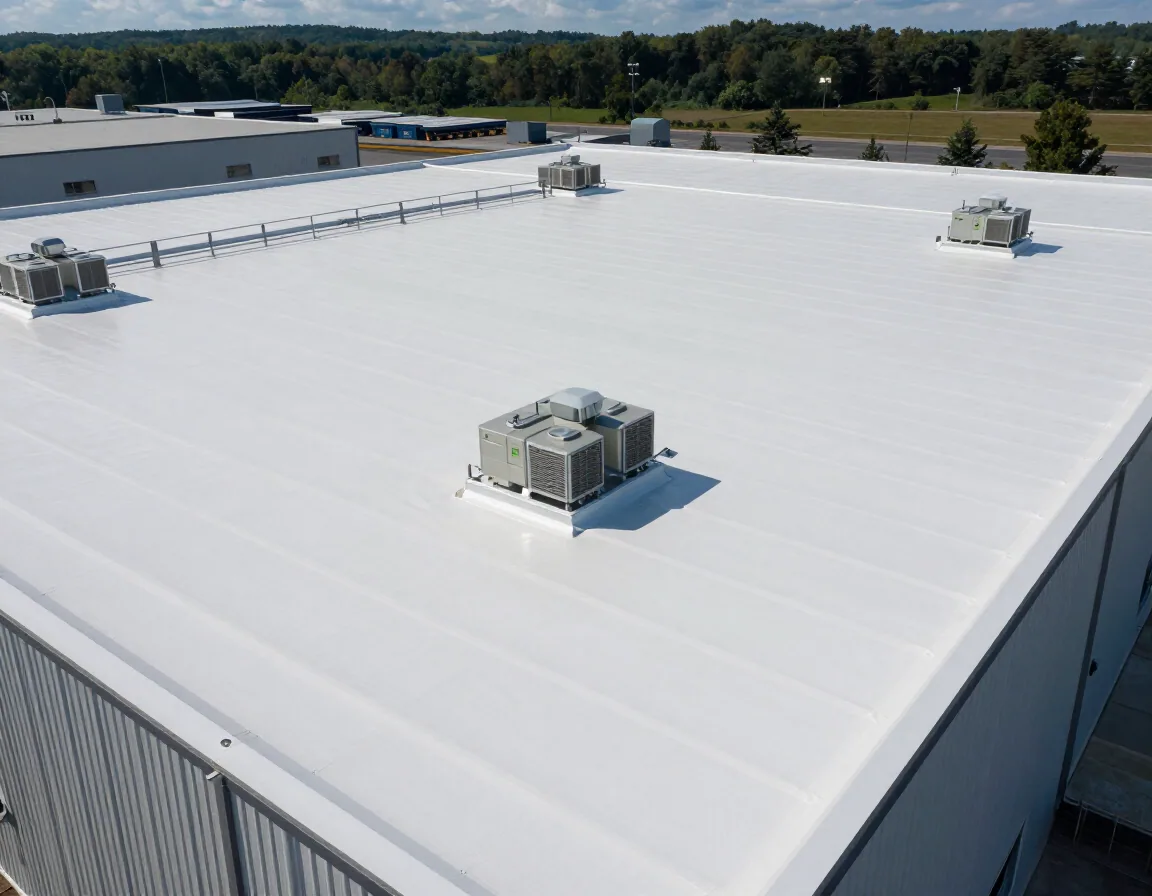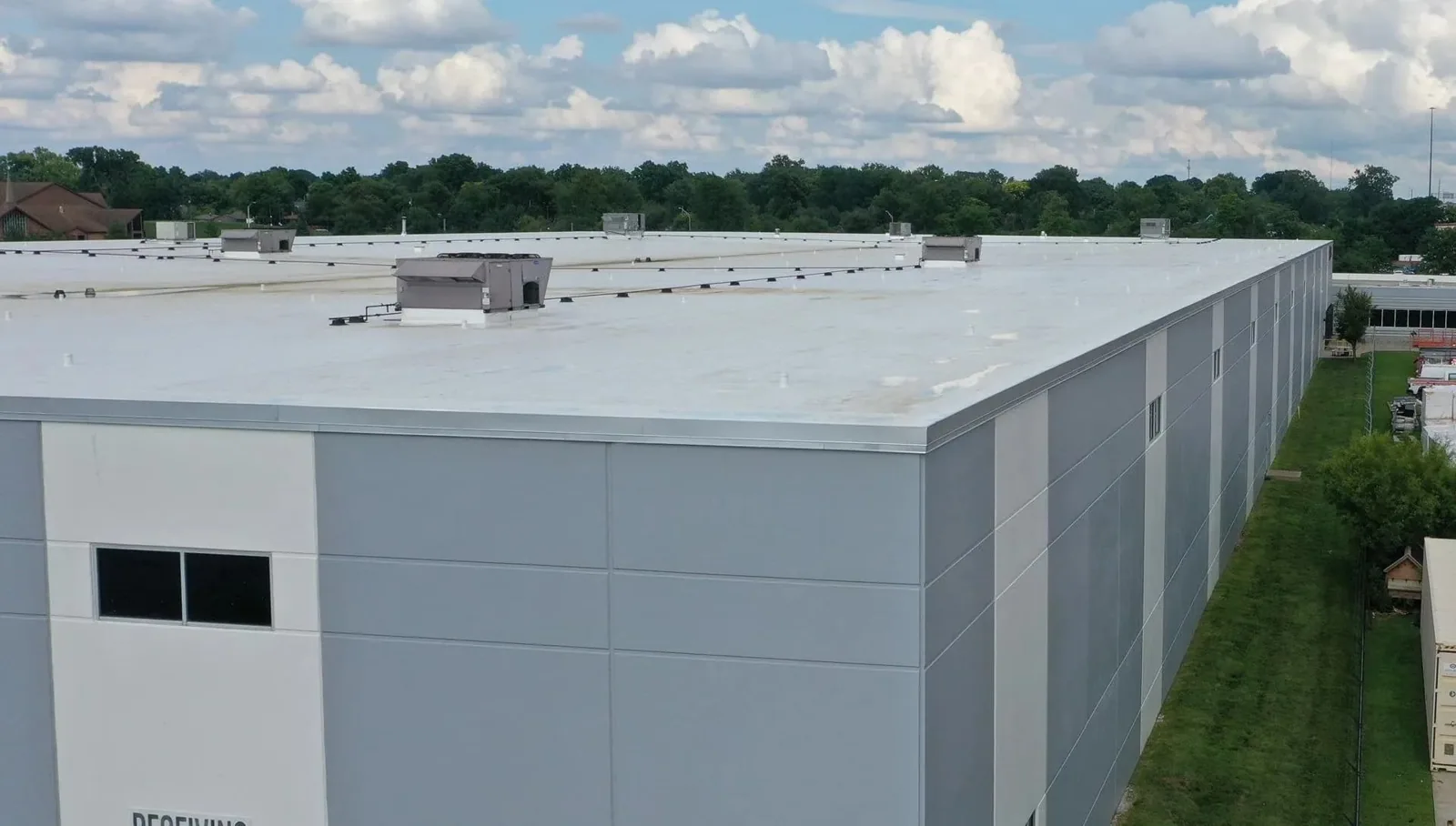
Measurement comes first on a prefabricated PVC roof, because the membrane is cut and welded to fit the building before it arrives. Duro-Last is known for made-to-measure PVC assemblies, with prefabricated panels and fitted accessories that are welded together on the roof.
In Kingsport, TN a replacement starts with a field survey, not a purchase order. We measure every roof section, mark every curb, pipe and drain, record parapet heights and photograph each detail. The measurements go to fabrication, and a mistake here reaches the roof as a panel that does not fit. For repairs, the same discipline applies: we record what is on the roof before we order anything.
Field Measurement and Detail Survey
A measurement survey covers each roof section: length and width, slope and drains, parapet and wall heights, curb sizes and pipe diameters. We mark penetrations on a plan and give each one a number. A prefabricated pipe boot or corner is made for a specific size, so the number must be right.
We also record the substrate. Insulation, cover board and deck condition affect the plan: a panel cannot make up for a soft board. Cores confirm what is under the old roof. The survey ends with a drawing and a photo set that go to fabrication and into the roof record. A second person checks the drawing against the photos, line by line, before it leaves. The same drawing later serves as the as-built, with any field changes marked in color, and it becomes the baseline for every inspection that follows.
- Section dimensions, slopes and drain locations
- Parapet and wall heights, curb sizes and pipe diameters
- Substrate condition from cores and moisture readings
- Numbered penetrations on the roof plan
Delivery, Laydown and Hoisting
Prefabricated panels arrive rolled or folded, and they are large. They need a flat, clean laydown area, a haul route that clears gates and turns, and a crane pick sized for the load. A campus with controlled access gets the delivery window and the vehicle details ahead of time.
We plan the order of delivery to match the order of installation. Panels for the first section arrive first, with their accessories, and panels for later sections follow on a set day. Unused panels go back under cover each evening, and nothing stays rolled out overnight unless it is welded and ballasted. A pallet of fabricated parts is not easy to replace if rain or wind takes it. Each panel carries a mark that matches the plan. A PVC roofing job with prefabricated parts moves fast once panels are on the roof, so the staging plan does most of the work before that. Folded panels are lifted in the order of installation, and the crane operator gets the pick list with section numbers, so a panel for one end of the building never lands at the other.
Installation and Weld Sequence
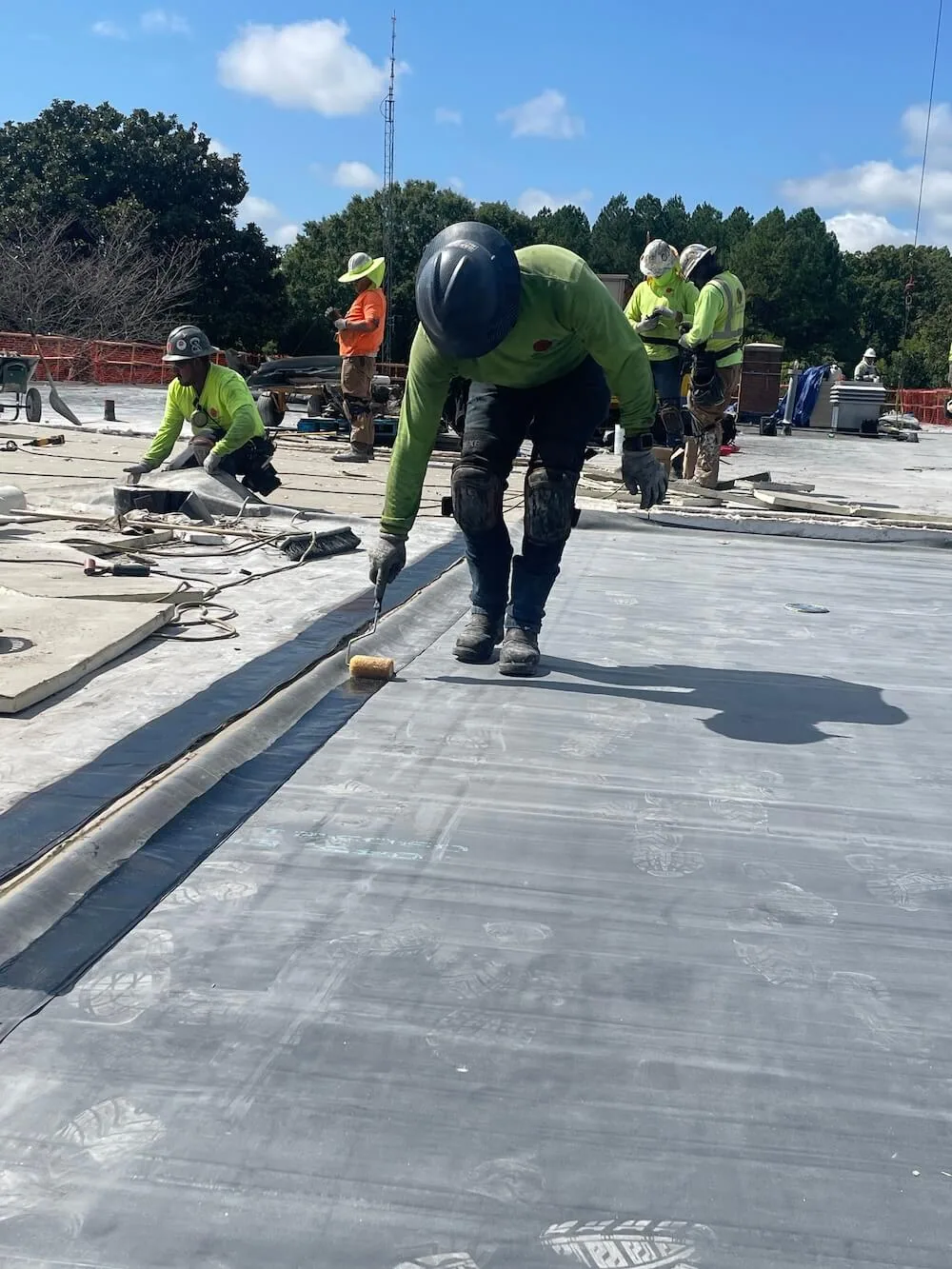
The sequence for a replacement is tear-off or prepare, install insulation and cover board, lay panels, weld seams, install accessories, weld flashings and probe the welds. Each step depends on the last. Panels depend on dry boards. Welds depend on a clean, dry sheet. Probing depends on a cooled weld.
Repairs use the same logic on a smaller scale. A repair after a storm, for example, starts with a photo of the damaged area and a measurement of the opening, so the patch or the replacement part is sized before the crew climbs up with materials. A damaged seam is cleaned, prepared, welded with a compatible patch and probed. A damaged accessory is replaced with a matching part or fabricated detail. A commercial roof replacement with prefabricated parts finishes with a full probe and a photo set, so the record shows every seam that was tested.
Phasing Around the Occupant
Work is phased by section; each opening is installed and dried in during the shift, and because panels arrive prefabricated, sections close sooner. Plants plan around turnaround outages and hospitals around quiet wings, and commercial buildings in Bloomingdale, a census-designated place of 8,918 residents in 2020, or in Colonial Heights follow business hours.
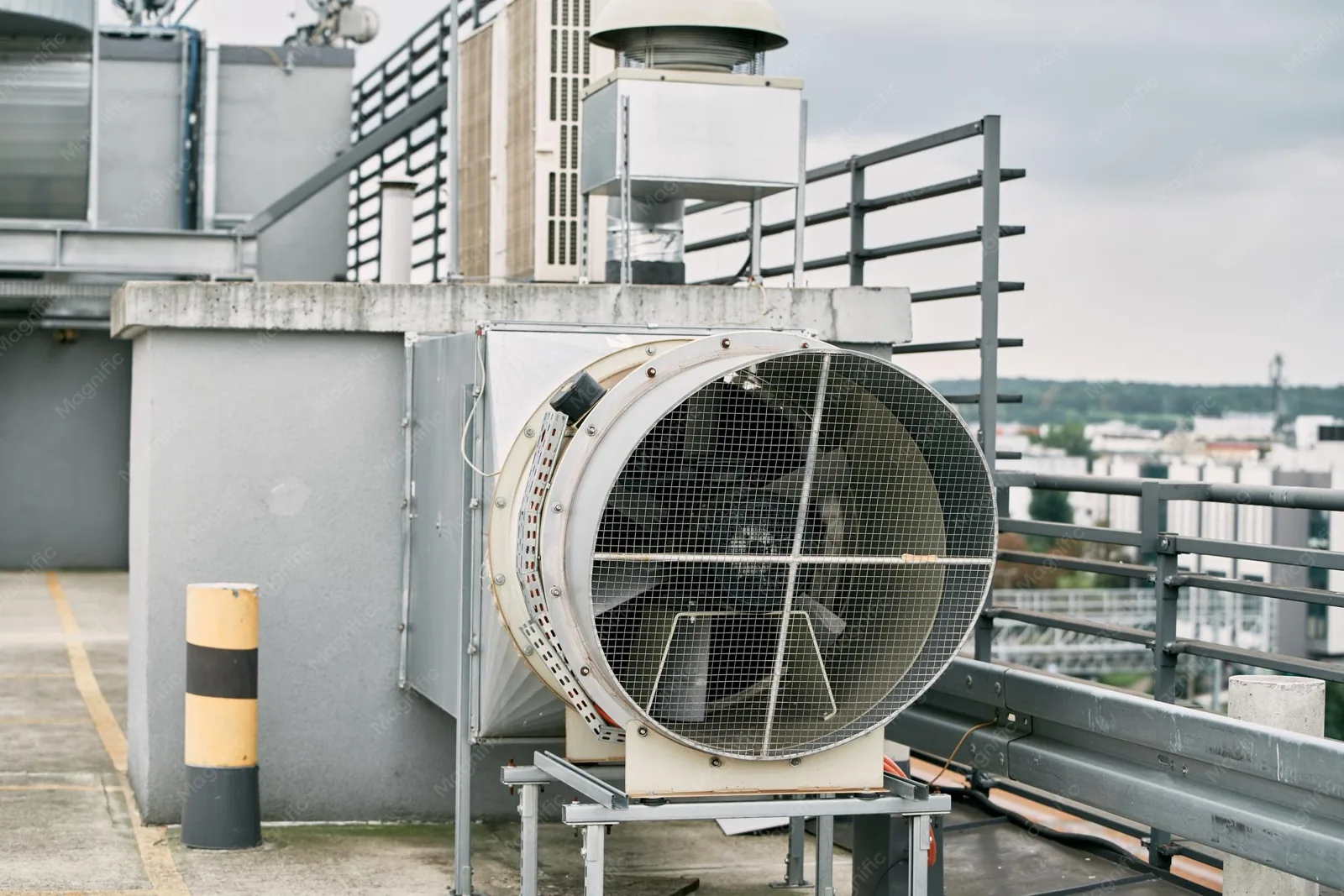
The plan sets the first section, the section dried in by dark and the night shift's starting point. Rooftop equipment goes in sequence: curbs and equipment supports are set before panels go over them, and the mechanical contractor knows the day.
Permits, Licensing and Warranty Notice
Prefabrication makes lead time a permit matter. A Duro-Last reroof goes to the Kingsport permit desk as a stamped plan set with a PDF; once the contract passes $25,000, the state license rule and the insurance certificates join the package. The submittal goes in as soon as the survey is done.
Submittal, permit review and fabrication run side by side, and the schedule shows the longest of the three as the critical path. Where a maker's warranty covers the roof, we read its notice and approved-method rules first, and the owner confirms the terms.
Weather Windows for Welded PVC
Welding needs a dry sheet and acceptable temperatures. Prefabricated panels are large sails, so wind control matters from the moment they are unrolled; a gust that lifts one corner can fold a panel back on itself, crease the sheet and delay the job while a replacement is made. Wet days here add up to roughly 45 inches over 133 days, with temperatures from minus 18 F to 104 F.
Hail and 60 mph gusts in county warnings are the reason we unroll only what can be welded and secured in the shift, ballast loose edges and close sections before dark. The weather buffer for each phase appears in the schedule as its own entry.
What We Need From You
Send the site plan, the roof access points, the building drawings if you have them and the outage or turnover calendar. We return a measurement plan, a delivery and phasing plan and a permit schedule. Roofs from Sika Sarnafil or Versico follow a similar format, with the differences noted.
Commercial Roofing Questions
Why is measurement so important for a prefabricated roof?
Because the parts are made before they arrive. A panel or corner cut to the wrong size cannot be fixed with a trowel. We recommend a full survey with photos and a numbered plan, reviewed by the superintendent, before any order goes to fabrication.
How long does fabrication take?
It depends on the manufacturer's schedule and the size of the job. We recommend asking for a lead time in writing at the start, and building it into the permit and outage calendar. Fabrication delays are a common reason a roof misses its window.
Can a prefabricated PVC roof be repaired in the field?
Yes. Seams and details can be cleaned, welded with compatible patches and probed. We recommend identifying the membrane and the weld condition first. The repair materials must match the existing system, and the test results go into the record.
What happens if a measurement is wrong?
A field fabricated detail can often correct a small error, but a large one means a new part and a delay. We recommend double-checking critical dimensions on the roof before ordering, and photographing each detail with a tape in frame.
What does the owner keep after the job?
Photographs of every section, weld probe results, product data, a punch list with dates and the updated roof plan. We recommend storing the set with the warranty papers, so the next inspection begins from known ground.