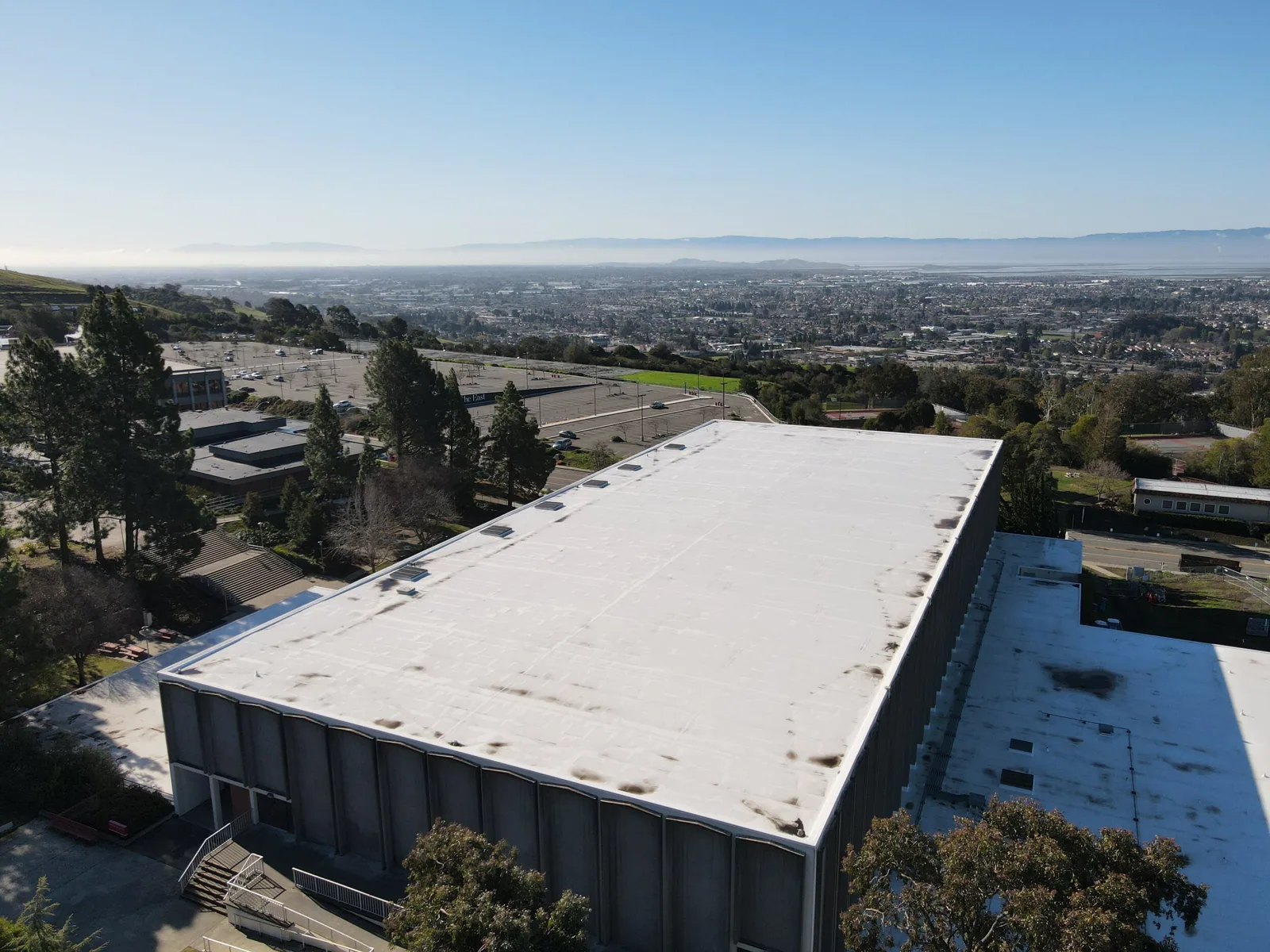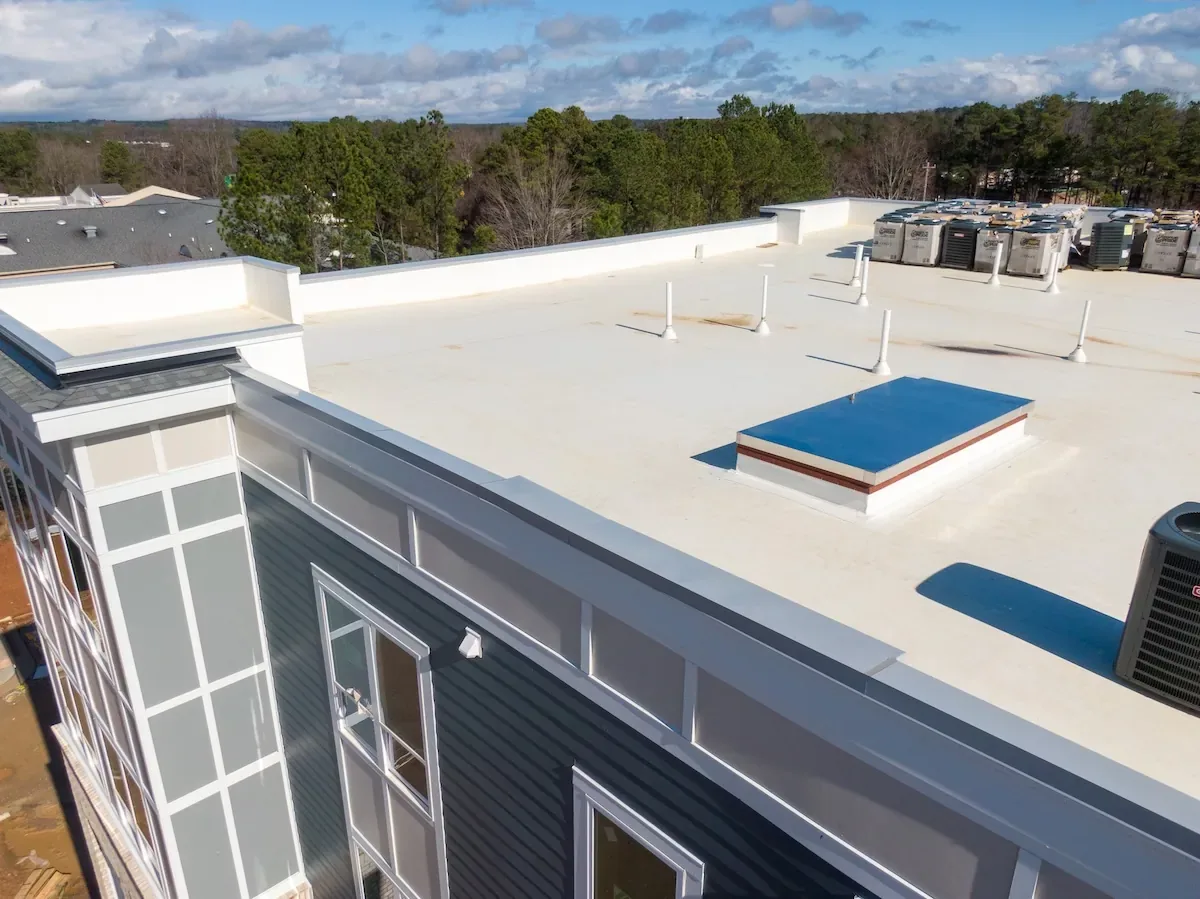
Identifying the assembly under a GAF label comes first, because that decides every step after it. GAF is a roofing manufacturer whose commercial offerings span several system categories, including single-ply membranes, modified bitumen, built-up assemblies and liquid-applied systems, and the repair method differs for each.
In Kingsport, TN we begin with the roof plan, the warranty paperwork if it exists and a core cut at one or two points. The core shows the membrane type, the insulation, the cover board and the deck, and the rest of the plan is built on it. We patch the core hole the same day with a compatible material and mark its location on the roof plan, so a later inspection can find it. The brand name on a document tells us who made the product. The core tells us what is on the roof.
Identifying the Assembly
We collect the original specification when it can be found, the repair invoices, the permit records and any warranty papers. Where those are missing, we read the roof itself: seam type, surface finish, flashing method and fastening pattern.
A heat-welded thermoplastic seam, a torch-applied or cold-adhered bitumen lap and a liquid-applied coating each look different and repair differently. We record the finding and match repair materials to the existing system. Mixing incompatible materials is a common cause of repeat leaks, so the identification step comes before any repair. A bituminous patch on a thermoplastic sheet, or a solvent-based sealant on a coating, can attack the material it is meant to protect. The core and the seam type settle which products go on the shopping list.
- Specification, permit and warranty documents
- Core cut at representative points
- Seam, flashing and fastening pattern
- Prior repairs and their materials
Access, Laydown and Hoisting
A GAF assembly can be membrane, bitumen or a liquid system, and the staging follows whichever the core reveals. Before work starts we settle the access route, the laydown area and the hoisting method. On a plant or hospital campus that may mean a badge, an escort or a hot work permit, and a downtown building may need a street closure for a crane pick.
Rolls of membrane, boards of insulation and drums of liquid material are heavy or sensitive, and none of them may sit where a dock door or a fire lane needs the space. The haul route comes first, then the pick, then the daily stacking, with pallets arriving in the order they are used so the first morning's material sits on top. On a roof with a single hoist point that habit saves the crew an hour a day, and a small commercial roof repair still gets its own staging plan, because a missing pallet stops a crew as surely as rain.
Repair and Maintenance Sequence
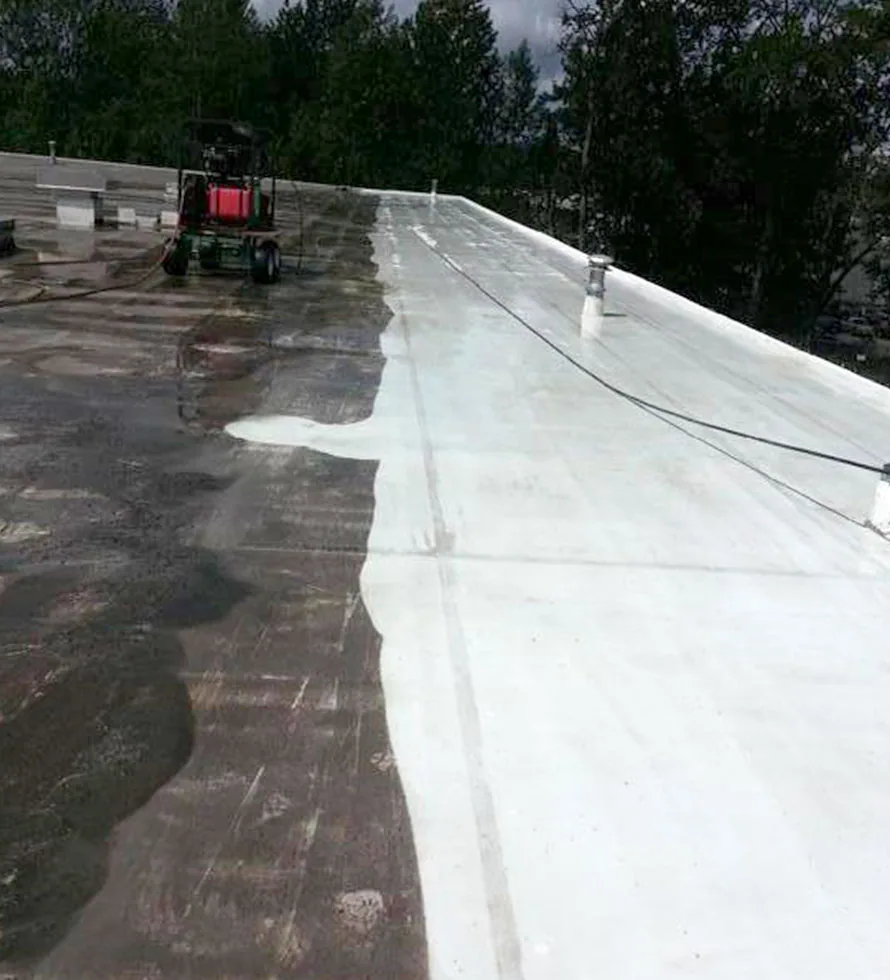
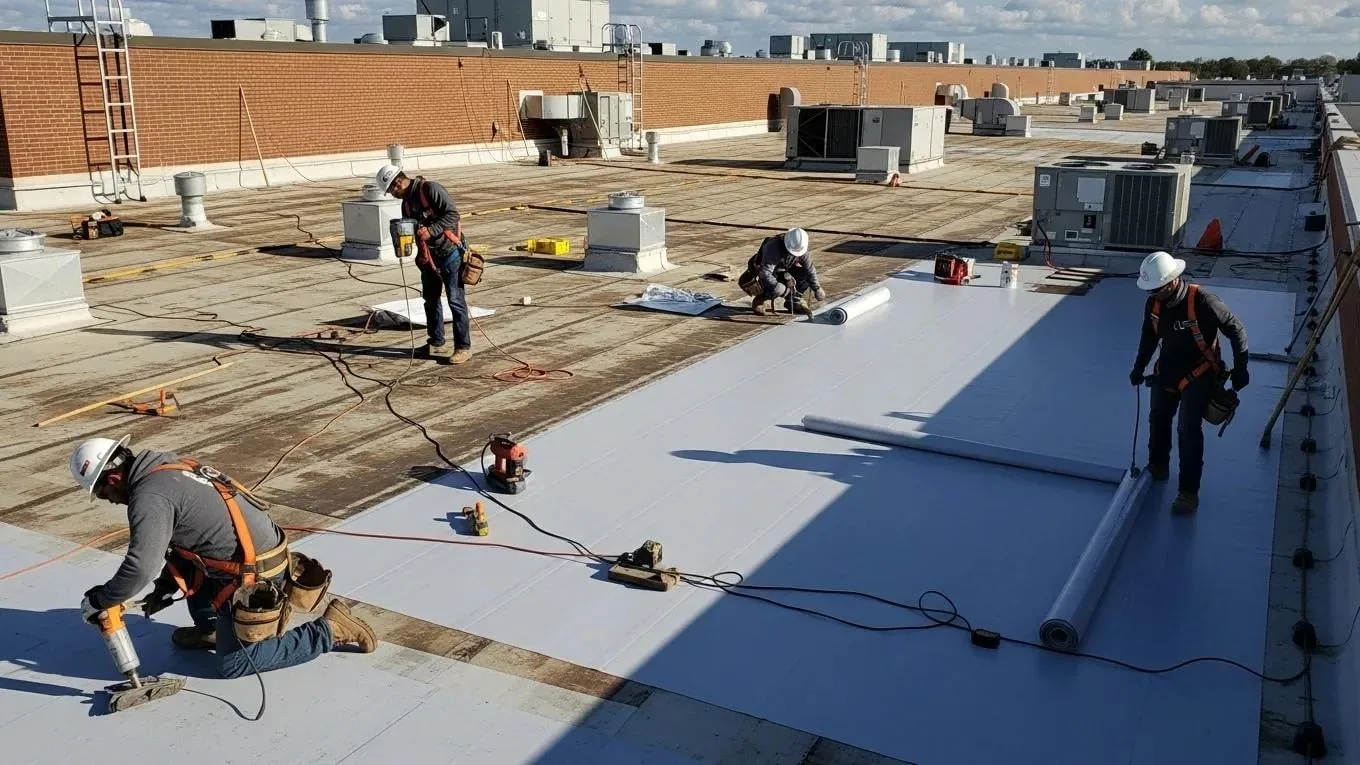
The sequence follows the assembly. For single-ply systems, we clean the area, prepare the seam, install a compatible patch or flashing and test the seam. For bitumen-based systems, we remove loose granules, repair laps and flashings and restore the surface. For liquid-applied systems, we clean, prime, reinforce details and recoat.
Each step has a dependency. Cleaning depends on dry conditions. Priming depends on surface temperature. Curing depends on weather. We list the dependencies in the work plan, with a buffer for each, and the superintendent can see what moves if a day is lost. The sequence ends with a closeout walk: we photograph each finished detail, test seams where the system allows it, hand over a punch list with dates and file the product data with the roof record. A modified bitumen roof and a TPO roof need different tools and different cure times, so the plan is written for the actual system.
Phasing Around the Occupant
An occupied GAF-roofed building is repaired section by section, with each opening dried in on the day it is cut. Sensitive spaces get protection first, quiet hours are written into the plan, and torch-applied work or strong adhesives get extra planning for fire safety and odor.
The calendar differs by owner: plants wait for a turnaround outage, hospitals for a quiet wing and the retail centers along Fort Henry Drive for the gap between holiday seasons. The phasing plan names the first section and the section that must be dried in by dark, and a larger scope follows the order used for reroofing an occupied building.
Permits, Licensing and Submittals
Any GAF repair that replaces roofing material is filed with the Kingsport Building Department as a stamped set of plans with a PDF. Past $25,000 of contract value, the package also carries the state contractor license, workers' compensation proof and liability certificates. The maker's published details become part of the specification wherever the owner wants them.
The filing goes in while the materials are on order. The owner's designer confirms the code points for each project, and the warranty file tells us whether the maker needs notice before a patch goes down.
Weather Limits by System
Different GAF systems carry different limits. Some adhesives and coatings need a minimum temperature, torch-applied work needs a dry surface and welded seams need dry conditions, so the calendar follows the family on the roof. The weather record sets the buffer: rain on roughly 133 days a year, about 45 inches in all, and a swing from minus 18 F to 104 F across the seasons.
Forecasters at Morristown have warned Sullivan County about hail and gusts reaching 60 mph, with roofs, siding and trees on the damage list. Every phase carries a weather buffer, open work stops when gusts are forecast, materials are staged to avoid wind loss and open edges are secured at the end of each shift.
What We Need From You
The site plan, the roof access points and whatever warranty or specification papers survive are the starting set, along with the outage or turnover calendar. We return a system identification plan, a repair or maintenance sequence and a phasing plan. A building that also holds Carlisle SynTec or Soprema systems gets one plan that names each assembly, and a property near Stone Drive is planned as carefully as one inside a plant campus.
Commercial Roofing Questions
How do we know which GAF system is on our roof?
Read the specification and warranty papers, then confirm with a core cut. We recommend not relying on a label alone. The core shows the membrane, insulation and deck, and the repair materials are chosen from that. We photograph the core so the record stays with the roof.
Can any contractor repair a GAF roof?
A repair should use compatible materials and follow the maker's published details. The warranty terms belong to the manufacturer. We recommend settling any notice or approval step before the repair begins and keeping a dated record of what was done.
Are all GAF commercial roofs the same type?
No. The maker's commercial line spans several categories of system, and the repair method depends on which one is on the roof. We recommend identifying the assembly first, because a patch that suits one category can damage another.
What does the schedule look like for a repair?
A small repair is a day or two once access is set. A larger one is phased by section. We recommend sending the calendar early, so work lands in an access window, and building a buffer for gusts and hail.
Do you replace GAF roofs with the same system?
Sometimes. The choice depends on the building, the budget and the owner's goals. We recommend weighing the options on cost, disruption and expected service life, using cores and moisture readings as the basis, and we put that comparison in writing.