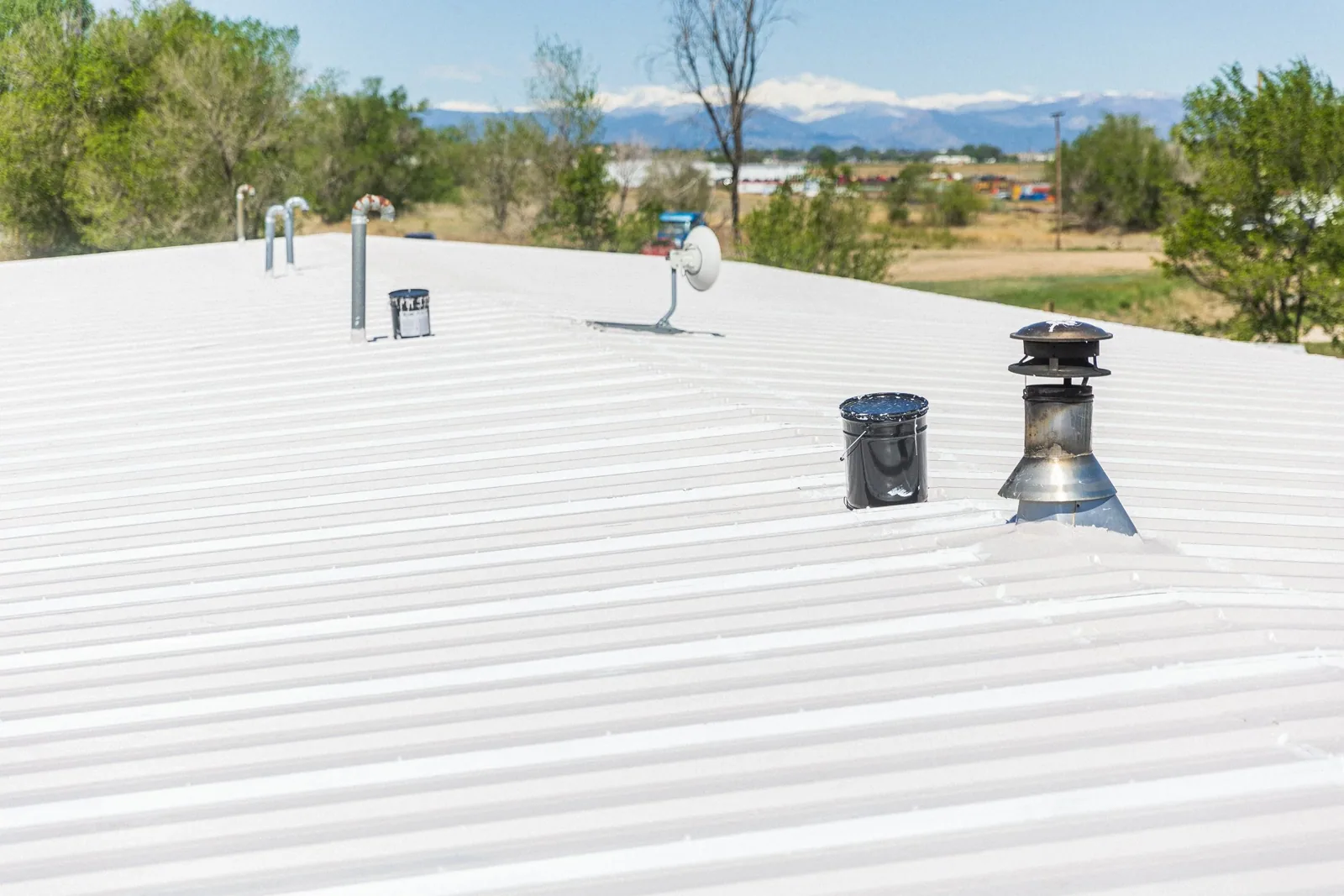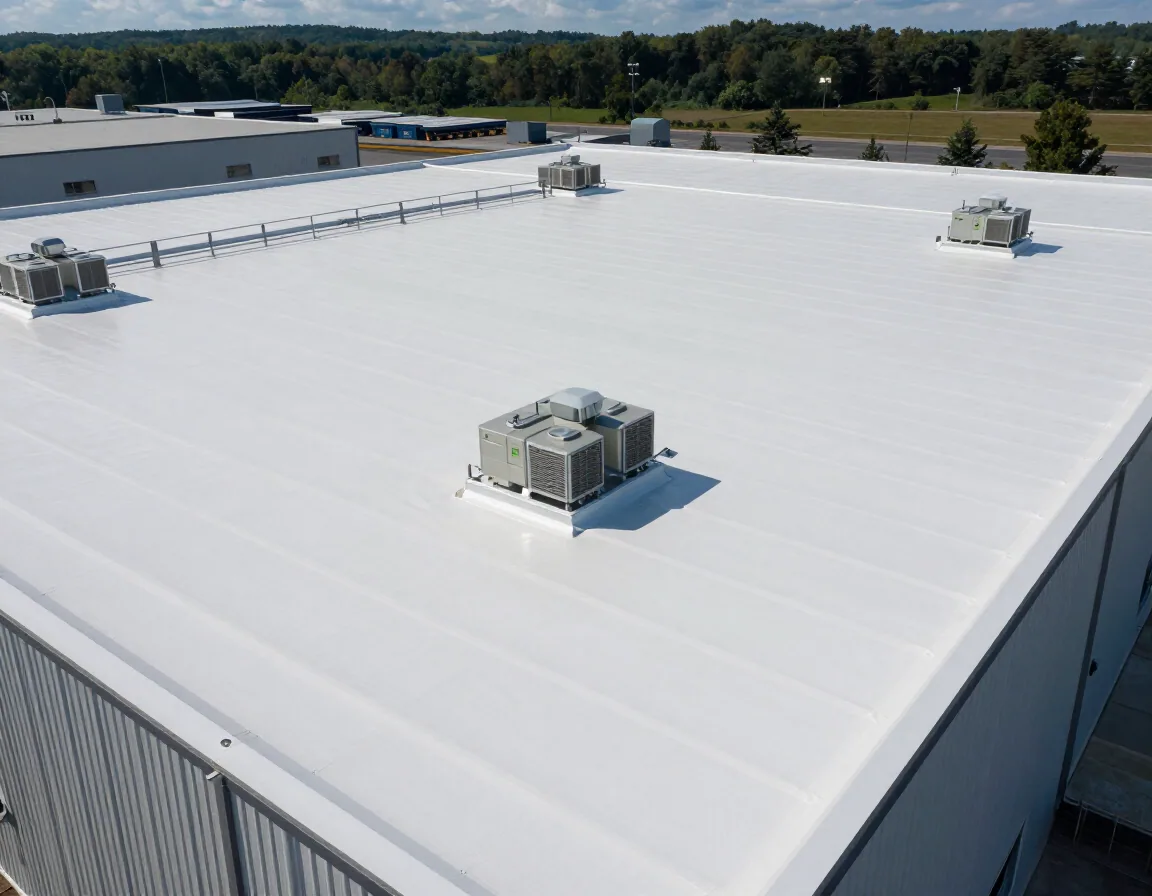
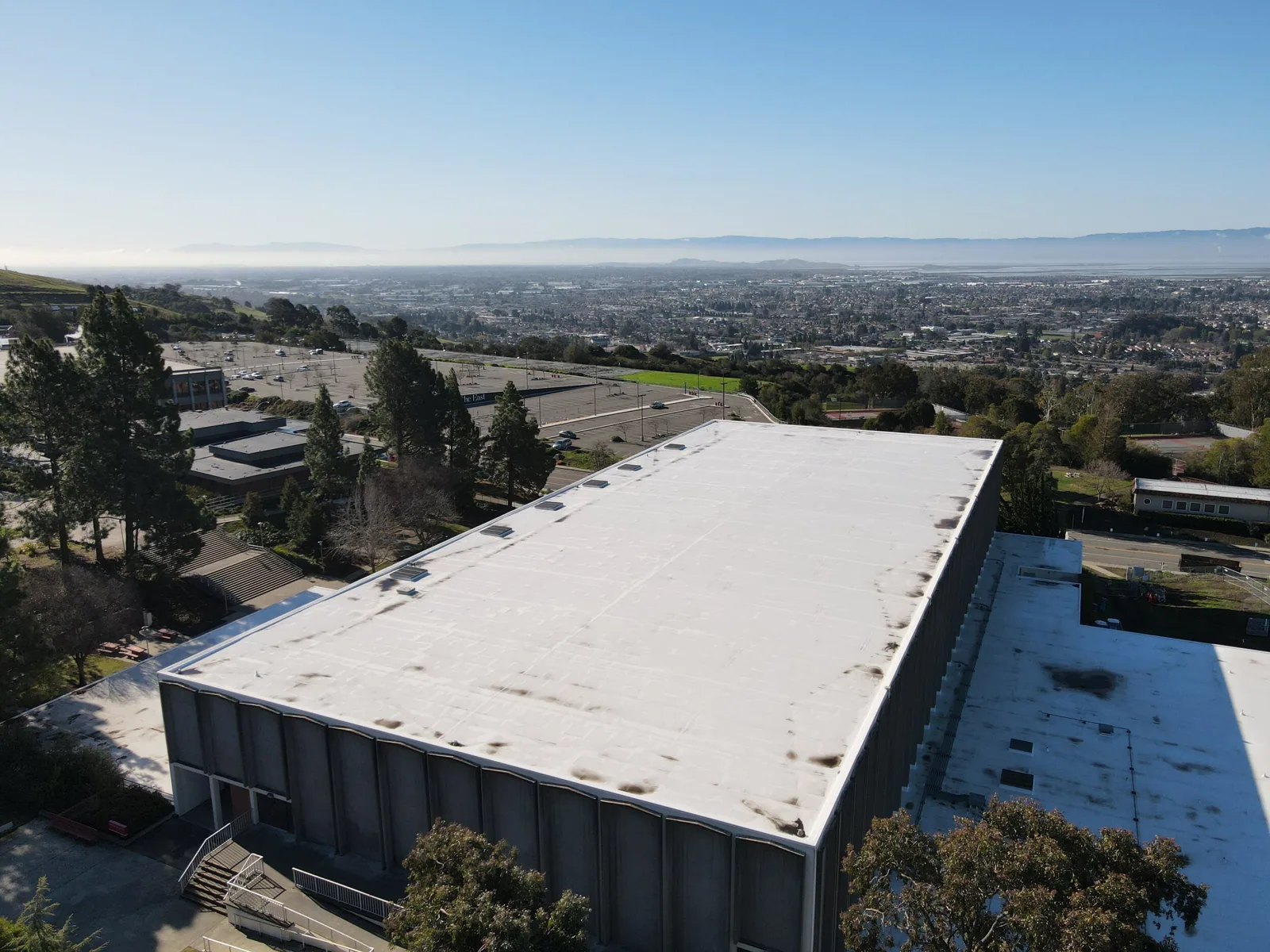
Confirming the attachment method comes first on a Carlisle SynTec roof, since it decides how the roof is inspected and how a repair is staged. Carlisle SynTec is a manufacturer of single-ply roofing systems, and single-ply roofs can be ballasted, mechanically fastened or fully adhered over insulation.
In Kingsport, TN we identify the method before we price a repair. A ballasted roof needs stone moved before a seam can be reached. A mechanically fastened roof needs a fastener check along every seam line. A fully adhered roof needs a close look at the bond at edges and details. Each method starts with a different list of tools and a different day of staging. A ballasted roof can take a full extra day just to uncover a seam, and the stone has to go back in the same pattern, with the same depth, or the wind rating of the assembly changes.
Membrane Type and Attachment
Single-ply systems from this manufacturer come in different membrane types, and each behaves differently. Rubber-based sheets are spliced with tape or adhesive. Thermoplastic sheets are welded with hot air. The repair material must match the membrane, and the process must match the seam.
We confirm the type by reading the specification, the warranty papers or the roof itself. Where records are missing, we cut a small sample and look at the reinforcement and the surface. The finding goes into the roof record along with the attachment method and the insulation beneath. Where a roof has been recovered once already, the record notes both membranes, because a second layer changes the fastener length, the flashing height and the weight on the deck. Those facts determine the repair sequence, the cure times and the weather limits.
- Membrane type from documents or a small sample
- Attachment: ballasted, mechanically fastened or adhered
- Insulation and cover board beneath the sheet
- Seam method and the condition of each seam line
Staging for Ballasted, Fastened and Adhered Roofs
A ballasted roof needs a place to put the stone. A mechanically fastened roof needs a plan for fasteners and plates. An adhered roof needs clean, dry surfaces and a place to store adhesive out of the cold. The laydown area differs for each, and so does the hoisting plan.
Before the crew arrives we map the haul route, the crane pick and the day's stacking. Materials are delivered in the order of use. Where access is controlled, the delivery schedule is submitted ahead of the truck. A commercial roof leak repair on any of these systems still follows the plan, because a missing roll of material or a wet pallet of adhesive stops the day. Adhesive drums and rolls of sheet stay out of direct sun until they are needed, since heat shortens working time and cold stiffens the sheet.
Seam and Flashing Repair Sequence
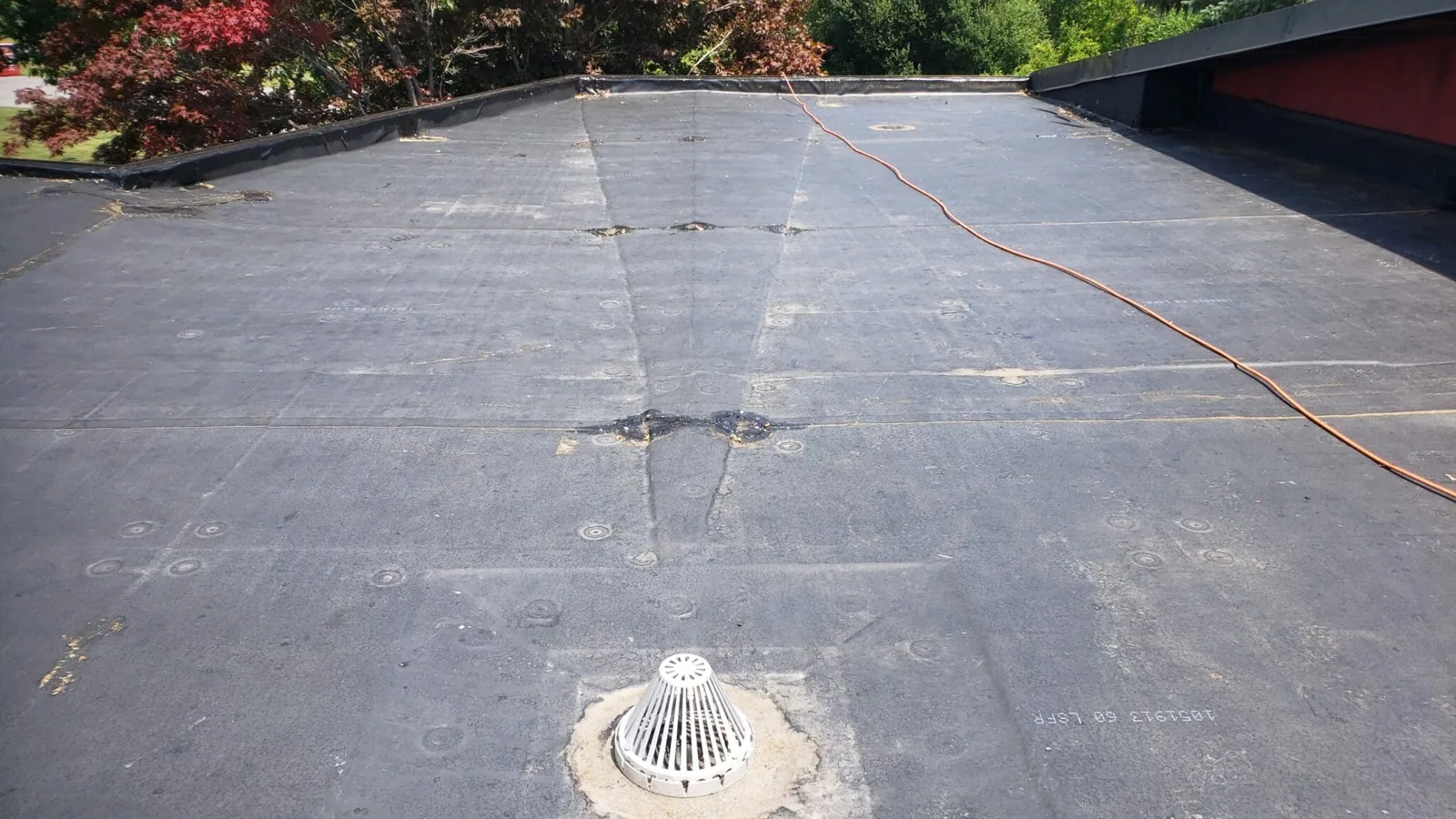
For a welded seam, the sequence is clean, probe, prepare, weld and test. For a spliced seam, it is clean, prime, apply tape or adhesive, roll and inspect. For a flashing, it is remove the failed material, clean the substrate, form a compatible flashing, seal terminations and check the lap.
We test every repair we can, and we finish with a closeout walk: photographs of each repaired detail, a punch list with dates, the product data and the test results, all filed under the section numbers on the roof plan. A probe along a welded seam shows an open edge. A visual and a pull check on a spliced seam show whether it has bonded. The test results go into the closeout record. Roofs built with EPDM, TPO or PVC membranes each have their own tools and tolerances, and the plan names them.
Recover and Replacement Phasing
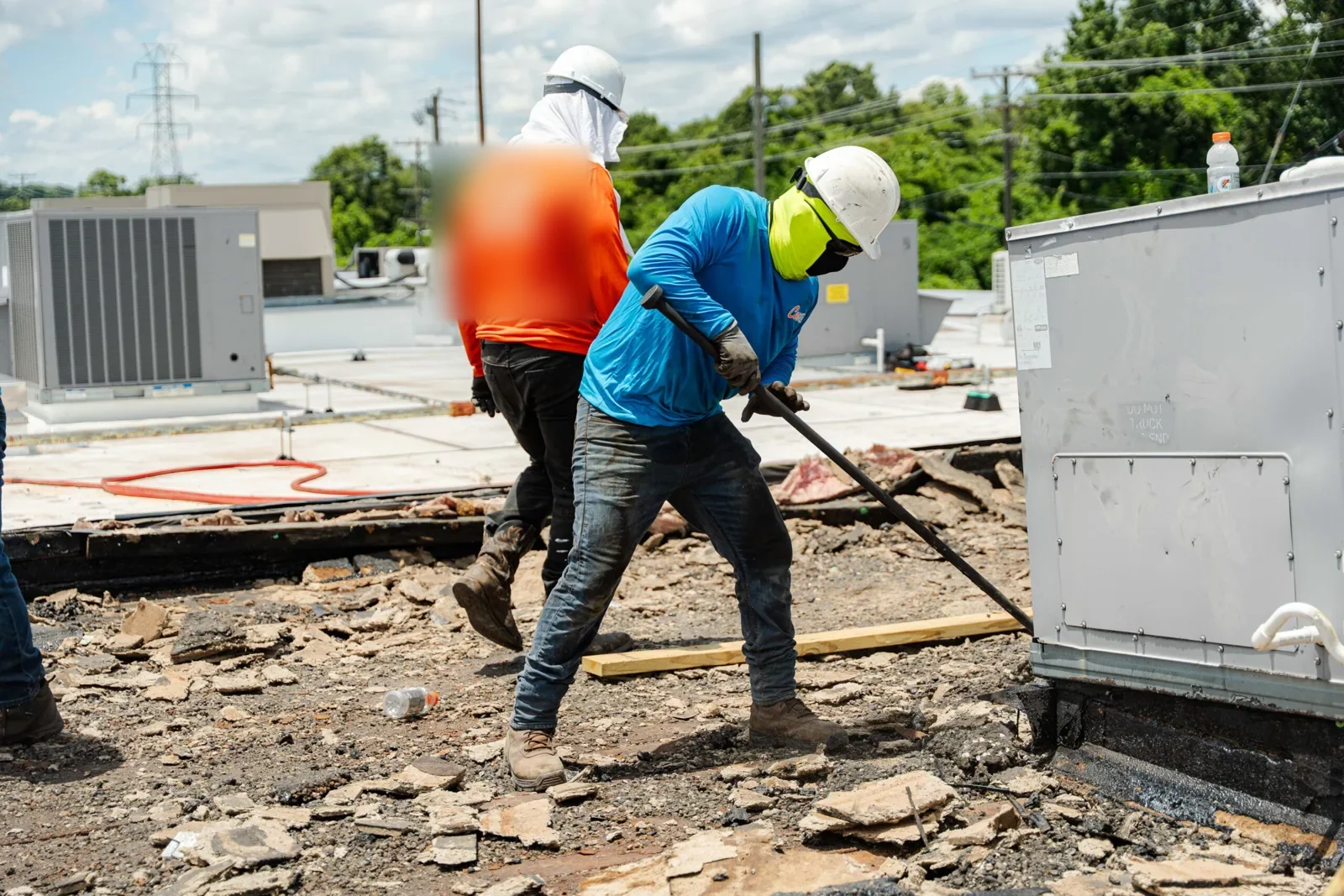
When a single-ply roof nears the end of its life, the options are a recover over dry insulation or a tear-off. A roof recover avoids removing layers, so it cuts noise, dust and landfill, but it depends on cores showing dry, sound insulation. A tear-off is the answer when the cores say otherwise.
Either way the work moves by section, and each opening is installed and dried in before the shift ends. Plants set their dates by outage, hospitals by wing and retail owners near Fort Henry Drive by the holiday calendar. The phasing plan states which section comes first and where the night shift picks up.
Permits and Licensing
A single-ply reroof here needs a city permit, and the commercial filing is one stamped plan set plus a PDF copy. Contracts above $25,000 call for a Tennessee contractor license, backed by compensation and liability coverage.
We prepare the submittal while materials are on order. Where the roof carries a warranty, we read the terms first and keep the repair consistent with them; the owner confirms those terms with the maker.
Weather Windows for Single-Ply Work
Hot-air welding needs a dry membrane, and adhesives and tapes need a minimum temperature to bond. A cold snap can stop splicing, and a hot afternoon can shorten the working time of an adhesive. Local numbers set the range: precipitation near 45 inches, measurable on about 133 days, and temperatures between minus 18 F and 104 F.
An unfastened membrane acts as a sail, and when Morristown posts a thunderstorm warning for the county, the usual language is 60 mph wind and hail. We limit open areas, secure the edges when the shift ends and carry a weather buffer in every phase, which the superintendent sees as a line in the schedule. Seams are never left half finished at the end of a shift; an open lap is either closed or covered with a temporary strip.
What We Need From You
Send the site plan, the roof access points, the warranty or specification papers and the outage calendar. We return an attachment and membrane identification plan, a repair sequence and a phasing plan. A building with a sister system from Versico or Johns Manville gets the same plan, and a retail owner on Fort Henry Drive or an industrial owner near Phipps Bend can use it for every roof.
Commercial Roofing Questions
How do we find out how our roof is attached?
Check the specification and warranty papers, then confirm at the roof. A fastener line, a bonded surface or a layer of stone tells the story. We recommend a core or a small sample to confirm. The method decides how repairs are staged and how wind uplift is checked.
Can a single-ply roof be recovered?
Yes, where dry insulation and a sound deck support it. We recommend cores and moisture readings before a recover is chosen. Recovering over saturated insulation hides the problem, so a section may need tear-off even when the rest can be covered.
What should we do about a seam that has opened?
Have it cleaned, prepared and repaired with a compatible material, then tested. We recommend photographing the seam before and after. Repeated openings at the same location point to movement or ponding, and the cause should be fixed with the seam.
How cold is too cold for repairs?
It depends on the material. Some adhesives and tapes have minimum temperatures, and welding needs a dry sheet. We recommend scheduling larger repairs in milder weather, and doing winter work as temporary dry-in. The product data gives the limits for each material.
Does a repair affect the manufacturer warranty?
It can, when a repair departs from what the warranty allows. Read the notice and approved-method rules before any repair starts, and keep a dated record with product data and photos; the manufacturer confirms what its warranty permits.