A remaining-life check comes first on a solar-ready roof, because an array outlasts a roof that is close to replacement. Lifting a panel field to re-roof under it costs more than the roof work itself. In Kingsport, TN the question goes to the general contractor and the owner before the solar designer draws a single rack.
With that answer in hand, the sequence runs in order: roof condition, structural review, mounting method, flashing details, permit and install. Each step depends on the one before it, and the solar and roofing trades have to hand off cleanly between them. The roofing side draws on commercial roof inspection records, and the solar side draws on the structural report.
Roof Condition and Remaining Life
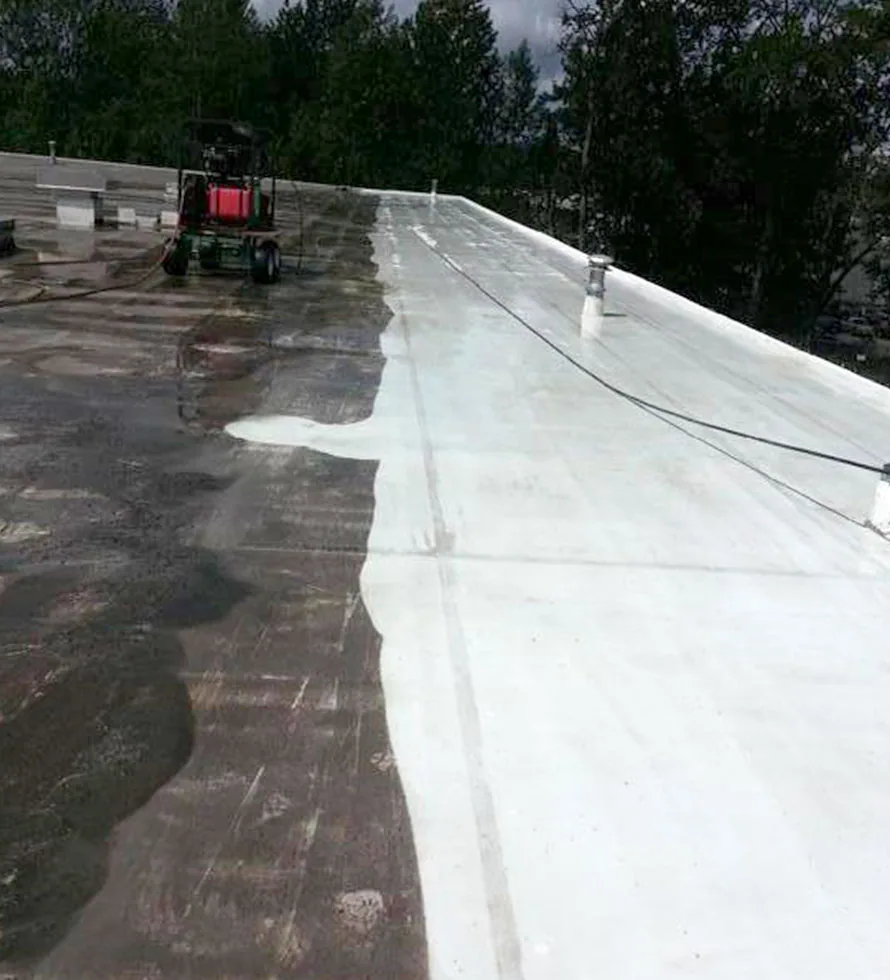
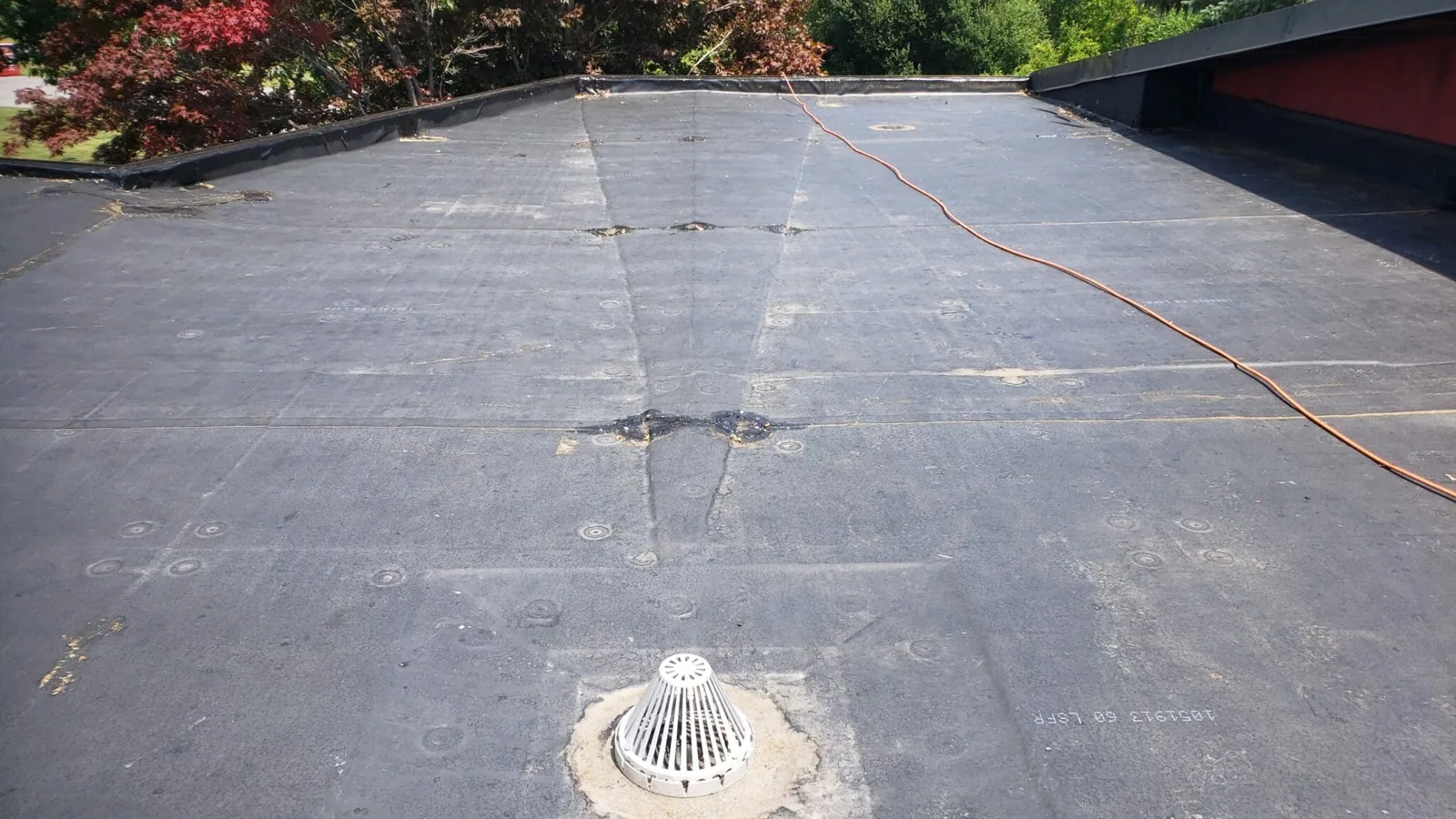
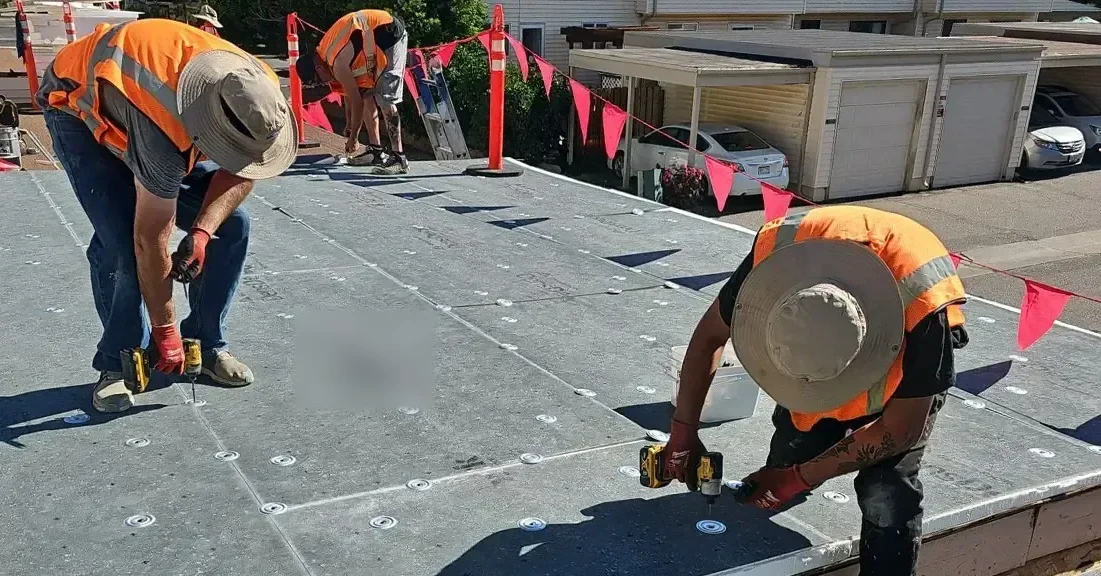
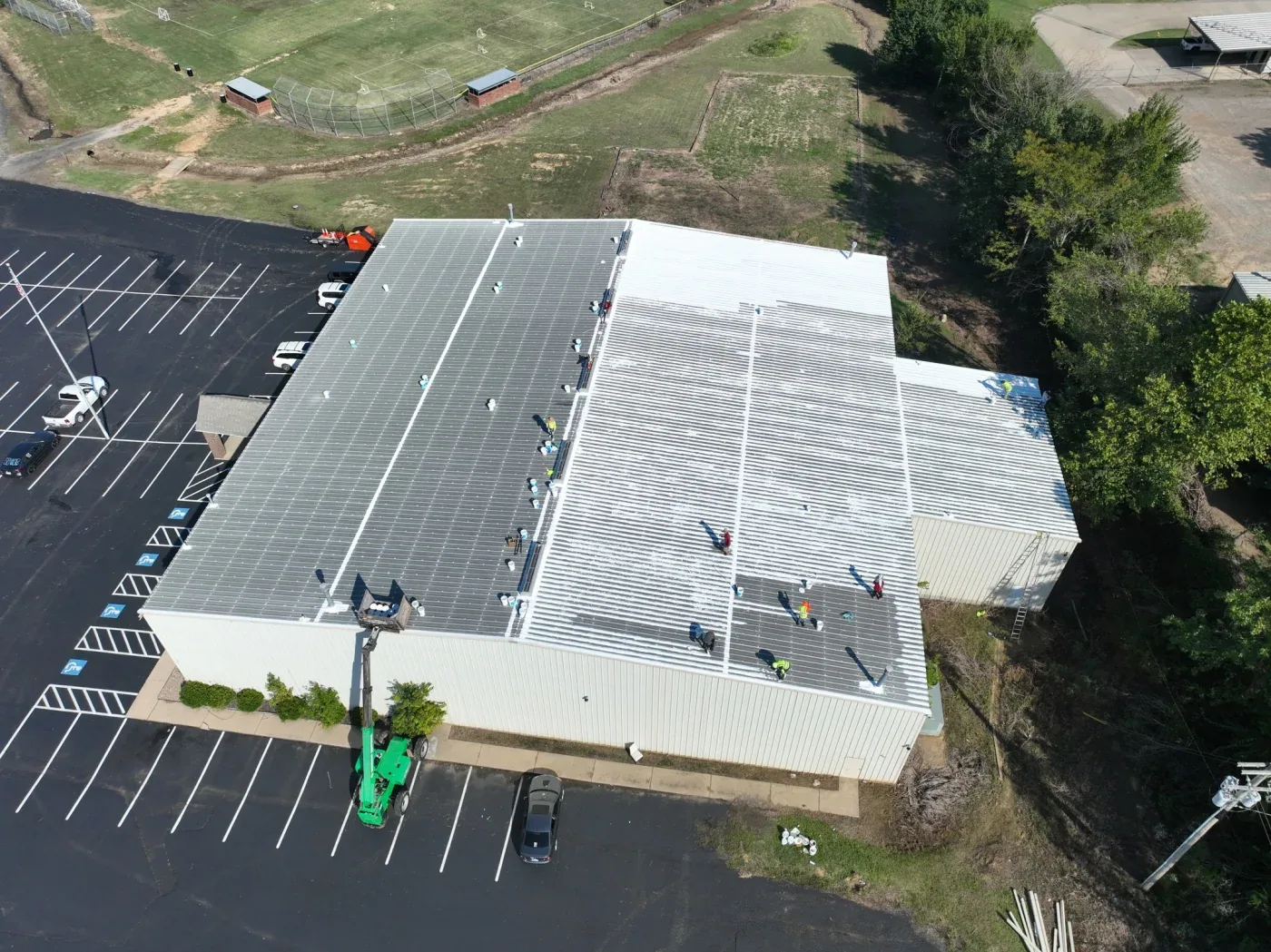
We start with a survey: core cuts, a moisture scan, seam probes and a look at drains. The goal is a clear estimate of how many years the roof has left. If the answer is shorter than the array's expected service life, the roof is replaced or restored first. If it is longer, we repair defects and document the starting condition.
The report goes to the owner and the solar installer. It includes photographs of every seam, flashing and drain in the array area. That record matters later, because a leak under an array raises the question of who disturbed the roof, and the starting photographs answer it in a single page. Where the survey finds a weak area, we price the repair as its own line, so the owner sees what the array adds and what the roof already needed. A recover before install is another option when the existing board is sound.
Mounting Methods: Ballasted, Attached and Rail-Mounted
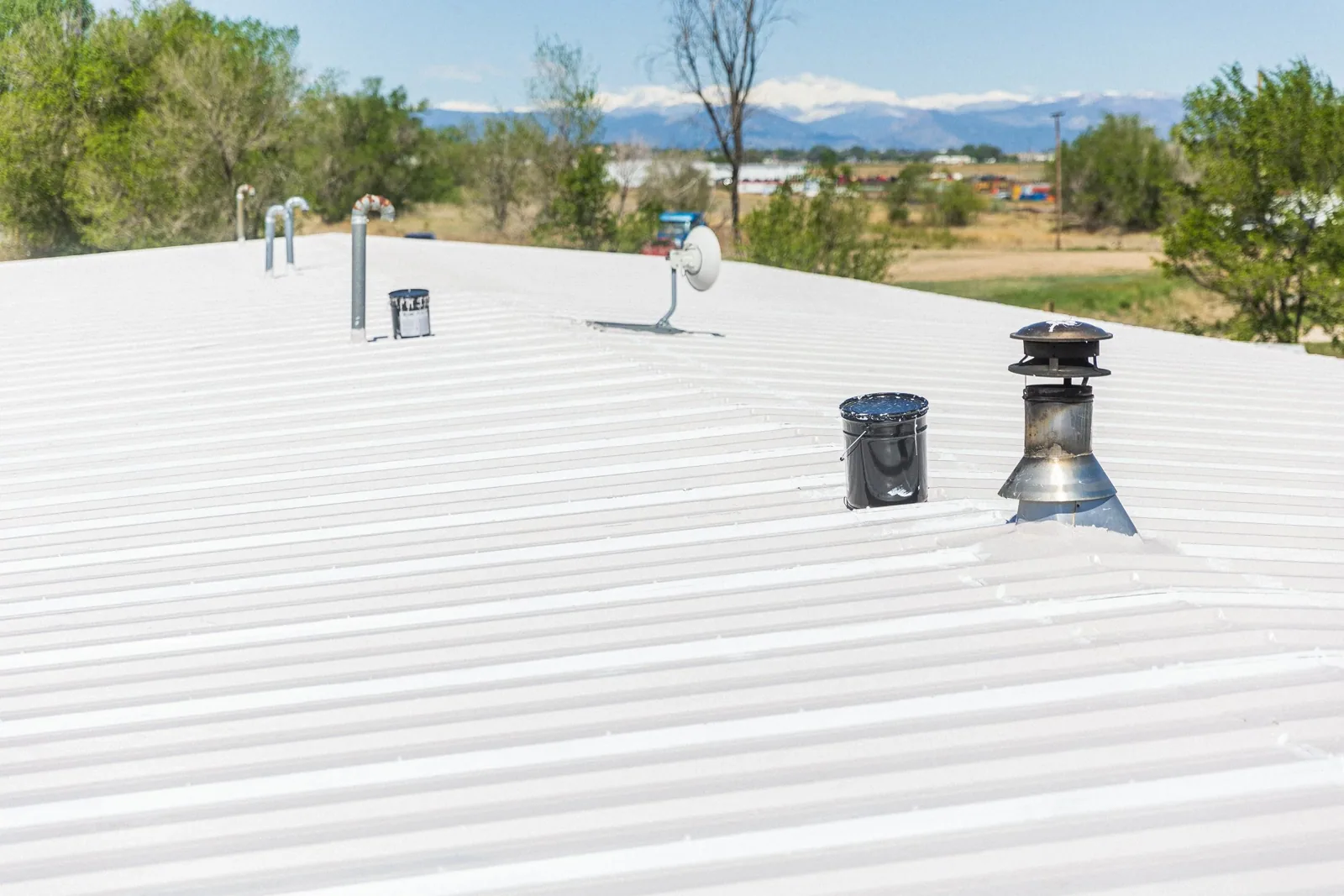
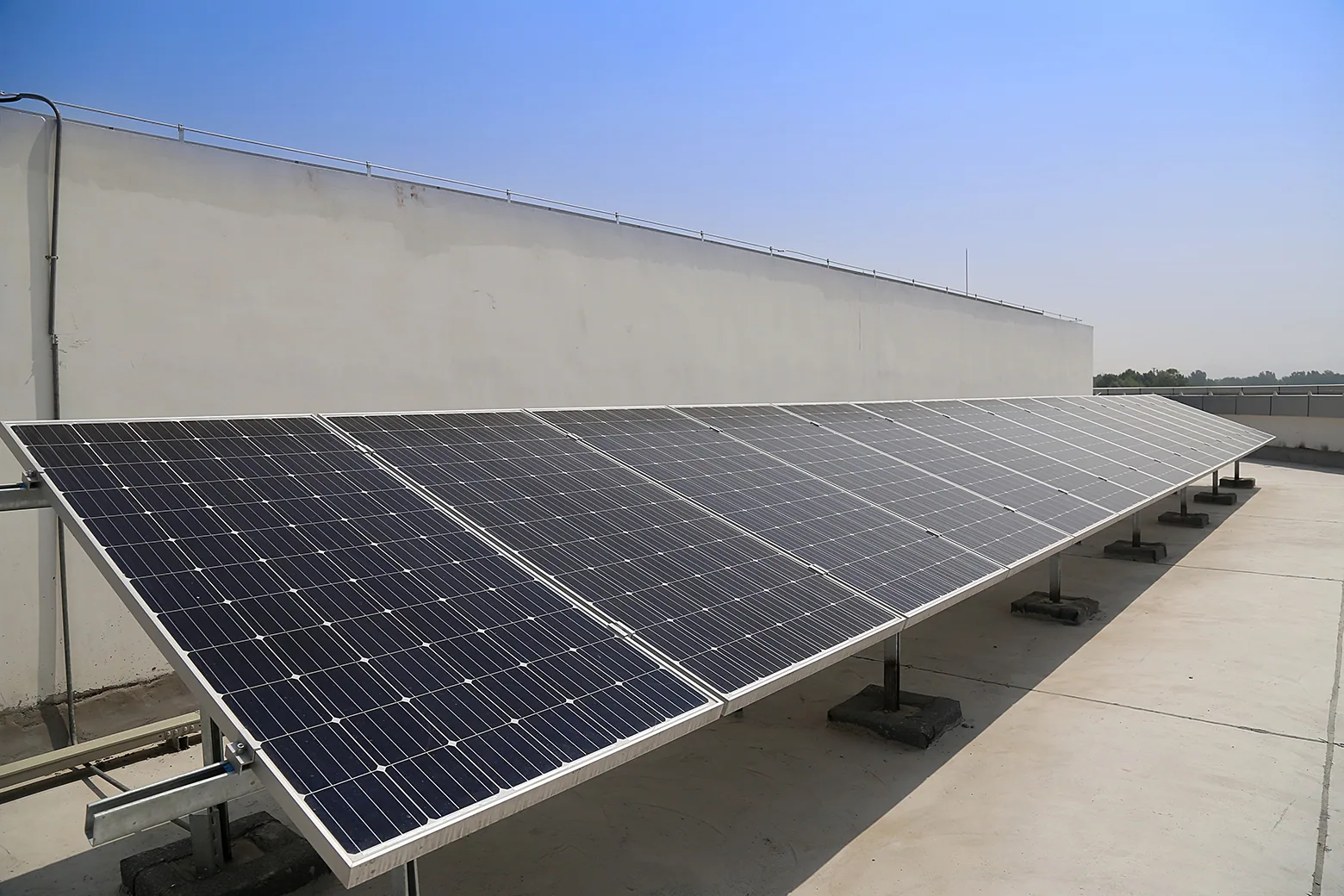
Arrays are held to a roof in three common ways. Ballasted systems use weight and need a roof that can carry it. Attached systems penetrate the roof at fixed points and need flashing at each one. Rail-mounted systems on metal roofs clamp to seams and avoid penetrations. The right choice depends on the roof type, the structure and the wind exposure.
Kingsport severe thunderstorm warnings have cited 60 mph wind gusts, so uplift is a real design input. We coordinate with the solar engineer on attachment spacing and ballast weight. Every penetration gets a detail drawn before it is made, and every detail is inspected after it is closed.
Flashing, Penetrations and Keep-Out Zones
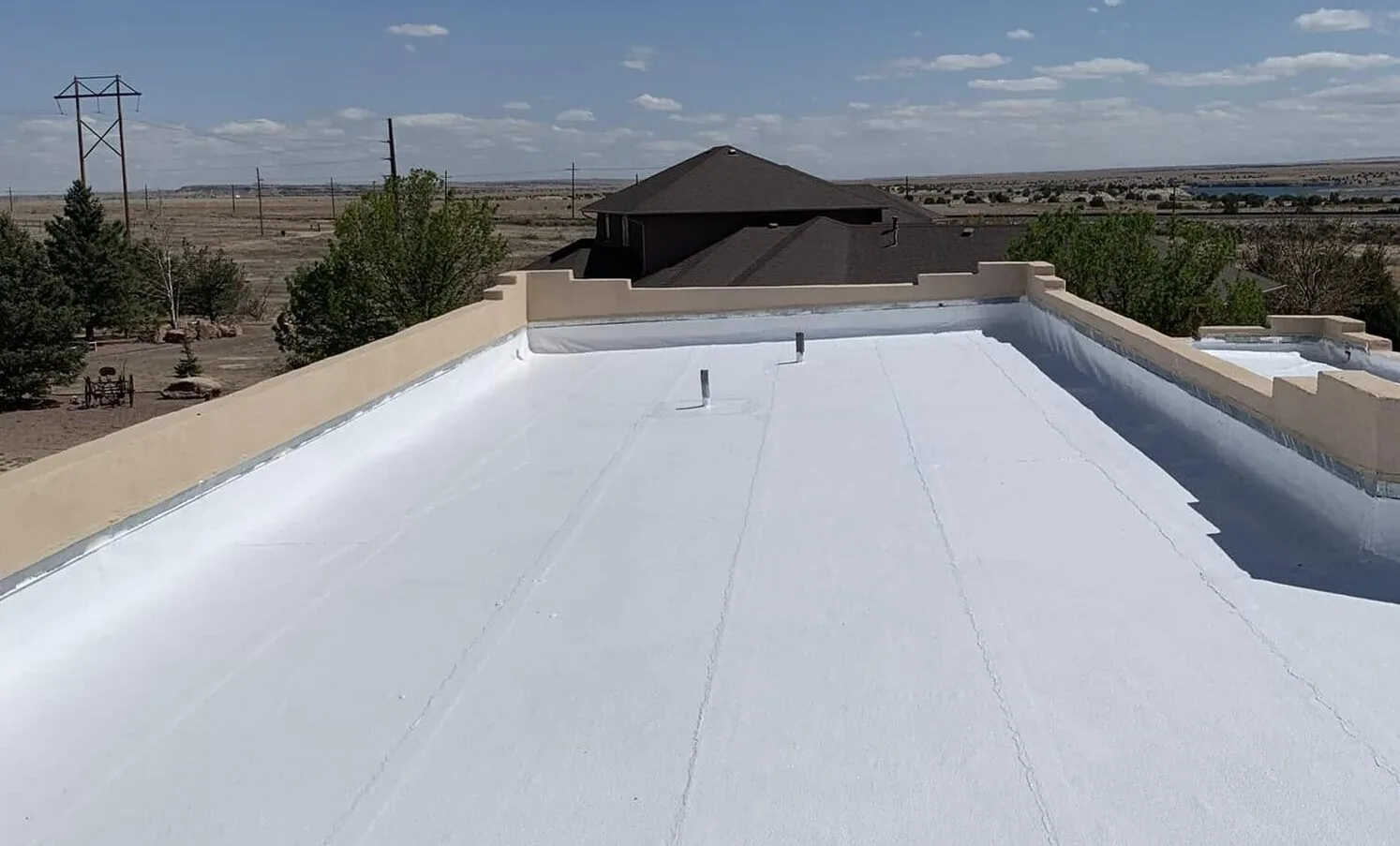
Each mount is a possible leak. We flash each penetration with a boot, a pitch pocket or a liquid-applied detail, matched to the roof system, whether the sheet is TPO, EPDM or a standing seam metal panel. Around the array we set keep-out zones: drains, scuppers, expansion joints and roof edges stay clear, so water can leave and a crew can reach them.
Conduit routes get the same care. A conduit run laid flat on the membrane traps water and wears the sheet. We use supports that lift it clear and spread the load. The routing is drawn on the roof plan and approved before any installer starts, so the cable does not end up across a drain.
Shading and snow behavior also shape the layout. Kingsport averages only about 5.1 inches of snow a year, mostly in January and February, so snow shedding is a smaller issue than in the north. Rain is another matter, with roughly 133 days of measurable precipitation, and the roof under the array still has to drain between the rows.
Walk Paths, Access and Future Maintenance
A roof with an array still needs maintenance. Crews must reach drains, curbs and flashings, and an inspector must see the membrane. We lay out walk paths and clear aisles between rows, and we protect them with pads.
When the roof needs work later, the array may need to be lifted or lowered in sections. The plan states how, who does it and who pays. Writing that down now avoids a dispute in year twelve, when the people who signed the contract have moved on and the roof has aged. Our preventive roof maintenance visits include a check of the array's footprint and the pads around it.
Permits, Inspection and Warranty Coordination
An array on a commercial roof starts at the Kingsport Building Department, whose contractor page lists the 2024 editions of the codes it applies to reroofing and roof alterations. The filing is a stamped plan set with a PDF, and a contract above $25,000 brings the Tennessee license and insurance certificates with it. The roofer's mount details go into the set beside the solar designer's layout.
The roof membrane warranty may restrict who can penetrate it and with what. We read the warranty before the mounts are set, and we write the coordination into the contract. A penetration made without that step can void coverage, and a voided warranty removes the coverage the roof was bought with. The permit package goes in while materials are ordered.
Weather Windows and Closeout
Rain reaches Kingsport roofs on roughly 133 days a year and totals about 45 inches, so a mount cannot sit open overnight. Sealants cure inside a temperature range, and the recorded span from minus 18 F to 104 F means penetrations go in during dry windows and each one is closed the same day.
At closeout, we walk the array area with the superintendent, inspect each flashing and photograph the finished mounts. Open items go on a dated punch list. The package includes the roof plan, the mount details and the warranty papers, and a warehouse roof or a school receives the same package.
What We Need From You
The roof plan, the roof age and whatever warranty papers exist come first. Send the solar designer's preliminary layout if you have one, along with the load calculations. Tell us the access points and the outage calendar. We will return a sequence that places the roof work, the mounts and the inspections in order. A retail owner along Fort Henry Drive sends the same items, with the tenant contacts added.
Commercial Roofing Questions
Should the roof be replaced before a solar array goes on?
If the roof has fewer years left than the array's service life, yes. We recommend a core cut and a moisture survey before the solar design is final. Lifting a finished array to re-roof under it costs far more than doing the roof first.
Does a solar array void a roof warranty?
It can if the penetrations or the mounting method break the warranty terms. We recommend reading the warranty before mounts are set and writing the coordination into both contracts. We document the roof condition before and after the install.
Ballasted or attached: which is better for a commercial roof?
Structure, roof type and wind exposure drive the choice. Ballast adds weight and avoids penetrations. Attached mounts add flashing points. We recommend a structural review first. Kingsport warnings have cited 60 mph gusts, so uplift is part of the decision.
Who is responsible for a leak under the array?
Start with the contracts and the starting record. We recommend photographs of every seam, flashing and drain in the array area before install. If a leak appears, the photographs show whether the area was sound when the array went on.
What happens when the roof needs work later?
The array is lifted or lowered in sections, and the plan says who does it and who pays. We recommend writing that into the install contract. Walk paths and clear aisles let maintenance crews reach drains and flashings in the meantime.